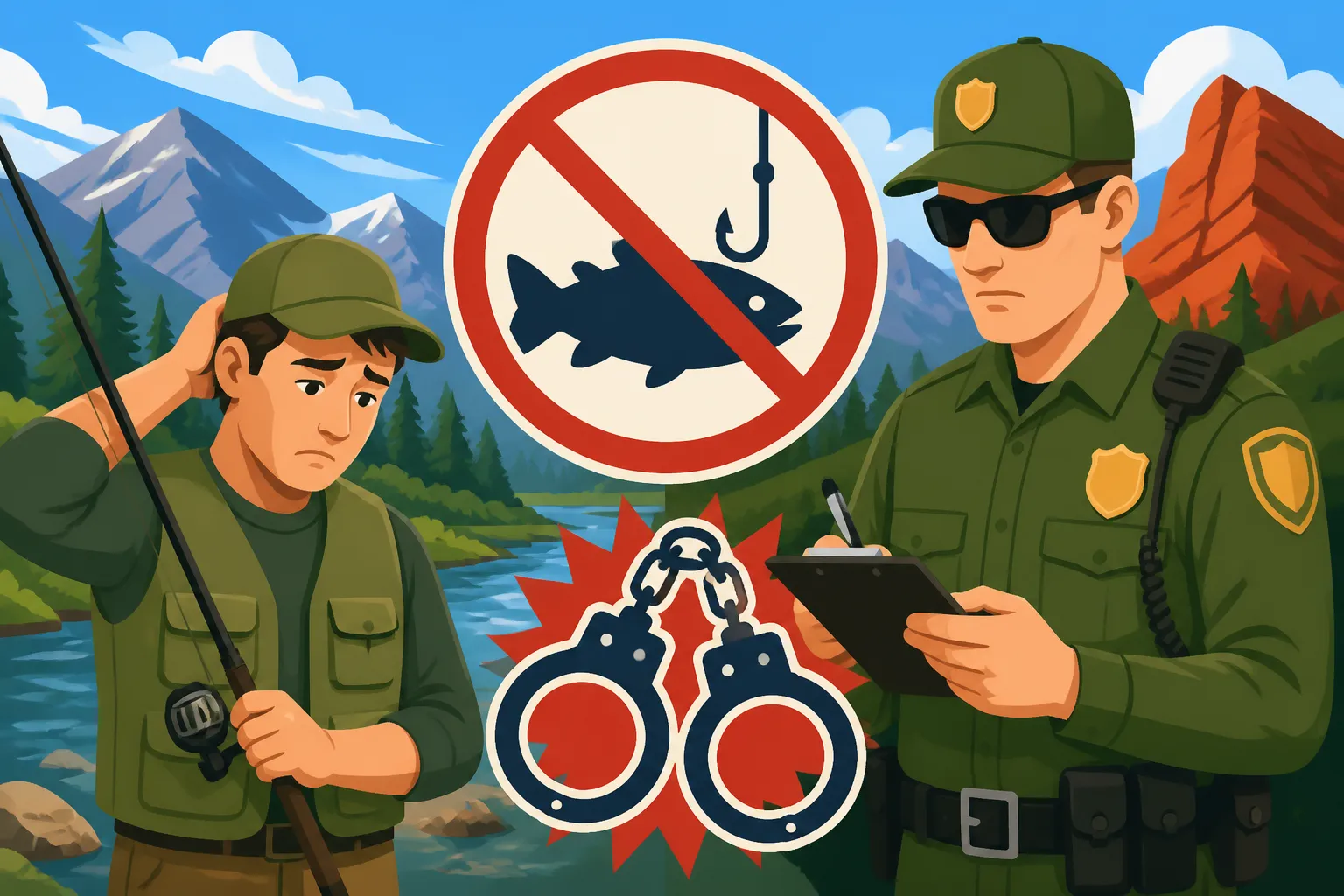
Penalties for Fishing Without a License in Colorado
It's a beautiful day, the fish are biting, and you're just itching to cast a line. But what happens if you forgot your fishing license, or perhaps thought you could get away with not buying one? That brief moment of convenience or oversight can lead to some serious headaches and financial penalties in Colorado. This guide will walk you through the actual repercussions you could face for fishing without a valid license in the Centennial State, helping you understand why it's simply not worth the risk.
The Immediate Consequence: Encountering a Wildlife Officer
Picture this: you're enjoying the tranquility of a pristine mountain lake or a meandering river, totally absorbed in the rhythm of casting and reeling. Suddenly, a figure approaches. It's a Colorado Parks and Wildlife (CPW) officer, easily identifiable by their uniform and vehicle. This isn't a rare occurrence; CPW officers are out there patrolling waterways constantly, ensuring that everyone is following the rules that protect Colorado's precious natural resources and diverse fish populations. Their job is to ensure fair chase and adherence to regulations, and checking licenses is a fundamental part of that.
The Initial Stop and Identification
When a CPW officer approaches, their first priority will be to verify your identity and ensure you're fishing legally. They'll typically ask to see your fishing license, your identification, and possibly inspect any fish you've caught. This is a standard procedure, and it's essential to cooperate politely and fully. Trying to evade an officer or being uncooperative can escalate the situation quickly, potentially leading to additional charges beyond just the lack of a license. It’s always best to be prepared, have your documents readily accessible, and engage respectfully.
The officer will ask for your name, address, and perhaps your date of birth, cross-referencing this information with their records. They might have a portable device that allows them to check your license status in real-time. If you genuinely forgot your physical license but bought it online through the CPW website, many officers can verify it electronically. However, if no record of a valid license is found, that's when the situation shifts from a routine check to a potential violation.
Verification of License Status
The CPW officer's primary task during this encounter is to confirm you possess a valid Colorado fishing license for your age and residency status. They'll typically ask for your license and a form of identification, such as a driver's license or state ID. If you've purchased your license online, a digital copy on your phone or a printed copy is usually acceptable. It's important to know the specific requirements for showing your Colorado Fishing License in the Field, as officers need to see proof. What they're looking for is evidence that you've paid your dues and are legally entitled to be fishing. This includes verifying that the license hasn't expired, that it's in your name, and that it matches your residency status. For instance, if you're an out-of-state angler, they'll check for a Resident vs Nonresident Fishing Licenses in Colorado.
If you don't have a license, or if it's expired, the officer will begin the process of issuing a citation. This isn't just a friendly reminder; it's a legal document detailing your violation. They'll explain the specific charge, which is typically "fishing without a valid license," and often associated with other potential charges like not having a Habitat Stamp, which is required for most anglers aged 18-64. Knowing Who Needs Colorado's Habitat Stamp is crucial, as forgetting this can add to your troubles.
Discretion vs. Strict Enforcement
While many people hope for a warning, especially if it's their first offense or a genuine oversight, relying on an officer's discretion isn't a strategy you can bank on. Wildlife officers are trained professionals, and while they can sometimes exercise discretion in minor situations, fishing without a license is a clear-cut violation of state law. The decision to issue a ticket rather than a warning often depends on several factors: the severity of the violation, whether you've had previous infractions, your cooperation during the stop, and even the specific regulations of the body of water you're fishing.
For example, if you're fishing in a heavily managed area or a "Gold Medal Water" known for strict regulations, an officer might be less inclined to give a warning. Repeat offenders or individuals attempting to mislead an officer will almost certainly receive a citation. While a simple oversight of an expired license might sometimes result in a warning if you can prove you immediately bought a new one, the general expectation should be that a violation will lead to a ticket. It’s always best to have your license in hand, completely valid and ready for inspection, to avoid any potential issues. It's simply not worth the stress and potential cost to gamble on an officer's leniency.
Understanding the Legal Penalties and Fines
Let's cut to the chase: fishing without a license in Colorado isn't just a slap on the wrist. It comes with real legal consequences, primarily in the form of fines and, in some cases, much more severe penalties. Colorado Parks and Wildlife takes these violations seriously because fishing licenses are a critical component of funding their conservation efforts, stocking programs, and enforcement activities. Without those funds, the health of Colorado's fisheries would suffer dramatically.
Standard Fines for Fishing Without a License
In Colorado, fishing without a license is typically considered a misdemeanor offense. The fine structure for these violations can vary, but generally, you can expect a significant monetary penalty. While specific amounts can change based on legislative updates and local court interpretations, a common range for a first offense of fishing without a proper license might start around $50 to $100 for the violation itself, plus additional court costs, surcharges, and a mandatory victim compensation fee. These add-ons often make the total amount considerably higher than the base fine.
For instance, you might see the total cost for a basic fishing without a license violation quickly climb to $150-$250 or more once all fees are factored in. This is a far cry from the relatively low cost of a Colorado Fishing License Costs Explained, which for a resident annual license is typically around $30-$40, plus the habitat stamp. When you compare the two, paying for a license upfront is clearly the more economical choice. Remember, these fines are designed to deter illegal activity and help fund the very resources you're trying to enjoy for free.
Here’s a simplified breakdown of typical fines and associated costs:
| Offense Category | Base Fine (Approx.) | Surcharges & Court Costs (Approx.) | Total Minimum (Approx.) |
|---|---|---|---|
| Fishing Without License | $50 – $100 | $100 – $150 | $150 – $250 |
| No Habitat Stamp (if applicable) | $25 – $50 | $50 – $100 | $75 – $150 |
| Exceeding Bag Limit | $50 – $200 per fish | $100 – $200 | $150 – $400+ per fish |
| Using Prohibited Bait | $50 – $100 | $100 – $150 | $150 – $250 |
Note: These figures are estimates and can vary based on the specific county, judge, and current regulations. Always refer to official CPW guidelines or legal counsel for exact amounts.
Aggravating Factors and Increased Penalties
The fines mentioned above are often just the starting point. Several aggravating factors can significantly increase the penalties you face. If you're caught fishing without a license while also committing other violations, such as exceeding bag and possession limits, fishing in a closed area, using illegal bait, or misrepresenting your residency to buy a cheaper license, the consequences multiply quickly. Each additional violation comes with its own separate fine and associated court costs.
Consider a scenario where an angler is caught without a license, has harvested more fish than allowed by Colorado Bag and Possession Limits by Species, and is using live minnows in a waterbody with bait restrictions. Not only would they face penalties for the lack of a license, but also for each of those additional offenses. This could easily push the total fines into the hundreds, or even thousands, of dollars. More egregious offenses, especially those involving the illegal take of endangered or trophy fish, carry even heftier fines and potential felony charges. The legal system doesn't look kindly on those who knowingly flout multiple regulations, making it even more imperative to understand all the Colorado Fishing Regulations Every Angler Should Know.
Court Appearances and Potential Jail Time
While rare for a first-time, standalone offense of fishing without a license, these violations are indeed criminal matters. This means that depending on the severity of the offense, the number of violations, or your previous record, you may be required to appear in court. Failing to appear in court as summoned can lead to a bench warrant for your arrest, transforming a simple fishing ticket into a much more serious legal problem. A court appearance means taking time off work, potential legal fees if you choose to hire an attorney, and the stress of navigating the justice system.
In extreme cases, particularly for repeat offenders, those who commit multiple serious violations (like poaching large numbers of fish or targeting endangered species), or individuals who are combative with wildlife officers, jail time is a very real possibility. While a few days in county jail for a simple license violation might seem far-fetched to some, it's a discretionary tool available to judges, especially when dealing with persistent disregard for wildlife laws. The judge might also impose community service hours in addition to fines, making the penalty a time commitment as well as a financial one.
Beyond Fines: Other Repercussions You Might Face
While the immediate shock of a hefty fine and the inconvenience of a court date are significant, the consequences of fishing without a license in Colorado don't always end there. There are other, sometimes longer-lasting, repercussions that can affect your ability to enjoy the outdoors in the future, proving that taking shortcuts with regulations truly isn't worth it. These additional penalties are designed not just to punish, but to deter future violations and protect the integrity of Colorado's wildlife management system.
Loss of Fishing Privileges
One of the most impactful penalties for a serious or repeated fishing violation, including fishing without a license, is the suspension or revocation of your fishing privileges. This isn't just about Colorado; many states are part of an interstate wildlife violator compact, meaning if your fishing privileges are suspended in Colorado, they could also be suspended in dozens of other member states, including neighboring states like Wyoming, Utah, and New Mexico. This can be devastating for an avid angler who loves to travel and fish.
The length of suspension can vary widely based on the severity and frequency of offenses. A minor first offense might result in a short suspension, but more severe violations or a pattern of disregard for regulations can lead to suspensions lasting several years or even a lifetime ban from fishing in Colorado and other compact states. Imagine being passionate about fishing, knowing all the best spots, and then being legally barred from casting a line anywhere. It's a harsh reality that many don't consider when they decide to skip buying a license. This consequence alone should be a strong deterrent, reminding anglers that their ability to enjoy the sport is a privilege, not a right.
Seizure of Gear and Fish
When a CPW officer encounters someone fishing illegally, they have the authority to seize any fish that have been caught and, in some cases, the fishing gear itself. If you've been harvesting fish without a license, those fish are considered illegally taken, and they will be confiscated. This isn't just a matter of losing your catch for the day; it can also lead to additional fines based on the "value" of the illegally harvested wildlife. For some species, especially trophy fish, these restitution fees can be substantial.
Furthermore, an officer may confiscate your fishing rod, reel, and other equipment if it was used in the commission of a serious violation, or if you were using illegal methods or equipment. While losing a favorite rod or reel might seem minor compared to fines or jail time, it can be a significant financial blow, especially if you're using high-quality gear from brands like Orvis, Sage, or even more accessible brands you might find on Amazon. The thought of losing hundreds or even thousands of dollars worth of equipment simply because you didn't buy a $30 license should be a sobering reminder of the true cost of non-compliance.
The Long-Term Impact on Your Record
A citation for fishing without a license isn't just a piece of paper you pay and forget. It becomes part of your public record. As a misdemeanor, it will show up on background checks, which can potentially impact future employment opportunities, especially for jobs that require a clean record or involve public trust. While it might not be as severe as a felony, any criminal record can raise eyebrows and complicate your life in unexpected ways.
Beyond the criminal record, CPW also maintains its own records of wildlife violations. These records are used to track repeat offenders and inform decisions regarding license suspensions and other administrative penalties. A history of violations can mark you as someone who disregards conservation laws, making future interactions with wildlife agencies more scrutinized. It effectively brands you as a high-risk individual in their system, making it harder to earn trust or receive leniency for future minor issues. This long-term black mark on your record is a consequence that many anglers simply don't consider when they decide to take a chance on fishing illegally.
Why It's Never Worth the Risk: The Importance of Licensing
When you weigh the minimal cost of a fishing license against the potentially massive penalties – fines, court appearances, loss of privileges, seized gear, and a tarnished record – it becomes abundantly clear that fishing without a license in Colorado is a gamble with incredibly poor odds. The system is designed to deter illegal activity, and it works. Opting for legal compliance isn't just about avoiding trouble; it's about being a responsible steward of the environment and contributing to the health of the very fisheries we love to enjoy.
How License Fees Support Conservation
It's easy to view a fishing license as just another fee, but it's much more than that. The revenue generated from the sale of fishing licenses and the Habitat Stamp directly funds vital conservation efforts across Colorado. This includes everything from fish stocking programs that ensure healthy populations in popular lakes and rivers, to habitat restoration projects that protect critical spawning grounds and improve water quality. CPW uses these funds to manage fish diseases, conduct research, maintain public access points, and employ the dedicated wildlife officers who patrol and protect these resources.
For example, a portion of every license goes towards ensuring the sustainability of native species like the Greenback Cutthroat Trout and other Colorado's Native Cutthroat Trout Subspecies, which are crucial to the state's ecological balance. This funding also supports the state's popular urban fishing programs, bringing the joy of angling to communities closer to home, and maintaining state parks that offer prime fishing opportunities. Essentially, when you purchase a license, you're directly investing in the future of Colorado fishing, helping to ensure that these opportunities exist for generations to come. It truly is "What You're Actually Paying for in a Colorado Fishing License."
Easy Ways to Ensure You're Licensed
Ensuring you have a valid fishing license is incredibly simple these days, removing any legitimate excuse for not having one. Colorado Parks and Wildlife (CPW) has made the process straightforward and accessible. The easiest way to purchase your license is online through the official CPWShop.com website. You can do this from the comfort of your home or even on your smartphone right before you head out to the water. The digital license is often immediately valid, and you can keep it on your phone or print a physical copy. For those who prefer in-person transactions, licenses are readily available at hundreds of retailers across the state, including most sporting goods stores like Bass Pro Shops or even general retailers like Walmart. You can learn more about Where to Buy a Colorado Fishing License in Person.
Remember to also purchase your Colorado's Habitat Stamp, which is required for most residents and non-residents aged 18 to 64, in addition to your fishing license. For specific details on costs, age exemptions for kids, and special considerations for seniors and veterans, CPW provides clear guidelines. For instance, Is Fishing Free for Kids 15 and Under in Colorado? Yes, it is, but it's important to know the cutoff ages and other details. Always check the expiration date, as Colorado licenses are typically valid from April 1st through March 31st of the following year, regardless of when you purchase them. If you’re unsure about renewal, there’s a clear process for Renewing a Colorado Fishing License. A quick check before each outing, or even setting an annual reminder on your phone, can save you a world of trouble.
Common Misconceptions to Avoid
There are several persistent myths and misunderstandings that lead people into trouble regarding fishing licenses. One common misconception is that you don't need a license to fish on private property. While landowners might grant access, state law still requires a valid license for anyone 16 years or older fishing public waters that happen to flow through or adjoin private land. Even if you're fishing a private pond, if it's connected to a public waterway, a license is generally required. Always clarify these nuances.
Another myth is that you only need a license for certain species, like trout, but not for others, like carp or catfish. In Colorado, a fishing license is required for all fish species statewide, with very few specific exceptions (like during the designated Colorado's Free Fishing Weekend, explained in detail by CPW). Don't assume that because you're targeting a less glamorous species, the rules don't apply to you. Similarly, don't assume that if you're just "dunking a worm" or not actively "fishing" in a technical sense, you're exempt. If you have fishing equipment in hand and are attempting to catch fish, you need a license. It's always best to err on the side of caution and ensure you're fully compliant with all the relevant regulations before you even cast your first line.
Disclaimer
The information provided in this guide is for general informational purposes only and does not constitute legal advice. While we strive to provide accurate and up-to-date information, fishing regulations and penalties in Colorado are subject to change by Colorado Parks and Wildlife and state legislature. Always consult the official Colorado Parks and Wildlife regulations and, if necessary, seek legal counsel for specific situations. Fishing without a license carries significant risks, and compliance with all state and federal laws is the responsibility of each individual angler.