What Colorado Game Wardens Check When They Stop You
There's a unique feeling that washes over you when you're out on the water, rod in hand, completely immersed in the beauty of Colorado's outdoors. Then, you see the unmistakable uniform of a Colorado Parks and Wildlife (CPW) Game Warden, and suddenly, a knot forms in your stomach. It's a common, completely natural reaction, even if you know you're doing everything right! This guide is here to demystify what happens when a game warden stops you, what they're looking for, and how to ensure your interaction is as smooth as a perfectly executed cast.
The Basics: Why a Game Warden Might Stop You and What They Look For
It's easy to feel singled out when a game warden approaches, but in reality, these stops are a routine part of their job. Their presence is crucial for maintaining the health of Colorado's incredible natural resources and ensuring everyone plays by the same rules. Let's break down their role and the reasons behind a typical interaction.
Understanding Warden Authority and Purpose
Colorado Parks and Wildlife game wardens, also known as wildlife officers, are commissioned law enforcement officers with specific duties focused on enforcing wildlife, fishing, hunting, and boating laws. Their primary goal isn't to catch you doing something wrong, but rather to ensure compliance with regulations that protect Colorado's fish and wildlife populations for current and future generations. Think of them as the custodians of our wild spaces and the advocates for the creatures within them.
They spend countless hours patrolling rivers, lakes, and trailheads, observing angler behavior, checking licenses, and educating the public. While it can feel a bit like a pop quiz, most wardens are approachable and professional, and their inquiries are usually straightforward. They're empowered by Colorado Revised Statutes to conduct these checks, which means they have the legal authority to stop you and ask to see certain documents and your catch.
Common Scenarios for a Stop
Warden stops can happen in various ways, and most often, they're not a result of you doing anything wrong, but simply being in the right (or wrong, depending on your perspective!) place at the right time.
- Routine Checks at Popular Access Points: This is perhaps the most common scenario. Wardens often set up at boat ramps, popular trailheads, or well-known fishing spots like Cheesman Canyon or the Fryingpan River to conduct broad checks. They might be looking at licenses, reviewing catch, or simply engaging with anglers to answer questions and promote safe practices. If you're fishing at a highly trafficked area, expect to be checked at some point during the season.
- Observing Suspicious Activity: Sometimes, a warden might observe behavior that raises a red flag. This could be anything from someone leaving a fishing spot very quickly after noticing the warden, attempting to conceal gear, or unusual activity on the water, like someone using a net in a fly-fishing-only area. These observations might prompt a more targeted stop to investigate further.
- Responding to Reports: Game wardens also act on reports from other anglers, landowners, or concerned citizens. If someone witnessed a potential violation – maybe an angler keeping too many fish or using illegal bait – and reported it, a warden might approach you based on that information. It’s a good reminder that the angling community often looks out for itself and the resource.
- Checks in Remote Areas: Don't think that just because you're deep in the backcountry that you're immune to a check. Wardens also patrol remote lakes and streams, often on foot or horseback. If anything, these remote stops might be even more important, as illegal activity in pristine areas can have a disproportionate impact.
What Documents and Gear Wardens Routinely Inspect
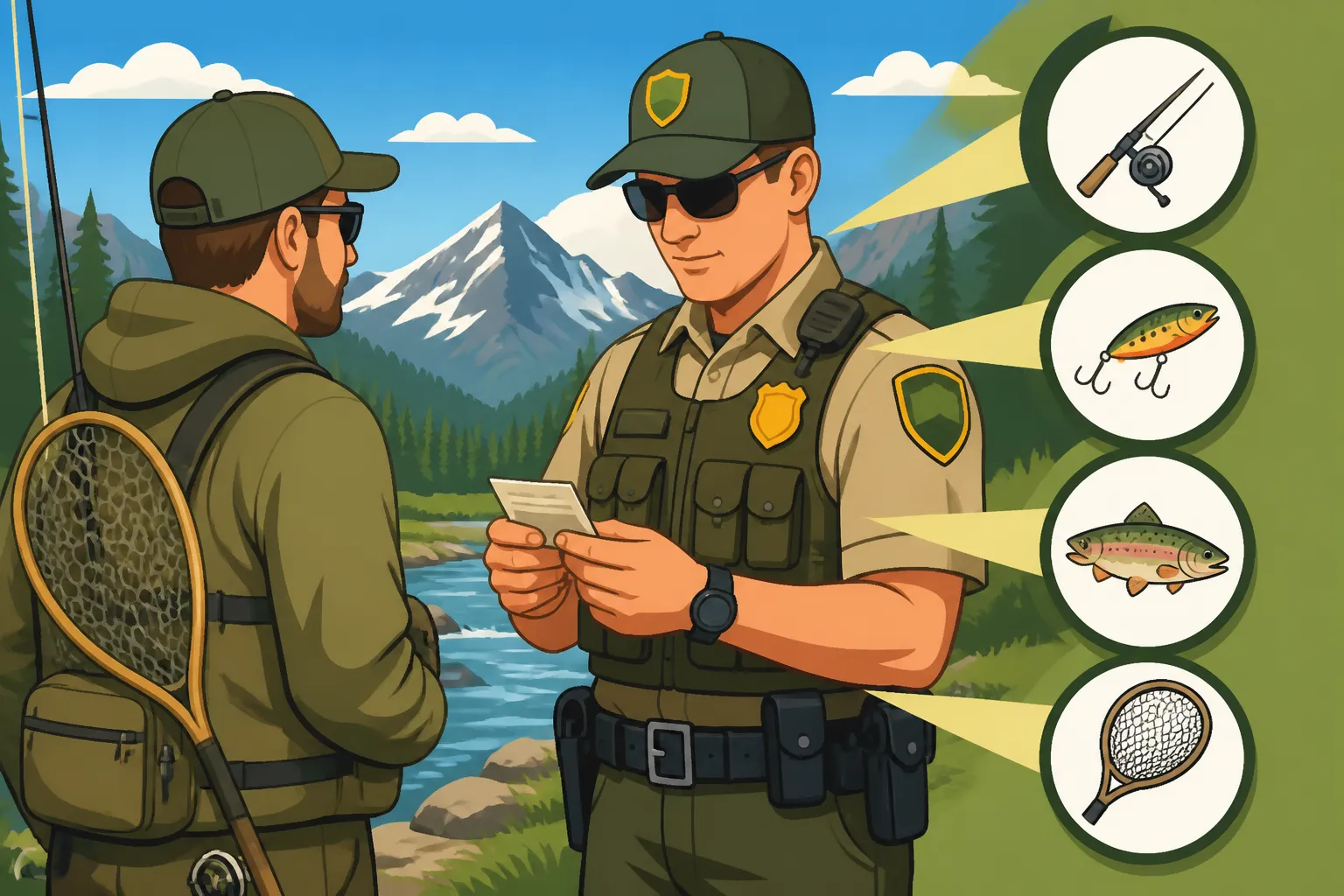
When a game warden stops you, they're looking for compliance with a few key regulations. Being prepared and knowing what they're likely to ask for can make the interaction quick and painless.
Your Colorado Fishing License and ID
This is absolutely the first thing any game warden will ask for. Your fishing license is your permit to partake in the sport, and it's mandatory for almost everyone aged 16 and older in Colorado. It needs to be valid for the current season and in your possession.
- Physical vs. Digital: Colorado Parks and Wildlife is pretty modern about this. You can carry a physical copy of your license, or display it digitally on your smartphone. Many anglers prefer the digital version, accessible through the MyCPW app. However, if you rely on your phone, make sure it's charged and that you have a way to protect it from the elements while fishing – a good waterproof case, easily found on Amazon, is a smart investment. For more details, our comprehensive Colorado Fishing License Guide for Residents and Nonresidents can help clear up any confusion about who needs what. Remember that our guide on How to Buy a Colorado Fishing License also covers both online and in-person options.
- Photo Identification: To verify that the license belongs to you, wardens will also ask for a valid form of photo identification, typically a driver's license or state ID. Make sure the name and information on your ID match your fishing license. This is especially important for verifying residency status, which impacts the cost of your license.
The Habitat Stamp and Other Endorsements
Beyond your basic fishing license, there are other stamps and endorsements that Colorado requires, depending on your age and fishing habits. Wardens will check for these as well.
- Colorado Habitat Stamp: This stamp is required for most anglers and hunters aged 18 to 64 when purchasing their first license of the year. It's a vital funding source for protecting and restoring wildlife habitat across the state. If you fall within this age range, expect the warden to look for this endorsement on your license. There are exemptions, which our guide on Colorado's Habitat Stamp, Explained dives into in detail. You might also want to read Who Needs Colorado's Habitat Stamp to ensure you are compliant.
- Colorado Second-Rod Stamp: Planning to fish with two rods? You’ll need a Second-Rod Stamp in addition to your regular fishing license. This allows you to legally use a second line, giving you more chances to hook a fish. If a warden sees you with two lines in the water, they will check for this stamp. We explain this in more detail in Colorado's Second-Rod Stamp and Who Needs One.
Fish, Tackle, and Method of Take
This is where the rubber meets the road, especially if you've been having a successful day. Wardens are meticulously trained to identify fish species, understand length regulations, and ensure your fishing methods are legal for the specific water you're on.
- Your Catch: The warden will want to see any fish you've kept. They'll count them, and for species with length limits (like many trout), they'll measure them. It's critical that you know and adhere to the Colorado Bag and Possession Limits by Species for the water you're fishing. For example, some Gold Medal Waters have very specific length restrictions or even require catch-and-release only. Know the difference between daily limits (what you can catch and keep in one day) and possession limits (what you can have in your possession, including at home, at any given time). Our piece on Colorado Gold Medal Water Regulations Explained goes into specific detail about these unique rules.
- Tackle Inspection: Your tackle can also be subject to inspection. This is primarily to check for compliance with bait restrictions and hook types. Many waters in Colorado, especially those managed for wild trout populations or designated as Gold Medal Waters, have specific rules:
- Bait Restrictions: Some areas are artificial flies and lures only, or even flies and lures with a single, barbless hook. Using live bait where it’s prohibited can lead to a citation. Make sure you check the specific regulations for your chosen fishing spot before you head out.
- Barbless Hooks: On many of Colorado's most pristine waters, particularly those with strong catch-and-release ethics, barbless hooks are mandatory. This minimizes harm to fish that are released. Wardens will often ask to inspect your flies or lures to ensure your hooks are indeed barbless.
- Method of Take: The way you catch fish is also regulated. For instance, snagging fish (intentionally hooking them in places other than the mouth) is illegal except for certain species like Kokanee Salmon during specific spawning runs in designated areas. Using nets for anything other than landing a legally hooked fish can also be prohibited. Wardens ensure you're using legal, ethical methods. For example, if you're targeting Kokanee Salmon at Blue Mesa Reservoir, you'll want to be aware of the specific rules.
Here's a quick overview of what a warden generally checks:
| Item | Purpose of Check | Key Consideration for Anglers |
|---|---|---|
| Valid Fishing License | Proof of legal authorization to fish | Must be current, in possession (physical or digital), and match ID |
| Photo ID | Verification of identity and residency status | Driver's license or state ID that matches license info |
| Habitat Stamp | Required for most anglers 18-64 to fund wildlife conservation | Ensure it's purchased with your first annual license if applicable |
| Second-Rod Stamp | Authorizes use of two fishing rods | Needed if you are actively fishing with two lines in the water |
| Number of Fish Caught | Compliance with daily bag limits for specific species | Know the limits for the water you're on and count your catch accurately |
| Size of Fish Kept | Compliance with length restrictions for certain species | Measure fish carefully; do not clean fish if length limits apply |
| Species Identification | Ensure only legal species are harvested | Be able to identify your catch to avoid keeping protected species |
| Bait/Lure Type | Adherence to bait restrictions (e.g., artificial flies/lures only, no live bait) | Check local regulations for bait/lure rules before fishing |
| Hook Type | Compliance with barbless hook requirements on specific waters | Ensure hooks are barbless where mandated to avoid citations |
| Method of Take | Ensuring legal and ethical fishing practices (e.g., no snagging) | Always aim to hook fish in the mouth; avoid illegal netting or spearing |
Your Rights and Responsibilities During a Stop
Encountering a game warden is a formal interaction with a law enforcement officer, but it doesn't have to be intimidating. Knowing your rights and responsibilities can help ensure a smooth, respectful, and efficient exchange.
Staying Calm and Cooperative
The single best piece of advice for any interaction with a game warden is to remain calm, respectful, and cooperative. They are performing their job, often under challenging conditions, and a professional attitude from your side will almost always lead to a professional attitude from theirs.
- Respond Respectfully: When a warden approaches, acknowledge them, stop fishing, and follow their instructions. Take off your hat and sunglasses so they can see your face clearly. Address them as "Officer" or "Warden." A simple "Good morning/afternoon, Warden" and a polite demeanor go a long way.
- Avoid Over-Sharing: Answer their questions truthfully and directly, but you're not obligated to volunteer unnecessary information. Stick to the facts: "Yes, I have my license," "No, I haven't caught anything yet," or "I have two trout in my cooler." Rambling or fabricating stories can create suspicion where there was none.
- Don't Argue: If you disagree with something the warden says, or if you believe they are mistaken about a regulation, it's best to address it calmly. Arguing, becoming defensive, or trying to challenge their authority on the spot will only escalate the situation. If you genuinely believe you've been unfairly treated or cited, you'll have an opportunity to contest it later through official channels.
Understanding Search and Seizure
This is a frequently misunderstood aspect of interactions with law enforcement, including game wardens. Wildlife officers, like other law enforcement, operate under specific legal frameworks regarding searches.
- Scope of Inspection: A game warden's authority specifically grants them the right to inspect items related to fishing and hunting. This includes your fishing license, your identification, any fish or game in your possession, and the gear you are actively using to fish (your rod, reel, tackle box, and any bait or lures). They can also inspect coolers or stringers where you might be holding your catch, as these are directly related to the regulated activity.
- Beyond Fishing-Related Items: Generally, a warden cannot search personal belongings that are not directly related to fishing (like the glove compartment of your car for non-fishing items, or your personal backpack if it doesn't contain fish or fishing gear) without probable cause or your explicit consent. If a warden asks to search something that seems unrelated, you have the right to politely ask if you are required to consent to the search. Remember, however, that refusing a lawful search (for instance, of your cooler with fish in it) can lead to further legal complications. The key is that they are looking for evidence of wildlife violations.
- Probable Cause: If a warden has probable cause to believe a crime has been committed (e.g., they see a fish of illegal size in plain view, or you admit to over-limiting), their authority to search broadens. It's always best to be compliant with regulations to avoid reaching this point.
Potential Outcomes and Penalties
Most game warden stops end with a friendly wave and a "have a good day." However, if a violation is found, there can be a range of outcomes.
- No Issues: The vast majority of interactions result in no problems at all. The warden checks your documents, confirms compliance, and sends you on your way. You might even get some helpful information about local fishing conditions or recent stockings.
- Warnings: For minor or first-time infractions, a warden might issue a verbal or written warning. This is a common outcome for small mistakes, like unknowingly having a lure that isn't quite barbless in a barbless-only zone. It's a chance to learn and correct without immediate penalties.
- Citations and Fines: More serious violations, or repeated minor ones, will typically result in a citation. This is essentially a ticket that carries a fine. Examples include fishing without a valid license (What Happens If You Fish in Colorado Without a License can be quite serious!), keeping over-limit fish, or using illegal methods. Fines can vary significantly depending on the severity of the offense.
- Confiscation: In cases of significant violations, a warden might confiscate illegally taken fish or even fishing gear used in the commission of a crime. For instance, if you're found with dozens of fish over the legal limit, those fish will be seized.
- License Suspension: For very serious or repeated offenses, your fishing and hunting privileges in Colorado (and potentially other states through interstate compacts) could be suspended for a period of time. This is a significant penalty, as it directly impacts your ability to enjoy the outdoors. Our article on Colorado Penalties for Keeping Over-Limit Trout elaborates on what serious repercussions can arise.
Best Practices for a Smooth Warden Encounter
Being prepared is the ultimate key to a stress-free interaction with a Colorado game warden. It not only demonstrates your respect for the regulations but also ensures you're doing your part for conservation.
Be Prepared Before You Go
A little foresight before you even leave the house can save a lot of hassle on the water.
- Verify Licenses and Stamps: Always, always check the expiration date on your fishing license and ensure your Habitat Stamp (if applicable) is attached or noted on your digital license. Many anglers buy their license at the beginning of the season, forget about it, and then realize it expired just when a warden asks for it. You can typically renew a Colorado Fishing License online or through the MyCPW app.
- Accessible Documents: Keep your physical license and ID in an easily accessible, waterproof wallet or pocket. If using a digital license, ensure your phone is charged and the MyCPW app is functioning. Nothing is more frustrating than fumbling through a dozen pockets or struggling with a dead phone when a warden is waiting. Consider a sturdy phone holder or case for your vest or waders, like those available on Amazon, to keep it secure and ready.
- Review Regulations: Before fishing any new body of water, or at the start of each season, take a few minutes to read the current Colorado Fishing Regulations Every Angler Should Know. These brochures are available at license vendors, CPW offices, and online. Regulations can change year to year, and different waters have unique rules that you need to be aware of.
Know Your Local Regulations
Colorado is a diverse state with an incredible variety of fishing opportunities, but that also means a variety of specific regulations. What's legal on one river might be illegal on another just a few miles away.
- Gold Medal vs. General Waters: Understanding the nuances of "Gold Medal Water Rules" versus general regulations is crucial. Gold Medal Waters, like sections of the South Platte River or the Fryingpan River, are managed for exceptional coldwater fishing and often have stricter rules regarding catch-and-release, fly-and-lure only, and barbless hooks. You won't want to show up with a tub of worms if you're fishing the Dream Stream.
- Bait Restrictions and Hook Rules: Always double-check if bait is allowed. Some waters are strictly artificial flies and lures only. If a "flies and lures only" regulation is in place, live or dead bait, organic concoctions, or even scent-enhanced artificial baits might be prohibited. If barbless hooks are required, make sure your hooks have been crimped or purchased as such. Many local fly shops or outfitters, including those endorsed by Orvis, are excellent resources for current river conditions and specific regulations.
- Species-Specific Rules: Certain species have very specific limits or seasons. For instance, Kokanee Salmon have unique regulations during their spawning runs, and some native cutthroat trout populations are protected with catch-and-release only rules. Understanding Catch-and-Release Rules on Colorado's Cutthroat Waters is vital for conservation.
Keep Your Catch Organized
If you plan on keeping fish, how you handle and store them can also impact a warden interaction.
- Separate and Countable: If you've kept multiple fish, keep them organized in your cooler or on your stringer. Avoid piling them all together in a way that makes counting or identifying difficult. Wardens appreciate it when you can easily present your catch.
- Don't Fillet On-Site (for length-regulated fish): If the fish you're keeping has a length limit, do not fillet it or cut off its head while still on the water or at the access point. Wardens need to be able to verify the length and species. Wait until you are off the water and back at your vehicle or home before processing your catch.
- Proper Storage: A good cooler keeps your fish fresh and makes inspection easier. When a warden asks to see your catch, you should be able to present it cleanly. Many anglers carry a simple tape measure, also widely available on Amazon, to double-check their fish against regulations before deciding to keep them. Brands like Yeti are known for durable coolers that maintain temperature and make handling fish easy.
Remember, Colorado's game wardens are dedicated to preserving the state's incredible fishing opportunities. By being prepared, knowledgeable, and respectful, you contribute to a positive experience for everyone and ensure our wild places remain vibrant for years to come.
Disclaimer
The information provided in this guide is for general informational purposes only and is not intended as legal advice. Fishing regulations in Colorado can change, and specific rules vary significantly by location and time of year. Always consult the most current official Colorado Parks and Wildlife (CPW) fishing regulations brochure or visit the CPW website for the exact rules and laws before you go fishing. It is your responsibility to know and follow all applicable regulations.