Suckers and Chubs, Colorado’s Overlooked Native Fish
For many anglers in Colorado, the quest for trout – the flashy rainbow, the elusive brown, or the native cutthroat – often dominates our thoughts and efforts. But if we're being honest, there's a whole world of fascinating, incredibly important native fish swimming beneath the surface that often gets overlooked, even dismissed as "rough fish." This guide is all about shining a spotlight on those unsung heroes: the suckers and chubs, two groups of native fish that play a vital role in Colorado's aquatic ecosystems and deserve our understanding and respect.
Understanding Colorado's Native Fish Landscape Beyond the Trout
It’s easy to get tunnel vision when you’re out on a beautiful Colorado river or lake. The iconic image of a rising trout, or the thrill of a big brown smashing a streamer, tends to capture all our attention. But the truth is, Colorado's waters are incredibly diverse, home to a complex tapestry of fish species, many of which were here long before the first trout were introduced. These native species, including our various suckers and chubs, are the backbone of many ecosystems, even if they aren't the ones typically featured on postcards.
The Original Inhabitants of Colorado's Waters
Before European settlement and the widespread stocking of non-native trout, Colorado's rivers and streams looked a lot different. The fish communities were dominated by species uniquely adapted to the dynamic, often harsh, conditions of the Rocky Mountain West. These native fish evolved to handle everything from raging spring runoff to low, warm summer flows and icy winters. They were the primary food source for native predators, played crucial roles in nutrient cycling, and held their own in a landscape that demanded resilience. It's a humbling thought, really, to consider just how ancient and perfectly suited these species are to their home.
It's also important to remember that not all native fish are glamorous. Many of Colorado's original fish species were smaller, hardier, and often less "sporting" in the traditional angling sense. This doesn't diminish their value, of course, but it does explain why they might not get the same attention as a 20-inch rainbow. Our focus tends to drift toward the flashiest, fastest-growing, or most challenging catch, and that's a natural human tendency. However, true appreciation for our natural heritage means understanding and valuing all the pieces of the puzzle, especially the ones that have been here for millennia. Colorado's Endangered and Threatened Fish often include some of these less-celebrated native species.
Why "Rough Fish" Is a Misleading Term
The term "rough fish" is something you'll often hear applied to suckers, carp, and chubs. It’s a pretty loaded term, implying they're undesirable, a nuisance, or simply "not good enough" to be considered game fish. This perspective, while common, is deeply flawed and often rooted in a lack of understanding. These fish aren't "rough" because there's something inherently wrong with them; they're simply different. They have different feeding habits, different body shapes, and often different ecological roles than the trout we primarily pursue.
Think about it: who decided what makes a fish "rough" anyway? Usually, it's based on human preferences for eating or sport. But from an ecological standpoint, every species has its place and purpose. Suckers, for instance, are nature's vacuum cleaners, sifting through river bottoms and keeping things tidy. Chubs are often important forage fish for larger predators. Labeling them "rough" isn't just inaccurate; it subtly encourages a dismissive attitude towards critical components of our aquatic ecosystems. A more accurate, and certainly more respectful, approach is to simply refer to them by their species name or as native non-game fish.
The Often-Misunderstood World of Suckers in Colorado
When you're wading a Colorado river, or casting into a high-country lake, you've probably seen them: those long, cylindrical fish with downturned mouths, rooting around on the bottom. These are very likely suckers, and Colorado is home to several native species. They might not jump like a rainbow or fight like a brown, but they are incredibly resilient, fascinating fish that are perfectly at home in our diverse aquatic environments.
Identifying Colorado's Sucker Species
Identifying specific sucker species can be a bit tricky, even for experienced anglers, because many of them share similar body plans. However, a few key characteristics can help you recognize them. The most obvious is their mouth, which is typically located on the underside of their head, designed for sucking up food from the substrate. They generally have soft, often large, rayed fins and a more streamlined body than, say, a carp. Their scales can range from relatively large to quite small.
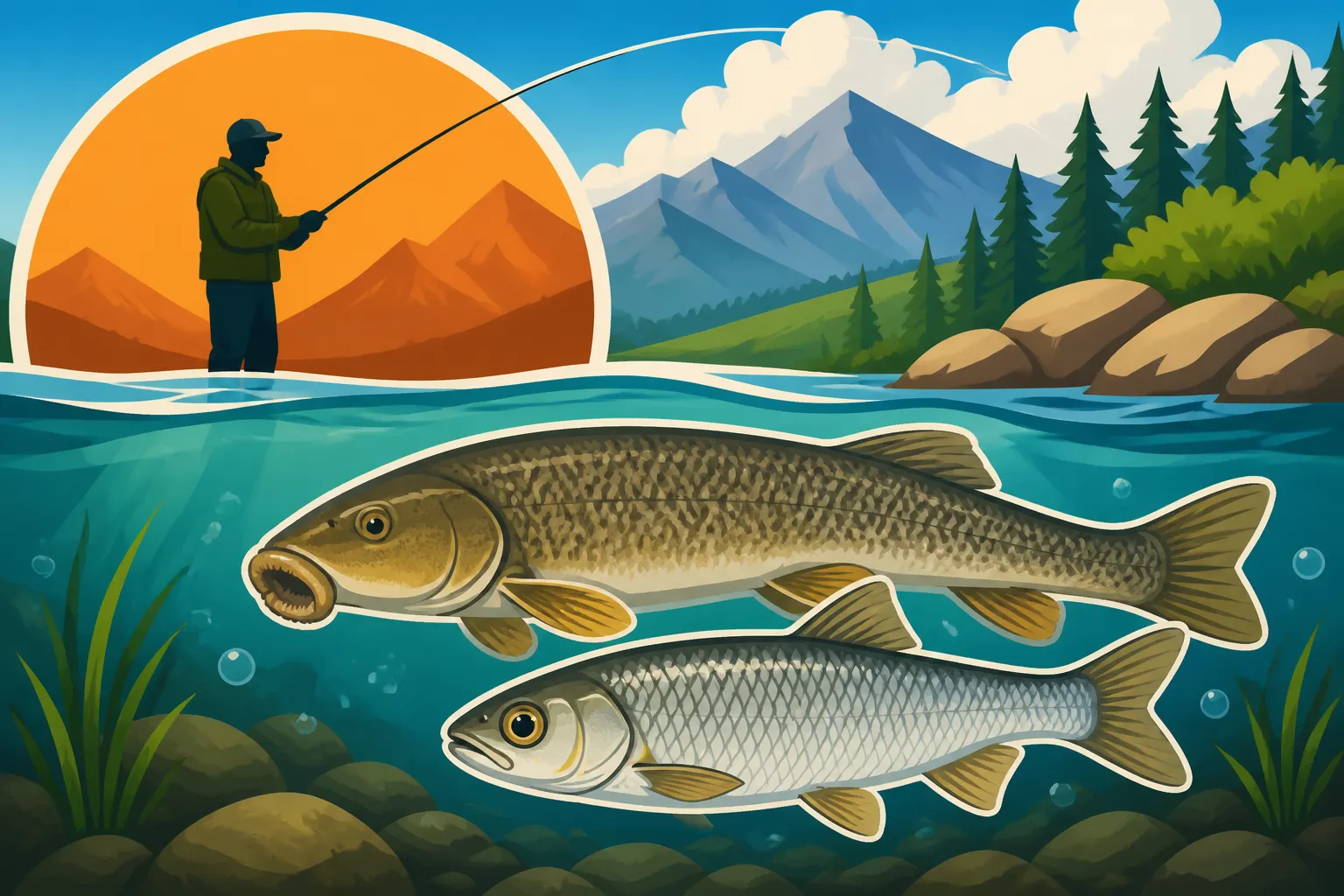
In Colorado, you're most likely to encounter a few common native species. The White Sucker is widespread, found in both rivers and lakes, and can grow to a decent size. They're often silvery to bronze, with a blunt snout. The Flannelmouth Sucker is another common native, particularly in larger rivers, and is known for its relatively large, flannel-like scales and a somewhat more pointed snout compared to the white sucker. We also have species like the Bluehead Sucker and the Mountain Sucker, which tend to be found in specific habitats, often in clearer, colder streams. The best way to really get to know them is to spend time observing them in their natural environment, paying attention to their mouth shape, scale size, and overall coloration. How to Identify a Longnose Sucker is one example of the specific traits that distinguish these fish.
Habitat and Behavior of Suckers
Suckers are incredibly adaptable fish, occupying a wide range of habitats across Colorado. You'll find them in cold mountain streams, large freestone rivers, warm lowland reservoirs, and even urban ponds. They are primarily bottom feeders, using that distinctive mouth to vacuum up algae, aquatic insects, detritus, and small invertebrates from the riverbed or lake bottom. This feeding strategy makes them crucial for cleaning up organic matter and recycling nutrients within the ecosystem.
Their behavior is typically much less aggressive than a predatory trout. They tend to move slowly and deliberately, often in schools, methodically working their way across the substrate. During spawning season, however, their behavior changes dramatically. Many sucker species migrate upstream in large numbers, often into smaller tributaries, to lay their eggs. This can be an incredible sight, as large aggregations of suckers gather in shallow riffles. It's during these spawning runs that you might see them more actively, and sometimes even mistake them for other fish if you're not paying close attention. It's truly amazing how these fish, so often ignored, put on such a spectacular, vital show.
Getting to Know Colorado's Chubs
While suckers are generally easy to spot with their distinctive mouths, chubs are a bit more varied in their appearance, and can sometimes be confused with other small native fish. However, they are just as important to the health of Colorado's aquatic ecosystems and represent another ancient lineage of fish that have called these waters home for millennia. They're often smaller than suckers, but what they lack in size, they make up for in ecological significance.
Identifying Colorado's Chub Species
Chubs, as a group, are part of the minnow family (Cyprinidae), which is a huge and diverse family of fish. In Colorado, you'll find several native chub species, each with its own characteristics. Generally, chubs have a more terminal mouth (at the end of the snout, not downturned like a sucker) and a more fusiform, or torpedo-shaped, body. They often have relatively large scales, and their fins are typically soft-rayed.
Some of the key native chub species in Colorado include the Colorado Chub, found predominantly in the Colorado River basin, which has a relatively large mouth and can grow to a decent size. The Flathead Chub is another, with a noticeably flattened head and a silvery body, often found in larger, turbid rivers. There are also smaller, less common species like the Speckled Chub and the Rio Grande Chub, each with specific habitat preferences. Learning to distinguish them requires a keen eye and often a good field guide. Remember, these are distinct species, not simply "baby trout," and recognizing them is part of appreciating our state's biodiversity.
Habitat and Behavior of Chubs
Chubs are, generally speaking, more oriented towards feeding on insects and smaller organisms in the water column or on the surface, though they will also pick food items from the bottom. Their more terminal mouth indicates this feeding preference. You’ll find them in a variety of habitats, from slow, warm sections of rivers to clearer, faster-flowing streams. Many chub species are quite tolerant of fluctuating water temperatures and turbidity, which makes them well-suited to the natural cycles of Colorado's rivers.
Their behavior can be quite active, especially when they are feeding. You might see schools of chubs darting through riffles or holding in slower pools, snatching at passing insects. Like suckers, chubs also undertake spawning migrations, though often on a smaller scale, moving into shallower waters to reproduce. They are often prey species for larger fish, birds, and mammals, making them a crucial link in the food chain. Understanding their role as forage fish helps us see their true value, even if they aren't the primary target of our fishing excursions.
The Ecological Importance of Suckers and Chubs
It’s easy to dismiss what we don’t understand, but when it comes to suckers and chubs, dismissing them would be a huge mistake. These native species are not just "other fish"; they are absolutely vital to the health and functioning of Colorado's aquatic ecosystems. Their roles are diverse and essential, contributing to the balance and resilience of the waters we love to fish.
Nutrient Cycling and Ecosystem Health
One of the most critical, yet often unseen, roles that suckers and chubs play is in nutrient cycling. As bottom feeders, many sucker species act as the "clean-up crew" of our rivers and lakes. They constantly churn and filter the bottom sediments, consuming detritus, algae, and small invertebrates. This activity helps to prevent the buildup of organic matter, which can otherwise lead to anoxic (low oxygen) conditions that are harmful to other aquatic life. By processing these materials, they help to release nutrients back into the water column, making them available for other organisms, from microscopic plankton to aquatic plants.
Think of them as the unsung heroes of water quality. Without them, many of our waterways would be far less healthy, accumulating organic material at a faster rate. Their constant grazing and sifting literally help to keep the riverbed clean and productive, providing a stable environment for the insects that trout and other fish rely on. This isn't just a small detail; it's a fundamental process that underpins the entire food web.
Forage Base for Game Fish and Other Wildlife
While we might not always be targeting suckers and chubs directly, many of Colorado's beloved game fish certainly are. These native fish, especially the smaller chubs and juvenile suckers, form a critical forage base for larger predatory species. Think about those big brown trout that lurk in deep pools – they aren't just eating tiny nymphs; they're opportunistic predators that will absolutely engulf a small chub or sucker if the opportunity arises. Lake trout in deep reservoirs also feast on various minnow species, including chubs and juvenile suckers.
But it's not just fish that benefit. Many of Colorado's terrestrial and avian predators also rely on these native fish. Ospreys, bald eagles, great blue herons, river otters, and even raccoons will readily target suckers and chubs. If these forage species were to decline significantly, it would have a cascading negative effect on the entire ecosystem, impacting everything from our state's trophy trout populations to the wildlife we cherish observing along the riverbanks. They are truly the foundation upon which much of the ecosystem's energy transfer relies.
Fishing for Suckers and Chubs (Yes, It's a Thing!)
While they may not be the primary target for most Colorado anglers, fishing for suckers and chubs can actually be a really fun, relaxing, and surprisingly rewarding experience. It's a fantastic way to slow down, practice your angling skills, and connect with a different side of our aquatic environments. Plus, it's a great opportunity to explore parts of a river or lake you might otherwise overlook in your pursuit of trout.
Simple Techniques for Catching Suckers
The beauty of fishing for suckers is that it doesn't require a lot of fancy gear or complex techniques. They are generally not line-shy, and their feeding habits make them fairly predictable targets. The most common and effective method is simple bait fishing on the bottom.
Here's a basic setup that often works wonders:
- Rod and Reel: A light to medium spinning rod (around 6-7 feet) with a reel spooled with 6-8 pound monofilament line is perfect. Nothing too heavy, as you want to feel those subtle bites. You can find perfectly adequate setups on sites like Amazon that won't break the bank.
- Terminal Tackle: Use a small hook, size 8 or 10, often a bait holder hook. A small split shot or two, just enough weight to get your bait to the bottom, placed a foot or so above your hook. Some anglers prefer a sliding sinker rig to allow the fish to take the bait without feeling resistance.
- Bait: This is where suckers are pretty easy. Worms (nightcrawlers or garden worms) are a universal favorite. Simply pinch off a piece and thread it onto your hook. Corn kernels can also work, as can small pieces of bread or dough baits.
- Location: Look for slower-moving pools, eddies, or deeper sections of rivers and creeks with soft, silty, or gravelly bottoms. In lakes, target shallower bays or areas where streams flow in.
Cast your bait out, let it sink to the bottom, and then just wait. Sucker bites are usually gentle nibbles, so watch your rod tip carefully. When it starts to bend steadily, give a gentle sweep set, and you're in business!
Fun and Unexpected Sport of Chub Fishing
Chubs, especially the larger Colorado Chubs, can offer a surprisingly spirited fight, particularly on light tackle. They're often more aggressive biters than suckers, making them a fun target.
- Gear: Again, light spinning gear is ideal. A 5-6 foot ultralight rod with 2-4 pound test line can make even a small chub feel like a lunker.
- Lures & Bait: Chubs are opportunistic feeders. Small inline spinners (like Panther Martins or Mepps), tiny jigs, or even small dry flies (if you're into fly fishing) can be effective. For bait, small pieces of worm, corn, or even a tiny marshmallow can work.
- Technique: Cast your lure or bait into slower runs, eddies, or pockets behind rocks. Chubs will often hold in these areas, waiting for food to drift by. For lures, a slow, steady retrieve is often best. If using bait, a small float can suspend your offering just above the bottom, or you can drift it naturally through slower currents.
Catching chubs can be a blast, especially for kids, as they are often more willing to bite and offer a good tug. It's also a great way to explore smaller streams or less-pressured sections of larger rivers. Plus, it sharpens your observation skills as you learn to spot different types of fish in different habitats. Think of it as broadening your horizons as an angler, and you'll find a new appreciation for these often-underestimated fish.
Conservation and Protecting Our Native Species
For those of us who care deeply about Colorado's outdoor heritage, conservation is always a pressing concern. And when it comes to suckers and chubs, their conservation status is particularly important because many of them are facing significant threats. Understanding these challenges is the first step toward becoming better stewards of our native aquatic resources.
Threats to Native Sucker and Chub Populations
Native suckers and chubs face a multitude of challenges, many of which stem from human activity and the changing landscape of Colorado.
- Habitat Loss and Degradation: This is perhaps the biggest threat. Dams, diversions, and channelization alter natural river flows, block spawning migrations, and eliminate critical habitat like floodplains and backwater eddies. Pollution from urban, agricultural, and industrial sources can degrade water quality, making it unsuitable for sensitive native species.
- Invasive Species: Non-native fish, including some game fish that are stocked extensively, can outcompete native suckers and chubs for food and habitat. They can also prey directly on native eggs and juveniles. For instance, the introduction of non-native predatory fish into waters where native chubs are a primary food source can significantly impact their populations. Colorado's Endangered and Threatened Fish includes some species where this is a major factor.
- Hybridization: In some areas, native suckers can hybridize with non-native suckers, weakening the genetic integrity of the native population. This is a complex biological issue that can dilute the unique adaptations of native fish.
- Climate Change: Changes in precipitation patterns, increased water temperatures, and more frequent droughts can stress native fish populations that are adapted to specific environmental conditions, pushing them beyond their tolerance limits.
These threats often interact, creating a complex web of challenges that make conservation efforts difficult but critically important. It's not just about protecting one species, but about preserving the entire interconnected web of life in our rivers and lakes.
How Anglers Can Contribute to Their Protection
As anglers, we have a unique opportunity and responsibility to contribute to the conservation of native suckers and chubs, even if they aren't our primary target species. Our actions on and off the water can make a real difference.
- Respect All Fish: The most fundamental step is to drop the "rough fish" mentality. Every fish you encounter is part of the ecosystem. Handle any incidental catches of suckers or chubs gently, and release them quickly, just as you would a prized trout. If you're fishing with bait, consider using circle hooks, which are less likely to deep-hook a fish, allowing for easier and safer release.
- Educate Yourself and Others: Learn to identify common native suckers and chubs. Understanding what makes them special and vital will help you articulate their importance to other anglers. Share your knowledge! The more people who understand, the more support there will be for conservation. Identifying Colorado's Native vs Stocked Trout can help you understand the broader picture of native fish.
- Support Conservation Organizations: Many local and national groups are working tirelessly to restore native fish habitats and protect at-risk species. Your membership, donations, or volunteer time can provide crucial support.
- Follow Regulations: Pay attention to all fishing regulations, especially those related to bait use. In some sensitive native fish waters, certain baits or practices might be prohibited to prevent harm to non-target species. Always consult the current Colorado Fishing Regulations Every Angler Should Know before you head out.
- Practice Catch and Release: If you're targeting suckers or chubs for sport, always practice careful catch and release. Use rubber nets, minimize handling, and ensure the fish is revived before letting it go.
- Responsible Gear Choices: When you're buying gear, whether it's on Amazon or at your local shop, think about the impact. Choosing durable, long-lasting gear reduces waste. Proper disposal of old fishing line and tackle is also crucial to prevent environmental harm.
By embracing these practices, we move beyond simply enjoying our sport to actively protecting the very ecosystems that make it possible. It’s a shift from being just a consumer of nature to being a conscious participant in its preservation, and that's a responsibility every true Colorado angler should embrace.
Disclaimer
This article is for general informational purposes only and does not constitute professional advice. Laws, prices and regulations vary by location and change over time. Consult a qualified professional for guidance on your specific situation.