What Counts as Colorado Residency for Licensing
Figuring out exactly what qualifies you as a Colorado resident when it comes to buying a fishing license can feel like navigating a complex maze. Many folks move here, buy property, or spend significant time in our beautiful state, only to get confused when it's time to purchase that resident license and enjoy our incredible waters. This guide is designed to cut through that confusion, clearly outlining Colorado Parks and Wildlife's (CPW) requirements for residency so you can confidently purchase the correct license.
Why Residency Status is So Important for Anglers
Let's be real, the difference in cost between a resident and a nonresident fishing license in Colorado is substantial. Nobody wants to pay more than they have to, especially when you're just trying to enjoy a peaceful day on the river or lake. Beyond the financial aspect, having the correct license is a matter of compliance with state law, and misrepresenting your residency status can lead to fines and penalties that no one wants to face.
Understanding the Cost Difference
The price gap between resident and nonresident licenses is the most immediate and impactful reason to understand Colorado's residency rules. For example, an annual Colorado resident fishing license is typically much more affordable than its nonresident counterpart. This isn't just a small discount; it's a significant saving that adds up, especially if you plan on fishing frequently throughout the year. Imagine buying a nonresident annual license year after year when you actually qualify as a resident – that's a lot of extra money that could be spent on new gear, a tank of gas to reach a remote high-country lake, or even a guided trip on a bucket-list river like the Fryingpan. You can dive deeper into the specifics by checking out our guide on Colorado Fishing License Costs Explained.
Avoiding Legal Headaches and Penalties
Beyond the wallet, there's the very real consequence of violating state regulations. Colorado Parks and Wildlife officers are out on the water to ensure everyone is playing by the rules, which includes having the appropriate license for your residency status. If you're caught fishing with a resident license when you don't actually meet the qualifications, you could be facing more than just a stern talking-to. Penalties can include fines, confiscation of fishing gear, and even loss of future hunting and fishing privileges. It's simply not worth the risk. Understanding Colorado Fishing Regulations Every Angler Should Know is crucial for a stress-free experience.
The Core Definition of Colorado Residency
Colorado Parks and Wildlife defines residency with specific criteria that must be met. It's not just about how long you've been in the state, but also about your intent to make Colorado your permanent home. This can be a point of frustration for many, especially if you maintain property or strong ties in another state. CPW needs a clear demonstration that Colorado is your primary dwelling place.
The 90-Day Physical Presence Rule
The bedrock of Colorado residency for licensing purposes is the 90-day physical presence rule. To qualify as a resident, you must have lived in Colorado continuously for at least 90 consecutive days immediately prior to applying for any resident license. This means you can't just move here for a month, leave for two, and then come back and claim residency. Your presence needs to be unbroken.
During those 90 days, Colorado must have been your "true and actual home or place of abode." This isn't just about sleeping here; it's about establishing your life here. You're expected to show that you haven't claimed residency in any other state, territory, or country during that time. For folks who are truly moving to Colorado and setting down roots, this period often flies by as they get settled, find jobs, and explore their new surroundings. However, for those with complex living situations, it's a critical detail to track.
Establishing Intent and Primary Domicile
The 90-day rule is necessary, but it's often not sufficient on its own. CPW also looks for evidence of your intent to make Colorado your primary domicile. This means Colorado isn't just a temporary stop; it's where you genuinely plan to live. This can be a bit more subjective, but CPW has clear guidelines for what constitutes proof.
Think about it: if someone spends half the year in Colorado and half in Florida, but keeps their driver's license, registers their vehicles, and votes in Florida, it's pretty clear where their primary domicile lies, even if they hit the 90-day mark in Colorado. CPW wants to see that you've cut ties with other states and committed to Colorado as your home. This is especially important for understanding the differences between a Resident vs Nonresident Fishing Licenses in Colorado.
Specific Scenarios: Navigating Common Residency Questions
Residency isn't always black and white, and many anglers fall into categories that make the rules feel a little murky. Let's break down some common situations that often lead to confusion.
Colorado Fishing License Rules for Out-of-State College Students
This is a big one. Many college students come to Colorado for school, and they live here for months, sometimes years. Do they qualify as residents? Generally, no, not automatically. For an out-of-state college student to qualify as a resident for a fishing license, they must meet the same 90-day continuous physical presence rule and demonstrate the intent to make Colorado their primary residence beyond just attending school.
This means if your parents claim you as a dependent in another state, you maintain a driver's license from another state, or you plan to return to your home state after graduation, you're likely still considered a nonresident. The exception is if you've truly moved here independently, established all the necessary ties (voter registration, CO driver's license, vehicle registration), and intend to remain in Colorado indefinitely. It's a high bar, and for most college students, a nonresident license is the correct choice, or one of the Colorado's Annual, One-Day and Five-Day License Options.
Colorado Fishing License Rules for Active-Duty Military
Active-duty military personnel and their families often have unique residency situations due to deployments and transfers. Colorado offers some specific provisions for them. Generally, active-duty military members stationed in Colorado for at least 90 consecutive days immediately preceding their license application are considered residents for licensing purposes, regardless of where they technically maintain their "home of record" or vote. This extends to their spouses and dependent children as well, as long as they also reside in Colorado.
The key here is being stationed in Colorado. If you're active-duty military but stationed elsewhere and just visiting Colorado for a vacation, you'd still be a nonresident. It's a recognition of the significant contribution and presence of military families in our state, and a way to make it easier for them to enjoy Colorado's outdoor opportunities.
Do Out-of-State Landowners Qualify for a Colorado Resident License?
This is a common misconception, especially among people who own beautiful vacation homes or ranch properties in Colorado. Unfortunately, simply owning land or property in Colorado does not automatically grant you resident status for fishing licenses. Many out-of-state individuals own substantial property here but maintain their primary residence, driver's license, and voter registration in another state.
To qualify for a resident fishing license, an out-of-state landowner must still meet the full 90-day physical presence requirement and prove their intent to make Colorado their primary domicile, just like anyone else. This means moving their main life to Colorado, not just their vacation spot. It can be frustrating, especially if you pay property taxes here, but the rules are designed to define primary residency, not property ownership.
Documents and Proof: What You'll Need to Show
So, you're pretty sure you meet the 90-day rule and you intend for Colorado to be your forever home. That's great! But intent alone isn't enough; you need to back it up with official documentation. CPW requires specific proofs to ensure fair enforcement of residency rules.
Acceptable Forms of Documentation
To prove your residency, you'll generally need to provide at least one, and often more, documents from a list of approved items. These documents serve as tangible evidence that you've truly established your life in Colorado. It's a good idea to keep these organized, perhaps in a dedicated folder or even a sturdy document organizer you might find on Amazon, to ensure they're readily accessible when you buy your license, whether that's in person or if you need to follow up with CPW.
Here's a breakdown of common acceptable documents:
- Colorado Driver's License or ID Card: This is often the most straightforward and accepted form of proof. It indicates you've already gone through the process of establishing state identification.
- Colorado Voter Registration Card: Registering to vote in Colorado is a strong indicator of your intent to make this your home.
- Colorado Vehicle Registration: Registering your car, truck, or other vehicles in Colorado demonstrates that your property is tied to the state.
- Valid Colorado State Income Tax Return: Showing that you've filed a resident income tax return for the most recent tax year is significant proof.
- Deed to Property or Lease Agreement: A deed showing property ownership or a long-term lease agreement for a Colorado residence can help, especially when combined with other proofs.
- Utility Bills: Recent utility bills (electricity, water, gas) in your name, showing a Colorado address, further confirm your physical presence.
- Employment Verification: Pay stubs or a letter from your Colorado employer can show you're working and living in the state.
- Current School Enrollment: For dependents, enrollment in a Colorado school can be part of the proof package.
It's vital that these documents clearly show a Colorado address and are current. Expired documents or those with out-of-state addresses won't count.
The Role of CPW Shop and Customer Service
When you go to buy your fishing license, especially if you're a new resident, the vendor (or the CPW online system at CPWShop.com) might ask for proof. If you're purchasing How to Buy a Colorado Fishing License Online at CPWShop.com, you might be prompted to upload documents or declare your residency under penalty of law.
If there's any doubt, or if your situation is complex, don't hesitate to reach out directly to Colorado Parks and Wildlife customer service. They are the ultimate authority and can clarify specific requirements based on your unique circumstances. It's always better to ask questions upfront than to risk purchasing the wrong license. They can guide you through what specific What ID Colorado Requires to Buy a Resident License you might need.
Here’s a helpful table summarizing common proofs of residency:
| Document Type | How It Helps Prove Residency | Key Considerations |
|---|---|---|
| Colorado Driver's License/ID Card | Primary identification, shows CO address and date | Must be valid and current |
| Colorado Vehicle Registration | Proves vehicles are registered in CO | Must be current for all vehicles owned |
| Colorado Voter Registration | Demonstrates intent to participate in CO | Must be active in Colorado |
| CO State Income Tax Return | Proves filing as a CO resident for tax purposes | Most recent tax year, filed as a resident |
| Deed/Lease Agreement | Shows property ownership or long-term rental | Must be for a primary residence in Colorado |
| Utility Bills | Confirms physical presence at CO address | Recent (within 90 days), in applicant's name |
| Employment Verification | Shows employment in Colorado | Recent pay stub or letter from CO employer |
| Active-Duty Military Orders | For military stationed in CO | Must show deployment/stationing in Colorado |
Maintaining or Changing Your Colorado Residency Status
Residency isn't always a one-and-done declaration. Life changes, and your residency status can too. Understanding how to maintain your status or what happens if you move away and then return is important for any long-term angler.
How to Prove Colorado Residency for a Fishing License in the Long Term
Once you've established your Colorado residency and obtained your first resident fishing license, maintaining that status is generally straightforward, as long as you continue to live here. Most of the proofs mentioned earlier, like your Colorado driver's license and vehicle registration, are ongoing indicators of your residency. As long as you keep these documents updated and continue to call Colorado your primary home, you should be fine.
However, if you're ever questioned, having a consistent record is key. This means continuously renewing your Colorado driver's license, keeping your vehicle registrations current, and filing Colorado state income taxes as a resident. These actions demonstrate a sustained intent to reside in the state. For instance, if you maintain a strong online presence for managing personal affairs, you might rely on services like Amazon for things like renewing subscriptions or ordering household goods, which can indirectly reflect your current mailing address and consistent ties to your Colorado home.
Colorado Fishing License Rules for New Residents
For individuals who are newly establishing residency in Colorado, the 90-day rule is paramount. You can't just arrive and immediately claim resident status. You need to physically be here for those three consecutive months. During this period, it's wise to start gathering all the documents that will eventually prove your residency: get your Colorado driver's license, register your vehicles, register to vote, and establish utility accounts in your name.
If you arrive in Colorado and want to fish before your 90 days are up, you'll need to purchase a nonresident license. There's no way around this rule. Once those 90 days have passed and you have your supporting documentation, then you can apply for a resident license. Many people find this frustrating, but it's a critical part of the state's system for distinguishing between visitors and permanent residents. Understanding these rules is a key part of your overall Colorado Fishing License Guide for Residents and Nonresidents.
Common Misconceptions and Pitfalls
The world of residency rules is rife with misunderstandings. It’s easy to assume something counts when it doesn’t, or to overlook a crucial detail that could affect your status. Let's tackle some of these common pitfalls head-on.
Does a Colorado State Park Pass Count as Proof of Residency?
Many anglers also enjoy Colorado's incredible state parks, which often offer fantastic fishing opportunities. Buying an annual Colorado State Park Pass is a common practice, and sometimes people assume that because they've purchased this state-issued pass, it automatically qualifies them for a resident fishing license. Unfortunately, this isn't the case.
While a state park pass shows your engagement with Colorado's outdoor recreation system, it is not listed as an acceptable form of proof for establishing fishing license residency by CPW. The state park pass is tied to a vehicle or an individual for park access, but it doesn't carry the same weight as a driver's license, voter registration, or tax return when it comes to proving your primary domicile. You'll still need to provide one of the other recognized documents when purchasing your resident fishing license. For more information, you might look into Colorado State Park Passes vs Fishing Licenses.
The Habitat Stamp and Its Connection to Residency
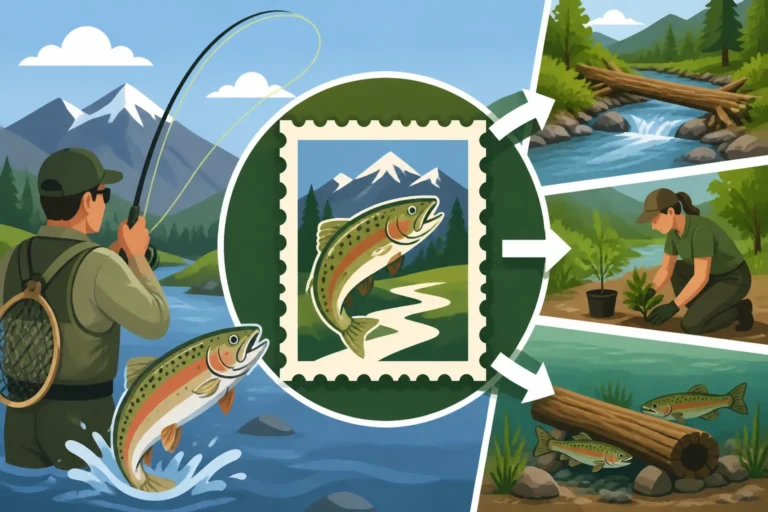
Another area that can cause confusion is the Habitat Stamp. This mandatory stamp is required for almost all annual hunting and fishing license holders in Colorado, with some specific exemptions for youth, seniors, and certain disabled individuals. While it's an additional cost and a necessary part of your overall fishing expenses, the Habitat Stamp itself doesn't determine or prove your residency.
The Habitat Stamp is a fee that supports wildlife habitat and public access programs across the state. Whether you're a resident or a nonresident, if you fall into the categories requiring a stamp, you'll need to purchase one. It's an important part of conservation funding, but it operates independently of your residency status verification. If you're curious about this, our article on Colorado's Habitat Stamp, Explained can provide further details. It’s important to know that while you might buy your fishing license online, the Habitat Stamp is an additive purchase, not something you'd typically find listed on a general retailer like Amazon.
Penalties for Falsely Claiming Colorado Residency
This is perhaps the most serious pitfall. Some individuals, eager to save money, might be tempted to declare resident status even if they don't meet the requirements, hoping they won't get caught. This is a gamble with significant risks. As mentioned earlier, falsely claiming residency for a hunting or fishing license is a violation of Colorado law.
The penalties for such an offense can include substantial fines, potentially ranging into hundreds or even thousands of dollars. In addition to monetary fines, offenders can face the suspension or revocation of their hunting and fishing privileges, not just in Colorado, but potentially in other states as well through interstate wildlife compacts. An officer might also confiscate your fishing equipment. It's simply not worth the short-term savings to risk these long-term consequences. Always be truthful and ensure you meet the criteria for a resident license before purchasing one.
Disclaimer
The information provided in this guide is for general informational purposes only and does not constitute legal advice. While we strive to provide accurate and up-to-date information, regulations can change. Always consult the official Colorado Parks and Wildlife (CPW) website or contact CPW directly for the most current and specific residency requirements before purchasing a fishing license.