What Catch-and-Release Only Means on Colorado Water
It can be incredibly confusing, and honestly, a little frustrating, when you're out on a beautiful Colorado river, casting away, only to see a sign that says "Catch-and-Release Only." What does that really mean for your day on the water? Are there exceptions? How do you even practice it correctly? This guide is here to demystify those signs and ensure you're a responsible, well-informed angler enjoying Colorado's pristine waters without fear of breaking the rules or harming the fish.
The Core Principle of Catch-and-Release Only Waters
When you see that "Catch-and-Release Only" sign, it's not just a suggestion; it's a hard-and-fast rule established by Colorado Parks and Wildlife (CPW). These regulations are put in place for very specific and important reasons, often to protect vulnerable fish populations or to create exceptional trophy fisheries. Ignoring them can lead to significant penalties, but more importantly, it can actively harm the very ecosystems we all love to fish.
Understanding the "Only" Part
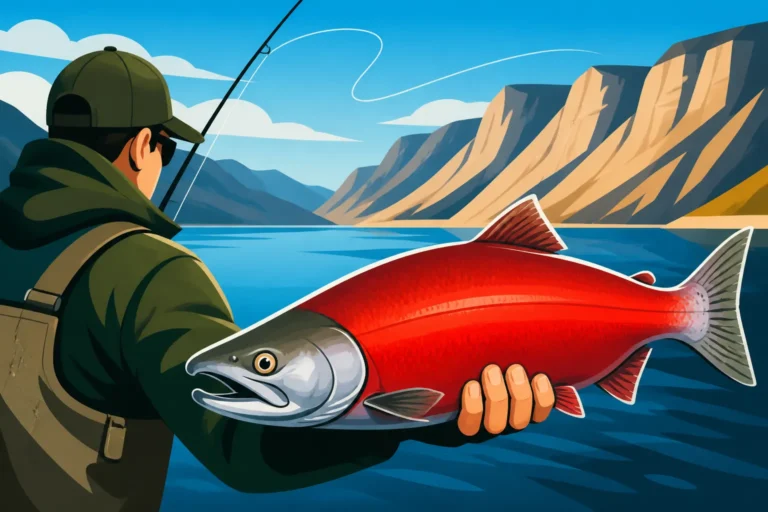
The "only" in "catch-and-release only" is the key word here. It means exactly what it sounds like: you must release every single fish you catch. There are no exceptions for size, species (unless explicitly stated otherwise for invasive species like Northern Pike in specific areas), or how hungry you are for dinner. You cannot put a fish in your cooler, a creel, or even a livewell. Possession of a fish from these designated waters, even for a moment outside the water longer than necessary for unhooking, is considered a violation.
Think of it this way: these fish are essentially considered residents of a special sanctuary. Their continued presence is vital for the health and vitality of that particular stretch of river or lake. When you understand that keeping even one fish from these areas can disrupt years of conservation effort or diminish the potential for another angler to catch a truly memorable trout, the "only" starts to make a lot more sense. These rules are part of the broader framework of Colorado Fishing Regulations Every Angler Should Know, designed to sustain our shared resources.
Why Colorado Designates Catch-and-Release Only Areas
Colorado doesn't just slap "catch-and-release only" signs up on a whim. These designations are the result of careful scientific study and strategic management goals, often aimed at nurturing healthy, robust fish populations. One primary reason is the conservation of native species, particularly our various cutthroat trout subspecies. For instance, specific stretches might be protected to help recover populations of Colorado's Native Cutthroat Trout Subspecies, ensuring their genetic integrity and preventing overharvesting. Areas like Hermosa Creek or specific high-alpine lakes often fall under such protective measures.
Another significant driver is the creation of trophy fisheries. By requiring all fish to be released, these waters allow fish to grow to impressive sizes, offering anglers a chance to catch truly monumental trout that might otherwise be harvested before reaching their full potential. Many of Colorado's famed Colorado Gold Medal Water Regulations Explained include catch-and-release segments or strict size and bag limits that essentially function as catch-and-release for larger fish. These areas become destinations for experienced anglers seeking the thrill of a lifetime catch. It's a way to ensure that these incredible fishing opportunities are available for generations to come, creating a sustainable model where the resource is continuously renewed.
Essential Gear and Techniques for Catch-and-Release
Practicing catch-and-release effectively isn't just about letting the fish go; it's about giving that fish the best possible chance of survival once it swims away. This involves using the right equipment and adopting responsible handling techniques. It's a crucial part of the angling etiquette in Colorado, especially on our more delicate or heavily fished waters.
Minimizing Harm with Proper Equipment
The gear you choose can significantly impact a fish's survival rate after release. The goal is to minimize stress, injury, and the time the fish spends out of water.
First and foremost, barbless hooks are practically non-negotiable in catch-and-release only waters, and in many Colorado Rivers Barbless Hook Rules are actually mandatory. A barbless hook slides out much easier, causing less tissue damage, especially around the mouth. If your hooks aren't barbless, you can easily crimp down the barb with a pair of pliers. This simple act makes a huge difference. You can find excellent quality barbless hooks and pliers on platforms like Amazon, making it easy to prepare your tackle box before your trip.
Next, consider your landing net. Old-school string nets can scrape off a fish's protective slime layer, leaving it vulnerable to infection. Instead, invest in a net with a rubberized or knotless mesh. These nets are much gentler on the fish's scales and slime coat, and they also prevent hooks from getting tangled, which speeds up the unhooking process. Again, searching for "rubber landing net" on Amazon will give you plenty of options that are perfect for responsible angling.
Finally, ensure your rod and line size are appropriate for the fish you're targeting. While it might seem sporting to use ultra-light gear, if it prolongs the fight unnecessarily, it can exhaust the fish to the point where it struggles to recover after release. Using gear that allows you to land the fish relatively quickly, without over-stressing it, is the more responsible approach in catch-and-release scenarios. For instance, if you're targeting large brown trout in a strong current, a 5-weight or 6-weight fly rod might be more appropriate than a 3-weight, even if the latter is "more fun."
Best Practices for Handling and Releasing Fish
Once you've hooked a fish, the real work of responsible catch-and-release begins. Every step from the moment you land the fish until it swims away should be focused on its well-being. This is an area where conscious effort truly makes a difference in fish survival rates. For more in-depth guidance, check out our article on How to Handle Trout for a Safe Release.
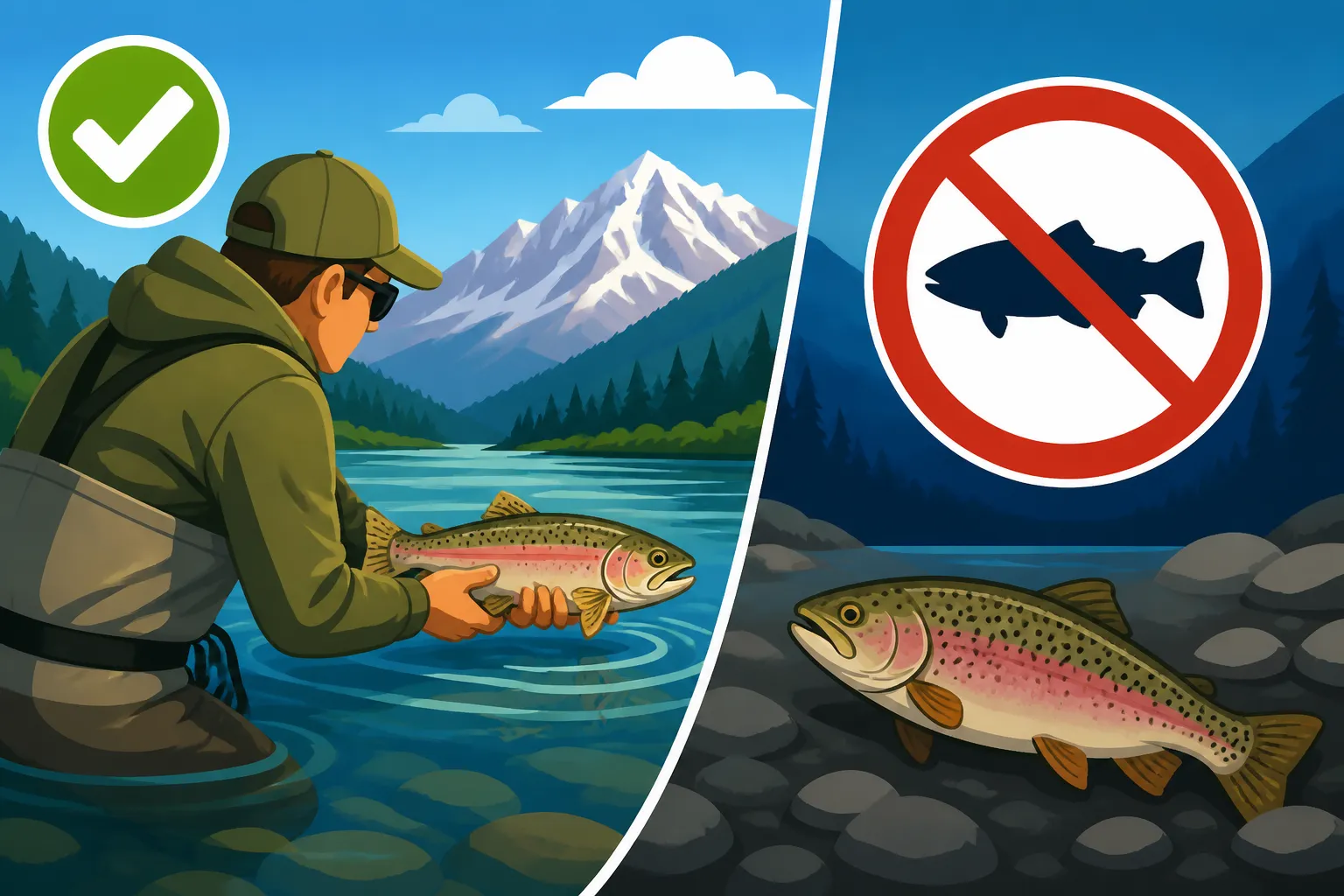
- Keep the Fish Wet: This is the golden rule. Fish need oxygen, and they get it from water. Try to unhook the fish while it's still in the net and submerged, or at least barely out of the water for a quick photo. If you absolutely must lift it, do so for the shortest possible time. Their gills can collapse and tissue can be damaged by air exposure, especially in warmer temperatures.
- Wet Your Hands: Before you even think about touching the fish, thoroughly wet your hands. Dry hands can remove that critical protective slime layer, leaving the fish susceptible to bacterial and fungal infections.
- Support the Fish Properly: If you do lift the fish for a photo, support its body horizontally with one hand under its belly and the other gently gripping the tail. Never hold a fish vertically by the jaw or tail alone, as this can dislocate its spine and cause internal organ damage. Avoid squeezing its body, particularly around the gill plates or abdomen.
- Unhook Quickly and Gently: Use forceps or needle-nose pliers to remove the hook. If the fish is deeply hooked and the hook cannot be removed without causing significant trauma, it's often better to cut the line as close to the hook as possible. Barbless hooks greatly simplify this process, as they often just slide out with a gentle twist.
- Revive the Fish: Once unhooked, hold the fish gently in the water, facing upstream into the current, until it regains its strength and can swim away under its own power. You'll feel it start to kick. Don't force it; if it swims off too early, it might not have enough energy to survive. Sometimes, a gentle forward and backward motion can help push water through its gills, aiding in recovery, but usually just holding it in the current is sufficient.
By following these practices, you increase the likelihood that the fish you release will go on to thrive, contributing to the health and abundance of Colorado's fisheries.
Locating and Identifying Catch-and-Release Only Waters in Colorado
Knowing how to fish catch-and-release is one thing, but knowing where these regulations apply is just as important. Colorado has a vast and diverse network of fishing waters, and regulations can change from one river section to another, or even seasonally. Getting caught unaware can be an embarrassing and costly mistake.
How to Find These Regulations
Your primary and most reliable source for all Colorado fishing regulations, including specific catch-and-release zones, is the Colorado Parks and Wildlife (CPW) website and their annual fishing brochure. Every year, CPW publishes a comprehensive brochure detailing all statewide and specific water-body regulations. This brochure is available for free at most sporting goods stores, CPW offices, and can be downloaded as a PDF from their website. It’s absolutely essential reading for any angler in Colorado. For a deeper dive into navigating this critical resource, refer to our article on Reading Colorado's Fishing Regulations Brochure.
When consulting the brochure, look for sections labeled "Special Regulations" or specific water body listings. These will explicitly state if a particular lake, reservoir, or river stretch is catch-and-release only, along with any other unique rules, such as mandatory barbless hooks or specific bait restrictions. Don't assume that if one section of a river allows keeping fish, the entire river does. Often, just downstream or upstream, the rules can change dramatically.
Beyond the brochure, on-site signage is another critical indicator. CPW does an excellent job of posting signs at popular access points for special regulation waters. Always pay attention to these signs as you approach or launch into a new fishing spot. They're there to inform and protect both you and the fishery.
Famous Colorado Catch-and-Release Destinations
Colorado is home to some truly world-class catch-and-release fisheries, celebrated for their abundant, large, and healthy trout populations. These spots are often managed specifically to foster trophy potential and provide exceptional angling experiences.
One of the most renowned is the Fryingpan River below Ruedi Reservoir, particularly the "Toilet Bowl" section. This tailwater fishery near Basalt is famous for growing massive rainbow trout, many exceeding 20 inches. Anglers flock here specifically for the challenge and reward of hooking these giants, knowing that every fish goes back to fight another day. It's a prime example of a gold medal water managed for both quality and quantity through strict catch-and-release rules.
Another iconic area is the South Platte River, specifically stretches like the Cheesman Canyon on the South Platte and the Dream Stream Between Spinney and Eleven Mile. These sections are revered for their wild brown and rainbow trout, offering incredible dry fly, nymphing, and streamer fishing opportunities. The catch-and-release mandate here is fundamental to maintaining the health and size of these wild populations, which face significant angling pressure due to their popularity.
The Gunnison River, particularly within the Black Canyon and the Gunnison Gorge, also features extensive catch-and-release segments. These remote and rugged areas are home to a truly wild and strong population of trout. The regulations here help preserve the wilderness experience and the integrity of a truly natural fishery, making it a bucket-list destination for many dedicated anglers.
These are just a few examples, but they illustrate the diversity and quality of catch-and-release fishing experiences available across Colorado. Always consult the most current CPW regulations for the specific water you plan to fish, as rules can occasionally be updated or modified.
The Penalties for Violating Catch-and-Release Rules
Ignoring "catch-and-release only" regulations isn't just a minor infraction; it's a serious offense that Colorado Parks and Wildlife takes very seriously. These rules are in place for the long-term health of our fisheries, and violations undermine conservation efforts and impact the experience for all anglers. It's not just about a possible fine; it's about the sustainability of the sport.
What Happens If You Keep a Fish
If a Colorado Parks and Wildlife game warden discovers you possessing a fish from a designated "catch-and-release only" water, you're looking at a citation and significant penalties. The exact fine can vary depending on the severity of the offense, the number of fish, and whether it's a repeat offense, but generally, expect to pay hundreds of dollars. On top of the monetary fine, you will also incur penalty points against your fishing license. Accumulating too many points can lead to the suspension or even permanent revocation of your fishing privileges in Colorado. Imagine not being able to legally fish in your favorite state for years! This is a very real consequence, similar in severity to the Penalties for Fishing Without a License in Colorado.
Game wardens are out on the water constantly, and they are highly trained to spot violations. They'll often check licenses, bag limits, and measure fish as part of their routine patrol, as outlined in What Colorado Game Wardens Check When They Stop You. It's simply not worth the risk to try to sneak a fish out. The reputation of Colorado's fisheries is built on careful management and angler compliance, and CPW is dedicated to upholding those standards.
The Ethical Ramifications
Beyond the legal consequences, there's a strong ethical component to respecting catch-and-release regulations. When you keep a fish from a water designated for catch-and-release, you're not just breaking a rule; you're directly impacting the very fishery you're enjoying.
Consider a trophy trout fishery where fish are allowed to grow to exceptional sizes. Every one of those large fish represents years of growth and is a valuable genetic contributor to future generations. Removing even one can reduce the overall quality and potential of that fishery for everyone else. If enough people decide to disregard the rules, these waters quickly lose their special status, diminishing a unique resource for all anglers.
Furthermore, these regulations are often vital for the survival of native and endangered species. On waters focused on native Catch-and-Release Rules on Colorado's Cutthroat Waters, keeping a fish could directly impede recovery efforts for populations that are already struggling. Our actions as anglers have a collective impact, and adherence to these rules demonstrates respect for the fish, the environment, and the broader angling community. It's about being a steward of these incredible natural resources, not just a consumer.
Understanding Catch-and-Release Only Regulations vs. General Regulations
It’s easy to get confused between general statewide regulations and the specific rules that apply to "catch-and-release only" waters. While some overlap exists, the key difference lies in the ultimate outcome for the fish you catch. Colorado's diverse fisheries mean a one-size-fits-all approach just doesn't work, which is why special regulations are so prevalent and important.
The Nuances of Daily and Possession Limits
In most general regulation waters across Colorado, you'll encounter rules regarding daily bag limits and possession limits. A daily bag limit specifies how many fish of a certain species you can legally keep in one calendar day. For instance, a common regulation might be "four trout combined species per day." This means you can keep up to four trout, which could be a mix of rainbow, brown, brook, or cutthroat (where legal to keep).
A possession limit refers to the maximum number of fish you can have in your possession at any given time, regardless of how many days you've been fishing. This usually includes fish in your cooler, freezer, or at your campsite. Often, the possession limit is the same as the daily bag limit, but sometimes it can be higher, especially if you're on a multi-day trip and storing fish responsibly. However, on "catch-and-release only" waters, both the daily bag limit and the possession limit for the designated species are zero. You cannot possess any fish from these waters, period.
For example, on a typical reservoir like Chatfield, you might be able to keep four trout per day, with specific length restrictions. But if you were on a stretch of the Fryingpan River under "catch-and-release only" rules, keeping even a single trout would be a violation. This distinction is critical and is usually clearly spelled out in the CPW brochure under the specific waterbody's regulations.
Special Size Restrictions and Their Implications
Beyond bag and possession limits, many Colorado waters have special size restrictions. These might be minimum lengths (e.g., "all trout must be 12 inches or longer to keep") or slot limits (e.g., "no trout between 12 and 16 inches may be kept"). The purpose of these rules is often to protect juvenile fish, allowing them to grow to a spawning age, or to encourage the growth of larger, trophy-sized fish.
For instance, some waters might have a Colorado's 14-Inch Trout Length Rule where you can only keep fish over 14 inches. The idea is to protect the younger, breeding fish. In some cases, you might even find regulations that say, "only one fish over 20 inches may be kept." These are all nuanced ways of managing a fishery to achieve specific conservation or recreational goals.
However, on "catch-and-release only" waters, these size restrictions become irrelevant for keeping fish, because you can't keep any fish regardless of its size. Instead, the focus shifts entirely to handling every fish with the utmost care to ensure its survival upon release. It's about preserving the entire population, not just a certain size class. Understanding these distinctions is paramount to being a compliant and effective angler in Colorado. Always double-check the rules for the specific body of water and the time of year you plan to fish, as regulations like Does a Colorado Fishing License Expire on a Set Date or a Year From Purchase? can sometimes be tied to the angling season.
| Regulation Type | General Regulation Waters (Example) | Catch-and-Release Only Waters |
|---|---|---|
| Bag Limit | Varies by species, e.g., 4 trout | 0 fish of designated species |
| Possession Limit | Varies by species, e.g., 8 trout | 0 fish of designated species |
| Size Restrictions | Common (min/max length, slot limits) | N/A (cannot keep any size fish) |
| Hook Type | Barbs generally allowed | Barbless often mandatory or highly recommended |
| Bait Use | Varies by water | Often restricted or prohibited (e.g., live bait) |
| Purpose | Sustainable harvest, recreation | Conservation, trophy fisheries, native species protection |
Disclaimer
The information provided in this guide is for general informational purposes only and is not intended as legal advice. Fishing regulations in Colorado are subject to change and can be highly specific to individual bodies of water. Always consult the most current official Colorado Parks and Wildlife (CPW) fishing regulations brochure or their website before heading out to fish to ensure full compliance with all applicable laws and rules. Failure to do so may result in penalties.