Why Some Colorado Rivers Require Barbless Hooks
There's nothing quite like the thrill of a trout biting your line in a pristine Colorado river, is there? But that immediate joy can quickly turn into a pang of worry when you realize how deeply the hook is set, especially if it’s a barbed one. Many anglers in Colorado have faced the frustration of trying to gently remove a stubborn hook, knowing that every moment out of the water and every rough movement stresses the fish. This guide dives deep into why specific Colorado rivers, particularly our cherished Gold Medal and Wild Trout waters, mandate barbless hooks and what that means for your fishing experience and the health of our aquatic ecosystems.
Understanding Colorado's Barbless Hook Regulations
It can feel a bit like you're navigating a labyrinth when it comes to understanding all the specific rules and regulations for fishing in Colorado. You’ve got your license, your Habitat Stamp, and you’re ready to hit the water, but then you hear whispers about "barbless only" sections. It's not just a suggestion; it's a critical regulation designed with a very clear and important purpose: the long-term health and vitality of our state's incredible fish populations. This rule isn't meant to make your life harder, but rather to ensure that the joy of fishing can be sustained for generations to come.
The Core Reason for Barbless Hooks: Fish Conservation
At its heart, the requirement for barbless hooks is all about conservation. Colorado Parks and Wildlife (CPW) implements these regulations to minimize the harm to fish, especially in areas where catch-and-release is prevalent or where wild, self-sustaining populations are particularly vulnerable. Think about it: when a fish takes a lure or fly, a barbed hook can essentially act like an anchor, tearing more tissue and making removal a significant struggle. This extended handling time, combined with the physical trauma, drastically increases the chances that the fish won't survive after release, even if it swims away initially.
Imagine you've just landed a gorgeous, wild brown trout from the Fryingpan River. You want to admire it, maybe snap a quick photo, and then send it back into the clear waters. With a barbed hook, you might spend precious seconds, or even minutes, wrestling with pliers, trying to extract a deeply embedded hook. During this time, the fish is out of the water, struggling, its delicate slime coat being rubbed off, and its internal organs potentially damaged. A barbless hook, on the other hand, often slips out with a gentle twist or push, getting the fish back into its oxygen-rich environment in mere seconds. This simple change dramatically reduces mortality rates, ensuring more of those beautiful fish live to spawn another day and grow even bigger for future encounters. It’s a small adjustment for anglers but a monumental difference for the fish.
Where and When Barbless Hooks Are Required
It’s crucial to understand that barbless hook regulations aren't universal across all Colorado waters. You won't find them everywhere, so it's essential to always check the specific regulations for the body of water you plan to fish. However, you'll most commonly encounter these rules in Colorado's famed Colorado Gold Medal Water Regulations Explained and designated Wild Trout waters, as well as other stretches under special regulations where catch-and-release is either mandatory or strongly encouraged. These are often the most productive and biologically important fisheries, holding robust populations of wild trout that are particularly sensitive to angling pressure.
For example, on iconic stretches like the Dream Stream or Cheesman Canyon on the South Platte River, barbless hooks are a non-negotiable rule. The same goes for sections of the Fryingpan River below Ruedi Reservoir, the Taylor River below Taylor Park Dam, and many of the specific stretches designated as Gold Medal Waters throughout the state. These areas are managed intensely for trophy trout and high catch rates, relying heavily on released fish to maintain their quality. If you're planning a trip, always consult the most current Colorado Fishing Regulations Every Angler Should Know or pick up a physical copy of the Colorado Parks and Wildlife fishing brochure. It’s your bible for staying legal and ethical on the water. Many specific Gold Medal stretches also have additional rules, such as Colorado's 14-Inch Trout Length Rule, further emphasizing the need for careful release of larger, older fish. Sometimes, bait restrictions are also in place alongside barbless hook rules, so you'll want to check Colorado Bait Restrictions and Where They Apply too. It’s all part of a cohesive strategy to protect these special fisheries.
The Impact of Barbless Hooks on Fish Survival
When we talk about fish conservation, it’s not just an abstract concept. It directly impacts every fish we interact with and the overall health of the entire aquatic environment. The seemingly small detail of a barb on a hook actually plays a huge role in the delicate balance of a thriving fishery. Understanding this impact can help shift your perspective from feeling restricted to feeling like an active participant in protecting these precious resources.
Minimizing Injury and Stress
The most immediate and obvious benefit of barbless hooks is the dramatic reduction in physical injury to the fish. A barbed hook, by its very design, is meant to resist coming out. When it's embedded in a fish's mouth, gill plate, or even its eye (it happens more often than we’d like to admit), the barb tears flesh as it goes in and then tears even more when it’s pulled out, causing unnecessary damage. This can lead to severe bleeding, tissue necrosis, infection, and ultimately, death for the fish.
Think about the difference: with a barbless hook, once the fish is brought to hand (ideally still in the water), a pair of forceps or pliers can typically remove the hook with a simple, quick motion. The hook slides out cleanly, leaving only a small puncture wound that heals rapidly. This minimizes the time the fish spends out of its natural element, struggling for oxygen. Prolonged handling and exposure to air cause immense stress, deplete energy reserves, and can damage gills and the protective slime coat, leaving the fish vulnerable to disease. By reducing both the physical trauma and the duration of stress, barbless hooks significantly improve the chances of a fish not just swimming away, but truly surviving and thriving after the encounter. This concept is central to Catch-and-Release Rules on Colorado's Cutthroat Waters and other sensitive species.
Promoting Healthy Ecosystems and Wild Trout Populations
Beyond individual fish survival, the widespread use of barbless hooks in designated areas contributes significantly to the overall health and sustainability of entire fish populations and the ecosystems they inhabit. In waters specifically managed for wild trout, such as those that support Colorado's Native Cutthroat Trout Subspecies, the ability for fish to reproduce naturally is paramount. High mortality rates from angling can decimate a population, especially if larger, more genetically robust breeding fish are lost.
By reducing post-release mortality, barbless hooks help ensure that these wild populations can maintain strong numbers, diverse genetics, and healthy age structures. This is especially vital for native species like the Greenback, Colorado River, and Rio Grande cutthroat trout, which have faced significant challenges from habitat loss and competition with non-native species. Conservation efforts are continuously working to restore and protect these precious fish, and angler practices play a direct role. Furthermore, healthy fish populations contribute to a balanced aquatic ecosystem, serving as both predators and prey, and indicating the overall health of the river or lake. When you use a barbless hook, you’re not just releasing a fish; you're helping to sustain a vibrant natural heritage for Colorado. This commitment to reducing harm is a key part of What Catch-and-Release Only Means on Colorado Water truly entails.
Practical Aspects of Fishing with Barbless Hooks
Making the switch to barbless hooks doesn't have to be a daunting task. It’s a simple adjustment that, once you get the hang of it, becomes second nature. Many anglers even find that it refines their technique, making them more attentive and skilled. If you're new to this, don't worry – it's easier than you might think, and the benefits for the fish are immeasurable.
Converting Your Hooks to Barbless
The good news is you don't necessarily have to go out and buy a whole new set of flies or lures specifically labeled "barbless." While many manufacturers, like those found on Amazon, now offer barbless options, you can easily convert most of your existing barbed hooks. The process is straightforward and requires just one essential tool: a pair of needle-nose pliers or hemostats.
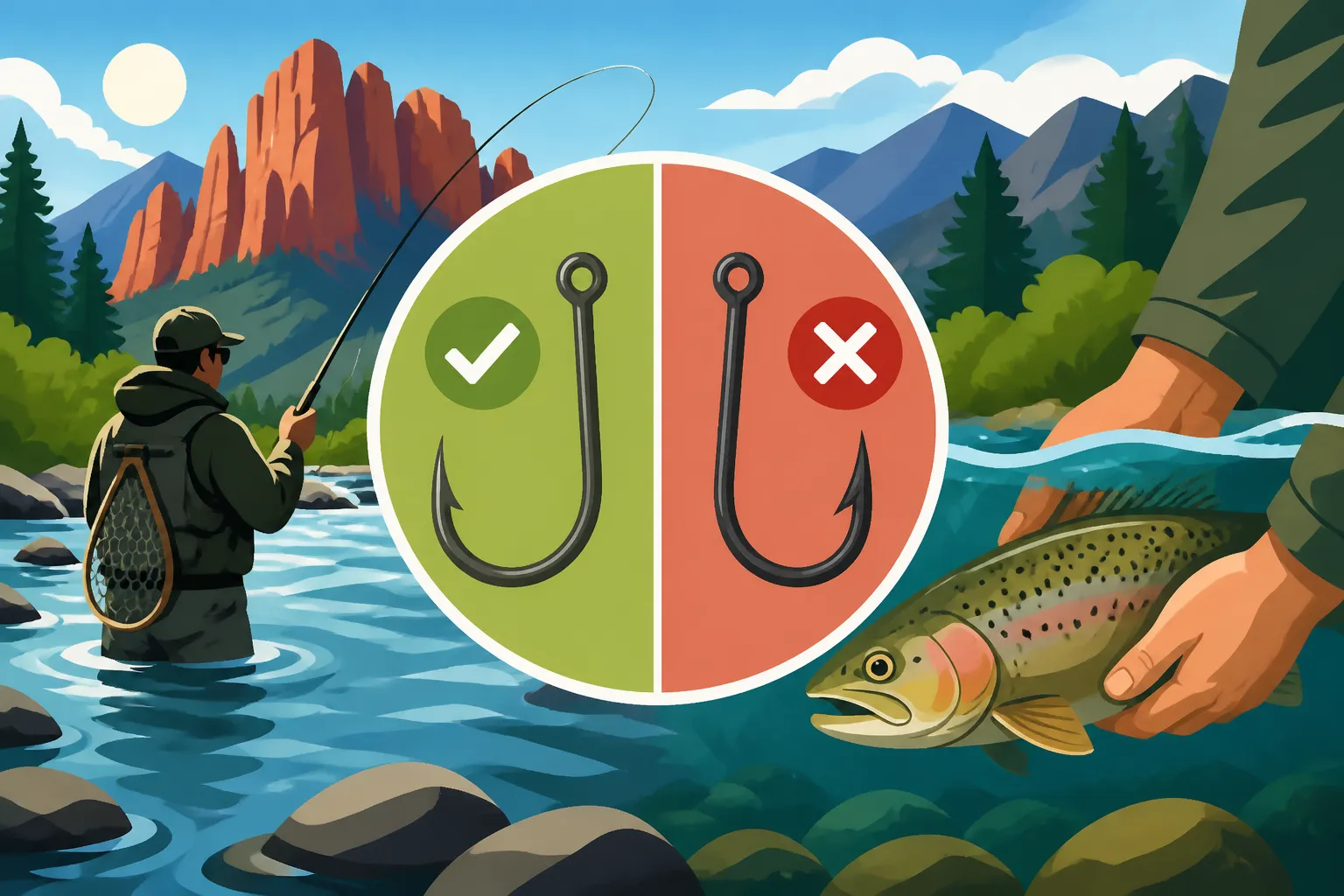
To convert a hook, simply take your pliers and firmly crimp down on the barb. You want to press it until it's completely flattened against the hook shank. Run your finger over it to ensure there's no sharp protrusion – it should feel smooth. If you're feeling a slight bump, crimp it down a bit more. Some anglers prefer to file down the barb for an even smoother finish, but a good crimp is usually sufficient. It's a good habit to check every hook on your flies and lures before you even tie them on your line, especially if you're heading to a "barbless only" water. This quick check will save you potential hassle and ensures you're ready to fish ethically and legally. Many anglers even convert all their hooks to barbless by default, regardless of where they're fishing, simply because it's better for the fish.
Adapting Your Fishing Technique
Fishing with barbless hooks does require a slight adjustment to your technique, but it's a change that often leads to becoming a more precise and skilled angler. The primary difference is that without the barb, there's no "lock" to keep the hook in place once it's set. This means you need to maintain constant tension on the line once a fish is hooked. Slack lines are the enemy of barbless hooks, as they can allow the fish to easily throw the hook.
This translates to several key behavioral changes:
- Quicker Hook Sets: When you feel a strike, set the hook decisively and quickly. Don't delay, as the fish might shake the hook before it's properly embedded.
- Constant Pressure: Keep your rod tip up and maintain a steady bend in the rod. This keeps continuous pressure on the fish, preventing slack.
- Smooth Retrieves: Avoid jerky movements. Fight the fish smoothly and steadily, guiding it toward you rather than yanking it in.
- Control the Fight: Try to land the fish as efficiently as possible. The longer the fight, the higher the chance of the hook dislodging, especially if the fish jumps or thrashes its head.
It might feel a bit awkward at first, and you might lose a few more fish initially, but stick with it. You'll quickly develop a feel for it, and the satisfaction of knowing you're minimizing harm to the fish is well worth the learning curve. Plus, it really sharpens your angling skills!
What Happens If You Don't Use Barbless Hooks
Ignoring barbless hook regulations in Colorado isn't just a minor oversight; it's a violation of state fishing laws and can lead to significant consequences. Colorado Parks and Wildlife officers actively patrol these special regulation waters, and they are trained to check angler compliance, often carrying small magnets to test hooks for barbs. This isn't a "slap on the wrist" type of rule; it's taken seriously because of the critical conservation goals it supports.
If you're caught using barbed hooks in a barbless-only section, you could face hefty fines. The exact amount can vary depending on the specific location and the discretion of the officer, but it's often a significant financial penalty. Beyond the financial hit, you might also have your fishing license revoked or suspended, meaning you'd be barred from fishing in Colorado for a period. In some cases, repeat offenses or egregious violations could even lead to more severe legal repercussions. It's simply not worth the risk. Always check the regulations, crimp your barbs, and practice ethical angling. Your fishing privileges and our valuable fisheries depend on it. For more details on potential consequences, you might want to look into Penalties for Fishing Without a License in Colorado, as the severity of fishing violations can be comparable.
Beyond Barbless Hooks: Other Conservation Practices
While barbless hooks are a vital component of responsible angling, they are just one piece of a larger puzzle when it comes to preserving Colorado's incredible fishing opportunities. A truly ethical angler understands that their impact extends beyond just the type of hook they use. It encompasses how they handle fish, how they interact with the environment, and how they contribute to the overall health of the resource.
Responsible Catch-and-Release Principles
Even with barbless hooks, the act of catching and releasing a fish still involves stress. Therefore, it's our responsibility to employ the best possible catch-and-release practices to maximize the fish's survival rate. This means making a conscious effort to minimize harm at every step of the process.
Here are some key principles for responsible catch-and-release:
- Wet Your Hands: Always wet your hands before touching a fish. Dry hands can remove the fish's protective slime coat, which is its first line of defense against disease and parasites.
- Minimize Handling: Try to keep the fish in the water as much as possible, especially during hook removal and photos. If you must lift it, support its body horizontally and avoid squeezing it, particularly around the gills or belly.
- Use Proper Tools: Carry hemostats or long-nosed pliers to aid in quick hook removal. You can find excellent, inexpensive options for these tools on Amazon.
- Quick Hook Removal: With barbless hooks, this is much easier. Gently back out the hook, or push it through, then twist.
- Revive the Fish: If the fish seems sluggish, hold it gently upright in the water, facing into the current (or gently move it back and forth in still water) until it regains its strength and swims away on its own. Don't just toss it back; make sure it's ready.
- Know When to Keep: Sometimes, a fish is too deeply hooked or too stressed to survive. In these cases, it's often more ethical to keep the fish (if legal and within bag limits) rather than release it to die. This is an important part of How to Handle Trout for a Safe Release.
Respecting Habitat and Other Anglers
Beyond the fish itself, a true conservationist respects the entire ecosystem and fellow outdoor enthusiasts. Our actions on the bank or in the water leave an impression, and it’s important to make that impression a positive one.
Consider these broader aspects of stewardship:
- Leave No Trace: Pack out everything you pack in, and if you see litter, pick it up. This includes fishing line, leaders, and any food wrappers. A clean environment benefits everyone, from the wildlife to the next angler.
- Stay on Trails: Stick to established paths to avoid trampling delicate riparian vegetation, which is crucial for preventing erosion and providing habitat for insects and other creatures.
- Respect Private Property: Be aware of land boundaries and only fish on public access points unless you have explicit permission from private landowners.
- Share the Water: Colorado's popular fishing spots can get crowded. Be courteous to other anglers, give them space, and avoid wading through their fishing lines. A simple nod or wave can go a long way in fostering a friendly atmosphere.
- Know the Rules: Not just about hooks, but about bag limits, fishing seasons, and bait restrictions. For instance, Colorado Bag and Possession Limits by Species vary widely and are designed to protect specific populations. Familiarize yourself with these details, perhaps by thoroughly Reading Colorado's Fishing Regulations Brochure.
By embracing these comprehensive conservation practices, we ensure that Colorado's reputation as a world-class fishing destination endures, and that future generations can experience the same incredible opportunities we enjoy today.
| Feature | Barbed Hooks | Barbless Hooks |
|---|---|---|
| Fish Injury | Higher risk of tearing flesh, gills, eyes. | Minimal tearing, small puncture wound. |
| Hook Removal | Difficult, often requires force and tools. | Easy, usually slides out with gentle pressure. |
| Handling Time | Longer duration out of water. | Shorter duration out of water. |
| Fish Stress | Higher due to trauma and prolonged handling. | Lower, quicker release reduces stress. |
| Survival Rate | Lower post-release survival. | Significantly higher post-release survival. |
| Technique | More forgiving, hook stays set with slack. | Requires constant tension, precise hook sets. |
| Legality | Illegal in "barbless only" waters. | Always legal for hook type (check bait/lure). |
| Conservation | Detrimental to fish populations. | Promotes healthy, self-sustaining fisheries. |
Disclaimer
The information provided in this guide is for general informational purposes only and does not constitute legal advice. Fishing regulations in Colorado are subject to change by Colorado Parks and Wildlife. Always consult the most current official Colorado Parks and Wildlife fishing regulations before heading out on the water. Following regulations is the responsibility of the individual angler.