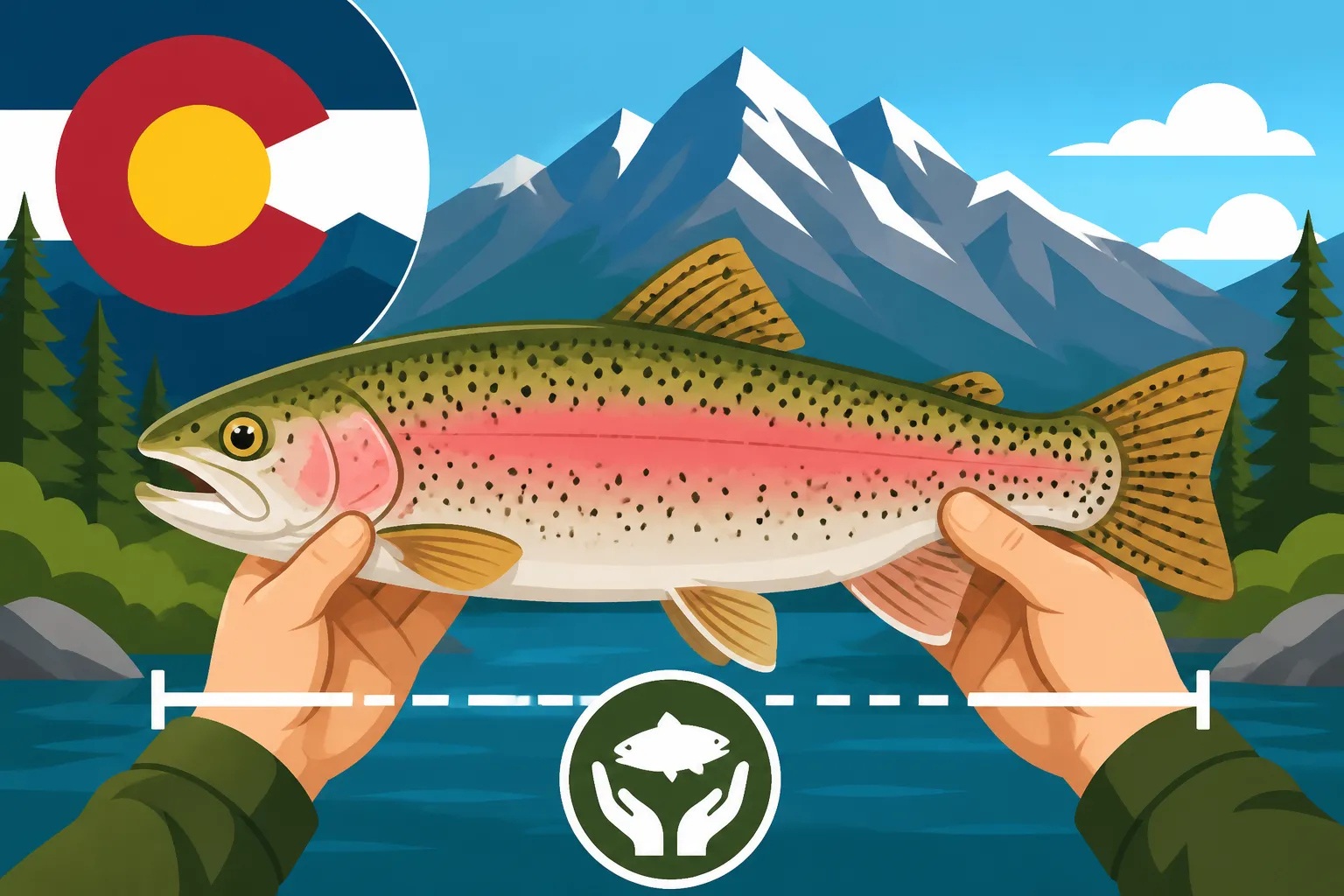
Colorado’s 14-Inch Trout Length Rule
One of the trickiest parts about fishing in Colorado, especially for those new to our beautiful state or even seasoned anglers venturing to new waters, is keeping track of the myriad regulations. It’s not just about having a Colorado Fishing License Guide for Residents and Nonresidents – it’s about understanding the nuances of where you can fish and what you can keep. Among the most common sources of confusion is Colorado's 14-inch trout length rule, a regulation that impacts many of our premier fishing destinations. This guide will meticulously break down this specific rule, helping you navigate the waters with confidence and ensure you're always fishing within the legal limits.
Understanding Colorado's Trout Length Regulations
Colorado boasts some of the most diverse and productive trout fisheries in the country, from high-alpine lakes brimming with brookies to roaring rivers full of browns and rainbows. This incredible variety, however, comes with an equally varied set of regulations designed to protect these precious resources and enhance the fishing experience for everyone. Disregarding these rules, even unknowingly, can lead to stiff penalties, so understanding the "why" behind them is as important as knowing the "what."
Why Length Limits Exist: Conservation and Trophy Management
At its core, the Colorado Parks and Wildlife (CPW) implements length limits for trout to achieve two primary goals: conservation and the development of trophy fisheries. For conservation, these rules often ensure that a sufficient number of fish survive to maturity and reproduce, maintaining a healthy, self-sustaining population. Imagine if anglers kept every fish they caught, regardless of size – it wouldn't take long for the breeding stock to dwindle, jeopardizing the future of that particular fishery. By setting minimum size limits, CPW helps guarantee that fish have at least one or two opportunities to spawn before potentially being harvested.
From a trophy management perspective, length limits, particularly slot limits, are incredibly effective. A slot limit might dictate that only fish below a certain size or above another size can be kept, while fish within a specific "slot" (like 14-20 inches) must be released. This strategy protects the larger, more genetically desirable fish, allowing them to grow even bigger and pass on their strong genes, thus cultivating a population of truly impressive, lunker-sized trout. It’s a delicate balance that allows for some harvest while fostering world-class fishing opportunities, making our state a destination for anglers far and wide.
General Statewide Rules vs. Special Regulations
It’s crucial to understand that Colorado doesn't have a single, blanket set of trout regulations that apply to every single body of water. While there are general statewide guidelines for species like trout, salmon, and whitefish, many specific rivers, lakes, and reservoirs operate under "special regulations." These special rules are often more restrictive than the general rules and are put in place for very specific ecological or management reasons. A classic example would be the Colorado Gold Medal Water Regulations Explained, where the rules are almost always stricter than standard public water.
These special regulations are meticulously detailed in the annual Colorado Fishing Regulations brochure, a document that every angler should carry (physically or digitally) and consult regularly. It's not enough to simply glance at the general bag limit; you need to find the specific body of water you intend to fish and read its associated regulations carefully. This is where many anglers get tripped up, assuming a standard rule applies everywhere when it absolutely does not.
The Importance of Knowing Your Water
The simple truth is, if you don't know the specific regulations for the precise stretch of river or lake you're fishing, you could be breaking the law. Imagine driving all the way to the Fryingpan River, a renowned Gold Medal Water, only to realize you don't understand its specific length and bag limits, which are vastly different from a typical community pond near Denver. This lack of knowledge can lead to frustration, potential fines, and even the loss of your fishing privileges.
Each body of water in Colorado is managed individually, taking into account factors like fish species present, spawning habits, fishing pressure, habitat quality, and management goals (e.g., wild trout fishery, put-and-take fishery, trophy fishery). This hyper-local approach means that what's legal on one side of a bridge might not be on the other, or what applies to a reservoir might be entirely different for the tailwater flowing out of its dam. Always double-check the regulations for your chosen fishing spot before you even tie on your first fly or lure. It’s an essential part of responsible angling in Colorado.
Delving into the 14-Inch Trout Length Rule
The 14-inch trout length rule is a specific regulation that often catches anglers by surprise, especially if they are accustomed to more lenient general statewide limits. It’s not a universal rule, but where it applies, it is strictly enforced and designed to significantly impact the quality of the fishery. Understanding its nuances is key to responsible and successful fishing in these designated areas.
What the 14-Inch Rule Means
When you encounter the 14-inch trout length rule in the Colorado fishing regulations, it typically means one of a few things, depending on the specific phrasing for that body of water. Most commonly, it implies a minimum length limit, meaning any trout shorter than 14 inches must be immediately released back into the water unharmed. This is usually coupled with a reduced bag limit, such as "two trout, 14 inches or longer," indicating that you can only keep fish that meet or exceed that minimum size, and only up to the specified number.
Less frequently, but still important to note, the 14-inch mark might be part of a slot limit. For example, a regulation might state, "All trout between 14 and 20 inches must be immediately released. Two trout may be kept, only one of which may be over 20 inches." In this hypothetical scenario, you could keep fish under 14 inches and one fish over 20 inches, but nothing in that middle slot. This particular slot limit variation is less common with the 14-inch threshold but illustrates how complex these rules can become. The main takeaway is that 14 inches is a significant benchmark that either dictates the minimum size for harvest or establishes a protected size range.
Where the 14-Inch Rule Primarily Applies
The 14-inch trout length rule is not a statewide mandate; rather, it’s a targeted regulation implemented on specific bodies of water that CPW manages for particular outcomes, most notably trophy trout fishing. You'll primarily find this rule in effect on many of Colorado's renowned Gold Medal Waters. These are stretches of rivers or entire lakes that consistently produce large trout (defined as 14 inches or larger) at a rate of at least 60 pounds per acre, along with a healthy population of at least 12 large trout per acre.
Examples of such waters include significant portions of the Fryingpan River, certain sections of the Arkansas River, and celebrated stretches of the South Platte River like the Dream Stream or Cheesman Canyon. These are some of the most famous trout fishing destinations in the state, drawing anglers from around the globe precisely because of the potential to catch large, healthy fish – a direct result of these stringent regulations. When you see a "Gold Medal Water" designation, expect more restrictive rules, and very often, a 14-inch or greater minimum length rule.
Species Affected by the Rule
While the 14-inch length rule is generally aimed at managing "trout" populations, it predominantly impacts the most common and sought-after species in Colorado: Rainbow Trout, Brown Trout, and various Cutthroat Trout subspecies (like the Colorado River Cutthroat or Rio Grande Cutthroat). These are the species that typically grow to sizes targeted by such regulations and constitute the bulk of the catch in many Gold Medal and other specially regulated waters.
It's less common to see this rule directly applied to smaller species like Brook Trout, which rarely reach 14 inches in most Colorado waters. Similarly, other salmonids like Kokanee Salmon have entirely different management strategies and length limits, often tied to their specific life cycles and spawning runs. Therefore, if you're targeting those larger, more common trout species in a designated trophy water, assume the 14-inch rule, or something similar, will be in play. Always check the specific regulations for the species you are pursuing in the exact location you are fishing, as detailed in the Colorado Bag and Possession Limits by Species guidelines.
Specific Waters Where the 14-Inch Rule is in Effect
Understanding where the 14-inch trout length rule applies is paramount for any angler hoping to keep a fish in Colorado's most esteemed waters. These rules aren't arbitrary; they are carefully crafted by Colorado Parks and Wildlife to protect specific ecosystems and promote exceptional fishing opportunities. Getting it wrong can quickly turn a memorable day into a costly mistake.
Gold Medal Waters: Examples Like the Fryingpan, Arkansas, South Platte
Colorado's Gold Medal Waters are where you'll most frequently encounter the 14-inch trout length rule. These are prime examples of fisheries managed for quality, where the goal is to produce large, healthy trout. The regulations here are designed to protect the breeding stock and allow fish to grow to impressive sizes.
Take the Fryingpan River below Ruedi Reservoir, for instance. This tailwater is legendary for its massive rainbow and brown trout. Much of its upper section, particularly from the dam down to the small town of Basalt, is designated Gold Medal Water. Here, you'll find regulations often specifying a minimum length of 16 inches for trout, with a reduced bag limit of one or two fish, or even specific catch-and-release only sections. The 14-inch rule might apply to certain adjacent stretches or serve as a baseline for understanding the protective intent. Another shining example is sections of the Arkansas River, particularly the stretch between Buena Vista and Salida. This vibrant freestone river is celebrated for its wild brown trout, and specific areas will have restrictive length limits, often at or above 14 inches, to protect these valuable fish. The South Platte River, especially the renowned "Dream Stream" between Spinney Mountain Reservoir and Eleven Mile Reservoir, or the challenging Cheesman Canyon section, is another area where the 14-inch rule, or similar restrictive length limits, are standard. These regulations ensure that the large, wild trout populations thrive, offering truly world-class fly fishing.
Other Designated Trout Streams and Lakes
Beyond the official Gold Medal Waters, numerous other streams, rivers, and lakes across Colorado also implement the 14-inch trout length rule or similar size restrictions. These are often waters that, while perhaps not meeting all the criteria for a Gold Medal designation, are nonetheless highly valued for their trout fisheries and require focused management. These could be specific high-country lakes that are difficult to access and thus home to fragile populations, or particular sections of rivers that experience high fishing pressure but hold exceptional fish.
For example, certain smaller reservoirs or specialized creek sections might have specific rules to foster a self-sustaining population or protect a unique strain of trout. Anglers exploring new areas should always assume that special regulations might apply, particularly if the water is known for its quality fishing or is in a more remote, pristine setting. These rules help prevent overharvest and ensure that these waters continue to offer good fishing for years to come. It's not just about famous rivers; local gems also get bespoke management attention.
How to Identify These Waters
Identifying waters under the 14-inch trout length rule, or any special regulation, requires diligent research. The absolute best and most authoritative source is the official Colorado Fishing Regulations brochure published annually by Colorado Parks and Wildlife (CPW). You can pick up a physical copy at any license agent, CPW office, or many sporting goods stores across the state. However, the most convenient and always up-to-date version is available online on the CPW website. This digital version also often includes an interactive map, making it even easier to locate specific stretches of water and their associated rules.
When you're Reading Colorado's Fishing Regulations Brochure, look for the "Special Regulations" section. Waters with unique rules are listed alphabetically by name, and each entry details the specific length limits, bag limits, and any other pertinent restrictions (like bait restrictions or tackle restrictions). Additionally, many regulated waters will have signage posted at common access points, such as trailheads, parking areas, or bridge crossings. These signs often clearly state the "Gold Medal Water" status and summarize the key regulations. While helpful, always cross-reference with the official brochure, as signs can sometimes be damaged or outdated. Being proactive in your research is your best defense against inadvertently breaking the rules.
Navigating Exceptions and Variations to the Rule
While the 14-inch trout length rule is prominent in many quality fisheries, it's just one piece of a much larger, intricate puzzle of regulations in Colorado. Anglers must be prepared for variations and exceptions that can completely change what is allowed, even within a short distance on the same river system. These nuances are critical for responsible angling and avoiding penalties.
Catch-and-Release Only Waters
One of the most significant variations to any length rule, including the 14-inch minimum, is the designation of "Catch-and-Release Only" waters. In these sections, the concept of a length limit for harvest becomes moot because no fish may be kept, regardless of its size. The regulation explicitly states that all fish caught must be immediately returned to the water unharmed. These areas are typically designated to protect extremely fragile populations, allow for maximum growth to create truly trophy-sized fish, or preserve genetically pure native species like the Greenback Cutthroat Trout in recovery areas.
You’ll find catch-and-release only sections on some of the state's most popular and sensitive waters. For instance, parts of the Fryingpan River, the Dream Stream, and even some high-alpine lakes can be designated as catch-and-release. Anglers often flock to these areas precisely because they offer the chance to hook into genuinely enormous fish, knowing that the resource is being fiercely protected. When fishing these waters, it's paramount to practice careful fish handling, minimizing stress and ensuring a high survival rate for the released fish.
Other Size Restrictions
Beyond the 14-inch mark, Colorado employs a variety of other size restrictions to manage its diverse fisheries. These can range from smaller minimum sizes to complex slot limits designed to achieve very specific management goals.
- Minimum Lengths (other than 14 inches): Some waters might have an 8-inch minimum, a 10-inch minimum, or even a 16-inch minimum for trout. For example, a small mountain stream might have a general 10-inch minimum to allow younger fish to grow, while a trophy lake might enforce a 16-inch minimum to protect larger, more mature fish.
- Maximum Lengths: In some rare cases, a regulation might specify a maximum length for retention. For instance, "only one trout may be kept, and it must be less than 12 inches." This often aims to protect all larger, breeding-size fish.
- Slot Limits: These are perhaps the most complex. A common slot limit might say, "All trout between 10 and 16 inches must be immediately released. Two trout may be kept, only one of which may be over 16 inches." This means you can keep fish under 10 inches, and one fish over 16 inches, but nothing in the middle. Slot limits are incredibly effective at cultivating trophy fisheries by protecting the prime breeding stock and allowing smaller fish to grow. Always read these rules meticulously, as misinterpreting them is a common angler mistake.
Species-Specific Exceptions
The general "trout" rules often have specific carve-outs for particular species, especially when it comes to length limits. This is most commonly seen with Brook Trout. These beautiful, colorful fish rarely grow to the sizes of rainbow or brown trout in Colorado, often topping out at 8-12 inches in many high-country streams and lakes. As such, it would be impractical and counterproductive to apply a 14-inch minimum length limit to them.
Therefore, many waters that might have restrictive length limits for rainbows and browns will have a much more liberal or even no length limit for brook trout. In some cases, CPW even encourages the harvest of brook trout in certain areas where they may be overpopulated or competing with native cutthroat species. Always consult the specific regulations for the water you are fishing and pay close attention to any species-specific rules. Don't assume that a "trout" rule applies equally to brook trout as it does to a large brown or rainbow. These species-specific nuances are a testament to the detailed, science-based approach CPW takes in managing Colorado's diverse fish populations.
Practical Tips for Anglers: Measuring and Compliance
Successfully navigating Colorado's trout length rules isn't just about reading the regulations; it’s about practical application on the water. Even the most well-intentioned angler can make a mistake if they’re not properly equipped or don’t understand the correct procedures. Compliance is key, not just to avoid penalties, but to uphold the conservation efforts that keep our fisheries healthy.
Accurate Measuring Techniques
When a trout length rule is in effect, accurately measuring your catch is paramount. There’s a specific, universally accepted method for measuring fish in Colorado, and understanding it is crucial. The measurement is always taken from the tip of the snout to the tip of the tail, with the tail compressed (squeezed together) to achieve the maximum possible length. Lay the fish flat on its side on a measuring board or tape.
It’s tempting to hold a fish up by hand and eyeball it, but this is highly unreliable and can easily lead to misjudgments, especially with a fish right on the cusp of a legal length. A dedicated measuring device is not just a convenience; it’s a necessity. You might think an extra half-inch doesn't matter, but if a game warden measures your fish at 13.5 inches where a 14-inch minimum applies, you're in violation. Always err on the side of caution. If it’s close, release it. Remember, stressing fish by repeated measuring or keeping them out of water for too long can be detrimental, so practice quick, precise measurements.
Essential Gear for Compliance
Being prepared with the right tools makes compliance much easier and also helps ensure the health of the fish you catch and release.
- Measuring Tape or Board: This is non-negotiable. While some nets have measuring lines on the handle, a dedicated, clear ruler or measuring tape is best. You can find durable, flexible measuring tapes specifically designed for fishing on platforms like Amazon, which are easy to carry in a vest or pack. A collapsible measuring board can also be very useful, offering a flat surface for accurate measurement.
- Rubber or Silicon Net: A quality net, ideally with a rubber or silicon mesh, is vital. These types of nets are much gentler on a fish's slime coat and fins than traditional nylon nets, preventing damage. They also help keep the fish submerged while you prepare your measuring tape or remove the hook, minimizing its time out of water. You can find excellent options on Amazon that are durable and fish-friendly.
- Forceps or Pliers: These tools are essential for quickly and safely removing hooks, especially if you're practicing catch-and-release or dealing with an undersized fish that needs to go back unharmed. Barbless hooks, which are often required on Gold Medal Waters (check Barbless Hook Rules on Colorado Rivers), are even easier to remove with forceps. Having these ready allows for a swift release, reducing stress on the fish.
Having these items readily accessible ensures that you can handle, measure, and release fish efficiently and responsibly, adhering to all regulations while prioritizing the well-being of the fish.
What to Do If You Catch an Undersized Fish
When you hook a beautiful trout in a specially regulated water, and it measures under the 14-inch minimum, the course of action is clear and immediate: release it quickly and carefully. This isn't just a suggestion; it's a legal requirement. Improper handling or delaying the release of an undersized fish can be considered a violation.
Here’s a brief rundown of best practices for catch and release, especially for undersized fish:
- Keep it Wet: Whenever possible, keep the fish in the water while you remove the hook. If you must lift it, do so quickly and only long enough to perform the measurement and hook removal.
- Support its Weight: If you lift the fish, support its entire body horizontally, especially heavier fish. Avoid holding it vertically by the jaw or tail, which can cause internal damage.
- Gentle Hook Removal: Use your forceps or pliers to quickly back out the hook. If the fish is deeply hooked and removing the hook would cause significant trauma, it's often better to cut the line as close to the hook as possible. The hook will likely rust out over time.
- Revive If Necessary: If the fish seems sluggish after release, gently hold it upright in the current, facing upstream, until it can swim away under its own power. Do not swing it back and forth; this can push water the wrong way over its gills.
- No Photography Delays: While a photo is tempting, especially for a beautiful catch, prioritize the fish's health. If it's undersized, a photo is not worth the risk of harm.
Following these practices ensures that the undersized fish has the best chance of survival, contributing to the very population that these length rules are designed to protect.
The Impact of Length Rules on Colorado's Fishery
The 14-inch trout length rule, along with other size and bag limits, isn't just about controlling what anglers can keep; it's a fundamental pillar of Colorado's fisheries management strategy. These regulations are scientifically designed to cultivate healthier, more robust fish populations and enhance the overall angling experience. Understanding their long-term impact helps appreciate why these rules are so important.
Promoting Healthy Fish Populations
At the heart of any effective fishery regulation is the goal of maintaining or improving fish population health. Minimum length limits, such as the 14-inch rule, are crucial because they ensure that a significant portion of the fish population reaches sexual maturity and has multiple opportunities to spawn. When fish can reproduce before being harvested, they contribute their genes to the next generation, strengthening the overall population. This is especially vital for species like brown trout and rainbow trout, which are the backbone of many Colorado fisheries.
If anglers were to harvest smaller, younger fish indiscriminately, the number of successful breeders could decline rapidly, leading to fewer fish in subsequent years and a general reduction in the size and vigor of the population. By protecting fish until they reach a certain size, CPW is effectively safeguarding the reproductive capacity of the fishery. This ensures a sustainable resource that can withstand natural fluctuations and continue to provide angling opportunities for generations to come, much like the extensive efforts to protect native cutthroat populations.
Creating Trophy Fisheries
Perhaps one of the most celebrated outcomes of strict length regulations is the development of Colorado's renowned trophy fisheries. When a 14-inch minimum (or higher) is implemented, it creates an environment where trout have the chance to grow significantly larger than they would in waters with more liberal limits. These larger fish are not only exciting to catch but also often represent the strongest, most adaptable individuals in the population, passing on superior genetics.
Gold Medal Waters, which frequently feature the 14-inch rule, are prime examples of this success. Anglers travel from all over to fish these rivers and lakes, knowing they have a legitimate shot at hooking a 20-inch brown trout or an even larger rainbow. This isn't accidental; it's the direct result of carefully managed regulations that allow fish the time and space to reach impressive sizes. These trophy fisheries contribute significantly to Colorado's reputation as a premier angling destination, attracting tourism and supporting local economies in towns like Basalt, Salida, and Deckers.
The Role of Colorado Parks and Wildlife (CPW)
Colorado Parks and Wildlife (CPW) is the governing body responsible for setting and enforcing all fishing regulations in the state. Their role in developing and implementing rules like the 14-inch trout length limit is absolutely critical. CPW biologists and fisheries managers conduct extensive research, including electrofishing surveys, creel censuses, and habitat assessments, to understand the health and dynamics of various fish populations.
This data-driven approach allows them to tailor regulations to the specific needs of each body of water, balancing conservation goals with recreational opportunities. For instance, if a particular river section shows a decline in larger trout, CPW might implement or strengthen a 14-inch minimum length rule to protect the remaining big fish and allow the population to rebound. Conversely, if a non-native species like northern pike becomes overpopulated and threatens native fish, CPW might implement liberal limits, or even no limits, to encourage harvest. Their work is a continuous cycle of monitoring, adapting, and educating, ensuring that Colorado's aquatic resources remain vibrant and accessible for all. These regulations, including the 14-inch rule, are not set in stone and can change year to year, which is why regularly checking the official CPW regulations brochure is so important for every angler.
Comparing General vs. Special Trout Regulations
To further clarify the difference between standard fishing rules and special regulations like the 14-inch trout length rule, here's a table comparing typical scenarios. This should highlight why checking the specific rules for your chosen fishing spot is non-negotiable.
| Feature | General Statewide Trout Regulations (Typical) | Special Regulations (e.g., Gold Medal Waters) |
|---|---|---|
| Minimum Length Limit | Often 8-10 inches for trout | Commonly 14 inches, 16 inches, or "catch-and-release only" |
| Daily Bag Limit | Usually 4 trout | Often reduced to 1 or 2 trout (e.g., "2 trout, 14 inches or longer") |
| Possession Limit | Typically 8 trout | Often aligns with or is slightly higher than the daily bag limit (e.g., 4 trout) |
| Tackle Restrictions | Artificial flies/lures or bait generally allowed (check local bait restrictions) | Often restricted to artificial flies and lures only; barbless hooks may be required |
| Why it Exists | Sustainable harvest across broad areas | To create and maintain trophy fisheries, protect native species, or sensitive areas |
| Examples | Most general streams, community ponds, many larger reservoirs | Fryingpan River, Dream Stream (South Platte), parts of the Arkansas River |
This table provides a quick visual of the significant differences you might encounter. The presence of a 14-inch minimum length rule, or any other size restriction, is a strong indicator that you are in a specially managed water where extra care and attention to the regulations are required.
Disclaimer
Please remember that fishing regulations, including length limits and bag limits, are subject to change. While this guide provides comprehensive information, it is absolutely essential to consult the most current Colorado Parks and Wildlife (CPW) fishing regulations brochure before heading out on any fishing trip. The official CPW website and their annual brochure are the definitive sources for all up-to-date rules and regulations. This guide is for informational purposes only and does not supersede official CPW documentation. Always fish responsibly and legally.