Best Lures for Northern Pike in Colorado Reservoirs
There's nothing quite like the surge of adrenaline when a monstrous northern pike slams your lure. But let's be real, Colorado's reservoirs, while teeming with these toothy predators, can also be incredibly intimidating. Figuring out which lures actually entice these aggressive fish, especially with so many options out there, can feel like a guessing game that costs you valuable fishing time. This guide is here to cut through the confusion, offering a deep dive into the most effective lures for northern pike in Colorado, helping you land that trophy catch.
Understanding Northern Pike in Colorado's Waters
Before we even talk about lures, it’s crucial to understand the beast you’re after. Northern pike are not subtle fish; they are apex predators, built for ambush and powerful strikes. They have a distinct personality in Colorado, influenced by the specific habitats and management strategies in place.
Pike Behavior and Habitat in Colorado Reservoirs
Northern pike are a fascinating species, and in Colorado, they truly thrive in certain reservoir environments. They prefer cooler, clear water but are incredibly adaptable. You'll often find them lurking in the shallow, weedy bays during spring and early summer, waiting for unsuspecting baitfish to swim by. As the water warms in mid-summer, they tend to retreat to deeper weed lines, submerged timber, or rocky drop-offs, still close enough to ambush but away from the direct heat. Come fall, they become incredibly aggressive, packing on weight before winter.
Some of Colorado's premier pike waters include vast reservoirs like Blue Mesa Reservoir, known for its trophy lake trout but also its robust pike population, and Eleven Mile Reservoir, where pike grow to impressive sizes. Williams Fork Reservoir and Spinney Mountain Reservoir are also fantastic spots, particularly if you're looking for that exhilarating shallow-water bite. Closer to the Front Range, Chatfield Reservoir and Cherry Creek Reservoir can surprise anglers with decent pike numbers, especially in the right conditions. Even Horsetooth Reservoir up north holds its share. Understanding where these fish choose to hide—often in areas with structure that offers cover and ambush points—is the first step to choosing the right lure.
It's worth noting that in many Colorado waters, pike are considered a non-native, predatory species. This often means very liberal bag and possession limits, or sometimes even a requirement to keep all pike caught to help protect native or desired sport fish populations. This unique management approach shapes the fishing experience and can often lead to exciting opportunities for anglers. If you're new to the pike scene, it's always smart to review the current Colorado Fishing Regulations Every Angler Should Know to be aware of species-specific rules. You might also want to dive deeper into Colorado's Northern Pike, Where They're Legal and understand Why Colorado Culls Pike From Some Waters to grasp the full picture of pike management in the state.
Key Factors Influencing Lure Choice for Pike
Choosing the right lure isn't just about picking something shiny; it’s about matching the conditions and the pike's mood. Several environmental factors play a huge role in what will trigger a strike.
First off, water clarity is massive. In clear water, a pike relies heavily on its eyesight. This means realistic patterns, natural colors, and subtle movements can be more effective. On the flip side, in murky or stained water, flash, vibration, and loud colors become paramount. A pike won't be able to see a subtle bait from a distance, so you need something that sends out strong distress signals it can feel with its lateral line.
Then there's the time of year and water temperature. Pike are cold-water fish, but their activity levels fluctuate. In the colder months, they might be sluggish, requiring slower retrieves and larger, more enticing baits. During the warmer parts of spring and fall, when they're actively feeding, they'll often chase down faster-moving lures. In mid-summer, when surface temps peak, they might go deep or become nocturnal, making early morning or late evening bites more productive with lures that can reach those depths.
Depth is another crucial consideration. Are the pike hiding in shallow weed beds, cruising over submerged flats, or hunkering down on deep structure? Your lure choice needs to be able to get to where the fish are. Shallow-running jerkbaits or spinnerbaits are perfect for skinny water, while deep-diving crankbaits or heavy jigs are essential for probing those deeper haunts.
Finally, consider the size of available forage. Pike are opportunists and will eat whatever is readily available. If the reservoir has a strong population of smaller trout or kokanee salmon, a lure that mimics those baitfish will often be more successful. If smaller perch or suckers are abundant, adjust your lure size and profile accordingly. Pike aren't afraid of a big meal, so don't be shy about throwing larger baits when targeting bigger fish.
The Best Lures for Colorado Pike Success
Now for the fun part: what to tie on! Northern pike are aggressive, but they can also be surprisingly selective. Having a diverse tackle box is key, and knowing when and how to present each lure is even more important.
Spinnerbaits and Buzzbaits
These are often my go-to lures, especially when fishing unfamiliar water or covering a lot of ground quickly. They shine in a variety of conditions, but truly excel in specific scenarios.
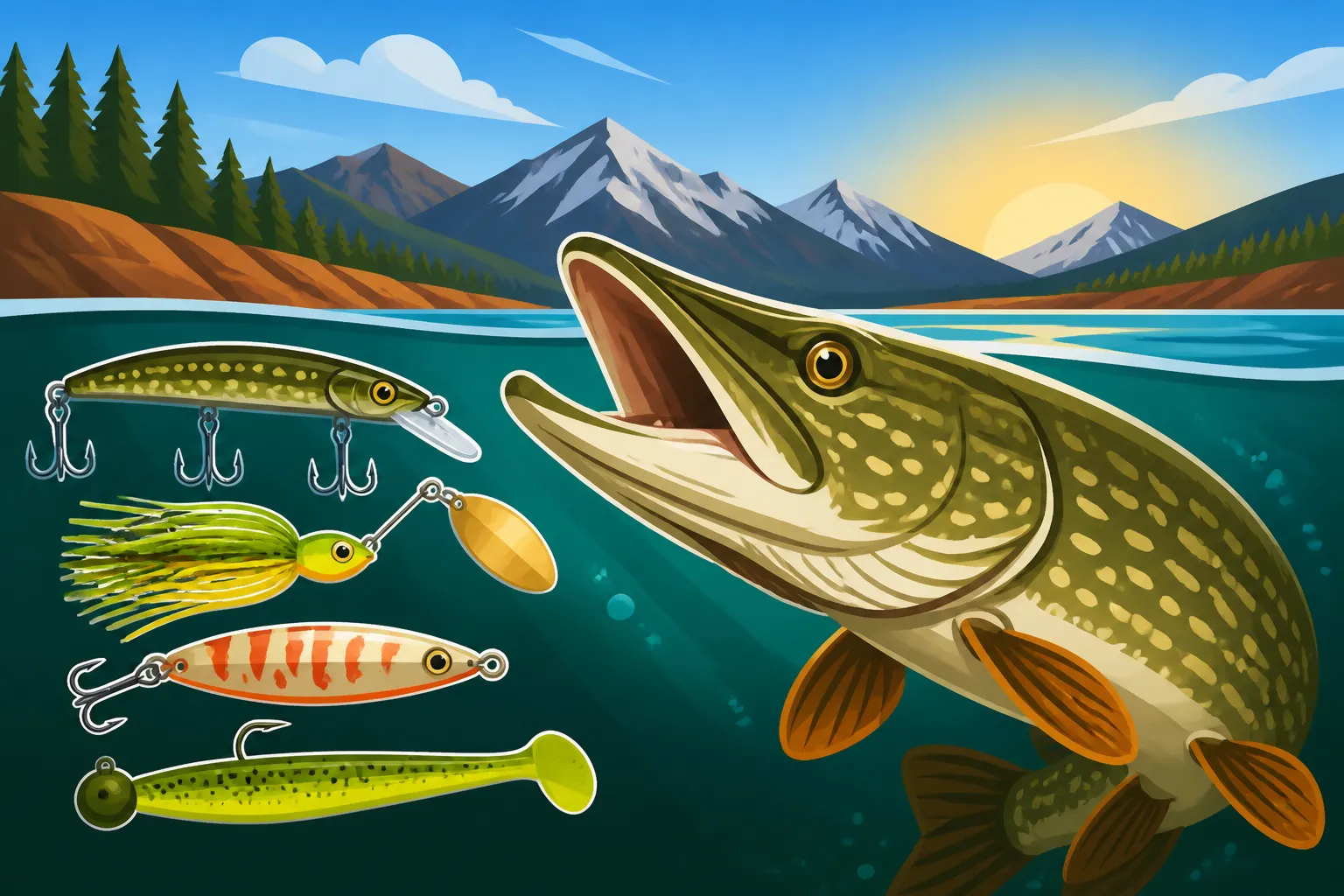
Spinnerbaits are incredibly versatile. They consist of a wire frame, a weighted head, a skirt, and one or more spinning blades (Colorado, Willowleaf, Indiana). The blades create flash and vibration, mimicking a distressed baitfish. They are exceptionally weedless, making them perfect for working through the dense aquatic vegetation that pike love to hide in. I've had countless pike absolutely crush a spinnerbait retrieved just over the top of a submerged weed bed at Eleven Mile. For Colorado pike, I typically opt for spinnerbaits in the 3/8-ounce to 1-ounce range, often with tandem willowleaf blades for maximum flash, or a single large Colorado blade for strong vibration in murkier water. Colors like chartreuse, white, or black-and-blue are always good starting points, especially with a bit of metallic flake in the skirt.
The technique is straightforward: cast it out and retrieve it steadily. You can vary your speed, adding pauses or quick jerks to trigger a reactionary strike. They also work great for "slow rolling" along deeper contours or through sparse timber. Brands like Booyah and Strike King make excellent pike-worthy spinnerbaits that hold up to those sharp teeth.
Buzzbaits are surface lures, characterized by a propeller-like blade that churns water, creating a commotion on the surface. They are incredibly exciting to fish because you get to witness the explosive strike! Buzzbaits are best used in low-light conditions (dawn, dusk, overcast days) or in shallow, calm water where pike are actively looking up for prey. Imagine casting a buzzbait into a glassy bay at Blue Mesa just as the sun is rising; the "ker-plunk" and subsequent "sizzle" of the blade is often enough to draw a pike out of hiding for a spectacular surface strike. They are fantastic for covering large, shallow areas quickly. Again, white, black, or chartreuse are solid color choices. The key is to retrieve them fast enough to keep them on the surface, but not so fast that the pike can't track them.
Spoons and Jigs
These old-school favorites are still incredibly effective for pike, offering different presentations for varying depths and conditions.
Spoons have been catching pike for generations, and for good reason. Their wobbling, darting action perfectly mimics an injured baitfish. Classic designs like the Dardevle "Red Eye" or the Johnson Silver Minnow (especially in silver or gold) are mainstays in many pike angler's boxes. Spoons can be cast and retrieved, trolled, or jigged vertically. For casting, a simple steady retrieve with occasional pauses is often enough. When trolling for pike in deeper sections of larger reservoirs, a heavier spoon can be deadly, allowing you to cover vast areas efficiently. I've had success slow-trolling spoons behind the boat at Williams Fork, letting them dive to target pike holding along drop-offs. Spoons are also fantastic for ice fishing, where their flutter on the drop can elicit strikes from lethargic winter pike. You can find a huge variety of spoons, including weedless options, on platforms like Amazon, making it easy to stock up.
Jigs are perhaps the most versatile lure family. When paired with the right soft plastic or natural bait, a jig can imitate nearly anything a pike eats. For pike, you'll want sturdy jig heads, typically from 1/4-ounce to 1-ounce or more, depending on depth and current.
- Soft Plastic Swimbaits: These are molded to look and swim like real fish. Rigged on a stout jig head, they can be cast, retrieved steadily, or jigged vertically. Sizes from 4 to 8 inches are common for pike. Look for natural baitfish colors (silver, perch patterns) or brighter colors (chartreuse, white) for murky conditions. The lifelike swimming action of a good swimbait is often irresistible.
- Tube Jigs: While often associated with smallmouth bass, larger tube jigs (3-5 inches) can be excellent for pike, especially when jigged aggressively near structure or through the ice.
- Bucktail Jigs: These offer a classic, natural presentation. The hair provides a subtle pulsing action in the water, making them great for clear water or when pike are being finicky. They are particularly effective when retrieved with a "lift and drop" motion.
When jigging, whether from a boat or through the ice, the technique is key. A sharp snap of the rod tip followed by a controlled fall can make the jig dart and dance, triggering strikes. This is a common tactic when ice fishing for pike on Colorado's reservoirs, often paired with a dead bait or a minnow on a treble hook above the jig. You can learn more about similar techniques in guides like Jigging for Lake Trout Through the Ice which applies to pike as well.
Jerkbaits and Crankbaits
These hard-bodied lures are designed to mimic baitfish, and their erratic actions or diving capabilities make them incredibly effective.
Jerkbaits are suspending or floating lures that are designed to be "jerking" or "twitching" through the water. They don't have a large diving lip, and their action comes almost entirely from angler input. A good jerkbait will dart side-to-side, stop abruptly, and often suspend enticingly in the water column during pauses. This erratic, wounded-baitfish action is a huge trigger for pike. Think of it: a pike sees a baitfish struggling, stops, then struggles again – it’s an easy meal. For pike, look for jerkbaits in the 4 to 7-inch range. Silver, perch, and firetiger patterns are perennial favorites.
To fish them, cast out, crank it down a turn or two, then twitch the rod tip sharply 2-3 times, followed by a pause. The pause length can be critical; sometimes a short pause works, other times a long 5-10 second pause is what it takes. Experimentation is key! These are excellent for clear water conditions and targeting pike holding just outside weed lines or cruising open water flats. Many popular jerkbait models from brands like Rapala or Daiwa are readily available.
Crankbaits differ from jerkbaits in that they have a prominent diving lip that creates their action and dictates their diving depth. They are designed to be retrieved steadily, though adding pauses or deflecting them off structure can also be effective.
- Shallow-Diving Crankbaits: These run from 2 to 6 feet deep and are perfect for targeting pike in shallow bays, over submerged vegetation, or near shorelines. Look for chunky, baitfish-profile crankbaits in the 3 to 6-inch range.
- Medium-Diving Crankbaits: These can reach depths of 6 to 12 feet, ideal for targeting pike holding along drop-offs or deeper weed edges in places like Blue Mesa.
- Deep-Diving Crankbaits: Some crankbaits are designed to get down to 15-20 feet or more. While not always necessary for pike, they can be useful for probing deeper structure or when pike are holding very deep during summer.
Crankbaits in bright colors (firetiger, hot orange) or natural baitfish patterns (shad, perch) are highly effective. When you're fishing a place like Chatfield Reservoir, where pike might be lurking in diverse habitats, having a selection of crankbaits that cover different depths is a smart move.
Swimbait Options
When you're serious about targeting larger pike, swimbaits become absolutely essential. These lures are designed for realism and appeal to the pike's instinct to consume a substantial meal.
Hard-bodied swimbaits are often jointed, creating a very natural, S-shaped swimming action that closely mimics a real fish. They come in various sink rates (slow sink, suspending) and sizes, often ranging from 6 to 10 inches. These are not cheap lures, but their effectiveness on big pike can be unmatched. The presentation is usually a slow, steady retrieve, letting the lure's natural action do the work. The goal is to imitate a healthy, cruising baitfish.
Soft-bodied swimbaits are typically made of durable plastic and can be rigged in various ways, often on a large, heavy jig head, an internal weighted hook, or even a specialized swimbait hook. They offer a more subtle action than hard baits and can be fished at different depths by adjusting the weight. Many soft swimbaits have paddle tails that create a tantalizing thump and wobble, drawing attention. Colors and patterns often mimic trout, perch, or kokanee salmon – common pike prey in Colorado.
Whether hard or soft, swimbaits demand a heavier rod and reel setup. A slow, steady retrieve is often best, though adding a few twitches or pauses can sometimes trigger a reluctant pike. I've found that targeting larger soft swimbaits along the deeper weed lines at Spinney Mountain Reservoir can often result in some truly impressive pike. When buying swimbaits, especially the larger, more specialized ones, checking online retailers like Amazon can often provide a wider selection than local tackle shops, ensuring you get the exact size and pattern you need for those Colorado monsters.
Essential Tips for Pike Anglers in Colorado
Catching pike isn't just about the lure; it's about the entire approach. From your gear to how you read the water, every detail can make a difference.
Rod, Reel, Line, and Leader Setups for Pike
Pike are powerful fish with incredibly sharp teeth. Your standard trout rod won't cut it here. You need gear that can handle the abuse and the fight.
- Rods: Look for a medium-heavy to heavy power baitcasting rod, typically 6'6" to 7'6" in length. The stout backbone is necessary for casting heavy lures and setting hooks in a pike's bony mouth. A fast action tip will help with casting accuracy and feeling subtle bites.
- Reels: A sturdy baitcasting reel with a good drag system is ideal. You'll need decent line capacity for long casts and powerful runs. Look for reels with a reliable retrieve ratio, as you'll be cranking larger lures. Spinning gear can work for smaller pike, but a baitcaster offers more control and power for the bigger ones and heavier lures.
- Line: Braided line is king for pike fishing. Its zero-stretch properties mean better hook sets and sensitivity. Choose a braided line in the 30-65 pound test range. The higher pound test also helps with abrasion resistance against teeth and structure.
- Leader: This is non-negotiable. Pike have razor-sharp teeth that will shred monofilament or fluorocarbon mainlines in an instant. You absolutely need a steel or heavy fluorocarbon leader (80-100 lb test) that is at least 12-18 inches long. Wire leaders are often preferred for maximum protection. Without one, you're just feeding the fish expensive lures. I always make sure my leaders are properly crimped or tied to withstand the fight.
Having a robust setup not only ensures you land the fish but also helps prevent break-offs, which is better for the fish too.
Reading the Water and Seasonal Tactics for Pike
Pike locations and feeding patterns shift significantly with the seasons. Understanding these changes is critical for consistent success.
- Spring (Ice-Out to Runoff): As ice melts and water temperatures rise into the 40s and 50s, pike move into shallow, warmer bays and protected coves. They are often focused on spawning or recovering from it. These areas warm up first and attract baitfish. This is a prime time for spinnerbaits, shallow-running crankbaits, and even buzzbaits. Look for old weed growth, emergent vegetation, and flooded timber.
- Summer (Late Spring Runoff to Fall Turnover): As water temperatures climb into the 60s and 70s, pike will retreat from the extreme shallows. They'll often be found along deeper weed lines (10-20 feet), submerged points, deep drop-offs, and around offshore structure. Trolling deep-diving crankbaits or spoons can be effective, as can jigging swimbaits vertically. Early morning and late evening are often the most productive times, as the bright midday sun pushes them deeper. When targeting Blue Mesa Reservoir, for example, remember that pike will often share the same deep-water structure with lake trout, making similar trolling tactics effective.
- Fall (Late Summer to First Ice): This is often considered the peak season for trophy pike. As water temperatures cool into the 50s and 40s, pike go on a feeding frenzy, bulking up for winter. They become incredibly aggressive and can be found in a wider range of depths, often moving between shallow and deep water throughout the day. Big swimbaits, large spinnerbaits, and even topwater lures (if water is still warm enough) can all be highly effective. This is when you can encounter some truly massive fish that are willing to chase down a substantial meal.
- Winter (Ice Fishing Season): Pike are a popular target for ice anglers in Colorado. They remain active under the ice, often patrolling weed edges, points, and deep flats. Heavy jigging spoons, large soft plastic swimbaits, and dead baits (like sucker minnows) fished under a tip-up are standard tactics. Remember to always check ice conditions carefully and adhere to Colorado Ice Fishing Rules before venturing out. Reservoirs like Eleven Mile and Spinney Mountain are popular for this winter pursuit.
Handling Pike Safely and Legally
Pike are powerful fish, and their mouths are armed with hundreds of razor-sharp teeth. Proper handling is crucial for both your safety and the fish's well-being, especially if you plan to release it.
Always carry a few essential tools:
- Long-nose pliers: Absolutely vital for reaching into a pike's mouth to remove hooks without getting your fingers too close to those teeth.
- Jaw spreaders: These are helpful for safely opening a pike's mouth to remove deeply embedded hooks, especially if you're fishing single-hook lures. They keep the mouth open, protecting your hands.
- Cut-resistant gloves: While not always necessary with the right tools, a pair of cut-resistant gloves can provide an extra layer of protection.
- Measuring tape/scale: If you're targeting trophy fish, have these ready to record your catch quickly.
When handling a pike, support its body horizontally. You can either grip it firmly behind the head, being careful of the gill plates, or use a specialized lip gripper. Never lift a large pike vertically by its jaw alone, as this can damage its spine and internal organs. If you're going to keep the fish, dispatch it quickly and humanely. If releasing, get the hook out as fast as possible and minimize its time out of water.
Remember to always consult the current Colorado Parks and Wildlife regulations regarding pike. While many waters have liberal limits, knowing the Colorado's Daily Northern Pike Limit for the specific body of water you're fishing is non-negotiable. Being a responsible angler means understanding and following all rules.
Summary of Top Pike Lures for Colorado Reservoirs
Here’s a quick overview of the essential lure types and when to best deploy them for Colorado pike.
| Lure Type | Best Conditions | Retrieve Technique | Key Features |
|---|---|---|---|
| Spinnerbaits | Shallow weeds, stained water, covering water | Steady retrieve, slow roll, stop-and-go | Flash, vibration, weedless, versatile |
| Buzzbaits | Shallow, calm water, low light, active fish | Fast, steady retrieve to keep on surface | Surface commotion, visual strike |
| Spoons | Varying depths, casting, trolling, ice fishing | Steady retrieve, flutter on drop, jigging, trolling | Wobbling action, flash, mimics injured baitfish |
| Jigs (w/ plastics) | Deep structure, weed lines, vertical jigging, ice fishing | Lift & drop, slow retrieve, twitching | Versatile, realistic profiles, can vary depth |
| Jerkbaits | Clear water, suspended fish, finicky biters | Twitch-twitch-pause, erratic action | Mimics wounded baitfish, suspends, visual trigger |
| Crankbaits | Varying depths, covering water, specific depth targeting | Steady retrieve, deflections, pauses | Diving lip, consistent action, good for specific depths |
| Swim baits | Targeting large pike, clear water, realistic presentation | Slow, steady retrieve, occasional twitches | Highly realistic, large profile, appeals to big fish |
This table provides a quick reference, but remember, the best lure is always the one you have confidence in and are willing to experiment with.
Disclaimer
The information provided in this guide is for general informational purposes only and does not constitute professional advice. Fishing regulations, conditions, and best practices can change. Always consult the most current Colorado Parks and Wildlife regulations and local conditions before heading out on the water. Fishing inherently involves risks; please prioritize safety and exercise caution in all fishing activities.