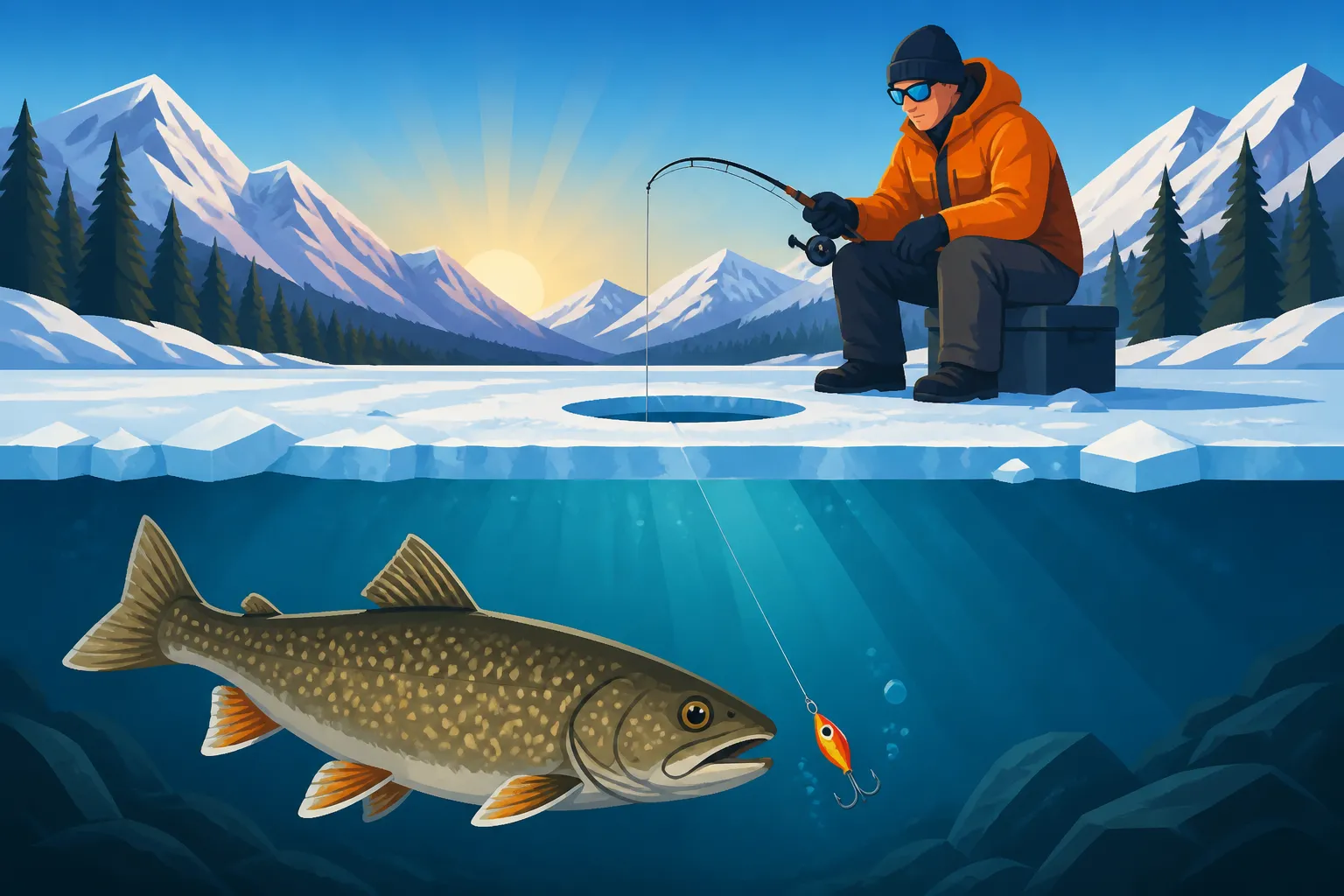
Jigging for Lake Trout Through the Ice
The biting cold of a Colorado winter, the crunch of snow underfoot, and the promise of a truly epic fight from deep beneath the ice – it's a feeling every serious angler chases. But let's be honest, trying to connect with a trophy lake trout through a small hole in the ice can feel like searching for a needle in a frozen haystack, especially when you're battling numb fingers and the fish just aren't cooperating. This guide is all about demystifying the art of jigging for these magnificent, hard-fighting fish, helping you understand their winter world and giving you the tools and techniques to consistently put them on the ice, even on the toughest days.
Understanding Colorado's Lake Trout and Their Winter Habits
Lake trout, often called "Mackinaw" by old-timers, are truly magnificent cold-water predators that thrive in Colorado's deeper, colder reservoirs. Unlike their rainbow or brown trout cousins, macks are built for the deep, spending their lives patrolling the submerged structures and vast open waters. When winter locks our high-country lakes under a blanket of ice, these fish don't just disappear; they simply adjust their habits, and understanding these adjustments is your first step to success.
Where Lake Trout Hold in Icy Waters
During the ice fishing season, lake trout typically relate to structure, but not always the obvious stuff. They love steep drop-offs, underwater points, submerged humps, and even the remnants of old creek beds that are now drowned by the reservoir. Think of it like this: if you were a big fish looking for a quick meal or a place to ambush prey, where would you hang out? You'd want access to both deep water for comfort and shallower feeding grounds. Early ice often finds them a bit shallower, closer to shorelines or prominent points, but as winter progresses and the ice thickens, they tend to pull out to deeper structures. We're talking anywhere from 40 to 120 feet, sometimes even deeper, depending on the specific reservoir and oxygen levels. For a comprehensive overview of these fish, check out our guide to Lake Trout Fishing in Colorado.
Finding these specific spots is paramount. Don't just drill a hole in the middle of a vast expanse. Instead, focus on areas with significant depth changes. A good topographical map of the reservoir is your best friend. Look for areas where the depth contours are tightly packed, indicating a steep drop, or where they form distinct features like humps or saddles. These are the highways and dinner tables for lake trout. For example, at Dillon Reservoir, focusing on the deep channels and sharp breaks where the Blue River once flowed can be incredibly productive. Similarly, at Lake Granby, the submerged islands and points are often magnets for these fish.
The Lake Trout's Winter Diet and Behavior
Lake trout are opportunistic feeders, and their winter diet largely consists of smaller fish like kokanee salmon, rainbow trout, and even their own young. They're not as active as they are in summer, but they still need to feed to maintain their energy stores in the frigid water. Their metabolism slows down, meaning they might not chase a jig as aggressively or as far as they would in warmer months. This is where patience and subtle presentation become critical.
When the ice is thick, and the water is super cold, lake trout often exhibit a "schooling" behavior around prime feeding areas. They might hold in small groups, waiting for an unsuspecting baitfish to swim by. They're also known to make vertical movements throughout the day, rising from the deepest parts of the reservoir to feed at certain times, often correlating with changes in light or barometric pressure. This is why having good sonar is indispensable; it allows you to see these fish holding at different depths and react accordingly. Sometimes they are suspended 20 feet off the bottom in 80 feet of water, and other times they are glued to the structure. Understanding these nuanced movements is key to intercepting them.
Key Colorado Reservoirs for Ice Fishing Lake Trout
Colorado boasts several incredible reservoirs where ice anglers can target lake trout, each with its own unique character and challenges. Knowing these spots can save you a lot of time and effort, especially if you're traveling a fair distance for your winter angling adventure.
- Blue Mesa Reservoir: Often hailed as one of the best lake trout fisheries in the state, and for good reason. It's massive, holding a huge population of macks, including some true giants. Depths here can easily exceed 200 feet, providing ample habitat. Focus on areas like the Cebolla Basin, Elk Creek, or the deep drop-offs near the dam. This place is famous for growing big fish, and you can learn more about Fishing Blue Mesa Reservoir for Lake Trout.
- Dillon Reservoir: Located right in the heart of Summit County, Dillon offers a picturesque setting with consistent lake trout action. While the fish might not reach the same record-breaking sizes as Blue Mesa, there are plenty of solid 20-30 inch fish, with some pushing bigger. Access points are good, and key areas include the deep basin near the dam, the Snake River arm, and the points near Frisco. If you're looking to visit, our guide on Fishing Dillon Reservoir Near Frisco can offer more tips.
- Lake Granby: Another fantastic high-country option, Granby is known for its abundant lake trout, with many anglers reporting high catch rates. It's a huge body of water with numerous submerged islands, humps, and old river channels that act as lake trout magnets. Popular spots include the areas around the islands like Shelter Island and Stillwater, and the numerous points. Our article on Fishing Lake Granby in Grand County provides further insights into this prime location.
- Twin Lakes: Near Leadville, this set of glacial lakes also holds lake trout, often caught alongside massive cutthroats. The deep, clear water here is ideal for macks, though they can be a bit more finicky.
- Ruedi Reservoir: Up near Basalt, Ruedi also has a healthy population of lake trout, often targeted by anglers seeking a mixed bag with rainbows and browns.
When planning your trip to any of these locations, always check local conditions and ice reports. Safety on the ice is paramount, and understanding How Thick Ice Needs to Be Before You Fish It in Colorado is crucial before you even step foot on the frozen surface.
Essential Gear for Jigging Lake Trout Through the Ice
Ice fishing for lake trout isn't like panfishing with a tiny rod. These are powerful fish that live deep, requiring specialized gear to stand a chance. Skimping on your equipment can lead to lost fish, broken lines, and a lot of frustration. Investing in the right tools will not only increase your success but also make your time on the ice much more enjoyable.
Rods, Reels, and Line Built for Big Fish
You need robust tackle to handle the deep-water battles that lake trout are famous for. A lightweight walleye combo just isn't going to cut it when a 15-pound mack decides to strip line off your reel.
- Rods: Look for an ice fishing rod that is medium-heavy to heavy power, typically in the 36 to 48-inch range. A longer rod provides more leverage and helps absorb the powerful runs of a big lake trout, especially when you're fighting them in tight quarters through a hole. Graphite blanks offer sensitivity to detect subtle bites, while a strong backbone is essential for setting the hook and horsing fish up from the depths. Many anglers prefer rods with a fast action tip for sensitivity but a strong parabolic bend to cushion the fight. Brands like St. Croix, Fenwick, and Clam offer excellent ice rods designed for these heavy-duty applications.
- Reels: A sturdy spinning reel in the 2000-4000 size range, or a baitcasting reel designed for jigging, is ideal. Ensure it has a smooth, reliable drag system, as this is your ultimate shock absorber. A strong retrieve ratio isn't as critical as line capacity and drag performance, but a decent retrieve speed helps bring fish up quicker from 80+ feet. Make sure your reel is cold-weather rated; some reels can seize up in extreme cold, leading to miserable experiences.
- Line: This is not the time to be frugal. You'll want a strong, low-stretch line.
- Main Line: 10-20 lb test braided line is a popular choice for its incredible strength-to-diameter ratio, zero stretch for excellent bite detection, and abrasion resistance. A bright color braid can help you see your line on the ice, especially if you're fishing multiple rods.
- Leader: A fluorocarbon leader of 10-20 lb test is crucial. Fluorocarbon is nearly invisible underwater, extremely abrasion-resistant, and provides that little bit of stretch that can absorb head shakes without snapping the line. The length of your leader can vary, but a 3-6 foot section is a good starting point. Connect your braid to your fluorocarbon leader with a strong knot like a FG knot or an Albright knot. You can find a wide selection of braided line and fluorocarbon leaders on Amazon, which often have competitive pricing.
Choosing the Right Jigs and Baits
Lake trout respond well to a variety of presentations, but jigs are often the most effective for ice fishing. The key is to match the hatch (or at least the general size of the forage) and offer something enticing.
- Jigs: Heavy-bodied jigs that can quickly get to the bottom are essential for deep water. Spoons like the classic Swedish Pimple, Acme Kastmaster, or Northland Buck-Shot Rattle Spoon are excellent. Their erratic flutter on the fall mimics a dying baitfish, and their flash is irresistible to predators. You'll want various sizes, from 1/2 oz up to 2 oz or even 3 oz for extremely deep or current-laden waters. Other popular options include tube jigs (3-6 inches long) in white, chartreuse, or natural baitfish colors, which can be incredibly effective when slowly twitched. Blade baits, like the Berkley Vibrato, also create a lot of vibration and flash, triggering aggressive strikes.
- Baits: While jigs alone can be deadly, tipping them with bait often seals the deal.
- Dead Bait: Smelt, sucker meat, or even a piece of a perch fillet are excellent choices. Attach a small piece to the treble hook of your spoon or jig. The scent trail is a huge attractant.
- Live Bait (Check Regulations!): In Colorado, live baitfish regulations can be restrictive, so always check the latest Colorado Parks and Wildlife (CPW) regulations before using any live bait. If allowed, small shiners or minnows can be deadly.
- Plastics: Scented soft plastics designed to mimic minnows or grubs, such as those from Berkley Gulp!, can be very effective when tipped on jigs or even on bare hooks. Their scent and action can entice strikes when fish are finicky.
You'll want a good assortment of jigs and baits to experiment with different sizes, colors, and actions. What works one day might not work the next, so be prepared to adapt.
Ice Augers, Sonar, and Shelter for Comfort and Success
Beyond your rod and reel, several other pieces of equipment are absolutely non-negotiable for serious ice fishing for lake trout.
- Ice Augers: Lake trout require bigger holes than most other species. An 8-inch auger is the minimum, but a 10-inch auger is often preferred, especially if you're targeting trophy fish. You don't want to lose a fish because it won't fit through the hole!
- Manual Augers: Fine for thinner ice or if you're only drilling a few holes.
- Propane Augers: Offer good power and reliability in the cold.
- Electric Augers: Increasingly popular for their quiet operation and lighter weight. Brands like Ion and StrikeMaster offer excellent electric augers that can drill dozens of holes on a single charge. You can find many of these top brands easily on Amazon.
- Sonar (Fish Finder): This is perhaps the single most important piece of gear for lake trout ice fishing. You are fishing deep, often for suspended fish. A flasher unit (like a Vexilar or Marcum) or a portable LCD fish finder allows you to:
- Locate fish: See them as arcs or lines at specific depths.
- Gauge depth: Know exactly how deep you are.
- Read bottom structure: Identify humps, drop-offs, and other features.
- Monitor your jig: Watch your lure on the screen and see how fish react to it. This real-time feedback is invaluable for refining your jigging presentation.
- Shelter: A portable ice fishing shelter, whether a flip-over style or a hub-style tent, is crucial for comfort and staying warm in Colorado's often harsh winter conditions. It shields you from wind, snow, and allows you to use a portable heater, transforming a frigid day into a comfortable angling experience. A good shelter makes long days on the ice not just tolerable but enjoyable.
- Heater: A portable propane heater (like a Mr. Heater Buddy) is a game-changer inside your shelter. It keeps you warm, prevents your holes from freezing over, and allows you to concentrate on fishing rather than shivering.
- Sled: A heavy-duty sled to haul all your gear across the ice is a must.
- Safety Gear: Don't forget ice picks (worn around your neck), a spud bar (to test ice thickness), and appropriate cold-weather clothing. For more essential items, check out our guide on Ice Fishing Gear for Colorado Reservoirs.
Mastering Jigging Techniques for Colorado Lake Trout
Once you have your gear dialed in, the next step is understanding how to present your lure effectively. Lake trout are cunning predators, and while they might be less active in winter, they'll still strike a well-presented jig. It's a game of finesse, observation, and adaptability.
Locating Fish with Sonar and Reading the Signals
Your sonar unit is your eyes beneath the ice, and learning to interpret its signals is vital for success. When you drill a hole, deploy your transducer and look for signs of life.
- Initial Scan: First, identify the bottom. It will appear as a solid line at the bottom of your screen. Look for any variations in the bottom contour – a rise, a dip, or a jagged edge indicates structure.
- Finding Fish: Fish will appear as distinct signals between your jig and the bottom. On a flasher, they might be colored bands, while on an LCD screen, they'll be arcs or horizontal lines. Larger, thicker signals generally mean bigger fish. Pay attention to their depth; lake trout might be cruising just off the bottom, or they could be suspended 20-30 feet up in the water column.
- Monitoring Your Jig: Drop your jig down and watch it appear on your sonar. You should be able to see it as a small, distinct signal. This allows you to place your jig precisely where the fish are. If fish are at 60 feet, adjust your jig to hang just above them.
- Reading Reactions: This is where sonar becomes truly invaluable. Watch how fish react to your jig. Do they rise quickly to meet it? Do they ignore it? Do they follow it but refuse to strike? This real-time feedback helps you adjust your presentation. If a fish is following but not committing, try subtle changes in your jigging motion, or change your jig's color or size. Sometimes, simply holding the jig completely still can trigger a strike from a cautious mack. The ability to see your lure and the fish simultaneously is a huge advantage when fishing deep water.
Presentation Matters: Jigging Motions and Cadence
Lake trout are rarely in a super aggressive mood under the ice. This means your jigging motion needs to be carefully considered. It’s not about constant, violent movements; it’s about enticing and irritating.
- The Aggressive Rip: Sometimes, especially when fish are first moving into an area, a series of aggressive rips can trigger a reaction strike. Drop your jig to the desired depth, then rip it up 2-3 feet with a sharp snap of the wrist, letting it flutter back down on a semi-slack line. Repeat this a few times, then pause. This mimics a fleeing baitfish.
- Subtle Twitch and Pause: More often, a subtle approach is best. Lower your jig to the fish's depth (or just above it), and give it a series of short, delicate twitches, raising it only a few inches at a time. After a few twitches, pause for 5-10 seconds, letting the jig hang perfectly still. Many strikes occur on the pause as the fish decides to commit. This is particularly effective with tube jigs or blade baits.
- The Dead Stick: Don't underestimate the power of a dead stick. Set up a second rod in a separate hole, baited with a piece of dead bait or a tube jig, just sitting motionless in a rod holder. Often, fish will ignore an actively jigged lure only to pick up the stationary bait. Just remember to have your second rod properly licensed with a Colorado's Second-Rod Stamp and Who Needs One if you plan to use two.
- Matching Depth: Always keep your jig at or just above the fish you see on your sonar. Lake trout, especially when lethargic, are less likely to swim down to hit a lure. They prefer to rise up or stay at their current level.
- Experimentation: The best cadence often varies by day and even by the hour. Start with a moderately active jigging motion, then try slowing it down, speeding it up, or incorporating longer pauses. Pay close attention to what the fish on your sonar are reacting to.
Setting the Hook and Fighting These Winter Giants
Hooking a lake trout in deep water is one thing; bringing it through the ice is another. Their strength and size make them a formidable opponent, especially when limited to a small hole.
- The Hook Set: When you feel a bite – which can range from a subtle tap to a heavy thud – reel down quickly to take up any slack, and then execute a firm, sweeping hook set. Because of the deep water and potential line stretch (even with braid, fluorocarbon leaders have some give), a powerful set is necessary to drive the hook home into their tough mouths.
- The Fight: Once hooked, a lake trout will often make powerful, sustained runs. This is where your smooth drag system comes into play. Let the fish run, but apply steady pressure. Resist the urge to crank down on the drag too much, as this can lead to broken lines or pulled hooks. When the fish pauses, gently reel in line, slowly gaining back territory.
- Pumping the Fish: As you bring the fish closer to the surface, avoid a continuous, fast retrieve. Instead, use a "pump and reel" technique: lift the rod tip to gain line, then quickly drop the tip while reeling in the slack. This helps keep constant pressure on the fish and uses the rod's leverage.
- Through the Hole: This is often the trickiest part. As the fish approaches the hole, it will likely make another surge, seeing the light. Be prepared to let it run again if needed. Once its head is in the hole, quickly but carefully grab it by the gill plate (if you intend to keep it) or use a large gaff hook (check regulations on gaff use for legal species and sizes) or a specialized ice fishing landing tool to guide it onto the ice. If you're planning to release, minimize handling and get it back into the water quickly. Knowing How Big Lake Trout Get in Colorado will help you prepare for the size of fish you might encounter.
Advanced Strategies and Safety Tips for Ice Lake Trout Fishing
Beyond the basic gear and techniques, there are always ways to refine your approach and ensure a safer, more productive day on the ice. These strategies often separate the consistently successful anglers from those who just get lucky.
Timing Your Attack: Best Hours and Weather Conditions
Lake trout, like most fish, have periods of increased activity. Understanding these windows can significantly boost your success rate.
- Early Morning and Late Afternoon: These are often prime times. Just after sunrise and about an hour or two before sunset, light levels change, triggering feeding activity. Lake trout are often more willing to cruise and strike during these crepuscular hours.
- Mid-Day Lulls: The middle of the day can be slower, but it's not always dead. If you've located fish, even during a slow period, a subtle presentation or a change in jig can still tempt a strike. Sometimes, on heavily pressured lakes, the fish might even become more active midday when fewer anglers are out.
- Overcast Days: Often preferred for ice fishing, as the reduced light penetration can make fish feel more secure and willing to move into shallower feeding areas.
- Barometric Pressure: A stable or rising barometer generally means more active fish, while a rapidly falling barometer often signals a tough bite. Keep an eye on the weather forecast and adjust your expectations. While you can't control the weather, knowing what to expect helps you stay patient.
- Moon Phases: Some anglers swear by moon phases, especially the full and new moons, claiming these periods often correspond with increased activity. While not scientifically proven for all species, it’s another piece of the puzzle that experienced anglers consider.
Drilling Multiple Holes and Staying Mobile
One of the biggest mistakes ice anglers make is drilling one or two holes and staying put all day, even if the fish aren't biting. Lake trout are migratory, especially in large reservoirs, and they won't always be in the same spot.
- Scouting Pattern: Start by drilling a series of holes in a grid or along a contour line in a promising area. For example, if you're targeting a point, drill holes at varying depths along the point's edge, from its shallower top to its deeper flanks.
- Fish Finder First: Before you even drop a line, use your sonar to scan each hole. If you don't see any fish signals within a few minutes, move to the next hole. Don't waste precious time fishing barren water.
- Follow the Fish: If you catch a fish, or even see significant activity on your sonar, stay in that area. But if the bite dies off, don't hesitate to pack up your gear and move to another promising spot. Covering ground is often the key to finding active schools of lake trout. Remember that a portable shelter and an electric auger make this mobility much easier. You’re looking for a pattern, not just a single fish.
Staying Safe on Colorado's Frozen Reservoirs
Safety on the ice cannot be stressed enough, especially when fishing large, deep reservoirs where conditions can change rapidly. Colorado's high-country lakes are beautiful but can also be unforgiving.
- Ice Thickness is Paramount: Always check the ice thickness with a spud bar or auger as you move onto the ice. The general rule of thumb for safe foot travel is at least 4 inches of clear, solid ice. For snowmobiles or ATVs, you'll need significantly more, typically 5-7 inches, and 8-12 inches for a small car or truck. Never assume the ice is safe. Conditions can vary widely across a single body of water due to currents, springs, or pressure ridges. You can get more details on How Thick Ice Needs to Be Before You Fish It in Colorado.
- Go with a Buddy: Never ice fish alone, especially on large reservoirs. If an accident occurs, having someone with you can be life-saving.
- Carry Safety Gear:
- Ice Picks: Essential. Worn around your neck, these allow you to pull yourself out of the water if you fall through.
- Spud Bar: For testing ice thickness ahead of you.
- Rope: A length of rope can be thrown to someone who has fallen through.
- Float Suit: A specialized ice fishing suit designed to provide flotation and thermal protection if you go into the water.
- Know Your Location: Be aware of your surroundings, potential hazards like open water, current areas, or thin ice zones. Use GPS on your phone or a dedicated unit to mark your holes and find your way back, especially in whiteout conditions or after dark.
- Dress in Layers: Colorado winters can be brutally cold. Dress in multiple layers, including a moisture-wicking base layer, insulating mid-layers, and a waterproof/windproof outer shell. Don't forget a warm hat, gloves, and insulated boots. Frostbite is a serious risk.
- Tell Someone Your Plans: Always inform a reliable person where you are going, your expected return time, and who you are with.
Post-Catch Care and Regulations
Successfully landing a lake trout is a rewarding experience, but your responsibility doesn't end there. Proper handling, whether for release or retention, and adherence to regulations are crucial for the sustainability of Colorado's fisheries.
Handling Lake Trout for Release or Retention
The way you handle a fish after catching it has a significant impact on its survival if released, or its quality if kept for the table.
- For Release:
- Minimize Air Exposure: Lake trout are cold-water species, and exposure to warm air, especially in freezing temperatures, can be very damaging to their gills and eyes. Keep the fish in the water as much as possible.
- Wet Hands: Always wet your hands before touching the fish to protect its slime coat, which is vital for disease resistance.
- Support the Fish: If you must lift it for a quick photo, support its body horizontally with one hand under the belly and the other near the tail. Never hold a large fish vertically by its jaw or gills, as this can damage its internal organs.
- Remove Hook Quickly: Use long-nosed pliers or a dehooking tool to remove the hook gently and quickly. If the fish is deeply hooked, cut the line as close to the hook as possible rather than trying to rip it out.
- Revive If Necessary: Gently hold the fish upright in the water, facing into any current if present, until it swims away under its own power. Don't just toss it back; make sure it's strong enough to survive.
- For Retention:
- Bleed Immediately: If you plan to keep the fish for consumption, bleeding it immediately after landing improves the meat quality significantly. Cut one of the gill arches or sever the caudal artery (near the tail) and let it bleed out in a bucket of slushy ice water.
- Keep Cold: Once bled, get the fish on ice as quickly as possible. A cooler filled with ice or a snow-packed sled will keep the meat fresh. Never let fish sit on the bare ice in freezing temperatures; this can actually cause freezer burn or damage the meat.
Understanding Colorado's Lake Trout Regulations
Colorado Parks and Wildlife (CPW) sets specific regulations to manage fish populations, and these can vary by water body. It's your responsibility to know and follow them.
- License Requirements: First and foremost, you need a valid Colorado fishing license. This applies to most anglers aged 16 and over. You can find all the details in our guide, Colorado Fishing License Guide for Residents and Nonresidents. Don't forget to review Colorado Fishing Regulations Every Angler Should Know before heading out.
- Bag and Possession Limits: These dictate how many fish you can keep per day and how many you can have in your possession. Lake trout limits often vary by reservoir. For example, some lakes might have a specific size restriction (e.g., only one fish over 20 inches, or a slot limit), while others might allow a higher number of smaller fish. Always check the current CPW fishing regulations brochure for the specific water you are fishing. You can often find this information online at the CPW website or through their mobile app.
- Special Regulations: Some waters might have unique rules, such as mandatory catch-and-release for certain species, specific bait restrictions, or even restrictions on types of gear. Always check for special regulations for the body of water you intend to fish. For example, some Gold Medal Waters have very strict rules.
- Reporting Requirements: While generally not required for standard catches, if you're lucky enough to catch a potential state record fish, there are specific reporting procedures you'd need to follow. You can learn more about Colorado's State Record Fish, Species by Species.
Ignorance of the regulations is not an excuse. Game wardens are out there, and fines for violations can be significant. A quick check of the CPW regulations before each trip can save you a lot of headache and ensure you're contributing to sustainable angling practices.
Disclaimer
The information provided in this guide is for educational and informational purposes only. Fishing regulations and conditions in Colorado can change frequently. Always consult the latest Colorado Parks and Wildlife (CPW) regulations and local ice reports before heading out onto the ice. Safety should always be your top priority when ice fishing.