Trolling for Kokanee Salmon in Colorado
For many anglers, the idea of consistently hooking into a shiny, hard-fighting Kokanee salmon in Colorado feels like chasing a ghost. You hear tales of massive schools and epic days out on the water, but then you spend hours trolling with no bites, wondering what magical secret everyone else seems to know. It’s frustrating to invest in gear and time only to come up empty-handed. This comprehensive guide will pull back the curtain, breaking down the art and science of trolling for Kokanee Salmon in Colorado, from understanding their habits to mastering the techniques and gear you need to fill your cooler.
Understanding Kokanee Salmon in Colorado
Before you even think about dropping a line, it's absolutely crucial to grasp who these fish are and what makes them tick. Kokanee are an intriguing species, and their behavior directly dictates how and where you'll find them. They aren't native to Colorado, but they've been successfully introduced into many of our reservoirs, providing a fantastic sport fishery. Knowing their patterns is your first step to success.
The Kokanee Life Cycle and Behavior
Kokanee salmon are a landlocked subspecies of Sockeye salmon, meaning they complete their entire life cycle in freshwater lakes and reservoirs without ever migrating to the ocean. Here in Colorado, their lives typically span three to four years, culminating in a spectacular, but ultimately fatal, spawning run. Throughout their lives, they are primarily plankton eaters, which makes them pelagic – they prefer open water rather than hugging the bottom or structure like trout often do. This plankton-feeding habit also influences their schooling behavior, as they'll often aggregate in massive schools, following concentrations of their food source. Finding one often means finding many! You can learn more about the intricacies of their journey in our guide on the Kokanee Salmon Life Cycle in Colorado.
During the warmer months, Kokanee tend to descend to cooler, deeper water to stay comfortable. This means you'll rarely find them in the shallow, sun-baked areas of a reservoir in mid-summer. As fall approaches, a remarkable transformation occurs. Their bodies begin to change, turning a vibrant red, and the males develop a distinct humped back and hooked jaw. This is all in preparation for their spawning ritual, where they will migrate upstream into rivers and streams, or to shallow rocky areas within the reservoir, to lay and fertilize eggs. Once spawning is complete, usually by late fall, the fish die. This unique life cycle creates distinct fishing opportunities throughout the year, especially if you're targeting those bright, pre-spawn fish.
Prime Colorado Kokanee Waters
Colorado is blessed with several fantastic reservoirs that hold thriving populations of Kokanee Salmon. Each body of water has its own nuances, but a few stand out as consistent producers. Blue Mesa Reservoir, near Gunnison, is often considered the undisputed king of Kokanee fishing in Colorado, famous for its abundant and often large salmon. It's a vast body of water, and understanding its depths and structure is key to success there. We have a dedicated article on Fishing Blue Mesa Reservoir for Kokanee Salmon that dives much deeper into this premier spot.
Other notable Kokanee hotspots include Carter Lake, Antero Reservoir, Eleven Mile Reservoir, and Granby Reservoir. Each of these offers different challenges and rewards. Carter Lake, for instance, is a popular destination on the Front Range, known for good numbers of smaller, feisty Kokanee. Antero, though shallower, can produce some surprisingly large fish when conditions are right. Knowing which reservoirs are stocked and which consistently produce good numbers is a vital part of your planning. Colorado Parks and Wildlife (CPW) often publishes stocking reports and fishing forecasts that can be incredibly helpful in pinpointing the best places to troll at any given time.
Essential Gear for Trolling Kokanee
Trolling for Kokanee isn't just about throwing a line out the back of your boat. It's a specialized discipline that requires specific equipment to be truly effective. If you're trying to use your bass fishing setup for Kokanee, you're likely to get frustrated quickly. The right gear helps you achieve the correct depth, detect subtle bites, and handle the unique fight of these salmon.
Rods, Reels, and Line Choices
For Kokanee trolling, you'll want a rod that's sensitive enough to detect the sometimes very light bite of a Kokanee, yet has enough backbone to handle a fish fighting deep. Many anglers opt for specialized Kokanee rods, which are typically 7 to 8.5 feet long with a soft, moderate action. This softer tip acts like a shock absorber, preventing hooks from tearing out of the Kokanee's delicate mouth when they thrash. You can find excellent options on Amazon or at local sporting goods stores like Sportsman's Warehouse. A good example might be a Lamiglas Kokanee rod or a Shimano Convergence.
Matching your rod with a reliable reel is equally important. Levelwind baitcasting reels are a popular choice due to their line capacity, smooth drag, and ease of use when deploying lines. Look for something in a 1500 to 2500 size. For line, a monofilament main line of 8 to 12 lb test is standard, often paired with a fluorocarbon leader of 6 to 10 lb test. The stretch in mono provides additional shock absorption, while the near invisibility of fluorocarbon can be critical in clear Colorado waters. Braided line isn't typically recommended as a main line for Kokanee trolling due to its lack of stretch, which can lead to pulled hooks. However, some anglers use braid for their downrigger main line for better sensitivity and less drag in the water.
Downriggers, Dipsy Divers, and Lead Core
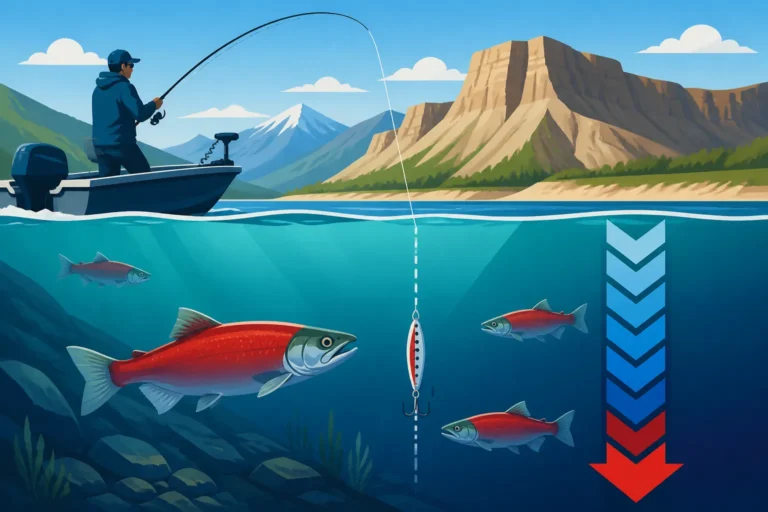
Reaching the specific depths where Kokanee are feeding is paramount, and standard weights often aren't enough. This is where specialized depth control methods come into play. Downriggers are the gold standard for precision depth control. These devices use a heavy cannonball weight (often 8-12 lbs) to carry your fishing line down to a precise depth, where it's released from a clip when a fish strikes. This allows your lure to swim freely at a consistent depth, which is exactly what you need when the fish are holding in a narrow water column. Modern downriggers from brands like Cannon or Scotty offer advanced features like electric retrieval and controlled descent, making the process much smoother. You can easily find various models and accessories on Amazon to suit your budget and needs.
If downriggers aren't in your budget or you prefer a simpler setup, Dipsy Divers (or similar diving planers) and lead core line are viable alternatives. Dipsy Divers are disc-shaped devices that dive to a specified depth when trolled, pulling your line and lure with them. They come in different sizes and can be adjusted to dive to either side of the boat, helping spread out your lines and prevent tangles. Lead core line is another effective method, though less precise. It's a specialized fishing line with a lead core that helps it sink at a predictable rate (often about 5 feet per color, with each color being 10 yards). By letting out a certain number of colors, you can estimate your lure's depth. Combining lead core with small inline weights can help you fine-tune your depth. Understanding these different depth control systems is crucial for knowing How Deep to Troll for Kokanee at Blue Mesa or any other reservoir.
| Depth Control Method | Pros | Cons | Ideal Use |
|---|---|---|---|
| Downriggers | Precise depth control, repeatable, minimal line drag on strike, multi-rod setups | Expensive, requires boat mounting, complex setup | Targeting specific depth ranges, large schools, consistent depths |
| Dipsy Divers | Moderate depth control, spreads lines, no boat mounting needed, relatively affordable | Less precise than downriggers, adds drag on fight, can be tricky to set up | Spreading lines, exploring depth ranges, smaller boats |
| Lead Core Line | Simple, no extra equipment needed, multiple rods per angler possible | Less precise depth, heavy and thick line, more drag, can be challenging to spool | Exploring broad depth ranges, smaller boats, budget-friendly |
Mastering Trolling Techniques
Once you have your gear sorted, it's time to put it to work. Trolling for Kokanee is a delicate dance of speed, depth, and presentation. It’s not just about covering water; it’s about presenting your offering in a way that mimics their natural food and triggers a strike.
Speed, Depth, and Presentation
The ideal trolling speed for Kokanee salmon typically falls between 0.8 and 1.5 miles per hour. However, this is not a hard and fast rule; fish can be particular, and what works one day might not work the next. It's vital to experiment with slight speed variations, bumping it up or down by 0.1-0.2 mph, until you find what the fish prefer. A good GPS unit on your fish finder will give you accurate trolling speed. Wind and current also play a significant role, so pay attention to your ground speed versus your speed through the water. Kokanee often respond to subtle changes, so don't be afraid to zig-zag slightly to vary the speed and action of your lures.
Depth is perhaps the most critical factor. Kokanee are highly sensitive to water temperature and light, and will suspend themselves in a very specific thermal layer. This "thermocline" is where their plankton food source thrives and where they feel most comfortable. In early season, they might be shallower, but by mid-summer, they could be anywhere from 30 to 80 feet, sometimes even deeper. Your fish finder is your best friend here, as it will help you identify the thermocline and any bait balls or fish arches holding within it. Once you find a depth that's producing, try to keep your lure consistently in that strike zone. A common frustration is catching one fish at 45 feet, and then nothing. It often means you've drifted out of that precise depth range. Trolling for Kokanee Salmon in Colorado requires constant monitoring of your depth.
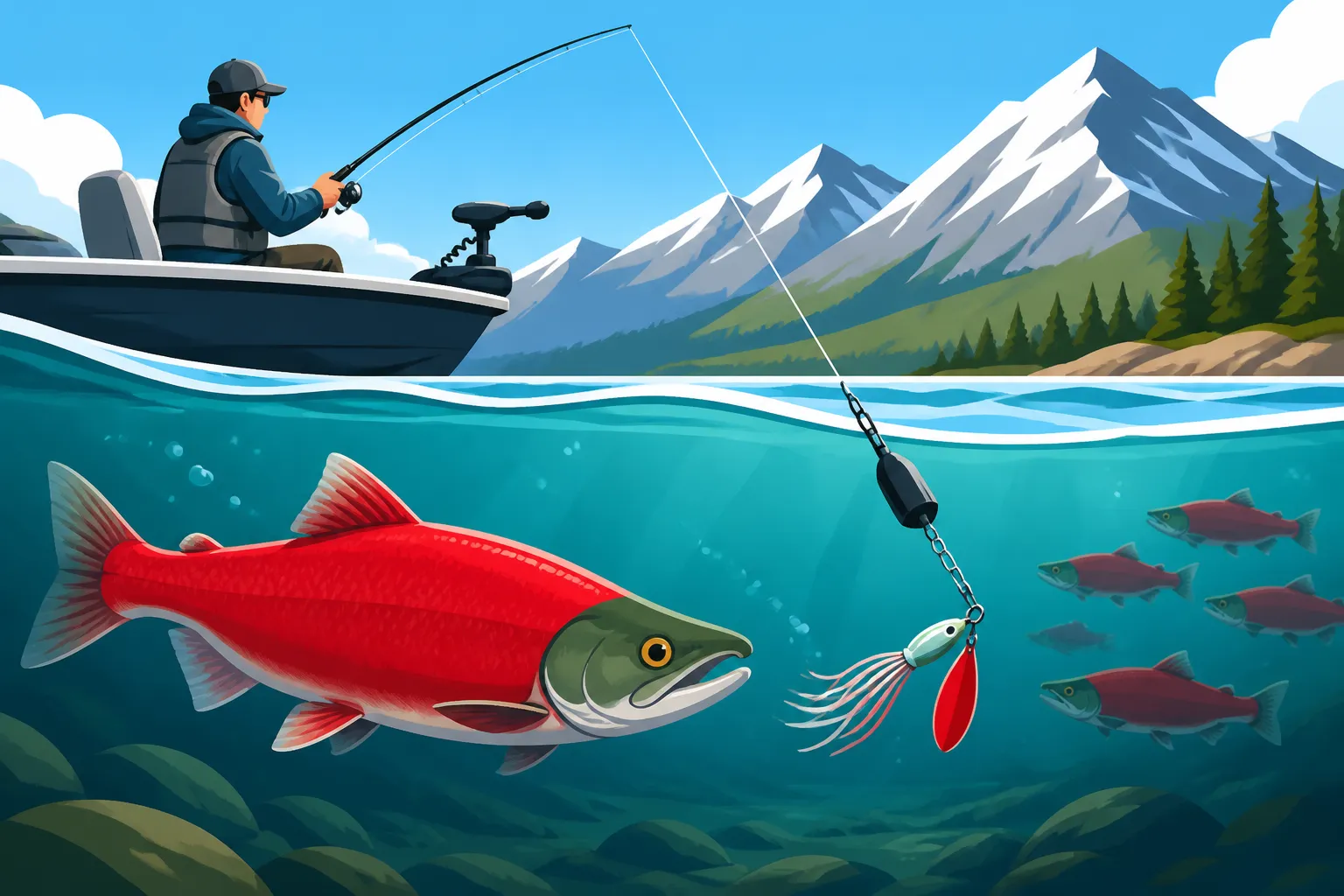
The actual "presentation" refers to how your lure behaves in the water. Kokanee are visual predators, but they can be finicky. The action of your dodger or flasher, followed by the subtle dance of your lure or wedding ring, needs to be enticing. A common setup involves a dodger or flasher followed by a short leader (10-24 inches) to a small spoon, hoochie, or wedding ring spinner. The dodger or flasher creates vibration and visual attraction, drawing fish in, while the trailing lure provides the actual "meal." Pay attention to the action of your lure in the water; sometimes a slightly longer or shorter leader will dramatically change its appeal.
Lures, Baits, and Scent Strategies
When it comes to lures for Kokanee, small is usually the name of the game. Popular choices include mini hoochies (small squid skirts), wedding ring spinners, and small trolling spoons. Brands like Mack's Lures, Kokanee Creek Tackle, and Vance's Tackle dominate this market. The color can be incredibly important, and it often varies from day to day and lake to lake. Pinks, oranges, greens, and chartreuse are perennial favorites, often with glitter or UV enhancements. It’s a good idea to have a wide assortment of colors and styles on hand. Sometimes a subtle two-tone hoochie will outperform a vibrant spoon, and vice-versa. You can easily stock up on a variety of Best Lures for Trolling Kokanee Salmon on Amazon.
While lures are essential, bait and scent can make all the difference, especially on tougher days. The most common and effective bait for Kokanee is a kernel or two of Shoepeg corn, dyed and scented. The corn adds a visual cue and a burst of flavor that Kokanee find irresistible. Popular scents include Anise, Garlic, Bloody Tuna, and Krill. Many anglers will soak their corn in a combination of dye and scent overnight. Try different scent combinations: some days garlic is king, other days anise. It’s another variable to experiment with until you crack the code. Applying scent to your lures or flashers directly, not just the corn, can also increase their drawing power, especially for fish following but not committing.
Reading the Water and Electronics
Modern fishing electronics have revolutionized Kokanee trolling, transforming it from a guessing game into a precise science. Relying solely on intuition will severely limit your success; learning to read your electronics is as important as choosing the right lure.
Interpreting Sonar and Fish Finders
Your fish finder is the window into the underwater world, and for Kokanee, it's indispensable. You’ll want to look for arches or lines that represent individual fish, but more importantly, you’ll be searching for dense clouds or "blobs" which indicate schools of Kokanee. These schools can be massive, sometimes stretching for hundreds of yards. Pay close attention to the depth at which these schools are holding. Kokanee often suspend at consistent depths, so if you see them at 50 feet, that’s your target depth.
Modern sonar units, like those from Garmin, Lowrance, or Humminbird, offer advanced features like CHIRP sonar, DownVu/SideVu imaging, and even live-scoping capabilities. CHIRP provides much clearer target separation, allowing you to distinguish individual fish within a school. DownVu (or Down Imaging) gives you a photographic-like view directly below your boat, showing bait balls and fish in incredible detail. If you see a dense bait ball with arches around or in it, you've likely found the feeding zone. Don't just look for fish; look for the bait that attracts the fish. Adjusting your sensitivity, depth range, and scroll speed on your fish finder will help you get the clearest picture of what's beneath the surface.
Locating Schools and Structure
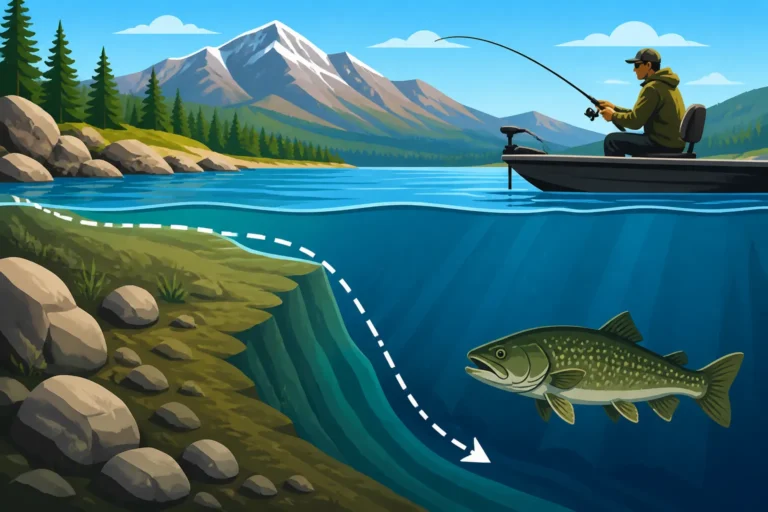
While Kokanee are pelagic, they aren't entirely random. They'll often relate to certain underwater features or currents. For example, they might congregate near submerged river channels, points, or humps where upwellings of plankton might occur. In very large reservoirs, they can be found cruising deep flats or near the faces of large submerged cliffs. The key is to cover water effectively until you locate a school. Once you find one, mark it on your GPS. Then, troll through it again, and again, trying to pinpoint the edges and center of the school. If you catch fish on multiple passes through the same area, you've likely found their holding pattern.
Understanding contours and changes in bottom structure is also important. Use your mapping features on your fish finder to identify these potential holding areas. Sometimes, schools will move along a particular depth contour, or they might be concentrated where a deep flat meets a drop-off. Keep an eye on your speed, depth, and direction in relation to these underwater features. If the wind picks up, it can sometimes push schools, so being able to adjust your trolling pattern to stay with the fish is a skill developed over time. Don't be afraid to make wide turns; sometimes the outside or inside of a turn will trigger a strike due to the slight speed variation it creates.
Seasonal Considerations for Kokanee
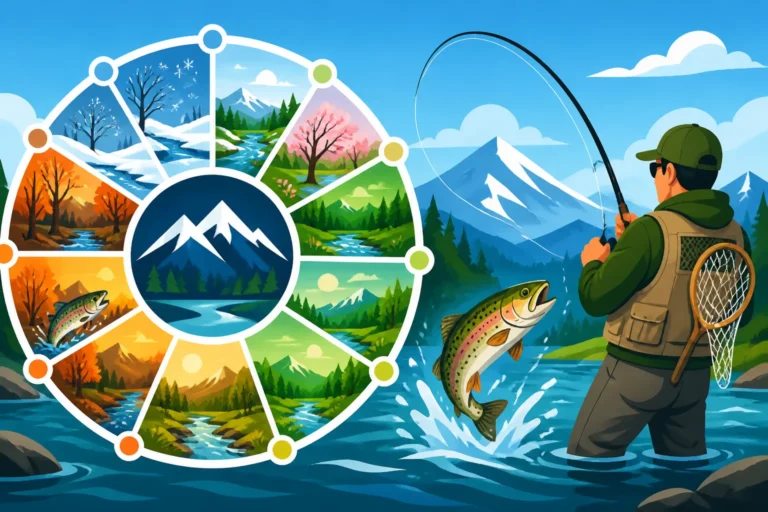
Colorado's seasons dramatically influence where and how Kokanee behave. What works in spring won't necessarily work in fall. Being attuned to these seasonal shifts is crucial for consistent success on the water.
Spring and Summer Tactics
As ice leaves Colorado's reservoirs in early spring (ice-out), Kokanee begin to spread out and feed actively. They're often found in the upper water column as the water temperatures are still cool and uniform throughout the lake. Trolling shallower, perhaps 15-30 feet, is often productive. Small spoons and hoochies in bright colors like pink and chartreuse are excellent choices. This is a great time to be out before the summer crowds, and the fish are generally quite hungry.
As summer progresses, the water warms, and Kokanee will move deeper to find their preferred cold-water habitat. This is when downriggers become absolutely essential, allowing you to target depths of 40-80 feet or even more, depending on the reservoir and the specific conditions. Mornings and evenings often provide the best bite during summer, as light levels are lower. Midday can be tough, but persistence and accurate depth control can still yield results. Focus on finding the thermocline and any dense bait concentrations using your electronics. Don't be surprised if you're trolling over what seems like barren water for long stretches, only to hit a prolific school and land several fish in quick succession. This is a hallmark of summer Kokanee fishing.
Fall Spawning Runs and Winter Challenges
Autumn is a truly spectacular time to target Kokanee in Colorado, but the tactics shift considerably. As mentioned earlier, Kokanee undergo a profound physiological change in preparation for their spawn. Their flesh turns red, and their bodies transform. During the early part of the fall, before the full spawn, they can be incredibly aggressive feeders as they build up energy. This is often when you'll find the largest, most vibrant red Kokanee. Trolling depths may vary, but they'll often be shallower than in mid-summer as they start to stage for their upstream migration or move to shallow spawning grounds within the reservoir. You might find them concentrated near the mouths of tributary rivers or in areas with rocky bottoms. For more detail on this, check out our guide to Kokanee Salmon Spawning Runs in Colorado.
As the spawn fully kicks in, usually by late September and into October, the fish stop feeding entirely. They are solely focused on reproduction, and catching them becomes extremely difficult, if not impossible, on traditional trolling gear. Some anglers might snag them during this time, but ethical anglers respect the spawning process and avoid targeting fish that are not actively feeding. Many areas have specific regulations during spawning runs to protect the fish, so always consult the latest Colorado Fishing Regulations Every Angler Should Know and species-specific rules. During winter, once the spawn is complete and the fish have died, the remaining Kokanee populations are typically juveniles. Ice fishing can be an option for these younger fish, but it's a completely different approach than trolling.
Troubleshooting Common Trolling Issues
Even with the best gear and knowledge, every angler experiences slow days. It’s part of the challenge! The key is to know how to diagnose the problem and make adjustments rather than stubbornly sticking to a technique that isn't working.
When the Bite is Slow
A slow bite can be incredibly frustrating. You’re doing everything you think is right, but the fish just aren’t cooperating. The first thing to check is your depth. Are you seeing fish on your sonar? If so, are your lures running at exactly that depth? Sometimes even a few feet can make a huge difference. Double-check your downrigger settings or how much lead core you have out. Next, experiment with speed. Try speeding up or slowing down by small increments. A change of 0.1 mph can sometimes trigger a reluctant bite.
If depth and speed adjustments aren't working, it's time to cycle through your lure and scent choices. Start with your most reliable "go-to" colors and scents, but if those aren't working, don't be afraid to try something completely different. Switch from a spoon to a hoochie, or from a pink lure to a green one. Change your corn scent from garlic to anise. Sometimes the fish prefer a completely different presentation or flavor profile. Lastly, consider your location. Are you still seeing schools on your electronics? If not, it might be time to move to a different area of the reservoir, perhaps exploring a new depth contour or point where fish might be holding. Sometimes the most effective troubleshooting is simply covering more water until you find actively feeding fish.
Avoiding Common Mistakes
One of the most common mistakes Kokanee anglers make is using gear that's too heavy or clunky. Kokanee have soft mouths, and heavy rods or stiff lines can tear the hook out easily during the fight. Using a moderate action rod and a proper leader are crucial. Another error is neglecting scent. While some days Kokanee will hit unscented lures, most of the time, that little extra something from scented corn or a smeared attractant can be the difference-maker. Don't forget your corn!
Many anglers also fall into the trap of setting it and forgetting it. Trolling for Kokanee requires constant attention to detail: monitoring your speed, depth, and sonar. If you're just driving in a straight line for an hour without checking your electronics or varying your presentation, you're missing opportunities. Pay attention to other anglers who are catching fish – what colors are they using? What speed are they trolling? While you don't want to crowd anyone, observation can provide valuable clues. Finally, remember that regulations are there for a reason. Always consult the Colorado Parks and Wildlife fishing brochure for specific bag and possession limits for Kokanee salmon, as these can vary by water body and time of year. Knowing Colorado Bag and Possession Limits by Species is vital to avoid penalties.
Disclaimer
Please note that fishing regulations and conditions in Colorado can change frequently. Always consult the latest Colorado Parks and Wildlife regulations before heading out on the water. This guide is for informational purposes only and does not supersede official regulations.