Best Lures for Trolling Kokanee Salmon
Trying to dial in the perfect setup for Kokanee salmon can feel like chasing a ghost in the deep, cold waters of Colorado. These fish are notorious for being finicky eaters, and without the right lures and presentation, you might spend a whole day trolling without a single bite. This comprehensive guide is here to demystify the art of selecting the best lures for trolling Kokanee salmon, helping you land more of these elusive, silver-sided beauties.
Understanding Kokanee Behavior for Optimal Lure Selection
Before we even talk about specific lures, it's crucial to understand what makes Kokanee tick. These aren't your typical trout; they're landlocked sockeye salmon, and their habits are distinctly different. Ignoring these biological truths is often why anglers struggle, throwing everything they have at these fish with little success.
Why Kokanee Are Such Finicky Eaters
Kokanee salmon in Colorado are primarily plankton feeders. Unlike trout, which often key in on insects or smaller fish, Kokanee sift microscopic organisms from the water column. This makes them incredibly selective. They aren't looking for a big, flashy meal; they're looking for something that either mimics the subtle presence of plankton or a small, vulnerable invertebrate, or something that triggers an aggressive reaction. When you're dealing with a fish whose natural diet is invisible to the naked eye, your lures need to do more than just look pretty. They need to create vibration, flash, and motion that appeals to their lateral line or their visual hunting instincts, even if what they're "hunting" isn't exactly what they eat.
The Impact of Water Temperature and Depth
Kokanee are cold-water fish, and they absolutely thrive in specific temperature bands. In Colorado's deep reservoirs like Blue Mesa Reservoir or Lake Granby, they'll seek out the thermocline — that distinct layer where warm surface water meets cooler, deeper water. This thermocline is often where plankton congregates, making it their preferred feeding zone. As seasons change, so does the depth of the thermocline. In spring and early summer, they might be shallower, but by mid-summer, they're often found 30 to 80 feet down, sometimes even deeper. This means your lure choice isn't just about what they eat, but where they eat it. You need lures that can be presented effectively at these precise depths, which usually means employing specialized gear like downriggers or lead core line. Understanding these movements is key; if your lure isn't in the strike zone, it doesn't matter how perfect it is.
Essential Lure Categories for Trolling Kokanee Salmon
When it comes to trolling for Kokanee, you'll find that a few core lure categories consistently outperform others. These aren't just random choices; they're designed to capitalize on Kokanee's specific feeding patterns and their sensitivity to flash and vibration.
Flashers and Dodgers: The Kokanee Callers
These aren't lures in themselves, but rather attractors that create a commotion in the water, drawing Kokanee in from a distance. A flasher or dodger is almost always rigged in front of a smaller Kokanee lure.
What They Are and How They Work
A flasher is typically a long, somewhat slender plastic or metal blade that spins or rotates on its axis, creating a continuous flash and vibration. Think of it as a small underwater disco ball designed to annoy and attract. A dodger, on the other hand, has a more oscillating, side-to-side motion, creating a thump-thump-thump vibration and an erratic flash. Both serve to mimic a school of baitfish or simply create enough disturbance to pique a Kokanee's curiosity. The trick is that they impart action to the following lure. Without a dodger or flasher, many Kokanee lures would simply swim straight and unconvincing.
Choosing the Right Size and Color
For Kokanee, you generally want smaller flashers and dodgers. Sizes typically range from 4 to 6 inches. Larger attractors can actually spook these wary fish. Color is paramount. Popular choices include chrome, silver, pink, orange, chartreuse, and sometimes combinations of these with glitter or UV finishes. On bright, sunny days, chrome or silver might excel, while in overcast conditions or deeper water, UV or glow-in-the-dark options in pink or orange can be incredibly effective. Sometimes, a subtle white or clear dodger can be the ticket, especially if the fish are highly pressured. You can find a wide array of these attractors on platforms like Amazon, making it easy to experiment with different patterns.
Small Hoochies and Squids: The Subtle Approach
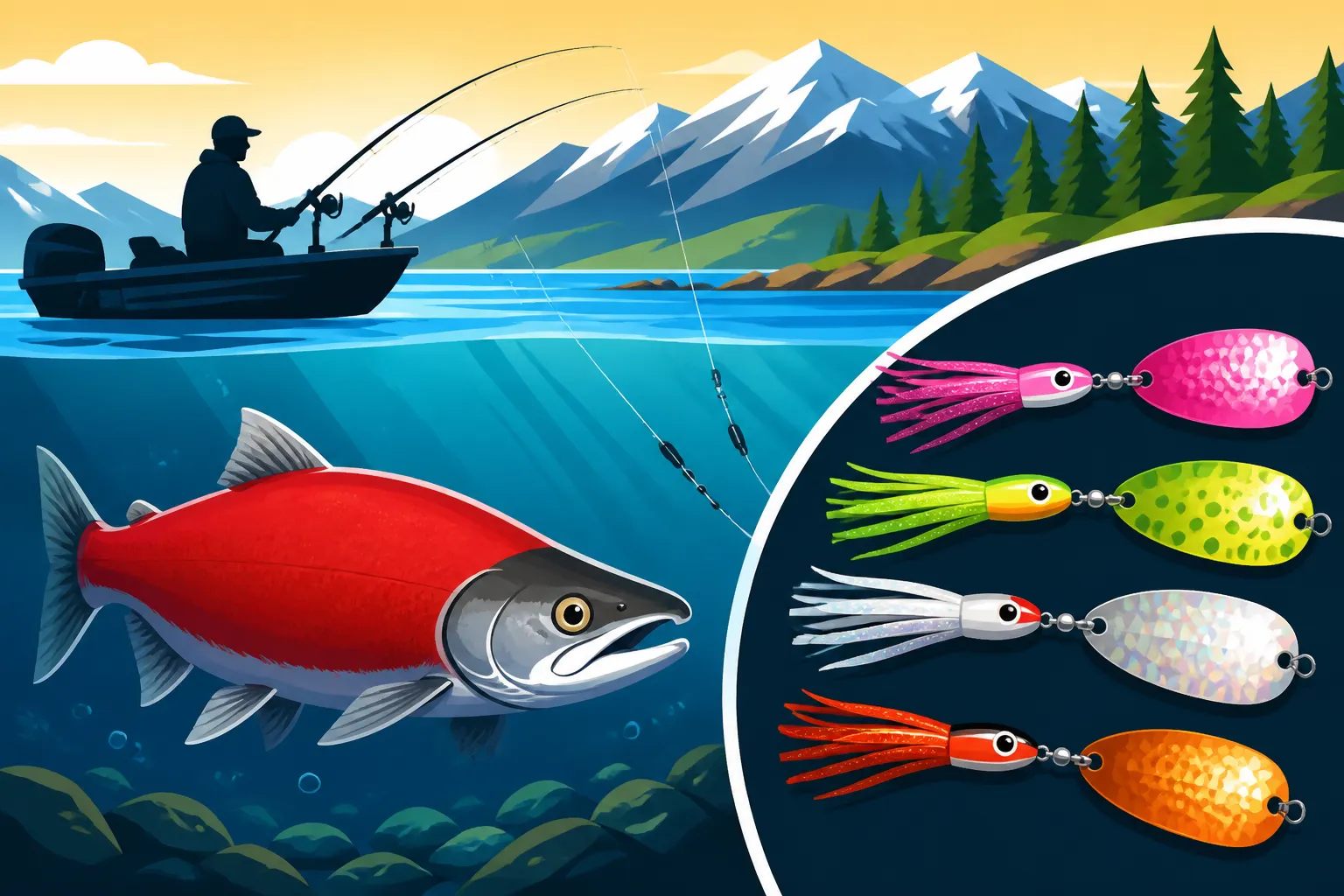
These soft plastic lures are perhaps the most popular follow-up bait behind a dodger or flasher. Their soft, pliable bodies and tentacles provide a lifelike action that Kokanee often can't resist.
Description and Mimicry
Hoochies and squids are small, often translucent plastic skirts with multiple tentacles. They range in size from about 1 to 2.5 inches. When pulled behind a dodger, the skirt pulses and wiggles, mimicking a small invertebrate or, perhaps more importantly, an injured baitfish struggling to keep up. The motion is subtle but constant, which seems to trigger a feeding response in Kokanee. They often come pre-rigged with two small, sharp hooks.
Effective Colors and Rigging
Again, color is key. Pink, orange, chartreuse, and white are perennial favorites. Many successful anglers swear by specific combinations, like a pink hoochie with a bit of glow or a white hoochie with a chartreuse stripe. Experimentation is your best friend here. Always tip your hoochie with a small piece of corn, Gulp! Maggots, or a similar scent-infused bait. This adds a crucial element of smell and a bit of visual bulk that can be the difference between a follow and a strike. The scent of corn is believed to mask human scent and also mimics the small natural organisms Kokanee feed on.
Small Spoons: Flash and Flutter
Spoons have been a staple for trout and salmon for generations, and small spoons are incredibly effective for Kokanee, especially when they're actively feeding.
Popular Brands and Actions
When it comes to small spoons for Kokanee, you're looking for something with a fluttering, erratic action that mimics a wounded baitfish. Brands like Kokanee Killer, Dick Nite, and Rocky Mountain Tackle are incredibly popular for a reason. These spoons are often brightly colored, sometimes with prism tape or UV finishes. They typically range from 1 to 2 inches in length.
Color Considerations and Trolling Speed
Just like with dodgers and hoochies, bright colors rule the day. Pink, orange, chartreuse, and iridescent finishes are standard. Sometimes, a metallic silver or gold with a splash of color can be very effective. The action of a spoon is highly dependent on your trolling speed. Too fast, and it might spin unnaturally; too slow, and it might just drag. Generally, a slow troll of 1.0 to 1.8 mph is ideal for Kokanee, allowing the spoon to wobble and flutter seductively. Remember to always tip your spoon with a kernel of corn for added scent and visual appeal. This small detail can significantly increase your strike rate.
Micro-Plugs and Crankbaits: When Kokanee Get Aggressive
While less common than hoochies or spoons, micro-plugs and crankbaits can be surprisingly effective, particularly when Kokanee are more aggressive or targeting slightly larger prey.
When to Use Them
These lures are best deployed when you notice Kokanee are hitting with more force, or if you're seeing signs of them chasing smaller baitfish on your sonar. They tend to have a more defined swimming action than a hoochie or spoon and can provide a different presentation that might entice fish that are ignoring other offerings. They can also be a good choice for targeting Kokanee suspended at specific depths or near structure.
Action and Presentation
Micro-plugs and crankbaits, typically 1 to 2 inches long, offer a more erratic darting or wiggling action. They often feature a small lip that helps them dive and wiggle. Colors again trend towards the bright and flashy: pink, orange, chartreuse, and silver are common. The key is to find one that has a tight, high-frequency wobble rather than a wide, slow swim, as Kokanee often prefer that tighter action. Tipping with corn or scent is still recommended to sweeten the deal.
Trolling Strategies and Rigging for Maximum Success
Having the right lures is only half the battle. Presenting them correctly at the right depth and speed is paramount to consistently catching Kokanee. This is where your trolling strategy and rigging come into play.
Downriggers, Lead Core, and Diving Planes
Accessing the deep-water haunts of Kokanee requires specialized equipment. You can't just cast and retrieve a small lure 50 feet deep.
The Precision of Downriggers
Downriggers are the gold standard for precision depth control. They allow you to get your lure down to a specific depth, say 65 feet, and hold it there consistently while you troll. You attach your line to a release clip on a heavy cannonball weight, which is then lowered to the desired depth. When a fish strikes, your line pops free from the clip, and you fight the fish directly. This method is incredibly effective for targeting tight schools of Kokanee in the thermocline. Many serious Kokanee anglers consider downriggers indispensable. Look for electric downriggers for ease of use, especially if you're frequently adjusting depth.
The Versatility of Lead Core Line
Lead core line is a weighted fishing line that sinks as you troll. Each color section (typically 10 yards) represents approximately 5 feet of depth at a standard trolling speed. So, if you let out 10 colors, your lure might be around 50 feet deep. It's less precise than a downrigger but more accessible for many anglers. It requires a specialized reel with a large line capacity to hold the thick, weighted line. When using lead core, remember that your trolling speed and the lure's resistance will affect the actual depth. It's an excellent option for covering a wider range of depths or if you don't have downriggers.
Diving Planes and Dipsy Divers
Diving planes, like Dipsy Divers or Pink Lady divers, are disc-shaped devices that dive when trolled, pulling your lure down to depth. They trip when a fish strikes, reducing resistance for the fight. They're a good intermediate option between lead core and downriggers, offering more precision than lead core without the expense of a full downrigger setup. They are particularly useful for targeting specific depths without a heavy weight directly on your line. You'll often find these alongside other trolling gear on Amazon.
Leader Length and Material: The Unseen Connection
The connection between your attractor (dodger/flasher) and your lure is critical. This "leader" section needs to be strong yet invisible, allowing the lure to perform naturally.
Optimal Leader Lengths for Attractors
For dodgers, a shorter leader is generally better, typically 8 to 14 inches. The dodger's erratic action is meant to be transferred directly to the lure. For flashers, a longer leader, often 18 to 36 inches, is preferred. Flashers spin, and a longer leader prevents the lure from spinning along with it, allowing it to have its own independent action. Always use a high-quality fluorocarbon leader, as it's nearly invisible underwater and has excellent abrasion resistance.
Fluorocarbon's Advantage
Kokanee have excellent eyesight, and heavy, visible monofilament can easily spook them. Fluorocarbon leader, ranging from 6 to 10 lb test, is the ideal choice. Its refractive index is very close to water, making it almost invisible to fish. It also sinks faster than mono, which can be an advantage when trying to maintain depth. Choosing a good fluorocarbon leader is a small detail that can make a big difference in your catch rates.
Trolling Speed and Boat Control: The Rhythm of the Bite
Consistency in speed and presentation is often the secret sauce to successful Kokanee trolling. These fish are often found in tight schools, and once you get a bite, repeating that exact presentation is key.
Finding the Sweet Spot
As mentioned earlier, Kokanee generally prefer a slower trolling speed, usually between 1.0 and 1.8 mph. However, this is just a starting point. The optimal speed can vary based on water temperature, the specific lure you're using, and the mood of the fish. Some days, a hair faster or slower might be the trick. Pay attention to your bites: if you get a strike, maintain that speed and depth. Using a reliable boat speed indicator and a good trolling motor is essential for maintaining consistent speed. For deeper insights into trolling, consider checking out our guide on Trolling Techniques for Colorado Reservoirs.
S-Turns and Pauses
Don't just troll in a straight line. Incorporating gentle S-turns or even momentary pauses in your retrieve can make your lures dart, slow down, and speed up, triggering reactive strikes. The change in speed and direction can make your lure look like a struggling baitfish, often prompting a Kokanee to hit. These subtle changes can be incredibly effective, especially when the fish are hesitant.
Scent and Bait Additives: The Secret Weapon
Kokanee rely heavily on their sense of smell, and incorporating scent into your presentation can dramatically increase your success.
Why Scent Matters
Since Kokanee are plankton feeders, they are highly attuned to subtle olfactory cues in the water. Adding scent, especially something like cured Shoepeg corn, Pro-Cure, or Mike's Glo Scent, can draw them in and encourage them to hold onto the lure longer, giving you time to set the hook. The scent also helps mask any human odor that might transfer to your lures. Don't underestimate the power of a good scent trail in the water.
Tipping Your Lures
Always tip your hoochies, spoons, and micro-plugs with a small piece of cured Shoepeg corn. You can buy pre-scented corn or add your own favorite Kokanee attractant. The visual appeal and the added scent create an irresistible combination. Some anglers also swear by Gulp! Maggots or PowerBait, which offer both scent and durability. Just a small piece is enough; too much can alter the lure's action.
Top Lure Recommendations for Colorado's Premier Kokanee Waters
Colorado is home to several fantastic Kokanee fisheries, each with its own nuances. While the general principles apply, specific lakes often have their preferred lure setups that local anglers swear by. Knowing the local favorites can give you a significant advantage.
Blue Mesa Reservoir: Kokanee Mecca
Blue Mesa Reservoir near Gunnison is arguably Colorado's most famous Kokanee fishery, holding massive numbers of fish. When planning a trip, be sure to review the specific regulations in our Colorado Fishing Regulations Every Angler Should Know guide.
Lure Specifics for Blue Mesa
For Blue Mesa, expect to troll deep, often 40-80 feet in summer. Pink, orange, and chartreuse are the holy trinity of colors here. The Blue Mesa Reservoir for Kokanee Salmon guide goes into more detail, but generally, a 4-inch pink or orange dodger followed by a small pink or chartreuse hoochie tipped with corn is a killer combination. Small spoons like the Kokanee Killer in pink/silver or orange/gold are also highly effective. Consider using a UV-enhanced lure on cloudy days or early mornings. For more precise depth control, you'll definitely want to master How Deep to Troll for Kokanee at Blue Mesa.
Seasonal Adjustments at Blue Mesa
In spring, Kokanee might be shallower, making 20-40 foot presentations effective. As summer progresses and the water warms, they'll descend to the deeper, cooler thermocline. Fall brings the famous Kokanee spawning runs, where they turn bright red. While targeting them during the spawn can be challenging due, our Kokanee Salmon Spawning Runs in Colorado article offers more information.
Lake Granby: The High-Altitude Gem
Lake Granby, nestled in the mountains, offers another prime Kokanee experience, albeit often with cooler water temperatures and different feeding patterns.
Go-To Lures for Granby
For Lake Granby, anglers often find success with slightly smaller dodgers and hoochies. White and clear dodgers with a silver blade are popular, especially when paired with a small, glow-in-the-dark hoochie in pink or orange. The Kokanee's natural diet of tiny crustaceans and plankton in these high-altitude lakes means that a subtle presentation is often best. Small, 1.5-inch spoons in silver or gold with a touch of color can also be very productive. Remember to check Colorado Fishing Season Dates and Bag Limits before you head out.
Depth and Speed Considerations
Granby's Kokanee can be found at varying depths, often shallower in spring and deeper in summer, but rarely as deep as Blue Mesa. Focus on the 20-60 foot range. A slightly slower trolling speed, around 1.0-1.5 mph, tends to work well here, allowing the lures to dance enticingly in the clear mountain water.
Taylor Park Reservoir: Rocky Mountain Trophy Potential
Taylor Park Reservoir, another high-country reservoir, is known for growing some truly massive Kokanee, offering trophy potential for persistent anglers.
Lure Choices for Taylor Park
Anglers at Taylor Park Reservoir often lean towards larger dodgers (5-6 inches) and slightly more robust hoochies or small plugs, especially when targeting the bigger fish. Colors like vibrant pink, chartreuse, and sometimes purple can be very effective. Many anglers have great luck with a gold dodger followed by a pink or green hoochie. The fish here are often looking for a more substantial meal. Knowing the Kokanee Salmon Life Cycle in Colorado can help you understand their feeding patterns throughout the year.
Dealing with Depth and Clarity
Taylor Park is known for its clear, cold water, which means leader invisibility is even more crucial. Long fluorocarbon leaders (24-36 inches for flashers) are recommended. Kokanee here can be suspended anywhere from 15 to 70 feet deep, depending on the season and time of day. Using a good fish finder to locate schools and then precisely dropping your lures with downriggers or a precise lead core setup is key.
General Tips for Any Colorado Kokanee Water
Regardless of where you're fishing, a few universal principles will serve you well. Our guide on Colorado Fishing License Guide for Residents and Nonresidents is a good starting point for ensuring you're legal on the water.
- Vary Your Spread: Don't run all your lines at the same depth. Stagger them by 5-10 feet to cover more of the water column until you find where the fish are holding.
- Experiment with Colors: Always have a variety of dodgers, flashers, and lures in different colors. What works one day might not work the next. Don't be afraid to try combinations you wouldn't expect.
- Check Your Bait: Periodically reel in your lures to check your corn or scent. It can fall off or lose its potency, drastically reducing your chances.
- Sharp Hooks are Non-Negotiable: Kokanee have soft mouths, and small, sharp hooks are essential for good hooksets and keeping fish on the line. Replace dull hooks frequently. You can find quality replacement hooks and other tackle on Amazon.
- Follow the Regulations: Always be aware of the specific Colorado Bag and Possession Limits by Species for Kokanee salmon, as they can vary by lake and season.
- Stay Flexible: Kokanee fishing is often about adapting to conditions. What worked yesterday might not work today. Keep trying different depths, speeds, and lure combinations until you crack the code.
Finding the best lures for trolling Kokanee salmon is a journey of understanding, experimentation, and persistence. By focusing on their unique biology, using the right attractors and lures, and mastering your trolling presentation, you'll be well on your way to filling your cooler with these fantastic fighting and delicious fish.
Disclaimer
The information provided in this guide is for general informational purposes only and is not intended as legal or professional advice. Fishing regulations, conditions, and best practices can change rapidly. Always consult the most current regulations published by Colorado Parks and Wildlife (CPW) before engaging in any fishing activities. Ensure you have all necessary licenses and stamps, such as the Colorado Fishing License Guide for Residents and Nonresidents and Colorado's Habitat Stamp, Explained, and adhere to all safety guidelines. The author and publisher are not responsible for any actions taken based on the information in this guide.