Why Colorado Rivers Get Dangerous During Afternoon Storms
There’s nothing quite like a peaceful morning on a Colorado river, the air crisp and the trout rising. But many of us have experienced that shift, often in the early afternoon, when the sky darkens, and a gentle drizzle quickly turns into a fierce thunderstorm. These sudden, powerful storms aren't just a nuisance; they can transform a tranquil fishing spot into a truly dangerous situation, and understanding why is crucial for every angler's safety. This guide will help you understand the unique characteristics of Colorado's afternoon storms and provide practical advice on staying safe when the weather turns.
The Unique Nature of Colorado's Afternoon Thunderstorms
Colorado is famous for its "300 days of sunshine," but those sunny days often give way to dramatic afternoon thunderstorms, especially during the summer monsoon season. These aren't your typical long, drawn-out rain events; they're often quick, intense, and come with a specific set of challenges for anyone out on the water.
Why Afternoon Storms Are So Common in Colorado
Think about a typical summer day in Colorado. The sun beats down, heating the ground and the air, especially over the expansive plains and sun-drenched mountain slopes. This warm, moist air starts to rise. As it ascends into the cooler atmosphere, the moisture condenses, forming towering cumulus clouds. When conditions are just right – often influenced by monsoonal moisture pushing up from the south – these clouds grow into full-blown thunderheads. The mountains themselves act as a natural chimney, enhancing this uplift and often concentrating the storm activity right where many of our favorite rivers flow. It's a cyclical pattern: warm mornings, building clouds, and then, often like clockwork, a dramatic display of nature's power in the afternoon. This pattern is particularly prevalent from July through September, though intense storms can pop up anytime from late spring into early fall.
The Dangers of Lightning and Flash Floods
These storms aren't just about a bit of rain. They pack a serious punch. Lightning is a primary concern, especially when you're holding a graphite fishing rod – essentially a lightning conductor – in an open environment near water. Being the tallest object in an exposed area like a riverbank or in a drift boat makes you a prime target. Seeking shelter under a lone tree is actually more dangerous, as lightning often strikes the tallest objects.
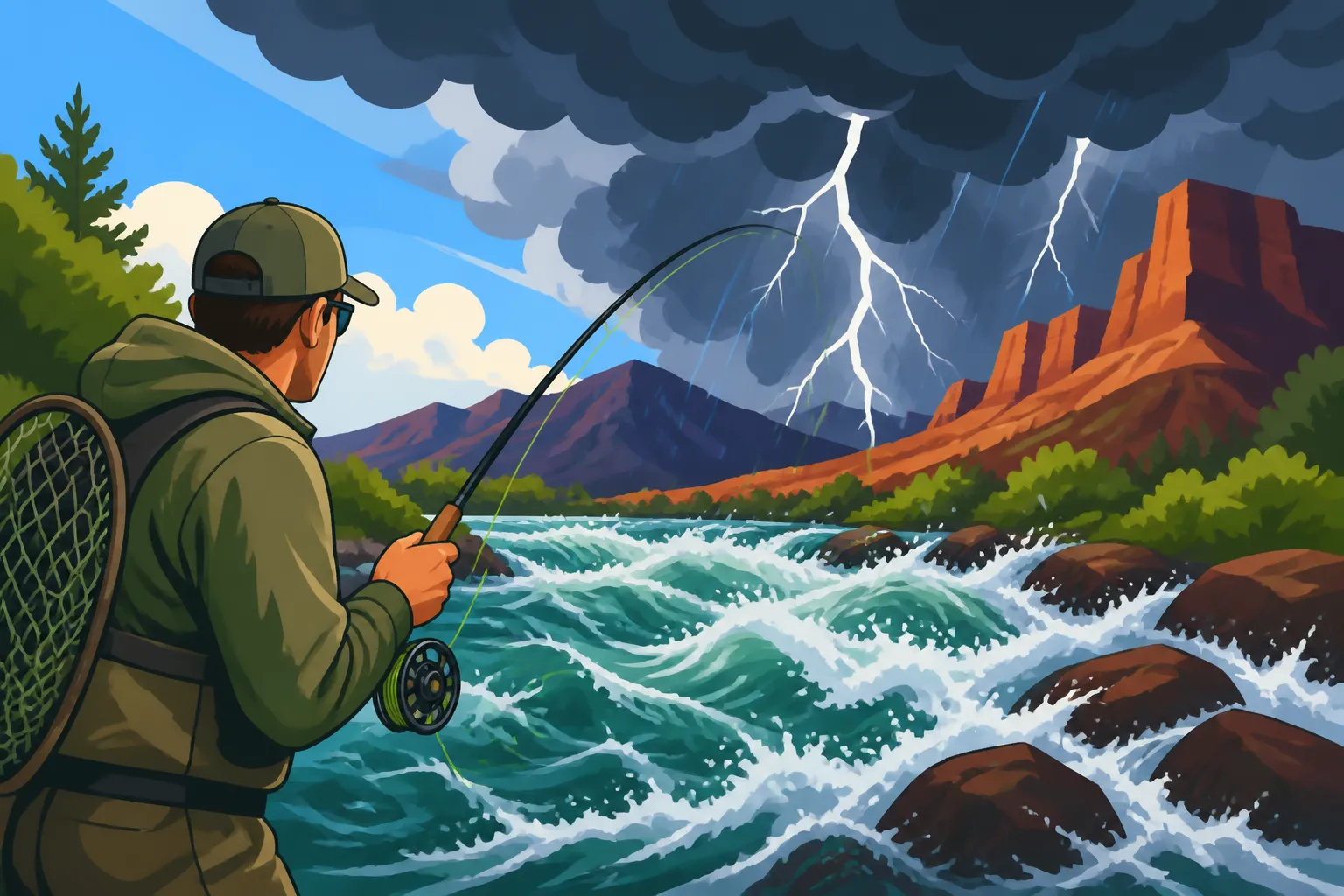
Beyond lightning, the sheer volume of rain these storms can dump in a short period is staggering. Picture a steep mountain canyon, like those found around the Arkansas River near Buena Vista or the Cache la Poudre. When heavy rain hits these areas, the water has nowhere to go but down. It rushes off the bare rock, through dry washes, and into the main river channel, creating incredibly dangerous flash floods. Even a small stream can become a raging torrent in minutes. I've personally seen a gentle riffle turn into a whitewater rapids during an intense afternoon downpour, making wading fast currents a sudden and terrifying experience. It's not just the depth of the water; it's the incredible force and speed that can sweep you off your feet in an instant.
Direct Impacts of Storms on River Conditions
When a Colorado thunderstorm unleashes its fury, the river itself undergoes rapid and dramatic changes, affecting both safety and fishing success.
Rapid Increases in Water Flow and Depth
One of the most immediate and dangerous impacts is the sudden surge in water flow. As rainwater rushes off the surrounding landscape, it funnels directly into the river. This isn't a gradual rise you can easily observe. We're talking about a river's depth and speed increasing significantly in mere minutes. What was once a wadeable stretch can quickly become a powerful, uncrossable torrent. This is especially true in narrow canyons or areas with steep, rocky banks. Anglers who might have waded out into the middle of a river to reach a prime fishing lane can find themselves cut off from the bank by a rapidly rising and swift current. Knowing how to read water is critical, but a sudden storm can render all your carefully observed cues useless.
The increased velocity of the water can be astounding. A current that was once manageable can now exert incredible pressure, making it nearly impossible to maintain your footing, even with good wading boots and a sturdy wading staff. This makes wading a difficult task, even for experienced anglers. The sheer force can dislodge rocks and debris from the streambed, turning them into underwater projectiles.
Decreased Water Clarity and Introduction of Debris
Along with the increased flow comes a dramatic decrease in water clarity. The rushing rainwater picks up sediment, silt, and dirt from the banks and surrounding hillsides, turning crystal-clear mountain streams into muddy, chocolate-milk flows. This "blown out" condition makes it incredibly difficult to see where you're stepping, hiding submerged obstacles and rapidly changing bottom contours. The lack of visibility also severely impacts fishing, as trout rely heavily on sight to feed, and a muddy river makes them much harder to locate and entice.
Furthermore, these surges of water carry a significant amount of debris. Twigs, leaves, branches, entire logs, and even larger objects can be swept into the river. This floating debris not only poses a direct physical hazard to anglers, potentially knocking them off balance or trapping them, but it also creates hazards for any boaters or floaters. Lines can get tangled, props can get damaged, and the sheer volume of floating material can be overwhelming. I've seen entire trees come down the Roaring Fork after a particularly nasty storm, making fishing – and even being near the water – impossible for days. This kind of sudden influx of debris drastically alters the river's character.
Fluctuations in Water Temperature
While perhaps less immediately obvious than flow or clarity changes, water temperature can also fluctuate, though usually less dramatically than during something like a spring runoff. Heavy rainfall, especially from a cold, high-altitude storm, can introduce colder water into the system. This can temporarily shock fish, causing them to become less active and move to different holding lies. Conversely, if the storm is warm and widespread, it might have a negligible or even slightly warming effect on surface waters in larger reservoirs, but in smaller, faster-moving rivers, the sudden influx of cooler runoff can be a factor. Trout are very sensitive to temperature changes, and rapid shifts can put them off their feed or send them seeking more stable thermal refuges.
Essential Safety Strategies for Anglers
Staying safe on Colorado rivers, especially when those famous afternoon storms roll in, requires a proactive approach and a healthy respect for Mother Nature. Planning ahead and being prepared can make all the difference.
Monitoring Weather Forecasts Relentlessly
This might sound obvious, but it's often overlooked in the excitement of getting to the water. Before you even leave the house, check the forecast for your specific fishing location, not just the nearest major town. Mountain weather can be incredibly localized. Many weather apps now offer hyper-local forecasts that can give you a better idea of what to expect.
Beyond the general forecast, pay attention to radar. A small, green blob on the radar can quickly become an angry red cell in the mountains. Look for any mention of flash flood watches or warnings in the area you plan to fish. Once you're out there, keep an eye on the sky. Darkening clouds, distant thunder, or a sudden drop in temperature are all signs that the weather is turning. Don't wait for the first raindrop to start thinking about safety. If you see lightning in the distance or hear thunder, it's time to pack up, even if it's still sunny where you are. The adage "when thunder roars, go indoors" applies just as much to fishing. If there's no "indoors," head for your vehicle immediately. Planning your fishing day around the weather, such as aiming for early mornings, can help you avoid the worst of the afternoon storm activity.
Equipping Yourself for the Unexpected
Being prepared for a sudden storm involves more than just a rain jacket, though that's a good start.
- Proper Rain Gear: Invest in good quality, waterproof outer layers. A cheap poncho won't cut it when the skies truly open up. Think about a durable, breathable rain jacket and pants that will keep you dry even in a deluge.
- Emergency Supplies: Always carry a small dry bag with essentials. This should include a first-aid kit (consider something robust you can find on Amazon), a headlamp, a fully charged cell phone (in a waterproof case!), and some high-energy snacks. Even if you don't fall in, being stuck in a downpour for an hour while you hike back to your car can lead to hypothermia if you're not adequately dressed.
- Wading Staff and Traction: A sturdy wading staff is non-negotiable for wading in any Colorado river, but it becomes absolutely vital during changing conditions. It provides a third point of contact, helping you maintain balance against increased currents and navigate unseen obstacles. Coupled with good wading boots that have excellent sole traction, a staff can literally be a lifesaver. You might also consider studded soles, especially if slipping is a concern on rocky riverbeds.
- Communication: Tell someone where you're going and when you expect to be back. If you're fishing alone, this is paramount. Consider carrying a personal locator beacon (PLB) or a satellite communication device, especially if you're venturing into remote areas where cell service is unreliable. Companies like Garmin offer compact devices that allow you to send SOS messages and communicate with loved ones via satellite, which can be invaluable when you're far from help and cell towers.
Developing an Exit Strategy
Before you even step into the river, take a moment to survey your surroundings. Where are the nearest high points? What's the quickest and safest route back to your vehicle or a sturdy shelter? Identify multiple exit points along the stretch you're fishing. If you're on a float trip, discuss contingency plans with your guide in case of severe weather. Know your put-in and take-out points, and any potential emergency stops along the way.
Remember that river banks can become extremely slippery when wet. What was an easy climb up a dirt bank in dry conditions might become a treacherous mudslide during and after a storm. Look for stable, gradual slopes or established trails. If you're in a canyon, be aware that escape routes can be limited, making it even more important to monitor the weather and err on the side of caution.
What to Do if You're Caught on the Water
Despite all the best planning, sometimes a storm appears out of nowhere or intensifies faster than expected. Knowing how to react quickly and calmly is crucial for your safety.
Immediately Seek High Ground and Shelter
If a thunderstorm breaks while you're fishing, your absolute top priority is to get off the water and away from any conductive materials. If you're wading, carefully make your way to the nearest bank. Do not try to cross the river if the water is already rising or becoming swift. It's better to be stuck on the "wrong" side of the river than to be swept away.
Once on shore, get to higher ground. Flash floods can come on incredibly fast, and even a slight elevation change can put you out of immediate danger. Avoid standing under tall, isolated trees, as they are lightning magnets. Similarly, don't seek shelter in small overhangs or caves right at the waterline, as these offer no protection from rising water. If you can reach your vehicle, that is often the safest place to be during a lightning storm, as the metal frame provides a Faraday cage effect. If no substantial shelter is available, crouch low to the ground in an open area, minimizing your profile.
| Storm Indicator | Immediate Action Required | Potential Dangers |
|---|---|---|
| Distant Thunder/Lightning | Stop fishing, begin packing up, head to safe shelter/vehicle | Lightning strikes, rapid weather deterioration |
| Dark, Building Clouds | Monitor radar, identify exit routes, prepare to leave | Imminent heavy rain, wind, potential lightning |
| Heavy Rainfall | Exit river immediately, seek high ground and sturdy shelter | Flash floods, hypothermia, reduced visibility |
| Rising Water Levels | Exit river immediately, do NOT attempt to wade across | Being swept away, entanglement in debris |
| Murky/Muddy Water | Consider exiting, wading becomes hazardous due to unseen obstacles | Loss of footing, hidden hazards, poor fishing conditions |
| Strong Winds | Secure gear, be mindful of falling branches | Loss of balance, flying debris, difficult casting |
Prioritizing Your Safety Over Your Gear
It's natural to want to protect your expensive fly rod, tackle box, or camera gear. But during a severe thunderstorm, your life is far more valuable than any piece of equipment. If you need to make a quick escape, be prepared to abandon your gear if it means getting to safety faster. A broken rod can be replaced; a life cannot. I know it's hard to walk away from gear you've invested in, but in these situations, instinct for survival has to kick in. You can always check gear reviews later to replace items.
If you are floating in a boat, secure loose items, make sure everyone has their life jacket on, and head for the nearest safe bank. If the current becomes too strong, the wisest move might be to beach the boat and wait out the storm on solid ground. Don't try to navigate through rapidly changing, debris-filled currents.
Understanding River Flow and Flood Zones
After a major storm, especially one that brings flash flooding, rivers can remain dangerous for hours, even days. River flows can be impacted for an extended period. Don't assume that once the rain stops, the danger is over. The peak of the floodwave might still be downstream, or the banks might be unstable. Check local river gauges and news reports before heading back to the water. Some areas, particularly Glenwood Canyon, might even have specific warnings or closures after severe weather events. Respect these closures.
Remember, if you find yourself in the water against your will, try to float on your back with your feet downstream, protecting your head. Work your way to the nearest calm eddy or bank. Knowing what to do if you fall in while wading might feel extreme, but it's vital information for anyone who spends time on fast-moving water. The best defense is always prevention, but preparedness for the worst can save your life.
Disclaimer
This article is for general informational purposes only and does not constitute professional advice. Laws, prices and regulations vary by location and change over time. Consult a qualified professional for guidance on your specific situation.