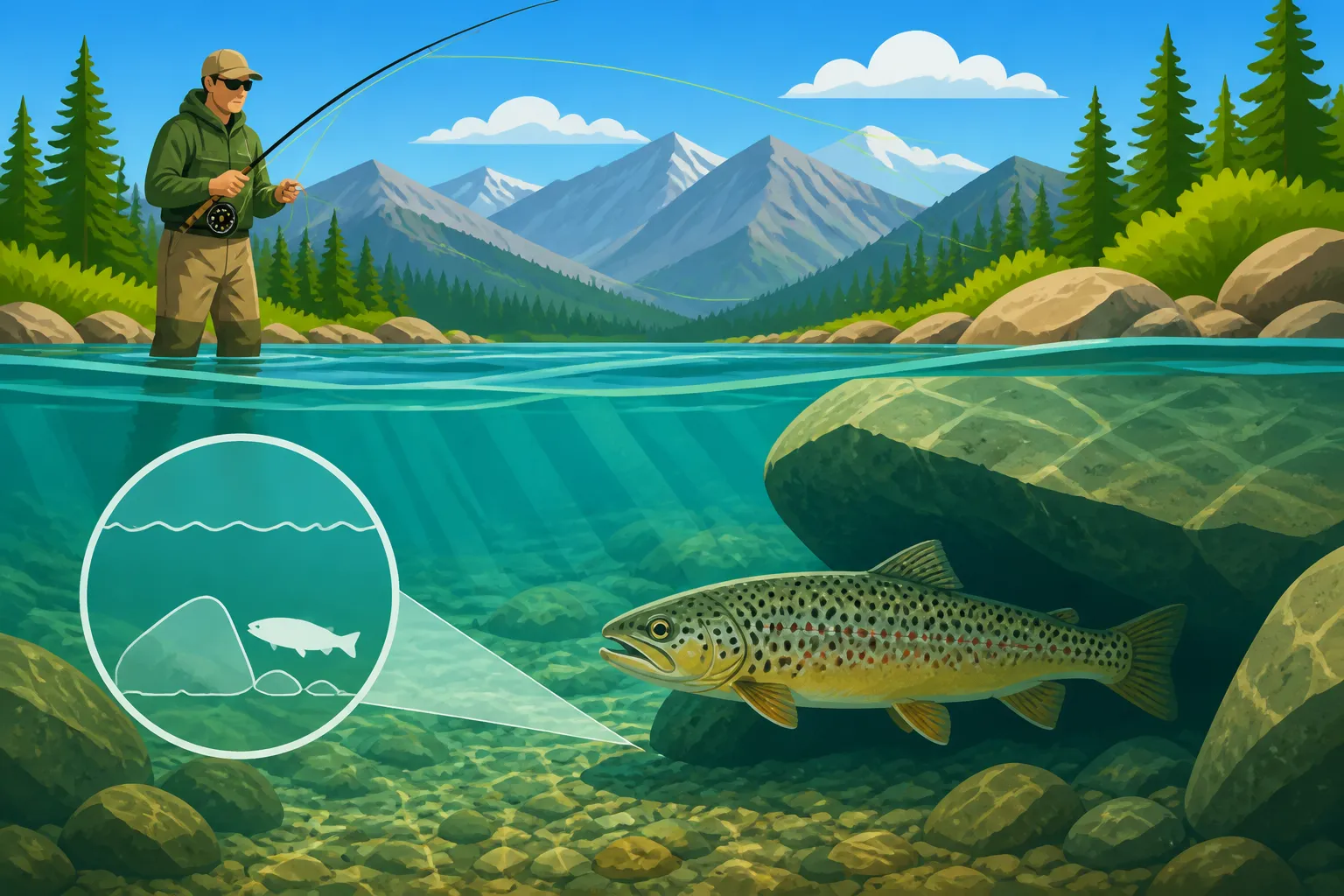
How to Spot Trout Holding in Clear Water
One of the most rewarding — and often frustrating — aspects of fishing in Colorado's stunning, crystal-clear rivers and streams is the challenge of actually seeing the trout. You know they're there, especially on those pristine Gold Medal stretches, but their camouflage and the deceptive nature of light on water can make them seemingly invisible. This guide will help you train your eyes and refine your approach to effectively spot trout holding in clear water, turning those elusive shadows into tangible targets.
Understanding Trout Behavior in Clear Water
Spotting trout isn't just about having good eyesight; it's about understanding why and where they choose to hold in clear water. Their survival depends on finding optimal feeding lies and cover, and clear water amplifies both their vulnerability and their need for strategic positioning.
Why Clear Water Poses a Challenge and an Opportunity
Clear water can feel like a double-edged sword for anglers. On one hand, the lack of turbidity means trout are easily spooked if you're not careful. Every shadow, every errant movement on the bank, every splash of a heavy cast can send them darting for cover. Their natural camouflage, designed to blend with rocks, gravel, and submerged vegetation, is incredibly effective in these conditions, making them seem to disappear into the riverbed. It’s not uncommon to stare at a piece of water for minutes, convinced there’s nothing there, only to see a fish materialize from what you thought was an empty space.
However, clear water also presents a fantastic opportunity for sight-fishing, which is arguably one of the most exciting ways to catch trout. When you do spot a fish, you can observe its behavior, gauge its feeding rhythm, and present your fly or lure with pinpoint accuracy. This direct interaction allows for immediate feedback on your presentation and can dramatically increase your success rate. It transforms fishing from a guessing game into a more strategic, almost hunting-like experience, where a successful catch feels earned through observation and precision. The clarity also allows you to appreciate the vibrant colors and patterns of a healthy Colorado trout before you even cast.
Where Trout Prefer to Hold: Structure, Shade, and Current Seams
Trout, especially larger ones, are energy-conscious predators. They're looking for places where food is delivered to them with minimal effort, and where they feel safe from aerial and terrestrial predators. In clear water, these spots become even more critical. Look for any kind of structure that breaks the current or offers concealment: large boulders, submerged logs, undercut banks, and even patches of darker substrate can provide refuge. These spots offer a crucial visual break from predators and often create a "soft spot" in the current where a trout can rest while still being close to the main food delivery lane.
Current seams are absolutely vital. These are the lines where faster water meets slower water, creating a natural conveyor belt for insects and other forage. Trout will often sit just inside the slower water, nose pointed upstream, waiting for food to drift by in the faster current. Look for subtle differences in water speed or surface texture to identify these seams. Shade, whether from overhanging trees, tall banks, or even clouds, provides both cooler water temperatures and a vital shield from predators like ospreys or eagles. On bright, sunny days, trout will frequently hold in shadows, making these areas prime targets for spotting. Think about how a deer might hide in the shade of a tree; trout do much the same thing, using the darker backdrop to make themselves harder to see. You can often find them hugging the bank where a large cottonwood casts a long shadow across the water.
Developing Your Eye: Practical Spotting Techniques
Becoming proficient at spotting trout is a skill that improves with practice and the right tools. It's less about having "20/20 vision" and more about how you train your brain to interpret what you see (or don't see) in the water.
The Importance of Polarized Sunglasses and Proper Angles
If there's one piece of gear that's non-negotiable for spotting trout in clear water, it's a good pair of polarized sunglasses. I cannot stress this enough. They cut through the glare on the water's surface, allowing you to see into the water rather than just seeing reflections off the water. The difference is truly night and day. Without them, you're essentially fishing blind in many situations. While you can find decent pairs on Amazon, investing in a high-quality pair with good lens technology, like those from reputable outdoor brands, will make a significant impact on your ability to spot fish. Consider amber, copper, or brown lenses for varied light conditions, as these tend to enhance contrast against the riverbed.
Beyond sunglasses, your angle to the water and the sun is crucial. Always try to approach the water with the sun at your back or to your side, illuminating the water in front of you. Looking directly into the sun will make spotting impossible, as the glare will overwhelm your vision even with polarized lenses. If you're walking upstream, try to stay on the sunny bank, looking across to the shadier side, or vice versa if you're walking downstream. A slightly elevated position, like standing on a small bank or boulder, can also give you a better vantage point, allowing you to see deeper into runs and pools. When you consider the importance of visibility, you'll understand why proper technique is so vital. If you're curious about other regulations, you might want to read more about Colorado Fishing Regulations Every Angler Should Know.
Reading the Water for Subtle Clues
Trout are masters of disguise, often blending seamlessly with the riverbed. So, instead of just looking for a clear fish shape, learn to look for discontinuities or anomalies in the water. This might be a subtle shadow that seems too distinct, a slight flicker of a fin, or a change in the color or texture of what looks like a rock. Sometimes you'll spot a movement rather than a stationary fish. It could be the slight sway of a tail fin as the fish holds its position against the current, or a momentary flash as it shifts its body. Look for areas of unusually calm water within a current, as this often indicates a fish breaking the flow.
Also, pay attention to the water's surface upstream. If you see a rise, even a subtle one, it tells you a fish is active and looking up. This doesn't mean it's the only fish, but it's a definite indicator of activity in the area. Often, the fish you're trying to spot will be darker than the riverbed, especially brown trout. Rainbow and cutthroat trout might appear silvery or olive, blending with gravel. Practice scanning systematically, rather than just staring aimlessly. Break the river into sections and slowly move your gaze, looking for anything that seems "out of place." You'd be surprised how often a perfectly camouflaged fish reveals itself as an odd-shaped rock that suddenly moves.
Stealth and Approach: Not Spooking the Fish
Spotting a fish is only half the battle; the other half is approaching it without sending it scurrying away. Trout in clear water are incredibly sensitive to movement and shadows. Always move slowly and deliberately. Avoid sudden movements, especially directly above the water. Think of yourself as a heron stalking its prey – low to the ground, deliberate steps, and using any available cover like bushes or bank contours to break up your outline. Your silhouette can be a major giveaway on bright days, so try to keep a low profile, especially when fishing small, intimate streams where overhead cover is minimal.
Wading also requires a delicate touch. Heavy footsteps on the bank or clumsy wading in the water send vibrations that travel far and wide, alerting fish to your presence. If you must wade, do so slowly and purposefully, lifting your feet rather than shuffling, and try to stay as far away from potential holding lies as possible. When you do spot a fish, take a moment to observe its behavior and plan your casting approach before making a move. Think about where the fish is facing, what current it's in, and how you can position yourself for the best presentation with minimal disturbance. This patient, deliberate approach is often the key to converting a spotted fish into a hooked fish. For more tips on approaching the water, check out our guide on How to Approach a Tailwater Without Spooking Trout.
Environmental Factors Affecting Visibility
The natural world plays a huge role in how easy or difficult it is to spot trout. Understanding these factors will help you choose the best times and places to focus your efforts.
Light Conditions and Time of Day
The sun's position and intensity are paramount when it comes to spotting fish. Bright, overhead sun around midday can create intense glare that penetrates even polarized lenses, making spotting incredibly tough. On the flip side, extremely low light, like deep twilight or heavily overcast conditions, simply doesn't provide enough illumination to see into the water effectively. The sweet spot often lies in the morning and late afternoon, when the sun is at an angle that reduces direct glare but still offers good visibility into the water.
Cloud cover can be a mixed bag. On a partly cloudy day, brief periods of shade can offer a window of opportunity to spot fish that were previously obscured by sun glare. However, a completely overcast day can sometimes make the water appear flat and dull, reducing contrast and making fish blend in more. Experiment with different times of day on your favorite stretches of river. What might be perfect for spotting on one river, due to its orientation or surrounding topography, might not be ideal on another. Sometimes the best time to spot fish is just as the sun begins to creep over a canyon wall, providing perfect sidelighting.
Water Depth and Riverbed Composition
It might seem obvious, but deeper water is inherently harder to see through. The deeper the water, the more light is absorbed and scattered, making it difficult to discern shapes on the bottom. Even with perfect light and polarized lenses, a deep pool will always be more challenging than a shallow riffle. Conversely, very shallow water can be deceiving, as trout in these areas are often incredibly spooky and will dart away at the first sign of danger.
The composition and color of the riverbed also play a significant role. Dark, mottled riverbeds composed of varying sizes of rocks and pebbles offer excellent camouflage for trout, especially brown trout. On the other hand, a uniform, light-colored sand or gravel bottom can sometimes make fish stand out more. However, a light bottom can also reflect a lot of light, creating more glare. Learn to differentiate between a shadow cast by a rock and the shadow of a fish. Often, a fish's shadow will be more defined or move slightly. Colorado's rivers often feature a beautiful mosaic of colorful rocks and gravel, making it a constant test of your observation skills.
Weather and Its Impact on Clarity
While we're talking about clear water, it's important to remember that weather can dramatically change conditions. Recent rainfall can introduce sediment and debris into the water, temporarily reducing clarity. Even a distant thunderstorm can turn a gin-clear stream into a murky torrent downstream. Knowing When Colorado's Spring Runoff Hits and How to Fish Around It is crucial, as this period brings high, discolored water that makes sight-fishing impossible for a time.
Conversely, long periods of stable, dry weather will usually lead to the clearest water conditions, making it the best time for spotting. Wind can also impact your ability to spot fish by creating ripples and chop on the water's surface, breaking up your line of sight. Strong gusts can even kick up sediment from the bottom in shallower areas. A calm, clear day with high pressure is often ideal for spotting, as the water's surface is undisturbed, and light penetration is maximized. Pay attention to local weather forecasts and recent precipitation patterns; they'll give you a good idea of what to expect in terms of water clarity.
Common Mistakes and How to Avoid Them
Even seasoned anglers make mistakes when trying to spot trout. Learning from these common pitfalls can fast-track your progress and lead to more successful outings.
Rushing Your Approach
Perhaps the most common mistake anglers make is rushing to the water. You arrive at a beautiful run, excited to fish, and immediately wade in or cast without taking a moment to observe. This often results in spooking fish that were holding just yards from the bank or in shallow water you didn't even notice. Remember the mantra: "Fish don't wear watches." Take your time. Before even thinking about a cast, pause and scan the water from a distance. Get low, use your polarized sunglasses, and patiently look for any signs of fish life.
Walk slowly along the bank, observing each section before approaching. Often, the biggest fish are the most cautious and will hold in surprisingly shallow water close to the bank, especially under cover. If you go barging in, they'll be gone before you even see them. Give yourself at least a few minutes, or even longer on a particularly promising stretch, to simply observe before making your first move. This patient reconnaissance will not only help you spot more fish but will also give you crucial information about their behavior and feeding patterns, which is invaluable for a successful presentation. This deliberate approach applies even more on popular waters where trout see a lot of pressure, like some of Colorado's Gold Medal Waters Explained.
Overlooking the Obvious and the Not-So-Obvious
It's easy to focus on what you expect to see – a large, dark shape in a prime holding lie. But trout often defy expectations. Sometimes, the biggest fish are hiding in plain sight, camouflaged so perfectly that they look like just another rock. Conversely, smaller fish can be almost imperceptible. Don't just look for fish in the "perfect" spots; scan every inch of water you intend to fish. This includes the very shallow edges, directly behind small rocks, and even in areas that look too fast or too slow to hold fish.
Many anglers tend to look through the water, focusing on the bottom. While this is important, also remember to look for surface disturbances like rises or subtle dimples indicating a fish feeding on emergers or drowned dries. Conversely, when the water is extremely clear, don't forget to look for fish that are holding slightly higher in the water column, especially if there's an active hatch. They might be suspended, waiting for food, and if you're only scanning the bottom, you'll miss them entirely. Expand your visual search both horizontally and vertically, from the very edges to the deepest parts of the run, and from the surface film to the riverbed.
Table: Spotting Conditions & Strategies
| Condition | Light Level | River Clarity | Riverbed Contrast | Spotting Challenge | Best Strategy |
|---|---|---|---|---|---|
| Midday Sun | High/Direct | Clear | Low (Glare) | High | Look for shaded areas, use high-quality polarized lenses, look from elevated positions. |
| Morning/Late Afternoon | Moderate/Angled | Clear | High | Low to Moderate | Ideal for spotting, sun at your back, focus on current seams and structure. |
| Overcast (Light) | Low/Diffuse | Clear | Moderate | Moderate | Look for movement, subtle color variations, fish might be less spooky. |
| High Water/Runoff | Variable | Murky | Very Low | Very High | Focus on eddy lines, slow pockets, don't expect to sight-fish effectively. |
| Low, Clear Water | Variable | Very Clear | High | Moderate | Extreme stealth, long leaders, tiny flies, fish are very spooky. |
Disclaimer
This article is for general informational purposes only and does not constitute professional advice. Laws, prices and regulations vary by location and change over time. Consult a qualified professional for guidance on your specific situation.