Best Landing Net for Catch-and-Release Trout
There's nothing quite as frustrating as landing a beautiful Colorado trout, only to worry if your handling methods are doing more harm than good, especially when you're committed to catch-and-release. This guide will walk you through everything you need to know about choosing and using the best landing net designed specifically for the safe release of trout, helping you protect our precious fish and ensuring future angling adventures.
Why a Gentle Landing Net is Crucial for Catch-and-Release
When you're out on a pristine Colorado river, whether it's the South Platte's gold medal waters or a high-country stream, the goal for many of us is to enjoy the fight and then send that fish back healthy. But an improper landing net can actually do more damage than good, undoing all your good intentions for a safe release.
Protecting the Trout's Slime Coat
Every trout, from a plump rainbow to a vibrant brook trout or even a native cutthroat, is covered in a protective slime coat. This natural barrier is incredibly important for their health, shielding them from infections, parasites, and bacteria. When you use a net with rough, knotted nylon mesh, especially if it's dry, it can scrape away this vital layer. Imagine trying to peel paint off a car – that's what a rough net can do to a fish's delicate skin. A compromised slime coat leaves the fish vulnerable to disease once it's back in the water, significantly reducing its chances of survival. This is why when we talk about methods like how to handle trout for a safe release, the net is often the first line of defense.
Minimizing Scale and Fin Damage
Beyond the slime coat, trout have delicate scales and fins that can be easily damaged. Hard, abrasive mesh can cause scales to lift or even be completely removed, which is akin to a serious cut for a human. Their fins, particularly the dorsal and caudal fins, are essential for propulsion and steering, and a net that snags or bends them unnaturally can impair their ability to swim effectively. This is especially true for feisty brown trout or the more delicate Colorado River Cutthroat Trout, which often have longer, more pronounced fin structures. Our goal is to minimize stress and physical trauma, allowing the fish to swim away strong and ready to thrive.
Preventing Hook Snags and Prolonged Handling
One of the biggest headaches for anglers, and a major stressor for fish, is when hooks get tangled in net mesh. Traditional nylon nets with small knots are notorious for this. You hook a fish, it wiggles, and suddenly your fly or lure is hopelessly embedded in the mesh. This forces you to spend precious minutes — or even longer — struggling to untangle it, all while the fish is out of the water, stressed, and potentially injured. Forcing an angler to spend too long unhooking a fish goes directly against the principles of successful catch-and-release, which emphasize speed and minimal contact.
Key Features to Look For in a Catch-and-Release Net
Choosing the right net isn't just about grabbing the first one you see. It's about looking for specific features that prioritize the fish's well-being and make your catch-and-release experience smoother.
Rubberized or Knotless Mesh Materials
This is arguably the most critical feature of any good catch-and-release net. Forget the old-school string nets with knots; those are practically fish shredders.
Soft Rubber Mesh
Modern rubberized nets are fantastic. They feature a soft, flexible rubber or silicon basket that's incredibly gentle on fish. The smooth, non-abrasive surface protects the slime coat and scales, and because it's rubber, hooks rarely snag. Plus, rubber nets don't absorb water or fish odors, making them cleaner and easier to maintain. They come in clear or black options; many anglers prefer clear as it can be less visible to spooky fish in clear water, though the effectiveness difference is often negligible in the heat of the moment. You'll find a wide variety of these nets when browsing online retailers like Amazon, often with glowing reviews from fellow conservation-minded anglers.
Knotless Nylon Mesh
While not as ideal as rubber, high-quality knotless nylon mesh is a significant improvement over knotted versions. It's softer and less abrasive than knotted nylon, reducing the chance of scale damage and fin fraying. Hooks can still get tangled occasionally, but far less frequently than with knotted nets. If rubberized nets aren't within your budget, a fine, knotless nylon is a good second choice, but always prioritize wetting it before the fish makes contact.
Appropriate Size and Depth
The size of your net's hoop and the depth of its basket are crucial for both securing the fish and ensuring its safety.
Hoop Dimensions for Colorado Trout
For most Colorado trout fishing, you'll want a hoop that's large enough to comfortably scoop a fish without having to force it. For typical river and stream fishing targeting rainbow and brown trout in the 10-20 inch range, a hoop opening of about 10-14 inches wide by 16-20 inches long is usually sufficient. If you're targeting larger fish, like trophy lake trout or monster browns in the Arkansas River, you'll need a bigger net, perhaps with a hoop in the 18-24 inch range. The idea is to scoop the fish quickly and efficiently, minimizing its time fighting both the line and your netting attempts.
Basket Depth for Secure Holding
The mesh basket should be deep enough to fully encompass the fish once it's in the net, ideally allowing the fish to remain submerged in the water while you handle it. A shallow net allows the fish to flop out easily, increasing stress and the risk of injury from hitting rocks or the bank. A deeper basket also means less chance of the fish jumping out before you have a chance to unhook it. Think about the types of fish you typically catch; if you're pulling 20-inch beauties, you'll need more depth than if you're focused on smaller panfish.
Handle Length and Durability
The handle of your net impacts its portability, ease of use, and suitability for different fishing scenarios.
Fixed vs. Telescopic Handles
- Fixed Handles: These are typically shorter and sturdier, often made from wood or rigid aluminum. They are excellent for wade fishing on smaller streams or where you don't need extra reach. They tend to be lighter and less prone to breaking or collapsing.
- Telescopic Handles: These handles extend, offering more reach for boat fishing, bank fishing, or reaching over obstacles. They're versatile but can be heavier and might have more moving parts that could potentially break over time. For anglers who fish varied waters, a good quality telescopic handle can be a game-changer.
Material Considerations
- Wood: Classic, often beautiful, and can have a comfortable feel. However, wood can be heavier and requires more maintenance to prevent warping or cracking, especially in varying Colorado weather.
- Aluminum/Carbon Fiber: These materials are generally lighter, more durable, and require less maintenance than wood. Aluminum nets are robust and common, while carbon fiber offers ultimate lightweight performance, though often at a higher price point. Many brands you might find on Amazon offer excellent aluminum options that balance durability and cost.
Attachment and Carry Options
How you carry your net is nearly as important as the net itself, ensuring it's always accessible but never in the way.
Magnetic Releases and Lanyards
For wade anglers, a magnetic release system combined with a lanyard is invaluable. The magnetic clip attaches to your vest or pack, holding the net securely while you fish. When you hook a fish, a quick tug releases the net, letting it dangle on the lanyard for easy access. This keeps your hands free until you need the net, preventing it from snagging on trees or dragging in the water. This type of setup is particularly useful when you're focusing on complex nymphing techniques for Colorado tailwaters or delicate dry-fly presentations on a freestone river.
Holsters and Clips
Some nets come with built-in clips or are designed to fit into a dedicated holster on your wading belt or pack. These offer another secure way to carry your net, often keeping it close to your body and out of the way. When comparing options, consider how well it integrates with your existing gear, such as your fishing vest or backpack.
Types of Landing Nets for Colorado Trout Anglers
Just like there are different types of fishing, there are different types of nets, each suited for particular situations you might encounter while fishing Colorado's diverse waters.
Traditional Wood Frame Nets
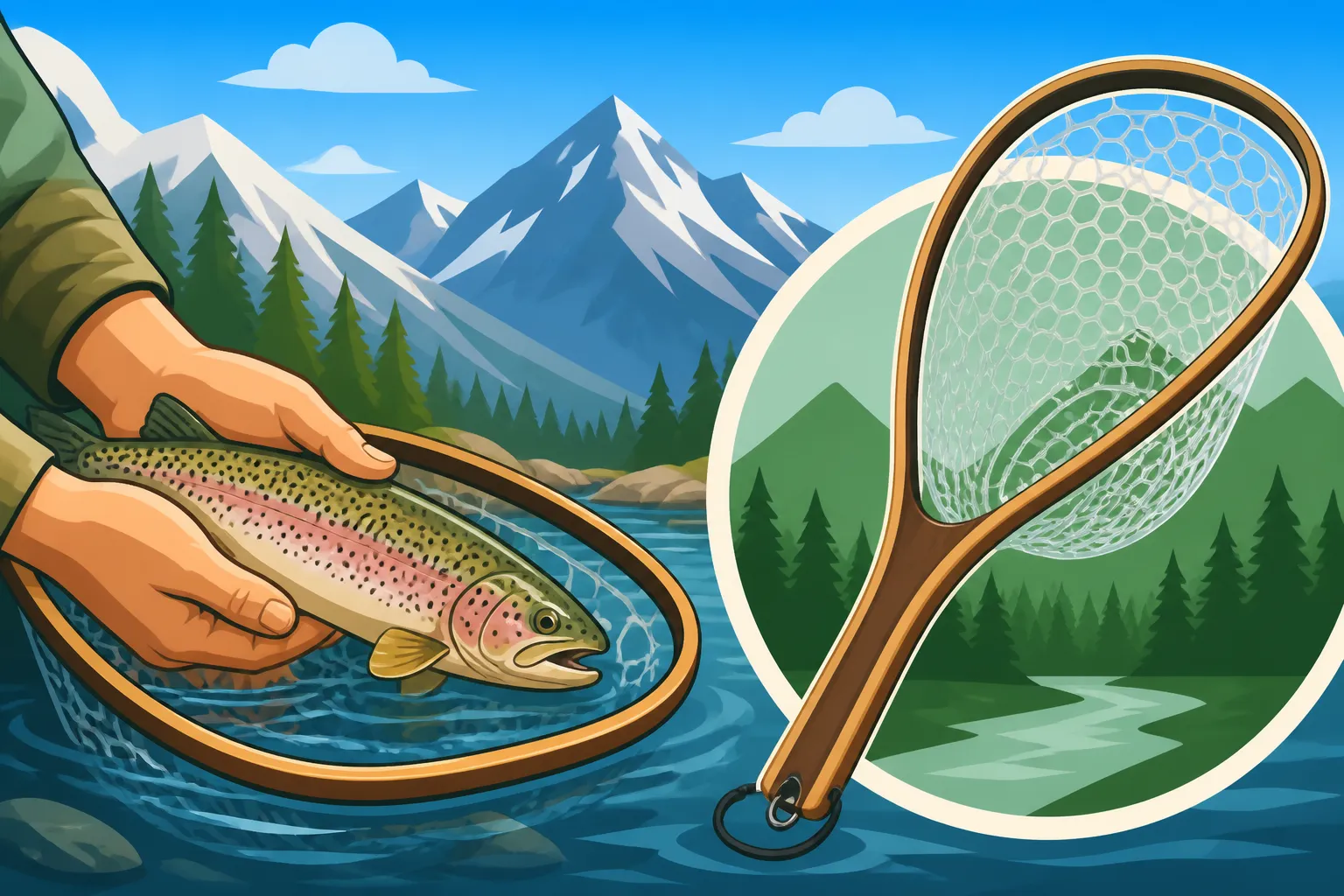
These are the classic, aesthetically pleasing nets often favored by fly anglers. They typically have a fixed, shorter handle, making them ideal for wading small to medium-sized rivers and streams. The wooden frame provides a comfortable grip and a traditional feel.
- Pros: Beautiful craftsmanship, often very durable if cared for, comfortable to hold. Many are designed with a teardrop shape that's efficient for scooping.
- Cons: Can be heavier than synthetic options, require more maintenance (sealing, oiling) to prevent water damage, and typically have fixed, shorter handles which limit reach. They might also be on the pricier side.
- Best Use: Wade fishing on pristine mountain streams or Gold Medal waters where you're not needing extreme reach and appreciate the classic look. They are perfect companions for anglers who prefer a simpler, more traditional approach.
Lightweight Aluminum and Carbon Fiber Nets
For anglers who prioritize weight, durability, and modern features, nets made from aluminum or carbon fiber are excellent choices. These are often seen with telescopic handles, offering versatility for various fishing scenarios.
- Pros: Extremely lightweight (especially carbon fiber), highly durable, corrosion-resistant, often feature telescopic handles for extended reach. Many models are designed to float if dropped in the water, which is a huge bonus!
- Cons: Can feel less "traditional" than wood, and some telescopic models might have slight flex when fully extended. Carbon fiber versions can be significantly more expensive.
- Best Use: Versatile for both wade and boat fishing, especially on larger rivers like the Colorado River or when fishing big reservoirs from the bank. The extended reach of telescopic models is great for reaching fish from a drift boat or for high-bank access.
Boat Nets and Long-Handled Options
If you spend a lot of time fishing from a drift boat, raft, or motorboat on reservoirs like Blue Mesa, a specialized boat net is a must. These nets are characterized by much longer handles and often larger, deeper hoops.
- Pros: Exceptional reach, large hoop and deep basket to easily net bigger fish or multiple fish (if regulations allow), sturdy construction to handle powerful fish. Essential for safely landing fish from an elevated position in a boat.
- Cons: Can be cumbersome to carry for wade fishing, generally heavier and bulkier.
- Best Use: Ideal for guided float trips, trolling for kokanee salmon, or targeting species like walleye and lake trout from a boat. A longer handle allows the guide or angler to reach out and net a fish cleanly without leaning precariously over the side of the boat.
Specialized Compact Nets for Backpacking
For the adventurous angler who hikes into remote high-country lakes or small, brushy streams, a compact or folding net can be a lifesaver. These are designed for portability and minimal weight.
- Pros: Extremely lightweight and compact, easy to attach to a backpack, often foldable or collapsible for convenient transport.
- Cons: Generally smaller hoops and shallower baskets, which can make landing larger fish more challenging. May not be as robust as full-sized nets.
- Best Use: Ideal for fishing lakes inside Rocky Mountain National Park or any backcountry fishing where every ounce matters and you're targeting smaller, native trout.
Comparison Table of Net Types
| Net Type | Primary Material | Handle Length | Best For | Pros | Cons |
|---|---|---|---|---|---|
| Wood Frame | Wood | Fixed, Short | Wade fishing, small-medium rivers/streams | Aesthetic, comfortable, durable with care | Heavier, requires maintenance, limited reach |
| Aluminum/Carbon | Metal/Composite | Fixed or Telescopic | Versatile (wade/bank/boat), varied waters | Lightweight, durable, corrosion-resistant, often float | Can be less aesthetic, carbon fiber is expensive |
| Boat Net | Metal/Composite | Long, Fixed | Boat fishing, large fish, deep water | Max reach, large capacity, sturdy for big fish | Bulky for wading, heavy |
| Compact/Backpack | Metal/Composite | Short, Often Folding | Remote hikes, small streams, ultralight trips | Lightweight, highly portable, easy to store | Smaller hoop, less robust, challenging for larger fish |
Mastering Net Usage for Maximum Fish Survival
Having the right net is only half the battle; knowing how to use it effectively and safely is just as important. Your technique can make all the difference in a successful catch-and-release.
Scoop, Don't Chase
This is probably the golden rule of netting. When you have a fish on the line, resist the urge to violently chase it around with the net. This only prolongs the fight, stresses the fish, and increases the chances of losing it or causing injury.
Guiding the Fish into the Net
Instead, bring the fish close to you, keeping its head up slightly with rod pressure. Position the net still in the water, just below the surface, facing downstream if you're in a current. Then, gently guide the fish into the net, leading it headfirst. The momentum of the current will help push it into the basket, or if you're in still water, a gentle sweep of the rod will do the trick. Once the fish is in, immediately lift the net just enough to secure the fish but keep it submerged in the water as much as possible. This minimal movement and immediate submersion greatly reduce stress and allow the fish to recover quickly. Keeping the fish wet also protects its sensitive gills and eyes from drying out.
The Importance of a Quick Landing
Every second a fish fights on the line, it expends valuable energy, building up lactic acid in its muscles. This can lead to what's known as "delayed mortality," where a fish swims away seemingly fine but dies later due to exhaustion or organ failure. A quick, clean scoop with a good rubberized net allows you to land the fish efficiently, minimizing its fight time and maximizing its chances of survival. Think of it like a sprint for the fish; the shorter the sprint, the less exhausted it will be at the finish line.
Keeping the Fish Submerged
Once the fish is in the net, your next priority is to keep it wet, ideally fully submerged in the water. This is where a deep-basket net really shines.
Gentle Handling in the Water
With the fish safely in the net, keep the net in the water. This allows the fish to continue breathing through its gills and keeps its slime coat intact. Use this time to unhook the fish carefully. If you're using barbless hooks, this process is usually incredibly fast and simple. For flies, a pair of hemostats or forceps are your best friends. Gently grasp the hook and back it out. Avoid squeezing the fish or touching it with dry hands as much as possible. If you must handle the fish for a quick photo, wet your hands thoroughly first. We’ve covered some specific guidelines on what catch-and-release only means on Colorado water, and keeping the fish submerged is a core tenet.
Removing Hooks Quickly
If the hook is deeply embedded or tangled, don't panic. Take a breath. If you can't easily remove it, consider cutting the line as close to the hook as possible. A hook left in the fish will often rust out or dislodge over time. The alternative — struggling for five minutes while the fish suffocates out of water — is far worse. This is also why many anglers opt for why some Colorado rivers require barbless hooks in certain areas; it simply makes the release process much easier and safer for the fish.
Post-Release Care and Net Maintenance
Your job isn't done once the fish swims away. A quick check and proper care of your net ensure it's ready for the next catch.
Observing the Fish's Recovery
After releasing the fish, take a moment to observe its behavior. Does it swim away vigorously, or does it float for a bit before slowly moving off? If it's struggling, gently hold it upright in the current (if applicable) or gently move it back and forth in still water to push oxygenated water over its gills until it regains its strength and swims away on its own power. This vital step is often overlooked but can make all the difference in ensuring a fish's survival, especially if the fight was long or water temperatures are warm. Learning about does water temperature affect catch-and-release survival? can provide more insight into why this recovery period is so important.
Cleaning and Storing Your Net
After each trip, especially if you've been fishing multiple species or in different waters, give your net a quick rinse with fresh water. This removes any debris, mud, or potential aquatic hitchhikers. If you have a rubberized net, a simple rinse is usually enough. For knotless nylon, ensure it dries thoroughly to prevent mildew. Store your net out of direct sunlight in a cool, dry place. Proper care extends the life of your net and ensures it's always ready to safely land your next Colorado trophy. Many of the nets found on Amazon come with care instructions that are worth reviewing.
Choosing the Right Net for Your Colorado Fishing Adventures
With so many options, how do you pick the best one for you? It really comes down to your personal fishing style, the types of water you frequent, and the species you typically target.
Matching Your Net to Your Fishing Style
Are you a dedicated wade angler who loves to cover miles of river on foot? A short, fixed-handle wood or lightweight aluminum net with a magnetic release will be your best friend. It stays out of the way, is quick to deploy, and won't tire you out. If you're more of a bank angler or prefer to fish from a float tube, a slightly longer handle might give you the crucial reach you need. For those who frequently fish from boats, particularly for larger species, a long-handled boat net is non-negotiable.
Consider your primary method:
- Fly Fishing: Many fly anglers prefer lighter, shorter nets that can be carried on their backs with a magnetic release. The net becomes an extension of their movement through the water. When discussing proper equipment, like the best rod weight for Colorado trout fishing, the net is an equally important piece of the puzzle.
- Spin Fishing: Spin anglers might opt for slightly larger, more robust nets, especially if they're targeting warm-water species like bass or pike in addition to trout. The longer reach of a telescopic aluminum net can be very beneficial.
Considering the Species and Size of Fish
Colorado is home to a fantastic variety of fish, from small brook trout in alpine lakes to massive lake trout in deep reservoirs.
- Trout (Rainbow, Brown, Cutthroat, Brook): For most trout, a medium-sized hoop (12×18 inches) with a moderately deep rubberized basket is ideal. This handles common sizes up to about 24 inches comfortably. Knowing how to tell a cutthroat from a rainbow trout, for instance, might influence your handling, but the net should remain consistent for safety.
- Kokanee Salmon: These beautiful salmon are often targeted in open water. A slightly larger net, especially one suitable for a boat, can be beneficial during their spawning runs when they're particularly feisty.
- Lake Trout, Walleye, Northern Pike: These species can grow quite large and have sharp teeth. For these, a large, deep boat net with a sturdy handle is essential. The larger hoop prevents them from thrashing out, and the rubberized mesh minimizes harm to their unique slime coats.
Durability and Investment
A good catch-and-release net isn't just a tool; it's an investment in the health of our fisheries. While some basic nets are inexpensive, investing a bit more in a quality rubberized net will pay dividends in fish safety and its own longevity. Look for sturdy construction, quality materials, and reputable brands. Read reviews on platforms like Amazon to see what other anglers are saying about a net's durability and performance in real-world conditions. A net might seem like a simple accessory, but its impact on your fishing success and conservation efforts is profound.
Disclaimer
This article is for general informational purposes only and does not constitute professional advice. Laws, prices and regulations vary by location and change over time. Consult a qualified professional for guidance on your specific situation.