Best Retrieve Speed for Streamers in Cold Water
There’s nothing quite as frustrating as heading out for a day of streamer fishing, knowing those big browns and rainbows are lurking, only to feel like your efforts are falling flat because the water is just cold. You strip, you twitch, you cast your heart out, but nothing seems to entice a strike. This guide is here to unravel the mystery of fishing streamers in chilly Colorado waters, specifically focusing on the retrieve speed that often makes all the difference when trout are feeling sluggish.
Understanding Cold Water and Trout Metabolism
When the water temperatures drop, whether it’s in late fall, winter, or early spring in the high country, everything in a trout's world slows down. This isn't just about their activity level; it's a fundamental biological shift that directly impacts how they feed and how you need to present your flies.
How Water Temperature Affects Trout Behavior
Think of it like us trying to run a marathon in freezing temperatures – our bodies just don't want to move as fast. Trout are cold-blooded creatures, meaning their body temperature mirrors their surroundings. As water cools, their metabolic rate decreases significantly. This means they digest food slower, their energy levels drop, and they become far less inclined to chase down a meal. You won't see them darting across the river with the same vigor they would in a warm summer current. Instead, they'll conserve energy, often holding in deeper, slower pools or behind significant structure, waiting for an easy, high-calorie meal to drift right into their strike zone. They're opportunistic, yes, but lazy opportunists in cold water. This is a crucial concept to grasp for success, especially in challenging conditions on popular stretches like the Fryingpan River or the Blue River tailwater.
Reading Water Temperature for Streamer Success
You can guess the water temperature by the air, but the best way is with a thermometer. Many anglers carry a small, easily readable thermometer to clip onto their vest or pack. Checking the water temperature in different parts of the river – the main current, eddies, deeper pools – can give you invaluable clues. Generally, when water temperatures fall below 45-50 degrees Fahrenheit, trout become noticeably more lethargic. Below 40 degrees, they are often in full winter dormancy mode, and your retrieve needs to adjust drastically. Knowing the approximate temperature helps you predict not just retrieve speed, but also where fish might be holding and what kind of Colorado Fishing Season Dates and Bag Limits you might encounter. Even a slight rise in temperature during a sunny afternoon can sometimes trigger a brief feeding window, and you'll want to be ready with the right retrieve.
Mastering the Slow Retrieve: Techniques for Cold Water
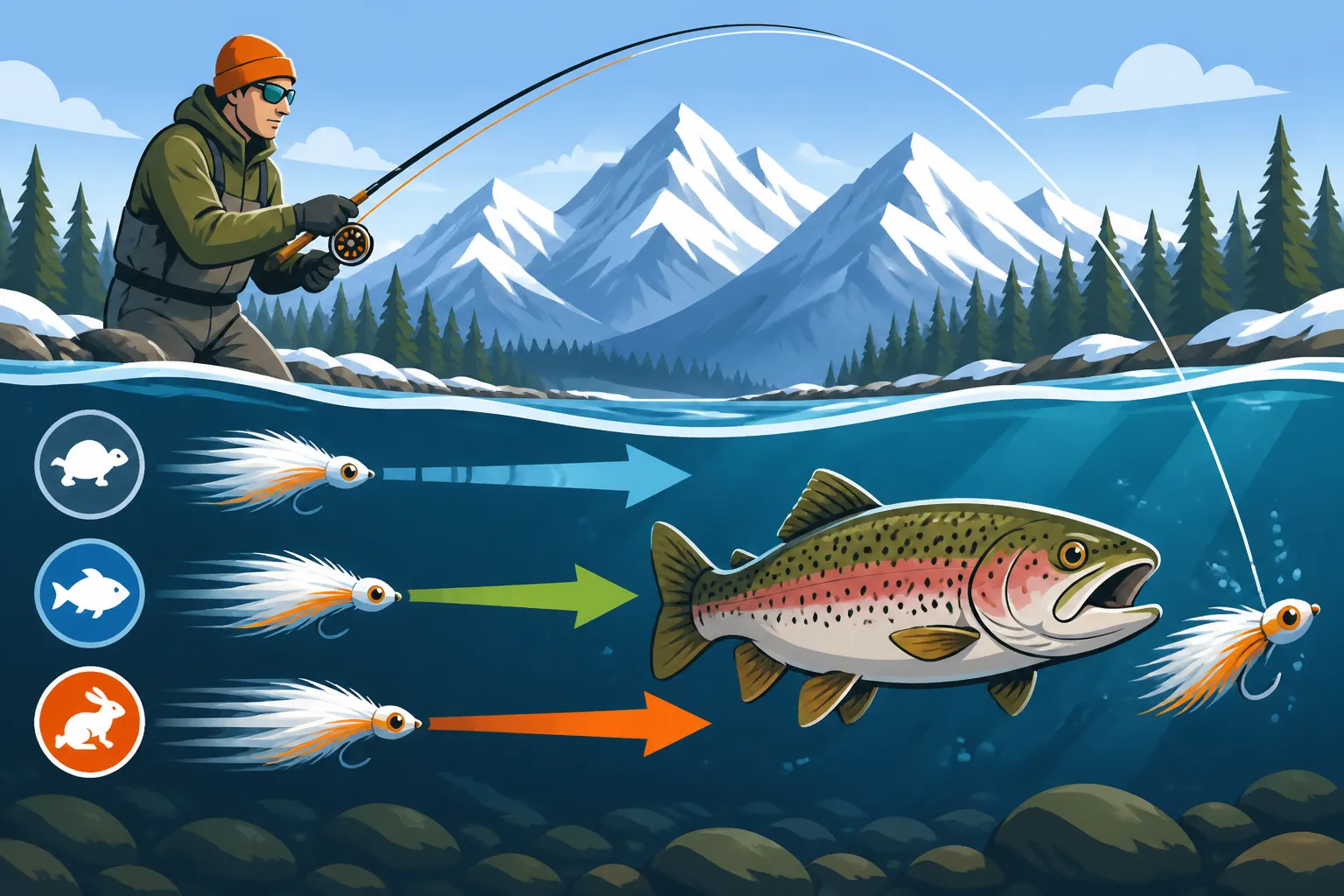
Given the trout's reduced metabolism, the cardinal rule for cold water streamer fishing is almost always: go slow. But "slow" isn't a single speed; it's a spectrum, and finding the right slow can be the key to triggering a strike.
The "Strip-Pause-Strip" Method
This is probably the most widely taught and effective cold water streamer technique, and for good reason. It perfectly mimics an injured baitfish struggling against the current, or perhaps a larger invertebrate slowly moving along the bottom. Instead of long, aggressive strips, you'll want short, deliberate strips followed by an extended pause.
Imagine a small sculpin or minnow, perhaps disoriented by the cold or injured, drifting helplessly. That’s what you’re trying to imitate. A typical strip might be anywhere from 4 to 12 inches, just enough to give the streamer some life. The pause, however, is critical. It allows the fly to sink, often fluttering tantalizingly as it drops, right into the face of a reluctant trout. These pauses can last anywhere from 3 to 10 seconds, sometimes even longer, especially in deeper holes. It’s during this pause that many strikes occur, so stay vigilant! You might feel just a subtle tug or a slight weight as the fish inhales the motionless fly. This method works wonders whether you're fishing a small mountain stream or a large river like the Arkansas. Many anglers find high-quality streamer flies and the necessary leader and tippet on Amazon before hitting the water, ensuring they have the right tools for this delicate technique.
Dead-Drifting Streamers
While it might sound counterintuitive to "dead-drift" a streamer, it can be incredibly effective in frigid conditions. This technique truly emphasizes the "slow" aspect, often eliminating the active retrieve almost entirely. Instead, you're treating your streamer more like a large nymph.
The goal here is to get your streamer down deep and allow it to drift naturally with the current, just barely ticking the bottom. You'll cast upstream, perhaps slightly quartering, and then mend your line to ensure a drag-free drift. The idea is to present the fly as something completely helpless – a dead baitfish, a large drowned insect, or an inert sculpin that's been dislodged. You might add the tiniest twitch with your rod tip every now and then, just to suggest a flicker of life, but the primary movement comes from the current itself. Indicator nymphing setups can even be adapted for this, using a strike indicator to help detect the subtle takes when fish mouth the fly. This tactic is particularly effective in slower, deeper runs or eddies where trout are expending minimal energy. Remember, you might need extra weight to get your fly down quickly, as cold water fish aren't moving far to intercept a fly. Understanding Nymphing Techniques for Colorado Tailwaters can help you adapt your dead-drifting streamer game.
Refining Your Presentation: Subtle Variations and Fly Choice
Even within the "slow" paradigm, there’s room for nuance. The perfect retrieve often involves a blend of subtle movements and knowing how your fly itself contributes to the action.
Subtle Twitches and Rod Tip Movements
Sometimes, trout need just a little more convincing than a pure strip-pause. This is where subtle twitches and rod tip movements come into play. Instead of a hard strip, you can use tiny, almost imperceptible twitches of your rod tip to impart a subtle quiver to your streamer during the pause. Think of it as making the fly "breathe" or shiver, rather than dart. This small amount of movement can trigger a reactive strike from a fish that was otherwise ignoring a completely static offering.
Another variation is to gently lift and drop your rod tip, causing the streamer to rise and fall slightly in the water column while still maintaining a slow overall pace. This can be very effective when fish are hugging the bottom and you need to get the fly dancing right in their eye line. Experimentation is key; sometimes a fish wants more action, sometimes less. Paying attention to how the current affects your fly's movement and making these small adjustments can be the difference between a blank day and a memorable catch. A quality fishing vest, easily found on Amazon, can keep your essential tools like extra tippet and nippers within easy reach for quick adjustments.
The Role of Fly Weight and Streamer Design
The streamer itself plays a huge role in how it behaves in cold water and how you need to retrieve it. Heavily weighted flies, like those with large lead eyes or tungsten heads, sink faster and get into the strike zone quicker. This can be crucial in deep, fast runs. However, a heavily weighted fly can also sink too quickly and get snagged on the bottom if your retrieve is too slow or your pause too long.
Conversely, lightly weighted or unweighted streamers rely more on the current for their action. Flies tied with materials like marabou, rabbit strip, or craft fur have a lot of movement even when barely retrieved, creating a "breathing" effect that can be incredibly enticing. These materials undulate and pulsate with minimal effort, making them ideal for ultra-slow presentations or dead-drifts. It’s often beneficial to carry a variety of streamer weights and styles. For instance, you might start with a heavy Gonga or articulated fly to probe the depths, then switch to a lighter Woolly Bugger or small sculpin pattern if fish seem to be holding slightly higher or in slower water.
Essential Gear for Cold Water Streamer Fishing
Having the right gear isn't just about comfort; it's about optimizing your presentation to succeed in challenging cold water conditions. Your setup influences how effectively you can execute those slow retrieves.
Line and Leader Choices
For streamer fishing, a good fly line is paramount. A weight-forward floating line with a short, aggressive front taper can turn over larger, heavier streamers with ease. However, in cold, deep water, a sink-tip line or even a full sinking line can be a game-changer. Sink-tip lines have a floating running line but a sinking front section, allowing your fly to get down quickly while still giving you some control over mending and casting. Full sinking lines are for getting really deep, ideal for probing the bottom of large reservoirs or deep tailwater runs. Each has its place depending on the depth and current speed you're facing.
Your leader setup also matters. For streamers, a shorter, stouter leader is generally preferred. A 7.5 to 9-foot leader with a stronger butt section and a tippet of 0X to 2X is common. If you're dead-drifting, you might even opt for a shorter, simpler leader. The idea is to efficiently transfer casting energy to the heavy fly and reduce leader-related tangles. Too long or too thin a leader can lead to frustrating wind knots when casting heavy streamers. Don't be afraid to experiment with different lengths and strengths to find what works best for your setup and the specific water you're fishing. Many anglers like to keep a variety of leader materials and pre-tied leaders handy, often stored in convenient pockets of their waders or vests. You can easily find various leader and tippet spools on Amazon to build your perfect cold-water streamer setup.
Streamer Patterns for Cold, Slow Presentations
The streamer itself is your primary tool for convincing a cold-water trout to bite. While classics like the Woolly Bugger are always a good choice, certain patterns excel in these conditions.
- Sculpin Patterns: Flies like the Sculpzilla, Dolly Llama, or conehead sculpins mimic bottom-dwelling baitfish. Their broad, flattened profiles and often heavy heads help them hug the bottom and undulate enticingly with minimal movement.
- Articulated Streamers: Patterns such as the Game Changer or Double Deceiver offer incredible movement and life-like swimming action even at slow speeds. Their multiple segments allow them to flex and wiggle, making them appear more natural and appealing to a hesitant trout.
- Marabou and Rabbit Strip Flies: Anything tied predominantly with marabou or rabbit strip will "breathe" beautifully in the water. Flies like the Autumn Splendor, Thin Mint, or Sex Dungeon (a common name for a popular streamer pattern) have a lot of natural flow and pulse even when paused.
- Darker Colors: While bright colors can work, darker patterns – olives, browns, blacks, and even purple – often prove more effective in colder, sometimes murkier, water. These colors provide a stronger silhouette against the lighter sky or bottom, making them more visible to a trout that isn't actively searching.
Remember that presentation is often more important than the exact pattern. A well-presented, slowly retrieved streamer of any of these types is more likely to draw a strike than a poorly presented one, no matter how famous the fly. For further details on specific flies for different conditions, you might want to read about Best Flies for Colorado's Gold Medal Trout Water.
Retrieve Speed and Trout Behavior in Colorado's Cold Waters
| Water Temperature (Fahrenheit) | Optimal Retrieve Speed | Trout Behavior | Notes for Colorado Anglers |
|---|---|---|---|
| Below 38°F | Ultra Slow / Dead Drift | Highly Lethargic, Minimal Movement | Target deep, slow pools. Fish often hug the bottom, requiring heavy flies and long pauses. Think stillwater ice fishing mentality on rivers. |
| 38°F – 45°F | Very Slow, Strip-Pause | Reduced Metabolism, Energy Conservation | Focus on short strips (4-8 inches) with significant pauses (5-10 seconds). Fish may move short distances for easy meals. Good for tailwaters in winter like the Blue River. |
| 45°F – 50°F | Slow, Moderate Strip-Pause | Metabolism Increasing, More Active | Strips can be slightly longer (6-12 inches), pauses shorter (3-5 seconds). Trout might chase a bit more. Good for early spring before When Colorado's Spring Runoff Hits and How to Fish Around It. |
| 50°F – 55°F | Medium, Varied Strip | Moderately Active, Opportunistic | Experiment with retrieve speed; trout are more willing to chase. Mix in subtle twitches and steady strips. Great conditions for a wider variety of streamers. |
| Above 55°F | Medium to Fast, Aggressive | Highly Active, Chasing Prey | Faster strips, less pause needed. Trout are actively feeding and will pursue. Best for summer and early fall streamer fishing. Be mindful of How Water Temperature Affects Trout Feeding in extreme heat. |
This table provides a general guideline. Always pay attention to what the fish are telling you on any given day. If you're not getting bites, try slowing down even more.
Understanding retrieve speed is critical, but it's not the only factor. Knowing Colorado's 14-Inch Trout Length Rule or specific Colorado's Gold Medal Water Rules can also impact your approach, especially if you're targeting trophy fish in managed areas. The key to successful cold water streamer fishing in Colorado, or anywhere really, is patience, observation, and a willingness to adapt your strategy to the conditions and the fish's mood.
Experiment with different retrieve speeds, fly patterns, and depths. Remember that in cold water, often the slowest presentation is the most effective. Pay close attention to subtle takes, as fish may not hit with the aggressive force they would in warmer water. With a thoughtful approach and the right techniques, you can still find incredible success bringing those big, cold-water trout to the net, even when the mercury drops.
Disclaimer
This article is for general informational purposes only and does not constitute professional advice. Laws, prices and regulations vary by location and change over time. Consult a qualified professional for guidance on your specific situation.