How to Set Up a Tip-Up for Lake Trout
Trying to target those elusive lake trout through the ice can feel like a game of hide-and-seek in a vast, frozen wilderness. Many anglers struggle with consistent success, often because their setup isn't quite right for these deep-water predators, or they're simply not sure how to effectively deploy their gear. This comprehensive guide will walk you through everything you need to know about setting up a tip-up specifically for lake trout, ensuring you're ready to tackle Colorado's frozen giants.
Understanding Lake Trout Behavior Under the Ice
Lake trout, often called "lakers," are a unique challenge for ice anglers in Colorado. They're not like your typical rainbow or brown trout that might patrol shallower areas; lakers are built for the depths, and understanding their winter habits is key to successful tip-up fishing.
Where Lake Trout Hold in Winter
During the cold winter months, lake trout in Colorado reservoirs will often gravitate towards specific types of underwater structure. They're typically found in deeper water, often relating to sharp drop-offs, underwater humps, points, and channel edges. These areas provide them with access to both deep sanctuary and shallower feeding grounds.
Imagine you're looking at a topographical map of a frozen reservoir like Blue Mesa Reservoir or Taylor Park Reservoir. You'd want to focus your attention on areas where the depth changes dramatically. A sudden drop from 20 feet to 60 feet can be a prime spot, especially if there are rocks or timber at the bottom. These deep structures offer lake trout cover and ambush points for their prey. They're not usually cruising aimlessly in open water; they prefer to hug contours where they can conserve energy and dart out for a meal. The thermocline, which is a temperature stratification line in open water, isn't as relevant under a thick sheet of ice, but the underlying structure still dictates their movement. Targeting these specific depths and structures is crucial, as simply drilling holes randomly over vast flats is unlikely to yield consistent results. You need to think like a laker and find their highway.
Preferred Forage and Presentation
Lake trout in Colorado are primarily piscivores, meaning they prefer to eat other fish. Their diet can include anything from kokanee salmon to smaller trout, perch, or even sculpins. This predatory nature means your presentation needs to mimic their natural prey effectively.
When it comes to presentation, a larger bait or lure is often more appealing to a hungry lake trout. They're not going to expend energy chasing a tiny insect imitation. For tip-up fishing, this typically means using larger cut bait, whole dead baitfish (where legal, always check Colorado Fishing Regulations Every Angler Should Know), or substantial artificial lures that offer a good profile. The key is to suspend your bait at the right depth – usually just off the bottom, or at specific depths where you've marked fish or baitfish on your sonar. Lake trout are opportunistic feeders, so a bait that looks like it's struggling or an easy meal will often trigger a strike. It's not just about the size, but the realism and the way it hangs in the water, appearing vulnerable. Many experienced anglers will slowly lift and drop their bait every so often, even on a passive tip-up, to impart a subtle movement that catches a laker's eye.
Essential Gear for Tip-Up Fishing for Lake Trout
Setting up for lake trout with tip-ups requires a specific array of gear designed to handle these powerful, deep-dwelling fish. You can't just use any old ice fishing equipment; it needs to be robust and reliable.
Selecting the Right Tip-Up
Not all tip-ups are created equal, especially when you're targeting large lake trout. You need a model that's durable, sensitive enough to detect a bite, and capable of holding a substantial amount of heavy line. Look for tip-ups made from sturdy materials like high-impact plastic or aluminum, designed to withstand freezing temperatures and strong winds.
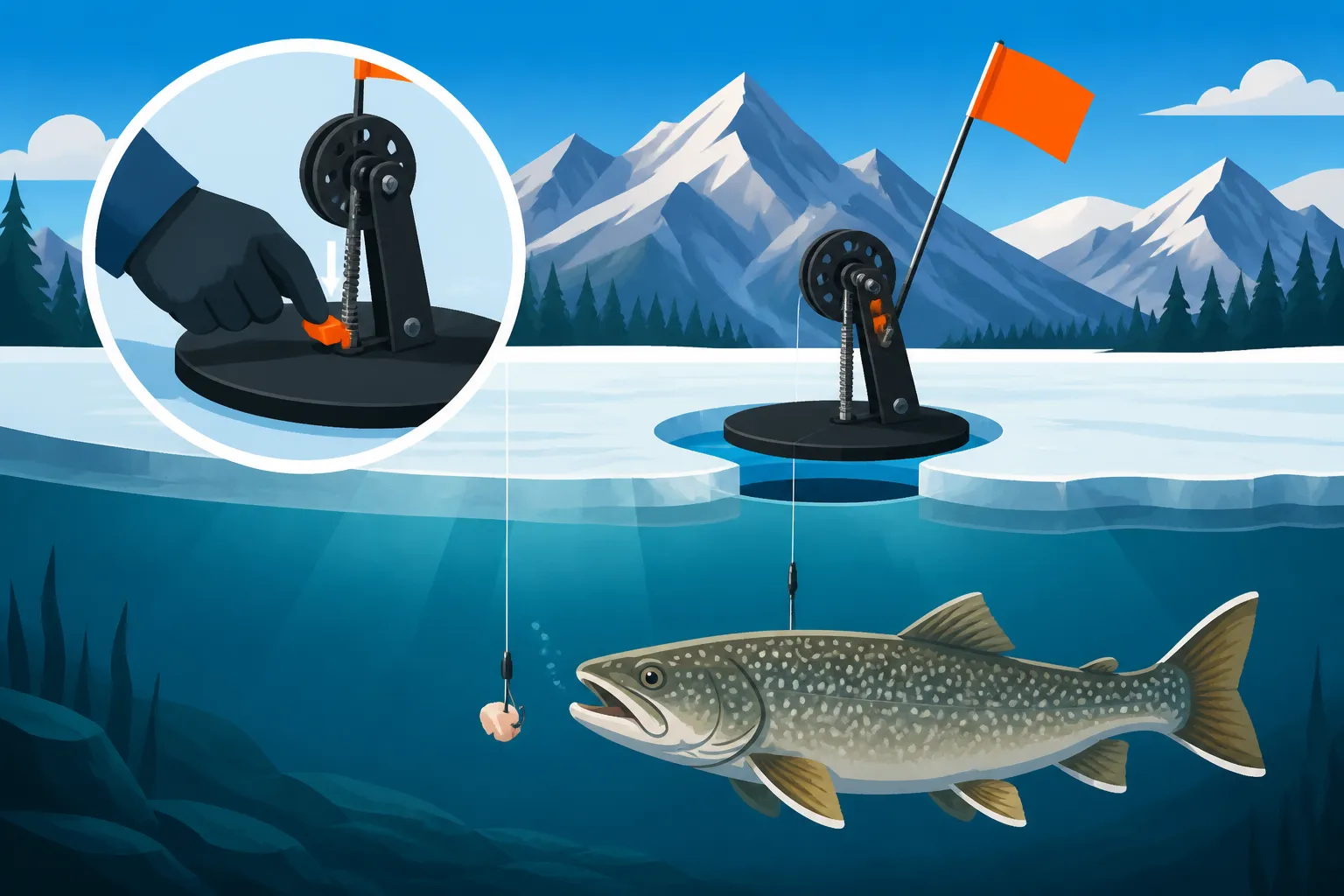
Some popular models, like the Frabill Arctic Fire or the Beaver Dam Original, are favorites among serious ice anglers. These often feature a robust spool system that can hold hundreds of feet of line, and a flag mechanism that's both sensitive and highly visible. A good tip-up will have a well-balanced trip arm that allows for easy release when a fish bites, but won't false-trip in the wind. The flag itself should be brightly colored, preferably neon orange or red, so you can spot it from a distance, even in flat light or snowy conditions. Consider models that have multiple tension settings on the trip arm; lighter settings are great for finicky bites, while heavier settings prevent nuisance trips from strong winds or smaller baitfish movements. When you're browsing for these on Amazon, you'll find a wide variety, but investing in a quality, reliable tip-up will save you frustration on the ice. Remember, durability is key when ice fishing in Colorado's often harsh winter conditions.
Rods, Reels, and Line Considerations
While tip-ups are primarily passive fishing devices, many anglers use a short, stout jigging rod in conjunction with their tip-ups. However, for the tip-up itself, the "rod" is effectively the line stored on its spool.
For lake trout, you'll need a heavy-duty line. Most anglers opt for 20-30 pound test monofilament or fluorocarbon main line, often with a heavier leader. Monofilament offers good knot strength and shock absorption, while fluorocarbon is virtually invisible underwater and highly abrasion-resistant, which is a huge plus when fishing around rocky structure. You need enough line to reach the bottom in deep reservoirs, often 80-150 feet, and still have plenty left for a strong run. A spool capable of holding at least 200 feet of line is a good starting point. While you won't be "reeling" a fish in with the tip-up itself, the line needs to be strong enough to withstand the initial powerful surge of a hooked lake trout. It’s critical to use fresh line each season, as old line can become brittle in cold temperatures. When building your complete Ice Fishing Gear for Colorado Reservoirs setup, don't skimp on line quality.
Bait and Lure Choices
When it comes to enticing lake trout, the bait or lure is arguably the most critical component. Since lakers are primarily piscivores, your offerings should reflect that.
Live bait, such as shiners, sucker minnows, or even smaller trout (check regulations for legality and species restrictions), can be incredibly effective. If live bait isn't permitted or available, cut bait from oily fish like herring, shad, or even mackerel can work wonders. The scent trail from oily cut bait can draw lake trout from a considerable distance. For artificials, large tube jigs, swimbaits, spoons, and soft plastic presentations designed to imitate baitfish are excellent choices. Look for lures in sizes ranging from 3 to 6 inches, in natural colors like silver, white, perch, or blue and black. Glow-in-the-dark options can also be effective in deeper, darker water. Some anglers swear by a large Rapala Jigging Rap or a substantial Swedish Pimple, tipped with a piece of sucker meat or a minnow head for added scent and appeal. When picking out your bait or artificials, consider the primary forage in the specific Colorado lake you're fishing. For example, if a lake is known for a strong kokanee population, a lure mimicking a young kokanee will likely be a hit. Don't be afraid to experiment with different sizes and colors until you find what the lake trout are keying in on that day. These are often readily available on Amazon or at local sporting goods stores.
Step-by-Step Tip-Up Setup for Lake Trout in Colorado
Once you've got your gear, the actual process of setting up a tip-up for lake trout is fairly straightforward, but precision and attention to detail make all the difference.
Drilling Your Holes and Spacing
Before you even think about dropping a line, you need to ensure the ice is safe. Always check How Thick Ice Needs to Be Before You Fish It in Colorado before venturing out. Once safety is confirmed, strategic hole placement is next.
Lake trout often cruise specific underwater contours or patrol larger areas. Instead of clustering your holes, spread them out to cover more ground. A good starting point is to space your holes 20 to 50 yards apart, forming a grid or line along a suspected structure like a drop-off or a hump. For drilling, an 8-inch or 10-inch auger is ideal, as it provides a wide enough hole to land a larger lake trout. A narrower hole can make it incredibly difficult to pull a big laker through without losing it at the last second. When you're ready to drill, make sure you have a reliable auger, whether it's a hand auger, a propane-powered model like a Jiffy, or an electric auger like a Strikemaster or Ion. These can be found at local shops or even ordered online from Amazon for convenience. Drill your holes efficiently, making sure to clear out any slush or ice chips before you deploy your tip-up.
Rigging Your Line and Bait
This is where the magic happens – getting your bait into the strike zone. Proper rigging is essential for both presentation and hook-set success.
Start by securely tying your leader material to your main line. A blood knot or an albright knot are strong choices for joining different line types or strengths. For lake trout, a 2-foot to 4-foot leader of 20-30 pound fluorocarbon is often recommended, as it's less visible and more abrasion-resistant. Attach your hook to the end of the leader. A strong, sharp circle hook or a large treble hook in sizes 1/0 to 4/0 are common for lake trout. If using live bait, hook it carefully through the back or lips to keep it lively. If using cut bait, ensure the hook is exposed but securely holds the bait. Some anglers also add a small, brightly colored bead or a spinner blade just above the bait to add visual appeal, especially in deeper, darker water. Next, crimp or tie a sufficient amount of weight (pencil lead, split shots, or an egg sinker) about 12-18 inches above the hook to get your bait down quickly and keep it at your desired depth. Finally, mark your line with a small piece of tape or a bobber stop to indicate your target depth, which you can determine with your fish finder. Many anglers have found success by jigging vigorously to mark fish, then setting a passive tip-up in that same area, ensuring their bait is precisely where the lakers are.
Deploying and Monitoring Your Tip-Up
Once rigged, deploying your tip-up is the final step before the waiting game begins.
First, use your fish finder or sonar to identify the depth and any potential structure or fish marks. This is where a good unit can make all the difference, helping you pinpoint exactly where lake trout might be holding. Drop your baited line down to the desired depth, usually a few feet off the bottom or directly at the depth where you've marked fish. Carefully place the tip-up over the hole, ensuring the spool is submerged in the water to prevent it from freezing. Position the flag mechanism so it's ready to trip when a fish pulls the line. Set the spool tension just enough so it won't false-trip in the wind, but light enough that a lake trout won't feel too much resistance. When the flag goes up, it’s a moment of pure adrenaline! Approach slowly and quietly to avoid spooking the fish. Grab the line firmly, feeling for any additional pulls or runs. Many lake trout will "mouth" the bait before fully committing, so a steady pull is your cue to set the hook with a strong, upward sweep. Remember, lake trout can make powerful runs, so be ready to hand-line the fish in carefully, letting line out when needed and slowly gaining it back. It’s a delicate dance between angler and fish.
Advanced Strategies and Tips for Colorado Lake Trout
Beyond the basic setup, there are several advanced tactics and considerations that can significantly improve your lake trout success in Colorado.
Incorporating a Jigging Rod
While tip-ups are passive, many successful lake trout anglers don't just sit and wait. They actively fish with a jigging rod near their tip-ups. This is where Jigging for Lake Trout Through the Ice really shines.
By actively jigging with a heavy spoon or a tube jig in a nearby hole, you can generate more activity and potentially attract lake trout to your area. The vibrations and flash from your jigging motion can act like a beacon, drawing in curious lakers. Often, a lake trout will investigate the jigging presentation but might be more inclined to strike the stationary, natural bait on your tip-up. This "one-two punch" approach allows you to scout for active fish and simultaneously offer a tempting, passive meal. If you mark fish on your sonar that aren't hitting your jig, they might be more receptive to the tip-up bait. Conversely, a jigging rod allows you to quickly react to fish you mark that might not be moving towards your tip-up. It's a highly effective way to maximize your chances, essentially running two different presentations at once. Plus, it keeps you warm and engaged during those long waits for a flag to fly!
Safety First on the Ice
Ice fishing is an exhilarating activity, but safety should always be your top priority, especially when venturing out onto large reservoirs known for big fish like lake trout.
Always tell someone where you're going and when you expect to return. Dress in layers, including waterproof outer layers, to protect against the elements. Carry essential safety gear such as ice picks (worn around your neck), a spud bar or ice chisel to check ice thickness, and a throw rope. Avoid going out alone, especially on unfamiliar bodies of water. Be mindful of changing weather conditions and listen to local advisories. Remember that ice thickness can vary greatly, even on the same body of water, due to currents, springs, and other factors. Keep a safe distance from ice huts or vehicles if you're not sure about their weight. A well-equipped ice fishing trip is a safe one, and you can find many of these safety items on Amazon, ensuring you're prepared for any scenario. This diligent approach is just as important as knowing Colorado's Best Ice Fishing Reservoirs to fish.
Locating Prime Lake Trout Waters
Finding the fish is half the battle, and for lake trout, this means understanding their preferred habitats in Colorado's large, deep reservoirs.
Lake trout thrive in cold, deep, oxygenated water. In Colorado, prime destinations for these powerful fish include Blue Mesa Reservoir, the state's largest body of water, known for its trophy lake trout and kokanee salmon populations. Taylor Park Reservoir near Almont is another excellent choice, offering consistent action for good-sized lakers. Granby Reservoir, part of the Arapaho National Recreation Area, also holds a healthy population of lake trout, some of which grow quite large. When choosing your spot, utilize resources like CPW's online fishing atlas, bathymetric maps, and local bait shop reports. Look for areas with significant depth changes, submerged humps, or old river channels. These underwater features act as highways and feeding grounds for lake trout. Learning How Big Lake Trout Get in Colorado in these specific waters can also help you tailor your gear and expectations. Many successful lake trout anglers use portable fish finders with GPS capabilities to mark prime spots and return to them. This technology, like a Garmin or Lowrance unit, is invaluable for understanding the underwater topography and identifying areas where Lake Trout Fishing in Colorado will be most productive. The clearer you can "see" what's below the ice, the better your chances of putting your tip-up directly over a laker's head.
Disclaimer
The information provided in this guide is for general informational purposes only. Fishing regulations, ice conditions, and fish behavior can change. Always consult the latest Colorado Parks and Wildlife regulations and local advisories before heading out on the ice. Exercise caution and prioritize safety when ice fishing.