What Auger Size Works Best for Colorado Ice Fishing
Stepping onto the frozen expanse of a Colorado lake or reservoir, eager for that first bite, there's nothing quite as frustrating as realizing your ice auger isn't up to the task. Maybe it's too small for the monster lake trout you're dreaming of, or perhaps it's a heavy beast that drains your energy before you even get through the ice. Choosing the right auger size for Colorado ice fishing isn't just about punching a hole; it's about matching your gear to the unique demands of our high-altitude fisheries and ensuring a successful, enjoyable day on the hard water. This guide will walk you through the ins and outs of auger sizes, helping you pick the perfect one for your Colorado ice fishing adventures.
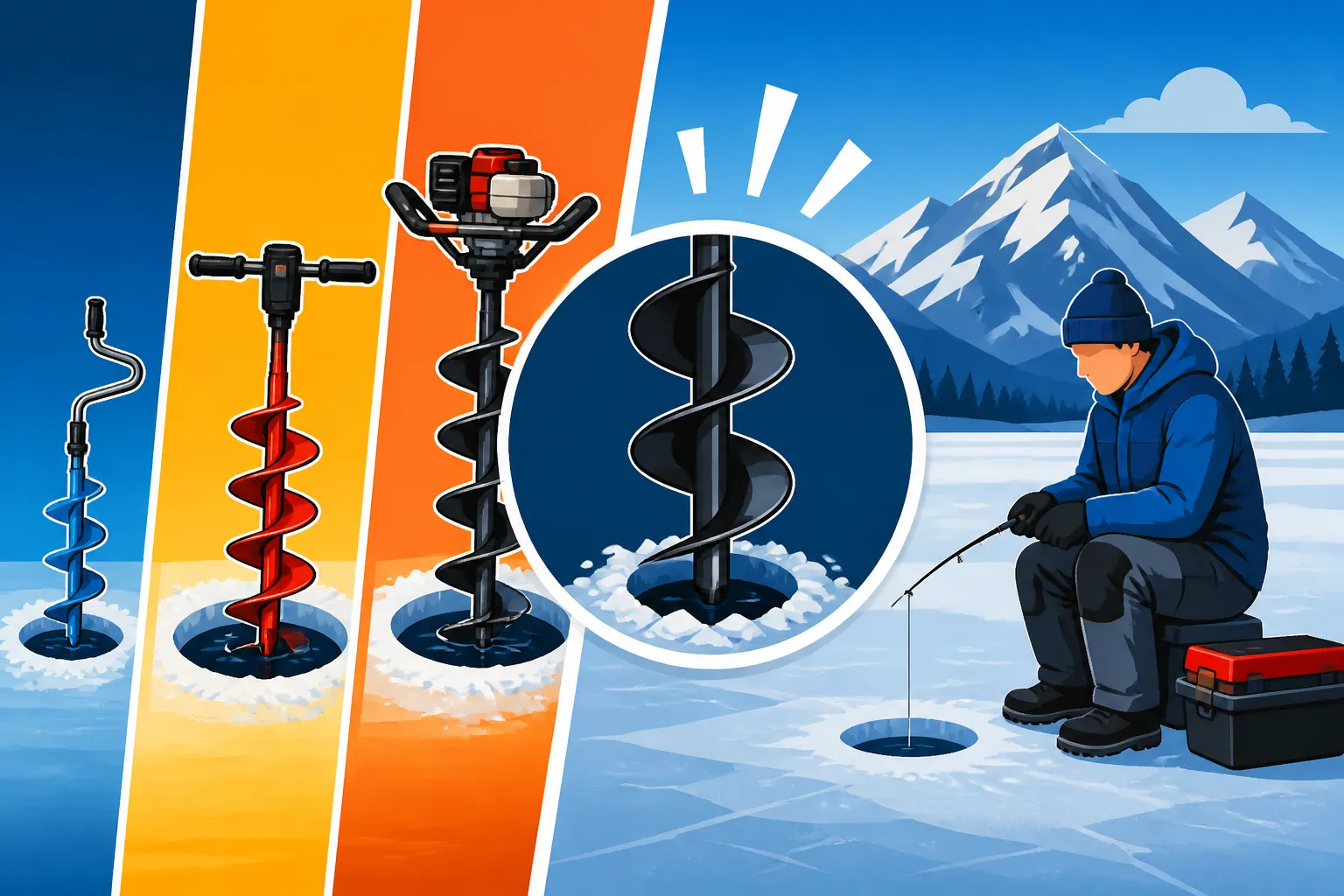
Understanding Auger Types and Their Impact on Size Choices
Before we dive into specific sizes, it's crucial to understand that the type of auger you choose significantly influences what size blade makes the most sense for you. Colorado's ice can vary wildly, from a few inches of early-season skim to several feet of rock-hard mid-winter slab, and your auger needs to contend with all of it.
Manual Augers: Lightweight and Mighty for Early Season
Ah, the manual auger. This is where many of us started, and honestly, they still have a place in a Colorado ice angler's arsenal, especially for those venturing out onto early ice or wanting to keep things light. Manual augers rely purely on your muscle power to drill through the ice. Because they require human effort, the size of the blade directly impacts how much work you'll be doing.
A smaller manual auger, typically 4 to 6 inches, is a breeze to drill with. It's fantastic for targeting panfish like perch or small trout, and it's incredibly portable if you're hiking into one of Colorado's many high-country lakes that freeze over. You can often find compact, lightweight models on platforms like Amazon that are perfect for backpacking. However, if you're trying to punch a 10-inch hole with a manual auger through two feet of ice, you'll feel every single rotation in your shoulders and back. It's doable, but it will quickly become a deterrent to drilling more holes and finding active fish. For those quick trips or when ice isn't excessively thick, a 6-inch manual auger offers a great balance of effort and hole size for general trout fishing.
Propane and Gas Augers: Power Through Thick Ice
When the ice really starts to thicken up on reservoirs like Blue Mesa or Eleven Mile, a manual auger can turn a fun day into an exhausting chore. That's where propane or gas-powered augers come into their own. These machines are designed for raw power, making quick work of even the most formidable ice. The engine does the heavy lifting, allowing you to choose larger blade sizes without worrying about arm fatigue.
With a gas or propane auger, an 8-inch blade is often considered the sweet spot for many Colorado anglers. It's large enough to land most trout and even decent-sized kokanee salmon, but not so big that it becomes unwieldy or burns through too much fuel. If you're consistently chasing larger species like trophy lake trout or northern pike, then a 10-inch gas auger might be your go-to. The trade-off, of course, is weight, noise, and the need to carry fuel. Gas augers can be heavy to transport, especially if you're not driving directly onto the ice, and the fumes can be a bit much in a small ice hut. Propane models offer a cleaner burn and less hassle with fuel mixing, making them a popular choice for many.
Electric and Battery Augers: The Modern, Quiet Choice
The ice fishing world has seen a huge leap forward with electric and battery-powered augers. These beauties offer the power to drill large holes without the noise, fumes, or maintenance associated with gas engines. If you've ever tried to have a conversation or listen to fish finders with a gas auger roaring, you'll appreciate the quiet hum of an electric unit.
Brands like ION and StrikeMaster have really perfected battery-powered augers, making them incredibly popular across Colorado. For these, an 8-inch or even a 10-inch blade is perfectly manageable. The battery provides consistent torque, making drilling large holes relatively effortless. The main consideration here is battery life, especially in bitter cold. Drilling more and larger holes consumes battery faster. Carrying a spare battery is a common practice, and you'll find them readily available. For those who value quiet operation, portability, and ease of use, an electric auger, typically with an 8-inch blade, is an excellent choice for a wide range of Colorado ice fishing scenarios, from fishing for Lake Trout at Blue Mesa Reservoir to chasing trout on smaller urban ponds.
Drill Augers: A Hybrid Approach
A relatively new innovation is the drill auger, which essentially consists of an auger bit designed to attach to a heavy-duty cordless electric drill. This offers a fantastic compromise for many anglers, especially those who already own powerful drills. These setups are usually lighter and more compact than dedicated electric augers and can be surprisingly effective.
For drill augers, a 6-inch or 8-inch blade is most common. A 6-inch bit puts less strain on your drill and battery, making it a great option for smaller fish or moderate ice thickness. An 8-inch bit can also work, but you'll need a robust, high-torque brushless drill with a good quality battery, preferably 18V or 20V and at least 4Ah (amp-hours). Many anglers report excellent success with brands like Milwaukee and DeWalt powering these drill auger bits. The key is to avoid cheap drills; you'll burn them out quickly. This hybrid option offers excellent portability and a respectable balance of power for general Colorado ice fishing.
Matching Auger Size to Your Colorado Fishing Goals
Now that we've covered the different types of augers, let's get down to the brass tacks of matching the hole size to the fish you're hoping to pull out of Colorado's icy waters. This is perhaps the most critical factor in your decision.
The 6-Inch Auger: For Panfish, Stocked Trout, and Portability
If your primary goal is to target panfish like yellow perch or crappie, or if you're hitting heavily stocked waters for smaller rainbow trout, a 6-inch auger is often more than sufficient.
- Target Species: Smaller rainbow trout, brook trout, perch, crappie. These fish generally won't put up a fight that necessitates a larger hole, and you'll easily land them.
- Benefits: Easier and faster to drill, especially with manual augers. Lighter to carry, making it ideal for backpacking into remote high-country lakes. Smaller holes freeze over faster but are also quicker to re-drill. If you're doing a lot of hole hopping, a 6-inch auger can save you a lot of energy and time, allowing you to explore more of the lake.
- Considerations: While a 6-inch hole is fine for most trout, a truly massive brown trout or a thick-bodied kokanee might present a challenge, especially if you're using a short leader or your rod is stiff. It’s also harder to get a camera down a 6-inch hole if you like that feature.
The 8-Inch Auger: The All-Around Colorado Workhorse
For many, many Colorado ice anglers, the 8-inch auger is the undisputed champion. It strikes an excellent balance between drilling ease and the ability to land a wide variety of fish.
- Target Species: This size is perfect for most applications, including larger rainbow trout, brown trout, kokanee salmon, walleye, and even average-sized lake trout. If you're ice fishing for Kokanee Salmon in Colorado or targeting bigger browns, an 8-inch hole provides ample room.
- Benefits: Offers enough clearance to land most trophy-sized trout and kokanee without too much struggle. It’s still relatively efficient to drill with, particularly with power augers, and not excessively heavy for short hauls. It also allows for easier deployment of fish finders, underwater cameras, and larger lures.
- Considerations: While it's great for most fish, a truly gigantic lake trout or a massive northern pike could still be a tight squeeze. Drilling an 8-inch hole, even with a power auger, uses more energy than a 6-inch hole, so battery life or fuel consumption will be higher. This is often the size I recommend to friends who are looking to get into Ice Fishing in Colorado, Getting Started, as it offers the most versatility.
The 10-Inch Auger: For Trophy Hunters and Big Game Fish
If you live for the thrill of battling a monster fish through the ice, and you're regularly targeting those state-record contenders, then a 10-inch auger is practically a necessity.
- Target Species: Trophy lake trout (especially at spots like Blue Mesa Reservoir), large northern pike, and the occasional truly massive walleye. If you’re targeting Lake Trout Fishing in Colorado specifically for those giants, you’ll want the extra space.
- Benefits: Provides maximum clearance for landing the biggest fish in Colorado. This significantly reduces the chance of losing a trophy fish right at the hole, a heartbreaking experience many of us have faced. It also makes it much easier to maneuver a big fish's head through the ice.
- Considerations: A 10-inch auger is significantly harder to drill, even with a powerful gas or electric unit. It's heavier, bulkier, and will consume more fuel or battery power per hole. These holes also take longer to freeze over, which can be a safety concern on high-traffic days, but also means they stay open longer for re-fishing. You'll likely need a power auger for this size; a manual 10-inch auger is a masochist's tool! When Jigging for Lake Trout Through the Ice, a wide hole allows for more aggressive jigging and easier fish handling.
Here’s a quick overview to help visualize:
| Auger Size (Inches) | Recommended Target Species (Colorado) | Pros | Cons | Ideal Usage |
|---|---|---|---|---|
| 6 | Perch, small trout, crappie, brook trout | Easiest to drill, lightweight, minimal effort | Can be tight for larger fish, limited camera/flasher access | High-country hikes, panfish, early/late season, manual augers |
| 8 | Rainbow, brown trout, kokanee, walleye, lakers | Good balance of ease & fish handling, versatile | Heavier than 6-inch, more effort for manual, uses more battery/fuel | General Colorado ice fishing, power augers, chasing mid-size trophies |
| 10 | Trophy lake trout, northern pike | Ample room for giants, reduced chance of losing fish | Heaviest, most effort to drill, highest battery/fuel consumption | Dedicated trophy hunting, specific big-fish waters, power augers essential |
Practical Considerations for Auger Size in Colorado
Beyond the type of auger and your target species, several practical factors unique to Colorado's ice fishing scene should influence your auger size decision.
Ice Thickness and Drilling Effort
Colorado winters can be unpredictable. Early in the season, you might encounter 4-6 inches of ice, while by February, reservoirs can boast 2-3 feet or more. How Thick Ice Needs to Be Before You Fish It in Colorado is always a key consideration, but how deep that ice gets will directly impact your drilling experience.
- Thin Ice (4-12 inches): Even a 10-inch manual auger might be manageable here, though still a workout. A 6-inch manual auger will be effortless. Electric and gas augers will make quick work of any size hole in thin ice.
- Medium Ice (1-2 feet): This is where manual augers beyond 6 inches start to become quite taxing if you're drilling many holes. An 8-inch manual auger will be a significant effort. Power augers (gas, propane, electric) really shine here, making 8-inch and even 10-inch holes relatively easy.
- Thick Ice (2+ feet): For this kind of ice, a power auger is almost essential, especially if you plan to drill multiple holes or use larger sizes. Trying to punch a 10-inch hole through 3 feet of ice with a manual auger is an undertaking most sane anglers avoid. If you're venturing to one of Colorado's Best Ice Fishing Reservoirs known for thick ice, plan accordingly.
Portability and Weight: Where Are You Fishing?
Colorado offers diverse ice fishing experiences, from drive-up access at Chatfield Reservoir to multi-mile treks into wilderness areas. Your auger's weight and bulk will matter significantly depending on your destination.
- Drive-Up Access: If you're lucky enough to drive your vehicle or ATV right onto the ice (where permitted, like at some sections of Blue Mesa or Eleven Mile), weight is less of an issue. You can easily haul a heavy 10-inch gas auger if that's what you prefer.
- Short Walks/Sleds: For areas requiring a short walk from the parking lot, or if you use an ice sled to transport your gear, an 8-inch electric or propane auger offers a good compromise. You still get power, but it's generally lighter than a full-sized gas unit. Many anglers find the ION G2 or StrikeMaster Lithium 40V models, often purchased on Amazon, to be perfect for this.
- Hiking/Backpacking: If you're hoofing it a mile or more to a remote high-country lake, every ounce counts. A 6-inch manual auger, or a drill auger with a 6-inch bit, becomes incredibly appealing. These lightweight options ensure you have enough energy left for fishing, not just drilling. Remember to pack lightly when heading into those pristine spots!
Hole Freezing and Re-Drilling
On bitterly cold, windy days in Colorado, especially on large, exposed reservoirs, your ice holes can start to freeze over surprisingly quickly.
- Smaller Holes (6-inch): These will freeze over faster than larger holes. However, because they're smaller, they're also easier and quicker to clear out or re-drill. This can be an advantage if you're frequently moving or fishing multiple holes.
- Larger Holes (8-inch, 10-inch): These take longer to freeze solid, giving you more fishing time before needing to clear them. This is particularly helpful when you're targeting fish that might take longer to bite, or if you're using larger fish finders or underwater cameras. On the flip side, if a large hole does freeze completely, it takes more effort to re-drill.
The Colorado Goldilocks Zone: Why 8-Inch is Often Just Right
Considering all these factors, the 8-inch auger often emerges as the "just right" choice for the average Colorado ice angler. It provides enough room to land almost any species you're likely to encounter, from robust trout to walleye and even smaller lake trout. It's not excessively difficult to drill, especially with a modern electric or propane auger, and it still offers a decent level of portability for many accessible spots.
If you're buying your first power auger for Colorado, starting with an 8-inch blade is a safe bet. You can always size down for specialized panfish trips with a smaller, lighter manual auger, or consider a 10-inch for those dedicated trophy hunts once you're hooked on the pursuit of Colorado's largest ice-dwelling fish like northern pike. The versatility of an 8-inch auger truly makes it a staple in many Colorado ice fishing setups.
Ultimately, the best auger size for you in Colorado comes down to a blend of your personal fishing style, your target species, and the specific locations you plan to frequent. Consider how much effort you're willing to exert, how much weight you want to carry, and what kind of fish you're dreaming of pulling through the ice. With a little thought, you'll find the perfect auger to make your Colorado ice fishing season a resounding success.
Disclaimer
The information provided in this guide is for general informational purposes only and does not constitute professional advice. Always consult the official Colorado Parks and Wildlife regulations for the most current and accurate fishing rules, bag limits, and licensing requirements before heading out on the ice. Ice conditions can be dangerous; always prioritize safety and check local ice reports.