Reading Water on a Colorado Freestone River
There's nothing quite as frustrating as standing on the bank of a beautiful Colorado freestone river, watching the water flow by, and having absolutely no idea where the fish are hiding. You cast, you wade, you try different flies, but it often feels like you're just guessing. This guide is all about taking the guesswork out of your Colorado fishing adventures by teaching you how to "read the water" like a seasoned pro, turning those blank stares into confident casts and, hopefully, more fish in the net.
Understanding the Dynamics of a Freestone River
Colorado's freestone rivers are living, breathing entities, constantly changing and offering new puzzles with every shift in flow or season. Unlike tailwaters, which are controlled by dam releases and tend to be more stable, freestones are truly wild, and understanding their unique character is the first step to unlocking their secrets.
What Makes a Freestone River Unique?
A "freestone" river, at its heart, is a river whose flow is primarily dictated by natural precipitation and snowmelt, rather than a dam. Think of rivers like the Upper Colorado River, the Arkansas River, or the Roaring Fork before it hits larger reservoirs. Their water levels and clarity can fluctuate dramatically throughout the year. In spring, you might witness an impressive spring runoff, turning the river into a powerful, churning force, while in late summer or fall, it might slow to a gentle trickle.
These dynamic changes mean that the riverbed itself is constantly being reshaped. Rocks are moved, banks are eroded, and new logjams can form overnight. This constant state of flux means that fish, too, must be adaptable. They're always searching for the most advantageous positions – places that offer both protection from strong currents and easy access to food. This ever-shifting environment is precisely why learning to read the water is so crucial; what worked last week might not work today.
How Flow and Depth Influence Fish Behavior
The flow and depth of a freestone river are perhaps the two most critical factors dictating where trout will hold. Fish are inherently energy-efficient creatures. They don't want to fight a strong current all day long if they don't have to, especially when there's an easier way to get food. Instead, they'll seek out current breaks where they can hold comfortably with minimal effort, waiting for food to drift by.
Deeper water, especially in conjunction with slower currents, provides a sense of security from predators like eagles, ospreys, and even other larger fish. It also offers thermal stability, keeping fish cool in the summer and relatively warmer in the winter. During periods of high flow, fish will often move to the banks or into the deepest, slowest parts of a pool, conserving energy and staying out of the powerful main current. Conversely, when flows are low and clear, they might spread out more, but still prefer spots with overhead cover or ample depth. Understanding these fundamental preferences will immediately narrow down your search.
The Anatomy of a Fish-Holding Lie
Once you grasp the general dynamics, it's time to zoom in on specific "lies" – the places where fish are most likely to be holding. Think of these as the trout's favorite spots to eat, rest, and hide.
Riffles and Runs: Fast Water Feeding Zones
Riffles are those shallower, turbulent sections of the river where the water tumbles over rocks, creating oxygen-rich, broken water. These areas are veritable insect factories, as nymphs are dislodged from the bottom and oxygen levels are at their peak. Trout love to feed in riffles, often positioning themselves just behind a rock or in a slightly deeper channel within the riffle, darting out to snatch drifting morsels.
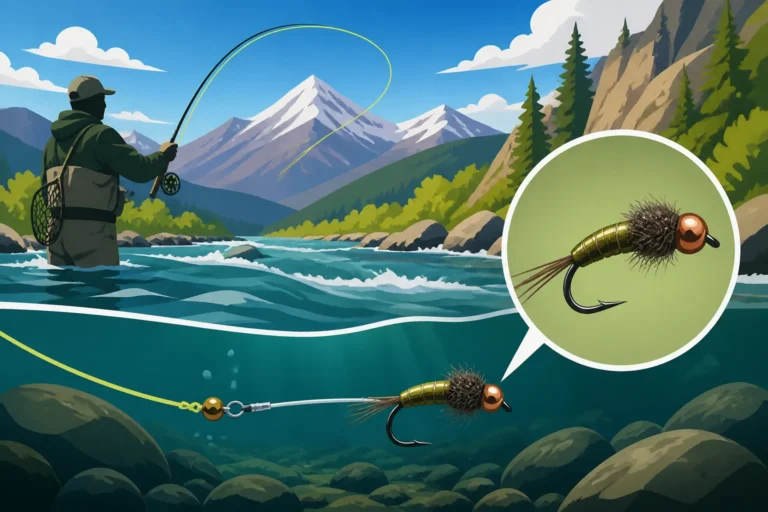
Runs are deeper, more uniform stretches of faster-moving water that often follow a riffle or lead into a pool. While still possessing a good current, runs offer more depth than riffles, providing better cover and allowing fish to hold comfortably. Trout in runs will typically be found along the edges, behind submerged rocks, or in subtle depressions, waiting for a steady parade of food. These are prime areas for nymphing, as you can often drift your flies naturally along productive feeding lanes.
Pools: Rest, Cover, and Opportunistic Feeding
Pools are the slower, deeper sections of a river, often characterized by calm surfaces and clear visibility. While they might not seem as "active" as a riffle, pools are incredibly important for trout. They serve as critical resting areas, especially for larger fish that need to escape the constant energy drain of faster currents. In a pool, a trout can comfortably conserve energy and still be on the lookout for an easy meal.
You'll often find fish in different parts of a pool. The "head" of the pool, where the faster water enters, can be a great feeding zone, as food is concentrated here. The "belly" of the pool, the deepest and slowest part, provides maximum security and is where bigger fish often lie. The "tail" of the pool, where the water begins to speed up again before flowing into the next riffle or run, is another excellent ambush point, especially during hatches when fish move up to feed on emergers or dry flies. Look for submerged logs, undercut banks, or large boulders that offer additional cover within these calm zones.
Edges and Seams: The Prime Real Estate
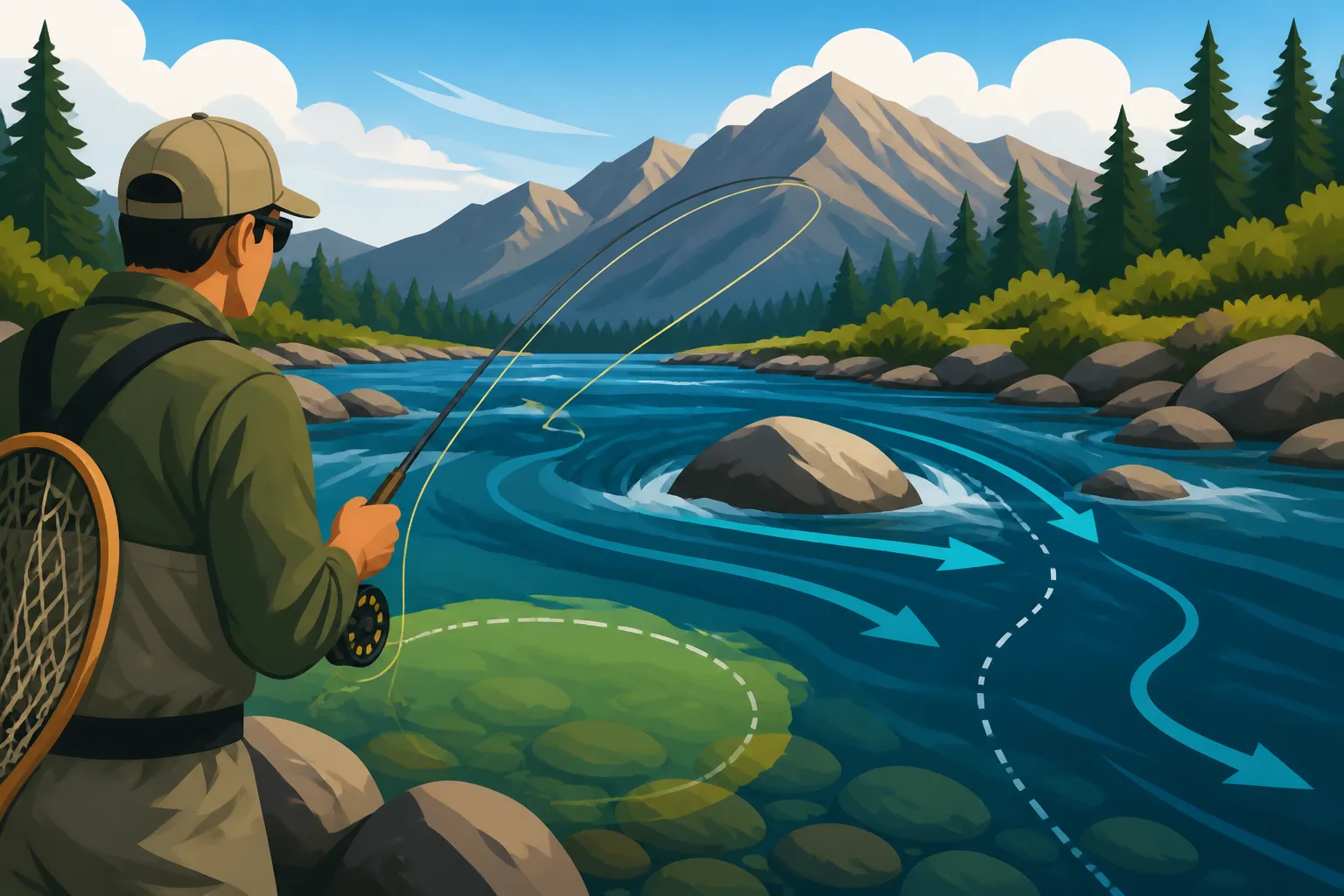
If you remember only one concept about reading water, let it be "seams." A seam is essentially a line where two different current speeds meet. Imagine a fast current flowing alongside a slower current, or a current break created by a submerged rock. Trout absolutely love these seams because they offer the best of both worlds: a slow-moving, low-energy "holding lane" right next to a fast-moving "food delivery conveyor belt."
Fish will position themselves in the slower water of the seam, facing upstream, and let the faster current bring food right to them. This allows them to expend minimal energy while having constant access to drifting insects. These seams can be subtle, like the invisible line between a main current and an eddy behind a boulder, or more obvious, such as the edge of a strong current running alongside a quieter bank. Learning to identify these seams, both on the surface and beneath it, is a game-changer for effective fly presentation. Look for foam lines or debris gathering on the surface; these often indicate underlying seams.
Obstructions and Structure: Natural Havens
Any interruption in the river's flow creates a potential fish lie. This includes obvious features like large boulders, downed trees (logjams), and undercut banks. These structures provide current breaks, allowing fish to hold without fighting the main flow. They also offer crucial overhead cover, protecting trout from aerial predators.
- Boulders and Rocks: Fish often hold directly behind large rocks, in the slower water of the eddy created by the obstruction. They might also hold in front of a rock, tucked into the slower water just upstream, or along the sides where current seams form.
- Undercut Banks: These are some of the most classic trout lies. The eroded bank creates a hidden cavern beneath the surface, offering deep cover and shade. Larger, more wary trout frequently inhabit these spots, especially on pressured rivers.
- Logjams and Downed Trees: While sometimes challenging to fish due to potential snags, logjams create incredible habitat. They offer complex current breaks, shade, and a constant source of dislodged insects and terrestrial food. Approach these with stealth and be prepared for strong takes if you can get your fly into the right pocket.
When approaching these areas, remember that the fish will typically be facing upstream, waiting for food. Your presentation needs to get your fly into their strike zone without spooking them.
Decoding the Surface: Visual Cues and Indicators
Sometimes, the river gives you clear clues on its surface, if you know how to read them. These visual cues can be invaluable for pinpointing active fish or understanding the overall mood of the river.
Surface Disturbances: Rising Fish and Feeding Lanes
The most exciting surface cue for many anglers is a rising fish. The sight of a trout breaking the surface to eat an insect is a direct indication that fish are active and feeding. But not all rises are equal. A subtle "sip" might indicate a fish gently taking tiny midges or small mayflies from the surface film, suggesting a delicate presentation is needed. A more aggressive "gulp" or "splashy" rise could mean a fish is targeting larger insects like caddis or stoneflies, or perhaps a beetle that just dropped into the water.
Observing the rhythm and location of these rises can tell you a lot. Are they consistently happening in a narrow band? That's a feeding lane. Are they sporadic and all over the place? Fish might be opportunistically feeding. Are they refusing your flies? It could be the wrong pattern, or perhaps your presentation is off. Take a moment to watch before you cast; patience here will pay off.
Foam Lines and Debris: Concentrated Food Delivery
Foam lines are nature's equivalent of a grocery conveyor belt on a freestone river. Formed by the accumulation of organic matter, bubbles, and naturally occurring surfactants, these lines often gather in slower currents adjacent to faster ones, along eddy lines, or at the head and tail of pools. These foam lines effectively concentrate floating insects, terrestrials, and other food items, making them prime targets for hungry trout.
If you see a prominent foam line, especially one that stretches for a good distance, fish are very likely holding beneath or adjacent to it, letting the river bring their meal directly to them. This is an excellent place to present dry flies, emergers, or even small nymphs drifted just beneath the surface. Similarly, accumulations of natural debris like leaves, twigs, or small bits of grass can also indicate a productive current seam or eddy where food is concentrating. Learning to identify these subtle indicators can significantly improve your success. For example, some anglers swear by the effectiveness of patterns that imitate these bits of natural debris that can be purchased from outfitters or found on Amazon.
Water Clarity and Color: Adjusting Your Approach
The clarity and color of the water are direct reflections of the river's health and recent conditions, and they heavily influence both fish behavior and your fishing strategy. In Colorado, especially during spring runoff or after a heavy rain, freestone rivers can quickly turn high and muddy. Knowing how to adapt is key. During high water tactics, such as those covered in High Water Tactics During Colorado's Runoff, fish will often move closer to the banks, seeking calmer, clearer water. They'll also be less selective, so bigger, brighter, or more scent-laden flies and lures might be effective. Our guide on Why Colorado Rivers Run High and Muddy in Late May provides excellent context for these conditions.
Conversely, in late summer or fall, freestone rivers can become incredibly low and clear. This makes fish more wary and easily spooked. In these conditions, stealth is paramount. You'll need longer, lighter leaders and tippets, smaller flies, and a very delicate presentation. Fish will often seek deeper pockets or overhead cover to feel secure. Understanding Low Water Tactics on Colorado Rivers in Late Summer will be invaluable here. Always adjust your fly patterns, retrieve speed, and approach based on what the water clarity tells you.
Advanced Techniques for Reading Water
Beyond the basics, there are nuanced ways to interpret the river, giving you an even sharper edge in finding and catching trout.
Understanding Micro-Currents and Subsurface Structure
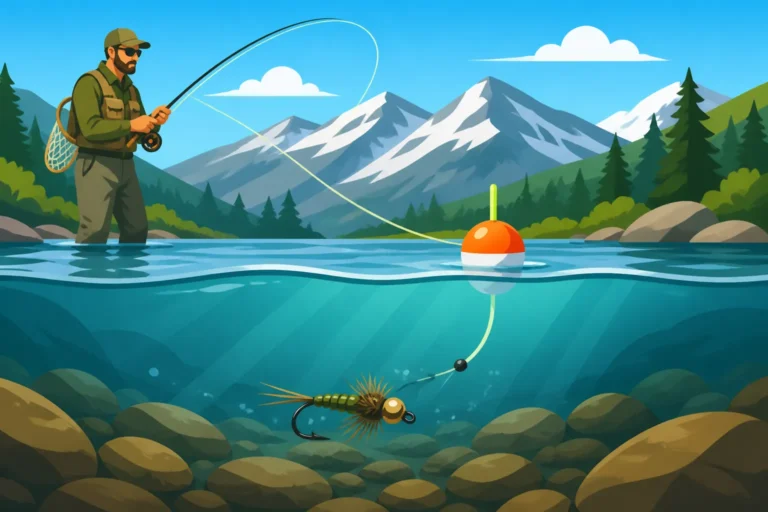
Reading water isn't just about the obvious features; it's also about interpreting the subtle, almost invisible cues that reveal what's happening beneath the surface. Micro-currents are tiny variations in flow that can indicate a submerged rock, a slight dip in the riverbed, or an underwater shelf. Watch how your indicator or fly line drifts. If it suddenly slows down in one spot, there's likely a current break or obstruction underneath. If it speeds up, you might be over a subtle drop-off or a slightly deeper channel.
You can also infer subsurface structure by observing the flow. A seemingly smooth patch of water might have a slight ripple or bulge that suggests a boulder is just beneath the surface. The way the water "boils" or "swirls" can hint at deeper holes or ledges. Developing this keen observational skill comes with practice, but it allows you to visualize the underwater landscape and identify potential holding lies that aren't visible from the bank.
Reading the River in Different Seasons
As we touched on earlier, a freestone river is a chameleon, changing its colors and character with the seasons. Your ability to read the water needs to adapt right along with it.
- Spring Runoff: This is a challenging but often rewarding time. High, turbulent water means fish push into the slowest, most protected areas: often right against the bank, behind large boulders, or in the very slowest eddies of big pools. Visibility is usually low, so larger, darker, or brighter flies that create a strong silhouette are effective. This is a time to focus on structure and the very edges of the river. If you're wondering What to Fish During Colorado's Spring Runoff, think heavy nymphs and streamers. Keep in mind that Why Tailwaters Fish Better Than Freestones During Runoff is often true because of the stable conditions below dams.
- Summer: Flows typically recede, and water warms up. Fish might spread out more in the mornings and evenings, actively feeding in riffles and runs. During the heat of the day, they'll retreat to deeper, cooler pools or shady undercut banks. Terrestrial insects become important, so look for overhanging vegetation.
- Fall: As water temperatures cool, fish become more active, especially brown trout preparing to spawn. They'll often move into shallower riffles and runs during the day, aggressively feeding. Streamer fishing can be incredibly productive during this time, targeting big browns in their spawning lies. Our article on Where Trout Hold During High Water and Where Trout Hold During Low, Clear Water can help you visualize these shifts.
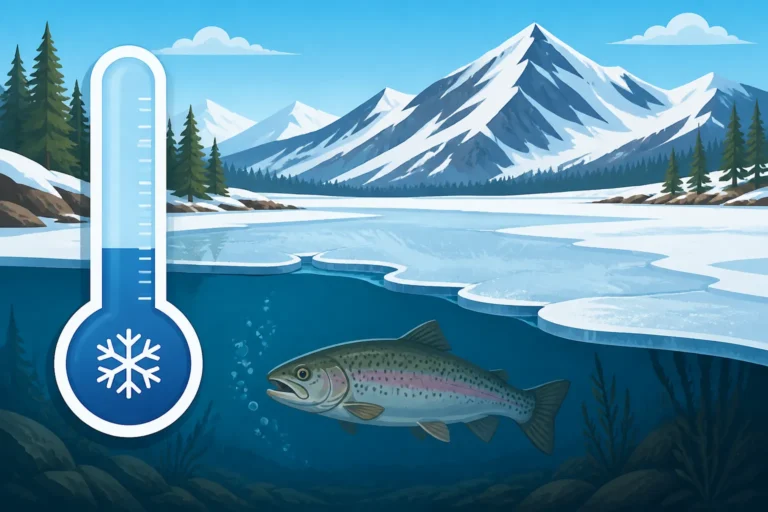
- Winter: Freestones can become very cold and slow. Fish will typically congregate in the deepest, slowest pools, conserving energy. Their feeding windows are shorter, and they'll be very sensitive to disturbance. Ultra-small midge and tiny nymph patterns, fished slowly and deliberately, are often the ticket. Ice fishing on some stillwater sections of freestones is also popular during this time.
The Importance of Observation and Patience
Reading water is not a skill you develop overnight; it's an art refined through countless hours on the river. The single most important "technique" is simply to observe. Before you even make your first cast, take five, ten, even fifteen minutes to just stand back and watch the river. Look for rises, watch the flow, identify current seams, note where foam gathers, and try to visualize the subsurface structure.
Pay attention to how insects drift, where they get held up, and where they disappear. Are there birds feeding in a particular area? That might indicate insect activity. Is there subtle movement along a bank? It could be a cruising fish. This patient observation allows you to build a mental map of the river, identifying prime lies and understanding how the fish are likely behaving on that particular day. Rushing in and blind casting is often a recipe for disappointment and can even spook fish that were otherwise catchable. Take a moment, breathe, and let the river tell its story.
Practical Tips and Common Mistakes
Even with a good understanding of river dynamics, applying that knowledge on the water takes practice and a few smart approaches. Avoiding common pitfalls can save you a lot of frustration.
Using Technology and Resources
While nothing replaces time on the water, modern tools can give you a significant head start. The Colorado Parks and Wildlife (CPW) Fishing Atlas is an invaluable resource for planning your trips. It provides detailed maps showing public access points, river classifications (like Gold Medal Waters), and even general descriptions of fishing opportunities in specific areas. Consulting this before you go can help you identify promising stretches of river that might have the types of lies you're looking for.
Beyond the CPW Atlas, don't underestimate the power of satellite imagery. Google Maps or other mapping applications allow you to scout a river section from above. You can often identify large pools, major riffles, prominent bends, and even significant boulders or logjams from an aerial perspective. This pre-trip scouting can help you formulate a game plan and identify specific targets before you even step foot in the water. You might even find specialized topographic maps on Amazon that show river contours and depths. Remember that while the satellite image won't tell you where fish are right now, it will show you the consistent structure of the river.
The Dangers of "Blind Casting"
Blind casting is arguably the most common mistake made by new and even some experienced anglers. It's the act of casting repeatedly into a stretch of water without a specific target or without having read the water to identify a likely fish-holding lie. While you might get lucky once in a while, blind casting is largely inefficient and counterproductive for several reasons:
- Spooks Fish: Each cast creates disturbance, and repeated, untargeted casts over water that isn't holding fish will likely spook any fish that are nearby, making them less likely to bite later.
- Wastes Time and Energy: You're expending effort on water that's unlikely to produce, when that energy could be focused on more promising spots.
- Reduces Learning: If you're not actively thinking about why you're casting where you are, you're not learning from your successes or failures. Reading water is about making informed decisions, not just flinging a line.
Instead, every cast should be a deliberate attempt to present your fly to a specific, identified lie. Think of it like a chess game: each move is calculated, not random.
Continuously Learning and Adapting
The most skilled river anglers are perpetual students. They understand that every river is different, every day is different, and even every hour can bring changes to the water. A river's personality can change with the weather, water temperature, insect activity, and even angler pressure. What you learned on the Fryingpan River might need significant adaptation on the Arkansas. Even on the same river, conditions in June will be vastly different from conditions in October.
The key is to remain flexible and willing to experiment. If your initial assessment of the water isn't producing, don't be afraid to change your approach. Try a different type of lie, adjust your depth, or switch your fly pattern. Pay attention to how the fish react (or don't react) to your presentations. Keep a mental log (or an actual fishing journal) of what worked and where. The more time you spend truly engaging with the river and its moods, the better you'll become at anticipating where the fish will be and how to tempt them. Don't be afraid to pick up a detailed guide or instructional DVD from Amazon to deepen your knowledge.
Ultimately, reading water is an ongoing journey, not a destination. It's about developing an intuition for the river, a quiet conversation between you and the current, that will lead to more rewarding days on Colorado's incredible freestone waters.
Comparing River Sections and Fish Lies
To help solidify your understanding, here's a quick comparison of the common river features and what they offer to fish and anglers.
| River Section | Characteristics | Fish Behavior | Angler Approach (General) |
|---|---|---|---|
| Riffle | Shallow, turbulent, highly oxygenated, broken surface | Active feeding, often in current breaks behind rocks | Nymphing, dry flies during hatches, upstream casts, focused on seams |
| Run | Deeper, more uniform current, good food delivery | Steady feeding, resting, cruising along edges | Nymphing, wet flies, streamers, targeting current seams and depressions |
| Pool | Deep, slow water, calm surface | Resting, escape from current, opportunistic feeding | Dry flies (head/tail), deep nymphing, streamers (ambush points), quiet approach |
| Eddy | Circular current behind obstructions, slower water | Resting, feeding on concentrated food, ambush point | Dry flies (foam lines), small nymphs, streamers, precise casts into the eddy |
| Undercut Bank | Hidden cavern under the bank, shade, strong cover | Large, wary fish, ultimate safety, ambush feeding | Careful presentation, deep nymphing, streamers, casting parallel to the bank |
| Logjam/Structure | Complex current breaks, debris, shade | Strong refuge, abundant food, opportunistic feeding | Careful short casts, tight-line nymphing, streamers, high snag potential |
Disclaimer
Please remember that fishing conditions, regulations, and fish behavior are subject to change. Always consult the latest Colorado Parks and Wildlife regulations brochure before heading out. Safety should always be your top priority when on or near the water.