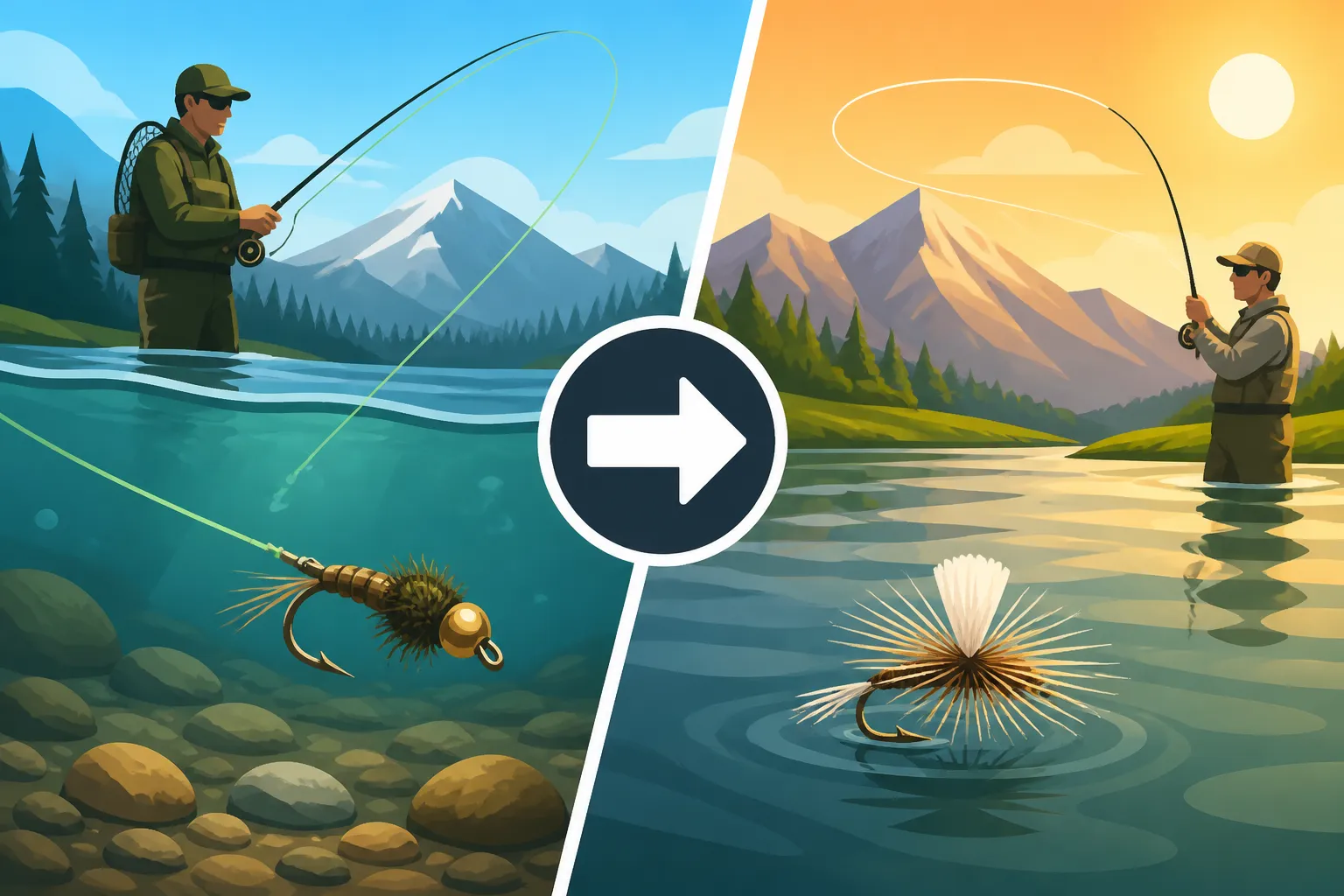
When to Switch From Nymphs to Dry Flies
It's a question that has plagued every fly angler in Colorado, from the seasoned veteran staring at a glassy surface on the Fryingpan to the newbie on the South Platte trying to figure out if that ripple was a fish or just a gust of wind. You've got your nymph rig all set up, bouncing along the bottom, feeling like you're doing "the right thing" because, let's face it, most trout eat subsurface. But then you see it: a tell-tale dimple, a subtle rise, or even a splashy grab. Suddenly, doubt creeps in. Is it time to ditch the nymphs and tie on a dry fly? This guide is here to help you decipher those subtle clues, understand what triggers trout to look up, and confidently make the switch from nymphs to dry flies in Colorado's incredible waters.
Understanding the Subsurface World and Surface Temptations
Let's be honest, the vast majority of a trout's diet comes from beneath the surface. Imagine a buffet where 90% of the food is on the bottom and only 10% floats by on top. That's pretty much what it's like for a trout. Nymphs, larvae, pupae, and various aquatic invertebrates are their daily bread and butter. However, there are those magical moments when the buffet shifts, and suddenly, the surface becomes the place to be.
Subsurface Feeding: The Nymph's Domain
Most of the time, especially when you don't see any fish rising, trout are actively feeding on nymphs and other aquatic critters that drift along the riverbed or are suspended in the water column. These are immature insects, essentially the larval or pupal stages of mayflies, caddisflies, and stoneflies, along with scuds, annelids, and even small baitfish. Trout instinctively know this, and their bodies are designed to pick these morsels off the bottom or out of the drift with minimal energy expenditure. This is why nymphing, whether with an indicator or using tight-line techniques, is often your most consistent strategy.
Think about a cold winter morning on the Blue River below Dillon Reservoir. The air is crisp, the water is clear, and there's not a single bug to be seen on the surface. Are the trout just going hungry? Absolutely not. They're hunkered down in the deeper runs and slow pools, methodically picking off tiny midges and small mayfly nymphs. In these conditions, sticking with a well-presented nymph rig, perhaps a couple of small flies like a Zebra Midge or a JuJu Baetis, is almost always your best bet. You're imitating the constant, reliable food source. Knowing about these tactics can be crucial, and our guide on Nymphing Techniques for Colorado Tailwaters dives even deeper into how to master them.
Even during warmer months, when hatches are possible, trout will spend a significant portion of their day feeding subsurface. They might pick off a few adults, but they'll often revert to nymphs between sporadic hatches or when the adult insects are sparse. Your job as an angler is to observe and adapt, but always remember that nymphs are the reliable foundation of a trout's diet.
Surface Activity: The Dry Fly's Moment
Now, let's talk about those exciting moments that make fly fishing so captivating: when trout decide to come to the surface. This isn't just a random act; it's almost always triggered by specific stages of an insect's lifecycle. Mayflies, caddisflies, and stoneflies all undergo transformations that bring them to the surface.
- Emergers: These are insects that are transitioning from their nymphal or pupal stage to their adult form, often struggling to break through the surface film. Trout love emergers because they're an easy, helpless meal, suspended just below or within the surface.
- Duns: Once an insect successfully emerges, it becomes a dun, floating on the surface to dry its wings before flying off. These are the classic "dry fly" targets, sitting right on top of the water.
- Spinners: After mating, adult insects, particularly mayflies, return to the water to lay their eggs. These spent insects, called spinners, often fall dead or dying onto the water, creating another easy meal for trout.
When you see a trout rise, it's reacting to one of these stages. The key is observing how it's rising. A gentle dimple might indicate a trout sipping tiny midges or emergers just below the film. A splashier rise could mean a more aggressive take on a larger caddisfly or stonefly. Understanding these nuances helps you decide not just if to switch to a dry fly, but which dry fly to use. This kind of surface action is what every angler dreams of, and learning to read it is paramount for successful dry fly fishing Colorado's freestone rivers.
Key Indicators for Switching to Dry Flies
Deciding when to switch to dry flies isn't always about seeing a fish jump out of the water. Often, it's a culmination of subtle observations and understanding the environmental cues that trigger a hatch.
Observing the Water: Rises and Hatches
The most obvious sign that it's time to consider a dry fly is seeing fish rise. But not all rises are created equal. You need to become a detective, observing the water carefully.
- The Subtle Sip: This is a gentle dimple on the water, often leaving a tiny ring. It usually indicates a trout taking small, delicate insects like midges or Blue-Winged Olives (BWOs) that are emerging or spent. The trout barely breaks the surface, just sipping the fly. If you see this, go small and light on your tippet. Our guide on Fly Selection for Colorado's Blue-Wing Olive Hatch might be especially helpful here.
- The Gulp/Head-and-Tail Rise: Here, the trout's nose and then its tail break the surface as it takes a larger insect. This indicates a more confident take on a dun or a larger emerger.
- The Splashy Rise: This is an aggressive, often noisy, rise where the trout really breaks the surface, sometimes even jumping clear of the water. This is commonly associated with caddisflies, which often skitter across the water, or larger stoneflies. When you see this, a more imitative dry fly or even an emerger pattern might be in order.
- The Porpoise Rise: The trout makes a hump-like roll, breaking the surface but often without showing its head. This usually means it's taking emergers or nymphs just below the surface, often in a rhythmic pattern. A dry-dropper rig with an emerger as the dropper could be deadly here.
Beyond just the rises, look for the actual insects on the water. Are there small, dark-bodied mayflies floating by? That's your BWO hatch. Are there fluttering, tent-winged insects skittering around? That's a caddis hatch. Pay attention to their size, color, and how they behave. Is it a sparse hatch, or are there so many bugs the trout are actively gorging? The intensity of the hatch will often dictate how willing the trout are to feed on the surface. You can even consult resources like Colorado Parks and Wildlife's Reading Colorado's Weekly Stocking Report or use their Colorado's Fishing Atlas to Plan a Trip to get a sense of what might be active in certain areas.
Environmental Factors: Weather and Water Conditions
The environment plays a huge role in triggering hatches and subsequent surface feeding. It's not just about what insects are present, but what conditions make them emerge.
- Overcast Days and Light Rain: These are often prime conditions for BWO hatches. The low light seems to encourage them to emerge, and trout become very active on the surface. Similarly, a light, warm rain can bring out caddis.
- Air and Water Temperature: Each insect species has an ideal temperature range for emergence. For instance, many mayfly hatches like BWOs often occur in cooler water temperatures, making them common in spring and fall. Caddis tend to be more active in warmer water. Knowing Colorado Fishing Seasons Month by Month can give you a general idea of what hatches might be expected.
- Water Clarity and Flow: Clearer, lower water conditions, often seen in late summer or during stable periods, make it easier for trout to spot insects on the surface. During high-water events or heavy spring runoff, trout are often focused on subsurface food because the turbidity makes surface feeding difficult. Our guide on When Colorado's Spring Runoff Hits and How to Fish Around It offers strategies for those challenging conditions.
- Time of Day: Many hatches are time-sensitive. Midges can be active all day, especially in winter. BWOs often come off in the afternoon on overcast days. Caddis can emerge throughout the day but are often strongest in the late afternoon and evening. Trico hatches are famous for their morning spinner falls.
Observing these environmental cues, even before you see a single rise, can give you a strong indication that dry fly opportunities are imminent. If it's a warm, breezy summer afternoon, and you're near brushy banks, consider tying on a Hopper or a Chubby Chernobyl – terrestrials blown into the water can be a massive food source without a typical aquatic insect hatch. These large, juicy meals will often bring even hesitant trout to the surface. You can even find patterns for these on platforms like Amazon if your local fly shop doesn't have what you're looking for.
The Trout's Mood: Selective Feeding vs. Opportunistic
Trout aren't always just mindlessly eating whatever floats by. During a heavy, consistent hatch, they can become incredibly selective. This is when the phrase "matching the hatch" truly comes into play.
- Selective Feeding: When there are thousands of one type of insect on the water, trout will often key in on that specific size, shape, and color, ignoring anything else. If you're throwing a size 14 Parachute Adams into a dense hatch of size 20 Blue-Winged Olives, you're probably not going to get a take. You need to observe the actual insects, identify them, and then select the closest imitation from your fly box. This can be frustrating, but incredibly rewarding when you crack the code. For example, during a strong Caddis hatch, trout might be keying in on the emerger stage more than the adult, requiring a slightly different presentation or fly pattern.
- Opportunistic Feeding: This happens when there isn't a dominant hatch, or when trout are simply hungry and willing to take a variety of foods. In these situations, an "attractor" pattern – a dry fly that doesn't perfectly mimic any specific insect but looks generally buggy and appealing – can be very effective. Think of a Royal Wulff, a Stimulator, or a large Parachute Adams. These flies are often used as "searcher" patterns when you're not sure what the fish are eating, or as the dry fly in a dry-dropper rig.
If you've been nymphing for a while and haven't had much luck, but the environmental conditions feel right for a hatch, it might be worth trying an attractor dry fly for a bit. Sometimes, the mere presence of a dry fly on the surface can pique a trout's curiosity, prompting it to come up and investigate. This is especially true on less pressured waters or during low-light conditions.
Making the Transition and Beyond
So, you've observed the rises, checked the conditions, and now you're pretty sure it's time for a dry fly. What's the best way to make the switch?
The Dry-Dropper: Your Transition Tool
One of the most versatile and effective ways to transition from nymphing to dry fly fishing, or even to fish when you suspect trout are looking up but aren't fully committed, is the dry-dropper rig. This setup uses a buoyant dry fly as both an attractor and an indicator, with a nymph tied off the bend of the dry fly's hook.
Here’s why it’s so brilliant:
- Double the Chances: You're presenting food at two different levels in the water column, increasing your odds of a hook-up. If a trout is willing to come to the surface, it might hit the dry. If it's still focused subsurface, the nymph could be the ticket.
- Built-in Indicator: The dry fly acts as your strike indicator. Any subtle twitch, drag, or disappearance of the dry fly indicates a take on either fly.
- Versatility: You can experiment with different nymphs as your dropper, matching various subsurface insects, while still offering a tempting dry fly on top. A classic setup in Colorado might be a chubby dry fly with a smaller nymph, like a Pat's Rubber Leg and a Zebra Midge, or even a smaller Pheasant Tail as the dropper. Many anglers find the components needed for these rigs easily on Amazon.
When is the dry-dropper especially effective?
- When rises are sporadic or inconsistent.
- When you suspect trout are feeding on both emergers and duns.
- When fishing pocket water, where trout have less time to inspect flies.
- During active periods where you want to cover multiple bases quickly.
Your leader and tippet choice are important here. The dry fly needs to be stout enough to hold the weight of your nymph. Generally, a heavier dry fly allows for a heavier nymph. Ensure your tippet from the dry fly to the nymph is appropriate for the nymph's size and weight, usually a size lighter than your main dry fly leader to avoid impacting the dry fly's float.
Reading the Hatch and Matching Your Fly
Once you've committed to a dry fly, the next step is crucial: selecting the right pattern. This is where your observation skills really pay off.
- Observe the Naturals: If there's an active hatch, try to catch one of the actual insects. Look at its size, body color, wing color, and shape. Is it a size 16 dark olive mayfly? Then grab a size 16 Parachute BWO or an adult Baetis imitation. Is it a tan-bodied caddis with tented wings? A size 14 Elk Hair Caddis in tan might be perfect. Our guide on Matching the Hatch on Colorado's Tailwaters provides a wealth of information on specific insects.
- Fly Box Diversity: Having a well-stocked fly box with various sizes and colors of common Colorado insects is vital. For example, for mayflies, you'll want patterns like Parachute Adams, BWO imitations, Pale Morning Dun (PMD) patterns, and Green Drake imitations. For caddis, Elk Hair Caddis, Goddard Caddis, and X-Caddis are popular. Stoneflies often call for Stimulators or Rogue Stone patterns. For specific guidance, check out our piece on Fly Selection for Colorado's Caddis Hatch.
- Emerger Patterns First: Sometimes, trout are taking insects just as they're breaking the surface film, not yet fully emerged. In these situations, an emerger pattern, like a Sparkle Dun, RS2, or even a CDC Comparadun, can be more effective than a traditional dry fly. These flies imitate the struggling insect and can often elicit strikes when a high-floating dry fly is ignored.
Remember, it's not just about the fly itself, but also the presentation. A drag-free drift is paramount when fishing dry flies. Any unnatural movement of your fly on the water will likely spook a selective trout. Mastering casting and mending techniques will significantly improve your dry fly success.
When to Switch Back: Nymphing as the Default
While dry fly fishing is exhilarating, it's important to remember that it's often a temporary opportunity. Trout revert to subsurface feeding much of the time.
- Hatch Ends: When a hatch tapers off, or the spinner fall concludes, trout typically drop back down to their holding lies and resume feeding on nymphs. If the surface activity stops, and you're no longer getting rises, it's time to consider switching back to a nymph rig.
- No Takes: If you've been confidently fishing a dry fly during what seems like a good hatch, but you're not getting any takes, it might mean the trout are actually keyed in on a different stage (e.g., emergers) or a different food source altogether. Before completely abandoning the dry, try a different pattern, size, or color. But if frustration mounts, go back to basics.
- Water Temperature and Conditions Change: A sudden drop in temperature, increased wind, or a change in water clarity can all shut down surface activity. Trout become more lethargic in cold water, and often won't expend the energy to rise. In these cases, deep nymphing with weighted patterns is usually the answer. This is particularly true during Winter Fishing on Colorado's Tailwaters.
- Reading the River: Ultimately, fishing is about constant observation and adaptation. Reading Water on a Colorado Freestone River is a skill that takes time to develop, but it's essential for knowing where trout are likely holding and what they're likely eating. The river tells you its secrets if you just pay attention.
The best anglers in Colorado are not dogmatic about dry flies or nymphs. They are versatile and willing to switch their approach based on what the fish are telling them.
| Condition | Primary Strategy | Secondary Strategy | Key Observations |
|---|---|---|---|
| No Visible Rises, Cold Water | Nymphs (deep, slow) | Streamers | No insects on surface, lethargic fish |
| Sporadic Rises, Moderate Flow | Dry-Dropper | Attractor Dry Flies | Occasional dimples, few insects on water |
| Consistent Rises, Active Hatch | Match-the-Hatch Dry | Emerger Patterns | Trout actively rising, specific insect visible |
| Overcast/Light Rain | Match-the-Hatch Dry (BWOs, Caddis) | Dry-Dropper | Dark-bodied insects emerging, strong surface activity |
| High/Turbid Water | Weighted Nymphs | Large Streamers | Poor visibility, no surface activity |
| Clear, Low Water (Summer) | Small Dry Flies (Tricos, Midges) | Terrestrials (Hoppers, Ants) | Glassy surface, wary fish, terrestrials near banks |
Disclaimer
Please note that fishing conditions and regulations in Colorado can change. Always consult the most current Colorado Parks and Wildlife (CPW) regulations before heading out. This guide is for informational purposes only and does not constitute official regulatory advice. Stay safe and respect our precious natural resources.