How to Read Riffles, Runs and Pools on a Freestone River
Stepping up to a rushing Colorado freestone river can feel overwhelming, can't it? All that water moving, churning, and gliding by, and you're left wondering where in the world a fish might actually be holding, let alone feeding. It's a common frustration, staring at what looks like an endless, chaotic flow. But the truth is, rivers aren't chaotic at all; they follow predictable patterns, and once you learn to decipher them, you'll unlock a whole new level of understanding, and more importantly, success on the water. This guide will walk you through the fundamental elements of river structure—riffles, runs, and pools—and teach you how to read these watery signposts to find where the trout are hiding.
The Foundation: Understanding Riffles, Runs, and Pools
Before you can start to "read" a river, you need to understand its basic vocabulary. Think of riffles, runs, and pools as the three primary paragraphs in the river's story, each telling you something different about where fish might be. They’re distinct features created by the riverbed's topography and the water's interaction with it, and each one holds unique opportunities and challenges for anglers.
What Defines a Riffle?
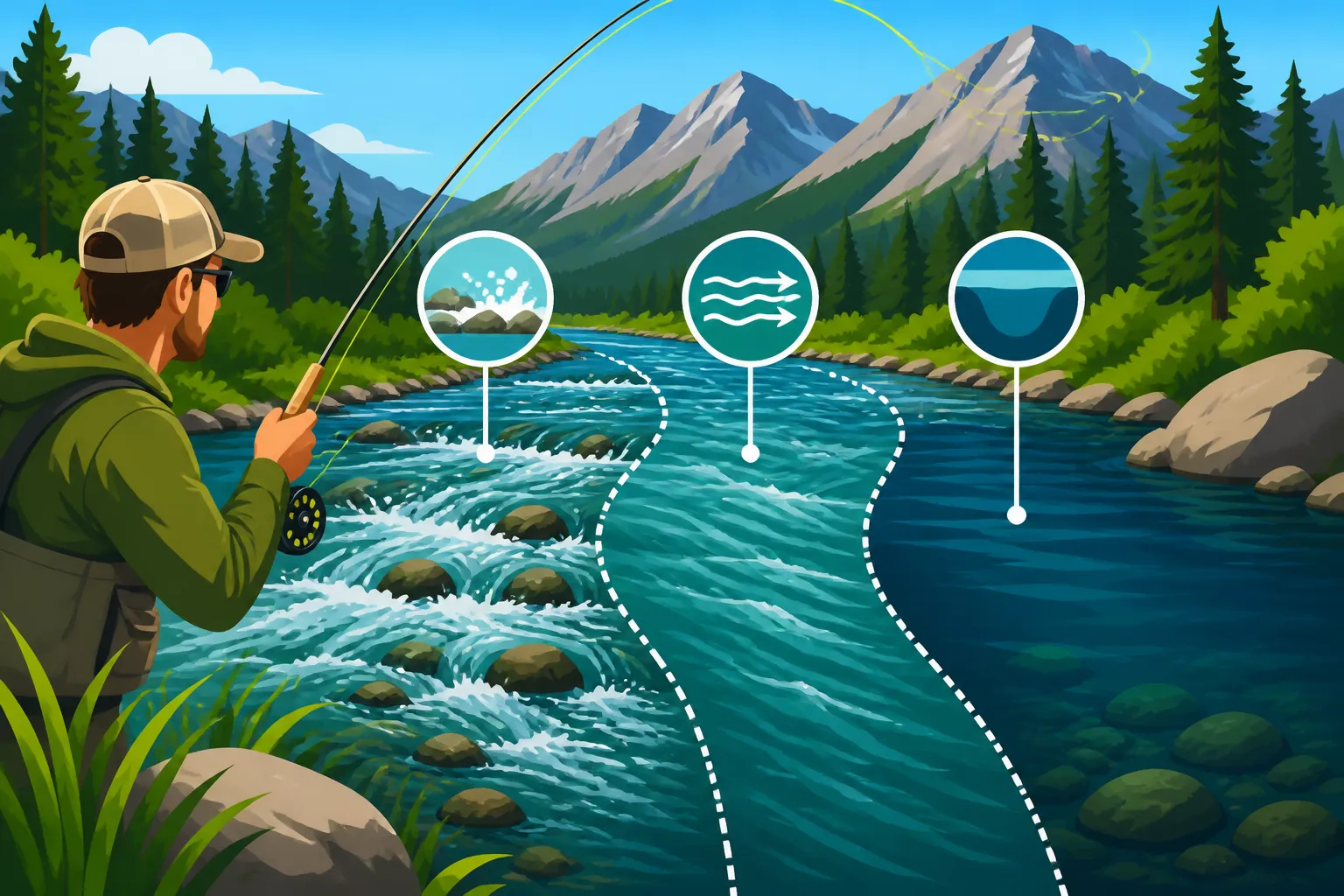
Imagine a section of river where the water is relatively shallow, moving at a fast clip, and often tumbling over small rocks and gravel. That's a riffle. You'll hear the water gurgling and see its surface broken and aerated, almost like it's boiling. This isn't just pretty scenery; it's a critical zone for trout. The fast, turbulent water here picks up and carries a huge amount of food, from tiny aquatic insects dislodged from the bottom to terrestrial insects that fall in. The increased oxygen content from the tumbling water also makes it a comfortable, energetic place for trout to hold and feed, especially in warmer months. While it might look too fast, don't underestimate the riffle; many a hungry trout sits right at its head or in its slightly calmer seams.
Decoding the Characteristics of a River Run
A run is often considered the bread and butter of trout fishing. It’s a section of river where the water flows at a moderate, consistent speed and depth, usually deeper than a riffle but shallower than a pool. Runs are typically found downstream from riffles, where the water has settled a bit but still maintains a strong current. The surface might be smoother than a riffle, but the water beneath is still carrying a steady supply of food. Trout love runs because they offer an excellent balance: consistent food delivery without the extreme energy expenditure required to hold in faster riffles. You’ll often find them along current seams, behind subtle obstructions, or in depressions along the bottom. For many anglers, the classic image of a trout stream is defined by its productive runs.
The Calm Depths of a River Pool
Pools are the deepest, slowest-moving sections of a river. They often form in bends, behind large boulders, or where the riverbed drops significantly. The water here is calm, often glassy, and you can sometimes see the bottom on clear days. While they might not seem as "active" as riffles or runs, pools are vital sanctuaries for trout. They provide cover from predators, refuge during high water or extreme temperatures, and a place for fish to rest and conserve energy. Big, old, wary trout often inhabit pools, using their depth and slow currents to their advantage. Fishing pools requires a different approach, often more subtle and patient, as the fish have more time to scrutinize your presentation.
Here’s a quick overview of how these three primary river features compare:
| Feature | Depth | Current Speed | Oxygen Level | Primary Function for Trout | Common Food Source | Best Tactics |
|---|---|---|---|---|---|---|
| Riffle | Shallow | Fast & Turbulent | High | Active feeding, oxygenation | Dislodged insects, nymphs | Short drifts, high-stick nymphing, small dries |
| Run | Moderate | Moderate & Steady | Moderate | Consistent feeding, holding | Drifting nymphs, emergers, dries, small streamers | Nymphing, dry-dropper, traditional dry fly |
| Pool | Deep & Slow | Slow to Stagnant | Moderate-Low | Resting, refuge, ambush point | Sub-surface food, large prey, crayfish | Deep nymphing, streamers, indicator fishing, patience |
Why Reading Water Is Your Secret Weapon for Colorado Fishing
Knowing the difference between a riffle, a run, and a pool isn't just academic; it's the fundamental skill that separates consistently successful anglers from those who cast aimlessly. When you learn to read the water, you're essentially understanding the river's language, allowing you to anticipate where fish will be and how they'll be behaving. This isn't about luck; it's about strategy, efficiency, and connecting with the natural rhythm of the river. It's especially true when you're fishing the diverse and often challenging waters of Colorado, from high mountain streams to broad, fertile rivers.
Trout Instincts and Water Flow: Why Fish Choose Certain Spots
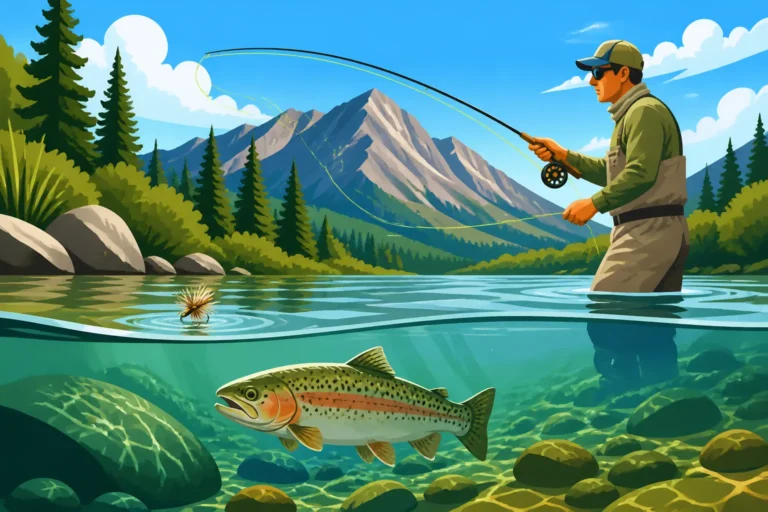
Trout, like all wild creatures, are driven by basic needs: food, safety, and energy conservation. The river's flow dictates how these needs are met. Fast water carries abundant food but requires significant energy to hold position. Slow, deep water offers safety and rest but fewer feeding opportunities. Trout instinctively seek out "lies"—spots where they can get maximum food with minimum effort, while staying protected from predators like ospreys, eagles, or even you.
Imagine a trout holding behind a large boulder in a fast run. The boulder breaks the current, creating a calm pocket of water where the fish expends little energy. Meanwhile, the main current is constantly delivering a conveyor belt of nymphs, emergers, and small fish directly to its face. This is a prime example of a fish utilizing the water's flow to its advantage. Understanding these principles helps you predict where these ideal lies will be, even before you make your first cast. Whether you're targeting elusive native cutthroat or robust rainbow trout, knowing their preferred holding patterns is key. For a deeper dive into what makes these fish tick, check out our guide on Colorado's Trout Species, A Field Guide.
Beyond Just Casting: It's About Strategy and Presentation
Once you identify a promising riffle, run, or pool, your understanding of these features doesn't stop there. It extends to your entire fishing strategy. The type of water will dictate:
- Your Approach: Do you need to sneak up quietly on a glassy pool, or can you be a bit more aggressive approaching a noisy riffle?
- Your Gear: A longer rod might be beneficial for deep nymphing in a pool, while a shorter, lighter rod could be perfect for quick casts into small pockets in a riffle. You might find a great selection of different rod weights on platforms like Amazon.
- Your Presentation: A natural, drag-free drift is crucial in a slower run, while a quick, high-stick nymphing technique might be necessary in a fast riffle.
- Your Fly Choice: Different water types often concentrate different types of food. For instance, in an oxygenated riffle, you might focus on small nymphs that are easily dislodged, whereas a deep pool might call for a large streamer imitating a baitfish. For advice on selecting the right patterns, explore Best Flies for Colorado's Gold Medal Trout Water.
Without the ability to read the water, you're essentially throwing darts blindfolded. With it, you're making informed decisions, increasing your chances of success, and ultimately, making your time on the water more productive and enjoyable.
Decoding Each Feature for Colorado Trout
Now that we understand the basics, let’s get into the nitty-gritty of how to actually fish these different water types effectively. Each type demands a slightly different approach, both in terms of tactics and fly selection, and understanding these nuances will make a world of difference, especially on popular Colorado rivers like the Fryingpan or the Arkansas.
Fishing the Frothy Riffles: High-Energy Feeding Zones
Riffles, with their bubbling, oxygen-rich water, are trout cafeterias. They're typically shallower and faster than other sections, making them a bit more challenging to fish but incredibly rewarding.
- Trout Behavior: Fish in riffles are usually actively feeding, snatching dislodged insects or those tumbling downstream. They often hold right in the faster currents or in the slight seams where faster water meets slower water. Because of the broken surface, they feel more secure and are less likely to be spooked by your presence.
- Best Tactics:
- High-Stick Nymphing: This is often the most effective method. Use a long leader, some split shot to get your flies down quickly, and keep as much line off the water as possible to achieve a drag-free drift. Cast slightly upstream and let your nymphs tumble naturally. Pay close attention to your indicator or the slightest twitch in your line. For specific nymphing strategies, consult our guide on Nymphing Techniques for Colorado Tailwaters, many of which apply to freestones.
- Short Dry Fly Drifts: In late spring or summer, when insect hatches are strong, trout will rise in riffles. Focus on short, precise casts with a buoyant dry fly, letting it drift a few feet before picking it up and recasting. The broken surface hides your leader and makes for explosive takes. Consider robust patterns like Chubby Chernobyls or large Caddis. You can find excellent fly assortment kits on Amazon that are perfect for freestone rivers.
- Ideal Lies: Look for darker patches in the riffle, indicating deeper pockets. Pay attention to "seams" – lines where two currents of different speeds meet, or where the main current rubs against a rock. These are prime ambush points.
Mastering the Steady Runs: Prime Holding Water
Runs are where trout often spend a significant portion of their day. They offer a steady supply of food and sufficient depth for security, without the constant fight against a raging current.
- Trout Behavior: Trout in runs are generally less frantic than those in riffles but more consistently active than those in pools. They’ll position themselves in optimal feeding lanes, often in the bottom third of the water column, waiting for food to drift by. They can be very selective, especially if there's a specific hatch occurring.
- Best Tactics:
- Nymphing with an Indicator: A good old-fashioned indicator rig is deadly in runs. Adjust your depth carefully to ensure your flies are drifting just above the bottom. Pay attention to mend your line upstream to maintain a drag-free drift.
- Dry-Dropper Rigs: This versatile setup is fantastic for runs. The dry fly acts as both an attractor and an indicator for the trailing nymph. It allows you to prospect with two different depths and patterns simultaneously. This is often an ideal setup for rivers like the South Platte below Deckers, where trout can be opportunistic.
- Dry Fly Fishing: During strong hatches of Mayflies or Caddis, runs can light up with rising fish. Focus on presenting your dry fly upstream of the fish and allowing it to drift naturally over them. Our guide on Dry Fly Fishing Colorado's Freestone Rivers offers excellent advice on these conditions.
- Ideal Lies: Look for the deepest part of the run, especially if there's a slight increase in current speed. Undercut banks, submerged rocks, and shelves along the bottom are also prime holding spots. Any subtle change in depth or current is worth investigating.
Unlocking the Depths of Pools: Resting and Trophy Opportunities
Pools are the river's slow, deep sanctuaries. While they might seem devoid of life on the surface, they often hold the biggest, most cautious fish, especially during times of stress like high sun or cold winter days.
- Trout Behavior: Fish in pools are typically resting, conserving energy, or waiting for larger prey items. They are often more wary due to the clear, slow water, making stealth crucial. However, when they do feed, they might take larger, more substantial meals like sculpins, crayfish, or large nymphs.
- Best Tactics:
- Deep Nymphing: You'll need extra weight to get your flies down into the deepest parts of the pool. A weighted fly line, multiple split shot, or heavy flies are often necessary. Patient, long drifts are key. Remember that fish in pools have more time to inspect your fly, so presentation and natural drift are paramount.
- Streamer Fishing: For targeting large, predatory brown trout in pools, streamers are incredibly effective. Cast across or slightly upstream, let the fly sink, and then strip it back in erratic movements, imitating a baitfish. This can provoke an aggressive strike from a trophy fish. Learn more about this exciting method in Streamer Fishing for Colorado Brown Trout. You can find a good selection of quality streamers and even specialized streamer boxes on Amazon.
- Indicator Fishing with Long Leaders: Sometimes, a long leader (12-15 feet) under an indicator, with minimal weight, can allow your flies to drift naturally into deeper holding zones without spooking fish with a heavy indicator plunk.
- Ideal Lies: Focus on the deepest sections, especially where there's overhead cover like undercut banks or submerged logs. The "tailout" of a pool, where the water begins to speed up again into the next run, is also a classic feeding lie, as fish will move here to ambush food being swept out of the calm water.
Integrating the Knowledge: A River's Holistic Story
Rivers aren't just a collection of disconnected riffles, runs, and pools; they are a dynamic, continuous system where these features flow into one another, creating a rich tapestry of habitats. Learning to see the river as a whole, understanding how these sections connect and influence each other, is the mark of a truly skilled angler. It's about reading the transitions and adapting your approach as you move downstream (or upstream).
Transition Zones: The Seams of Opportunity
The most overlooked, yet often incredibly productive, areas on a freestone river are the transition zones. These are the "seams" where a riffle flows into a run, or a run deepens into a pool, or vice versa. These junctions create micro-habitats that can be irresistible to trout.
- Head of a Run (Tail of a Riffle): As a riffle dissipates and the current slows into a run, food particles that were tumbling chaotically begin to settle and concentrate. Trout will often sit right at this seam, picking off easily accessible meals. It's a high-reward, relatively low-energy feeding station.
- Head of a Pool (Tail of a Run): Similarly, where a run meets the calmer water of a pool, food can accumulate. Larger, more cautious fish might hold here, especially if there’s a deeper drop-off, waiting for an easy meal to be delivered.
- Current Seams: Anywhere fast water meets slow water—along a bank, behind a boulder, or where an eddy forms—you'll find a current seam. These are natural conveyor belts of food right next to a low-energy holding lie. Learning to identify these subtle lines of demarcation is a crucial part of reading water.
- Bends in the River: River bends naturally create both deeper, slower pools on the outside curve and shallower, faster riffles or runs on the inside curve. The transition between these can be highly productive, offering varied habitat in a small area.
When you approach a new stretch of river, don't just focus on the obvious features. Look for where they merge, where the currents change speed dramatically, and where the river bottom changes character. These are often the spots that hold the most fish, especially the wariest ones.
Seasonal and Environmental Influences
Your ability to read water also needs to adapt to the time of year and current conditions. A prime holding lie in July might be completely unproductive in November, or inaccessible during spring runoff.
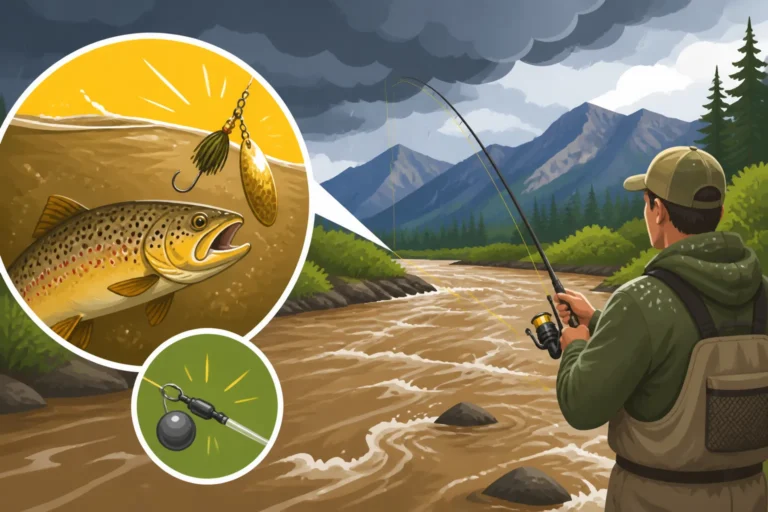
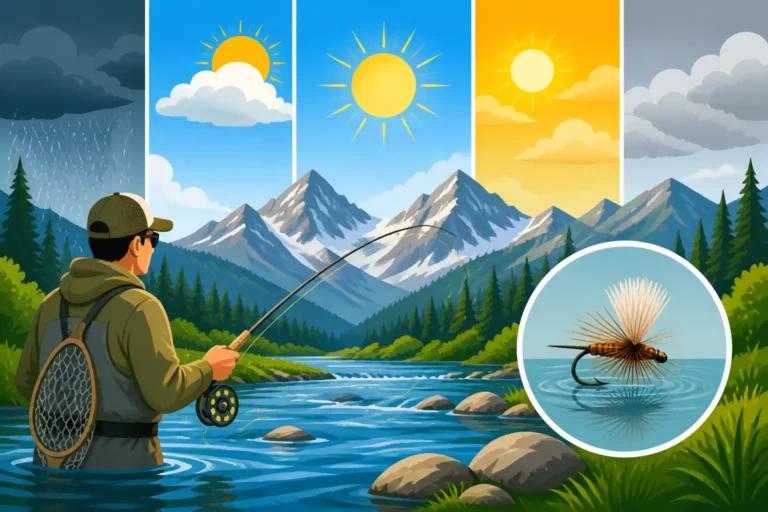
- Spring Runoff: When the snow melts in the high country, Colorado's rivers swell with cold, turbid water. During this time, the clear definitions of riffles, runs, and pools can blur. Trout will often move to slower, shallower water closer to the banks, seeking refuge from the powerful currents. They might hold behind large structures or in eddies. Your focus shifts to finding these calmer pockets. Our guide on When Colorado's Spring Runoff Hits and How to Fish Around It provides detailed strategies. And if the water gets particularly high, you'll want to check out High Water Tactics During Colorado's Runoff.
- Low, Clear Water: In late summer or fall, rivers can run low and clear. In these conditions, trout become extremely spooky. They might retreat to the deepest parts of pools or hide under heavy cover. Stealth is paramount, and long, fine leaders become essential. Think delicate presentations and longer casts.
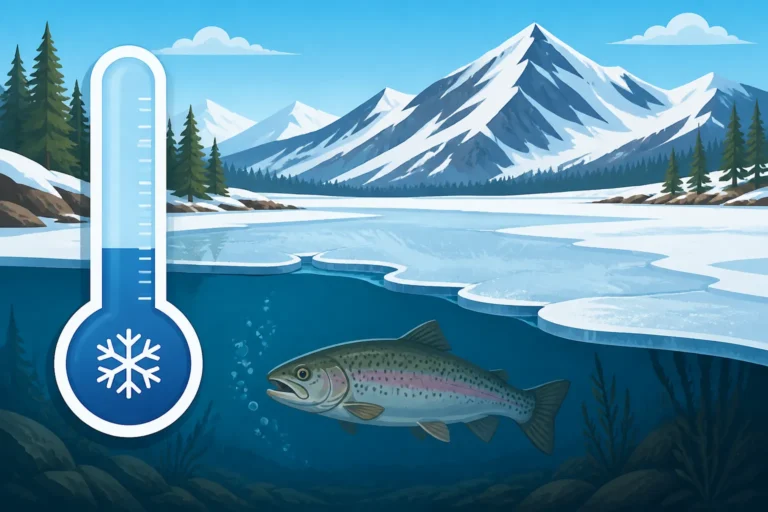
- Winter: During the colder months, trout are less active and metabolism slows. They often congregate in the deepest, slowest pools, conserving energy. Riffles become less productive, as there's less insect activity and fish aren't expending energy to chase food. Deep nymphing and slow-moving streamers are often the most effective techniques.
- Hatches: A significant insect hatch can temporarily override typical holding patterns. Trout might move out of their usual lies to feed opportunistically on the surface, making runs or the tails of pools incredibly productive for dry fly fishing.
By combining your understanding of riffles, runs, and pools with these seasonal adjustments, you're not just reading the water; you're reading the river's entire narrative. It takes practice, keen observation, and sometimes a good pair of polarized sunglasses (which you can easily find on Amazon), but the rewards are immeasurable. Don't forget to always keep a copy of the regulations handy; a quick read of the Reading Colorado's Fishing Regulations Brochure is always a good idea before heading out.
Disclaimer
The information provided in this guide is for general informational purposes only and does not constitute professional advice. Fishing conditions, regulations, and safety considerations can change rapidly. Always consult the most current Colorado Parks and Wildlife regulations before fishing and prioritize personal safety on the water.