How Many People One Colorado Guide Boat Holds
It's a common and totally understandable question when you're dreaming of a Colorado fishing adventure with friends or family: just how many of us can pile into one of those guide boats? You picture the stunning mountain scenery, the clear water, and the fish biting, but then the practical side kicks in. You don't want to get there only to find out half your group is watching from the bank, or worse, that you're crammed in like sardines, making casting nearly impossible. This guide is here to shed light on typical guide boat capacities in Colorado, helping you plan your perfect outing without any unwelcome surprises.
Understanding Colorado's Guided Fishing Vessel Capacity
When you book a guided fishing trip in Colorado, the type of boat your guide uses will largely dictate how many anglers can comfortably and safely join the adventure. We're talking about everything from nimble drift boats on our iconic rivers to larger, more stable motorboats on vast reservoirs. Each has its own sweet spot for group size, designed to maximize both the fishing experience and safety.
Standard Drift Boats and Rafts: The Most Common Scenario
For many fly fishing adventures on Colorado's celebrated rivers like the Arkansas, the Colorado, or the Rio Grande, you'll likely find yourself in a drift boat or a whitewater raft specifically rigged for fishing. These vessels are the workhorses of river guiding here, and for good reason. They allow guides to navigate currents and rapids safely, position anglers effectively, and provide a stable platform for casting.
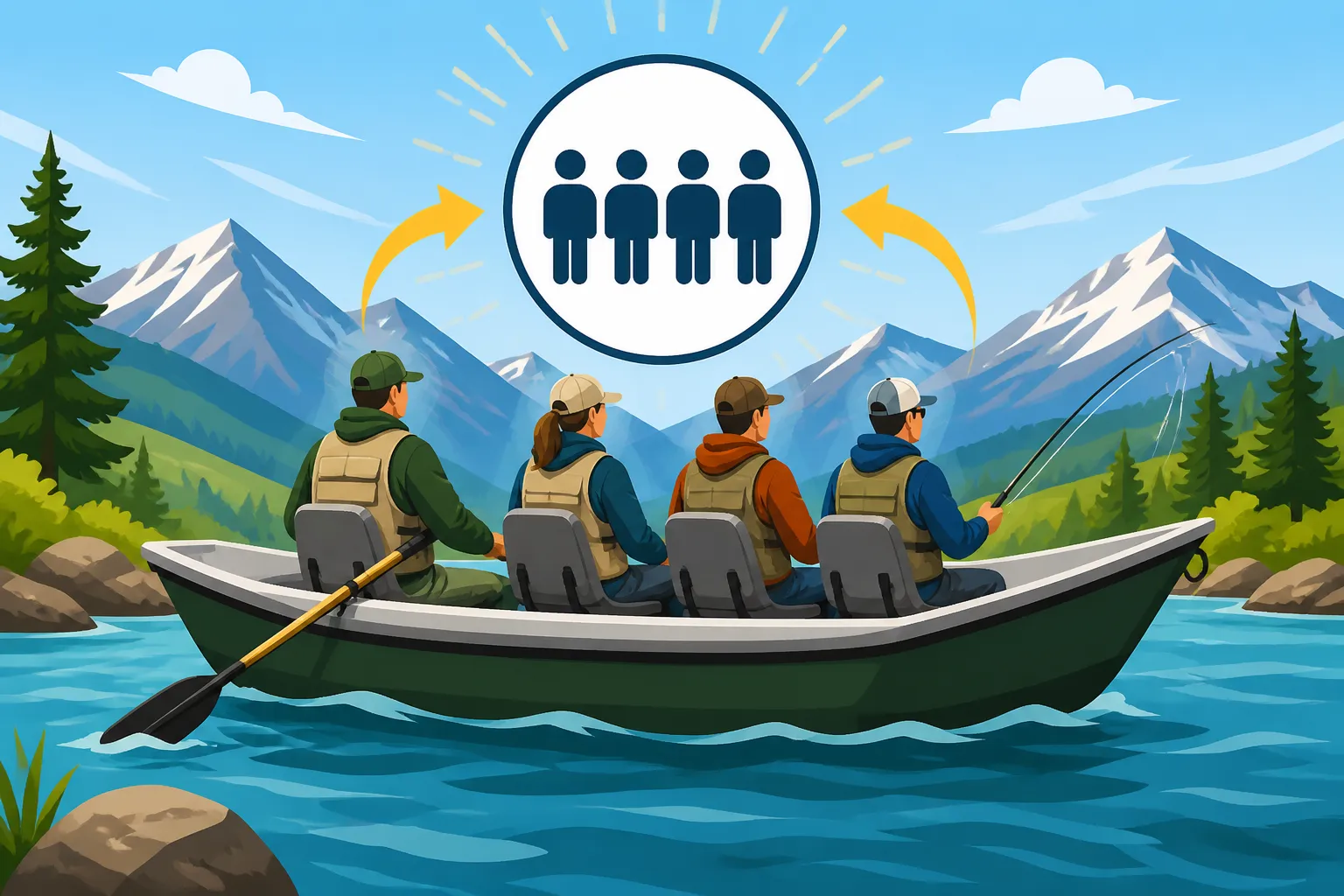
The general rule of thumb for these boats is that they comfortably accommodate one guide and two anglers. This setup is incredibly popular because it allows for excellent one-on-one or one-on-two instruction, plenty of room for casting without tangling lines with your boat-mates, and a more intimate experience with the river. Imagine standing on the casting brace at the front of a drift boat, your guide expertly maneuvering from the oars, calling out fish sightings, and coaching your cast. With just two anglers, everyone gets prime real estate and consistent attention. While some outfitters might occasionally squeeze in a third person, especially if it's a small child or a non-fishing observer, it's not the ideal or most common scenario for active fishing, and it’s something you’d definitely want to confirm explicitly when booking. The whole point of hiring a guide is to enhance your experience, and overcrowding a boat simply doesn't do that.
Larger Rafts and Specialty Boats: When More People Fit
While the drift boat is king on many of our trout streams, Colorado also offers a diverse range of fishing experiences, and with that comes different types of guided vessels. If your sights are set on a bigger water body or a specific kind of fishing, you might encounter boats designed for a larger crew.
On some wider, slower sections of rivers or for full-day float trips that prioritize comfort and scenery as much as casting, outfitters might utilize larger whitewater rafts. These can sometimes accommodate up to three anglers plus the guide, though again, the personal fishing space per angler starts to diminish. It really depends on the specific design of the raft and how it's rigged for fishing. For instance, a larger raft might have more spacious casting platforms, or be used on waters where less active casting is required, making it more feasible for a slightly bigger group.
Then there are the vast reservoirs like Blue Mesa, Lake Granby, or Pueblo Reservoir, where the game changes entirely. Here, you'll find guides operating motorized fishing boats, often larger center consoles or bass boats, equipped with powerful engines and sophisticated electronics. These boats are built for covering large distances, trolling, or jigging deep water. On a big reservoir, a guide might comfortably take three or even four anglers, depending on the size of the boat and the specific fishing technique. For instance, if you're trolling for kokanee salmon at Blue Mesa, three or four lines can be managed effectively with downriggers and rod holders, allowing more people to share the experience. When you're considering Charter Boats for Colorado's Blue Mesa Reservoir, you'll often see these larger capacities advertised, reflecting the different nature of reservoir fishing compared to river fly fishing. It’s a different kind of camaraderie, often less about individual casting prowess and more about the collective excitement of a strike.
Factors Influencing Your Group Size on a Colorado Guided Trip
It's not just about the size of the boat; several other elements play a crucial role in determining how many folks can join a guided fishing trip in Colorado. Understanding these factors will help you make an informed decision and ensure everyone in your party has a fantastic time.
The "Two Anglers Per Guide" Rule of Thumb
This isn't just a suggestion; for many, it's the gold standard, especially in the world of fly fishing. The reason is simple: personal attention. When you're learning to cast, mending line, identifying subtle takes, or trying to understand complex river currents, having a guide focused on just one or two anglers makes a monumental difference. A guide can easily spot casting flaws, untangle backlashes, re-rig lines, and offer real-time coaching without feeling spread too thin.
Imagine a guide trying to teach four beginners how to fly cast in a single boat. It becomes a logistical nightmare, and inevitably, some anglers will get less instruction and feel frustrated. With two anglers, the guide can rotate attention, demonstrating techniques for one while the other practices, or helping both simultaneously if they're fishing in tandem. This ratio ensures that everyone gets their money's worth in terms of instruction and opportunity. This is a key consideration when you're looking at Colorado Fly Fishing Guide Costs Explained, as the price often reflects this optimal guide-to-angler ratio and the quality of instruction it allows.
Type of Trip: Float vs. Walk-Wade
The method of fishing itself heavily influences group size.
- Float Trips: As we discussed, these typically involve a drift boat or raft. For active fishing, this means one guide and two anglers. While a third person might ride along, they often don't get the same fishing opportunities due to space constraints for casting and maneuvering. The guide is constantly moving the boat, positioning it for the best drifts, and calling out shots, which is a specialized skill best executed with a manageable number of active fishing lines.
- Walk-Wade Trips: This is where things can get a bit more flexible. On a walk-wade trip, you and your guide will hike into a section of river or stream, fishing from the banks or by wading into the water. Since there's no boat to physically limit the number of anglers, some guides might take three or even four anglers on a single walk-wade trip, especially if the group is experienced or if the water is very accessible. However, it's important to remember that more anglers per guide still means less individualized attention. If you're a beginner or truly want to hone your skills, even a walk-wade trip might be best with just two anglers per guide. If you're comparing Float Trips vs Walk-Wade Trips With a Colorado Guide, factor in how many people are in your party and what level of personal instruction you're seeking.
Safety, Comfort, and Fishing Experience
These elements are inextricably linked to group size and are paramount for a successful outing.
- Safety: This is non-negotiable. On a river float, especially with some mild rapids or fast currents, too many people in a boat can become a safety hazard. Overloading a boat affects its maneuverability and stability, making it harder for the guide to react to unexpected situations. Guides are trained professionals, and they adhere to strict safety protocols, which often include limits on passenger numbers.
- Comfort: Nobody wants to spend a day on the water feeling cramped. Imagine trying to cast a long fly line with another angler's elbow constantly brushing yours, or having to step over gear every time you move. Limited space also means less room for personal belongings, snacks, and drinks, which can make a long day less enjoyable. A comfortable trip means ample room for movement, casting, and simply enjoying the majestic Colorado scenery.
- Fishing Experience: This is perhaps the biggest factor for most anglers. With too many people, casting lanes become restricted, lines get tangled more frequently, and the sheer number of lines in the water can sometimes spook fish in smaller, clearer streams. A higher guide-to-angler ratio often translates directly into a more productive and enjoyable fishing experience, allowing each person more shots at fish and more direct guidance when they need it most.
Specific Regulations and Outfitter Policies
While state regulations might outline broad safety parameters for commercial vessels, many Colorado outfitters also have their own internal policies regarding group size. These policies are often based on years of experience on specific rivers and are designed to uphold their reputation for quality service and safety.
Some outfitters, particularly those focusing on high-end or educational experiences, might strictly adhere to a one-guide-to-two-anglers policy for all their river trips, regardless of boat type. They understand that the success of their business hinges on positive customer experiences, and overcrowding simply doesn't lead to that. Always ask about an outfitter's specific policy when booking, as it can vary. For instance, when you're Questions to Ask Before Booking a Colorado Fishing Guide, confirming the maximum number of anglers per guide is always a smart move.
Planning Your Colorado Guided Trip for Optimal Group Size
Now that we've covered the typical capacities and the factors at play, let's talk about how to plan your trip to ensure everyone in your group has an incredible, memorable day on the water. It’s all about managing expectations and making the right choices for your unique group.
The Ideal Scenario: Two Anglers for Focused Attention
For most guided fishing trips in Colorado, especially fly fishing on rivers, the sweet spot is two anglers per guide. This really is the optimal setup for several reasons. You get maximum individual instruction, plenty of room to cast and move around the boat (or along the bank during a walk-wade), and a generally more peaceful, focused experience.
Think about it: with two anglers, the guide can spend dedicated time with each person, whether it's perfecting a roll cast, explaining the intricacies of nymphing a specific run, or helping you understand why a particular fly choice is working (or not working!). This intimate setting is where true learning and connection with the sport often happen. If you’re a beginner, this ratio can make all the difference in building confidence and skills. Many outfitters price their trips based on this two-person standard, recognizing its value. If you're curious about What's Included in a Colorado Guided Fly Fishing Trip, often the benefit of this personalized attention is a major component.
If you have a larger group, say four or six people, the best solution is usually to split into multiple boats with multiple guides. For example, a group of four would typically book two guides and two boats. This might seem like a higher upfront cost, but it ensures everyone receives the same high-quality experience. Plus, it can be a lot of fun to compare notes with your friends at the end of the day, discussing who caught the biggest fish or had the most hilarious casting mishap!
What to Ask When Booking for a Larger Group
Don't be shy about asking direct questions when you're booking a guided trip, especially if you have a larger party. It's your adventure, and you deserve clarity.
Here are some key questions to pose:
- "What is your standard guide-to-angler ratio for this type of trip?"
- "If our group has [X number] of people, how would you typically accommodate us?" (e.g., "If we have four people, would that be one boat with two guides, or two separate boats with one guide each?")
- "Are there options for larger boats for our group, and what would the fishing experience be like in that scenario?"
- "What are the costs associated with adding an additional angler to a boat, versus booking an additional guide and boat?"
Many outfitters are well-versed in accommodating groups and can offer solutions like multiple boats or even multi-day packages. If you're looking at Colorado Fishing License Costs Explained and trying to factor in your entire group's expenses, understanding the guide fees for different group sizes upfront is crucial. Sometimes, you can find outfitters or guides through platforms like FishingBooker, which allows you to filter by group size or compare options side-by-side, making the process of finding the right fit a bit easier. When Booking a Colorado Fishing Guide Online, look for those details on their listing.
Special Considerations for Families or Mixed Groups
Planning a trip with a mix of avid anglers, casual fishers, or even non-fishing family members requires a little extra thought.
- Non-Fishing Participants: If someone in your group just wants to enjoy the scenery and camaraderie without actively fishing, they might sometimes be accommodated as a third person in a drift boat, especially if they are small or if the outfitter specifically allows it. However, this should always be cleared with the guide service beforehand. Space is still a factor, and a guide’s primary responsibility is to the fishing experience and safety. On larger reservoir charters, it's often much easier to include non-fishing observers, as the boats are typically more spacious and the activity less demanding of individual deck space.
- Kids' Trips: Fishing with kids is fantastic, but it does change the dynamic. For very young children (under 10-12), a guide might be able to manage three small children in a boat, especially if the focus is less on advanced casting and more on simply catching fish with bait or easy spin setups. For older kids who are actively learning to cast, a one-guide-to-two-kids ratio is still probably best to ensure they get the attention they need. Many guides offer Guided Trips for Kids in Colorado, and they are usually very experienced in adapting the trip to suit younger anglers and their attention spans. Always discuss your children's ages and fishing experience with the outfitter.
- Mixed Skill Levels: If you have a group with varying skill levels, consider whether splitting into two boats might be beneficial. One guide could focus on advanced techniques with the experienced anglers, while another guide provides more basic instruction for beginners. This prevents either group from feeling held back or overwhelmed.
Ultimately, open communication with your chosen outfitter is your best tool. They are the experts on their waters and their boats and can help you craft an experience that works for everyone in your party, ensuring a safe, comfortable, and memorable fishing trip in our beautiful Colorado.
| Boat Type | Typical Angler Capacity (per guide) | Best For | Considerations |
|---|---|---|---|
| Drift Boat (River) | 2 anglers | Fly fishing, wade access, smaller rivers | Optimal for instruction and casting space. Tight for 3 active anglers. Safety is paramount on moving water. |
| Whitewater Raft | 2-3 anglers (for fishing) | Larger rivers, multi-day trips, more gear | Can be slightly more flexible with space than a drift boat; 3rd person often rides in middle or is non-fishing. |
| Motorized Reservoir Boat | 3-4 anglers | Lake trout, kokanee, walleye, covering water | Ample space for trolling, jigging. Less individual casting space than drift boat, but different fishing style. Ideal for large bodies of water. |
| Walk-Wade (no boat) | 2-4 anglers (per guide) | Small streams, technical water, hiking in | More flexible capacity as no physical boat limitation. Less individual attention with more anglers. Best for mobile fishing. |
Disclaimer
This article is for general informational purposes only and does not constitute professional advice. Laws, prices and regulations vary by location and change over time. Consult a qualified professional for guidance on your specific situation.