How to Fish Emergers During a Hatch
It can be incredibly frustrating when you're on the river, seeing fish rise all around you, but they just won't touch your dry fly. Often, those picky trout aren't looking up at fully mature adults; they're keying in on the vulnerable emerger stage. This guide will help you understand what emergers are, why trout love them, and the specific techniques and patterns you need to successfully fish emergers during a hatch in Colorado.
Understanding the Emerger Stage of an Insect's Life Cycle
When you think about insect hatches, your mind probably jumps straight to those beautiful adult mayflies or caddis fluttering on the water's surface. But for a significant portion of the hatch, trout are actually focused on what's happening under or in the surface film. This is the magical, often exasperating, emerger stage.
What is an Emerger?
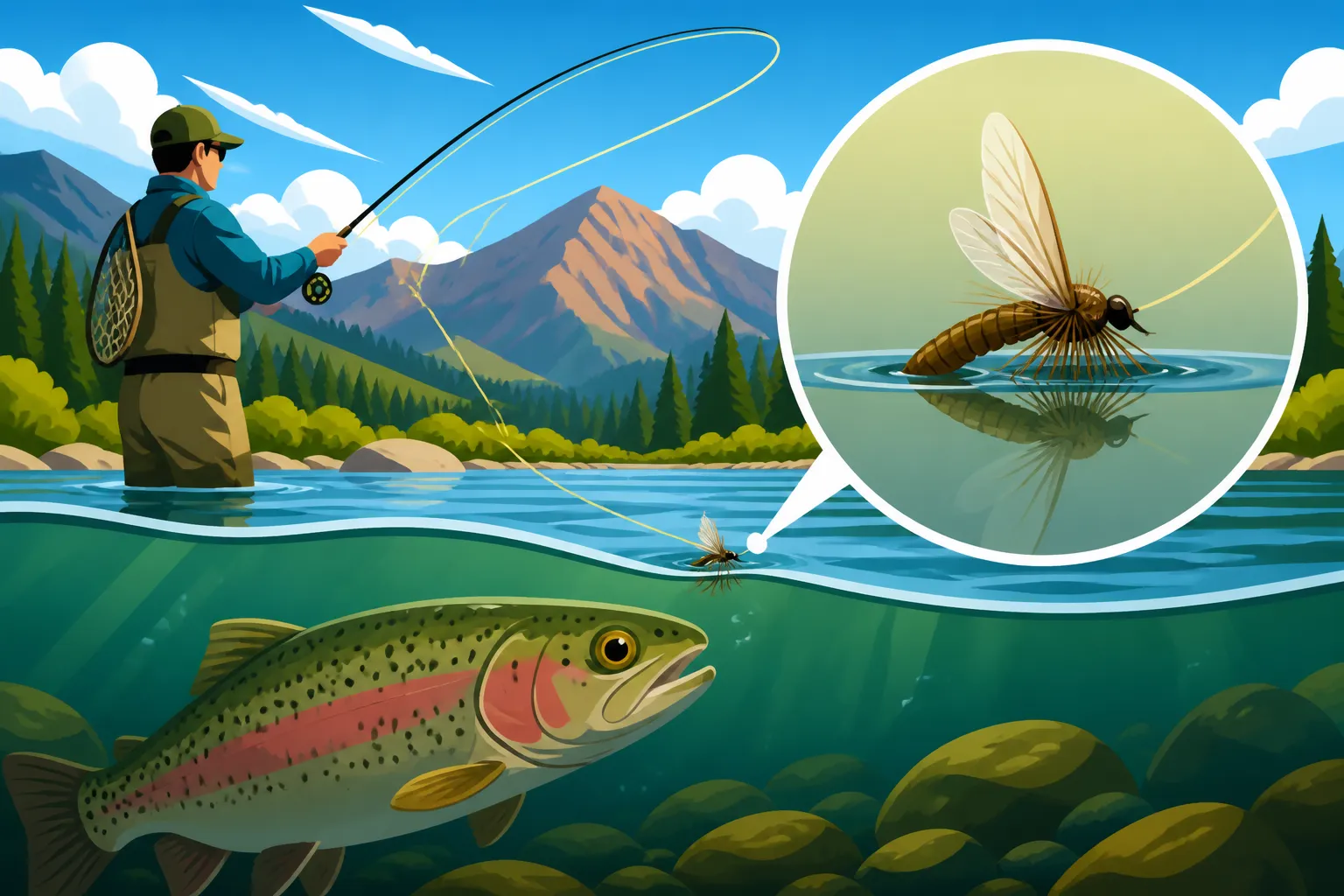
An emerger is an insect in its transitional phase, moving from its aquatic nymph or pupa form to its aerial adult form. Imagine a tiny aquatic creature, having spent weeks or months living on the riverbed, now making a perilous journey to the surface. It's shedding its nymphal shuck, trying to break through the surface tension, and struggling to inflate its wings. This is a moment of immense vulnerability, and trout know it. They've learned that these struggling insects are easy targets, often providing a bigger meal with less effort than chasing a fully formed adult or digging for a nymph on the bottom.
This phase can last anywhere from a few seconds to several minutes, depending on the insect species and water conditions. For a mayfly, it might be a gradual ascent through the water column, often with its wing pad still developing just below the surface. A caddisfly pupa, on the other hand, might swim rapidly to the surface, breaking through the film with a quick pop, resembling a tiny underwater rocket. Then there are midges, which seem to drift slowly upwards, almost suspended in the water column before becoming adults. Each of these different emergence styles presents a unique opportunity for trout, and by extension, for us anglers.
Why Emergers are So Crucial for Trout
Trout are opportunistic feeders, always looking for the most caloric meal with the least amount of energy expenditure. When a hatch is in full swing, and millions of insects are making their way to the surface, the emerger stage becomes a veritable buffet. Think about it from a trout's perspective: a fully formed adult on the surface might fly away, and a nymph on the bottom requires active hunting. An emerger, however, is a slow, struggling, easily captured morsel. They are often suspended, helpless, right in the "trout window"—that narrow zone just below or in the surface film where the trout's vision is most acute.
During a prolific hatch on a Colorado river, trout will often "key in" on a specific stage of the insect's life cycle. While some might be gulping down adults, many of the most selective fish, especially the larger, more experienced ones, will be feeding almost exclusively on emergers. This is because the emerger represents a consistent, high-reward food source that requires less effort to catch. You'll notice their rises are often subtle—a soft sip, a nose breaking the surface, or a gentle bulge, indicating they're intercepting the insect just as it attempts to break through the surface film. Ignoring this critical feeding behavior means missing out on some of the best fishing opportunities, particularly on pressured waters like those found in Colorado's Gold Medal Waters Explained.
Essential Gear and Fly Selection for Fishing Emergers
To successfully trick trout with emergers, you need the right tools in your arsenal. Delicate presentations, subtle flies, and responsive gear are key to making your offering look as natural as the real thing.
Rod, Reel, and Line Considerations
When targeting trout with emergers, especially on clear, technical waters, finesse is the name of the game. A lighter fly rod, typically in the 3 to 5-weight range, will give you the sensitivity and delicate touch needed to cast small flies and protect fine tippets. A 9-foot rod is a great all-around length, offering good line control and reach for mending on freestone rivers. For closer, more intimate waters or smaller mountain streams, an 8-foot or even 7.5-foot rod might be ideal. Your reel doesn't need to be fancy; a good quality reel that balances your rod and has a smooth drag is perfectly sufficient.
The fly line itself is also crucial. A weight-forward floating line is generally preferred for emerger fishing, allowing for easy casting of light flies and efficient mending. However, the real secret weapon for emerger presentations lies in your leader and tippet. A longer leader, around 9 to 12 feet, tapered down to a fine tippet (5X or 6X, sometimes even 7X on extremely technical waters) will help ensure a natural, drag-free drift. Many anglers opt for fluorocarbon tippet for its invisibility underwater and its faster sink rate, which can help position your emerger just right in the water column. You can find a vast array of leaders, tippets, and specialty fly lines from various brands on Amazon, allowing you to fine-tune your setup for Colorado's diverse fishing conditions.
Top Emerger Patterns for Colorado Hatches
Colorado has a rich entomology, and knowing which emerger patterns to tie on for specific hatches is vital. While the general techniques for fishing emergers remain consistent, the actual fly pattern needs to closely imitate the emerging insect in size, shape, and color. When it comes to Fly Selection for Colorado's Blue-Wing Olive Hatch, for instance, tiny emergers are key.
Here's a breakdown of some go-to emerger patterns that every Colorado angler should have:
- RS2 (Rim-Shaft 2): This pattern, developed by Rim Chung, is a Colorado classic for a reason. It's incredibly versatile, imitating small mayfly emergers and midges. Its sparse dressing, subtle flash, and wing bud imitation make it incredibly effective during blue-wing olive (BWO) or midge hatches. Sizes 18-24 are common.
- Barr's Emerger: This pattern, another Colorado invention by John Barr, is a fantastic imitation for mayfly emergers. It features a trailing shuck and a realistic body profile, often fished just below the surface. It excels during baetis (BWO) and pale morning dun (PMD) hatches, typically in sizes 16-20.
- Sparkle Dun: This unique pattern imitates a mayfly struggling to shed its nymphal shuck and emerge, with the trailing Z-lon representing the shuck. It's technically a dry fly, but it sits low in the film, mimicking that critical emergence phase. It's exceptional for green drakes, PMDs, and BWOs, usually in sizes 12-20.
- LaFontaine's Emerger: Gary LaFontaine's caddis emergers are legendary. These patterns often incorporate deer hair or CDC (Cul de Canard) to create a buggy, buoyant profile that can be fished just under or in the surface film. They are deadly during caddis hatches, particularly when trout are targeting the ascending pupa. Look for them in sizes 14-18.
- CDC Comparadun: While primarily a dry fly, the CDC Comparadun's low-riding profile and prominent wing can effectively imitate a mayfly emerger that's almost through the surface film but still partly submerged. The CDC offers a subtle shimmer that fish find irresistible. Sizes 16-22 are great for various mayfly hatches.
- Pupa Patterns (Caddis): Specific caddis pupa patterns, like the venerable LaFontaine's Sparkle Pupa or a simple bead-head soft hackle, are critical when caddis are migrating to the surface. These flies are designed to be fished slightly deeper, imitating the energetic swim of the pupa before it breaks the surface.
When selecting patterns, always observe the size and color of the natural insects. A great way to build your fly box with specific patterns is to browse online retailers like Amazon, which often have seasonal selections and multi-packs for various hatches. Don't forget that tying your own can also be incredibly rewarding and cost-effective!
Effective Techniques for Presenting Emerger Flies
Presenting an emerger correctly is often more challenging than nymphing or dry fly fishing because you're dealing with that subtle zone between the two. Your goal is to make your fly look like a struggling insect, not a drag-laden piece of fluff.
The Dry-Dropper Rig for Emergers
One of the most popular and effective ways to fish emergers, especially when trout are showing occasional surface activity, is with a dry-dropper rig. This setup utilizes a buoyant dry fly as both an attractor and a strike indicator, with a short piece of tippet (the dropper) tied off the bend of the dry fly hook, suspending your emerger underneath. The dry fly helps you track your drift and visually detect subtle takes, while the emerger does the real work below. This method is particularly useful when fish are feeding in the upper water column or when you're looking to cover multiple feeding zones.
To set up a dry-dropper, select a dry fly that's robust enough to support your emerger without sinking. A large foam hopper, a stimulator, or a substantial parachute adams works well. Tie a section of 5X or 6X fluorocarbon tippet, usually 12 to 36 inches long, from the bend of the dry fly's hook to your emerger pattern. The length of the dropper will depend on how deep the fish are feeding – shorter for fish feeding right in the film, longer if they're a foot or so down. Cast upstream or across-stream, aiming for a perfectly drag-free drift. Watch your dry fly intently for any hesitation, twitch, or disappearance—that's your cue to set the hook. This rig is incredibly versatile for rivers like the Dream Stream and Cheesman Canyon on Colorado's South Platte where fish can be incredibly selective.
Indicator Nymphing for Deeper Emergers
Sometimes, trout are feeding on emergers that haven't quite reached the surface film yet, or they're holding in deeper seams during a hatch. In these situations, traditional indicator nymphing can be highly effective. The key is to adjust your depth and weight to present the emerger in the specific feeding lane where the trout are holding. This often means running your emerger just a foot or two below your indicator, or even less, depending on the water depth and the observed feeding behavior.
You'll typically use a small, sensitive strike indicator for this technique, positioned on your leader so that your emerger drifts naturally through the perceived feeding zone. Add just enough split shot or weight to get your emerger down quickly but without impeding a natural drift. The goal is to imitate an emerger slowly ascending or drifting in the current. Pay close attention to your indicator; takes can be incredibly subtle, often just a slight hesitation or dip. This technique is often discussed further when exploring Nymphing Techniques for Colorado Tailwaters, where precise depth control is paramount. You might also want to refer to a guide on How to Set Up a Nymph Rig for a Deep Tailwater Run for more granular details on weighting and leader construction.
Swing and Soft-Hackles: A Different Approach
While dry-dropper and indicator nymphing are excellent for imitating suspended or slowly rising emergers, there are times when a different approach, particularly with soft-hackle flies, can be incredibly deadly. Soft-hackles, often tied with a sparse body and a collar of partridge or grouse feathers, are fantastic imitations of caddis pupa or small mayfly emergers that are actively swimming or struggling to break free.
The "swing" technique involves casting a soft-hackle emerger slightly downstream and across the current, then allowing it to drift and swing across the river on a taut line. As the fly swings, the soft hackle pulses and breathes in the current, mimicking the movement of an emerging insect. The take can be surprisingly aggressive, often feeling like a solid tug as the trout intercepts the fly mid-swing. This method works exceptionally well in riffles, runs, and the tail-outs of pools, especially during a robust caddis hatch or when you're fishing a faster current where a dead drift is harder to maintain. It's a more active way to present an emerger and can often entice strikes from fish that are ignoring dead-drifted patterns.
| Emerger Pattern | Primary Imitation | Key Features | Best Conditions/Technique |
|---|---|---|---|
| RS2 | Mayfly/Midge Emerger | Sparse body, small wing bud | Subtle rises, dry-dropper |
| Barr's Emerger | Mayfly Emerger | Trailing shuck, realistic body | BWOs, PMDs, dry-dropper |
| Sparkle Dun | Mayfly in surface film | Low-riding, Z-lon shuck | Fish actively rising in film |
| LaFontaine's Pupa | Caddis Pupa | Buggy, buoyant, deer hair/CDC | Caddis hatch, subsurface swing |
| CDC Comparadun | Mayfly almost emerged | Low profile, CDC wing | Finicky fish, dry-dropper |
| Soft Hackle | Caddis/Mayfly Emerger | Pulsating hackle, sparse body | Swinging, active fish |
Reading the Water and Trout Behavior During a Hatch
Successfully fishing emergers hinges not just on your gear and flies, but crucially on your ability to read the water and understand what the trout are telling you. They are masters of efficiency, and their rise forms will often give away exactly what they're eating. If you want to refine your skills, studying a guide on Reading Water on a Colorado Freestone River can be very beneficial.
Identifying Rises to Emergers
When a hatch is in full swing, and you see fish rising, don't just assume they're eating dry flies. Trout feeding on emergers exhibit very distinct rise forms that are different from those gulping down fully mature adults. You're looking for subtle cues:
- The "Nose Poke" or "Head-and-Tail" Rise: This is a classic emerger rise. The trout's nose or just the tip of its head might break the surface, often followed by its tail as it dips back down. There's usually no splash, just a gentle disturbance. This indicates the fish is taking an insect that is literally stuck in the surface film.
- The "Bulge" or "Subsurface Sip": Sometimes, you won't even see the fish's mouth or nose. Instead, you'll see a subtle bulge or swirl just beneath the surface, almost like a ghost moving through the water. This means the trout is intercepting the emerger a few inches under the film, without ever breaking the surface itself. These rises can be particularly challenging to spot but are a strong indicator of emerger feeding.
- Slow, Deliberate Sips: If the fish are rising very slowly, almost lazily sipping, it often means they are taking very small, easy-to-catch insects that are gently drifting up or along the surface film. This often points to midge or tiny BWO emergers.
Pay close attention to where these rises occur. Are they in the quiet seams, behind rocks, or in slow eddies? Trout will often find preferred feeding lanes during a hatch, positioning themselves in currents that bring a steady stream of food right to them. Understanding Colorado Fishing Seasons Month by Month will also help you anticipate which hatches you might encounter.
Adjusting Your Presentation to Trout's Feeding Lane
Once you've identified that trout are indeed feeding on emergers, and you've honed in on their rise forms, the next step is to match your presentation perfectly. This is where observation truly pays off.
First, consider the depth. If you're seeing mostly "nose pokes," your emerger needs to be right in or just below the surface film. A dry-dropper rig with a very short leader (6-12 inches) to the emerger might be ideal. If you're seeing bulges, the fish are probably a bit deeper, perhaps 6-18 inches down, making an indicator nymphing rig with a slightly longer dropper more suitable.
Next, pay attention to the drift speed. Emergers are often swept along by the current as they try to emerge. Your fly needs to drift at precisely the same speed as the natural insects, without any drag. Mending your line effectively is paramount here. For tips on reducing drag, you might find valuable information in a guide on Dry Fly Fishing Colorado's Freestone Rivers, even though we're talking emergers, the principles of drag-free drifts are the same. Cast upstream of the rising fish, allowing your fly to settle and drift naturally into their feeding lane. If they ignore your first few casts, don't be afraid to adjust your leader length, add a tiny bit more weight, or even switch to a slightly different emerger pattern or size. Sometimes, a tiny change in angle or trajectory is all it takes to elicit a strike from a wary trout. And remember, when you do hook up, focus on How to Handle Trout for a Safe Release to ensure they live to fight another day.
Disclaimer
This article is for general informational purposes only and does not constitute professional advice. Laws, prices and regulations vary by location and change over time. Consult a qualified professional for guidance on your specific situation.