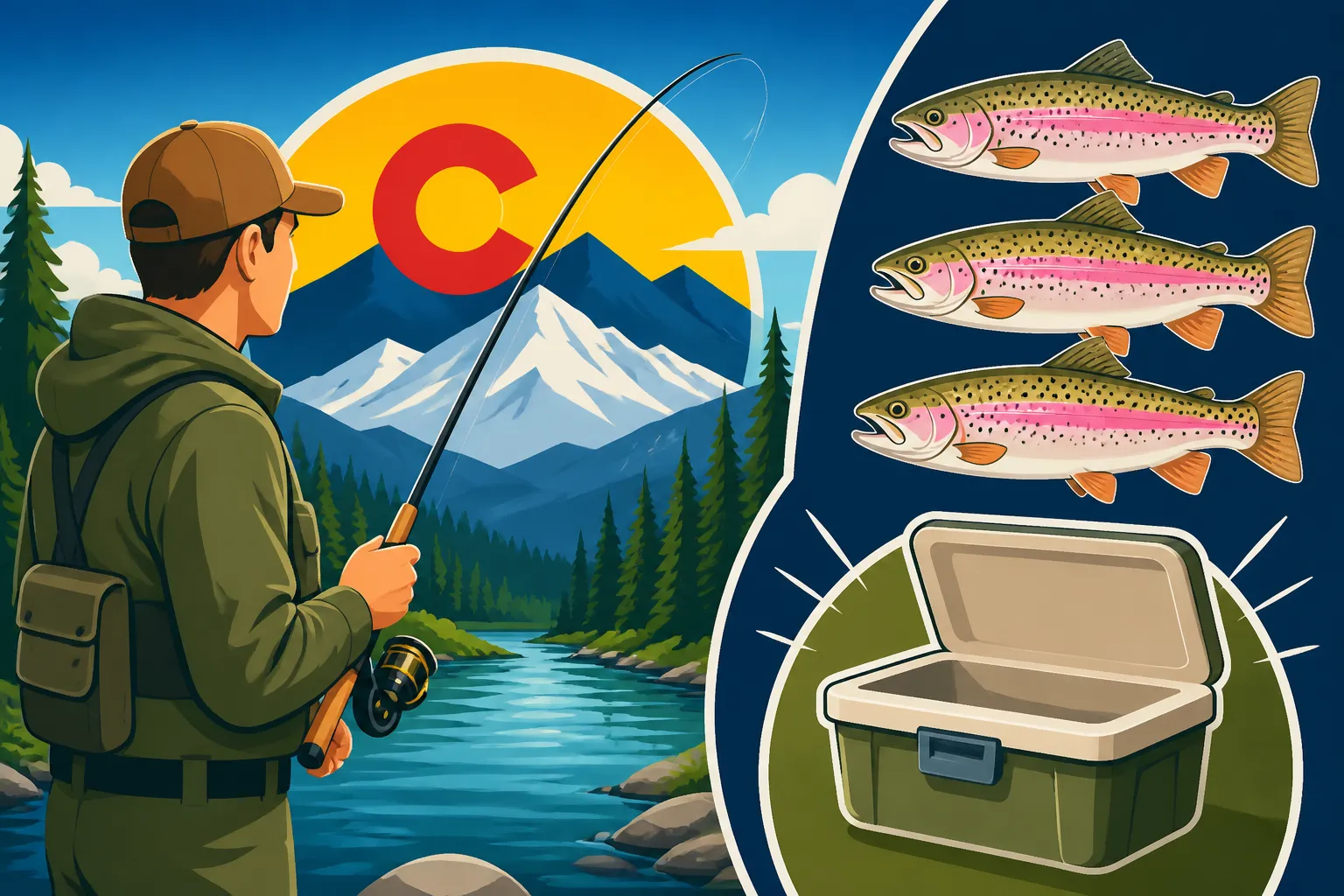
How Many Trout You Can Keep Per Day in Colorado
Figuring out exactly how many trout you can legally keep in Colorado can feel like deciphering a secret code, especially with all the varying rules across different waters and species. It's frustrating to want to do the right thing but feel overwhelmed by the sheer volume of regulations. This guide is here to untangle that confusion, providing clear, practical insights into Colorado's daily trout bag limits so you can fish with confidence, protect our precious fisheries, and stay on the right side of the regulations.
Understanding Colorado's Daily Bag Limits for Trout
The world of fishing regulations can seem like a labyrinth, but at its core, Colorado Parks and Wildlife (CPW) aims to balance angler opportunity with sustainable fish populations. When it comes to trout, the rules are designed to ensure there are always plenty of fish for future generations while allowing anglers to enjoy a delicious meal. It’s not just about a simple number; it’s about understanding the nuances that apply to specific waters and species.
The General Trout Limit Rule
For most of Colorado's lakes, rivers, and streams, there's a straightforward general rule for trout: you can keep a combined total of four trout per day. This "aggregate" limit means that no matter the species – be it rainbow, brown, cutthroat, or brook trout – they all count towards that total of four. So, if you catch two rainbows and two brown trout, you've reached your daily limit. You can't then go out and keep two more brook trout. This rule provides a blanket conservation measure across the majority of the state's diverse fishing grounds.
However, it's absolutely crucial to remember that this is a general rule. Colorado is renowned for its diverse fisheries, and many specific bodies of water or stretches of river have unique regulations that supersede this general limit. Failing to check the specific rules for your chosen fishing spot is one of the quickest ways to accidentally fall out of compliance. Always, and I mean always, double-check the current Colorado Fishing Regulations Every Angler Should Know for the precise location you plan to fish. Don't assume the general rule applies everywhere, because it often doesn't.
What Counts Towards Your Daily Limit
The term "kept" might seem self-explanatory, but let's break it down to avoid any ambiguity. Your daily bag limit refers to the number of fish you have in your possession at any given time, whether they are live in a stringer or cooler, or already cleaned and on ice. Once a fish is caught and you decide to keep it, it immediately counts toward your daily limit. This isn't about how many you harvest in total, but how many you retain.
For example, imagine you're fishing a small mountain lake. You catch and immediately release five small brook trout that didn't meet your desired size. Then, you land a beautiful 16-inch rainbow and decide to keep it. That rainbow counts as one towards your limit of four. If you then catch two more keepers, you now have three fish counting towards your limit. The fish you released safely don't count, but any fish you choose to retain, even if you clean it on the spot, does. This is why having a tape measure and a cooler ready for your catch is so important; it ensures you can quickly assess and manage your take. You can find reliable, waterproof tape measures on Amazon if you don't already have one in your tackle box.
The Difference Between Daily and Possession Limits
This is a point of confusion for many anglers, and it’s vital to understand the distinction between Colorado's Daily Bag Limits by Species and their Possession Limits vs Daily Limits in Colorado. The daily bag limit is the maximum number of fish you can harvest in one calendar day. As discussed, for trout, this is generally four. The possession limit, however, refers to the maximum number of fish you can have in your possession at any time, regardless of when or where they were taken.
For trout, the possession limit in Colorado is typically twice the daily bag limit, which means a general possession limit of eight trout. So, if you fished on Monday and kept four trout, and then fished again on Tuesday and kept four more trout, you now have eight trout in your cooler or freezer. This is perfectly legal as long as you didn't keep more than four on either individual day. However, if you already had eight trout in your possession from previous trips, you would not be able to keep any more on your current fishing trip until some of those previously kept fish are consumed or disposed of. This rule is particularly important for multi-day trips or if you have a well-stocked freezer. Always manage your catch responsibly to avoid exceeding the possession limit, as wardens can check fish in your cooler, vehicle, or even your home freezer if they have reason to believe you're exceeding limits.
Navigating Species-Specific and Special Water Restrictions
Colorado is home to an incredible array of trout waters, from high-alpine lakes to famous Gold Medal Rivers. With this diversity comes a patchwork of regulations designed to protect specific populations, enhance fishing experiences, or manage ecosystems. It’s never enough to just know the general statewide limit; you truly have to become a student of the local rules.
Designated Gold Medal Waters and Special Regulations
Colorado's Gold Medal Waters are truly exceptional fishing destinations, recognized for their ability to consistently produce large trout (over 14 inches) at a rate of 60 pounds per acre. Naturally, these waters come with very specific rules, often much stricter than the general statewide limits. The intent behind these regulations is to maintain the high quality of these fisheries, often by promoting catch-and-release practices or imposing very tight harvest restrictions. For a deeper dive into these unique areas, check out our guide on Colorado Gold Medal Water Regulations Explained.
For instance, many Gold Medal stretches, like sections of the Fryingpan River or the Dream Stream on the South Platte, are strictly catch-and-release only for trout. This means you cannot keep any trout, regardless of size or species. Other Gold Medal Waters might have a specific size restriction, like the Colorado's 14-Inch Trout Length Rule, allowing you to keep only one trout over a certain length, or perhaps one under a certain length, while releasing all others. These rules are designed to protect the trophy-sized fish that make these waters famous. It’s not uncommon to see regulations like "two trout total, only one over 16 inches" or "all trout must be immediately released." These are not suggestions; they are enforceable laws, and violating them can carry significant penalties.
Unique Limits for Specific Trout Species
While the general rule of four trout aggregate usually holds, certain species or specific locations might have their own distinct limits. This is particularly true for native species or those managed for specific outcomes.
- Native Cutthroat Trout: Colorado is fiercely protective of its native cutthroat subspecies, including the Colorado River Cutthroat, Rio Grande Cutthroat, and the Greenback Cutthroat Trout. Many waters containing these precious fish are managed as catch-and-release only for cutthroat, or have extremely reduced bag limits, sometimes as low as one fish. Identifying these fish can be tricky, so it's wise to study Colorado's Native Cutthroat Trout Subspecies and be prepared to release anything you're unsure about. The goal is to ensure the genetic purity and survival of these iconic fish.
- Brook Trout: In some high-elevation lakes and streams, particularly where brook trout are abundant and can sometimes outcompete other native species, CPW might increase the bag limit for brook trout to encourage harvest. You might find regulations allowing a higher number, sometimes even eight or ten brook trout, in addition to the general four-trout aggregate. Always verify the specific rules for the body of water you're targeting.
- Lake Trout: Lake trout, often found in deep, cold reservoirs like Blue Mesa Reservoir or Taylor Park Reservoir, frequently have their own separate bag limits, which can be significantly different from the general trout limit. It's common to see a higher daily limit for lake trout, sometimes up to eight or even ten fish, with potential size restrictions. This is often because lake trout can become overpopulated in certain environments and negatively impact kokanee salmon populations or other species. Our guide on Lake Trout Fishing in Colorado provides more detail on these specific limits. These distinct regulations highlight the importance of knowing your target species and the specific water body's rules.
Size Restrictions and Slot Limits
Beyond the total number of fish you can keep, many Colorado waters implement size restrictions or slot limits to manage fish populations. These are designed to protect certain size classes of fish, often the larger, more prolific breeders, or to thin out smaller, overpopulated fish.
A common size restriction might state something like, "daily limit of two trout, only one over 16 inches." This means you can keep two fish, but only one of them can exceed 16 inches in length, while the other must be smaller. This allows anglers to keep a trophy while still contributing to population management.
Slot limits are a bit more nuanced. They dictate that fish within a certain size range must be released, while fish outside that range (either smaller or larger) can be kept. For example, a regulation might say, "all trout between 12 and 18 inches must be released; daily limit of two fish under 12 inches or over 18 inches." This protects the breeding stock in the middle "slot," while allowing harvest of smaller fish (to reduce competition) or larger fish (which might be past their prime breeding years or are predators on other desirable species). Always carry a measuring tape with you to ensure you're compliant, as judging fish length by eye is notoriously difficult, especially after a long day of fishing. Having a reliable, easily readable one in your gear, perhaps sourced from Amazon, can be a real game-changer.
Essential Resources for Staying Compliant
Understanding Colorado's fishing regulations isn't just a suggestion; it's a fundamental part of responsible angling. The rules can be dynamic, evolving based on environmental conditions, population surveys, and management goals. Relying on old information or hearsay can lead to inadvertent violations and potential penalties.
Where to Find the Most Up-to-Date Regulations
The single most authoritative source for Colorado fishing regulations is Colorado Parks and Wildlife (CPW). They publish a new fishing brochure annually, usually in late winter or early spring, which details all statewide and specific water regulations.
- CPW Website: The CPW website is your best friend. You can always find the most current digital version of the "Colorado Fishing" brochure there. It's easily searchable, and they often have interactive maps and additional resources.
- Physical Brochures: You can pick up a free physical copy of the annual fishing brochure at any CPW office, most sporting goods stores (like a local Scheels or Cabela's), or licensed vendors where you buy your Colorado Fishing License Guide for Residents and Nonresidents. Always grab a fresh copy each year, even if you think you know the rules by heart, because regulations do change.
- CPW's Fishing Atlas: This incredible online tool is a mapping system that allows you to pinpoint specific bodies of water and view their regulations directly. It's an invaluable resource for planning trips and verifying rules on the fly.
- Local Tackle Shops: The folks who work at local fly and tackle shops are often incredibly knowledgeable about the immediate area's regulations. They fish these waters daily and can offer insights, but always cross-reference their advice with the official CPW brochure.
How to Interpret Regulation Brochures and Online Tools
Reading a regulations brochure can feel a bit daunting at first, with all its tables, maps, and special conditions. But with a systematic approach, it becomes much easier to digest. Our guide on How to Read Colorado's Fishing Regulations Brochure offers more in-depth advice, but here are the key steps:
- Start General: Begin by reviewing the statewide general regulations for trout (e.g., the four-fish aggregate limit). This gives you a baseline.
- Locate Your Water: Find the specific river, lake, or reservoir you plan to fish in the brochure's index or map sections. Regulations are often organized by county or by major river drainage.
- Check for Special Regulations: Once you find your specific water, look for any text or tables that list "Special Regulations" or "Exceptions." These sections will explicitly state if the daily limit for trout (or other species) differs from the general rule, if there are size restrictions, catch-and-release requirements, or bait restrictions. This is where you'll find details about Gold Medal Waters, specific cutthroat conservation areas, or unique rules for certain reservoirs.
- Understand Geographic Boundaries: Pay close attention to descriptions that define the start and end points of special regulation areas (e.g., "from the confluence of X Creek to the bridge at Y Road"). Sometimes, just a few miles can mean a completely different set of rules.
- Review the "Important Notes": Often there are crucial notes about season dates, specific times of day, or other conditions that impact fishing.
Penalties for Exceeding Limits
It's tempting to think that a few extra fish won't matter, but violating Colorado's fishing regulations, especially daily or possession limits, carries serious consequences. CPW wildlife officers and park rangers are highly trained and regularly patrol fishing areas, and they take violations seriously because these rules are critical for conservation.
The penalties can include:
- Fines: You'll likely face a monetary fine, which can range from a few hundred dollars to well over a thousand, depending on the severity of the violation and the number of fish involved. Each fish over the limit often constitutes a separate offense.
- Court Appearances: Many violations require a mandatory court appearance, which means time off work and additional legal fees.
- License Suspension/Revocation: One of the most significant consequences for anglers is the potential for your fishing license to be suspended or even permanently revoked. This means you won't be able to fish in Colorado for a period, or ever again. This also applies to hunting licenses.
- Seizure of Equipment: In some cases, your fishing gear, boat, or even your vehicle could be seized.
- Restitution: You may also be required to pay restitution for the value of the fish illegally taken, particularly for protected or native species.
It's simply not worth the risk. Always err on the side of caution, measure your fish carefully, and if in doubt about a regulation, release the fish or consult the official CPW resources. Our article, What Happens If You Fish in Colorado Without a License, elaborates on the broader consequences of violating fishing laws, including those related to bag limits.
Remember, fishing is a privilege, and respecting the regulations is how we ensure that privilege continues for everyone.
| Regulation Type | General Statewide Rule | Common Exceptions/Special Waters | Key Examples |
|---|---|---|---|
| Daily Bag Limit (Trout) | 4 trout (aggregate of all species) | Catch-and-release only; 1-2 fish limits; specific size slots; increased limits for certain species (e.g., brook trout, lake trout). | Gold Medal Rivers (e.g., Fryingpan, Dream Stream): Often catch-and-release or 1 fish > 16 inches. Native Cutthroat Waters: Often catch-and-release or 1 fish. Blue Mesa Reservoir: Lake trout limits can be 8 or 10 fish, with specific size ranges. |
| Possession Limit (Trout) | 8 trout (twice the general daily limit) | Varies based on daily limit for specific waters (e.g., if daily limit is 1, possession limit is 2). | If you keep 4 trout on Monday and 4 on Tuesday, you are at your possession limit of 8. If you have 8 in your freezer, you cannot keep any more until some are consumed. |
| Size Restrictions | None generally, but specific rules common for special waters | Minimum length (e.g., must be 16 inches to keep); maximum length (e.g., must be under 12 inches); slot limits (e.g., release 12-18 inches). | Arkansas River (Pueblo): No trout 12-16 inches may be kept. South Platte (Cheesman Canyon): All trout must be immediately released. Taylor River (below dam): One trout over 20 inches, or under 8 inches. |
| Species-Specific Limits | Included in general aggregate limit | Separate limits for species like Lake Trout, Brook Trout, or native Cutthroat. | Lake Trout (many large reservoirs): Higher daily limits than other trout species, often with specific size ranges. Brook Trout (some high-country lakes): Increased daily limits (e.g., 8-10 fish). |
Disclaimer
The information provided in this guide is intended for general informational purposes only and is not a substitute for the official Colorado Parks and Wildlife (CPW) regulations. Fishing regulations are subject to change, and it is the sole responsibility of each angler to consult and adhere to the most current official CPW fishing regulations brochure for the specific waters they intend to fish. Always verify regulations directly with CPW before heading out.