How to Submit a Colorado State Record Fish Application
Catching a truly massive fish in Colorado is an exhilarating, heart-pounding moment, often followed by a flurry of questions: Is this a record? What do I do now? How do I even prove it? It's a fantastic problem to have, but navigating the official process can feel a bit daunting amidst the excitement. This guide will walk you through everything you need to know about officially submitting a Colorado State Record Fish Application, ensuring your incredible catch gets the recognition it deserves.
Understanding Colorado's State Record Fish Program
Before you even cast a line, it's helpful to understand what Colorado Parks and Wildlife (CPW) considers a state record and the program's underlying philosophy. It's not just about catching the biggest fish; it's about doing so legally, ethically, and then properly documenting it for posterity. This program celebrates exceptional angling achievements and helps CPW track fish populations and management successes.
What Makes a Fish Record-Worthy?
Colorado's state record program focuses primarily on the weight of the fish for most species, though length can sometimes be a secondary factor or a specific record category for certain unique situations. Every species of fish found in Colorado waters, from the revered greenback cutthroat trout to the mighty northern pike, has a standing state record. To even consider your fish record-worthy, it must:
- Be a recognized species: This sounds obvious, but sometimes hybrids or unusual specimens can cause confusion. CPW biologists will confirm the species identification.
- Exceed the current state record: You can find the most up-to-date list of current records on the official Colorado Parks and Wildlife website. Knowing the existing record for your target species is your first benchmark. Imagine landing a monster walleye at Pueblo Reservoir, only to find out the current record is just a pound heavier – that's a tough break, but it highlights why knowing the numbers matters.
- Be legally caught: This is paramount. The fish must be taken by legal angling methods during a legal season, adhering to all Colorado Fishing Regulations Every Angler Should Know. No snagging, spearing, or illegal nets are allowed.
- Be caught in Colorado public or private waters: The fish must have been caught within the geographical boundaries of Colorado. If you’re fishing a reservoir that straddles state lines, like Navajo Reservoir with New Mexico, make sure your catch was clearly on the Colorado side.
It's important to remember that the state record list changes as new, larger fish are caught. What was a record last year might not be today. Always check the current standings to see if your catch truly has a chance to etch its name in the record books. You can dive deeper into specific achievements by checking out Colorado's State Record Fish, Species by Species.
Essential Pre-Requisites for Your Catch
Beyond the fish itself, you as the angler must meet certain criteria for your record application to be considered valid. These are not just bureaucratic hurdles; they are fundamental principles of ethical angling and wildlife management.
Firstly, you absolutely, unequivocally, must possess a valid Colorado Fishing License Guide for Residents and Nonresidents at the time of the catch. There are no exceptions to this rule. If you caught that trophy fish without a license, it cannot be recognized as a state record, regardless of its size. This is a non-negotiable requirement that helps fund conservation efforts across the state. Remember, ignoring this could lead to serious penalties, as highlighted in What Happens If You Fish in Colorado Without a License.
Secondly, the fish must be caught using legal methods. This typically means hook and line, employing legal baits or lures as per the specific waterbody's regulations. For example, if you're fishing a Gold Medal Water that requires flies and artificial lures, using live bait would disqualify your catch for a record, even if the fish was enormous. Understanding nuances like Colorado Bait Restrictions and Where They Apply is crucial. The principle of "fair chase" is inherent in all wildlife regulations. This means the fish must be caught under conditions where it has a reasonable chance of escape, without undue advantage given to the angler through illegal means.
Finally, the fish must be wild or legally stocked within Colorado's public or private waters. You can't catch a fish from a private pay-to-fish pond that exclusively stocks exotic, unnaturally large specimens and expect it to count as a state record for a native species. CPW's program is about celebrating the natural resources of Colorado and the skill of anglers who pursue them responsibly.
Immediate Actions When You Hook a Potential Record
The moment you realize you might have a state record on the end of your line is pure adrenaline. Your heart pounds, your hands might shake, and a million thoughts race through your head. While the urge to celebrate is strong, taking immediate, deliberate steps to verify and preserve your catch is absolutely critical for a successful record application. This isn't just about showing off; it's about scientific verification.
Prioritizing Verification and Preservation
Once that magnificent fish is landed, the clock truly starts ticking. Your immediate priority, if you suspect it's a record, is to keep the fish alive and in good condition, if possible, especially if you wish to release it after verification. Some anglers prefer to weigh and release, and CPW may make provisions for this with appropriate documentation and witnesses. However, for most record applications, the fish must be harvested and presented for official verification.
Your very first action, even before rushing to a scale, should be to contact Colorado Parks and Wildlife. Find the nearest CPW office or contact a local Parks and Wildlife officer. Their number can usually be found on the CPW website or in the annual fishing regulation brochure. Explain your situation calmly and clearly. They can guide you on the next steps, including where to find a certified scale and potentially dispatching an officer or biologist to assist with verification. Do not try to guess or assume the process; get direct guidance.
While waiting for CPW instruction or heading to a certified scale, keep the fish cool and protected. If it's a coldwater species like trout, place it on ice or in a cooler filled with ice water. For warmwater species, similar cooling methods are effective. The goal is to prevent weight loss due to dehydration or spoilage, which can happen surprisingly quickly. A few ounces lost can mean the difference between a new state record and just a great fish story.
Accurate Weighing and Measuring
This is arguably the most crucial step in the entire application process. Without accurate and verifiable weight and measurements, your claim will simply not stand up to scrutiny.
The Scale is King: Your fish must be weighed on a certified scale. What does "certified" mean? It means a scale that has been inspected and calibrated by a state-approved entity, such as a grocery store, a post office, a meat locker, or a professional sporting goods store like Cabela's or Bass Pro Shops. The scale must be able to weigh to the nearest ounce or hundredth of a pound. A typical digital fishing scale you bought on Amazon for quick tournament checks, while often accurate, is generally not considered certified for official state record purposes. You’ll need a signed statement from the establishment confirming the scale's certification.
Before weighing, ensure the scale is properly zeroed. Any container used to hold the fish during weighing must also be weighed separately and its weight deducted. For instance, if you use a bucket to hold the fish, weigh the empty bucket first, then weigh the bucket with the fish, and subtract the empty bucket's weight. Don't eyeball it; precision is key.
Measurements Matter Too: While weight is primary, length and girth measurements provide additional valuable data for CPW biologists to confirm species identification and overall fish health. Use a flexible measuring tape or a rigid ruler to measure:
- Total Length: From the tip of the snout to the end of the longest lobe of the tail, with the tail squeezed together (also known as "fork length" if measuring to the fork of a forked tail, but CPW usually specifies total length).
- Girth: The circumference of the fish at its widest point.
Take these measurements carefully and record them immediately. Have at least one, preferably two, unrelated witnesses present during both the weighing and measuring. Their signed statements on the application form are vital for corroboration. These witnesses should not be family members, as that could raise questions of impartiality.
Document Everything with Photos: High-quality photographs are indispensable. Take multiple pictures from various angles:
- The fish on the certified scale with the weight clearly visible.
- The fish next to a measuring device (ruler or tape) showing its length and girth.
- A clear, close-up shot of the fish's identifying features (fins, markings, mouth) for species verification.
- A photo of you with your catch, showing its size in proportion to you.
- Photos of the witnesses with the fish, if possible.
Ensure the photos are well-lit and in focus. Modern smartphones can take excellent pictures, but if you have a dedicated camera, even better. The more visual evidence you can provide, the stronger your application will be.
| Documentation Checklist for Potential Record Fish | Importance | Details |
|---|---|---|
| Valid Colorado Fishing License | Essential | Must be active at time of catch. No exceptions. |
| Certified Scale Weight | Critical | Weighed on a state-certified scale (grocery, post office, sporting goods store). Signed witness statement. |
| Length & Girth Measurements | Important | Accurate measurements from snout to tail, and widest point. Signed witness statement. |
| High-Quality Photographs | Essential | Multiple angles: on scale, with ruler, close-ups for ID, angler with fish. |
| Unrelated Witness Statements | Crucial | At least one, preferably two, witnesses to weighing/measuring. Must sign application. |
| Date, Time, Location of Catch | Required | Specifics of where and when the fish was caught. |
| Gear Used (Rod, Reel, Line, Lure/Bait) | Required | Detailed description of tackle. |
| Fish Preservation (on ice/cooler) | Recommended | Prevents weight loss and spoilage before official verification. |
The Colorado State Record Fish Application Process
Once you've secured your catch, properly documented its size, and gathered your witnesses, the next step is to formally compile all this information into an official application. This is where your meticulous record-keeping truly pays off.
Gathering Your Documentation
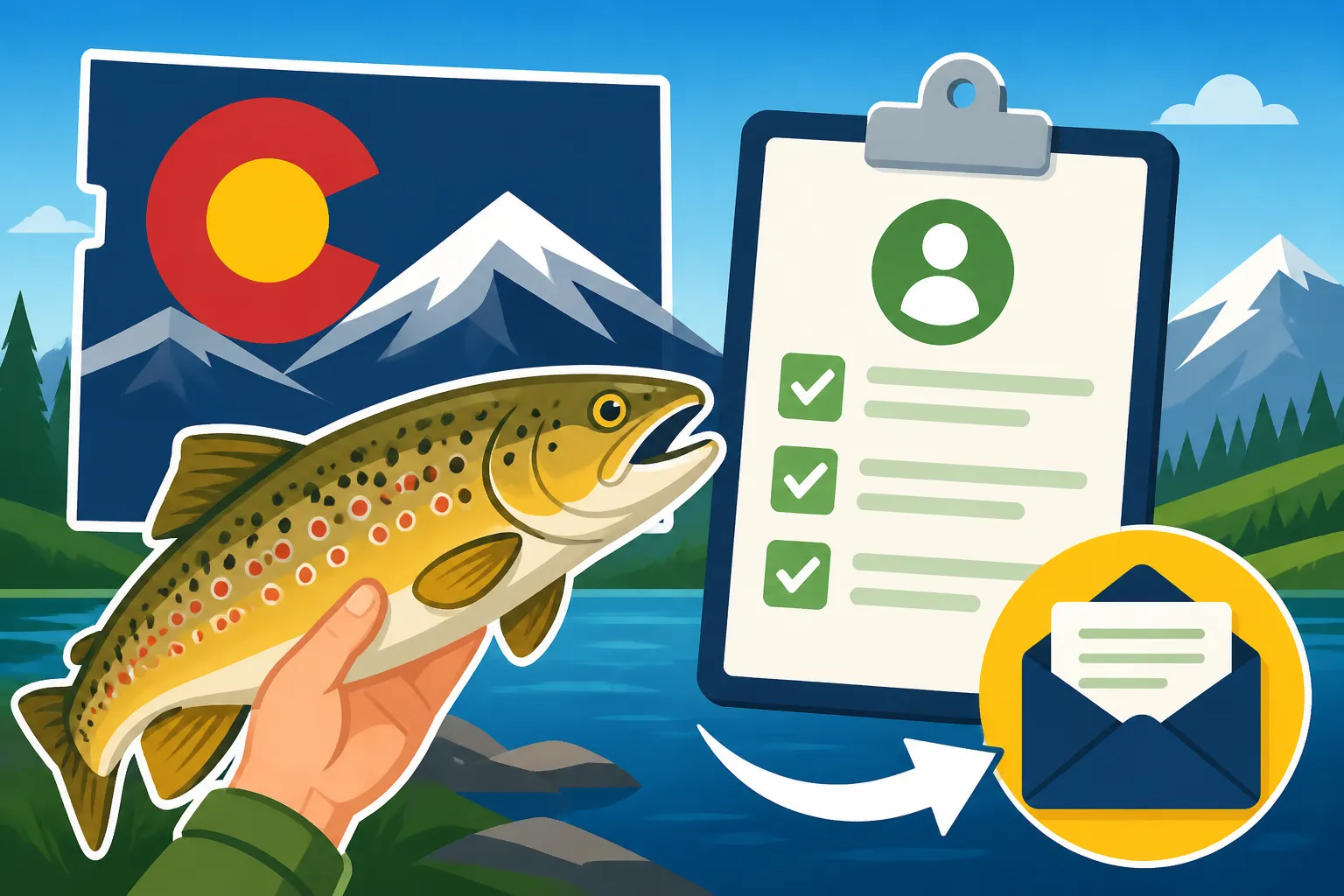
Colorado Parks and Wildlife provides a specific application form for state record fish. You’ll typically find this form available for download on their official website, often in the "Fishing" or "Regulations" sections. Print it out or fill it digitally if allowed, but ensure you have a physical copy to get all necessary signatures.
The application form will ask for a wealth of detail, including:
- Your personal information: Name, address, contact details, and most importantly, your Colorado fishing license number.
- Catch details: The exact date and time of the catch, the name of the waterbody (e.g., Eleven Mile Reservoir, the Dream Stream), the county, and as precise a location as possible (e.g., "south shore near the inlet").
- Gear used: Specify your rod type and length, reel, line weight and type, and the specific lure or bait used. This helps CPW understand the context of the catch and confirms legal methods.
- Fish details: The species you believe it is, its official weight, length, and girth.
- Witness information: Names, addresses, and signatures of the people who observed the weighing and measuring. This is incredibly important for authenticity.
- Scale certification: Information about the certified scale used, including the business name, address, and a signature from the manager or a responsible party verifying the scale's certification and accuracy.
Beyond the form itself, you will need to compile all your supporting evidence:
- Photographs: As discussed, high-resolution photos are essential. You might need to print these out to include with a mailed application or ensure they are properly embedded or attached to an emailed submission.
- Copy of your fishing license: A clear photocopy of your valid license further substantiates your claim.
- Any additional notes: If there were unique circumstances, or anything that might add to the story of the catch or clarify details, include a brief written account. This could be about challenging weather conditions or a particularly long fight, adding to the narrative behind the numbers.
Completing this package thoroughly, without leaving any blanks, significantly expedites the review process. Think of it as presenting a legal case; you want to leave no room for doubt or missing information.
Submitting Your Application
Once all your documentation is meticulously prepared and reviewed, it's time to submit. CPW typically prefers applications be sent to their main Denver office or directly to the state's fisheries biologist responsible for the record program.
The exact submission method might vary, but generally, you have a couple of options:
- Mail: This is the traditional route. Place all your documents—the completed application form with signatures, printed photos, copies of licenses, and any other supporting materials—into a sturdy envelope. It’s highly recommended to send it via certified mail with a return receipt requested. This provides proof that your application was sent and received, giving you peace of mind. You can find robust envelopes and mailing supplies easily on Amazon or at any post office. Ensure the address is correct for the Colorado Parks and Wildlife headquarters or the specific fisheries division they designate for record applications.
- Email: Some divisions of CPW may accept digital submissions, especially if you can scan all signed documents and attach high-resolution photos. If submitting via email, consolidate all your documents into a single, organized file (e.g., a PDF document that includes the form, witness statements, and photos). Label your email subject line clearly, such as "Colorado State Record Fish Application – [Your Name] – [Species] Caught on [Date]". This helps ensure it gets routed to the correct department without delay.
Always double-check the current CPW instructions for the preferred submission method and address. A quick call to the CPW main line can confirm this information and save you from potential misdirection. Once submitted, resist the urge to call daily. The CPW team is busy, and processing these applications takes time.
What Happens After You Submit Your Application?
Submitting your application is a huge milestone, but it's not the end of the journey. There's a review process involved, and then, if everything checks out, the exciting moment of official recognition. Patience is definitely a virtue at this stage.
The Review and Approval Process
After your carefully compiled application reaches CPW, it goes through a thorough review by their expert fisheries biologists. This isn't just a quick glance; it's a detailed examination to ensure everything aligns with the program's strict guidelines.
Here's what the CPW team will be looking for:
- Species Identification: Biologists will meticulously examine your photos and descriptions to confirm the species. This is particularly important for species that look similar, or for potential hybrids like a cutbow (rainbow-cutthroat hybrid). Their scientific expertise ensures accuracy.
- Verification of Weight and Measurements: They will cross-reference the stated weight and measurements with the witness statements and the scale certification. Any discrepancies could lead to further questions or even disqualification.
- Legality of Catch: They will confirm that the method of capture was legal and that you held a valid fishing license. This often involves checking their internal records. This process is part of why understanding Colorado Fishing License Costs Explained and ensuring your license is current is so vital.
- Completeness of Documentation: Was every field filled out? Are all required signatures present? Are the photos clear and sufficient? A complete application makes their job easier and speeds up your approval.
The review process can take several weeks, sometimes even longer, depending on the volume of applications and the complexity of your submission. Don't be surprised if you don't hear back immediately. If, after a reasonable amount of time (say, 4-6 weeks), you haven't received any communication, you can gently follow up with the CPW office you sent the application to, referring to your certified mail tracking number or email date. They might just need a little nudge, or perhaps they have a question for you.
In some cases, CPW might request additional information or clearer photos. They might even ask to inspect the actual fish (if you've preserved it). Be prepared to provide anything they need to complete their review. Their ultimate goal is to ensure the integrity of the state record program.
Recognition and Legacy
If your application is approved, congratulations! You've officially entered the annals of Colorado fishing history. This isn't just about bragging rights, though those are certainly well-earned; it's about a lasting legacy and contributing to the rich tapestry of Colorado's outdoor heritage.
Here's what typically happens upon approval:
- Official Notification: CPW will send you an official letter or certificate confirming your new state record. This is a moment to savor!
- Publicity: Your achievement will often be publicized by Colorado Parks and Wildlife. This could be on their website, in their newsletters, or through local media outlets. Imagine seeing your name and your incredible fish celebrated across the state!
- Inspiration for Other Anglers: Your record becomes the new benchmark, inspiring other anglers to pursue their own trophy fish and contributing to the excitement and challenge of fishing in Colorado. It encourages others to learn more about Colorado's Trout Species, A Field Guide or Colorado's Kokanee Salmon Limit at Blue Mesa if they aim to beat a record in those categories.
- A Place in History: Your name and your fish will be permanently recorded on the official Colorado State Record Fish list, a testament to your skill, patience, and a bit of luck. It's a fantastic achievement that very few anglers ever realize.
Holding a state record connects you to a community of dedicated anglers and conservationists. It’s a powerful reminder of the incredible fisheries we have in Colorado and the importance of preserving them for future generations. So, the next time you're out on the water, whether it's the South Platte or Blue Mesa Reservoir, remember that a record-breaking fish could be just a cast away. Always be prepared, fish responsibly, and you might just find your name on that prestigious list.
Disclaimer
Please note that fishing regulations, license requirements, and state record application processes can change. Always consult the most current Colorado Parks and Wildlife (CPW) regulations brochure and their official website before planning your trip or submitting any applications. This guide is for informational purposes only and should not replace official CPW documentation or expert advice.