Dry Fly Fishing Colorado’s Freestone Rivers
There’s nothing quite like the sight of a trout rising to a perfectly presented dry fly, a moment of pure magic that every angler chases on Colorado's spectacular freestone rivers. But let's be real, achieving that perfect drift, identifying the right bug, and coaxing a picky trout to sip your offering can feel incredibly daunting, especially when the river seems to be ignoring every cast you make. This comprehensive guide will walk you through everything you need to know to unlock the incredible world of dry fly fishing on these dynamic waters, transforming frustration into exhilarating success.
Understanding Colorado's Freestone Rivers
When we talk about "freestone rivers" in Colorado, we're discussing those incredible waterways that flow freely, largely unimpeded by dams or major diversions. Unlike tailwaters, which have their flows and temperatures regulated by dams, freestones are truly at the mercy of Mother Nature. This means their character, water levels, and temperatures fluctuate wildly with the seasons, often dictated by snowmelt, rainfall, and daily weather patterns. These rivers carve their own paths, tumbling over rocks, creating deep pools, riffles, and runs that are constantly shifting and evolving.
What Defines a Freestone River
The essence of a freestone river lies in its natural hydrology. Think about the roar of the Colorado River during spring runoff or the gentle babble of a smaller stream in late summer. These dramatic changes are what make freestone fishing both challenging and incredibly rewarding. They are fed primarily by snowmelt and rain, leading to distinct high-water periods in late spring and early summer, and often crystal-clear, lower flows later in the summer and into the fall. The water temperature mirrors ambient air temperatures much more closely than a deep, bottom-release tailwater, influencing insect activity and trout behavior.
One of the most defining characteristics is the presence of a diverse, naturally occurring insect population. Unlike tailwaters that often favor specific, consistent hatches due to stable conditions, freestone rivers support a wider array of aquatic and terrestrial insects. Caddisflies, stoneflies, and a variety of mayflies thrive here, alongside prolific grasshopper, ant, and beetle populations during warmer months. This natural bounty means that matching the hatch often involves a more diverse fly box. Rivers like the upper Arkansas River near Salida and the stretches of the Colorado River Fishing From Glenwood Canyon to Kremmling are prime examples of the varied nature of Colorado's freestones.
Key Differences from Tailwaters
While both freestone rivers and tailwaters can offer incredible dry fly opportunities, their differences are critical to understand for successful angling. Tailwaters, being dam-controlled, typically boast more stable water temperatures year-round. This stability often leads to consistent hatches of specific insects, like midges and blue-winged olives, which can be predictable in their timing and size. The fish in tailwaters also tend to be highly educated and extremely selective, often requiring incredibly delicate presentations and precise fly patterns.
Freestones, on the other hand, are less predictable but can be more forgiving in some ways. Their fluctuating flows and temperatures mean the trout aren't always facing the same challenging conditions, making them occasionally less wary. When a major hatch is on, such as a salmonfly emergence, the fish can become incredibly aggressive, readily taking larger, less precisely matched patterns. However, high-water events can make dry fly fishing impossible, while low, clear water can make fish exceptionally spooky. Understanding these dynamics is crucial for adapting your approach and choosing the right time and place to fish.
The Allure of Dry Fly Fishing
There’s an undeniable romanticism to dry fly fishing, a purity that captures the imagination of anglers worldwide. It’s not just about catching fish; it’s about the direct connection to the environment, the thrill of the hunt, and the satisfying visual of a trout rising to your fly. This method appeals deeply to those who appreciate the delicate artistry and patient observation required.
Why It's So Rewarding
For many, dry fly fishing isn't just a technique; it's a passion. The visual aspect is paramount – watching your fly drift naturally on the surface, anticipating a strike, and then seeing the water erupt as a fish takes your offering is an adrenaline rush unlike any other. It’s a moment of direct engagement with the trout, a clear indication that you've fooled it with your imitation. This immediate feedback loop, whether positive or negative, makes every cast an exciting proposition.
Moreover, dry fly fishing often requires a heightened sense of awareness. You're not just casting; you're actively reading the water, observing insect activity, and anticipating where a trout might be holding and feeding. This deep engagement with the river’s ecosystem fosters a profound appreciation for nature. When everything comes together – the perfect cast, the natural drift, the right fly, and a willing fish – it feels like a small victory earned through skill, observation, and a bit of luck. The challenge itself is part of the reward; dry fly fishing often demands more precision and finesse than other methods, making success all the sweeter.
The Art of Observation
Successful dry fly fishing begins long before your line even touches the water. It starts with keen observation. Before making your first cast, take time to watch the river. Are insects flying around? Are you seeing any rises? What kind of rises are they – gentle sips, aggressive splashes, or something in between? The type of rise can tell you a lot about what the fish are eating and how aggressively they're feeding.
Look for the subtle clues: shucks of insects floating in the current, adult bugs fluttering near the banks, or even birds feeding on insects in the air. Pay attention to current seams, eddies, and structure where trout might be holding. The more you observe, the better you'll understand the rhythm of the river and the feeding habits of its inhabitants. Sometimes, the most valuable tool in your fly box isn't a fly at all, but a pair of polarized sunglasses, allowing you to peer beneath the surface and potentially spot feeding fish or emerging insects that would otherwise go unnoticed. This patient, almost meditative, observation is a cornerstone of effective dry fly angling.
Essential Gear for Dry Fly Anglers
Having the right equipment can make all the difference between a frustrating day and a fantastic one on Colorado's freestone rivers. While you don't need the most expensive gear, understanding what each piece does and why it's important is key to effective dry fly fishing. From your rod to your tippet, every component plays a crucial role in delivering that perfect presentation.
Rods, Reels, and Lines
For most dry fly situations on Colorado's freestone rivers, a fly rod in the 3-weight to 5-weight range, typically 8.5 to 9 feet long, is ideal. A 4-weight, 9-foot rod is often considered the most versatile choice, offering enough backbone to cast accurately in the wind while still being delicate enough to present small flies to wary trout. For smaller streams or when targeting smaller fish, a 3-weight can be a joy to cast, providing excellent feel and precise presentations. On larger rivers, or if you anticipate strong winds or bigger fish, a 5-weight will give you more power and control. Choosing the Best Rod Weight for Colorado Trout Fishing is a balance of delicacy and power.
Your reel's primary job in dry fly fishing is to hold your line and provide a smooth drag for fighting fish. A simple, reliable click-and-pawl or disc drag reel that balances well with your chosen rod is all you need. Focus on weight balance rather than excessive features. As for fly line, a weight-forward floating line matched to your rod weight is essential. This line type is designed for casting accuracy and delicate presentations, making it perfect for dry flies. You might also consider specific lines with longer front tapers for even more subtle presentations, or those designed for high-visibility if tracking your fly is a challenge. You can find a vast selection of these on platforms like Amazon, making it easy to compare features and prices.
Leaders, Tippet, and Indicators
The connection between your fly line and your fly is arguably the most critical component in dry fly fishing. A tapered leader is absolutely necessary, gradually thinning from a thicker butt section (which attaches to your fly line) down to a fine tippet section. This taper helps transfer casting energy smoothly, allowing your fly to land softly and naturally on the water. For dry fly fishing, leaders typically range from 7.5 to 12 feet in length, with longer leaders (9-12 feet) generally preferred for spookier fish or clearer water.
Tippet, the very end section of your leader, is where you tie on your fly. It's usually a separate piece of monofilament or fluorocarbon that you add to the end of your tapered leader. Tippet size is crucial; it needs to be fine enough to not spook the fish, but strong enough to land it. Generally, tippet sizes range from 6X (very fine for small flies and delicate presentations) to 3X or 4X (for larger flies and stronger currents). As a rule of thumb, use a tippet that corresponds to the size of your fly: smaller numbers for larger flies (e.g., a size 12 fly might use 4X tippet), and larger numbers for smaller flies (e.g., a size 20 fly might use 6X or 7X tippet). You won't typically need a strike indicator for dry fly fishing, as the dry fly itself serves as your indicator!
Essential Dry Fly Patterns
Colorado's freestone rivers are home to a huge variety of insect life, so a diverse fly box is a must. While "matching the hatch" is the ultimate goal, having a selection of reliable attractor patterns and common imitations will cover most situations.
Mayfly Imitations:
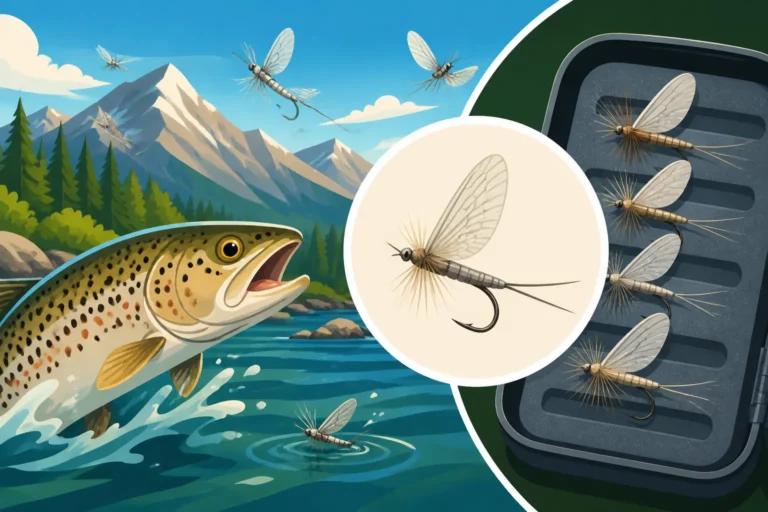
- Parachute Adams: This is arguably the most versatile dry fly ever created. It imitates a wide range of mayfly species and is effective throughout the season. Have it in sizes 12-22.
- Blue-Winged Olive (BWO): Critical for spring and fall hatches, especially on cloudy days. Sizes 16-22.
- Pale Morning Dun (PMD): Important in late spring and summer. Sizes 14-18.
- Green Drake/Yellow Sally: Larger mayflies that can elicit aggressive strikes. Have these in sizes 10-14.
- Western Green Drake: Specifically for the larger, vibrant green drakes found on some Colorado rivers.
Caddisfly Imitations:
- Elk Hair Caddis: Another essential, highly effective pattern that imitates emerging and adult caddisflies. Sizes 10-18 in various body colors (tan, olive, black).
- Stimulator: A great attractor pattern that can imitate caddis, stoneflies, or even grasshoppers. Sizes 8-16.
Stonefly Imitations:
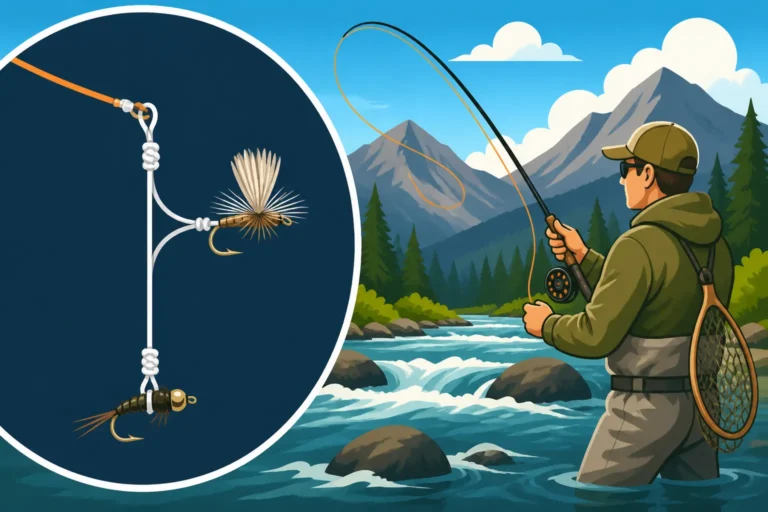
- Chubby Chernobyl: A large, buoyant foam fly that can imitate large stoneflies or grasshoppers. Great for fishing high-water or as the top fly in a dry-dropper rig. Sizes 6-12.
- Adult Golden Stonefly/Salmonfly: Crucial during the major stonefly hatches. Sizes 4-10.
Terrestrial and Attractor Patterns:
- Hoppers (e.g., Dave's Hopper, Morrish Hopper): Essential from mid-summer through fall when grasshoppers are abundant near the banks. Sizes 8-14.
- Ants (e.g., Cinnamon Ant, Black Ant): Often overlooked, but ants are a staple in a trout's diet, especially in late summer. Sizes 14-20.
- Beetles (e.g., Foam Beetle, Madam X): Another consistent terrestrial producer. Sizes 12-16.
- Royal Wulff/Humpy: Classic attractor patterns that don't imitate a specific bug but often provoke strikes. Sizes 10-16.
Remember, having a good variety of sizes and colors for these patterns is key. You can find excellent quality fly selections and individual patterns from reputable brands on Amazon, allowing you to build up your fly box efficiently. For even more detailed recommendations, check out our guide on the "Best Flies for Colorado's Gold Medal Trout Water".
Reading the Water on Freestones
One of the most crucial skills for any successful dry fly angler is the ability to read the water effectively. Freestone rivers, with their constantly changing dynamics, demand a keen eye for subtle currents, lies, and feeding lanes. Knowing where trout are likely to hold and feed will dramatically increase your chances of success. It's more than just casting; it's about understanding the river's flow and how fish interact with it.
Identifying Productive Lies
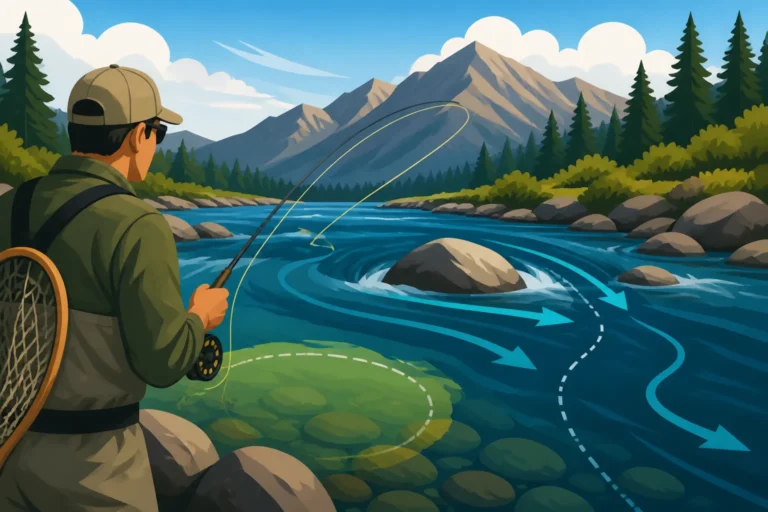
Trout, being opportunistic feeders, will position themselves in places that offer both food and protection from the current. On freestone rivers, these "productive lies" can be found in a variety of places. Look for slower water adjacent to faster currents, as this is where trout can expend less energy while still having easy access to insects being washed downstream. These transition zones are often goldmines.
- Current Seams: These are perhaps the most classic productive lies. A current seam is where two different current speeds meet. The faster current acts as a food conveyor belt, bringing insects downstream, while the slower water offers a comfortable holding spot. Trout will often sit just inside the slower water, nose pointed into the faster flow, ready to dart out and grab a meal.
- Eddies and Backwaters: These are areas where the current forms a circular motion or where water pools up behind an obstruction. Insects often get trapped in these areas, making them prime feeding zones. Don't overlook the "dead water" in the center of an eddy – sometimes the biggest fish will sit there, waiting for food to accumulate.
- Structure: Rocks, submerged logs, undercut banks, and overhanging vegetation all provide cover and current breaks for trout. Fish will often hold directly behind or alongside these structures, using them as ambush points. The deeper the water around the structure, the more likely a larger fish might be present.
- Riffles and Runs: Riffles are shallower, turbulent sections of the river where oxygen levels are high and insects are often dislodged. Trout will hold in the deeper pockets within or just below riffles. Runs are deeper, smoother sections that connect riffles and pools. Trout can be found cruising these runs, especially during active hatches.
Understanding Current Dynamics
The currents of a freestone river are not uniform; they are a complex tapestry of varying speeds and directions. Understanding these dynamics is paramount for achieving a natural, drag-free drift with your dry fly. The faster the current, the more food it carries, but also the more challenging it is to get a perfect drift.
When you cast your dry fly onto the water, different parts of your line (the fly, the tippet, the leader, and the fly line itself) will be subject to different current speeds. This often results in "drag," where the line pulls the fly unnaturally across the surface, instantly alerting wary trout. Your goal is to make your fly drift at the same speed as the natural insects, without any unnatural tugging or skipping. This is where mending comes in.
To effectively read current dynamics, pay attention to surface disturbances, the movement of leaves or bubbles, and the flow around obstructions. Observe how long a piece of debris drifts naturally before it’s pulled by a different current. This will give you an idea of the "drift window" you need to aim for. As our guide on "Reading Water on a Colorado Freestone River" explains, practice and observation are your best teachers here. Every river, and even every section of a river, will have its own unique current personality.
Mastering the Cast and Presentation
A beautiful cast isn't just for show; it's the foundation of effective dry fly fishing. The goal isn't necessarily distance, but rather accuracy, delicacy, and the ability to achieve a drag-free drift. On Colorado's freestone rivers, where currents can be complex and fish can be easily spooked, a well-executed cast and presentation are paramount.
Achieving Accuracy and Delicacy
When dry fly fishing, precision is key. You often need to place your fly in a very specific feeding lane, sometimes no larger than a dinner plate. This requires casting accuracy, the ability to put your fly exactly where you want it. Practice casting to specific targets in your yard or a local pond to hone this skill. Work on shortening your casting stroke for accuracy over distance.
Equally important is delicacy. Your fly needs to land softly, like a natural insect falling onto the water, without a splash or disturbance that would alert a trout. This is achieved through proper leader turnover and a controlled presentation. A good leader will help, but your casting stroke is the main factor. As your loop unrolls, aim to lay the leader and fly out gently, allowing the tippet to extend fully before the fly touches down. Often, this means "reaching" your cast slightly, extending your rod tip forward at the very end of your casting stroke to gently place the fly.
The Art of the Drag-Free Drift
A drag-free drift is the holy grail of dry fly fishing. It means your fly is floating on the surface at the exact same speed and direction as the natural current, making it indistinguishable from a real insect. Any unnatural movement, however subtle, will cause most trout to refuse your fly.
Achieving a drag-free drift involves several components:
- Casting Angle: Position yourself so you can cast slightly upstream or directly across the current to the target. Casting straight downstream often makes it harder to manage your line.
- Slack Line: Sometimes, intentionally introducing a small amount of slack into your cast (e.g., a pile cast or a parachute cast) can help delay drag, especially in turbulent water.
- Mending: This is the most critical technique. Mending involves repositioning your fly line on the water after the cast, to compensate for varying current speeds. If the current nearest you is faster than the current near your fly, you'll need to "upstream mend" (throw a loop of line upstream) to prevent the faster current from pulling your fly line and, consequently, your fly. If the current nearest you is slower, you might need a "downstream mend." Mends should be subtle and proactive, ideally before drag begins. Practice "aerial mends" during your casting stroke, where you reposition the line in the air before it lands.
- Reach Cast: This cast involves extending your rod arm out to the side (left or right, depending on the current) as your fly line unrolls, allowing you to place the fly on the target while keeping much of your fly line out of conflicting currents.
Mastering the drag-free drift takes practice, but it's an incredibly rewarding skill that will unlock countless dry fly opportunities on Colorado's freestones.
Matching the Hatch: Key Colorado Dry Fly Insects
The term "matching the hatch" is a cornerstone of fly fishing, and it’s never more crucial than when dry fly fishing on Colorado’s freestone rivers. This means presenting a fly that closely imitates the size, shape, and color of the natural insects that trout are actively feeding on. While some days trout will readily take attractor patterns, often they become highly selective, keying in on a specific insect.
Common Mayfly Hatches
Mayflies are a primary food source for trout and are responsible for some of the most exciting dry fly fishing on freestone rivers. Knowing their life cycles and appearance is vital.
- Blue-Winged Olives (BWOs): These small, dark mayflies are incredibly important, particularly in spring (March-May) and fall (September-November), especially on cloudy, overcast days or after a light rain. They typically hatch in the late morning or early afternoon. Imitations should be in sizes 18-22. Trout can be very selective during a BWO hatch, so delicate presentations are key. You’ll often find these widespread, affecting many rivers including the Fryingpan River Below Ruedi Reservoir and the Blue River in Silverthorne, although these are technically tailwaters, the patterns crossover.
- Pale Morning Duns (PMDs): PMDs are a beautiful yellow-bodied mayfly that typically hatch from late spring through mid-summer (June-August). They are slightly larger than BWOs, usually in sizes 14-18, and often emerge in the late morning or early afternoon. Look for them on sunny days.
- Green Drakes: These are among the largest mayflies, characterized by their striking green bodies and prominent wings. Green Drake hatches are sporadic but intense, primarily occurring in mid-summer (July-August) on specific freestones. When they hatch, trout often feed aggressively, making for exhilarating dry fly action. Flies in sizes 10-14 are appropriate.
- Western Green Drakes and Flavilinea: These are specific regional variations of the larger drakes. Western Green Drakes are often larger and found in certain drainages, while Flavilinea are smaller and more widespread. Again, observation is key. If you see big, dark green mayflies, think drakes.
Having patterns like Parachute Adams, Split-Wing PMDs, and Green Drake Comparaduns in your box will cover most mayfly emergences. For more details on these and other patterns, our guide on "Matching a Blue-Wing Olive Hatch on a Colorado Tailwater" (which has useful crossover info for freestones) and "Fly Selection for Colorado's Blue-Wing Olive Hatch" offer more tips.
Prolific Caddisfly and Stonefly Hatches
Caddisflies and stoneflies are also incredibly important insects on Colorado's freestone rivers, often providing explosive dry fly action.
- Caddisflies: Caddis hatches are arguably the most common and widespread on freestone rivers throughout the warmer months (May-September), often peaking in late spring and early summer. You’ll find them in a variety of colors, from tan to olive to grey to black, and in sizes 12-18. Caddis don’t typically drift on the surface like mayflies; they often skitter and bounce across the water as they emerge or lay eggs. This behavior can make trout incredibly aggressive. Having a good selection of Elk Hair Caddis and Stimulators in various colors is crucial. Check out "Matching a Caddis Hatch on a Colorado River" for specific pattern recommendations.
- Stoneflies: These are some of the largest aquatic insects, and their hatches can bring the biggest trout to the surface.
- Salmonflies: The largest and most famous stonefly, these often hatch in late spring/early summer (late May-early July) on specific, larger freestones. When salmonflies are hatching, trout will gorge themselves, and you can often fish large, bushy dry flies (sizes 4-8) with confidence.
- Golden Stoneflies: Slightly smaller than salmonflies, these are also prevalent in mid-summer (June-August) on many freestone rivers. Imitations in sizes 8-12 are effective.
- Yellow Sallies: These smaller, bright yellow stoneflies are common from late spring through summer (June-September) and can provide consistent action when nothing else is hatching. Sizes 14-18 are typical.
- For stoneflies, patterns like the Chubby Chernobyl, Stimulator, and various adult Golden Stonefly imitations are essential. "Matching a Stonefly Hatch in Early Summer" provides additional insights.
Terrestrial Insects and Attractor Patterns
Beyond the aquatic insect hatches, terrestrial insects (those that live on land) play a huge role in a trout's diet, especially from mid-summer through fall.
- Grasshoppers: When grasshoppers are abundant in the riverside meadows (July-October), they often fall or are blown into the water, becoming an easy meal for trout. Larger foam hopper patterns (sizes 8-14) can be deadly, often eliciting aggressive strikes.
- Ants and Beetles: Don't underestimate these smaller terrestrials. Ants and beetles are constantly falling into the water, providing a steady food source. Black, cinnamon, or red ant patterns (sizes 14-20) and foam beetle imitations (sizes 12-16) can be incredibly effective, especially on clear, low-water days when trout might be picky.
- Attractor Patterns: Sometimes, trout aren't keying in on a specific insect. In these situations, attractor patterns like the Royal Wulff, Humpy, or a larger Stimulator can work wonders. These flies don't perfectly imitate any natural insect but have features (bright colors, bushy hackle, prominent wings) that grab a trout's attention, often triggering an opportunistic strike. They're great for searching water when there's no visible hatch.
Remember, the key to matching the hatch is constant observation. What are you seeing on the water? What are the fish doing? Sometimes, the fish will tell you exactly what they want.
Seasonal Strategies for Dry Fly Fishing
Colorado's freestone rivers are dynamic, and their character changes dramatically with the seasons. A successful dry fly angler adapts their approach to these seasonal shifts, understanding how water levels, temperatures, and insect activity influence trout behavior. There isn't a one-size-fits-all strategy, but rather a flexible mindset guided by the conditions.
Spring and Early Summer
Spring on Colorado's freestones can be a tale of two rivers: pre-runoff and during-runoff.
Pre-Runoff (March-April): Before the heavy snowmelt begins, often in March and early April, freestones can offer fantastic dry fly opportunities. Water levels are usually lower and clearer than during runoff, and temperatures are starting to rise. Blue-Winged Olive (BWO) hatches are common, especially on warmer, cloudy days, and midges are always present. Focus on slower runs and eddies, as trout are still conserving energy in the cooler water. Delicate presentations with small dry flies (sizes 18-22) will be key.
During Runoff (Late May-Early July): This is the period when most of Colorado's freestone rivers swell with snowmelt, turning into raging, muddy torrents. Dry fly fishing during this time becomes incredibly challenging, if not impossible, on many mainstem rivers. The high, turbid water makes it difficult for fish to see flies on the surface, and the sheer force of the current pushes them into softer water along the banks. "Why Colorado Rivers Run High and Muddy in Late May" perfectly describes this period.
However, don't despair! You can often find productive dry fly fishing in smaller tributaries that clear up faster, or on the very edges of the main river where slower pockets form. This is prime time for larger stonefly hatches (Salmonflies, Golden Stones), as these robust insects can survive the turbulent flows. Focus on big, bushy patterns like Chubby Chernobyls or large Stimulators, often fished tight to the banks or in eddies. Our guide on "High Water Tactics During Colorado's Runoff" provides excellent strategies for this tricky period.
Mid-Summer to Fall Fishing
Mid-summer to fall generally offers the most consistent and enjoyable dry fly fishing on Colorado's freestones, though each period has its nuances.
Mid-Summer (July-August): As runoff subsides, freestone rivers generally settle into lower, clearer, and warmer flows. This is prime time for a diverse array of insect activity. Caddis hatches are prolific, PMDs are common, and the larger Green Drakes can make an appearance on specific rivers. Critically, this is when terrestrial insects like grasshoppers, ants, and beetles become incredibly important. On a hot, sunny afternoon, a large hopper pattern fished near a grassy bank can be irresistible to a hungry brown trout. Fish tend to be more active and willing to move for a fly in the warmer water, making for exciting visual takes. However, very low, clear water can make fish spooky, requiring longer leaders and more delicate presentations. Our piece on "Low Water Tactics on Colorado Rivers in Late Summer" covers this in detail.
Fall (September-November): Many consider fall to be the absolute best dry fly fishing of the year in Colorado. As temperatures cool and flows stabilize, trout become incredibly active, feeding aggressively to build up fat reserves for winter. BWO hatches return with a vengeance, often on crisp, cloudy days. Midges are also prevalent. Terrestrials, especially ants and smaller grasshoppers, remain important well into October. The changing leaves and crisp air add to the beauty of the experience. Brown trout, in particular, become very aggressive as they prepare to spawn. While the focus might shift to streamers or nymphs for spawning fish, opportunistic dry fly takes can be frequent. Remember, the "Dry Fly Season on Colorado's Freestones" typically extends well into late fall on many rivers.
Winter Dry Fly Opportunities
While winter isn't traditionally thought of as dry fly season on freestones, there can still be opportunities, especially on milder days. Midge hatches are the most reliable dry fly producers in winter. On sunny, still afternoons, small clusters of midges can emerge, bringing trout to the surface for subtle sips. Focus on very small patterns (sizes 20-24) and ultra-delicate presentations. Look for slow, deep pools or eddies where trout are holding. The window for dry fly action might be brief, but a winter dry fly take is incredibly satisfying. Just remember to bundle up!
Common Challenges and Solutions
Dry fly fishing on Colorado's freestone rivers, for all its beauty, comes with its own set of challenges. From the unpredictable elements to the wary nature of wild trout, anglers frequently encounter hurdles that test their patience and skill. However, for every frustration, there's a technique or adjustment that can turn the tide.
Dealing with Wind and Weather
Colorado is famous for its sudden shifts in weather, and wind can be a dry fly angler's nemesis. A strong breeze can make accurate casting incredibly difficult, create drag on your line, and even make it hard to see your tiny fly on the water.
- Adjust Your Cast: When facing wind, shorten your cast and use a tighter loop. A more powerful, compact stroke can punch through the wind better. Try a side-arm cast to keep your line lower to the water, out of the strongest gusts.
- Use Heavier Rods/Lines: On particularly windy days, consider bumping up a rod weight (e.g., using a 5-weight instead of a 4-weight) or a fly line designed for windy conditions.
- Fish Protected Areas: Seek out stretches of river that are sheltered by trees, bluffs, or canyon walls. These areas will offer a more pleasant fishing experience and easier casting.
- Choose Bushy Flies: A larger, more visible fly like an Elk Hair Caddis or a Chubby Chernobyl can be easier to see and track in windy, choppy water compared to a tiny BWO.
- Adapt to Precipitation: Light rain can actually be excellent for dry fly fishing, as it often brings down insects and softens the water, making fish less spooky. However, heavy rain can quickly muddy up freestones and blow out hatches. Sunny days are often best for PMDs, while BWOs prefer cloudy, overcast conditions. Be flexible and check the forecast.
Spooky Fish and Tricky Currents
Freestone trout, especially in clear, low water, can be incredibly wary. They've seen it all, and any unnatural movement, shadow, or poor cast can send them darting for cover. Combine this with the complex currents, and you've got a recipe for frustration.
- Approach with Stealth: Always approach the river cautiously. Stay low, move slowly, and avoid making sudden movements. Your shadow falling across the water is a guaranteed fish-spooker. Cast from a kneeling position or use natural cover like bushes or rocks to conceal yourself.
- Longer Leaders and Finer Tippets: When fish are spooky, lengthening your leader (10-12 feet) and dropping down a tippet size (e.g., from 5X to 6X) can make a huge difference in achieving a more natural presentation and keeping your fly line further from the fish's view.
- Perfect Your Drift: As discussed, a drag-free drift is paramount. Any micro-drag will likely be refused. Focus on mending, reach casts, and positioning yourself to minimize conflicting currents.
- Target the Right Water: Sometimes, overly spooky fish in slow, clear pools are best left alone. Focus on riffles, current seams, or faster runs where the fish have less time to inspect your fly and the broken surface makes them feel more secure.
- Vary Your Presentation: If repeated perfect drifts aren't working, try subtly twitching your caddis pattern to imitate a struggling insect, or making a "splashy" landing with a hopper. Sometimes a slight disturbance can trigger a strike, especially with attractor patterns.
Conservation and Ethics in Dry Fly Fishing
As dry fly anglers, we share a deep connection to Colorado's rivers and the trout that inhabit them. This connection comes with a responsibility to protect these precious resources for future generations. Ethical angling practices are not just about following the rules; they're about respect for the fish, the ecosystem, and fellow anglers.
Practicing Catch-and-Release
Many of Colorado's most cherished freestone fisheries operate under special regulations, including mandatory catch-and-release rules or specific harvest limits. Even on waters where keeping fish is allowed, many dry fly anglers choose to practice catch-and-release to help maintain healthy fish populations, especially for wild trout.
To ensure the highest survival rates for released fish:
- Minimize Fight Time: Land the fish as quickly as possible to reduce stress. Overly long fights can exhaust trout, making them less likely to recover.
- Keep Fish in Water: Avoid removing the fish from the water entirely. The air can damage their gills and protective slime coat. If you need a photo, do it quickly with the fish partially submerged.
- Wet Your Hands: Always wet your hands before touching a fish. Dry hands can remove the fish's protective slime, leaving it vulnerable to disease.
- Use Barbless Hooks: Crimp down the barbs on all your flies. Barbless hooks greatly reduce injury to the fish and make release much easier and faster. You can find barbless hooks or tools to crimp barbs on Amazon.
- Gentle Release: Hold the fish gently in the current, facing upstream, until it regains its strength and can swim away on its own. Don't simply toss it back. Our guide on "How to Handle Trout for a Safe Release" offers even more in-depth advice on this crucial topic.
River Etiquette and Respect
Sharing the river is part of the Colorado fishing experience. Practicing good river etiquette ensures everyone has an enjoyable and respectful day.
- Give Space: Always give other anglers plenty of space. A general rule of thumb is to allow at least one full cast length between you and the next angler, or more if the water allows. If you approach another angler, ask which direction they are heading before you start fishing.
- Don't Crowd: If someone is already fishing a prime spot, move on to the next one. There are plenty of fish to go around, and crowding someone ruins their experience.
- Walk Quietly: When moving along the bank, walk slowly and quietly, especially if others are fishing nearby. Avoid heavy footsteps or loud noises that could spook fish.
- Pack It In, Pack It Out: Leave no trace. Take all your trash, including discarded leader and tippet scraps, home with you. Better yet, pick up any litter you find.
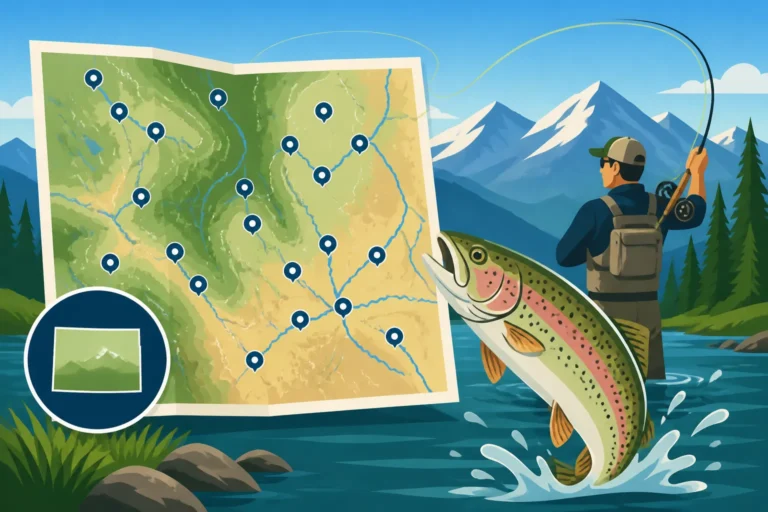
- Respect Private Property: Always be aware of property lines. If a section of river flows through private land, ensure you have permission to access it or stick to public access points. Check Colorado Parks and Wildlife (CPW) maps or online resources like the "Using Colorado's Fishing Atlas to Plan a Trip" to identify public access.
- Know the Regulations: Be familiar with all local and state fishing regulations, including bag limits (even if you're catch-and-release), bait restrictions, and special Gold Medal Water rules. Understanding "Colorado Gold Medal Water Regulations Explained" is particularly important for many of the state's best freestone rivers.
By adhering to these ethical guidelines, we contribute to a positive angling community and help preserve Colorado's incredible dry fly fishing opportunities for generations to come. This mindfulness is as much a part of the dry fly experience as the cast itself.
Disclaimer
The information provided in this guide is for general informational purposes only and is not intended as legal advice or a substitute for official regulations. Fishing regulations in Colorado can change frequently. Always consult the most current Colorado Parks and Wildlife (CPW) fishing regulations brochure and local signage before fishing any waters.