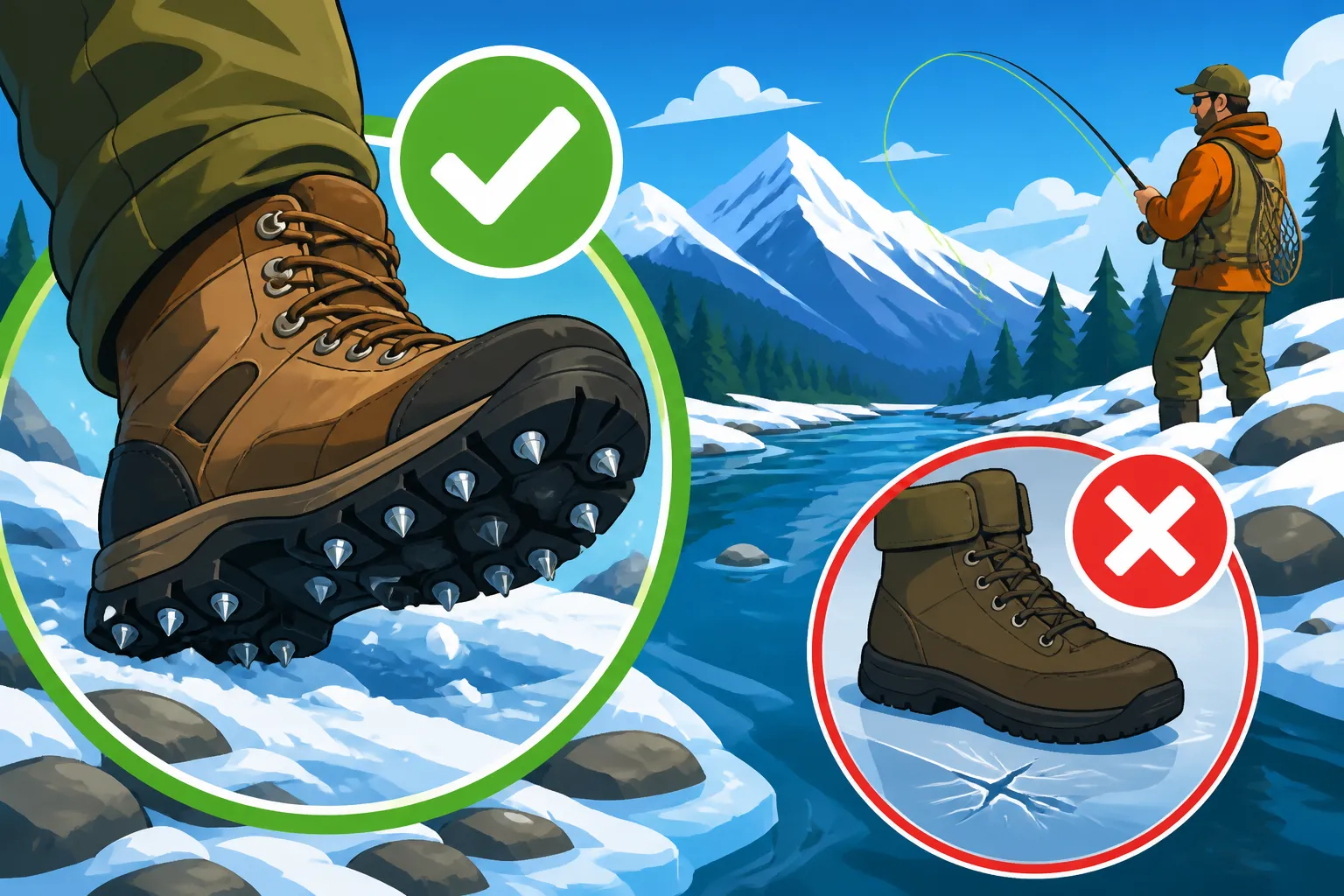
Do You Need Studded Boots for Icy River Banks?
Stepping out onto a Colorado riverbank in winter is a magical experience, but it also comes with a unique set of challenges. One minute you're admiring the frosty beauty, the next your feet are slipping out from under you on a patch of unseen ice, sending your heart racing and potentially ruining your day, or worse. This guide is all about navigating those treacherous conditions, specifically diving into whether studded boots are truly a necessity for staying upright and safe on icy Colorado river banks.
The Treacherous Reality of Winter River Banks in Colorado
Winter fishing in Colorado offers unparalleled beauty and often some fantastic solitude, but let's be real: those stunning, snow-covered riverbanks are often hiding some serious hazards. It's not just a little slippery; it can be downright dangerous. Many anglers, myself included, have had more than a few close calls that serve as stark reminders of winter's unforgiving nature.
Why Icy Banks Are So Dangerous
It's easy to picture a solid sheet of ice and think, "Okay, I know what I'm dealing with." But Colorado's riverbanks in winter are far more complex and insidious. You might encounter frozen mud that looks like solid ground but offers zero traction, or thin layers of ice hidden beneath a dusting of fresh snow, creating perfect slip traps. Imagine walking along a bank of the South Platte River near Deckers, where the ground can be uneven, rocky, and then suddenly, without warning, you step onto a slick, frozen patch. Your momentum carries you, and before you know it, your feet are flying, and you're heading for a hard landing or, even scarier, a tumble into the frigid water.
Beyond the visible ice, many riverbanks have steep, uneven grades that become exponentially more hazardous when covered in any form of frozen precipitation. Trying to clamber down a snowy bank to reach a prime fishing spot, only to find the bottom section is a sheet of ice, can turn a simple approach into a full-blown survival maneuver. The risk of sprains, fractures, or even hypothermia if you take an unexpected plunge is very real. This isn't just about comfort; it's about personal safety, especially if you're out fishing alone on a remote stretch of water. It's why preparation for Winter Fishing on Colorado's Tailwaters means more than just tying flies.
Beyond the Obvious: Hidden Hazards
Sometimes, the biggest dangers aren't the ones you can clearly see. "Black ice" isn't just a road hazard; it's a common occurrence on shaded riverbanks, rocks, and even submerged logs near the water's edge. This thin, transparent layer of ice blends in perfectly with its surroundings, making it virtually invisible until your foot finds it. One minute you're confident in your footing, the next you're surprised by an instant loss of control.
Another hidden hazard is the ever-present slush that forms where snow meets the slightly warmer river water. This can create a tricky, unstable surface that might feel soft and forgiving, but can conceal a dangerously slippery layer of ice or submerged obstacles that can trip you up. And let's not forget how quickly conditions can change. A sunny morning might melt some snow, but as soon as the sun dips behind a ridge or clouds roll in, that melted water can refreeze, turning previously safe pathways into treacherous slides. This constant variability means you can never let your guard down, and you need reliable gear to adapt to these shifting conditions. It’s part of the broader understanding of Colorado Fishing Seasons Month by Month.
Understanding Studded Boots and Their Purpose
Given the realities of winter riverbanks, it's no wonder that many anglers turn to specialized footwear. Studded boots, or more accurately, wading boots equipped with studs, are a popular choice for good reason. They are designed to give you a fighting chance against the slickest surfaces.
What Are Studded Boots and How Do They Work?
When we talk about "studded boots" for fishing, we're typically referring to wading boots that have small, often carbide or hardened steel, studs threaded into the sole. These studs are essentially tiny spikes that bite into ice, packed snow, and even slippery rocks, providing an incredible amount of grip that traditional rubber or felt soles simply can't match in icy conditions. Think of them as miniature ice picks on the bottom of your feet. Some boots come with factory-installed studs, while others have soles designed to accept aftermarket screw-in studs, giving you flexibility to customize your traction as needed. Brands like Patagonia and Simms offer options for both integrated and interchangeable stud systems.
The principle behind them is simple: increase the friction coefficient by providing sharp points that penetrate the slippery surface. On bare ice, this penetration is crucial. On frozen mud or slush, the studs dig in, preventing lateral slips that can lead to falls. They excel in environments where solid, unyielding traction is paramount for safety and confidence. They’re a specialized piece of equipment, much like understanding Best Waders for Cold Tailwater Fishing for different water temperatures.
When Studs Shine: Ideal Conditions for Use
Studs truly come into their own when ice is a primary concern. If you're planning to go Ice Fishing in Colorado, Getting Started and need to walk across a frozen lake, or if you're navigating the banks of a tailwater river like the Blue River in Silverthorne during the dead of winter, where ice forms constantly along the edges, studded boots are invaluable. They offer a level of security that can transform a nerve-wracking experience into a much more enjoyable one.
Consider an early morning trip in January to the Arkansas River near Salida. The air is crisp, the water is clear, but the rocks and shoreline are coated in a thin, almost invisible layer of ice from the overnight freeze. Without studs, every step is a gamble. With them, you can move with far greater confidence, focusing on your cast rather than your footing. They also shine when wading through areas with slick, algae-covered rocks, as the studs can pierce through the slime to find purchase. For anyone serious about winter fly fishing or accessing high-country lakes early or late in the season when shores might still be icy, the answer to "Do you need studded boots for icy river banks?" is often a resounding yes. You can find a wide range of studded wading boots and aftermarket studs by searching on Amazon, allowing you to compare options and read reviews from other anglers.
Alternatives and Considerations: When Studs Aren't the Only Answer
While studded boots are fantastic in icy conditions, they aren't always the only answer, nor are they always the best answer for every single situation you might encounter on Colorado's diverse waters. It's worth exploring other options and understanding their pros and cons.
Other Traction Devices
Sometimes, a full studded boot isn't necessary, or you might need different types of traction for varied terrain. Here's a look at some common alternatives:
| Traction Device | Description | Ideal Use Cases | Pros | Cons |
|---|---|---|---|---|
| Screw-in Wading Studs | Small metal studs that screw into existing felt or rubber wading boot soles. | Icy riverbanks, slick rocks, moderate ice. | Customizable, less aggressive than full cleats, can be removed. | Can wear down rubber soles, may need frequent replacement. |
| Strap-on Ice Spikes/Cleats | Rubber harnesses with metal spikes that strap over existing footwear. | Walking on packed snow, light ice, short distances, versatile. | Portable, can be added/removed easily, fits various boots. | Can shift on foot, less secure than integrated studs, not ideal for deep wading. |
| Felt-Sole Wading Boots | Soles made of compressed felt material. | Algae-covered rocks, slick river bottoms without ice. | Excellent grip on wet, slimy rocks. | TERRIBLE on ice and snow, can transfer aquatic invasives (some areas ban them). |
| Rubber-Sole Wading Boots | Standard Vibram or similar rubber compound soles with aggressive treads. | General hiking, dry land, some wet rocks. | Durable, good for varied terrain, don't pick up invasives easily. | Limited grip on pure ice or very slick algae. |
For example, if you're primarily fishing a river known for its incredibly slick, algae-covered rocks but very little ice, traditional felt soles might give you better purchase than studs, which can sometimes slide over pure slime. However, it's critical to note that felt soles are often restricted or banned in certain Colorado waters due to the risk of spreading aquatic invasive species. Always check the Colorado Fishing Regulations Every Angler Should Know before using felt-soled boots.
Strap-on ice cleats, often available on Amazon from brands like Kahtoola or Yaktrax, are excellent for walking to and from the river on icy trails or across packed snow. They're quick to put on and take off, making them a versatile option for mixed conditions where you're not always in the water. However, for serious wading, they can be less secure and less effective than integrated studs.
The "No-Studs" Approach: When You Might Skip Them
There are definitely times and places where studs might be overkill or even detrimental. If you're fishing a tailwater during a mild winter spell with very little ice and you're primarily sticking to sandy or gravelly banks, studs might just be adding unnecessary weight and noise. On long hikes to remote high-country lakes in the summer or fall, studded boots would be uncomfortable and offer no real benefit on dirt trails. In these scenarios, a good pair of rubber-soled wading boots with aggressive tread for hiking might be all you need.
Another consideration is the type of river bottom. If you're fishing a sandy or fine gravel bottom, studs don't have much to bite into and can actually make your footing less stable by sinking in and then sliding. They also aren't generally necessary when fishing from a boat or raft, where your primary concern is stability within the vessel, not on the bank. If you know you'll be on Colorado's Gold Medal Water Regulations Explained with catch-and-release rules and sensitive aquatic environments, sometimes minimizing impact with smooth-soled boots can be a consideration, though safety always comes first.
Safety First: General Winter Wading Precautions
Regardless of your footwear choice, general safety precautions are paramount when venturing out in winter.
- Always Carry a Wading Staff: This is non-negotiable for winter wading. A sturdy wading staff provides a third point of contact, helping you test footing, maintain balance, and even break a fall. It's your best friend against unexpected slips.
- Never Fish Alone: If possible, always fish with a buddy during winter. If you take a fall or encounter an emergency, having someone there to assist can be life-saving.
- Layer Up: Hypothermia is a serious risk if you fall into cold water. Wear appropriate layers, including a waterproof outer shell, and consider packing a change of clothes in a dry bag, just in case. Read more about Ice Fishing Gear for Colorado Reservoirs as many of those principles apply.
- Know Your Limits: Don't wade deeper or faster than you're comfortable with, especially when visibility is poor or the current is strong. If a section of the river looks too risky, find an alternative route or fishing spot. Understanding How to Stay Safe Wading Fast Colorado Currents is crucial.
- Check Conditions Religiously: Before heading out, check weather forecasts, river flows, and recent angler reports. What was safe yesterday might be a frozen nightmare today.
- Emergency Preparedness: Carry a small first-aid kit, a fully charged phone, and know where the nearest emergency services are. Understanding What to Do If You Fall In While Wading can make a huge difference.
Making the Decision: Do You Really Need Them?
So, after all that, should you invest in studded boots for your Colorado fishing adventures? The honest answer is: it depends on when and where you plan to fish.
Assessing Your Fishing Spot and Conditions
The need for studded boots hinges heavily on the specific conditions you anticipate. If your winter fishing involves hiking icy trails to the Fryingpan River's "Toilet Bowl," navigating snow-covered banks along the Dream Stream, or gingerly stepping across frozen sections of the Taylor River below the dam, then yes, studded boots or robust screw-in studs are highly recommended. They provide a level of security that rubber or felt soles simply cannot on pure ice. If you're specifically targeting certain areas known for their winter access challenges, like some stretches along the Colorado River near Kremmling, then studs become a critical safety tool.
However, if your winter fishing is limited to, say, the Urban Fishing Ponds in the Denver Metro after a light snowfall, where access is paved or well-maintained, and you don't plan on wading much, you might get by with regular waterproof hiking boots and perhaps some strap-on microspikes for peace of mind. Always err on the side of caution. If there's any doubt about icy conditions, having studs on your boots is a smart move. They're a relatively small investment for the significant boost in safety and confidence they provide. Checking the Colorado Parks and Wildlife (CPW) website for local conditions and stocking reports can also give you clues about the likely bank conditions. Consider Reading Colorado's Fishing Regulations Brochure for localized information.
Balancing Cost vs. Safety
Let's talk about the practical side: cost. Studded wading boots can be a bit more expensive than their non-studded counterparts, and aftermarket studs add to the initial investment. You might find a good selection of options and pricing by searching for "studded wading boots" on Amazon or visiting your local fly shop. However, weigh this against the potential cost of an injury – medical bills, lost time at work, and the sheer misery of a bad fall. From an economic standpoint alone, the cost of studded boots pales in comparison to the expenses associated with a broken bone or severe sprain.
More importantly, consider the peace of mind. Knowing you have reliable traction allows you to focus on the fishing, enjoy the serene winter landscape, and move with confidence. It transforms a potentially stressful outing into a genuinely relaxing and rewarding experience. For dedicated winter anglers, studs aren't a luxury; they're a fundamental piece of safety equipment, just as essential as your waders or a warm jacket. They allow you to access incredible winter fishing opportunities that would otherwise be too risky, opening up entirely new possibilities on the water. Ultimately, while not every fishing trip in Colorado requires them, if there's any chance of encountering ice on the banks, studs are a wise and often necessary investment for a safer, more enjoyable day on the water.
Disclaimer
This article is for general informational purposes only and does not constitute professional advice. Laws, prices and regulations vary by location and change over time. Consult a qualified professional for guidance on your specific situation.