Colorado Penalties for Keeping Over-Limit Trout
It’s a scenario that can make any angler's heart skip a beat: you’ve had an incredible day on one of Colorado’s stunning rivers or high-country lakes, the trout are biting, and your cooler feels satisfyingly heavy. But then, a nagging doubt creeps in—have you kept too many? The fear of unknowingly violating fishing limits and facing stiff penalties from Colorado Parks and Wildlife (CPW) can easily overshadow the joy of a successful trip. This comprehensive guide is here to shed light on the exact Colorado penalties for keeping over-limit trout, help you understand the rules, and, most importantly, empower you to confidently stay within legal boundaries.
The Foundation of Fair Play: Why Trout Limits Exist
Before we dive into the nitty-gritty of penalties, it’s crucial to understand why these limits are in place. Many anglers new to the state, or even long-time residents, sometimes view regulations as arbitrary hurdles designed to make fishing more complicated. But in reality, Colorado's bag and possession limits are carefully crafted tools essential for conservation and maintaining healthy fish populations.
Protecting Fragile Ecosystems
Colorado's pristine mountain streams and high-alpine lakes are incredibly special, but they are also delicate ecosystems. Trout populations, especially native species like the Greenback Cutthroat, can be vulnerable to overharvesting. Limits ensure that enough fish remain to reproduce, sustain the food web, and provide future generations with the same incredible fishing opportunities we enjoy today. It’s a balancing act: allowing anglers to enjoy their catch while safeguarding the future of the resource. Without these limits, even a few highly successful anglers could quickly deplete a small, isolated trout population, leading to irreversible damage.
Daily vs. Possession Limits: A Critical Distinction
One of the most common sources of confusion for anglers revolves around the difference between daily bag limits and possession limits. It’s easy to mix them up, and an honest mistake here can still lead to significant penalties.
- Daily Bag Limit: This is the maximum number of fish you can legally harvest and keep in one day, from midnight to midnight. So, if the daily limit for rainbow trout is four, you can only keep four rainbows during that specific 24-hour period, regardless of how many you might release. This limit applies to the fish in your immediate possession while actively fishing or heading home from your fishing trip.
- Possession Limit: This refers to the total number of fish you can have in your possession at any given time, whether they are fresh, frozen, cooked, or otherwise processed. This includes fish at your campsite, in your vehicle, at your home, or anywhere else. The possession limit is often higher than the daily bag limit, allowing you to accumulate fish over multiple days of fishing, provided you stay within the daily limit each day you fish.
For example, if the daily limit is 4 trout and the possession limit is 8, you could fish on Monday and keep 4 trout. Then, on Tuesday, you could keep another 4 trout, bringing your total possession to 8. However, if you already have 8 trout in your freezer from previous trips, you cannot legally keep any more until some of those are consumed or gifted away. Understanding this nuance is absolutely critical to avoid an over-limit violation. You can learn more about these specific distinctions in our guide on Possession Limits vs Daily Limits in Colorado.
Species-Specific Rules and Gold Medal Waters
Colorado's regulations aren't just a blanket rule for all trout. Many waters, especially our renowned Gold Medal Waters, have very specific rules. For instance, you might find a stream where only artificial flies and lures with barbless hooks are allowed, and all brown trout must be immediately released. Other waters might have length restrictions, like a 14-inch minimum or maximum, for certain species.
Take a moment to consider the Greenback Cutthroat Trout, Colorado's state fish. This native subspecies is undergoing a significant recovery effort, and in many areas, specific regulations are in place to protect them, often requiring immediate release. Misidentifying a native cutthroat and keeping it can lead to very serious consequences, as these are often considered endangered or threatened species. It’s essential to be familiar with Colorado's Native Cutthroat Trout Subspecies and the specific regulations for the water you're fishing.
The best way to stay informed is to always consult the current Colorado Fishing Regulations brochure, available online through the Colorado Parks and Wildlife (CPW) website, or as a physical copy at any license vendor. You can even find waterproof versions for sale on Amazon, which are incredibly handy to keep in your tackle box or fishing vest for quick reference on the water. This brochure is your Bible for every trip. For a deeper dive into overall rules, check out Colorado Fishing Regulations Every Angler Should Know.
The Harsh Reality: Penalties for Over-Limit Trout in Colorado
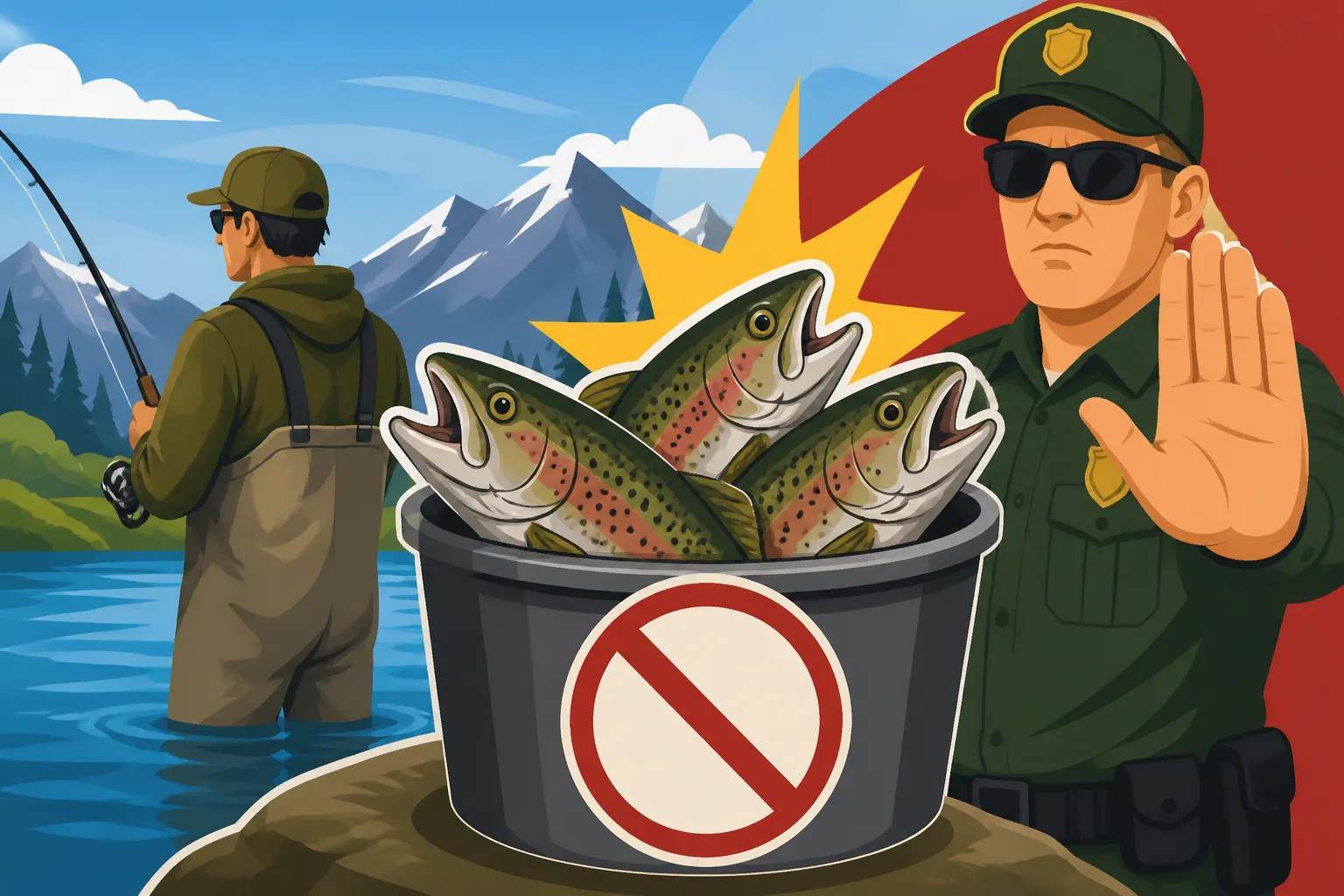
Let's face it, nobody wants to get a ticket while enjoying the great outdoors. But when it comes to keeping over-limit trout, the consequences in Colorado can be quite severe, extending far beyond a simple slap on the wrist. These aren't just minor infractions; they are violations of state law that CPW officers take very seriously.
Fines and Surcharges: The Immediate Financial Hit
The most immediate and common consequence of an over-limit trout violation is a fine. Colorado classifies most wildlife violations, including exceeding bag limits, as "misdemeanor petty offenses" or "misdemeanor offenses" under the Wildlife Act. While the exact fine can vary depending on the species, the number of fish over the limit, and the specific circumstances (e.g., if it's a protected species or a repeat offense), expect a base fine of at least a few hundred dollars.
For instance, a general violation of the bag or possession limit can result in a fine of around $70. However, this is just the base fine. On top of this, there’s a mandatory surcharge, often around $17. But here’s where it gets more painful: Colorado law often includes additional penalties per fish over the limit. If you're caught with six trout when the limit is four, you're looking at the base fine plus potentially significant additional fines for those two extra fish. These per-fish penalties can add up quickly, sometimes reaching $35 per fish or more, especially if it’s a specific protected species or a particularly desirable fish from a trophy water.
Furthermore, you might also be subject to court costs and other administrative fees, even if you simply pay the ticket without appearing in court. These financial penalties are designed to be a significant deterrent, reflecting the value of the wildlife resource.
License Suspension: A Major Blow to Your Fishing Privileges
Perhaps one of the most impactful consequences for a dedicated angler is the potential suspension of your fishing privileges. Colorado uses a "point" system for wildlife violations, similar to a driving record. Each violation carries a certain number of points. Accrue too many points within a five-year period, and you could face a suspension of your fishing license and potentially all other hunting and trapping licenses.
For an over-limit violation, depending on the severity and species involved, you could accrue anywhere from 5 to 20 points. Accumulating 20 points within five years can lead to a mandatory suspension of your Colorado fishing license. This suspension isn't just for a few months; it can last anywhere from one year to a lifetime, effectively barring you from legally enjoying Colorado's waters. Imagine being unable to fish for years because of a single mistake. This is why knowing your limits and being vigilant is so crucial. A suspension means you cannot even buy a Colorado Fishing License Guide for Residents and Nonresidents for that period.
Potential for Jail Time and Criminal Record Implications
While less common for a first-time, minor over-limit offense, serious or repeat violations, especially those involving protected species or gross negligence, can escalate to more severe charges. In Colorado, some wildlife offenses are considered misdemeanors, which can carry potential jail time. While an officer might have discretion for a minor infraction, a flagrant violation could lead to time behind bars.
Even if you avoid jail, a misdemeanor conviction goes on your criminal record. This can have far-reaching implications, affecting everything from employment opportunities to background checks for housing or professional licenses. It’s a stark reminder that fishing regulations are indeed laws, and breaking them carries serious legal weight.
Forfeiture of Property and Restitution
In some cases, especially with larger or more egregious violations, a CPW officer has the authority to seize any illegally taken fish. More severely, they may also seize fishing equipment, vehicles, or even boats used in the commission of the crime. Imagine losing your favorite rod and reel, or even your boat, over an over-limit violation.
Additionally, courts can order "restitution" to the state. This means you might be required to pay the fair market value of the illegally taken wildlife. For certain species, this restitution can amount to thousands of dollars, far exceeding the initial fines. This is a powerful mechanism for the state to recover the value of its public trust resources.
Here’s a simplified breakdown of typical penalties for wildlife violations, including over-limit trout:
| Violation Type | Base Fine (Approx.) | Points Assessed (Range) | Other Potential Penalties |
|---|---|---|---|
| General Bag/Possession Limit | $70 – $100 | 5 – 10 | Per-fish penalties ($35+ each), court costs |
| Taking Protected/Threatened Species | $150 – $500+ | 10 – 20+ | Significant per-fish penalties, restitution, jail time |
| Repeated Offenses | Higher | Accumulative | Mandatory license suspension, increased fines, jail |
| Illegal Methods/Gross Negligence | $100 – $1,000+ | 15 – 20+ | Forfeiture of gear, jail time, substantial restitution |
Note: These figures are approximate and subject to change by Colorado state law. Always refer to current CPW regulations for precise details.
It's clear that the penalties for keeping over-limit trout in Colorado are substantial and designed to protect the state's precious wildlife resources. It's not just about a ticket; it's about potentially losing your ability to fish, facing significant financial burdens, and even impacting your legal record.
Navigating the Waters: Practical Steps to Avoid Over-Limit Violations
Given the serious consequences, preventing over-limit violations is paramount. It’s often not malicious intent but rather confusion, oversight, or lack of preparation that leads to anglers making mistakes. Here are some actionable steps to ensure you stay on the right side of the law and truly enjoy your Colorado fishing experience.
Know Before You Go: Research is Your Best Friend
The single most effective way to avoid violations is to thoroughly research the regulations for your specific fishing destination before you even cast a line. Colorado's regulations can vary significantly from one body of water to another. A common mistake is assuming that statewide general regulations apply everywhere, but many rivers and lakes have special restrictions.
- CPW Brochure and Website: Always start with the official Colorado Fishing Regulations brochure. Download the PDF to your phone or tablet, or grab a physical copy. The CPW website also has an interactive Colorado Fishing Atlas that provides detailed information for specific locations. Make it a routine to check the regulations a day or two before your trip, as emergency closures or special rules can sometimes be implemented.
- Signage at Access Points: Pay attention to any signs posted at trailheads, boat ramps, or other access points. These signs often highlight specific regulations for that particular stretch of water, such as catch-and-release only sections or bait restrictions.
- Local Fly Shops/Outfitters: These are invaluable resources. The staff at local shops like Angler’s Covey in Colorado Springs or the Flyfisher in Denver are usually incredibly knowledgeable about local rules and recent changes. Don't hesitate to ask questions.
Tools for Accurate Measurement and Counting
It’s easy to lose track when you’re having fun, especially if you’re catching and releasing many fish while keeping a few. Having the right tools on hand can prevent accidental overages.
- Measuring Device: Carry a reliable measuring tape or ruler. Many fishing nets even have integrated rulers. Always measure fish accurately, especially in waters with minimum or maximum length restrictions. Remember that a fish's length is typically measured from the tip of the nose to the tip of the tail, with the tail squeezed together. You can find durable, waterproof measuring tapes on Amazon that are perfect for fishing.
- Fish Counter: For species where you plan to keep a limit, a simple clicker fish counter (also readily available on Amazon) can be a lifesaver. This helps you keep an accurate tally of your kept fish, especially if you’re fishing for multiple species with different limits or releasing some catches.
- Digital Scale: While not strictly for limits, a small digital scale can help you determine if a fish is worth keeping if you’re aiming for larger specimens, ensuring you don’t keep smaller fish and then accidentally exceed your limit later with bigger ones. Amazon offers many compact, waterproof options.
Proper Storage and Identification of Your Catch
Once you decide to keep a fish, how you handle and store it can also play a role in avoiding violations, particularly when fishing with a group or targeting different species.
- Separate Your Catch: If fishing with a partner, keep your catches separate and clearly identifiable. This prevents confusion about whose fish is whose and helps you both stay within individual daily and possession limits.
- Immediate Identification: Before placing a fish in your cooler or on a stringer, ensure you’ve correctly identified its species. As mentioned, some trout species like native cutthroats have stricter regulations. Knowing Colorado's Trout Species, A Field Guide is fundamental. What looks like a rainbow to an untrained eye could be a cutbow (a rainbow-cutthroat hybrid) or even a pure cutthroat, and the rules for each might differ. This can be especially tricky when trying to tell How to Tell a Cutthroat From a Rainbow Trout.
- Don’t Mix Processed Fish: If you’ve been fishing for several days and have fish from previous daily limits already cleaned and perhaps frozen, do not mix them with your fresh catch unless you are absolutely certain you are still within your overall possession limit. It’s better to keep them in separate, labeled bags or coolers, especially if transporting them. Having a multi-compartment cooler from a brand like Yeti or a more budget-friendly option from Amazon can be very useful here.
Understanding "When to Stop Fishing" and Group Scenarios
- Your Limit is YOUR Limit: Once you have harvested your daily limit of a particular species, you must stop fishing for that species for the rest of the day. You cannot continue to fish for them and release subsequent catches, as the act of fishing with intent to harvest (even if releasing) when already at your limit is a violation in many circumstances. This often surprises anglers but is a key rule.
- Group Limits: If you are fishing with a group, each licensed angler is entitled to their own daily and possession limit. However, you cannot "pool" your limits. For example, if you catch your limit of four trout, you can’t then contribute to your friend’s limit if they haven’t caught theirs yet by catching more fish for them. Each fish kept must be attributed to the person who caught it, and they must be within their personal limit. This also applies to children who do not need a license but are still subject to daily and possession limits. For details on age requirements, see Do Kids Need a Fishing License in Colorado?.
By diligently following these practices, you can dramatically reduce your risk of facing Colorado penalties for keeping over-limit trout and ensure your time on the water remains stress-free and enjoyable.
When Mistakes Happen: Dealing with a Wildlife Officer
Despite your best efforts, sometimes things go awry. Maybe you miscounted, misidentified a fish, or simply made an honest error. Encountering a Colorado Parks and Wildlife officer when you suspect you might be in violation can be an intimidating experience. However, how you handle this interaction can significantly influence the outcome.
Remain Calm and Cooperative
The most important advice is to remain calm and cooperative. CPW officers are law enforcement professionals, and they are there to enforce state wildlife laws. Becoming defensive, argumentative, or aggressive will only escalate the situation and can lead to additional charges, such as obstructing an officer.
- Be Polite: Greet the officer respectfully.
- Follow Instructions: If an officer asks you to stop fishing, show your license, or open your cooler, comply without argument. Remember, CPW officers have the authority to inspect your catch, fishing equipment, and license. If you're wondering how to properly display your license, our guide on Showing Your Colorado Fishing License in the Field offers helpful tips.
- Hands Visible: Keep your hands in plain sight and avoid sudden movements.
Honesty vs. Self-Incrimination: A Fine Line
This is where it gets tricky. While you should always be cooperative, you also have constitutional rights.
- Answer Factual Questions: Be prepared to show your Colorado Fishing License Guide for Residents and Nonresidents and answer questions about where you were fishing and what you were doing.
- Be Truthful About Your Catch: If asked about your catch, be honest about what you have. Trying to hide fish or lie will likely make the situation much worse if discovered.
- You Have the Right to Remain Silent: If an officer starts asking questions that feel accusatory or could lead to you admitting a crime, remember you have the right to remain silent. You can politely state, "Officer, I would prefer not to answer any further questions without legal counsel." This is not an admission of guilt, and it protects your rights. Do not make false statements, but you don't have to provide information that incriminates yourself.
Officer Discretion: Not a Guarantee, But Possible
CPW officers, like all law enforcement, often have a degree of discretion. For a minor, clearly unintentional violation, especially for a first-time offender who is genuinely remorseful and cooperative, an officer might issue a warning rather than a full citation. However, this is entirely at their discretion and should never be expected. Factors influencing discretion include:
- Your Demeanor: Being polite, cooperative, and respectful goes a long way.
- Severity of the Violation: A single fish over the limit is generally viewed differently than multiple fish or a protected species.
- Your History: A clean record with no previous wildlife violations is favorable.
- Your Explanations: If you can offer a plausible, honest explanation for an accidental oversight (e.g., "I honestly miscounted; I thought I was at the limit"), it might be considered, but again, don't expect it to negate the violation.
What to Do If You Receive a Citation
If you are issued a citation, accept it calmly. Do not argue with the officer about the ticket itself at the scene. You will have an opportunity to address the charges in court. The citation will have instructions on how to pay the fine or how to appear in court if you wish to contest the ticket.
- Read the Citation Carefully: Understand the charges, the fine amount, and the court date (if applicable).
- Consider Your Options: You can often pay the fine by mail or online, which typically closes the case but results in a conviction on your record and potential points against your license. If you believe the citation was issued in error or the circumstances warrant an explanation, you can choose to appear in court.
- Seek Legal Advice: For serious violations or if you are concerned about license suspension or a criminal record, it is always wise to consult with an attorney who specializes in wildlife law. They can advise you on the best course of action.
Ultimately, preventing over-limit trout violations comes down to diligent preparation and responsible angling. But if you find yourself in a challenging situation with a CPW officer, remember that respectful cooperation, coupled with an awareness of your rights, is always the best approach.
Disclaimer
The information provided in this guide is for general informational purposes only and does not constitute legal advice. Fishing regulations and penalties are subject to change and may vary by specific location and species. Always consult the official Colorado Parks and Wildlife (CPW) regulations and consider seeking legal counsel for specific situations.