Showing Your Colorado Fishing License in the Field
You've spent good money and time getting your Colorado fishing license, carefully planning your trip, and maybe even splurged on some new gear. But then, as you're enjoying the serenity of a mountain stream or the vastness of a reservoir, a Colorado Parks and Wildlife (CPW) officer or game warden approaches. It's a moment that can make even seasoned anglers a little nervous, especially if you're not entirely sure what they need to see or if your digital license is truly up to snuff. This guide is here to demystify the process, walking you through everything you need to know about legally showing your fishing license in the field, so you can fish with confidence and focus on that next bite.
The Legal Requirement to Show Your License
Let's get straight to it: when you're fishing in Colorado, you are legally required to possess a valid fishing license (unless exempt) and to present it upon request to any authorized CPW officer or other law enforcement personnel. This isn't just a suggestion; it's a critical part of upholding the state's wildlife management laws and ensuring everyone is contributing to the conservation efforts that keep Colorado's fisheries healthy.
Why Game Wardens Ask for Licenses
Game wardens, often referred to as Wildlife Officers, aren't out there to ruin your day. Their primary role is to protect Colorado's natural resources and ensure that everyone is playing by the rules. When they ask to see your license, they're simply performing a routine check to ensure compliance. This helps them confirm that you've purchased the necessary permits, which in turn fund vital conservation programs, fish stocking efforts, and habitat improvements across the state. Think of it as a quality control check for the health of our outdoor spaces. They might also be checking for compliance with specific regulations like bag limits or bait restrictions, and having your license readily available is the first step in demonstrating you're a responsible angler.
What Happens If You Can't Produce It Immediately
Imagine this: you're knee-deep in the Arkansas River, a beautiful brown trout just took your fly, and suddenly a game warden is on the bank asking for your license. You pat your pockets, search your vest, and realize you left your wallet in the truck, or perhaps your phone battery just died. In these situations, the immediate inability to produce your license doesn't automatically mean you're in deep trouble. Often, officers are reasonable. They might ask you to retrieve it from your vehicle, or if you truly can't produce it, they might take down your information and verify it later. However, repeated inability or refusal to show a license can lead to citations, which can range from a warning to significant fines. It's always best to be prepared and have it on you, as the convenience of proving your compliance upfront can save you a lot of hassle and potential worry. To avoid these uncomfortable scenarios, understanding the rules, like those outlined in the comprehensive guide on Colorado Fishing License Guide for Residents and Nonresidents, is crucial.
Physical vs. Digital Licenses in Colorado
The world has gone digital, and Colorado's fishing licenses have largely followed suit. But what does that mean for you on the water? The good news is that Colorado Parks and Wildlife generally accepts both physical and digital representations of your license. However, each option comes with its own set of considerations you should be aware of.
Carrying Your Physical License
For many traditional anglers, the peace of mind that comes with a physical, printed license is unmatched. Whether it's the official plastic card issued by CPW or a printout from the CPW website, having a tangible copy means you're not reliant on battery life or cell service. When you buy your license in person at a licensed vendor like a local sporting goods store or a Walmart, you'll typically walk away with a printed copy right then and there. It's a good idea to protect this precious piece of paper; many anglers use a small, waterproof wallet or a lanyard pouch that can be easily tucked into a fishing vest pocket or around their neck. You can find durable, waterproof cases on online retailers like Amazon, ensuring your license stays dry and legible through splashes, rain, or an accidental dip in the river. This method avoids any worries about technology failing you at a critical moment.
Using Your Smartphone for a Digital License
In today's connected world, carrying your license on your smartphone is incredibly convenient for most people. Colorado Parks and Wildlife explicitly states that a digital copy displayed on your phone is generally acceptable as proof of a valid license. This means you can keep a PDF or a screenshot of your license on your device. The official My Outdoors Colorado app is an excellent tool for this, allowing you to access your licenses directly. When an officer asks to see it, simply pull out your phone and display it. This is a popular option, especially if you've purchased your license online at CPWShop.com. However, remember the caveat: while generally accepted, you must be able to display it clearly. If your screen is cracked, too dim, or if your phone decides to freeze up, it could cause issues. For those wondering about the specifics, our article on Is a Digital Colorado Fishing License on Your Phone Accepted? goes into more detail.
Situations Where Digital Might Be Tricky
While digital licenses are widely accepted, there are a few scenarios where relying solely on your phone could become a headache. The most common culprit is, predictably, battery life. A dead phone means no digital license display, and in remote areas, finding a charging station isn't an option. Another challenge is cell service. While the My Outdoors Colorado app can sometimes store licenses offline, if you're deep in the wilderness without service, you might struggle to access proof if you don't have it saved properly. Furthermore, some officers might prefer to see a physically printed copy if the digital display is hard to read or if there are any doubts about its authenticity. It’s always a good backup plan to have a printed copy tucked away, even if you primarily rely on your phone. Consider bringing a portable power bank, easily found on Amazon, especially if you plan extended trips in areas with limited connectivity.
Acceptable Forms of Proof
Beyond just your basic fishing license, there are other documents and stamps that Colorado Parks and Wildlife officers may need to see to confirm your full compliance with fishing regulations. It's not just about proving you paid; it's about proving you're legally equipped for how and where you're fishing.
Beyond the Basic License: Habitat Stamp, Second-Rod Stamp
When an officer approaches, they're not just looking for your fundamental fishing license. Many anglers in Colorado also need additional stamps depending on their age, residency, and fishing practices. The most common is the Habitat Stamp. Generally, anglers aged 18 to 64 need to purchase a Habitat Stamp annually. This stamp isn't just an extra fee; it's a crucial component that directly funds the preservation and improvement of wildlife habitats across the state, benefiting countless species, including the fish you're trying to catch.
Then there's the Second-Rod Stamp. If you plan on fishing with two rods concurrently – a common practice for many lake and reservoir anglers trying to cover more water or target different species – you absolutely need this stamp. Without it, using a second rod is illegal and can result in a citation. These stamps are usually printed directly on your physical license or digitally linked to it. When an officer checks your license, they'll verify these stamps as well, so ensure they are clearly visible and valid. Understanding Colorado's Habitat Stamp, Explained and Colorado's Second-Rod Stamp and Who Needs One can help you stay compliant.
What Counts as Valid Identification
When presenting your fishing license, particularly if it's a digital copy or a printout that doesn't include your photo, officers will almost certainly ask for a form of valid identification. This is to ensure that the license belongs to you and that you are the person legally authorized to use it. Acceptable forms of ID typically include:
- A state-issued driver's license: This is the most common and widely accepted form of identification.
- A state-issued ID card: For those who don't drive, a state ID serves the same purpose.
- A passport: Especially relevant for non-residents or international visitors.
- Military ID: For active duty personnel or veterans.
The key is that the ID must be current and clearly show your name, photo, and date of birth, matching the information on your fishing license. Don't rely on less formal IDs like a work badge or student ID alone. Officers need official documentation to confirm your identity and residency status, which can affect the validity and cost of your license, as detailed in Colorado Fishing License Costs Explained. Always carry a primary form of government-issued photo ID along with your license.
Encountering a Colorado Parks and Wildlife Officer
Coming across a game warden can be a surprising moment, especially if you're deep in nature enjoying some quiet time. But there's no need for alarm. These interactions are a routine part of ensuring fair play and conservation. Knowing what to expect and how to respond can make the encounter smooth and stress-free.
What to Expect During a Stop
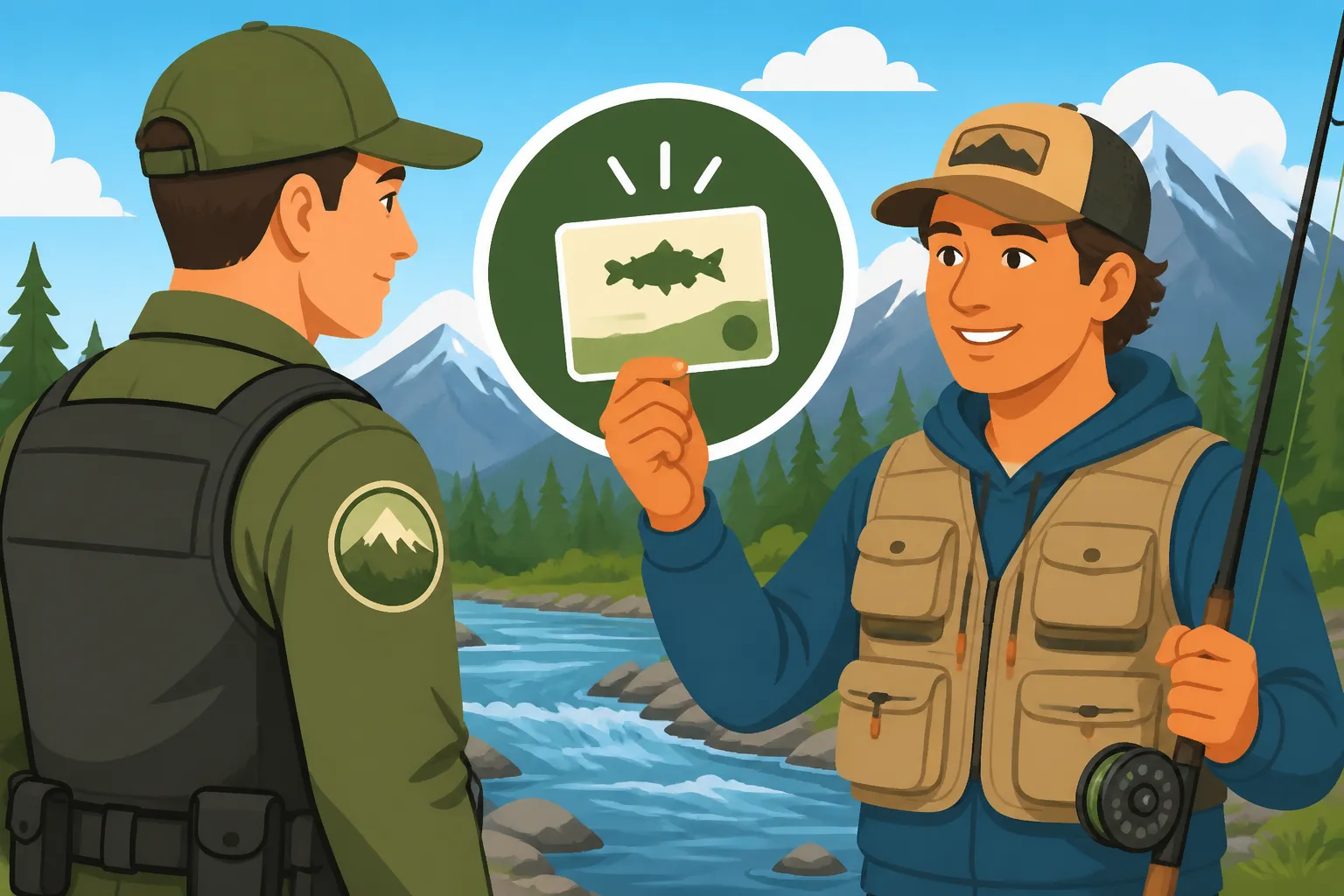
When a CPW officer approaches you on the water or trail, they'll typically identify themselves and state their purpose. They might be in uniform, or sometimes in plain clothes if they're observing from a distance. Their first request will almost certainly be to see your valid Colorado fishing license and a form of photo identification. They might also ask about your fishing activity, such as what you've caught, what bait or lures you're using, and where you plan to fish.
It's common for them to check your fish stringer, cooler, or livewell to ensure compliance with bag and possession limits for various species. They might also inquire about specific regulations for the body of water you're on, such as barbless hook rules, bait restrictions, or length limits for trout. The process is generally quick and professional. Think of it as a brief, friendly check-in, not an interrogation.
Your Rights and Responsibilities
As an angler, you have rights during an interaction with a CPW officer, but you also have clear responsibilities.
Your Rights:
- You have the right to ask for the officer's identification if they are not in uniform or if you're unsure of their authority.
- You have the right to remain silent, but it's generally best to be cooperative regarding standard questions about your license and fishing activity.
- You have the right to refuse a search of your personal belongings (like a backpack or vehicle) without a warrant or probable cause, though this typically doesn't apply to your immediate fishing gear, stringers, or coolers which are directly related to the regulated activity.
Your Responsibilities:
- Cooperation: Your primary responsibility is to cooperate with the officer's requests. This includes immediately and clearly presenting your fishing license and photo ID.
- Honesty: Provide truthful answers to questions about your fishing activities.
- Compliance: Adhere to all Colorado fishing regulations. This means knowing your Colorado Fishing Regulations Every Angler Should Know before you even cast your line.
Remaining calm, polite, and cooperative will almost always lead to a positive and quick interaction. Remember, they are there to enforce laws that benefit the very resource you enjoy.
Common Reasons for a Check
While a license check can feel random, officers often have specific reasons or patterns for their patrols and stops.
- Routine Patrols: This is the most common reason. Officers patrol popular fishing spots, boat ramps, and access points to ensure general compliance.
- Targeted Enforcement: They might be specifically looking for violations in certain areas, such as checking for illegal snagging during kokanee salmon runs, ensuring bait restrictions are followed in Gold Medal Waters, or verifying length limits for specific trout species.
- High-Violation Areas: Some areas are known to have higher rates of certain violations, prompting more frequent patrols and checks.
- Public Complaints/Tips: CPW officers often respond to tips from other anglers or landowners about suspicious activity or suspected violations.
- License Sales Verification: Sometimes, checks are simply to verify that anglers have purchased their licenses, especially at the beginning of a new season or after a free fishing weekend.
It's not usually personal; it's part of their job to protect Colorado's natural heritage. Be prepared, be respectful, and you'll be back to fishing in no time.
Troubleshooting Common Scenarios
Even the most prepared angler can run into unexpected snags. What happens if your license gets ruined, your phone dies, or you realize too late you forgot something crucial? Knowing how to navigate these common scenarios can save you a lot of grief and potential penalties.
Lost or Damaged License
Picture this: you've had a fantastic day fishing the Fryingpan River, but somewhere between netting that big rainbow and packing up your gear, your physical license slipped out of your pocket, or maybe your dog decided it was a new chew toy. A lost or severely damaged physical license isn't the end of the world, but it needs to be addressed.
If you bought your license online through CPWShop.com, you can usually log back into your account and print another copy at home. If you purchased it in person, you might need to visit a CPW office or a licensed vendor to get a replacement. There might be a small fee for reissuing a physical card. The key is to act quickly. Until you have a valid replacement, you technically aren't in legal possession of your license, which could lead to issues if you continue fishing and are checked by an officer. Always carry a backup digital copy if possible, even if you prefer a physical one.
Dead Phone Battery or No Signal
This is perhaps the most common frustration with digital licenses. You're enjoying the solitude of a remote high-country lake, pull out your phone to show your license, and… nothing. Dead battery. Or maybe you're in a canyon with absolutely no cell signal, and your digital license isn't cached properly. This is where relying solely on a digital license can backfire.
If your phone battery dies, and you have no other form of license, you are technically fishing without a readily available license. While an officer might be understanding and allow you to retrieve a physical copy or verify it later, it puts you in a vulnerable position. The best preventative measure is to always carry a small, fully charged portable power bank (available from retailers like Amazon) if your phone is your primary license holder. Better yet, have a printed paper copy laminated and stored in your tackle box as a bulletproof backup. For situations where cell service is non-existent, ensure your digital license is downloaded and saved directly to your phone's memory, not just accessible via an app that requires an internet connection. Check out Colorado Fishing License Options for Someone Without a Smartphone for alternatives.
Fishing Without a License and the Consequences
Let's be brutally honest: forgetting your license at home, or worse, intentionally fishing without one, is a serious offense in Colorado. Even if you meant to buy one and just "haven't gotten around to it," the law is clear.
If you are caught fishing without a valid license, the consequences can range from a warning (rare for an outright missing license) to a substantial fine. Fines for fishing without a license in Colorado typically start in the hundreds of dollars and can escalate, especially if there are other violations involved (like over-limits or fishing in closed waters). Beyond the monetary penalty, you could also face court appearances, and in some cases, your fishing privileges could be suspended. It's simply not worth the risk. The small cost of a license pales in comparison to the potential legal fees and fines. If you're unsure about the requirements, consult resources like How to Buy a Colorado Fishing License to ensure you're always legal. Our detailed post on What Happens If You Fish in Colorado Without a License lays out the full extent of the penalties.
Renewing Your License
Colorado fishing licenses are annual, running from March 1st to the end of February the following year. It's easy to forget that renewal date, especially if you bought your license mid-season. Many anglers find themselves caught off guard when March rolls around and they realize their old license has expired. CPW usually sends out email reminders if you've opted into their notifications, but it's ultimately your responsibility to stay on top of it. You can renew your license online via CPWShop.com, by phone, or in person at various vendors. A great tip is to renew it as part of your spring fishing prep, perhaps when you're checking your gear or spooling new line. Staying current ensures you're always legally ready for the next adventure. For all the details, see our guide on Renewing a Colorado Fishing License.
Best Practices for Anglers
Being prepared for a license check is about more than just avoiding a fine; it's about being a responsible, respectful steward of Colorado's incredible natural resources. Adopting a few simple habits can make every fishing trip smoother and more enjoyable.
Preparing for Your Trip
Before you even leave your driveway, take a moment to ensure you're fully prepared. This isn't just about packing your rods and tackle; it's about compliance.
- Check License Expiration: Confirm your fishing license is current. As mentioned, Colorado licenses typically expire at the end of February, so a quick check at the start of March or before your first trip of the season is wise.
- Gather All Documents: Ensure you have your main fishing license, any required stamps (like the Habitat Stamp or Second-Rod Stamp), and a valid photo ID.
- Backups for Digital Users: If you primarily use a digital license, ensure it's downloaded and accessible offline on your phone. Fully charge your phone and consider packing a portable power bank, easily sourced from Amazon, especially for longer trips or remote locations.
- Printed Copy Backup: Seriously consider printing a paper copy of your license. Laminate it yourself (you can find affordable laminators and pouches on Amazon) or have it done professionally. This small piece of paper can be a lifesaver if your technology fails.
This pre-trip checklist ensures you won't have any last-minute surprises when you're eager to hit the water.
Keeping Your License Accessible
Once you're on the water, the last thing you want to do is rummage through a cluttered backpack to find your license while an officer waits patiently. Accessibility is key.
- Designated Pocket: Use a specific, easy-to-reach pocket in your fishing vest, waders, or tackle bag for your license and ID. Many fishing vests even have clear plastic pockets specifically designed for displaying licenses.
- Waterproof Protection: Regardless of whether it's physical or digital, keep it protected from the elements. A small waterproof dry bag, a zip-top freezer bag, or a dedicated waterproof case (check Amazon for options) will prevent water damage, especially if you're wading or on a boat.
- Lanyard or Neck Pouch: For physical licenses, a lanyard with a clear, waterproof pouch worn around your neck is an excellent way to keep it visible and readily available, minimizing fumbling.
- My Outdoors Colorado App: If using digital, keep the My Outdoors Colorado app (or your screenshot) easily accessible on your phone's home screen or in a clearly labeled folder.
The goal is to be able to present your license within a few seconds of being asked, without stress or delay.
Tips for a Smooth Interaction
When a CPW officer approaches, your actions and demeanor can greatly influence the interaction. Here are some tips to ensure a smooth, positive encounter:
- Be Polite and Respectful: Start with a friendly greeting. Officers are people too, and a positive attitude goes a long way.
- Stay Calm: There's no need to be nervous if you're compliant. Approach the interaction with confidence.
- Listen Carefully: Pay attention to the officer's requests and questions. Don't interrupt.
- Have Your Documents Ready: As soon as they ask for your license and ID, retrieve them promptly and present them clearly. If it's on your phone, ensure the screen brightness is up.
- Answer Honestly: If asked about your catch or methods, be truthful. Trying to hide something or fabricate a story will only make matters worse.
- Follow Instructions: If the officer asks you to do something, like put down your rod or open your cooler, comply respectfully.
- Ask Questions (Politically): If you're unsure about a regulation or why you're being asked something, you can politely ask for clarification. For example, "Officer, could you clarify the length limit for brown trout in this section of the river?" This shows you're engaged and trying to be compliant.
- Don't Argue: If you disagree with something, or if you receive a citation, accept it calmly. You can always address the issue through legal channels later. Arguing on the spot is rarely productive.
By following these simple guidelines, your interactions with Colorado Parks and Wildlife officers will likely be brief, professional, and allow you to quickly return to the reason you came out: enjoying Colorado's fantastic fishing.
| Feature | Physical License | Digital License (Smartphone) |
|---|---|---|
| Accessibility | Easy to pull from wallet/vest pocket | Quick access on phone, especially with CPW app |
| Durability | Can be laminated for protection | Depends on phone durability, screen easily damaged |
| Reliability | Not dependent on battery or signal | Dependent on phone battery and sometimes cell signal |
| Visibility | Clear print, always visible | Screen brightness/cracks can affect visibility |
| Backup Potential | Can be a backup for digital | Can be a backup for physical (if printed at home) |
| Cost | Basic license cost (+ optional re-issuance fee) | Basic license cost (+ cost of smartphone, portable charger, etc.) |
| Ideal for | Anglers in remote areas, those who prefer traditional | Tech-savvy anglers, those who frequently forget wallets |
| Key Risk | Loss or damage | Dead battery, no signal, damaged phone screen |
Disclaimer
The information provided in this guide is for general informational purposes only and does not constitute legal advice. While we strive to provide accurate and up-to-date information, fishing regulations in Colorado can change. Always consult the official Colorado Parks and Wildlife (CPW) website or the current Colorado Fishing brochure for the most accurate and legally binding regulations before you go fishing. It is your responsibility as an angler to know and abide by all applicable laws and regulations.