Do You Need a Passport or State ID to Buy a Colorado License?
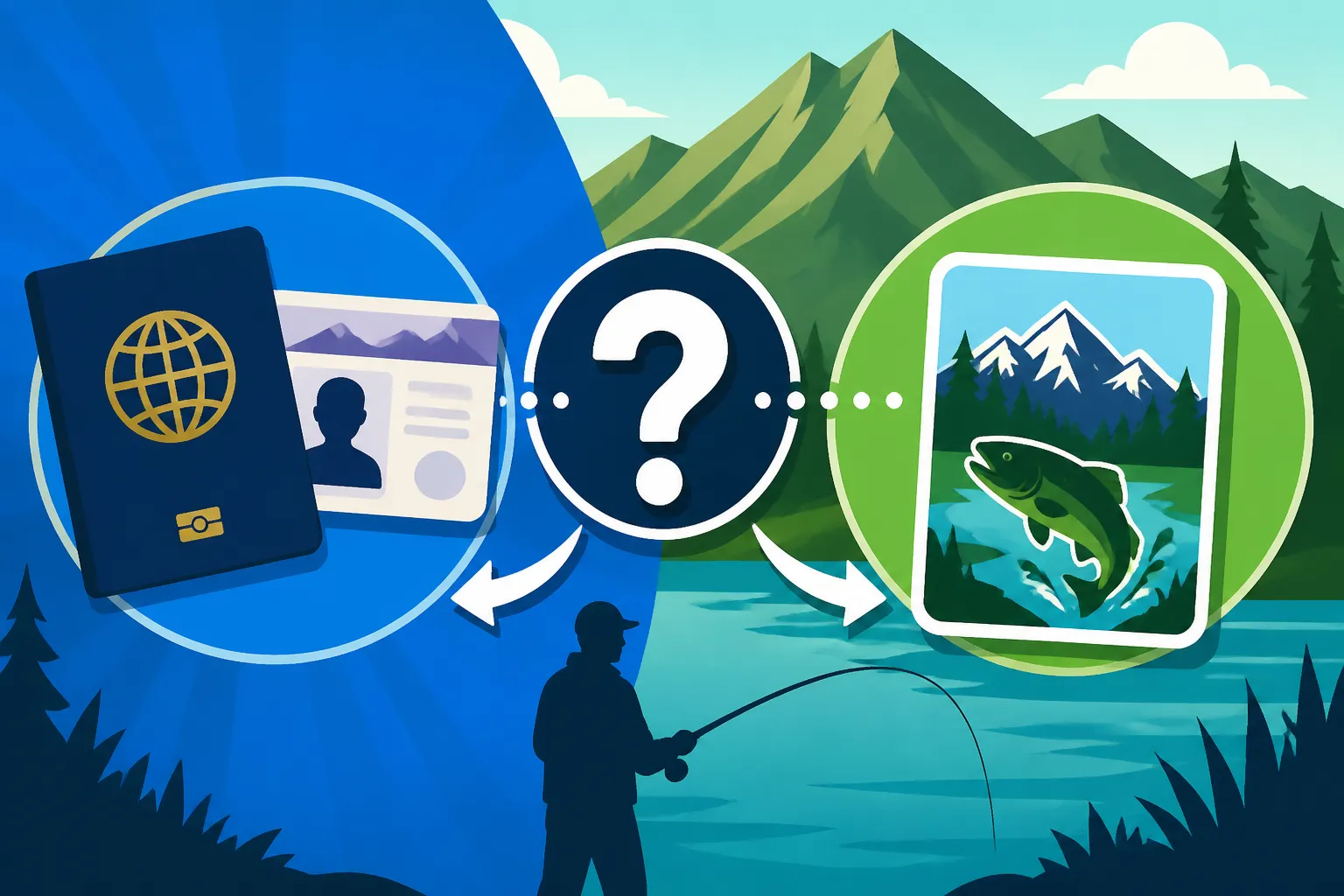
Navigating the requirements for a fishing license can sometimes feel like solving a puzzle, especially when you're wondering what specific identification documents you need to bring along. It's a common worry – you don't want to get all the way to the sporting goods store or halfway through an online application only to find out you're missing a critical piece of paperwork. This guide is here to clear up exactly what kind of ID Colorado Parks and Wildlife (CPW) accepts and whether that passport gathering dust in your drawer is truly necessary.
The Basics of Identification for a Colorado Fishing License
When it comes to securing your Colorado fishing license, whether you're a seasoned local or just visiting our beautiful state, proper identification is absolutely crucial. The state needs to know who you are, how old you are, and most importantly, where you reside. These factors directly influence the type of license you're eligible for and the cost you'll pay. The process is designed to be straightforward, but understanding the accepted forms of identification upfront can save you a lot of hassle.
Acceptable Forms of ID for Residents
If you're lucky enough to call Colorado home, proving your residency is the main hurdle, and your state-issued identification is your best friend here. The primary document CPW relies on is a current, unexpired Colorado driver's license or a state identification card. This is generally the easiest and most universally accepted form of ID for residents. It clearly shows your name, photo, and a Colorado address, which is exactly what retailers and the CPW system need to verify your eligibility for a resident license.
It's important that your ID is up-to-date. An expired driver's license, even if it's from Colorado, might cause issues. Retailers and CPW staff are required to verify that your ID is valid. If you've recently moved to Colorado, you'll want to ensure your Colorado driver's license or state ID card has been updated with your new address. Simply having a Colorado address on a utility bill isn't usually sufficient on its own without a corresponding state-issued photo ID. The good news is, once you have your current Colorado ID, purchasing your license becomes a breeze, whether you're buying it online at CPWShop.com or heading to a local vendor. You can find more details on what constitutes residency in our guide on What Counts as Colorado Residency for Licensing.
Acceptable Forms of ID for Nonresidents
For those visiting Colorado from another state or country, the identification requirements are equally clear-cut, albeit with a slight difference in the types of documents you might present. Nonresidents typically need a valid, government-issued photo ID from their home state or country. For most U.S. citizens, this means their unexpired driver's license from their home state will suffice. It serves the same purpose as a Colorado driver's license for a resident: it verifies your identity and, by showing an out-of-state address, confirms your nonresident status.
When it comes to international visitors, a valid passport is indeed an excellent and widely accepted form of identification. However, it's not the only option. Any official government-issued photo ID from your country of origin that clearly displays your name, photo, and country of residence should generally be acceptable. This could include national ID cards, depending on the country. The key is that it must be a credible, official document. The goal is simply to confirm your identity and that you are not a Colorado resident, which affects the pricing (see Resident vs Nonresident Fishing Licenses in Colorado for more). Remember, the distinction between resident and nonresident fishing licenses is primarily about ensuring fair pricing based on who contributes to state taxes that fund wildlife management.
Do You Need a Passport? Unpacking the Requirement
Many people traveling to Colorado, especially from other states within the U.S., often wonder if they need to dig out their passport to buy a fishing license. It's a fair question, particularly when thinking about official documents. However, the short answer is usually "no" for U.S. citizens. Passports are certainly valid, but they're rarely the most practical option.
When a Passport is Necessary (and When It's Not)
For U.S. citizens, a passport is almost never a required document to purchase a Colorado fishing license. Your state-issued driver's license or state ID card is generally the go-to, as it fulfills all the necessary criteria: proof of identity, age, and residency (or non-residency). Bringing your driver's license is far more convenient than carrying your passport around for a simple fishing trip, reducing the risk of loss or damage to that crucial international travel document. If you're a U.S. citizen and you present your valid driver's license from any state, you should be good to go.
Where a passport does become necessary, or at least highly recommended, is for foreign visitors. If you are not a U.S. citizen, your passport is the most straightforward and universally recognized document to confirm your identity and non-U.S. residency status. In some cases, other national ID cards might be accepted, but a passport is the gold standard for international travelers. So, if you're coming from abroad to experience Colorado's fantastic fishing, make sure your passport is current and easily accessible. More information specific to international visitors can be found in our comprehensive guide on Colorado Fishing License Rules for Foreign Visitors.
Proving Residency with ID
The entire point of showing identification when purchasing a fishing license boils down to one critical factor: proving your residency. Colorado Parks and Wildlife (CPW) has different fee structures for residents and nonresidents, and your ID is the primary way they determine which category you fall into. For example, a resident annual fishing license costs significantly less than a nonresident annual license. This isn't about penalizing visitors; it's about ensuring that those who contribute to the state's tax base through residency receive a discounted rate for accessing its natural resources. You can explore the exact costs in our article on Colorado Fishing License Costs Explained.
When you present your Colorado driver's license, the address on it is checked to confirm you reside within the state. If you’re a new resident and your ID still has an out-of-state address, you might need additional documentation to prove your new Colorado residency, such as vehicle registration or voter registration, alongside your current photo ID. However, it's generally best practice to update your primary ID as soon as possible after moving. For active-duty military personnel or college students, there are often specific rules that allow them to qualify for resident rates even if their ID shows another state. These specific situations require careful attention to the nuances outlined by CPW, and often involve showing military orders or student enrollment documents in addition to a photo ID. Failing to accurately prove residency and attempting to purchase a resident license when you are a nonresident can lead to serious penalties, as outlined in our article What Happens If You Fish in Colorado Without a License.
Practicalities of Buying Your License: Online, In-Person, and By Phone
Once you understand what identification you need, the next step is actually buying the license. Colorado offers several convenient ways to do this, each with slightly different implications for how your ID is used during the purchase process. Whether you prefer the personal touch of a storefront or the ease of online shopping, your identification plays a key role.
Buying In-Person and Showing ID
For many anglers, especially those who like to chat with fellow enthusiasts or ask for local tips, buying a license in person is the preferred method. You can walk into a Colorado Parks and Wildlife office, a participating sporting goods store, or even major retailers like Walmart or Bass Pro Shops. When you buy in person, you will physically hand over your identification to the clerk. They will visually inspect your ID to verify your identity, check your birthdate to confirm your age category, and look at the address to determine your residency status. This ensures that you're purchasing the correct type of license, whether it's an annual resident license, a one-day nonresident option, or something else entirely.
This direct interaction allows for immediate clarification if there are any questions about your ID. For example, if your license is from another state but you believe you qualify as a Colorado resident (perhaps due to military service), you can present additional supporting documents directly to the clerk. It’s a straightforward process, and these vendors are well-versed in handling all sorts of ID scenarios. After verification, they'll print out your official license on the spot. Don't forget that many of these locations also sell other essentials, so after your license is sorted, you might find yourself browsing the tackle aisle for new lures or hooks.
Online Purchases and Digital Verification
The digital age has made buying a fishing license incredibly convenient, with CPW offering a robust online portal at CPWShop.com. When you purchase your license online, you won't physically "show" an ID in the traditional sense. Instead, the system relies on the personal information you input – your name, date of birth, and current address – to verify your identity and residency. This information is typically cross-referenced with state databases to confirm its accuracy.
While you don't present a physical card, the online system is built on the premise that you possess valid, government-issued identification from which this information is derived. If there are discrepancies or if your information doesn't match existing records, the system might flag it, potentially requiring you to contact CPW directly to resolve the issue. This digital verification is how they ensure that someone trying to buy a resident license, for instance, actually qualifies for it. Once your purchase is complete, you'll usually have the option to print your license at home or save a digital copy to your smartphone. This digital version is just as valid as a paper copy when you're out on the water. Many anglers appreciate the ease of purchasing online, as it allows them to get their license anytime, anywhere, and then focus on gathering their gear, maybe even browsing for fishing supplies on Amazon, without an extra stop. Our guide on Buying a Colorado Fishing License Online at CPWShop.com has even more helpful details.
Common Scenarios and What to Do
Life often throws curveballs, and sometimes those curveballs affect our ability to provide proper identification. Whether your ID is lost, expired, or you're trying to figure out the rules for younger anglers, it's helpful to know what to do when you encounter less-than-ideal situations.
Lost or Expired ID
Imagine this: you've planned a fantastic fishing trip to the Fryingpan River, only to realize your driver's license expired last week, or worse, you've lost it entirely. This can definitely throw a wrench in your plans, as a valid, unexpired government-issued photo ID is almost always required. Most retailers and the CPW system will not accept an expired ID for a license purchase. It's a fundamental requirement to ensure that the person buying the license is who they say they are and is legally permitted to hold such a document.
If your ID is expired or lost, your immediate priority should be to obtain a valid replacement or a temporary ID from your state's Department of Motor Vehicles (DMV) or equivalent agency. In some limited cases, a temporary paper ID issued by the DMV might be accepted in conjunction with another form of photo identification (like a school ID or even an old, expired ID for photo verification, though this is less common for fishing licenses). However, it's always safest to have a fully valid, unexpired photo ID. Do not try to fish without a license if your ID situation prevents you from buying one. The penalties for fishing without a license in Colorado can be quite severe, ranging from fines to loss of privileges.
ID Requirements for Minors and Specific Groups
The rules for identification and licensing also vary significantly depending on age and other specific circumstances. This is where many anglers, especially parents or guardians, often have questions.
Kids aged 15 and under generally don't need a fishing license at all in Colorado. This is fantastic news for families, as it means the youngest anglers can enjoy casting a line without any bureaucratic hurdles. So, if you're bringing along a child under 16, you don't need to worry about their ID for license purposes.
However, once a young angler turns 16, they do need a license. For those aged 16 and 17, a valid school ID or another form of photo identification (like a state ID card) is usually sufficient to purchase a youth fishing license. The requirements are a bit less stringent than for adults, but some form of ID proving their age and identity is still needed. Our article on Colorado Youth Fishing License Rules for Ages 16 and 17 delves into this further.
For seniors (65+) and veterans, Colorado offers special license benefits and sometimes reduced fees. To qualify for these, specific identification is necessary to prove age and/or veteran status. This often includes a standard driver's license or state ID to confirm age, and for veterans, official military discharge papers (DD-214) or a veteran's designation on a driver's license. These details are important to ensure you get the benefits you're entitled to. You can find more comprehensive information on these specific programs in our article Colorado Fishing Licenses for Seniors and Veterans. These tailored programs are a great way Colorado recognizes the contributions of these groups.
Here's a quick reference table to help clarify ID requirements:
| Scenario | Primary ID Required | Additional Notes / Examples |
|---|---|---|
| Colorado Resident (18-64) | Valid, unexpired Colorado Driver's License or State ID | Must show a current Colorado address. |
| Nonresident U.S. Citizen (18+) | Valid, unexpired Driver's License or State ID from home state/territory | Any U.S. state-issued ID is generally accepted. Passport also acceptable. |
| Foreign Visitor (18+) | Valid, unexpired Passport | National ID card may be accepted if it is a government-issued photo ID. |
| Minor (Under 16) | None | Not required to purchase a fishing license in Colorado. |
| Youth (16-17) | Valid Photo ID (e.g., School ID, State ID) | Must prove age to purchase a youth license. |
| Seniors (65+) | Valid, unexpired Driver's License or State ID | To verify age for potential senior discounts/licenses. |
| Veterans | Valid, unexpired Driver's License or State ID + Proof of Veteran Status | Proof of veteran status (e.g., DD-214, veteran's designation on ID) for specific benefits. |
Understanding these nuances ensures that you're always prepared and can enjoy your time on Colorado's incredible waters without any unexpected hiccups. Whether you're planning a full season of fishing or just a quick afternoon outing, having your proper identification sorted is your first cast towards a great experience.
Disclaimer
The information provided in this guide is for general informational purposes only and is subject to change. Always consult the official Colorado Parks and Wildlife (CPW) regulations or contact CPW directly for the most current and accurate information regarding fishing license requirements and identification policies.