How Charter Boats Find Lake Trout in Deep Water
One of the biggest puzzles for any angler in Colorado, especially when targeting the elusive lake trout, is figuring out just where these magnificent fish are hiding in the vast, deep waters of our mountain reservoirs. It's not like they're hanging out in the shallows for everyone to see! This guide is going to pull back the curtain on how those experienced charter boat captains, the ones who consistently put clients on trophy lake trout, manage to locate these deepwater dwellers.
The Unique Challenge of Deepwater Lake Trout in Colorado
If you've ever stared out at the immense expanse of a reservoir like Blue Mesa or Lake Granby, you know it's a daunting task to find a fish in what feels like an inland ocean. Lake trout are especially tricky because their preferred habitat often means they're not just deep, but also moving around within that depth band, following subtle changes in their environment.
Understanding Lake Trout Behavior and Habitat
Lake trout, often called "lakers" by those who pursue them, are true coldwater specialists. Unlike rainbow or brown trout that you might find closer to the surface or in shallower rivers, lakers thrive in the chilly, oxygen-rich depths of Colorado's largest and deepest reservoirs. Think of them as the stealth bombers of the underwater world – big, powerful, and rarely seen unless you know exactly where to look. They're built for deep water, with thick bodies and large mouths designed for preying on baitfish like kokanee salmon or even smaller lake trout.
Their preference for cold water means they're constantly seeking out that optimal temperature zone, which can change throughout the day and certainly with the seasons. In the height of summer, when surface waters warm up, these fish will retreat to the deepest, coolest sections of the lake, often hanging just above the thermocline – that invisible boundary where the water temperature rapidly drops. Conversely, in the cooler months, they might spread out a bit more, but their core need for cold water remains. Understanding this fundamental behavior is the first key to unlocking their whereabouts. They're not just aimlessly swimming; they're following the conditions that support their survival and feeding habits. You can learn more about these fascinating fish in our guide to Lake Trout Fishing in Colorado.
Why Deep Water Presents a Puzzle for Anglers
The sheer volume of water in a deep reservoir is what makes finding lake trout such a challenge. It's not like sight-fishing a clear mountain stream where you can spot a trout holding in a run. In deep water, your eyes are useless. You can't see the structure, you can't see the baitfish schools, and most importantly, you can't see the lake trout themselves. This lack of visual cues forces anglers to rely entirely on technology and interpretation.
Adding to the complexity is the way light penetrates water. Deeper down, it's dark, which means different senses come into play for the fish. Also, the bottom of these reservoirs isn't a flat, featureless plain. They often hold drowned river channels, submerged islands, rock piles, and steep drop-offs – all remnants of the landscape before the dam was built and the valley flooded. These features are prime holding areas for lake trout, providing ambush points and shelter. But from the surface, these underwater topographies are completely invisible, creating a significant puzzle for even the most experienced angler. This is where the right tools become absolutely indispensable.
Essential Tools and Technologies for Deepwater Detection
For charter captains, finding lake trout isn't guesswork; it's a science built on a foundation of sophisticated electronics. They combine cutting-edge sonar with detailed mapping and environmental sensors to literally "see" into the depths and understand what's happening beneath their boat. It's a blend of high-tech gadgetry and keen interpretation.
Advanced Sonar and Fish Finders
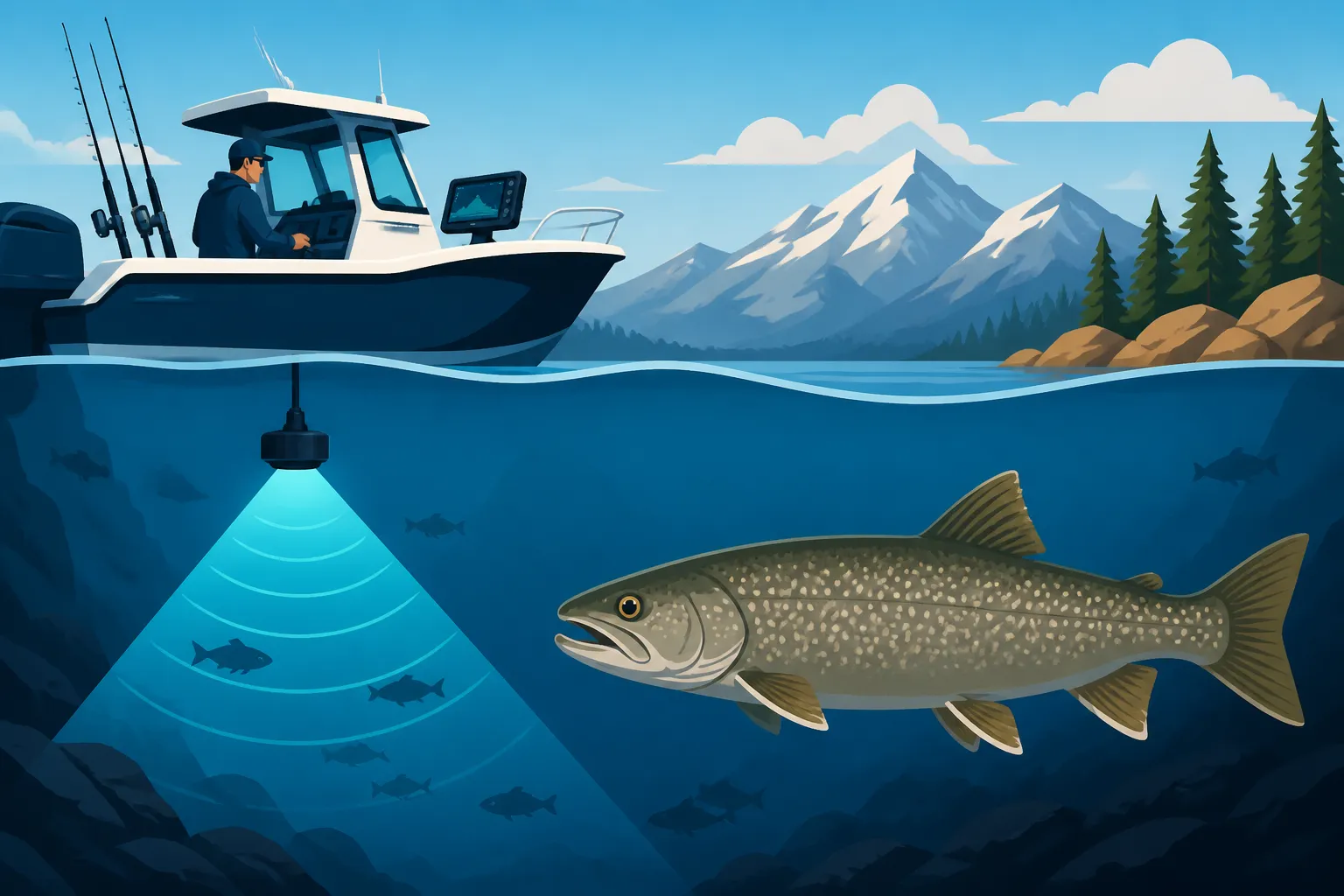
The cornerstone of any deepwater lake trout hunt is an advanced sonar unit, often referred to as a fish finder. Modern units go far beyond the simple black-and-white screens of yesteryear. Today, charter boats typically use units with multiple sonar technologies:
- 2D Sonar: This is your traditional cone-shaped beam that shows returns directly beneath the boat. Guides use this to identify fish arches, bait balls (which look like dense clouds), and the bottom contour. They look for those distinctive, solid arches that scream "big fish!" or for clusters of smaller marks indicating a school of kokanee, which often draw in hungry lake trout. The clarity of these returns helps them distinguish between debris, thermocline, and actual fish.
- DownImaging (or DownScan): This technology provides a picture-like view of what's directly below the boat. It uses a much narrower, high-frequency beam to create incredibly detailed images of structure like submerged trees, rock piles, and even individual fish lying near the bottom. This helps confirm what the 2D sonar is suggesting and gives a clearer understanding of the habitat.
- SideImaging (or SideScan): This is where things get really exciting. SideImaging sends out beams to the left and right of the boat, allowing guides to "see" a wide swath of the lake bottom on either side. This is crucial for rapidly scanning large areas for structure and fish that might not be directly under the boat. Imagine being able to see a school of baitfish or a group of lake trout holding off to the side, allowing the captain to adjust their course without having to pass directly over them.
Guides spend countless hours interpreting these sonar returns. They learn to differentiate between different species, understand the size of fish, and even infer their behavior based on how they appear on screen. The quality of the transducer – the part that sends and receives the sonar waves – is also vital. High-frequency transducers provide sharper, more detailed images, which is essential when pinpointing fish in several hundred feet of water.
GPS Mapping and Contour Charts
While sonar helps guides see what's under the boat, GPS mapping tells them where they are on the lake and what the general underwater topography looks like. Modern GPS units come pre-loaded with incredibly detailed bathymetric charts, which are essentially topographic maps of the lake bottom. These charts show depth contours, drop-offs, humps, submerged channels, and other key structural elements that lake trout are known to frequent.
Charter captains use these maps to identify potential hotspots before they even get there. They'll look for areas where a steep drop-off meets a flat, or where a submerged ridge comes up from the depths. Once they find a promising area on the chart, they'll use their sonar to investigate it more closely. As they find fish or prime structure, they'll mark waypoints on their GPS, creating a digital breadcrumb trail of productive spots. This allows them to return to specific locations with pinpoint accuracy, whether it's later that day or on future trips. FishingBooker listings for charters often highlight guides who use these advanced navigation tools, giving you a sense of their dedication to finding fish. This combination of "seeing" and "knowing where" is what gives experienced guides a massive advantage over recreational anglers.
Temperature Gauges and Oxygen Sensors
Beyond visible structure and fish, invisible factors like water temperature and dissolved oxygen are absolutely critical for locating lake trout. These fish are highly sensitive to their environment, and being able to measure these conditions precisely is a game-changer.
Charter boats often have onboard temperature gauges that show surface temperature, but more importantly, many guides employ specialized probes that can measure temperature at various depths. They'll look for the thermocline – the layer in the water column where the temperature drops significantly. Lake trout often suspend just above or within this layer, seeking their preferred cold-water comfort zone where baitfish also tend to gather. Knowing the exact depth of the thermocline helps guides target their baits and lures precisely.
While less common, some advanced setups even include dissolved oxygen sensors. Like us, fish need oxygen to survive. In deep, stratified lakes, the oxygen levels can drop significantly below the thermocline. A guide who understands where the oxygen is abundant can further narrow down the search area, ensuring they're presenting baits in water that not only has the right temperature but also enough oxygen to support active fish. This kind of detailed environmental data, combined with sonar and GPS, allows for an incredibly precise and efficient search for How Deep Lake Trout Hold in Summer.
The Guide's Strategy: Combining Technology with Experience
Having all this fancy gear is one thing, but knowing how to use it effectively and, more importantly, how to interpret what it's telling you, is what truly sets a great charter captain apart. It's a continuous process of observation, analysis, and adjustment.
Systematic Search Patterns and Grid Search
When a charter boat heads out onto a vast body of water like Blue Mesa Reservoir, they don't just randomly motor around. Experienced guides employ systematic search patterns to efficiently cover prime real estate. This often involves a "grid search" or a series of parallel passes over an area known for structure or past productivity. They might start by making long, straight passes over a submerged river channel or a large flat, meticulously scanning with their SideImaging sonar for any signs of fish or bait.
Once they identify a promising area – maybe a sudden drop-off where baitfish are schooling, or a hump rising from the bottom – they'll refine their search, making tighter turns or zig-zag patterns to get a more precise reading with their DownImaging and 2D sonar. They're constantly monitoring their boat speed, often trolling slowly, to ensure their sonar has enough time to paint a clear picture of the depths. Factors like wind and current can also influence their approach, as they might drift over a target area rather than motor, presenting a more natural lure presentation while still getting valuable sonar data.
Interpreting Environmental Cues and Seasonal Changes
Technology is a powerful tool, but it's only as good as the person interpreting the data. Charter captains are masters at combining what their electronics show with their deep understanding of the lake and the seasons. They know, for example, that in spring, lake trout might be shallower and more active after ice-out, while in late summer, they'll be pushed to the deepest, coolest haunts. Best Downrigger Depth for Lake Trout in Summer will drastically change with the seasons.
They also pay attention to subtle environmental cues. Is it a bright, sunny day? The fish might be even deeper or tucked tight to structure. Is it overcast and stormy? They might be a bit more active and willing to move. The captain's years of experience on that specific lake, like Blue Mesa, mean they have a vast mental database of how fish respond to different conditions, pressures, and times of year. They know the spawning patterns of the kokanee salmon, which are a primary food source for lake trout, and how that influences where the lakers will be feeding. This local knowledge is invaluable and something no off-the-shelf fish finder can provide. This is also why checking reviews on platforms like FishingBooker is so important, as satisfied clients often highlight a guide's expertise and knowledge of local waters.
The Art of "Reading the Lake"
Beyond all the high-tech gadgets and scientific understanding, there's an undeniable "art" to finding fish, especially in deep water. This is where a guide's intuition and cumulative experience truly shine. It's about "reading the lake" – taking in every piece of information, both technical and anecdotal, and piecing together the puzzle.
This might involve observing bird activity on the surface, as diving birds can indicate schools of baitfish. It could be noticing subtle changes in the water color or current. It might even be a gut feeling about a specific area that "looks fishy" based on years of fishing that particular reservoir. When the sonar isn't showing much, a seasoned guide doesn't give up; they shift tactics, change locations, and rely on that deeper understanding. They ask themselves: "If I were a big lake trout looking for food and comfort, where would I be right now?" This constant questioning, combined with a willingness to experiment and adjust, is what allows them to unlock the secrets of the deep and consistently put clients on impressive fish.
Practical Application: What a Charter Day Looks Like
So, what does all this advanced knowledge and technology look like on a typical charter trip targeting lake trout in Colorado? It's a well-orchestrated dance of preparation, execution, and continuous adaptation.
Pre-Trip Planning and Preparation
A good lake trout charter starts long before the client steps on the boat. The captain is usually spending hours before the trip, often the night before or at dawn, reviewing weather forecasts, recent fishing reports, and their own extensive logs of past trips. They'll check their GPS for marked waypoints from previous successful outings, considering how current conditions might affect those spots. Are the kokanee spawning? Is there a new thermocline? Has a cold front pushed through? All these factors influence the initial game plan.
They'll also ensure all the necessary tackle is prepared. This means checking leader lines, sharpening hooks, setting up rods for trolling with downriggers or lead core, and having a variety of lures and baits ready for different depths and presentations. For instance, if they anticipate fishing 100 feet deep, they'll have the right weights and lures for that specific challenge. This meticulous preparation means less time fiddling with gear on the water and more time focused on finding fish. It's part of the value you get when Hiring a Fishing Guide in Colorado, What to Expect.
On-the-Water Execution and Adjustment
Once on the water, the charter captain's strategy unfolds. They'll typically head to a general area identified during pre-trip planning. As they motor along, their eyes are glued to the sonar screen, constantly scanning for fish, bait, and promising structure. If they see a school of kokanee at 80 feet, you can bet they're going to try to put a lure at that exact depth.
They'll deploy multiple rods, often using downriggers to precisely control the depth of their lures. Downriggers are essentially weighted cables that take your lure down to a specific, controlled depth, allowing you to troll through the fish zone with incredible accuracy. You can read more about the specific gear in What Downrigger Gear a Blue Mesa Charter Provides. As they troll, they're monitoring boat speed, looking for that magic speed that gets the lures to run just right and entices a bite. They're also watching the GPS to ensure they stay on a productive contour or structure.
But it's rarely a straight line to success. If an area isn't producing, the captain is quick to adjust. This might mean changing lures, altering depth by a few feet, speeding up or slowing down the troll, or even moving to a completely different part of the lake. They're constantly analyzing the feedback from their electronics and the lack of bites, making calculated decisions to maximize the chances of success. A great guide will even explain what they're seeing on the fish finder to their clients, turning the trip into an educational experience. It’s this combination of advanced tools and expert decision-making that allows them to consistently find and hook these incredible deepwater fish, some of which become true trophies, like Colorado's State Record Lake Trout.
| Technique/Tool | What it Does | How it Helps Find Lake Trout |
|---|---|---|
| 2D Sonar | Traditional fish finder, shows direct returns. | Identifies fish arches, bait balls, bottom contour. |
| DownImaging | Picture-like view directly below boat. | Detailed view of structure (rocks, trees) and fish holding tight to it. |
| SideImaging | Scans wide areas to the left and right of the boat. | Quickly locates schools of fish or structure off to the sides, aids steering. |
| GPS & Charts | Provides boat position and underwater maps. | Identifies promising areas (drop-offs, humps), marks productive waypoints. |
| Temp Gauges | Measures water temperature at various depths. | Locates the thermocline and preferred cold-water zone of lake trout. |
| Oxygen Sensors | Measures dissolved oxygen levels. | Confirms oxygen-rich waters where lake trout can actively feed. |
| Systematic Search | Grid patterns, parallel passes. | Efficiently covers large areas to find fish and structure. |
| Seasonal Knowledge | Understanding fish patterns by time of year. | Predicts general depth and location based on calendar and conditions. |
| Intuition/Experience | Gut feeling, observational skills. | Fills in gaps, makes nuanced adjustments based on years on the water. |
Finding lake trout in the deep, expansive waters of Colorado's reservoirs is a formidable challenge, one that requires a unique blend of cutting-edge technology and seasoned experience. Charter boat captains don't just get lucky; they meticulously combine advanced sonar, GPS mapping, and environmental sensors with their extensive knowledge of fish behavior and local lake conditions. This systematic approach, coupled with the art of interpreting subtle cues, allows them to unlock the secrets of the deep and consistently lead anglers to successful and memorable encounters with these magnificent coldwater predators. The next time you're out on a Colorado reservoir, remember the complex dance happening beneath the surface, a dance that skilled guides have mastered to bring the deepwater giants into reach.
Disclaimer
This article is for general informational purposes only and does not constitute professional advice. Laws, prices and regulations vary by location and change over time. Consult a qualified professional for guidance on your specific situation.