How Fine a Tippet You Need for Selective Tailwater Trout
There’s nothing quite like the crystal-clear waters of a Colorado tailwater, where every ripple seems to whisper promises of a trophy trout. But let's be honest, those stunningly clear rivers, often teeming with sizable, educated fish, can also be the source of immense frustration. You cast the perfect drift, your fly looks just right, but time and again, those selective beauties just turn up their noses. Often, the culprit isn't your fly pattern or presentation, but something far more subtle: your tippet. This comprehensive guide will delve into the nuanced world of tippet selection for Colorado's discerning tailwater trout, helping you understand how to choose the right diameter for success.
Understanding Selective Tailwater Trout in Colorado
Colorado's tailwaters are some of the most productive and beautiful fisheries in the world, but they're also home to some of the wariest trout you'll ever encounter. These are not your average hatchery-hatchery stockers; these fish are seasoned veterans of angling pressure and have seen every fly in the book. Mastering these waters often hinges on understanding their unique ecosystem and the specific challenges they present.
Why Colorado Tailwaters Create Finicky Fish
Colorado's tailwaters, like the Fryingpan River below Ruedi Reservoir, the Taylor River below Taylor Park Reservoir, or the Blue River in Silverthorne, are truly unique environments. Unlike freestone rivers that experience dramatic fluctuations in flow and temperature, tailwaters typically offer a more stable, consistent environment. This consistency, while great for trout growth and bug populations, also creates incredibly smart fish.
First, the water clarity is often exceptional. Water released from the bottom of large reservoirs is usually very cold and clear, providing trout with an unobstructed view of their surroundings, including your fishing line. These fish have an uncanny ability to spot anything unnatural in the water column. Second, the food sources in tailwaters are incredibly consistent, often dominated by tiny aquatic insects like midges and small mayflies. This abundance means trout don't have to work hard for food, allowing them to become highly selective, focusing on precise sizes, shapes, and colors. If your offering isn't an exact match, they'll simply ignore it. Finally, these gold-medal caliber waters receive significant angling pressure. Day in and day out, these trout are exposed to anglers, flies, and yes, tippet. They learn quickly, becoming accustomed to subtle cues that signal danger. This cumulative pressure refines their senses and makes them incredibly wary, demanding nothing less than perfection from anglers.
The Impact of Water Conditions on Tippet Choice
The prevailing water conditions on any given day will heavily influence your tippet selection. Ignoring these factors is a surefire way to get skunked.
Water Clarity: This is perhaps the most significant factor. On those gin-clear, blue-sky days when the Fryingpan is running pristine, a thicker tippet can easily cast a shadow or become a glaring anomaly in the water, sending trout scurrying. Conversely, if there's been a slight increase in flow or a bit of turbidity from a rain shower or reservoir release, you might get away with a slightly heavier tippet, as visibility is reduced. The clearer the water, the finer your tippet needs to be. You'll often find yourself reaching for something like 6X or even 7X.
Flow Rate: The speed of the current also plays a role. In slower, glassy pools, trout have more time to inspect your offering. This is where the visibility of your tippet becomes paramount, and going as light as possible is often beneficial. In faster, turbulent runs, the current can obscure your tippet somewhat, and the fish have less time to scrutinize. However, faster currents also put more strain on your leader and tippet, requiring sufficient breaking strength to fight a strong fish without snapping. It's a delicate balance; too light and you break off, too heavy and you don't get a bite. Understanding how to "read water on a Colorado freestone river" and apply those principles to tailwaters can help you identify these varying conditions.
Water Temperature: While less direct, water temperature can influence fish activity levels and, consequently, their selectivity. Colder water, common in winter or early spring on tailwaters, generally means fish are more lethargic and less willing to move for a fly. This can sometimes make them even more finicky, demanding flawless presentation with ultra-fine tippet. Warmer water can make them more aggressive, but still highly selective on prolific insect hatches.
How Trout See Your Tippet
It might seem almost impossible that a trout can discern a difference between a 0.005-inch line and a 0.006-inch line, but they absolutely can. Trout have excellent eyesight, particularly in clear water. Their vision is adapted to detect movement and subtle variations in their environment, which includes light refraction and shadows.
When light hits your tippet, especially if it's monofilament, it refracts differently than the surrounding water. This creates a visible boundary or "sheen" that signals something artificial. Fluorocarbon tippet, which has a refractive index closer to that of water, is significantly less visible than traditional monofilament. This is why most serious Colorado tailwater anglers exclusively use fluorocarbon for their tippet material. A thicker tippet not only refracts more light but also creates a larger profile in the water, making it more easily detected. Think of it like looking through a window pane; a thicker pane of glass distorts the image more.
Furthermore, a heavy tippet can hinder the natural movement of your fly. Delicate midges or tiny emergers are meant to drift weightlessly. A stiff, thick tippet can restrict this natural movement, causing your fly to drag unnaturally or sit awkwardly in the current. Trout are highly tuned to these subtle movements. If your fly doesn't behave like a natural insect, it's a red flag. The goal is always to present the fly as naturally as possible, almost as if it's untethered.
Deciphering Tippet Sizes and Their Applications
Choosing the right tippet size is a critical skill for any angler hoping to fool Colorado's wily tailwater trout. It's not just about what feels right; there's a system that helps guide your choices.
The X-Rating System Demystified
The "X-rating" system for tippet and leaders might seem a bit abstract at first glance, but it's actually quite straightforward and universally understood among fly anglers. Essentially, the higher the X-number, the finer and lighter the tippet.
- 0X, 1X, 2X, 3X: These are generally considered heavier tippets, ranging from around 0.011 to 0.008 inches in diameter. You might use these for larger streamers, big dry flies, or when targeting very large, aggressive fish in turbulent water where stealth isn't the absolute highest priority. However, for most selective tailwater nymphing, these are likely too heavy.
- 4X, 5X: These are workhorse sizes for many anglers. 4X (typically 0.007 inches) is good for larger nymphs (size 12-16) or smaller streamers, while 5X (around 0.006 inches) is excellent for smaller nymphs and dry flies (size 16-20). These are often the starting points for many Colorado tailwater situations.
- 6X, 7X: Now we're getting into the sweet spot for highly selective tailwater fish. 6X (approximately 0.005 inches) is often the minimum you'll want to use when targeting trout that are feeding on small flies like size 18-22 midges or tiny mayflies. 7X (around 0.004 inches) is where you go when fish are extremely picky, often on tiny midge patterns (size 22-26) or during tough winter conditions. When you're "midge fishing in Colorado winters", 7X is often your best friend.
- 8X and finer: These are ultra-fine tippets, usually 0.003 inches or less, reserved for the absolute most challenging situations: super clear water, microscopic flies (size 26+), or incredibly pressured, highly educated fish that have seen it all. Breaking strength is significantly reduced at these diameters, making careful fish fighting crucial.
It's important to remember that these are approximate diameters, and there can be slight variations between different brands. When you're buying tippet on Amazon or at your local fly shop, pay attention to the actual diameter listed on the spool, not just the X-rating, especially if you're being extremely precise.
Matching Tippet to Fly Size
A general rule of thumb for matching tippet to fly size is to divide the fly size by 3 or 4. For instance:
- Fly size 12: Divide by 3 = 4. So, 4X tippet would be a good starting point.
- Fly size 16: Divide by 3 = 5.3, so 5X tippet.
- Fly size 20: Divide by 3 = 6.6, so 6X or 7X tippet.
- Fly size 24: Divide by 3 = 8, so 7X or 8X tippet.
This rule provides a good starting point, but it's not rigid. Sometimes, if you're using a particularly bushy dry fly, you might want to go one X-size heavier to help turn over the fly. Conversely, if you're fishing a very sparse, delicate nymph in super clear water, you might need to go one X-size lighter than the rule suggests.
The reasoning behind this matching is twofold: first, it helps with presentation. A tippet that's too heavy for a small fly will make the fly not drift naturally. A tippet that's too light for a large, heavy fly might not have enough stiffness to turn over the fly effectively during the cast. Second, it relates to visibility. A small fly with a thick tippet looks unnatural to the fish, making the connection between the insect and the line too obvious. The goal is always to make the tippet as inconspicuous as possible while still maintaining sufficient strength.
Balancing Strength and Stealth
This is the eternal conundrum on tailwaters: you need tippet fine enough to fool the fish, but strong enough to land it. This balance is often dictated by the specific conditions and the size of the fish you're targeting.
The Stealth Factor: As discussed, finer tippet is less visible to the fish, especially fluorocarbon. It allows your fly to drift more naturally. When fish are "matching the hatch on Colorado's tailwaters," and feeding on tiny, specific insects, a fine tippet is paramount. If you're constantly seeing fish shy away or refuse your fly at the last second, going down one more X-size in your tippet is usually the first adjustment you should make.
The Strength Factor: The downside of going finer is reduced breaking strength. A beautiful 20-inch brown trout in a strong current can easily snap 7X or 8X tippet if you're not careful. This is where your angling skill comes into play. You need to learn to "play" the fish properly, using the flex of your rod to absorb shocks, keeping the fish out of snags, and avoiding excessive pressure. It's a delicate dance. When choosing your tippet, always consider the realistic size of the fish you expect to encounter. If you're fishing a renowned "Colorado Gold Medal Water," where 18-20 inch trout are common, you might opt for 6X as your minimum, accepting that some truly massive fish might challenge that choice.
Another consideration is how many flies you're fishing. When "nymphing techniques for Colorado tailwaters" often involve multi-fly rigs, the tippet connecting your flies can be a point of weakness. It's not uncommon for anglers to use a slightly heavier tippet (e.g., 5X) for the lead fly and then drop down to a finer tippet (e.g., 6X or 7X) for the trailer fly, especially when the trailer is the key pattern.
Practical Tips for Choosing and Using Fine Tippet
Beyond the scientific principles, there are practical considerations and techniques that will improve your success when dealing with fine tippet on Colorado's challenging tailwaters.
The "Go-To" Tippet Sizes for Colorado Tailwaters
While every day on the river presents unique challenges, there are certain tippet sizes that tend to be staples for anglers fishing Colorado's premier tailwaters.
For general nymphing and dry fly fishing with average-sized flies (size 16-20), 5X fluorocarbon is a fantastic starting point. It offers a good balance of strength and stealth and will handle many situations. Brands like Rio, Seaguar, or Scientific Anglers offer excellent fluorocarbon options that you can easily find on Amazon. If you're specifically "how to set up a nymph rig for a deep tailwater run," you might start with 5X for your lead and then drop down.
However, once you encounter the truly selective fish, especially during prolific midge hatches or when fish are feeding on tiny mayfly emergers, you'll need to drop down. 6X fluorocarbon becomes the workhorse for flies in the size 18-24 range. This is often the sweet spot for consistent hook-ups when conditions are tough. You’ll find yourself using it for many of the "best flies for Colorado's gold medal trout water."
When the conditions become extremely clear, the fish are educated, and you're fishing microscopic patterns (size 24-28), then 7X fluorocarbon is your best bet. This is particularly true during bright, sunny winter days or in slow, glassy pools. Be warned, though: 7X requires a very delicate touch to avoid snapping. You might even want to carry a spool of 8X for those truly desperate situations, but approach with extreme caution. Remember that "Colorado's 14-inch trout length rule" on many Gold Medal Waters means you could be tangling with some substantial fish on incredibly light tippet.
Situational Adjustments for Extreme Selectivity
Sometimes, even your go-to sizes won't cut it. This is where experience and observation come into play, allowing you to make quick, informed adjustments.
When to Go Even Finer:
- Refusals at the last second: If fish are coming up to your dry fly or tracking your nymph but refusing to eat, a finer tippet is almost always the solution. They’re seeing something they don’t like.
- Gin-clear water & bright sun: These conditions amplify the visibility of your tippet. If the river is running like glass, lighten up.
- Microscopic flies: When trout are keying in on tiny midges or mayflies (size 24 and smaller), you'll need 7X or 8X to get a natural drift and presentation.
- Heavily pressured areas: On popular stretches of the South Platte River near Deckers or Cheesman Canyon, fish are constantly harassed. Lighter tippet is essential here. Consider adjusting your "best leader length for clear tailwater water" along with your tippet.
When to Go Slightly Heavier (if you can get away with it):
- Off-color water: A bit of turbidity can provide just enough cover to allow for 5X or even 4X, especially if you’re fishing larger nymphs or streamers.
- Larger, more aggressive flies: If you're dead-drifting a streamer or a large stonefly nymph, a slightly heavier tippet (4X or 5X) will help with turnover and provide more confidence against larger fish.
- Strong wind: While not directly related to fish selectivity, a heavier tippet can help cut through the wind and improve casting accuracy, which is crucial for presentation. However, remember that "what fly line works best for high-altitude wind" is also a factor.
- Obstacle-rich water: If you're fishing around lots of submerged timber or rocks where a big fish could quickly dive and break you off, a slightly stronger tippet might give you a fighting chance. This is a judgment call that prioritizes landing the fish over absolute stealth.
Always start with the finest tippet you feel confident fishing, and only go heavier if you're consistently breaking off fish and the conditions (like turbidity or larger flies) warrant it. The goal is to find the lightest tippet that will still allow you to land fish reliably.
Best Practices for Knot Tying and Leader Construction
Choosing the right tippet is only half the battle; how you connect it to your leader and flies is equally important. A faulty knot or poorly constructed leader can negate all the advantages of fine tippet.
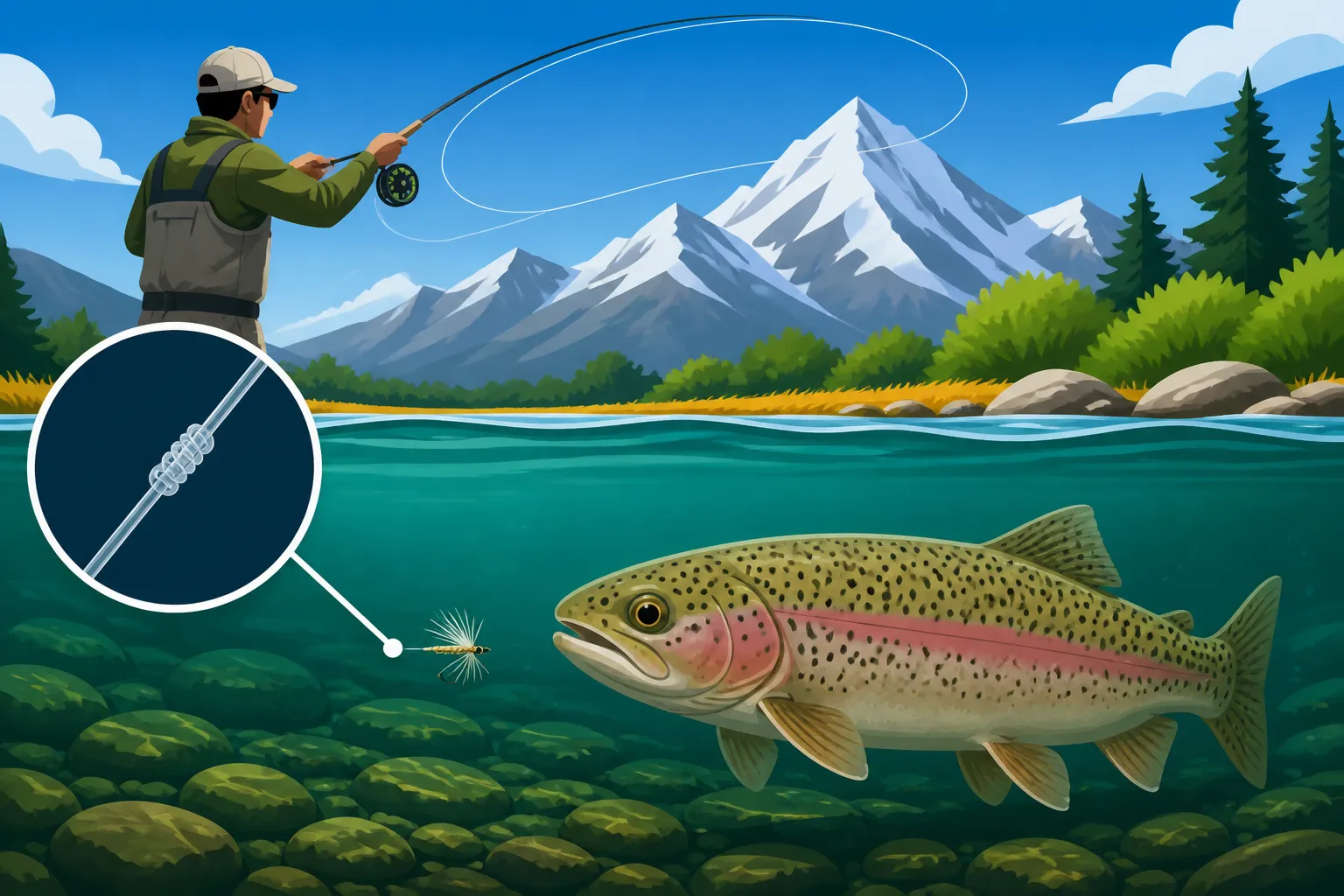
Knots, Knots, Knots: When using fine tippet, knot strength becomes paramount. A poorly tied knot can reduce the breaking strength of your line by 50% or more. The most reliable knots for connecting tippet to leader include the Blood Knot or Surgeon's Knot. For attaching your fly, a perfect Clinch Knot or an Improved Clinch Knot is usually sufficient. When using fluorocarbon, some anglers prefer a Pitzen Knot (also known as the 16-20 Knot or Eugene Bend) or a tried-and-true Davy Knot, especially with tiny flies, as they can retain more strength in slick materials. Always moisten your knots thoroughly before tightening them down slowly and consistently to ensure they seat correctly without burning or weakening the line.
Fresh is Best: Tippet material, especially fine diameters, degrades over time due to UV exposure, heat, and simply being stretched and nicked. A spool of tippet that's been rattling around in your vest for two seasons might not be as strong as a fresh one. It's a small investment to replace your tippet spools regularly, and it can save you from heartbreaking break-offs. If you suspect your tippet has been nicked on a rock or a fish's tooth, cut it back and re-tie.
Leader Turnover: Your leader needs to transfer casting energy smoothly from your fly line to your tippet and then to your fly. A properly tapered leader, combined with the right length of tippet, is crucial for good presentation. If your leader isn't turning over smoothly, it can cause your fly to land awkwardly or tangle. Using a tippet that's too heavy for your leader's end, or too long for its taper, can create hinge points. Experiment with different tippet lengths – generally 18-36 inches – to find what works best with your specific leader and casting style. When you're learning "Euro nymphing basics for Colorado rivers," you'll find that specialized leaders and even finer tippets are often part of the equation.
Remember, a great fishing day in Colorado often comes down to the smallest details. Investing in quality fluorocarbon tippet, like those available from various reputable brands on Amazon, and mastering its use, will undoubtedly put more of those selective tailwater trout in your net.
| Tippet X-Rating | Approximate Diameter (in) | Approximate Diameter (mm) | Recommended Fly Sizes | Breaking Strength (lbs)* | Common Application |
|---|---|---|---|---|---|
| 0X | 0.011 | 0.279 | #6 – #10 | 11 – 15 | Large streamers, heavy nymphs |
| 1X | 0.010 | 0.254 | #8 – #12 | 9 – 13 | Streamers, large dry flies |
| 2X | 0.009 | 0.229 | #10 – #14 | 7 – 11 | General purpose, larger flies |
| 3X | 0.008 | 0.203 | #12 – #16 | 6 – 9 | Larger nymphs, small streamers |
| 4X | 0.007 | 0.178 | #14 – #18 | 5 – 7 | Medium nymphs, small dry flies |
| 5X | 0.006 | 0.152 | #16 – #20 | 3 – 6 | Finer nymphing, smaller dry flies |
| 6X | 0.005 | 0.127 | #18 – #24 | 2 – 4 | Selective tailwater nymphing, midges |
| 7X | 0.004 | 0.102 | #22 – #28 | 1.5 – 3 | Ultra-selective fish, micro-flies |
| 8X | 0.003 | 0.076 | #26 + | 1 – 2 | Extreme technical fishing |
*Note: Breaking strengths are approximate and vary by brand and material (fluorocarbon vs. monofilament).
Disclaimer
Fishing regulations and conditions can change rapidly. Always consult the latest Colorado Parks and Wildlife regulations before heading out on the water. Be aware of private property boundaries and respect local rules and ethical angling practices.