Colorado Fishing License Rules for Out-of-State College Students
Many out-of-state college students living in Colorado find themselves scratching their heads when it comes to buying a fishing license. Do you qualify for a resident license, or are you still considered a nonresident? This guide will cut through the confusion surrounding Colorado fishing license rules for out-of-state college students, helping you understand the requirements and ensure you’re legal on the water.
The Nuances of Colorado Residency for Anglers
When you move to a new state for college, it often feels like you're caught in a gray area when it comes to things like residency for state-specific privileges. This is especially true for fishing licenses in Colorado, where the rules are pretty specific and designed to differentiate between true long-term residents and those who are just here for a temporary stay. You might be paying in-state tuition, feeling like a local, but when it comes to fishing, the state has its own set of criteria. Understanding these definitions is the first crucial step to figuring out which type of license you need.
What Defines a Colorado Resident Angler
The Colorado Parks and Wildlife (CPW) has a clear definition for what constitutes a resident for the purpose of purchasing a fishing license. Generally, to be considered a resident, you must have lived in Colorado for at least six consecutive months immediately prior to applying for a license, and your primary residence must be in Colorado. This isn't just about showing up; it's about establishing a demonstrable intent to make Colorado your permanent home. They're looking for signs that you've truly integrated into the state's fabric, beyond just attending school. This typically means things like registering your vehicle here, getting a Colorado driver's license, and even registering to vote.
For many out-of-state students, this six-month rule is the first hurdle. If you just moved to Colorado in August for classes, by the time the prime fall fishing season rolls around in September or October, you haven't yet met that minimum residency requirement. It’s a common frustration, especially when you feel like you live here. You might have an apartment, a job, and friends, but the clock for official residency starts ticking on your first day with the intent to establish permanent residence. This is a critical distinction, as incorrectly claiming residency can lead to significant penalties, which we definitely want to avoid. The CPW regulations specifically outline these details to prevent misunderstanding, so it's always worth a thorough read of the official sources.
The Specifics for College Students
Now, here's where it gets a little tricky for college students. Even if you've been living in Colorado for more than six months because you're attending a university or college, you might still be considered a nonresident for fishing license purposes. The key lies in the "primary residence" and "intent to establish permanent residency" clauses. If your "domicile"—your true, fixed, and permanent home—is still considered to be in your home state, then Colorado views your presence here as temporary, regardless of how long you've been physically residing here for school. This often catches students off guard, especially those who've been here for a year or more.
For example, if you maintain a driver's license from your home state, keep your car registered there, or frequently return there for breaks and summers with the intent to return permanently after graduation, CPW will likely classify you as a nonresident. The state wants to see that you're committed to making Colorado your new permanent home, not just a temporary stop for education. This isn't just about living here for six months; it's about changing your legal residence. For a deeper dive into what they consider, you might want to read our guide on What Counts as Colorado Residency for Licensing. It really clarifies the finer points beyond just time spent in the state.
Navigating Colorado Parks and Wildlife (CPW) Rules
Once you understand the general residency definitions, the next step is to look at the practical side of obtaining your license through the Colorado Parks and Wildlife (CPW). They are the ultimate authority on these matters, and their rules are designed to be quite robust in determining who qualifies for resident pricing. It's not just a simple checkbox; they often require specific documentation to back up your claim, which can feel like a lot of hoops to jump through, especially when you're already juggling classes and student life.
Required Documentation for Residency Claims
To prove residency for a Colorado fishing license, CPW requires more than just your student ID. They want to see tangible evidence that Colorado is your permanent home. This typically includes a valid Colorado driver's license or state ID that has been issued for at least six consecutive months. If your driver's license is still from your home state, that's a pretty strong indicator to CPW that you're not a resident for licensing purposes. They may also ask for proof of a Colorado vehicle registration for the same period. Utility bills, tax returns filed as a Colorado resident, or even voter registration can sometimes be used to bolster your claim, but the driver's license/ID and vehicle registration are usually the primary proofs.
It's a common scenario: a student from Texas might have lived in Fort Collins for two years attending Colorado State University, renting an apartment, and even working a part-time job. However, if their driver's license is still Texan, and their car is registered in their parents' name back home, CPW will almost certainly classify them as a nonresident. This is why it's so important to align all your official documents with your declared residency if you truly intend to claim resident status for fishing. Without the proper documentation, your application for a resident license will likely be denied, and you’ll have to purchase a nonresident one. For a comprehensive look at the specific documents you'll need, check out our article on Colorado Fishing License Guide for Residents and Nonresidents.
How Non-Resident Licenses Work for Students
If, after reviewing the criteria, you determine that you don't yet meet Colorado's residency requirements, don't fret! You can absolutely still enjoy the amazing fishing opportunities Colorado has to offer by purchasing a nonresident license. This is the path most out-of-state college students will take, especially during their first year or two in the state. While it might cost a bit more, it ensures you're fully legal and won't face any unwelcome surprises from a game warden.
Colorado offers several options for nonresident anglers, depending on how long you plan to fish. You can opt for an annual nonresident license if you expect to fish throughout the year. For shorter trips or weekend excursions, there are also one-day and five-day nonresident options. These shorter-term licenses are often perfect for students who might only get out on the water a few times a semester or during specific breaks. For instance, if you're planning a quick weekend trip up to Rocky Mountain National Park or a day trip to the Dream Stream, a one-day license might be all you need. You can explore the various durations and their associated costs in our guide on Colorado's Annual, One-Day and Five-Day License Options. This flexibility makes it easy to tailor your license to your fishing plans without overspending.
Practical Advice for Out-of-State Students
Dealing with state regulations can be a headache, especially when you're trying to figure out if you're a resident or not. But once you've sorted that out, getting your license is straightforward. The key is to be honest with yourself about your residency status and then choose the license type that best fits your situation. This section will walk you through the practical considerations, from cost to where you can actually buy your license, making the process as smooth as possible so you can get to the fun part: fishing!
Weighing the Costs of Resident vs. Nonresident Licenses
Let's be real, college students are usually on a budget. So, the cost difference between a resident and nonresident fishing license can be significant and definitely factor into your decision. A Colorado resident annual fishing license is considerably less expensive than a nonresident annual license. For instance, in 2024, a resident annual fishing license costs $41.00, plus the mandatory Habitat Stamp fee (currently $12.15 for most adults, though seniors and veterans may be exempt), totaling around $53.15. Compare that to a nonresident annual license, which runs about $110.00, plus the Habitat Stamp, bringing it to approximately $122.15. That's a big chunk of change, especially for a student.
This cost difference is precisely why so many students try to claim resident status. However, it's crucial not to misrepresent your residency to save money. The penalties for fishing without the correct license, or under a falsely obtained resident license, can include hefty fines and even loss of future hunting and fishing privileges. It's simply not worth the risk. If you only plan to fish a couple of times, a nonresident one-day license (around $17.15 including the Habitat Stamp) or a five-day license (around $37.15 including Habitat Stamp) might be the most economical and legally sound choice. You can find a detailed breakdown of all the price points in our article Colorado Fishing License Costs Explained.
Where to Purchase Your License
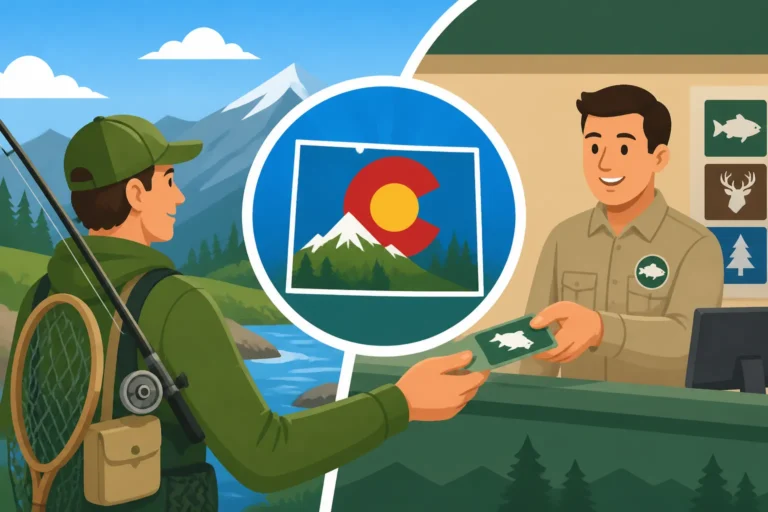
Once you've decided which type of license you need, buying it is quite easy. Colorado Parks and Wildlife has made the process very accessible. The most convenient way for most students is often online. You can purchase your license directly through the CPW website at CPWShop.com. This allows you to print your license at home or save a digital copy on your smartphone, which is increasingly common. Many anglers prefer this method, as it's quick and you can do it from your dorm room or library. Just make sure your phone has enough battery life if you're relying on a digital copy!
If you prefer an in-person transaction or need some gear for your trip, you can also purchase a license at most sporting goods stores like Bass Pro Shops or even larger retailers like Walmart. Local tackle shops throughout Colorado are also authorized vendors. These places can be great resources, not only for buying your license but also for getting up-to-date fishing reports and local advice. Some smaller independent shops might even offer a little more personalized service. Just be sure to bring all necessary identification, especially if you are attempting to prove resident status. Additionally, if you need some last-minute fishing accessories like a new fly box or some tippet, you can easily find them on Amazon before your trip, ensuring you're fully prepared.
Avoiding Common Misconceptions and Penalties
It's really easy to misunderstand residency rules, especially when you're navigating new state laws while balancing college life. Many out-of-state students come to Colorado with assumptions based on how other states define residency, or they might simply be unaware of the specific nuances CPW applies. Falling into these traps can turn a fun day of fishing into a stressful encounter with law enforcement, which is the last thing anyone wants. Taking a little time to understand these potential pitfalls can save you a lot of grief.
Misunderstandings About "Temporary" Residency
One of the biggest misconceptions students have is confusing "temporary" residency for academic purposes with "permanent" residency for state privileges like fishing licenses. You might be eligible for in-state tuition after a year, but CPW’s definition often remains more stringent, focusing on your long-term intent. For example, some students believe that simply having a Colorado mailing address or attending a Colorado university for a full academic year automatically makes them a resident for all purposes. This is often not the case for fishing licenses. If you plan to return to your home state after graduation, or if you maintain strong ties (like a driver's license, vehicle registration, or even bank accounts) in another state, CPW is likely to view your Colorado presence as temporary.
This isn't about being punitive; it's about the equitable distribution of resources. Resident license fees are lower because residents contribute to the state's tax base and are considered long-term stakeholders in conservation efforts. Therefore, the state wants clear proof of that commitment. It's also worth noting that claiming resident status falsely can have ripple effects beyond just fishing, potentially impacting other state benefits or even creating legal complications. When in doubt, it’s always better to err on the side of caution and purchase a nonresident license or directly contact CPW for clarification on your specific situation.
Consequences of Fishing Without the Correct License
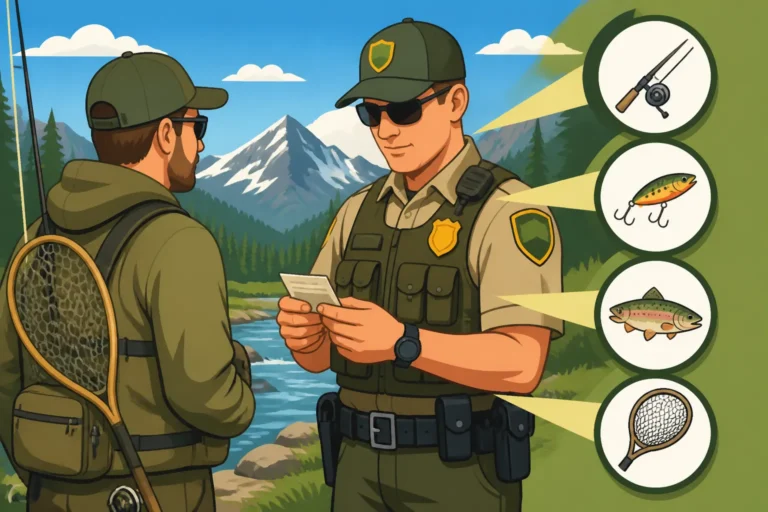
Fishing in Colorado without a valid license, or with a resident license you don't legitimately qualify for, is no small matter. Colorado Parks and Wildlife officers are highly trained and take violations seriously, especially those related to licenses and tags. The consequences can range from significant monetary fines to more severe penalties. A first offense for fishing without a license can result in a fine of several hundred dollars, along with court costs. It's a much steeper price than the difference between a resident and nonresident license.
Beyond the immediate financial hit, there can be other repercussions. Violations can lead to the accumulation of "points" against your hunting and fishing privileges, potentially resulting in the suspension or revocation of these privileges in Colorado and, through interstate compacts, in other states as well. Imagine being unable to fish for years because of one mistake! This is especially true for repeat offenders. So, while it might seem like a minor infraction, CPW views it as a serious breach of regulations designed to protect Colorado's natural resources. Don't risk it; always ensure you have the appropriate and valid license before casting a line. You can learn more about the legal ramifications in our guide, What Happens If You Fish in Colorado Without a License. Having a physical or digital copy of your license readily available (even on your smartphone bought from Amazon or directly from CPW) is always recommended when approached by a wildlife officer.
Summary Table: Colorado Fishing License Options for Out-of-State Students
To help clarify the choices available, here's a quick overview of the most common license types that out-of-state college students might consider:
| License Type | Eligibility & Criteria | Approximate 2024 Cost (incl. Habitat Stamp) | Best For | Key Considerations |
|---|---|---|---|---|
| Resident Annual | Must meet 6+ months residency, hold a Colorado driver's license/ID for 6+ months, have Colorado vehicle registration (if applicable) for 6+ months, and genuinely intend for Colorado to be their primary, permanent home. | $53.15 | Students who have definitively established Colorado as their permanent residence and plan to fish year-round. | Strict requirements; misrepresentation can lead to fines/penalties. Often not applicable for first-year or students whose permanent domicile remains elsewhere. You'll need to update your documents like your driver's license. |
| Nonresident Annual | All other out-of-state students not meeting resident criteria. | $122.15 | Students who fish frequently throughout the year but do not meet resident criteria. | More expensive, but legally sound and hassle-free. Covers all seasons of fishing without needing to prove complex residency. A great option if you plan to fish a lot and don't yet qualify as a resident. |
| Nonresident One-Day | All out-of-state students. | $17.15 | Casual anglers, single fishing trips, or testing the waters. | Most affordable for short visits. Can be easily purchased online at CPWShop.com or at many retailers like those found on Amazon. Convenient for spontaneous trips. |
| Nonresident Five-Day | All out-of-state students. | $37.15 | Longer weekend trips, short vacations, or multiple outings within a week. | Good value for extended trips without committing to an annual license. Provides flexibility for a week-long break or multiple local excursions. |
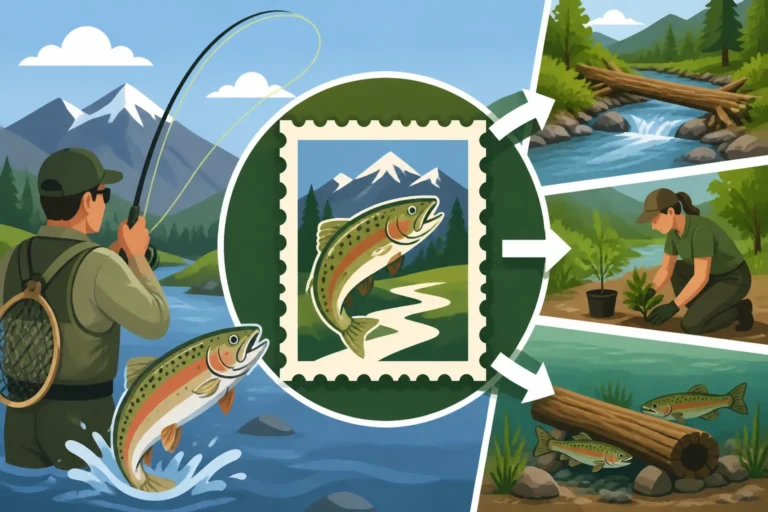
| Habitat Stamp | Mandatory for most anglers aged 18-64 (unless specifically exempt by other license type or age). | Included in above prices | Required alongside any fishing license. | This fee directly supports wildlife habitat conservation across the state. It is a one-time annual purchase that is typically automatically added to your first license purchase of the season. Check Do You Need a Habitat Stamp to Fish in Colorado? for more info on age exemptions and other details. |
Disclaimer
Please remember that fishing regulations and license costs can change. This guide is for informational purposes only. Always consult the official Colorado Parks and Wildlife (CPW) website or their current regulations brochure for the most up-to-date and accurate information before heading out to fish. The CPW is the ultimate authority on all fishing laws in Colorado.