How to Fish a Wooly Bugger for Colorado Trout
Let's be honest, sometimes you just want to catch a fish without overthinking every micro-nymph drift or delicate dry fly presentation. The good news is, there's a classic fly pattern that consistently delivers, offering both simplicity and incredible effectiveness for Colorado's abundant trout. This guide will dive deep into the versatile Wooly Bugger, showing you exactly how to fish it to hook into more trout across our stunning rivers and reservoirs.
Understanding the Wooly Bugger's Appeal for Colorado Trout
The Wooly Bugger isn't just a fly; it's a legend in the fly fishing world, and for very good reason. Many anglers, myself included, will tell you it's often the first fly they reach for when the bite is tough or they're exploring new water. Its universal appeal stems from its ability to imitate so many different food sources that Colorado trout love.
Why the Wooly Bugger is So Effective
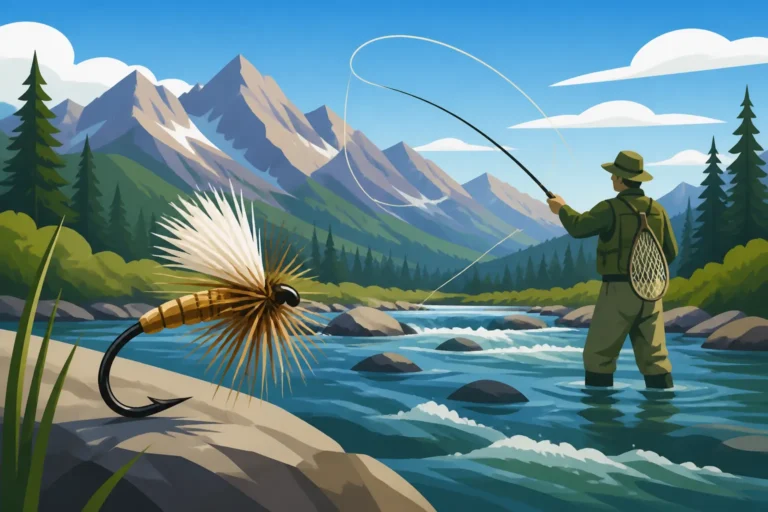
What makes the Wooly Bugger such a phenomenal pattern? It's all about its incredible versatility and lifelike action in the water. This fly doesn't try to be one specific thing; instead, its general profile and movement suggest a whole buffet of trout treats. Think about it: a baitfish darting through a run, a leech slithering off a rock, a dragonfly nymph cruising the bottom, or even a drowned terrestrial insect struggling in the current – the Wooly Bugger can represent all of these. Its marabou tail pulsates and breathes with every twitch of your rod or subtle current shift, sending out vibrations that trout simply can't ignore. This natural movement is key, especially in waters where trout are constantly looking for easy protein.
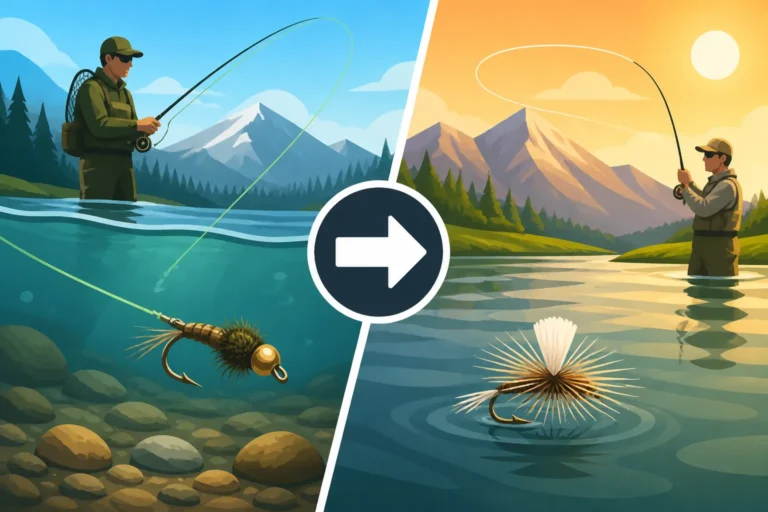
Furthermore, the Wooly Bugger often comes weighted, allowing it to sink quickly into the strike zone where bigger, hungrier trout often hold. You don't always need complex nymphing rigs; sometimes, a simple cast and retrieve with a Bugger is all it takes to trigger an aggressive strike. It's a fantastic search pattern, enabling you to cover a lot of water efficiently and find out if fish are active and where they're holding. Its robust construction also means it can stand up to multiple fish, making it a reliable workhorse in your fly box.
When and Where to Use It in Colorado
One of the greatest strengths of the Wooly Bugger is its adaptability to nearly every type of Colorado water, from high-country streams to vast reservoirs. You'll find it effective practically year-round, though specific conditions might dictate color or size adjustments. On our famous freestone rivers, like the upper Colorado River or the Arkansas River, the Wooly Bugger excels at prospecting deeper pools, undercut banks, and swift runs. When the spring runoff starts to recede, but the water still has a bit of stain, a black or olive Wooly Bugger can be incredibly productive, as it presents a strong silhouette that fish can easily spot in lower visibility.
Tailwaters, such as the Fryingpan River or the Blue River, might seem like a place only for tiny nymphs, but the Wooly Bugger still shines, especially during periods of higher flows or when the fish are less selective. Swinging a smaller, olive Bugger through slower runs can mimic midges or smaller baitfish. Even in stillwaters and our many high-alpine lakes, this fly is a powerhouse. Whether you're casting from shore at Chatfield Reservoir or stripping from a float tube in a remote mountain lake, the Bugger can entice everything from feisty rainbows to elusive lake trout. During specific times, like fall when brown trout are getting aggressive before their spawn, a larger, darker Wooly Bugger fished near redds can be irresistible. Remember to always check the specific rules for the water you're fishing, especially concerning bait restrictions or catch-and-release rules on Colorado's Gold Medal Water.
Choosing the Right Wooly Bugger for Colorado Waters
Just like choosing the right bait for spin fishing, picking the right Wooly Bugger can make a big difference. While it's a versatile fly, a little thought about color, size, and weight can drastically improve your hook-up rates on Colorado's diverse waters.
Selecting Colors and Sizes
The world of Wooly Buggers offers a dazzling array of colors and sizes, which can sometimes feel overwhelming. However, a few staples will cover 90% of your needs in Colorado. Black is arguably the most universal color. It creates a strong silhouette in the water, making it visible in everything from murky, post-runoff rivers to clear, sunny days. Many anglers swear by black for big brown trout. Olive is another absolute must-have, mimicking everything from leeches to aquatic insects and smaller baitfish. It's particularly effective in clearer waters or when trout are feeding on greener vegetation or dark-bodied nymphs. Brown Wooly Buggers are excellent for imitating sculpins or crayfish, especially in rocky riverbeds.
Beyond these foundational colors, don't be afraid to experiment. White Wooly Buggers can be deadly in lakes or larger rivers where rainbow trout or even pike might be keying in on juvenile baitfish. If you want to add a bit of flash, some Buggers incorporate Krystal Flash into the tail or body, which can be fantastic on bright days or in still, clear water to mimic fish scales. As for size, a good starting point is a size 6 or 8. These are versatile for most trout. For smaller streams or highly pressured tailwaters, you might drop down to a size 10 or 12. Conversely, when targeting larger predators like big lake trout at Blue Mesa Reservoir or Northern Pike, don't shy away from a bulky size 2 or 4. Having a selection of sizes and colors in your fly box, readily available, perhaps even organized in a small tackle box purchased from a retailer like Amazon, will prepare you for almost any scenario.
Materials and Construction for Durability
A well-tied Wooly Bugger is more than just a piece of fluff; it's a carefully constructed imitation designed to withstand the rigors of fishing and multiple trout battles. The primary components that make a Bugger effective are the marabou tail, the chenille body, and the hackle collar. Marabou, with its soft, web-like fibers, is crucial for the fly's lifelike action. It pulses and collapses in the water, creating an incredibly enticing movement that trout often mistake for living prey. The hackle, typically saddle or hen hackle, wraps around the body, adding bulk and further enhancing that "breathing" motion.
The body is usually made from chenille, a durable, fuzzy material that provides bulk and color. Some Buggers will include a small lead or tungsten bead near the eye to add weight, allowing the fly to sink faster and deeper. This weighting is particularly useful when you need to get the fly down quickly in fast currents or when you're probing deeper holes in reservoirs. A good quality hook is also paramount; a sharp, strong hook ensures better hook-sets and prevents straightening when you're fighting a substantial Colorado trout. When you're stocking up, look for patterns that feel robust and have securely tied materials. A fly that falls apart after one fish is no bargain.
Techniques for Fishing a Wooly Bugger in Colorado
The beauty of the Wooly Bugger lies not just in its looks but in the myriad ways you can present it. It's not a "cast and let it sit" kind of fly; it demands action, but the good news is that action can be as simple or as nuanced as you like. Mastering a few key retrieves will unlock its full potential.
Stripping and Retrieving in Rivers
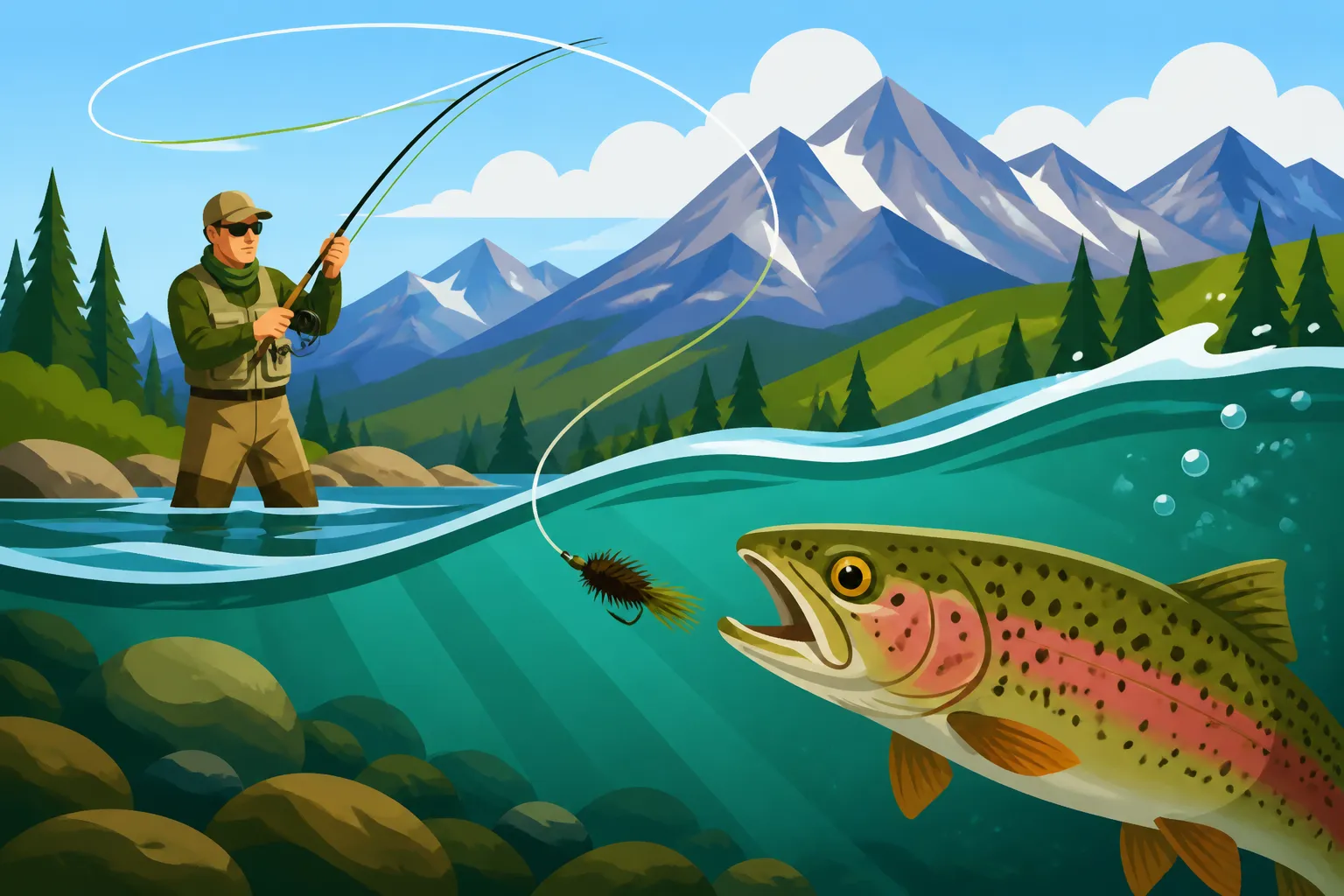
When fishing a Wooly Bugger in a river, especially in moving water like the South Platte River near Deckers or a stretch of the Big Thompson, stripping and retrieving is your bread and butter. The goal is to make the fly look like a struggling baitfish, a fleeing crayfish, or a darting leech. Start by casting across or slightly downstream. Let the fly sink for a few seconds, getting it down into the feeding lane. Then, begin your retrieve. A common and highly effective method is a strip-pause retrieve: pull your fly line in with short, sharp strips (anywhere from 6 inches to 2 feet) followed by a brief pause. This stop-and-go motion often triggers an aggressive reaction strike from trout that are following the fly.
Vary your retrieve speed and strip length until you find what the fish prefer on a given day. Sometimes, a slow, continuous strip is best, while other times, fast, erratic strips followed by longer pauses are key. Pay close attention to how the fly feels in the water; you want to feel that pulsing action. When a trout strikes, it's often a solid tug or a sudden stop. Set the hook firmly with a strip-set, pulling the line horizontally, rather than lifting the rod straight up, which helps maintain contact with the fish and prevents missing strikes. This technique is especially good when targeting hungry brown trout, which are known to chase down prey.
Drifting and Swinging Through Runs
While stripping is effective, sometimes a more natural, dead-drift presentation or a controlled swing is exactly what Colorado trout want. This is particularly true in waters where fish are accustomed to seeing natural insect drifts. To dead drift a Wooly Bugger, cast upstream or up-and-across, and then use mending techniques to guide the fly downstream, minimizing drag. The goal is for the Bugger to tumble and bounce along the bottom, mimicking a dislodged stonefly nymph or a drowned terrestrial. This can be deadly in deeper runs and riffles, where trout are often holding close to the bottom.
Swinging the Bugger is another fantastic tactic, especially in moderate currents. Cast across or slightly downstream, let the fly sink, and then allow the current to sweep it in an arc across the river. As the fly swings, the tension in your line will cause the marabou tail to pulse, making it look very alive. Strikes often occur just as the fly finishes its swing and begins to hang directly downstream. For swinging, a sink-tip line can be beneficial to keep the fly deep throughout its arc. Both dead-drifting and swinging can be highly effective when fish are not aggressively chasing, but rather ambushing prey that drifts by. Learning to read water on a Colorado freestone river will greatly enhance your success with these techniques.
Fishing in Stillwaters and Reservoirs
Colorado's lakes and reservoirs, from small mountain ponds to massive bodies of water like Blue Mesa Reservoir, offer incredible opportunities for Wooly Bugger fishing. Here, the absence of strong current means you are entirely responsible for imparting action to the fly. One of the most common and effective methods is a slow, consistent retrieve. Cast out, let the fly sink to the desired depth (which might be several seconds in deep water), and then retrieve the line with a series of slow, steady hand-over-hand pulls. Imagine a leech gracefully swimming through the water.
Varying your retrieve is still important. Try a slow strip-pause, or even a continuous figure-eight retrieve, which imparts a subtle, snake-like motion to the fly. When targeting suspended fish or deeper holding spots, you might want to use a full sinking fly line to get your Bugger down quickly. For those fishing from a boat or float tube, trolling a Wooly Bugger behind you at a very slow speed can also be incredibly effective, especially when searching for fish in new areas. In winter, for ice fishing, a small, weighted Wooly Bugger can even be jigged directly under the ice, mimicking a distressed baitfish. The key in stillwaters is patience and experimentation with depth and speed until you crack the code for that particular day.
Rigging Your Rod for Wooly Bugger Success
Getting your setup right for Wooly Bugger fishing in Colorado doesn't need to be complicated, but a few considerations can optimize your presentation and your ability to land fish. The right rod, line, leader, and tippet work together to give you control and sensitivity.
Fly Rod and Line Recommendations
For most Wooly Bugger fishing in Colorado, a moderate to fast-action fly rod in the 5 to 7-weight range is ideal. A 5-weight is versatile enough for smaller streams and average-sized trout, offering a good balance of power and finesse. However, if you're consistently targeting larger trout, like those found in the Gold Medal Waters, or battling the wind on open reservoirs, a 6 or 7-weight rod will give you more backbone for casting larger, heavier Buggers and fighting bigger fish. This extra power can also be a lifesaver when you're trying to set the hook on a hard-hitting fish or need to steer a strong trout away from snags.
When it comes to fly line, a weight-forward floating line is a great all-around choice for rivers and shallower stillwaters. It allows for easy casting and mending, and you can always add a poly leader or a weighted fly to get deeper. However, for fishing deep reservoirs or in situations where you need to get your Bugger down quickly and keep it there, a sink-tip or even a full sinking line can be incredibly advantageous. These lines are designed to pull your fly down into the strike zone, maintaining a direct connection to the fly even in deeper water. Having both a floating and a sink-tip spool for your reel, or even a second reel spooled with a sinking line, gives you maximum flexibility. You can often find excellent quality fly lines and reels from popular online retailers like Amazon, ensuring you have the right gear for diverse Colorado fishing conditions.
Leader and Tippet Setup
A proper leader and tippet setup are crucial for presenting your Wooly Bugger effectively and connecting with fish. For most river situations with a floating line, a standard 7.5 to 9-foot tapered leader, with a butt section that matches your fly line weight, works well. The taper helps transfer casting energy smoothly and turn over the heavier fly. The tippet section, which is the thinnest part of your leader and connects directly to your fly, should be chosen based on water clarity, fish size, and the size of your Bugger.
For average trout, 3X or 4X tippet is a good starting point. If the water is very clear or the fish are exceptionally spooky, you might drop down to 5X, but be mindful of breaking strength with larger flies or aggressive takes. Conversely, if you're throwing a really big Bugger for trophy fish or in off-color water, 2X or even 1X tippet provides more strength. Make sure your knots are solid; a good surgeon's knot or blood knot for connecting tippet sections and a strong clinch knot or improved clinch knot to tie on your fly will minimize break-offs. When using a sinking line or sink-tip, your leader can be much shorter, often just 2 to 4 feet of straight fluorocarbon, as the line itself is doing the work of getting the fly down, and a shorter leader reduces hinging and improves feel. Consider fluorocarbon for its abrasion resistance and invisibility underwater, which can be an advantage when dealing with Colorado's clear mountain waters.
| Wooly Bugger Color | Common Imitation | Best Conditions | Suggested Size Range |
|---|---|---|---|
| Black | Leeches, Baitfish, Aquatic Insects | Murky/Stained Water, Low Light, Deeper Pools | #4 – #10 |
| Olive | Leeches, Dragonfly Nymphs, Baitfish | Clear Water, Vegetation, General Purpose | #6 – #12 |
| Brown | Sculpins, Crayfish, Stoneflies | Rocky Bottoms, Streams with Crayfish | #4 – #8 |
| White | Juvenile Baitfish | Stillwaters, Clear Water, Targeting Pike/Lake Trout | #2 – #8 |
| Tan | Caddis Larva, Small Sculpins | Freestone Rivers, Clearer Streams | #8 – #12 |
There you have it – the mighty Wooly Bugger, a fly that consistently proves its worth across all of Colorado's incredible fishing environments. Don't let its simplicity fool you; this pattern is a true trout magnet. Whether you're stripping it through a swift river, swinging it through a deep run, or slowly retrieving it across a tranquil lake, the Bugger is designed to catch fish. Keep a good selection in your box, experiment with colors and retrieves, and you'll find yourself reaching for this confidence-builder again and again. It truly is one of the most reliable flies you can have for chasing Colorado trout.
Disclaimer
This article is for general informational purposes only and does not constitute professional advice. Laws, prices and regulations vary by location and change over time. Consult a qualified professional for guidance on your specific situation.