Does Catfish Fishing Slow Down in Cold Water?
It's a common frustration for anglers in Colorado: you've had a fantastic summer pulling in feisty channel catfish from our warmer lakes and reservoirs, but as the leaves turn and the mountain peaks get their first dustings of snow, you start to wonder if your catfish game is over for the year. Does catfish fishing really slow down in cold water? The short answer is yes, absolutely, it does. But that doesn't mean it's impossible. This guide will walk you through why catfish activity dwindles with dropping temperatures and, more importantly, how you can adapt your approach to still find success, even when the air bites and the water chills.
The Chilling Truth About Cold Water and Colorado Catfish
Catfish, particularly the channel catfish species common in Colorado's reservoirs and warmwater ponds, are ectothermic creatures, meaning their body temperature mirrors their surroundings. Unlike us warm-blooded folks, they can't regulate their internal temperature. This fundamental biological fact dictates much of their behavior, especially when the mercury drops.
Understanding Catfish Metabolism in Winter
Think of a catfish in cold water like a bear in hibernation, but without the cozy den. As water temperatures fall below, say, 50-55 degrees Fahrenheit, their metabolism slows significantly. This isn't just a minor dip; it's a profound physiological shift. Their heart rate decreases, their digestion slows to a crawl, and their energy expenditure drops dramatically. It's a survival mechanism, allowing them to conserve precious energy when food sources might be scarce and their bodies aren't designed to operate at peak efficiency in frigid conditions.
This metabolic slowdown means they're not burning through calories at the same rate they would during a scorching July afternoon. They don't need to eat as much, as often, or with the same intensity. They become sluggish, less responsive, and far less inclined to chase down a meal. You won't find them tearing through schools of baitfish with the same aggression. Instead, they're looking for an easy, high-calorie meal that requires minimal effort to consume. This biological reality is the primary reason why your summer hotspots might seem utterly barren in the chillier months.
The Impact on Feeding Habits and Activity
Because their bodies are running on "low power" mode, cold-water catfish drastically alter their feeding habits. During the warm months, they're opportunistic scavengers, actively cruising shorelines, patrolling drop-offs, and scent-trailing for anything edible – dead baitfish, crayfish, insects, you name it. They'll readily hit a variety of baits and often put up a strong fight.
However, once the water turns cold, their activity level plummets. They become much more sedentary. Instead of actively hunting, they're more likely to hold in specific areas where they can expend the least amount of energy, waiting for food to come to them. This often means finding deep pockets, submerged structures, or areas with slightly warmer water. Their bites become incredibly subtle, often feeling like nothing more than a slight tap or a slow, heavy drag on your line. You might even mistake it for the current or bottom debris. Forget the aggressive tugs and rod-bending strikes of summer; cold-water catfish demand a keen eye and even keener touch. This shift in behavior requires a complete overhaul of your typical catfish tactics if you hope to succeed.
Finding Colorado Catfish When the Water Turns Cold
Knowing why catfish slow down is only half the battle. The real trick is figuring out where they go when they're in their winter slump. You can't just cast blindly into your usual summer spots and expect results. You need to think like a cold-blooded fish trying to stay comfortable and conserve energy.
Deep Water Sanctuaries
When the surface water starts to cool rapidly, catfish will instinctively seek out the deeper parts of a lake or reservoir. Deeper water tends to maintain a more stable, and often slightly warmer, temperature than the surface layers, especially as ice begins to form. These deep zones offer refuge from the harsh, fluctuating temperatures closer to the surface. Look for areas where the lake bottom drops off dramatically, such as old creek channels, submerged humps, or the deep ends of dam faces.
These aren't just random deep spots, though. Catfish will often congregate around structure within these deep areas. Think about submerged timber, rock piles, old bridge abutments, or even subtle depressions in the lake bed. These features provide a sense of security, a place to hide, and often concentrate any available baitfish. Exploring these deeper, structured areas with your boat's sonar can be incredibly beneficial. If you're bank fishing, focus on accessible deep water, like near a boat ramp or a prominent point that extends into deeper sections. Sometimes, even seemingly insignificant structural changes at depth can hold a good number of fish.
Identifying Thermal Refuges
While catfish generally head to deeper water, there can be exceptions, especially in bodies of water with unique features. Any source of slightly warmer water, even a degree or two difference, can act as a "thermal refuge" and attract lethargic catfish. These areas might include:
- Inflows from industrial plants: While not common in Colorado's pristine fishing areas, some reservoirs might have warm water discharges. Always check local regulations before fishing near such areas.
- Springs: Submerged springs can often introduce slightly warmer water into a lake. These can be tricky to locate without specialized equipment or local knowledge, but they are goldmines when found.
- Deep river channels: In reservoirs formed by damming rivers, the old river channel can be a primary thermal highway and congregating point for fish.
These thermal refuges are less about finding the "hottest" water and more about finding the most stable and least cold water. Catfish aren't looking for a hot tub, just a spot where they don't have to fight the chill as much. Sometimes, even the north-facing banks that get more consistent sun throughout the day can warm the shallow water just enough to draw some catfish in the late afternoon. This is especially true on sunny, still days following a cold snap.
Prime Locations in Colorado Reservoirs
Colorado boasts several excellent reservoirs for channel catfish, and their characteristics can help you pinpoint winter holding patterns. For example, large, deep impoundments like Pueblo Reservoir or John Martin Reservoir on the Eastern Plains are known for their catfish populations. When the weather turns cold, these catfish will generally retreat to the deepest parts of the main lake body, often near the dam or where old river channels run.
For anglers looking to target these fish, consider casting out into the deepest accessible areas from shore, perhaps utilizing heavier weights to hold your bait on the bottom. If you're fishing from a boat, you'll want to employ your fish finder to locate schools of baitfish and potential catfish holding spots near submerged structures in these deeper basins. The fishing can be tough, but the rewards—like landing a hefty channel cat in the dead of winter—are incredibly satisfying. While species like walleye and trout remain active in colder conditions, channel catfish become a true challenge. If you're curious about other species, you might be interested in knowing about Colorado's Daily Walleye Limit.
Adapting Your Tactics for Cold-Water Catfish
Since catfish are less active and less willing to chase, your approach needs to be fundamentally different from your summer tactics. It's all about precision, patience, and presenting an irresistible, easy meal right to their noses.
The Right Bait and Scent for Lethargic Catfish
In summer, a wide variety of stinky baits work wonders. In cold water, you need to double down on scent and appeal. Live bait or fresh cut bait often outperforms prepared stink baits because it offers a more natural presentation and emits fresh blood and oils.
- Cut Bait: Fresh cut bait, like shad, carp, or even small pieces of bluegill (check local regulations for legality and size restrictions), is often the most effective. The scent trail from the blood and guts is potent, and catfish don't have to work hard to pick up on it. Make sure your pieces are small enough for a sluggish catfish to inhale without much effort, but large enough to emit a good scent.
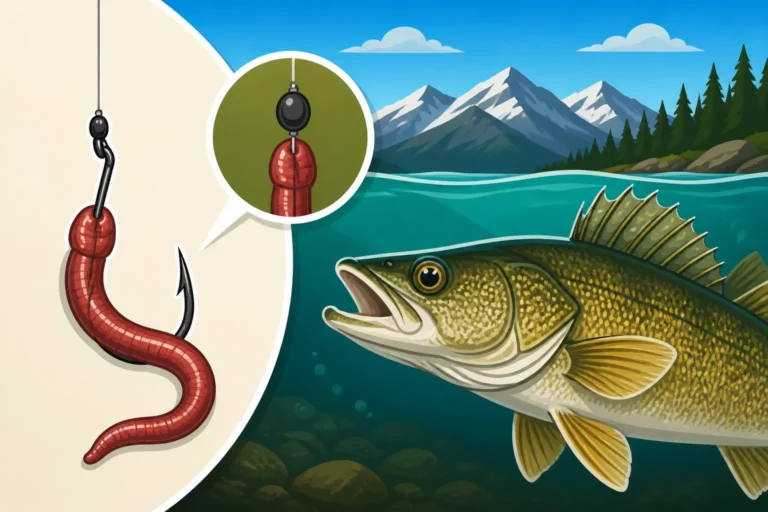
- Worms: Nightcrawlers or large earthworms can still be effective, especially when threaded to give a natural appearance. They provide some natural movement and scent.
- Shrimp: Raw, peeled shrimp from the grocery store can be surprisingly effective. They are packed with scent and can be easily cut into bite-sized pieces.
Whatever bait you choose, ensure it's fresh and strong-smelling. Consider adding a commercial scent attractant, especially those with an oily base that disperses well in cold water. You want to create a strong, localized scent plume that will eventually reach the catfish, drawing them in without requiring them to move much. For more ideas on what tempts these fish, check out our guide on Best Bait for Catfish in Colorado Reservoirs. If you're stocking up on gear, Amazon can be a great place to find a variety of scents and specialized cold-water baits.
Slow and Steady Presentation is Key
This is where many anglers go wrong in cold water: they fish too fast. A catfish in cold water won't chase a rapidly retrieved lure or aggressively attack a bait drifting by quickly. Your presentation needs to be agonizingly slow and right on the bottom.
- Bottom Fishing: Always keep your bait on the bottom. Use enough weight to ensure your bait stays put, even in subtle currents. A Carolina rig or a three-way swivel rig works well, allowing the bait to move naturally with a short leader while the weight anchors it.
- Minimal Movement: Cast your bait out, let it sink, and leave it there. Resist the urge to constantly reel in and re-cast. Give the scent time to disperse and for a sluggish catfish to slowly approach and investigate. You might need to wait 15-30 minutes, or even longer, before checking your bait.
- Leader Length: A slightly longer leader (18-36 inches) can allow your bait to flutter more naturally off the bottom, making it more appealing to a hesitant fish.
- Multiple Rods: If legal (check Colorado Fishing Regulations Every Angler Should Know for specific rules, including Colorado's Second-Rod Stamp and Who Needs One), using multiple rods with different baits at varying depths can help you cover more ground and discover what the catfish prefer on a given day.
Gear Adjustments for Subtle Bites
Your tackle also needs to be refined for cold-water catfish. Heavy catfishing rods and braided lines that are great for battling powerful summer fish might be too insensitive for the faint bites of winter.
- Sensitive Rods: Opt for a medium-light to medium-heavy spinning or casting rod with a sensitive tip. This will allow you to detect those incredibly subtle taps or the heavy, spongy feeling that often indicates a catfish has picked up your bait.
- Monofilament Line: While braided line has its advantages, many anglers find that monofilament line offers better stretch, which can be crucial for absorbing the initial subtle "take" without ripping the bait away from the fish. It also tends to be less visible in clear winter waters. A 10-20 lb test mono is generally sufficient.
- Smaller Hooks: Downsize your hooks. A large hook can be difficult for a lethargic catfish to ingest properly. A 1/0 to 3/0 circle hook or Kahle hook is often perfect. Circle hooks are excellent for catfish, as they usually hook the fish in the corner of the mouth, making for easier release and less harm to the fish.
- Bite Indicators: Since bites are so subtle, any advantage you can get to detect them is huge. Consider using bell alarms, electronic bite alarms, or even simply watching your rod tip intently for the slightest twitch or bend. A still rod tip might look uneventful, but it's often the slight, slow bend that gives away a cautious catfish. On Amazon, you can find a wide array of affordable bite alarms that clip directly to your rod.
When to Try Your Luck: Optimal Cold-Water Catfish Times
While summer months are generally preferred for catfish, there are specific windows when targeting them in cold water might prove more fruitful. Patience, as always, is paramount.
Early Winter Opportunities
The transition from late fall to early winter, just before ice-over, can be a prime time for cold-water catfish. During this period, water temperatures are dropping but haven't yet reached their absolute coldest. Catfish are still somewhat active, trying to pack on calories before their metabolism really grinds to a halt. Look for these opportunities in late October and November in most parts of Colorado, depending on elevation.
On sunny days, pay attention to the warmest parts of the day, typically mid-afternoon. A few hours of consistent sunshine can warm the top layer of water by a degree or two, sometimes encouraging catfish to move slightly shallower to feed before retreating to the depths as evening approaches. These "warm-ups" can be your best bet for getting a bite. Think of it as a brief window where they're willing to make a small effort for a meal. For a broader understanding of how different species behave, consult our guide on Colorado Fishing Seasons Month by Month.
Ice Fishing for Catfish (Yes, It Happens!)
Believe it or not, you can target catfish through the ice in Colorado! While not as popular as ice fishing for trout or perch, it's definitely possible in reservoirs known for their catfish populations, like Cherry Creek Reservoir or Chatfield Reservoir, which are home to Best Waters for Channel Catfish in Colorado. The key is to remember everything we've discussed about their lethargic nature.
- Location: Drill your holes over known deep-water structures – old creek channels, humps, or drop-offs. Use your fish finder to locate fish holding tight to the bottom.
- Bait: Small, fresh cut bait or a lively fathead minnow (where legal) are excellent choices.
- Presentation: Drop your bait slowly to the bottom, then barely lift it an inch or two. Keep it as still as possible. You're not jigging aggressively; you're simply presenting a meal directly in front of their faces.
- Detection: Use a spring bobber or a very sensitive tip-up flag, as the bites will be extremely subtle. Sometimes, the only indication is a slight increase in line tension or a slow drift of the line to the side. For more on this chilly pursuit, read about Ice Fishing in Colorado, Getting Started and Colorado Ice Fishing Rules. Even when fishing through the ice, an electronic fish finder from brands available on Amazon can be a game-changer for locating these deep-holding fish.
Why Patience is Your Best Friend
No matter the time of year, patience is a virtue in fishing, but for cold-water catfish, it's absolutely essential. You're not dealing with actively feeding fish that will aggressively hit your bait within minutes. You're trying to entice a semi-dormant creature to slowly, deliberately, pick up a meal.
Expect long waits between bites. Set up your rods, put on some warm layers (winter fishing in Colorado can be brutal, so proper clothing from your favorite outdoor retailer or Amazon is a must), and be prepared to enjoy the quiet solitude of the cooler months. Don't get discouraged if you don't get a bite for an hour or two. A single fish in cold water is often the reward for hours of persistence. The payoff, however, can be a surprisingly large fish, as older, larger catfish are often the ones most adept at conserving energy and surviving the winter chill.
Cold Water Catfish Tactics at a Glance
| Characteristic / Tactic | Warm Water (Summer) | Cold Water (Fall/Winter) |
|---|---|---|
| Catfish Activity | Highly active, aggressive feeding | Lethargic, slow metabolism, minimal movement |
| Preferred Location | Shallow flats, creek channels, shorelines, cover | Deep water, submerged structures, thermal refuges |
| Feeding Habits | Opportunistic, active hunting, strong bites | Passive, scent-driven, subtle bites |
| Best Bait | Stink baits, cut bait, worms, chicken livers | Fresh cut bait (small pieces), live minnows (where legal), shrimp |
| Presentation | Cast and retrieve, drift, active jigging | Still fishing on the bottom, extremely slow retrieves (if any) |
| Hook Size | Larger (3/0 – 6/0) | Smaller (1/0 – 3/0) |
| Rod Sensitivity | Medium-heavy to heavy, good backbone | Medium-light to medium, sensitive tip |
| Bite Detection | Visible rod bending, strong tugs | Subtle taps, slow bends, increased line tension |
| Patience Level Required | Moderate | High, expect long waits |
Fishing for catfish in Colorado when the water is cold is a different ballgame altogether compared to the summer months. Their metabolism slows, their activity drops, and they become far more selective and subtle in their feeding. However, by understanding these physiological changes and adapting your strategy to focus on deep-water sanctuaries, potent baits, incredibly slow presentations, and sensitive gear, you can still find success. It demands more patience and a keen eye for detail, but landing a robust Colorado channel cat against the backdrop of a crisp, wintery landscape is a truly rewarding experience that proves fishing doesn't have to stop when the temperatures plummet. So bundle up, adjust your tactics, and embrace the challenge of cold-water catfishing!
Disclaimer
This article is for general informational purposes only and does not constitute professional advice. Laws, prices and regulations vary by location and change over time. Consult a qualified professional for guidance on your specific situation.