How to Tell a Brown Trout From a Brook Trout
It can be surprisingly tricky out on the river or lake when you're staring down a beautiful trout, wondering exactly which species it is. Is that vibrant red-spotted beauty a brown trout, or have you just landed a stunning brook trout? Many anglers, especially those new to Colorado's diverse waters, find themselves second-guessing the identity of their catch. This guide is here to clear up that confusion, helping you confidently distinguish between these two popular, yet distinctly different, trout species you'll encounter in our magnificent state.
Why the Mix-Up Happens: Common Trout Characteristics
When you're out there, rod in hand, whether it's on a high-alpine stream or a freestone river, every trout can look pretty similar at first glance, especially when they're darting through clear water. Both brown trout and brook trout are members of the salmonid family, and they both often feature spots, vibrant colors, and sleek, powerful bodies built for thriving in cold, oxygen-rich waters. Plus, depending on the specific water body, their diet, and even the time of year, individual fish can display varying colorations that make identification even more challenging. It's not just you; it's a genuine puzzle until you know what key features to look for.
The Initial Glance and Environmental Clues
Before you even get close enough to examine fin details, you can often get a hint from where you're fishing. Brook Trout in Colorado's High Country are almost exclusively found in colder, smaller streams and high-altitude lakes, often those that are tucked away and require a hike to reach. They thrive in pristine, very cold water. Brown trout, on the other hand, are much more widespread. You'll find them in larger rivers, tailwaters, and many reservoirs across the state. This geographical context is often your first clue. If you're backpacking into a remote, tiny alpine lake, chances are good you're after brook trout. If you're on a big, popular river, it's more likely a brown.
The Problem with Color Variation
One of the biggest culprits for confusion is how much a trout's color can change. A brook trout pulled from a dark, tannin-stained pond might be much darker than one from a clear, sunny mountain stream. Similarly, a brown trout that's been feeding heavily on crayfish in a particular river might have a very different hue than one that primarily eats insects. During spawning season, both species also undergo dramatic color shifts, becoming even more vibrant and intense, which can further obscure their typical markings. Don't rely solely on the overall color of the fish; you need to look closer. To help with identification in the field, I always keep a good, waterproof field guide in my pack, which you can easily find on Amazon.
Decoding the Brown Trout: Spotting the Key Features
Brown trout, scientifically known as Salmo trutta, are true champions of adaptation. They're not native to North America but were introduced from Europe and have since made themselves very much at home in Colorado's rivers and lakes. They're often celebrated for their hard-fighting nature and elusive tendencies, making them a prized catch for many anglers. When you reel in a brown, here's what to look for to confirm its identity.
Distinctive Spotting and Coloration
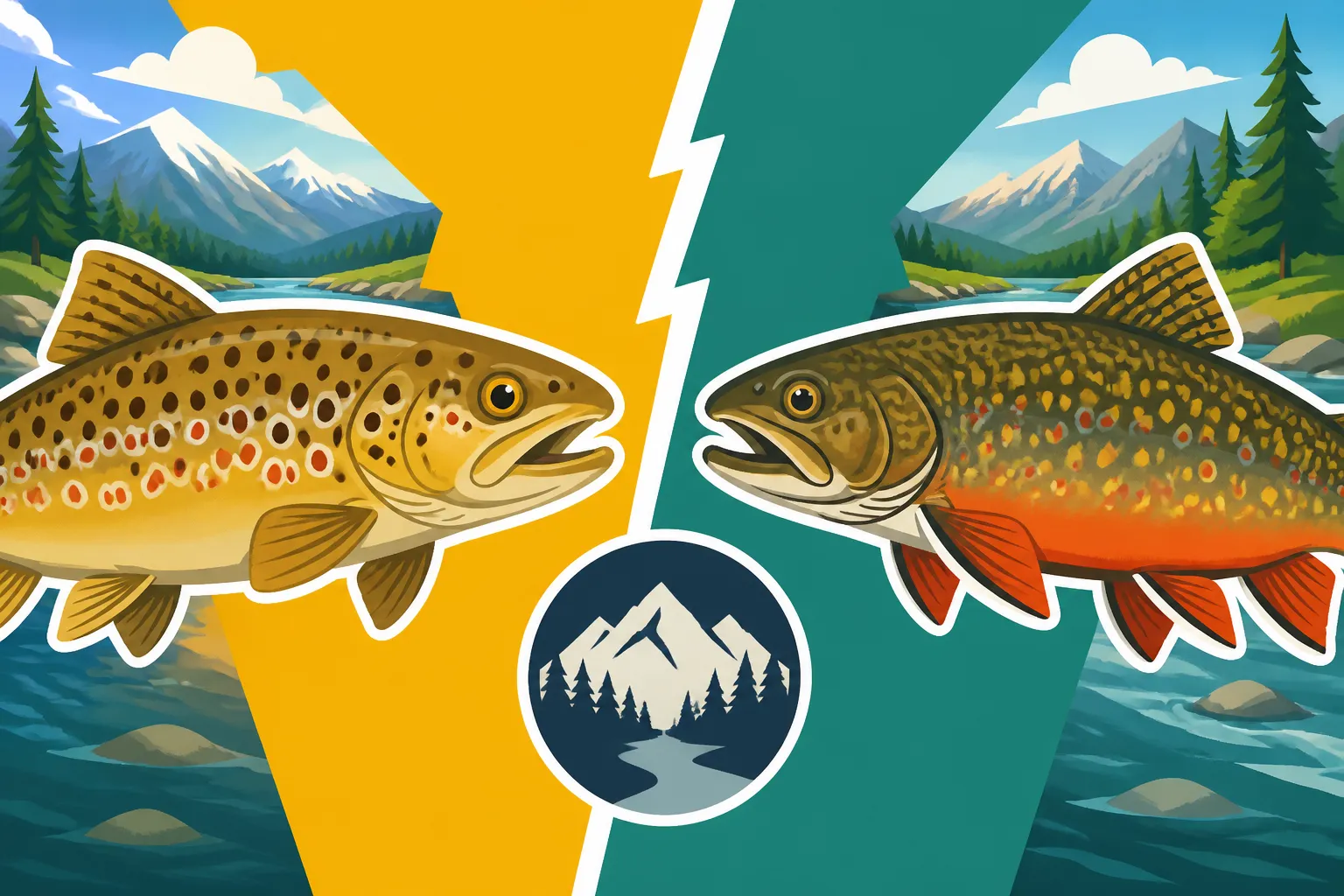
The most telling characteristic of a brown trout is its spotting pattern. They typically have dark brown or black spots, often encircled with a lighter halo, scattered along their sides, back, and dorsal fin. What really sets them apart, though, are the red or orange spots that are usually present on their sides. These red spots are often surrounded by a light, bluish halo, almost like little bullseyes. While their overall body color can range from a golden-brown to a silvery-bronze, especially in larger lake-dwelling fish, these distinct dark and red-orange spots are consistent. The belly is usually creamy white to yellow. Take a look at Brown Trout in Colorado, Where They're Wild for more on where these beauties thrive.
Fin Characteristics and Body Shape
When examining the fins of a brown trout, you'll generally notice that their dorsal fin (the one on their back) also has distinct spots, much like their body. Their tail fin (caudal fin) is typically square or only very slightly forked, and usually lacks the prominent vermiculation (worm-like markings) you might see on other trout species. The adipose fin, that small, fleshy fin near the tail, is usually present and unspotted. Brown trout generally have a more robust, streamlined body shape compared to the sometimes chunkier appearance of brook trout, especially the larger, older specimens. They can grow quite large in Colorado, becoming formidable predators that consume a variety of prey. What Brown Trout Eat as They Get Larger highlights how their diet shifts from insects to smaller fish and even mice as they mature.
Mouth and Jaw Structure
One final, often overlooked, identifier for a brown trout is its mouth. They tend to have a larger mouth that extends well past the eye. This isn't just a visual cue; it's an adaptation that speaks to their predatory nature. Larger brown trout are formidable hunters, and their jaw structure allows them to engulf bigger prey. So, if you're holding a fish with those tell-tale red and dark spots, a square tail, and a jaw that seems a bit disproportionately large for its head, you've likely got a brown trout on your hands.
Unmasking the Brook Trout: Unique Identifying Marks
Brook trout, Salvelinus fontinalis, are technically char, not true trout, but most anglers in Colorado refer to them as brook trout. They are often the vibrant jewels of our high-country streams, known for their stunning colors, especially during the fall spawning season. These fish are native to eastern North America, but like brown trout, they've been widely introduced and have established strong populations in many of Colorado's colder, higher-elevation waters.
The Signature Vermiculations and Spotting
The most definitive characteristic of a brook trout is the striking, wavy, worm-like markings, called "vermiculations," on their back and dorsal fin. These markings are usually olive green or black against a lighter, often greenish or yellowish background. This is a dead giveaway; brown trout do not have these patterns. On their sides, brook trout have light spots, often yellowish, and incredibly distinctive bright red spots, many of which are surrounded by blue halos – these are called "areolae." The contrast between the light body spots and the vivid red-blue spots is a key identifier.
Fin Colors and Body Characteristics
The fins of a brook trout are perhaps their most beautiful and unique feature. Their lower fins (pectoral, pelvic, and anal fins) often have a leading white edge, followed by a black stripe, and then a vibrant orange or red coloration. This "white-black-orange/red" fin pattern is incredibly distinct and virtually unmistakable. Their tail fin is typically square or only slightly forked, much like a brown trout, but the vivid fin colors on the lower fins are the real clincher. Brook trout tend to have a slightly chunkier, more rounded body shape than brown trout, especially when caught in smaller streams or high-mountain ponds. They rarely grow as large as brown trout in Colorado, often topping out at smaller sizes in their typical high-alpine habitats.
Identifying Through Habitat and Behavior
As mentioned earlier, habitat is a huge clue for brook trout. If you're fishing a small, crystal-clear stream tumbling down a mountain, or a secluded high-alpine lake, there's a very good chance you're looking at brook trout. They prefer water that remains exceptionally cold, often below 65 degrees Fahrenheit. They also tend to be less wary than brown trout, often found in less cover. If you see a fish that seems almost too beautiful with those vibrant colors and distinctive fins, and it came from a tiny creek, you've probably found a brook trout. Keeping a quality pair of polarized sunglasses, which you can find on Amazon, can greatly aid in spotting these fish in clear water before you even cast.
Brown Trout vs. Brook Trout: A Side-by-Side Comparison
To truly solidify your identification skills, let's put these two incredible fish head-to-head. Sometimes, seeing the differences laid out clearly can make all the difference when you're on the water.
| Feature | Brown Trout | Brook Trout |
|---|---|---|
| Scientific Name | Salmo trutta | Salvelinus fontinalis (a char) |
| Back/Dorsal Fin | Dark brown/black spots, sometimes with halos; no vermiculations. | Distinctive wavy, worm-like markings (vermiculations); few or no spots. |
| Side Spotting | Dark brown/black spots, red/orange spots with light (often bluish) halos. | Light yellowish spots; bright red spots with blue halos (areolae). |
| Lower Fins | Plain; no distinct white leading edge. | Distinct white leading edge, black stripe, then orange/red. |
| Tail Fin | Square to slightly forked. | Square to slightly forked. |
| Mouth Size | Large, jaw extends past the eye. | Smaller, jaw typically does not extend past the eye. |
| Body Shape | More streamlined, generally longer. | Stockier, often chunkier, especially when smaller. |
| Preferred Habitat | Larger rivers, tailwaters, reservoirs, tolerates warmer water. | Cold, pristine, small streams, high-alpine lakes. |
| Native To | Europe/Western Asia (introduced in US). | Eastern North America (introduced in CO). |
This table should be a handy reference next time you're trying to figure out if you've got a Colorado's Trout Species, A Field Guide brown or a brook on your line.
Why Does Accurate Identification Matter?
Beyond the satisfaction of knowing your fish, accurate identification is crucial for a few very practical reasons, especially when it comes to following local regulations. In Colorado, bag limits, size restrictions, and even bait restrictions can vary significantly by species and by specific water bodies. For example, some waters might have different limits for brook trout compared to brown trout, or specific rules for Colorado's 14-Inch Trout Length Rule that apply differently. Not knowing could lead to inadvertently breaking the rules.
Furthermore, conservation efforts sometimes focus on specific species. Understanding which fish you're catching helps with data collection that contributes to management decisions. For instance, Catch-and-Release Rules on Colorado's Cutthroat Waters are often very strict to protect native cutthroat populations, and while this article focuses on browns and brookies, knowing the difference between all trout species is paramount. You certainly don't want to mistake a native cutthroat for a stocked rainbow, let alone a brook trout for a brown, if regulations differ. Always check the current Colorado Fishing Regulations Every Angler Should Know brochure before heading out, which you can easily read online or pick up at most sporting goods stores or even on Amazon.
Practical Tips for Field Identification
To make identification easier on the water, consider these tips:
- Handle with Care: Always handle fish gently and with wet hands, especially if you plan to release them. This protects their protective slime coat.
- Take a Photo: A quick, clear photo (while keeping the fish wet and in the water as much as possible) can be reviewed later if you're unsure. Focus on the back, sides, and fins.
- Use a Field Guide: As mentioned, a small, waterproof field guide in your tackle box is invaluable.
- Observe the Fins Closely: The white-black-orange/red leading edge on the lower fins of a brook trout is a major distinguishing feature. Don't just glance; really look at those fins!
- Look for Vermiculations: No other common Colorado trout has the distinct worm-like markings on its back like a brook trout. If you see them, it's a brook.
- Consider the Mouth: Is the jaw extending far past the eye? More likely a brown.
By paying attention to these key features, you'll soon be able to confidently tell the difference between a brown trout and a brook trout, enhancing your understanding and enjoyment of Colorado's incredible fishing opportunities.
Disclaimer
This article is for general informational purposes only and does not constitute professional advice. Laws, prices and regulations vary by location and change over time. Consult a qualified professional for guidance on your specific situation.