Why Colorado Closes Rivers Early During Drought Years
It’s a scenario all too familiar to Colorado anglers: you’ve meticulously planned a fishing trip, scouted your favorite stretch of river, maybe even tied a few flies in anticipation, only to hear the dreaded news that the river is closed or under severe restrictions due to low water and high temperatures. This can be incredibly frustrating, feeling like Mother Nature is personally thwarting your plans. But these early river closures, especially during drought years, are not arbitrary; they are a critical conservation measure by Colorado Parks and Wildlife (CPW) to protect the very fish we love to pursue. This comprehensive guide will explain the complex ecological reasons behind these closures, how they impact our precious trout populations, and what you, as a responsible angler, can do in response.
The Harsh Reality of Colorado's Water Cycle
Colorado's rivers and streams are the lifeblood of its world-class fishing, but this aquatic ecosystem is incredibly sensitive to the ebbs and flows of our annual water cycle. When drought tightens its grip, the ripple effect on our waterways is profound and often devastating for fish.
Snowpack's Pivotal Role and Runoff's Diminished Importance
Anyone who lives in or visits Colorado knows the importance of winter. Our entire ecosystem, from the forests to our farmlands, relies heavily on the snowpack that accumulates in the high country. This snow acts as a giant, natural reservoir, slowly melting throughout spring and early summer, consistently feeding our rivers and streams with cold, oxygen-rich water. It's this steady flow that keeps water temperatures stable and currents strong, creating the ideal habitat for trout.
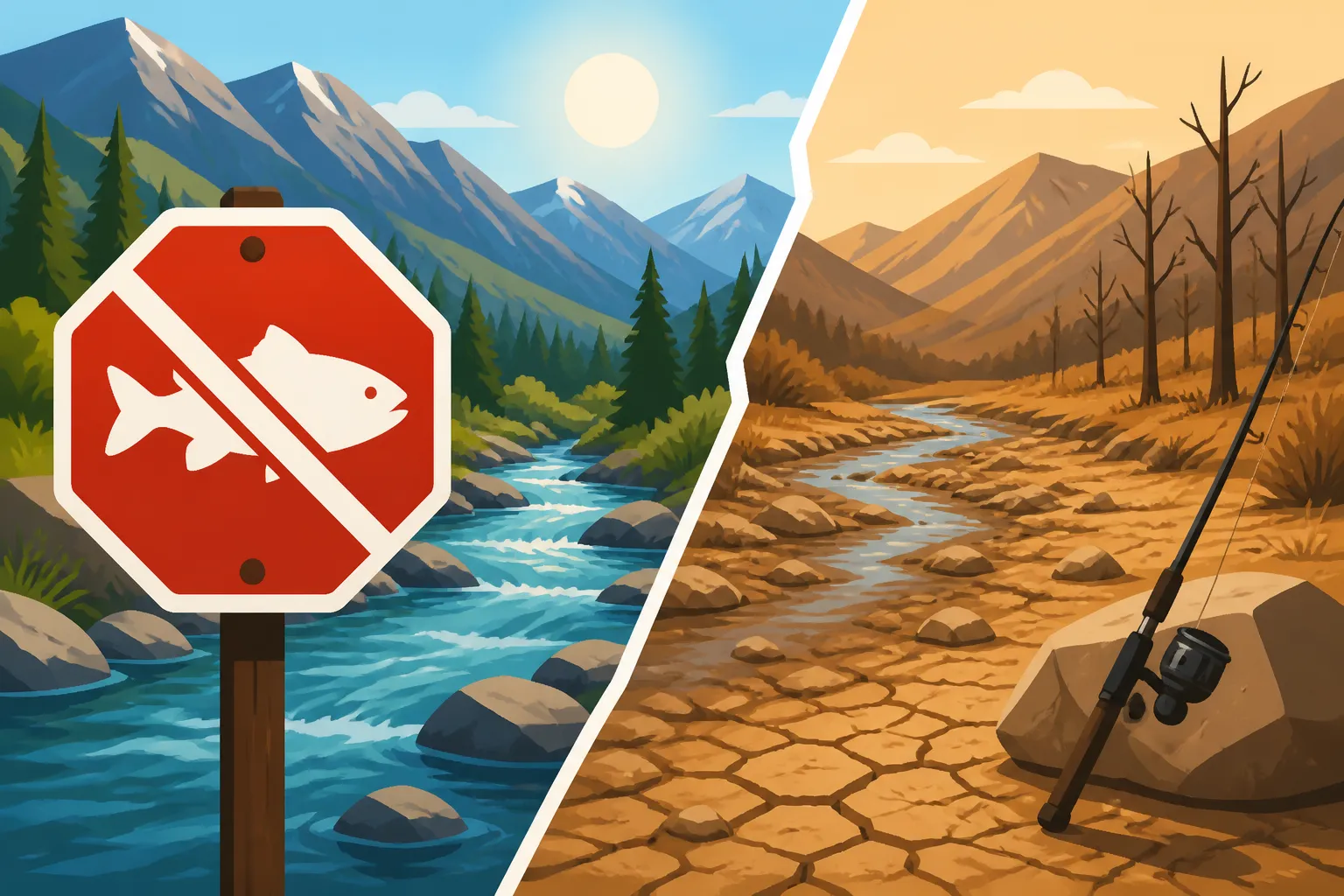
During a drought year, however, this critical snowpack is significantly reduced. You might see less snow on the mountain peaks in April, or hear reports of a "poor snow year." This isn't just about pretty scenery; it means less water available to melt into the river systems. When the runoff season finally arrives, it's often meager and short-lived. Instead of the robust, sustained flows we hope for, rivers might swell briefly with what little snow exists, then quickly recede to alarmingly low levels. This leaves rivers vulnerable throughout the crucial summer months, long before the typically anticipated late-summer slowdown. It's heartbreaking to witness, especially when you're used to seeing those same rivers roaring in spring.
The Intensifying Impact of Heatwaves and Low Precipitation
Compounding the issue of a poor snowpack are the increasingly common and intense heatwaves that bake Colorado in summer. When the air temperature soars, it directly translates to higher water temperatures in our rivers and lakes. Shallow, slow-moving water heats up much faster than deep, turbulent flows. So, even if there was some initial runoff, sustained hot weather can quickly turn a cool trout stream into a dangerously warm bath.
Lack of precipitation, another hallmark of drought, exacerbates this problem further. Without summer rainstorms to contribute flow and cool things down, rivers continue to drop, exposing more streambed to the sun. This creates a vicious cycle: less water means warmer water, which means even less habitat and more stress for fish. You'll often see this unfold on popular fishing destinations like the Fryingpan River or sections of the Arkansas River, where what might normally be a slight dip in flow becomes a severe constriction of fish habitat, sometimes leading to voluntary or mandatory closures much earlier than usual, perhaps in late July or early August instead of late August or September.
How High Water Temperatures Harm Trout and Other Fish
The consequences of warm, low water are dire for coldwater fish like trout. Their very survival is predicated on specific environmental conditions, and when those conditions degrade, fish populations suffer rapidly.
The Physiology of Trout in Warm Water
Trout, being coldwater species, thrive in water temperatures generally below 68°F (20°C). As water temperatures climb above this threshold, their metabolism increases dramatically. They need more oxygen, just like we would if we were running a marathon in stifling heat. The cruel irony is that warmer water holds significantly less dissolved oxygen than colder water. It's a double whammy: fish need more oxygen, but less is available.
Imagine trying to breathe through a thin straw while running on a hot day – that’s essentially what a trout experiences in warm water. They become lethargic, struggle to feed, and their immune systems weaken, making them highly susceptible to diseases. If temperatures remain elevated for too long, or climb above lethal thresholds (often in the low 70s°F), trout can simply suffocate, leading to widespread fish kills. This isn't just a slight inconvenience for the fish; it's a matter of life and death, and it's why organizations like CPW take these conditions so seriously.
The Danger of Low Flows and Concentrated Stress
Beyond temperature, low water levels themselves pose a significant threat. When rivers shrink, fish are forced to abandon their typical territories and crowd into the deepest, coolest pools available – often referred to as "thermal refuges." While these spots offer a temporary reprieve from the heat, they come with their own set of dangers.
Concentrating fish into smaller areas increases competition for food and space, leading to heightened stress levels. It also makes them much easier targets for predators, both avian and mammalian. Furthermore, the waste products from so many fish in a confined area can quickly degrade water quality, further depleting oxygen and promoting the spread of disease. It’s a tragic scene to witness, seeing large trout unnaturally packed together, visibly distressed. This increased stress makes any additional pressure, such as being caught and released, potentially lethal, even with the best handling practices. This is exactly why closures are often implemented on popular stretches like the Gold Medal Waters of the South Platte River near Deckers or the Fryingpan below Ruedi Reservoir, where high angler pressure combined with poor conditions would be devastating. Understanding Colorado's Gold Medal Water Rules becomes critical in these situations.
Colorado Parks and Wildlife's Conservation Mandate
It's easy for anglers to feel frustrated by closures, but CPW doesn't make these decisions lightly. Their primary mission is the long-term health and sustainability of Colorado's wildlife, and that includes our valuable fisheries.
Proactive Monitoring and Reactive Closures
CPW’s approach to river management during drought involves constant, vigilant monitoring. This isn't just someone glancing at the river; it's a sophisticated system using real-time data from stream gauges (like those maintained by the U.S. Geological Survey, or USGS) that track water flow and temperature. They also rely heavily on observations and reports from local wildlife officers, fly shop owners, and concerned citizens who are on the water every day.
These closures are not arbitrary acts; they are a last resort, implemented only when data indicates that the fish populations are at extreme risk. Often, before a mandatory closure is enacted, CPW will issue "voluntary" closures, asking anglers to stay off certain stretches of river during the warmest parts of the day. This is a call for collective responsibility, a plea to minimize stress on fish when conditions are borderline. When conditions deteriorate further, and the risk to fish becomes unacceptable, mandatory emergency closures are put into effect. This demonstrates a proactive stance, trying to get ahead of the worst impacts rather than simply reacting to a catastrophe.
Balancing Angler Access with Fish Survival
The decision to close a river, even temporarily, is a complex balancing act. CPW understands the significant economic impact closures have on local communities, outfitters, fly shops, and tourism. They also recognize the passionate connection anglers have to these waterways. No one wants to stop people from enjoying the outdoors.
However, their overriding responsibility is ecological stewardship. The health of the fish populations takes precedence over short-term recreational access. If entire year classes of trout are wiped out due to extreme conditions and continued angling pressure, it could take years, even decades, for those populations to recover, impacting fishing opportunities far into the future. By implementing closures, CPW is making a difficult choice to protect the resource for everyone, ensuring that there will be fish to catch when the conditions improve. It's an investment in the future of Colorado fishing, even if it feels like a personal sacrifice in the present. This management is crucial for all species, as detailed in our guide on Colorado's Trout Species, A Field Guide.
| Condition Type | Water Temperature | Flow Level | CPW Action | Angler Recommendation |
|---|---|---|---|---|
| Optimal | Below 60°F | Normal to High | No restrictions | Fish freely and ethically |
| Marginal | 60-65°F | Moderate to Low | Voluntary Hoot Owl (dawn-noon) | Fish early/late, minimal handling |
| Critical Stress | 66-70°F | Low | Mandatory Hoot Owl (dawn-noon) | Avoid fishing, respect closures |
| Lethal Threshold | Above 70°F | Very Low | Full Emergency Closure | Absolutely no fishing, vital rest |
Note: Hoot Owl restrictions typically mean fishing is only permitted from an hour before sunrise until noon.
What Anglers Can Do During Drought Closures
When your favorite river is closed, it can feel disheartening, but it's not the end of your fishing season. There are always alternatives and ways to contribute positively.
Checking Conditions Before You Go
One of the most important things any angler can do, especially during volatile weather patterns, is to check current conditions before you even leave the house. Relying solely on past experiences or broad season predictions is a recipe for disappointment. The CPW website is your first and best resource for up-to-date closure information and real-time conditions. They'll clearly list any voluntary or mandatory restrictions.
Beyond CPW, reputable local fly shops are goldmines of information. They often have the most current, on-the-ground reports and can advise on specific stretches that might still be fishing well or suggest alternative locations. Websites like the U.S. Geological Survey (USGS) offer real-time streamflow and temperature data for many Colorado rivers, allowing you to interpret the numbers yourself. Making this a routine part of your trip planning, especially during the warmer months, can save you a wasted journey and ensure you're fishing responsibly. Remember, understanding Colorado Fishing Regulations Every Angler Should Know is always paramount.
Finding Alternative Fishing Opportunities
Just because one river is closed doesn't mean all fishing in Colorado is off-limits. This is where a little flexibility and adventurous spirit come in handy. During high-temperature river closures, consider these alternatives:
- High-Altitude Lakes: Lakes in the high country, especially those above 9,000 or 10,000 feet, often remain cold enough to support trout even during intense heatwaves. These require more effort to reach, usually involving a hike, but the reward can be pristine conditions and eager fish. You might find Brook Trout or even native cutthroats in these environments. When packing for these trips, ensure you have appropriate gear; sometimes a quick check on Amazon for lightweight rain gear or a reliable water filter can make all the difference for a high-country adventure.
- Large Reservoirs: Deeper, larger reservoirs tend to stratify, meaning they have cooler water layers at depth. While surface temperatures might be warm, fish like lake trout, kokanee salmon, or even larger rainbow trout can often be found in the cooler depths. Trolling with downriggers or jigging for bottom-dwellers can be effective. Our guide on Colorado Fishing Seasons Month by Month can help you plan for these.
- Warmwater Fisheries: Colorado isn't just about trout! Many lakes and ponds across the state, particularly on the Eastern Plains and Front Range, are managed as warmwater fisheries, teeming with species like bass, catfish, walleye, and wiper. These species are naturally adapted to warmer temperatures and can provide excellent action when trout rivers are struggling. Places like Chatfield Reservoir or Cherry Creek Reservoir, for example, offer fantastic warmwater opportunities.
- Tailwaters (with caution): While many tailwaters (rivers below dams) are considered coldwater refuges due to cold releases from the bottom of reservoirs, they are not immune to heat and low flows. Some tailwaters can still warm up too much or have reduced flows during severe drought. Always check specific conditions for tailwaters like the Fryingpan, Taylor, or Blue River, as even these can face restrictions.
Exploring different species and locations can open up entirely new fishing experiences and ensure you're still getting out on the water respectfully. You might discover a new favorite spot or species you never considered before, and you can easily stock up on specialized lures or baits via Amazon for these different fish.
Practicing Extreme Low-Impact Fishing
Even when a river isn't officially closed, if you notice the water is low, clear, and warmer than usual, it's our ethical responsibility as anglers to practice extreme low-impact fishing. This means prioritizing the fish's well-being above your catch count.
- Fish Early or Late: Avoid the hottest parts of the day, typically from noon to late afternoon. Trout are under severe stress during these hours. Fishing at dawn or dusk, when water temperatures are at their coolest, significantly reduces stress on the fish.
- Check Water Temperatures: Carry a small thermometer and test the water. If it's consistently above 68°F, strongly consider calling it a day or moving to cooler water.
- Minimize Fight Time: Use appropriate tackle that allows you to land fish quickly, reducing their exhaustion. A longer fight in warm, low-oxygen water can be a death sentence.
- Keep Fish in Water: If you must take a photo, keep the fish submerged as much as possible. Lifting them into the air, even for a few seconds, deprives them of oxygen and removes their protective slime layer. This is especially true for delicate species like cutthroat trout, which have specific Catch-and-Release Rules on Colorado's Cutthroat Waters.
- Use Barbless Hooks: Barbless hooks make for quicker, less damaging releases. Many Gold Medal Waters already require them, but it’s a good practice everywhere when conditions are tough.
- Avoid Handling: Reduce physical contact with the fish to an absolute minimum. If you need to handle it, wet your hands thoroughly first.
- Know When to Walk Away: The most ethical decision might be to simply stop fishing. If fish are visibly stressed, lethargic, or gasping, it’s a clear sign that angling pressure, even catch-and-release, is doing more harm than good. Sometimes, the best way to protect the resource is to give it a break, and perhaps instead spend your time reading Colorado's Weekly Stocking Report for future plans.
By adopting these practices, you're not just complying with regulations; you're becoming a vital part of Colorado's conservation efforts, ensuring healthy fish populations for years to come.
Disclaimer
The information provided in this guide is for general informational purposes only and is subject to change. Always consult the official Colorado Parks and Wildlife (CPW) website for the most current regulations, river conditions, and closure information before planning any fishing trip. Conditions can change rapidly, and it is the angler's responsibility to be aware of and adhere to all applicable rules and restrictions.