Why Interbreeding Threatens Native Cutthroat Populations
It's a tough pill to swallow for many of us who love chasing trout in Colorado, but the truth is, some of our most cherished native fish populations are facing a silent, ongoing threat: interbreeding. We're talking about the distinct, beautiful cutthroat trout that have called these waters home for centuries, long before any of us ever cast a line. This isn't just a biological curiosity; it's a real, tangible problem that undermines decades of conservation work and threatens the very identity of our unique aquatic ecosystems. This guide will dive deep into why interbreeding is such a serious concern for Colorado's native cutthroat, what's being done about it, and how you, as an angler, can play a vital role in their survival.
What Exactly Is Interbreeding in Trout Populations?
When we talk about interbreeding in fish, especially trout, we're discussing what happens when different species or subspecies mate and produce offspring. While nature has its own ways, the rapid and widespread introduction of non-native trout has massively accelerated this process in a way that our native cutthroat were never equipped to handle. It's a complex genetic dance that often leads to irreversible consequences for the purity of native strains.
The Basics of Trout Genetics and Hybrids
Think about it like this: each distinct species of trout, whether it's a rainbow, a brown, or one of our native cutthroat subspecies, carries a unique genetic blueprint. This blueprint dictates everything from their coloration to their spawning habits and their ability to survive in specific environments. When a fish from one species mates with a fish from another, their genetic material combines, creating a hybrid.
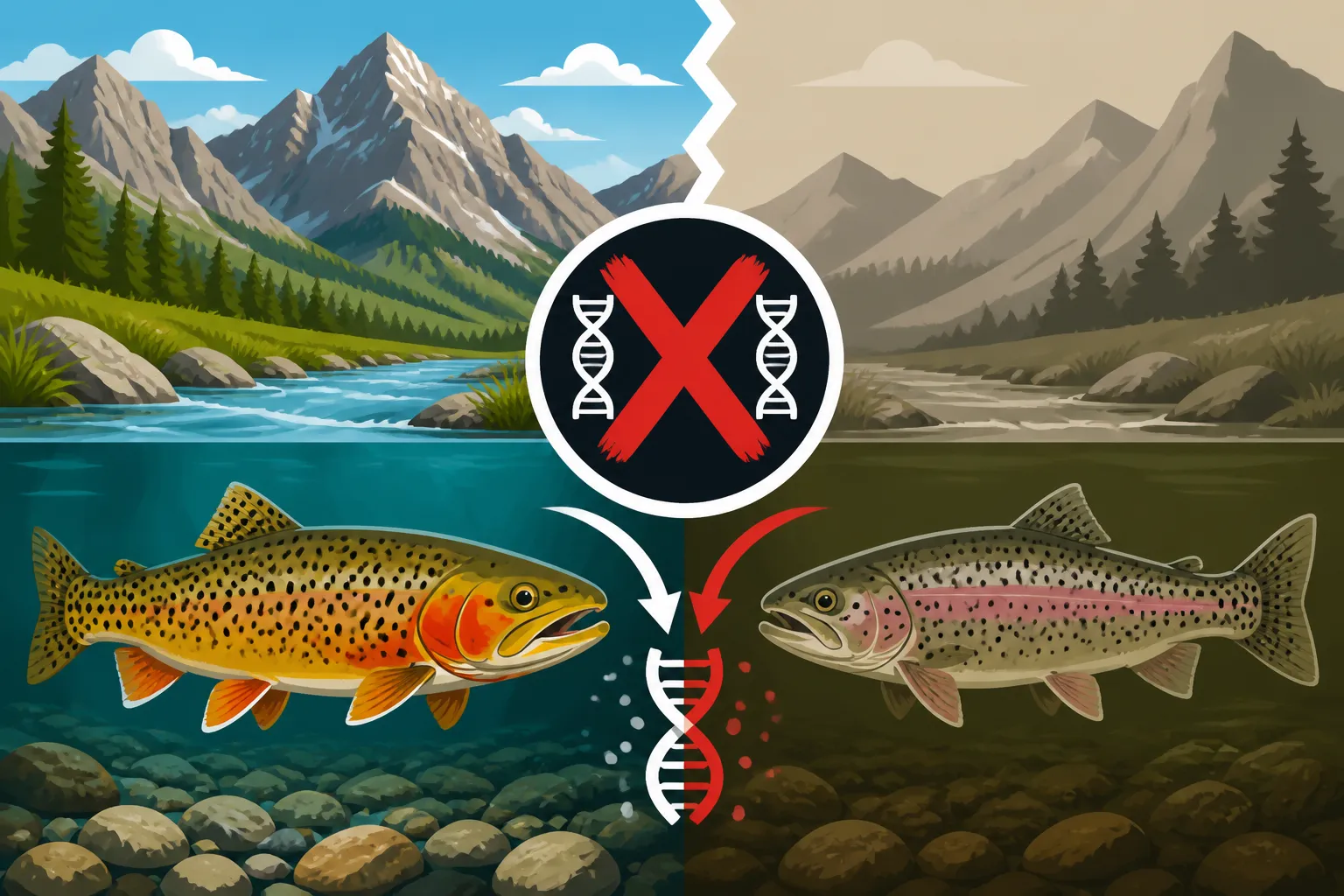
The most famous example, and one many Colorado anglers are familiar with, is the "cutbow." This is a hybrid cross between a rainbow trout and a cutthroat trout. On the surface, a cutbow can be a beautiful and feisty fish to catch, often displaying a mix of traits from both parents. You might even find yourself wondering, How to Tell a Cutthroat From a Rainbow Trout, because distinguishing them can be quite tricky! However, while exciting for the angler, the proliferation of cutbows is a flashing red light for native cutthroat conservationists. It means that the unique genetic lines of our native cutthroats are being diluted, making it harder and harder to find truly pure populations. It's not just about aesthetics; it's about the very genetic integrity that defines a species and allows it to thrive in its specific niche. To learn more about identifying different fish, consider grabbing a good field guide, perhaps one you can easily find on Amazon.
How Non-Native Trout Entered Colorado's Waters
The story of non-native trout in Colorado is a long one, rooted in good intentions that, with the benefit of hindsight, had unforeseen impacts. In the late 19th and early 20th centuries, as the West was being settled, there was a huge demand for sport fish and a perceived lack of game fish in many waters. Anglers and early conservation agencies introduced species like rainbow trout and brown trout from other regions, believing they were enhancing fishing opportunities.
Rainbow trout, originally from the Pacific Northwest, were brought in because they grow quickly, fight hard, and adapt well to various conditions. Brown trout, hailing from Europe, were valued for their hardiness and ability to thrive in more challenging environments, often outcompeting native species. These introductions were often done without a full understanding of the ecological implications, or the potential for these new fish to interbreed with the existing native cutthroat populations. The goal was to provide more fish for recreational purposes, and in many cases, it worked. But the cost was a significant threat to the purity and survival of Colorado's indigenous trout, including the various subspecies detailed in Colorado's Native Cutthroat Trout Subspecies.
The Dire Consequences for Colorado's Native Cutthroat
The consequences of interbreeding are far more insidious than just losing a "pure" strain for geneticists to study. For our native cutthroat, it's a matter of survival, impacting their unique adaptations and their place in Colorado's delicate ecosystems. This isn't just about what looks good on a fishing poster; it's about the fundamental health of our wild places.
Loss of Unique Genetic Material
Every native cutthroat population—be it the Greenback, Colorado River, or Rio Grande cutthroat—has evolved over millennia to perfectly suit its specific environment in Colorado. They've developed unique genetic traits that allow them to thrive in our high-altitude, cold-water streams, dealing with snowmelt, drought, and predators in ways that non-native species often cannot. These genetic adaptations are priceless.
When non-native trout, like rainbows, interbreed with these native populations, it's like scrambling that delicate genetic code. The offspring, the cutbows we discussed, might carry some of the native traits, but they also carry traits from the non-native parent. Over generations, if this interbreeding continues, the distinct genetic markers that define a pure Greenback or Colorado River cutthroat get diluted and eventually lost entirely. It's a process called genetic swamping. We lose not just a fish, but a living archive of adaptation that has allowed that specific subspecies to persist for centuries. The loss is irreparable, meaning that the unique qualities that make a true Colorado's State Fish, the Greenback Cutthroat Trout what it is, can vanish forever. This is why efforts for Greenback Cutthroat Trout Recovery in Colorado are so crucial and often involve extreme measures to protect genetic purity.
Reduced Fitness and Adaptation
You might hear about "hybrid vigor," where hybrids are sometimes stronger or more adaptable than their parent species. While this can happen in some plant and animal kingdoms, for native cutthroat in their specific, often harsh, Colorado environments, interbreeding often leads to what's known as "outbreeding depression." This means the hybrid offspring are less fit, less able to survive, or less fertile than their pure native counterparts.
Why? Because those specific genetic adaptations that pure native cutthroat possess—like resistance to local diseases, efficient foraging for native insects, or optimal spawning times for fluctuating Colorado river conditions—are weakened or lost in the hybrid. A fish that's half rainbow, half cutthroat might not be as good at surviving a harsh mountain winter or finding food in a specific high-altitude stream as a pure cutthroat. They might also be less inclined to spawn in the right places at the right times, or their offspring might be less viable. This impacts the overall health and resilience of the population, making them more vulnerable to environmental changes, diseases, and predation. It's a quiet erosion of their survival capabilities, and something that we must contend with as we work towards healthier ecosystems.
Competition for Resources
Even without direct interbreeding, the presence of non-native trout poses a significant threat to native cutthroat. Non-native species like brown trout and rainbow trout often have different life histories and competitive advantages. Brown trout, for example, are known to be more aggressive predators, often outcompeting or even preying on native cutthroat, especially juveniles. Rainbow trout can be incredibly prolific, sometimes reaching higher densities than cutthroat, which puts pressure on limited food sources and prime habitat.
Imagine a pristine high-mountain stream, home to a small, isolated population of pure Colorado River cutthroat. If non-native rainbows or browns are introduced, they immediately start vying for the same limited insect hatches, the same prime holding lies, and the same spawning gravel. The native cutthroat, which evolved without this intense competition, are often at a disadvantage. This competition can reduce their growth rates, lower their survival rates, and push them out of their preferred habitats, fragmenting their populations further. This isn't just a slight disadvantage; it can be the tipping point for a struggling native population. Many anglers might not consider this competition when they look at Colorado's Trout Species, A Field Guide but it's a huge factor in the health of our native fish.
The Struggle to Protect What's Left
Protecting Colorado's native cutthroat populations from interbreeding and competition is an uphill battle, but it's one that Colorado Parks and Wildlife (CPW) and dedicated conservation groups are fighting tooth and nail. It requires innovative strategies, significant resources, and sometimes, difficult decisions that aren't always popular but are essential for the long-term health of our native fish.
Conservation Efforts and Restoration Zones
The primary strategy in many areas is to create and protect "restoration zones." These are specific stretches of river or high-altitude lakes where the goal is to establish and maintain genetically pure populations of native cutthroat. This often involves several complex steps:
- Non-Native Removal: This is perhaps the most controversial but often necessary step. In designated restoration areas, non-native trout are sometimes removed, either through electrofishing, trapping, or even angling, to eliminate the source of interbreeding and competition. While it can be hard for anglers to see fish removed, it's a critical step in isolating and safeguarding the native populations.
- Barrier Construction: Physical barriers, like impassable waterfalls or man-made structures, are often installed or enhanced downstream of restoration zones. These barriers prevent non-native trout from migrating upstream into the designated native cutthroat habitat, acting as a genetic firewall.
- Stocking Pure Cutthroat: Once non-native fish are removed and barriers are in place, genetically pure native cutthroat are sometimes reintroduced from conservation hatcheries or donor populations. This helps to re-establish robust native populations in their historical ranges.
- Monitoring and Research: Ongoing genetic testing, population counts, and habitat monitoring are crucial to ensure the success of these programs and to adapt strategies as needed. CPW works diligently on these programs, often in remote, challenging terrain.
These efforts are not just theoretical; they're happening across the state. For instance, much of the work detailed in Greenback Cutthroat Trout Recovery in Colorado relies on these very strategies. The goal is to create strongholds where these unique fish can thrive without the threat of genetic dilution.
What Anglers Can Do to Help
As anglers, we have a significant role to play in protecting our native cutthroat. It's not just about what CPW does; it's about our individual choices and actions on the water.
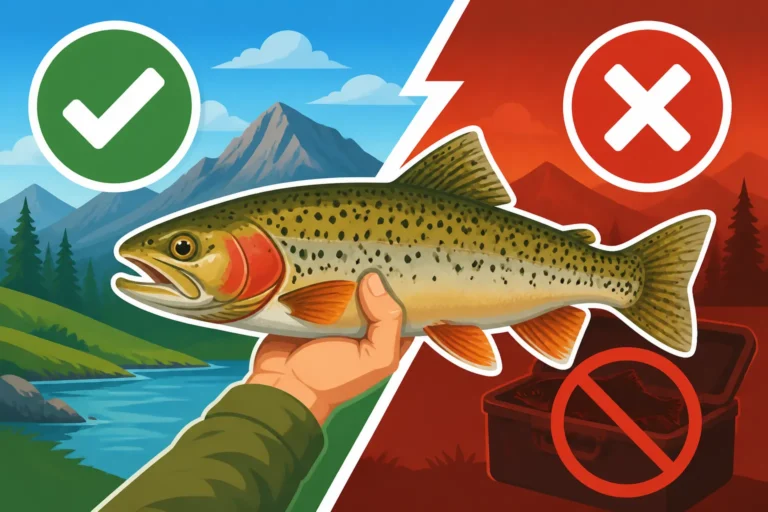
- Learn to Identify Fish: This is paramount. Before you even think about keeping a fish, make sure you know what it is. Learning How to Tell a Cutthroat From a Rainbow Trout or Telling a Cutbow From a Pure Cutthroat can make a huge difference. Many conservation areas have strict regulations regarding native cutthroat, including catch-and-release only rules or specific limits to protect populations. A good field guide, easily found online through retailers like Amazon, can be an invaluable tool for this.
- Practice Responsible Catch-and-Release: In areas with native cutthroat, particularly those designated as Catch-and-Release Rules on Colorado's Cutthroat Waters or What Catch-and-Release Only Means on Colorado Water, handle fish with extreme care. Minimize their time out of water, use barbless hooks, and revive them gently. Every fish released healthily is a victory for the population.
- Clean, Drain, and Dry Your Gear: This applies particularly if you move between different drainages. Invasive species and diseases can be transported on waders, boots, and boats. Always clean off mud and debris, drain all water from boats and kayaks, and allow your gear to dry completely between fishing trips.
- Respect Regulations: Always consult the current Colorado Fishing Regulations Every Angler Should Know before heading out. Regulations are put in place for a reason, often to protect vulnerable species. Ignorance of the rules is never an excuse.
- Support Conservation: Consider purchasing a Colorado's Habitat Stamp, Explained even if you are exempt, as these funds directly support wildlife conservation and habitat restoration. Additionally, supporting local conservation organizations helps fund critical native cutthroat recovery projects.
Understanding Colorado's Cutthroat Subspecies
Colorado is truly special because it is home to three distinct subspecies of cutthroat trout, each with its own unique history, characteristics, and conservation challenges. These are the Greenback, Colorado River, and Rio Grande cutthroat trout. Understanding their individual stories helps us appreciate the scale of the interbreeding threat.
The Greenback Cutthroat Trout Story
The Greenback cutthroat trout, Colorado's state fish, has an incredible story of near-extinction and a remarkable comeback. Historically, Greenbacks occupied the South Platte and Arkansas River drainages on the Eastern Slope. However, extensive mining, agriculture, pollution, and widespread stocking of non-native trout in the late 19th and early 20th centuries pushed them to the brink. For a long time, it was even believed they were completely extinct.
Thankfully, through diligent research and genetic testing, a few remnant populations were identified, some hiding in plain sight in isolated high-country lakes. These discoveries sparked intensive conservation efforts. Today, thanks to the dedicated work of CPW and partners, the Greenback is slowly expanding its range in protected waters. However, its recovery remains fragile, and genetic purity is paramount. Anytime you encounter a fish that might be a Greenback, remember the incredible journey it has taken, and treat it with the utmost respect.
Colorado River Cutthroat and Rio Grande Cutthroat
On the Western Slope, the Colorado River cutthroat trout (CRCT) historically inhabited the vast Colorado River drainage, from its headwaters down into Utah. They are still found in many remote stream systems within this range, particularly in the Flat Tops Wilderness Area and other high-elevation locales. Their vibrant colors and adaptability to diverse Western Slope habitats make them a truly iconic species. However, like their Greenback cousins, CRCT populations have suffered significantly from habitat degradation, competition, and interbreeding with non-native trout. Protecting the purity of existing CRCT populations and expanding their range is a key focus for Western Slope conservationists.
Further south, in the San Luis Valley and the streams flowing into the Rio Grande, lives the Rio Grande cutthroat trout (RGCT). These beautiful fish are distinguished by their unique markings and their adaptation to the specific conditions of the Rio Grande drainage. Their habitat historically extended into northern New Mexico. Similar to the other subspecies, RGCT populations have faced severe declines due to interbreeding with rainbows and browns, as well as habitat loss. Conservation efforts here focus on maintaining genetic integrity in isolated headwater streams and re-establishing populations where conditions are suitable. Each of these subspecies represents a unique part of Colorado's natural heritage, and their continued survival depends heavily on preventing further genetic dilution.
These native cutthroat are more than just fish; they are living symbols of Colorado's wild heritage. By understanding the threats they face, particularly from interbreeding, and by actively participating in conservation, we can help ensure that future generations of anglers will also have the privilege of pursuing these magnificent, truly Colorado fish.
| Cutthroat Subspecies | Native Range (Colorado) | Primary Threat | Conservation Status (General) | Key Identification Feature |
|---|---|---|---|---|
| Greenback Cutthroat Trout | Eastern Slope (South Platte & Arkansas River drainages) | Interbreeding with non-native trout | Threatened | Sparse, small spots; deep green/gold hues |
| Colorado River Cutthroat Trout | Western Slope (Colorado River drainage) | Interbreeding with non-native trout, habitat loss | Species of Special Concern | Larger, more numerous spots; often red/orange belly |
| Rio Grande Cutthroat Trout | San Luis Valley (Rio Grande drainage) | Interbreeding with non-native trout, habitat loss | Species of Special Concern | Fine, profuse spotting; yellow/gold coloration |
| Rainbow Trout (Non-native) | Widespread (stocked throughout Colorado) | Interbreeding with all cutthroat subspecies | Abundant | Pink/red lateral stripe; no cutthroat slash |
| Brown Trout (Non-native) | Widespread (stocked throughout Colorado) | Competition, predation on native trout | Abundant | Dark spots with light halos; red/orange spots |
Disclaimer
This article is for general informational purposes only and does not constitute professional advice. Laws, prices and regulations vary by location and change over time. Consult a qualified professional for guidance on your specific situation.