What Rainbow Trout Eat in Colorado Rivers
One of the biggest mysteries for any angler hitting Colorado's beautiful rivers is often the simplest: "What are these rainbow trout actually eating today?" It's a question that can make or break a fishing trip, leaving you either beaming with success or scratching your head in frustration as fish rise all around you but ignore every offering you present. This guide is here to unravel that mystery, giving you a detailed look into the diverse diet of Colorado's rainbow trout, so you can step onto the river with a much clearer idea of what they're looking for.
The Foundational Diet of Colorado Rainbow Trout: Opportunistic Eaters
If there's one thing you need to understand about rainbow trout in Colorado's rivers, it's that they are, by nature, incredibly opportunistic eaters. They aren't usually picky unless conditions force them to be, and they're constantly on the lookout for a meal that requires the least amount of energy to obtain. This fundamental aspect of their behavior dictates much of what they consume throughout the year and where they position themselves in the river.
Why Rainbows Aren't Picky Eaters
Think about it from a trout's perspective: survival is all about efficiency. These fish live in environments where food supply can fluctuate wildly, from abundant summer hatches to lean winter months. Being a generalist, someone who will happily munch on a wide variety of snacks, gives them a huge advantage. They don't have the luxury of turning up their noses at a perfectly good meal floating by, even if it's not their absolute favorite. If it looks edible, fits in their mouth, and doesn't require too much effort to chase down, chances are a rainbow trout will consider it. This is why you'll often hear anglers talk about "junk flies" that consistently catch fish even when there's no obvious hatch—patterns like a San Juan Worm or a squirmy worm often mimic readily available food sources dislodged from the riverbed.
This generalist approach means that while they might have preferences, especially during a strong hatch, they're rarely locked into one food source for long. A trout that spends its morning picking off tiny midges might switch to devouring a drowned grasshopper in the afternoon if one tumbles into the current. Their ability to adapt their diet is a key factor in their success and why they thrive in so many different Colorado river systems, from high-alpine streams to wide, flowing tailwaters.
The Importance of the River's "Drift"
The flow of a river is essentially a conveyor belt of calories for a trout. Unlike a lake fish that might actively hunt, a river trout often holds a strategic position, letting the current bring food directly to them. This "drift" is paramount to their feeding behavior. They typically face upstream, waiting for nymphs, larvae, or even unfortunate terrestrial insects to be swept into their feeding lane. This is why your presentation as an angler is so crucial – if your fly or lure isn't moving naturally with the current, it immediately looks suspicious and often gets ignored.
A trout expends energy to maintain its position in the current and to dart out and grab food. Therefore, they're constantly performing a cost-benefit analysis. A large, meaty meal that drifts right into their strike zone is far more appealing than a small bug they have to chase energetically across a swift current. This principle is fundamental to understanding why Nymphing Techniques for Colorado Tailwaters are so effective; you're mimicking the vast majority of a trout's diet as it drifts helplessly downstream. They've evolved to see the river as a flowing buffet, and their instincts are finely tuned to capitalize on whatever the current delivers.
Water Temperature and Trout Metabolism
Water temperature acts like a dimmer switch for a rainbow trout's appetite and metabolism. Just like us, when it's really cold, trout become sluggish; their digestive systems slow down, and they require less food overall. In the frigid depths of winter, they might feed only a few times a day, conserving energy. Their metabolism is so slow that they don't need huge meals. This is when smaller, more protein-dense offerings like midges become incredibly important. Midge Fishing in Colorado Winters is a testament to how adaptable anglers become when understanding trout behavior in cold water.
Conversely, when river temperatures are in their optimal range—typically between 45 and 65 degrees Fahrenheit—a trout's metabolism kicks into high gear. They're more active, burn more calories, and therefore need to eat much more frequently. This is when you'll see them aggressively chasing streamers or eagerly rising to a dry fly. Understanding this temperature-metabolism link helps you anticipate feeding windows and select the size and type of food imitation that will be most attractive. During these warmer, more active periods, they're more likely to chase a larger meal, like a sculpin or a stonefly, because they have the energy to do so.
A Seasonal Smorgasbord: What's On the Menu Through the Year
Just like our own diets change with the seasons, what rainbow trout munch on in Colorado rivers is heavily influenced by the time of year. Each season brings its own unique buffet of insects, baitfish, and other organisms, and understanding these shifts is vital for successful angling.
Spring's Awakening: Runoff and Early Hatches
Ah, spring in Colorado! It’s a time of renewed life, but also often a challenge for anglers. Before the full force of runoff hits, usually in March and April, rainbows are typically ravenous. They've just made it through winter and are looking to bulk up for the upcoming spawning season. During this pre-runoff period, you’ll find them feasting on a variety of subsurface treats. Large stonefly nymphs start to become more active, and mayfly nymphs are abundant. Worms, leeches, and other detritus get dislodged from the riverbed by increasing flows, presenting easy targets. Trout eggs from spawning brown and brook trout (if present in the same system) are also a highly prized, protein-packed meal.
Then comes runoff. When Colorado's Spring Runoff Hits and How to Fish Around It is a common concern for anglers. As snowmelt swells the rivers, flows increase dramatically, and water often becomes murky and colder. While this might seem like a tough time for trout, it's actually an abundance of food. The powerful currents dislodge countless nymphs, larvae, and aquatic worms from the riverbed. Trout will often move to slower seams, eddies, and the edges of the river where they can expend less energy to hold their position and let the current deliver food right to them. Large, dark nymphs and worm patterns are often highly effective during this period, as they mimic the bulk of what's getting washed downstream.
Summer's Bounty: Terrestrials and Consistent Hatches
Summer is arguably the most exciting time for a fly angler, as the menu for rainbow trout expands dramatically. As air temperatures rise, terrestrial insects become a significant food source. Grasshoppers, ants, beetles, and even crickets often lose their footing on streamside vegetation and tumble into the water, becoming an irresistible, protein-rich snack. A large foam hopper pattern landed near the bank on a sunny afternoon can elicit explosive strikes.
Beyond terrestrials, summer sees a flurry of aquatic insect hatches. Caddisflies are incredibly prolific, with multiple generations emerging throughout the warmer months. Mayflies, including larger species like Green Drakes or smaller, more frequent Blue-Winged Olives, provide steady dry fly action. Stoneflies, particularly the smaller golden stones and yellow sallies, are also active. Trout become accustomed to seeing these insects on the surface, making Dry Fly Fishing Colorado's Freestone Rivers a prime technique. This is the season when being able to identify and "match the hatch" truly pays off, as trout can become very selective, keying in on a specific insect.
Autumn's Calories: Spawning Prep and Meatier Meals
As the vibrant colors of autumn sweep across Colorado, rainbow trout shift their focus to building up fat reserves for the lean winter months. While they are primarily spring spawners, the fall still sees intense feeding activity. They will continue to key in on aquatic insects, particularly smaller mayfly species like Blue-Winged Olives that have a strong fall hatch. However, their diet also expands to include more substantial protein sources.
This is a prime time for larger meals. Streamer fishing becomes incredibly effective as rainbows, sometimes aggressively, chase baitfish like sculpins, dace, and various minnows that are abundant in the river. Additionally, if the river system contains brown trout or kokanee salmon, rainbow trout will eagerly feed on their eggs. These protein-packed bundles are an easy, high-calorie meal, and egg patterns can be incredibly successful, especially below spawning redds (though ethical angling practices dictate not disturbing actively spawning fish or targeting them directly on redds). Crayfish, if present, also become a significant part of their diet as they become more active before winter.
Winter's Lean Times: Tiny Treats and Survival
Winter brings stark changes to the feeding habits of Colorado's rainbow trout. With colder water temperatures and often less available food, their metabolism slows significantly. They become less active, holding in slower, deeper pools and runs, conserving energy. During these months, the food menu becomes much more limited, dominated by the hardy aquatic insects that can tolerate the cold.
Midges become the absolute cornerstone of a winter trout's diet. These tiny insects, present in various life stages (larvae, pupae, and sometimes even adult forms), are often the only consistent food source available. Trout will key in on them, often becoming incredibly selective to size, color, and depth. Midge Fishing in Colorado Winters requires patience and finesse, but it can be incredibly rewarding. Beyond midges, small mayfly nymphs (like tiny Blue-Winged Olives), sowbugs, and scuds can also be important. Trout will feed more sporadically, often during the warmest part of the day, making presentation and finding their preferred lies even more critical.
Diving Deeper: Specific Food Sources and What They Look Like
Understanding the categories of food is one thing, but knowing the specific organisms that make up a rainbow trout's diet in Colorado rivers can truly elevate your angling game. These are the bugs and baitfish you'll want to imitate.
Aquatic Insects: The Backbone of a Trout's Diet
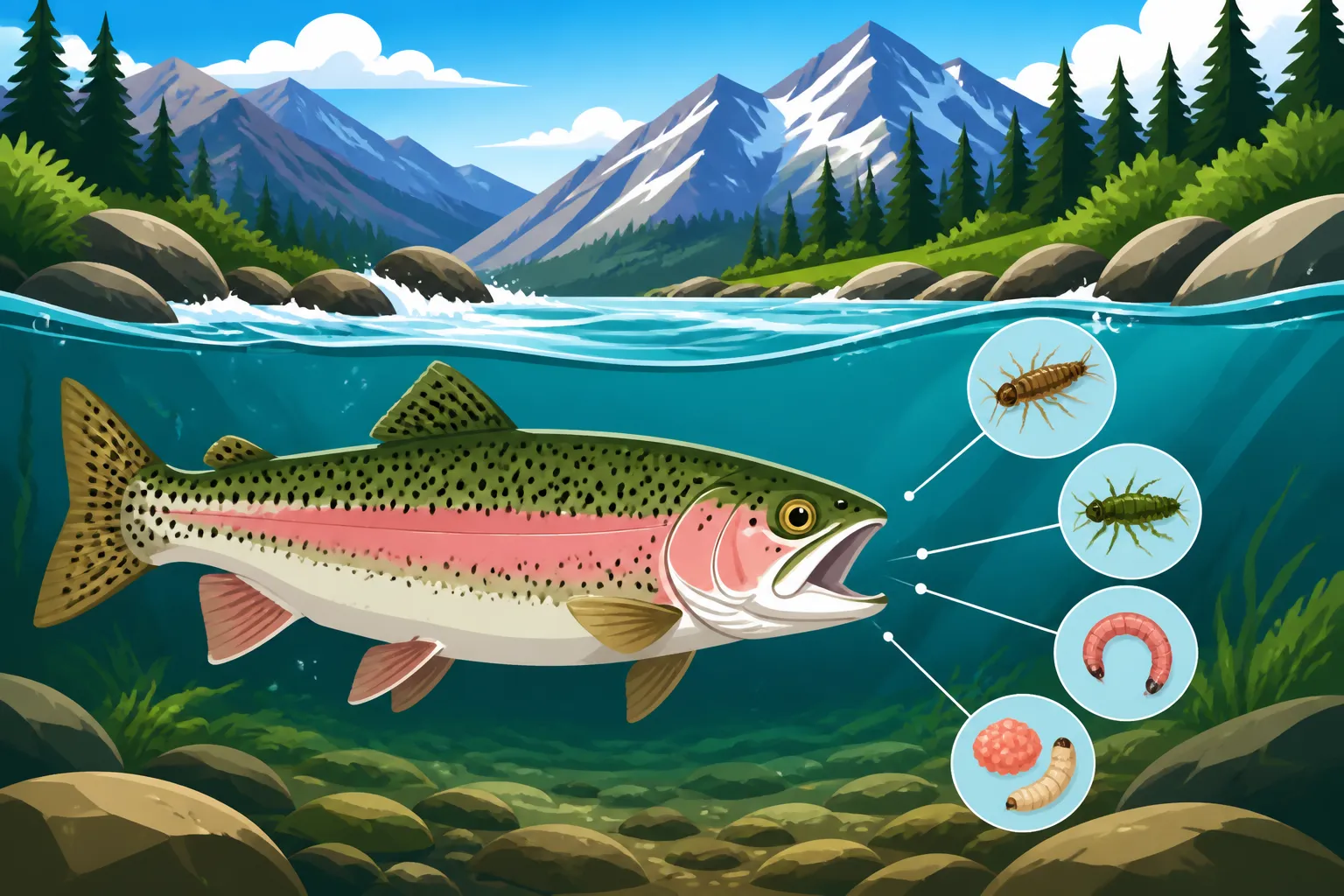
Aquatic insects are the bread and butter of a rainbow trout's diet. They spend most of their lives underwater in various larval and nymphal stages, making up a huge percentage of a trout's caloric intake.
-
Mayflies: These delicate insects are incredibly important. Their lifecycle involves a nymphal stage (bottom-dwelling), an emerger stage (ascending to the surface), a dun stage (floating on the surface to dry wings), and a spinner stage (returning to lay eggs). Trout feed on all stages. In Colorado, common species include Blue-Winged Olives (BWO), known for their prolific hatches in spring and fall, and Green Drakes or Pale Morning Duns (PMDs), which provide exciting summer dry fly action. When a strong BWO hatch is on, knowing your Fly Selection for Colorado's Blue-Wing Olive Hatch can be the difference between a great day and a frustrating one.
-
Caddisflies: Caddis are super active and often underrated. Their larvae live in cases they build, or are free-living, crawling along the riverbed. The pupal stage is highly mobile, swimming rapidly to the surface to emerge as an adult. Adults are moth-like and often skate across the surface to lay eggs. Trout aggressively pursue caddis pupae and adults. You'll find a variety of species throughout Colorado, and a good understanding of Fly Selection for Colorado's Caddis Hatch will serve you well, especially in the warmer months.
-
Stoneflies: These are the big boys of the insect world, often providing a significant meal. Stonefly nymphs are large, flattened, and crawl along the bottom, making them a consistent food source. Larger species like Salmonflies or Skwalas have massive spring hatches, while smaller Golden Stones and Yellow Sallies are common throughout summer. Their nymphs are a constant offering in the drift, and Fly Selection for Colorado's Stonefly Hatch is essential for imitating these robust insects.
-
Midges: While tiny, midges are mighty. They are present year-round but become especially crucial in colder water when other insects are less active. Their larvae resemble small worms, and their pupae slowly ascend to the surface. Trout will key in on all life stages, especially the pupae, which are often suspended just below the film. They are a staple in tailwaters and during winter.
Terrestrial Treats: When Land Meets Water
Terrestrial insects are the "bonus" meals for trout, appearing when the weather warms up and insects are active on the land surrounding the river.
-
Grasshoppers: Big, juicy, and an undeniable temptation. From mid-summer through early fall, grasshoppers are a prime target, especially on windy days when they get blown into the water. A good hopper pattern is a must-have in your fly box for those warm, sunny afternoons.
-
Ants and Beetles: These smaller terrestrials are often overlooked but are incredibly consistent food sources. Ants can be present from spring through fall, and beetles are around during the summer. Even a tiny, subtle ant pattern can be deadly when trout are selectively feeding on terrestrials, especially in quieter pools or slower sections of the river.
-
Crickets: While not as universally prevalent as grasshoppers, crickets can be locally significant in some areas, providing another hearty meal for opportunistic trout.
Other Aquatic Delicacies: Baitfish and Crustaceans
Beyond insects, rainbow trout are not above chasing down smaller fish or crustaceans, especially as they grow larger and need more calories.
-
Sculpins: These mottled, bottom-dwelling fish are often found hiding under rocks and provide an excellent, high-protein meal. They are a favorite target for larger trout, especially brown trout, but rainbows won't pass them up. Imitations like Woolly Buggers or other sculpin patterns fished near the bottom are very effective.
-
Dace and other small minnows: Many Colorado rivers host various species of small minnows that can become prey for larger rainbow trout. When trout are in an aggressive mood, chasing a streamer that imitates these baitfish can be incredibly productive.
-
Crayfish: In slower river sections or reservoirs connected to rivers, crayfish can be a significant food source. These crustaceans are protein-packed and move slowly, making them an easy target. Trout will crush a well-presented crayfish imitation.
-
Worms and Leeches: After heavy rains or during spring runoff, worms get washed into the river, becoming an easily accessible food item. Leeches are always present and are a constant, nutritious meal. Both are prime targets for opportunistic trout, and patterns like San Juan Worms or dark Woolly Buggers can imitate them perfectly.
Decoding the Menu: How Anglers "Match the Hatch"
Understanding what rainbow trout eat is one thing; putting that knowledge to use on the river is where the magic happens. It’s all about becoming a detective, observing the environment, and then choosing the right imitation.
Observation is Key: Reading the Water for Clues
Before you even make a cast, take a moment to observe. This is perhaps the most crucial step in "matching the hatch" or, more accurately, matching the menu. What are the clues telling you?
- Look for rising fish: If you see trout sipping gently on the surface, they're likely feeding on small, adult insects (like midges or small mayflies). If they're slashing aggressively, they might be hitting larger, more active insects like caddis or even terrestrials.
- Check the air: Are there insects flying around? Mayflies, caddis, stoneflies? This gives you a hint about what might be emerging.
- Turn over rocks: In the shallower, slower sections of the river, carefully lift a few rocks. What nymphs, larvae, or scuds are clinging to the underside? This tells you what's abundant on the bottom, which is often what trout are eating sub-surface.
- Watch the banks: Are grasshoppers jumping? Ants crawling? If so, be ready with a terrestrial pattern.
- Pay attention to the time of day and year: As we discussed, the season dictates much of the menu. Early mornings and evenings often see different activity than midday.
All these observations, combined with an understanding of Reading Water on a Colorado Freestone River, help you piece together the puzzle of what the trout are feeding on at that specific moment. Sometimes you might even gently net a bug that's floating by to get a precise look.
Selecting the Right Imitation: Flies, Lures, and Bait
Once you have an idea of what's on the menu, it's time to choose your offering. This is where your knowledge of fly patterns, lure types, or natural baits comes into play.
-
Nymphing: This technique is about mimicking the subsurface aquatic insects that make up the vast majority of a trout's diet. If you see no surface activity but suspect fish are feeding on the bottom, a nymph rig is your best bet. You'll select patterns that imitate stoneflies, mayfly nymphs, caddis larvae/pupae, or midges based on your observations. Depth, weight, and presentation are critical here. You can find a vast array of nymph patterns, from classic Pheasant Tails to modern Euro-nymphing designs, easily available through retailers like Amazon, ensuring you have the right tools for various conditions.
-
Dry Fly Fishing: When trout are actively feeding on the surface, a dry fly is the most exhilarating way to catch them. You'll choose a fly that accurately represents the adult stage of the insect they're eating – a Parachute Adams for a mayfly dun, an Elk Hair Caddis for an adult caddis, or a large foam hopper for terrestrials. The key is to get a drag-free drift that looks completely natural. If fish are sipping tiny midges, you'll need micro-patterns and delicate presentations.
-
Streamer Fishing: When trout are after bigger meals like baitfish or larger nymphs, streamers are the way to go. These flies are designed to imitate sculpins, minnows, or even crayfish. They're typically retrieved with strips and pauses, mimicking the erratic movement of prey. Streamer fishing is often effective for targeting larger, more aggressive rainbow trout, especially in fall or during periods of higher flows.
-
Spin Fishing: For those who prefer spin gear, artificial lures like spinners, spoons, or small jerkbaits can imitate baitfish effectively. Soft plastics or jigs can mimic nymphs and sculpins when fished along the bottom. And of course, natural baits like worms or salmon eggs can be incredibly effective, especially when conditions are tough or trout are less selective.
Ultimately, the goal is not always a perfect match, but a "close enough" imitation presented naturally. Matching the Hatch on Colorado's Tailwaters is an art, but it starts with simply knowing what's generally available in the river.
Essential Gear Considerations for Colorado's Rivers
Having the right gear makes all the difference when you're trying to fool a smart Colorado rainbow. Your rod, reel, line, and especially your leader and tippet selection are all part of the equation. For fly fishing, a 9-foot, 5-weight rod is a versatile choice for many Colorado rivers, handling everything from nymphs to smaller streamers. A good selection of tippet sizes, from 5X down to 7X or even 8X for technical midge fishing, is non-negotiable.
For both fly and spin anglers, carrying a variety of patterns or lures is key. You never know what the trout will be keying into on a given day, or how the conditions might change. A well-stocked fly box or tackle box, filled with diverse patterns for various hatches and seasons, can be easily assembled by browsing options on Amazon, which offers a vast selection of flies, lures, and fishing accessories. However, don't forget to stop by your local Colorado fly shop! They can give you up-to-the-minute reports on what's hatching and what flies are working best on specific stretches of river, often providing hyper-local advice that's invaluable. Having a good Colorado's Trout Species, A Field Guide handy can also help you understand the specific nuances of rainbow trout and other species you might encounter.
Understanding what rainbow trout eat in Colorado rivers is a journey, not a destination. The more you observe, learn, and experiment, the more successful and fulfilling your time on the water will be. Tight lines out there!
Disclaimer
This article is for general informational purposes only and does not constitute professional advice. Laws, prices and regulations vary by location and change over time. Consult a qualified professional for guidance on your specific situation.