Colorado Fishing License Options for Someone Without a Smartphone
It's easy to feel left behind when everything seems to be going digital, especially when you just want to enjoy a peaceful day fishing in Colorado. For those who prefer not to use a smartphone, or simply don't have one, navigating the world of fishing licenses can feel like an unnecessary hurdle. This comprehensive guide is here to cut through the confusion and show you exactly how to secure your Colorado fishing license without needing a digital device.
The Challenge of Going Analog in a Digital World
In today's fast-paced world, it often feels like every transaction, every piece of information, and every form of entertainment is migrating to our smartphones. For many, this digital shift is a convenience, a way to streamline life. But for a significant number of people, whether by choice or circumstance, reliance on a smartphone isn't a given. When it comes to something as fundamental as getting a fishing license, the expectation that you'll just pull up an app or a QR code can be incredibly frustrating. It makes a simple outdoor pleasure feel unnecessarily complicated.
Imagine planning a relaxing fishing trip to a scenic spot like the Arkansas River near Salida, only to hit a brick wall when trying to secure your license because the system assumes everyone has a device in their pocket. This isn't just an inconvenience; it can be a real barrier to enjoying Colorado's incredible natural resources. This section will dive into why traditional methods remain vital and the specific hurdles non-smartphone users often encounter.
Why Traditional Methods Still Matter for Many
Despite the pervasive nature of technology, there are countless reasons why traditional, non-digital methods for obtaining a fishing license are not just preferred but essential for a large segment of the population. For seniors, veterans, or those living in rural areas with limited internet access, the thought of trying to navigate a complex online portal on a tiny screen can be daunting, if not impossible. Many people simply enjoy the simplicity of doing things face-to-face or through established paper processes. They appreciate the direct interaction and the tangibility of a physical document.
For some, it's a matter of personal preference and privacy; they'd rather not have their outdoor activities tied to an online profile. For others, it’s a practical reality – perhaps their phone broke, they lost it, or they simply can't afford a smartphone and a data plan. The joy of fishing shouldn't be exclusive to those with the latest tech. Colorado Parks and Wildlife (CPW) understands this need, even if the digital options are often highlighted. Providing accessible alternatives ensures that everyone, regardless of their technological comfort or access, can participate in the state's rich angling traditions.
Common Hurdles for Non-Smartphone Users
So, what exactly makes obtaining a fishing license difficult if you're not carrying a smartphone? The primary issue is the assumption that you will access information or complete transactions online. Many modern government websites and retail portals are designed with mobile responsiveness in mind, making them optimized for smartphone screens. However, if you don't have that screen, you miss out on real-time information, immediate purchase confirmation, and the digital display of your license.
Another hurdle is the evolving nature of documentation. While a physical license is always valid, the trend towards digital display often makes people think they need a phone. This misinformation can lead to unnecessary stress or even missed opportunities on the water. Even seemingly minor issues, like needing to quickly check specific regulations or bag limits while at the lake, become challenges without instant online access. Without a smartphone, planning and execution require more forethought and reliance on printed materials, which can feel like swimming against the current in a digitally driven society.
Your Options for Buying a Colorado Fishing License
Don't let the digital noise fool you; there are still plenty of straightforward, non-smartphone ways to get your Colorado fishing license. You won't be relegated to the sidelines just because you prefer to keep your phone at home or simply don't own one. CPW has maintained traditional avenues that are perfect for those who appreciate a more hands-on approach. Whether you like talking to a real person, filling out a form, or simply prefer using a landline, you've got solid choices. Let's walk through them.
If you're looking for a general overview of the process, our comprehensive guide on "How to Buy a Colorado Fishing License" offers additional insights.
Buying In-Person at Authorized Sales Agents
This is perhaps the most popular and convenient method for those without a smartphone. Colorado boasts a vast network of authorized sales agents across the state, making it easy to purchase your license face-to-face. Think about your local sporting goods store, like a familiar Cabela's or a local Walmart, or even small independent bait shops in towns like Gunnison or Salida. These locations are equipped to issue licenses directly.
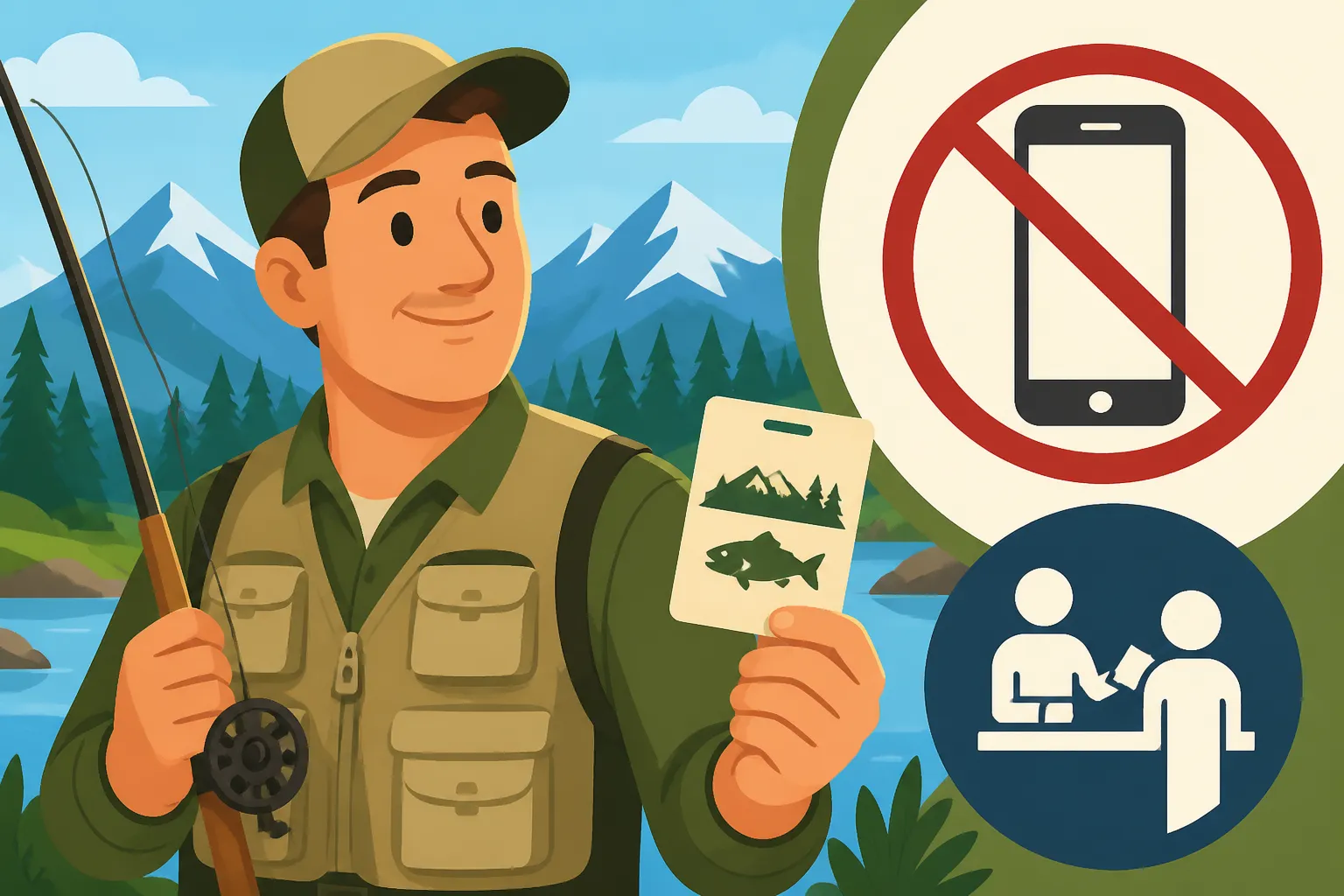
When you go in person, you'll need to provide some basic identification, such as a driver's license or state ID. The friendly staff will walk you through the options, whether you need a resident or nonresident license, an annual license, or one of the shorter-term options. They can also explain additional requirements like the Habitat Stamp, which is required for most anglers aged 18-64. This personalized service means you can ask questions about specific regulations, discuss local fishing reports, and leave with a physical license printout in hand, ready for your adventure. You can find a detailed list of locations in our post on "Where to Buy a Colorado Fishing License in Person".
For example, let's say you're heading up to fish the Fryingpan River near Basalt. Before you hit the water, you could stop at the Frying Pan Anglers shop right there in Basalt. They're not just selling flies; they're authorized CPW agents and can get you squared away with a physical license. This method is incredibly reassuring for many, as it offers immediate gratification and a tangible document, removing any worry about digital glitches or connectivity issues out in the wilds of Colorado.
The Old-School Mail-In Method
While less common these days, purchasing your Colorado fishing license via mail is still an option, particularly useful for those who plan far in advance or live in very remote areas. This method requires a bit more foresight, as it involves printing out an application form, filling it out by hand, and sending it through the postal service. You can usually find these forms on the Colorado Parks and Wildlife (CPW) website, or sometimes at official CPW offices.
Once you have the form, you'll need to clearly fill in all your personal details, choose the type of license you want (e.g., resident annual, nonresident five-day, etc.), and include payment. Typically, a check or money order is required. This application and payment are then mailed to the address provided on the form, usually a CPW headquarters. It's a slower process, certainly not for last-minute trips, as it can take a few weeks for your application to be processed and your physical license mailed back to you. However, for those who value traditional paper trails and aren't in a rush, it's a perfectly viable option that completely bypasses any digital requirements.
Imagine you're an out-of-state angler planning a summer trip to Colorado's high country, perhaps to fish the stunning high-alpine lakes. You know you'll be off-grid for much of the time and prefer to have all your paperwork sorted before you even leave home. Mailing in your application a month or two in advance ensures your license is waiting for you when you arrive, eliminating any need for cell service or internet access on your vacation. This proactive approach allows you to focus purely on the fishing when you're here.
Phone Purchases, with a Caveat
Yes, you can technically purchase a Colorado fishing license over the phone, but there's a small catch: while the transaction can be completed without a smartphone, you'll still need a way to receive and print your temporary license. When you call CPW or an authorized vendor, they'll collect your information and payment details over the phone. You'll then typically be given a confirmation number or directed to an email where a temporary license can be sent.
If you don't have a smartphone or access to a printer at home, this might mean coordinating with a friend or family member who can print it for you, or finding a local library or business service that offers printing. You can also visit a CPW office or an authorized sales agent in person with your confirmation number to have them print your official license. So, while the initial purchase doesn't require a smartphone, the delivery of a usable license still leans on either digital forwarding or an in-person follow-up for a physical copy. For a deeper dive into this process, check out "Buying a Colorado Fishing License by Phone".
This option is particularly useful if you're stuck at home without a car to get to a sales agent but have access to a landline and a computer with a printer, or reliable support from someone who does. Perhaps you're recovering from a minor injury and can't easily get out, but your friend can pick up the printed license from your email and bring it over. It bridges the gap for some, offering a verbal transaction but relying on a printing solution for the physical proof you need on the water.
Here's a quick summary of your options without a smartphone:
| Purchase Method | Requirements | Pros | Cons |
|---|---|---|---|
| In-Person | State ID/Driver's License, Payment | Immediate physical license, direct assistance, no tech needed | Requires travel to a physical location |
| Mail-In | Printed application, Check/Money Order | No tech needed, convenient for advance planning | Slow processing time (weeks), not for last-minute trips, requires printer for application |
| Phone (with follow-up) | Landline phone, Payment | Purchase from home | Requires email/printer access (yours or someone else's) for temporary license, or in-person pickup |
Displaying Your License Without a Digital Device
Once you’ve successfully purchased your Colorado fishing license, whether through a local store or another non-digital method, the next critical step is ensuring you can properly display it when asked by a Colorado Parks and Wildlife officer. This is where many smartphone users take for granted the convenience of a digital license on their phone. However, for those without a device, the traditional, reliable methods are still very much in play, and frankly, often preferred by game wardens who appreciate a clear, physical document.
It's important to remember that regulations require you to have your license on your person and be able to present it upon request. This section will walk you through the straightforward process of carrying your physical license and what to do if the unexpected happens and it gets lost or damaged while you're out enjoying the waters. For general details on this, our article "Showing Your Colorado Fishing License in the Field" provides helpful context.
Carrying Your Physical License
When you buy your license in person, you'll receive a printed document – typically a durable, paper-like license or a small card. This is your official proof of permission to fish. The simplest and most reliable way to display your license without a digital device is to carry this physical copy with you whenever you are fishing. It’s a good idea to protect it from the elements. Many anglers use a small, waterproof wallet, a plastic sleeve, or a lanyard with a clear pouch to keep their license safe from water, sweat, and wear and tear.
Think of it like your driver's license or ID; it's a physical document that you present when needed. When a CPW officer approaches and asks to see your license, you simply pull out the physical copy. This is exactly what they expect to see, and it fulfills your legal obligation. It’s always smart to keep it separate from your cash wallet, just in case one gets misplaced, or you drop it while reaching for something else. A dedicated fishing pouch or the inside pocket of your vest is often the best spot. This way, your focus can remain on the serene beauty of the Roaring Fork River, not on worrying about a dead phone battery.
For instance, if you're wade fishing a river like the Blue River in Silverthorne, you might have your license tucked into a small, zippered, waterproof pouch hanging from your wader straps. It’s easily accessible but completely protected from splashes and accidental dunkings. This traditional method is tried and true, and it requires no thought about charging cables, signal strength, or cracked screens. It just works.
What to Do if Your Physical License is Lost or Damaged
Accidents happen, especially when you're out in the elements. A sudden gust of wind could snatch your license, it could accidentally fall into the water, or simply get torn over time. If your physical Colorado fishing license becomes lost or too damaged to be readable, don't panic. You have options that don't involve scrambling for a smartphone.
The most straightforward way to get a replacement is to visit any authorized CPW license agent in person. Just as you purchased your original license, they can issue you a duplicate. There might be a small fee for a replacement, but it's usually minimal. You'll need to provide your identification and some details about your original purchase. This ensures that the replacement is issued to the correct person. Alternatively, you can call CPW directly to inquire about replacement options; they can often guide you on the nearest in-person location or mail-in alternatives for replacements. For specific steps and costs, our article "How to Replace a Lost Colorado Fishing License" has all the details.
Imagine you're fishing at Chatfield Reservoir, and you realize your license is no longer in your wallet. Instead of stressing, you could simply drive to a nearby Walmart or a sporting goods store in Littleton or Centennial that sells licenses. Within minutes, you could have a replacement in hand, ready to get back to fishing for walleye or bass. This ability to get a quick physical replacement is a huge advantage for those who don't rely on digital documents, ensuring minimal disruption to your fishing plans.
Planning Your Trip Beyond the Purchase
Getting your fishing license is just one piece of the puzzle for a successful and enjoyable outing in Colorado. For those who don't rely on smartphones, planning needs to be a bit more intentional, but it’s certainly not impossible. In fact, many seasoned anglers swear by these traditional planning methods, finding them more reliable and less distracting than constantly checking a screen. From understanding local regulations to knowing what gear to bring, a little preparation goes a long way.
This section will guide you through accessing crucial information and preparing your gear, all while keeping your analog preferences in mind. Remember, the goal is to make your Colorado fishing experience as smooth and rewarding as possible, regardless of your tech setup.
Accessing Regulations and Information Without Apps
One of the biggest concerns for anglers without smartphones is how to access current regulations, stocking reports, or specific Gold Medal Water rules. While many people use apps like Fishbrain or directly check the CPW website on their phones, you're not out of luck. Colorado Parks and Wildlife publishes a comprehensive, physical fishing brochure annually. This brochure contains all the crucial information: statewide regulations, specific water body rules, bag limits, and season dates. You can pick up a physical copy for free at any CPW office, authorized license vendor, or even many visitor centers across the state.
Beyond the official brochure, old-school maps are your best friend. Detailed topographical maps or specialized fishing maps can show you access points, river stretches, and even potential fishing spots. You can purchase these at local fly shops, outdoor retailers like REI, or even online platforms like Amazon if you order in advance. Local bait and tackle shops are also invaluable resources; the folks working there are often lifelong anglers and can provide up-to-the-minute local knowledge about water conditions, recent stockings, and the best baits or flies to use. Don't underestimate the power of a good conversation! For a deeper understanding of the regulations, refer to our article "Colorado Fishing Regulations Every Angler Should Know" and "Reading Colorado's Fishing Regulations Brochure".
Imagine planning a trip to Blue Mesa Reservoir to target Kokanee Salmon. Instead of pulling up an app, you'd pick up a CPW fishing brochure and a detailed map of the reservoir. You'd mark potential access points and confirm the Kokanee limits right from the printed page. Then, you might call a local tackle shop in Gunnison to get the latest intel on where the fish are biting and what lure colors are working. This traditional approach means you're not relying on a fleeting battery charge or inconsistent cell service, especially in remote areas.
Essential Gear Considerations for Analog Anglers
When you're not relying on a smartphone for navigation, weather updates, or identifying fish species, your gear setup needs to be a bit more self-contained. Beyond your fishing rod and tackle, consider what physical items will replace those digital conveniences. A reliable, waterproof watch with an altimeter and barometer can give you crucial weather insights, especially in Colorado's unpredictable mountain environment. A small, durable notebook and pencil are perfect for jotting down notes about catches, successful flies, or changing conditions – a personal fishing log.
A physical compass and paper map are non-negotiable for navigating unfamiliar territory, especially when exploring high-country lakes or remote river sections where cell service is non-existent. A dedicated camera, rather than a phone camera, means you can capture memories without draining your communication device's battery (if you even carry one for emergencies). And don't forget a first-aid kit; without instant communication, self-sufficiency becomes even more important. Many of these items are readily available at outdoor stores or through mail order catalogs if you're planning your purchases ahead of time. You can even find specialized fishing vests with multiple pockets designed to hold all these essentials, keeping them organized and easily accessible.
For example, heading into the Black Canyon of the Gunnison, where cell service is non-existent, a prepared angler without a smartphone would have a laminated map, a compass, and a small, weather-resistant notebook. Instead of checking a weather app, they might consult a compact weather radio for forecasts. This comprehensive physical toolkit ensures they are prepared for any scenario, making their fishing experience safer and more enjoyable without relying on a digital tether. Remember that certain species like those you'd find in "Colorado's Trout Species, A Field Guide" or those listed under "Colorado's State Record Fish, Species by Species" require knowledge of specific regulations, which are easily referenced in your physical brochure.
Disclaimer
The information provided in this guide is for general informational purposes only and is not intended as legal advice. Fishing regulations in Colorado can change, and it is the responsibility of each angler to consult the most current Colorado Parks and Wildlife regulations before fishing. Always verify information with official CPW sources.