How Far a Colorado Guide Will Drive to Meet Clients
One common point of anxiety when planning a Colorado fishing trip, especially if you're traveling from out of state or heading to a new area, is figuring out the logistics of meeting your guide. You've booked the perfect day on the river or lake, but where exactly do you meet, and how far will that expert angler actually drive to pick you up? This guide will help demystify how Colorado fishing guides operate when it comes to meeting clients, so you can plan your trip with confidence.
Understanding the Guide's Home Base and Operating Area
The world of guided fishing in Colorado, much like any specialized service, operates with a degree of localization. Guides aren't typically roaming free-range across the entire state, ready to meet you at any whim. They have established zones of operation, and understanding this is key to setting proper expectations for meeting points.
The Concept of a "Home River" or "Local Lake"
Think of a Colorado fishing guide as a local expert. Most guides, and the outfitting shops they work for, are deeply rooted in a specific region or town. For example, a guide based in Gunnison will likely focus on the Gunnison River, Taylor River, and Blue Mesa Reservoir. A guide in Basalt will specialize in the Fryingpan River and Roaring Fork. Someone in Silverthorne will be all about the Blue River. These are their "home waters," the places they know like the back of their hand, where they've spent countless hours studying hatches, fish movements, and subtle currents.
This deep local knowledge is precisely why you hire them! It means they aren't just showing up; they're bringing years of intimate understanding of that particular fishery to your trip. Expecting a guide from the Roaring Fork Valley to drive all the way to the South Platte near Deckers for a single day trip is generally unrealistic. Their expertise is geographically bound, and their daily operations are structured around minimizing travel to maximize time on their preferred and most productive waters. When browsing guides, whether on an outfitter's website or a booking platform like FishingBooker, pay attention to the rivers or lakes they list as their specialties; this usually indicates their home base.
Why Proximity to Permitted Waters Matters
It's not just about a guide's personal preference for their favorite fishing holes. Colorado, like many states, has a robust system of permits that dictate where professional fishing guides and outfitters can legally operate. These permits are issued for specific sections of rivers, specific lakes, or designated wilderness areas. A guide who holds a permit for a stretch of the Arkansas River near Buena Vista cannot simply decide to guide a trip on the Colorado River in Glenwood Canyon, unless they also hold permits for that specific area.
This permitting system is designed to manage angler pressure, protect natural resources, and ensure licensed professionals adhere to regulations. For you as a client, it means your guide is not only skilled but also operating within legal boundaries. Therefore, a guide's "operating area" isn't just a suggestion; it's a legal requirement. When you book a trip, you're booking a guide for their permitted waters. Driving far outside of these permitted zones to meet clients just isn't an option for a legitimate outfitter. This system is part of what allows services like Colorado Fishing License Guide for Residents and Nonresidents to outline the rules for everyone.
The Logistics of Guide Travel Time
Let's put ourselves in a guide's waders for a moment. A typical full-day guided trip often starts before dawn and ends well into the evening. There's gear to prep, boats to launch, lunch to pack, and then the actual guiding, teaching, and fish-finding. After the trip, there's cleanup, shuttle returns, and sometimes even flies to tie for the next day. If a guide has to drive two hours each way just to meet a client, that adds four hours of uncompensated travel to an already demanding 10-12 hour day.
This travel time significantly cuts into their available hours for paid trips, adds wear and tear to their vehicles, and burns fuel, all of which are real business costs. While they certainly want your business, these logistical challenges mean that driving long distances for a single day trip isn't sustainable for most. Outfitting shops often have multiple guides, each specializing in different nearby waters, which allows them to cover more ground collectively without individual guides needing to trek across the state. This operational reality is a big reason why meeting points are almost always chosen to be convenient to the specific fishery you'll be targeting.
Typical Meeting Arrangements and Their Flexibility
So, if guides generally stay close to their home waters, what does a typical meeting look like? And is there any room for flexibility?
Standard Meeting Points: Fly Shops and Boat Ramps
For most guided fishing trips in Colorado, your meeting point will be incredibly practical and convenient for accessing the water.
- Local Fly Shops: These are often the nerve center of a guide's operations, especially for walk-wade or float trips on rivers. If you're fishing the Fryingpan River, you might meet at a fly shop in Basalt. For the South Platte, perhaps a shop in Deckers or Woodland Park. For the Blue River, a shop in Silverthorne. These shops are usually located right in the heart of the guide's primary operating territory. Meeting at a fly shop is great because you can grab any last-minute essentials like sunscreen, a hat, or a local fly pattern if your guide suggests it. It also centralizes the beginning of the trip, making it easy to sort out gear, sign waivers, and discuss the day's plan.
- Designated Boat Ramps or Marinas: If you're doing a lake trip, like targeting Kokanee salmon or Lake Trout on Blue Mesa Reservoir, you'll almost certainly meet your guide directly at the boat ramp or a specific marina. This is the most efficient way to get on the water. The guide will have their boat ready, and you'll load up there. You can learn more about specific lake opportunities by looking into Charter Boats for Colorado's Blue Mesa Reservoir.
- Specific River Access Points: For some walk-wade trips, especially those on more remote stretches or specific public access points, the guide might have you meet them at a well-known parking area right near the water. This could be a Forest Service trailhead, a designated public parking lot, or a state park entrance.
These meeting points are strategic. They minimize wasted travel time for both you and the guide, ensuring you spend more time with a line in the water and less time in a car.
How Long a "Reasonable" Drive Might Be for a Guide
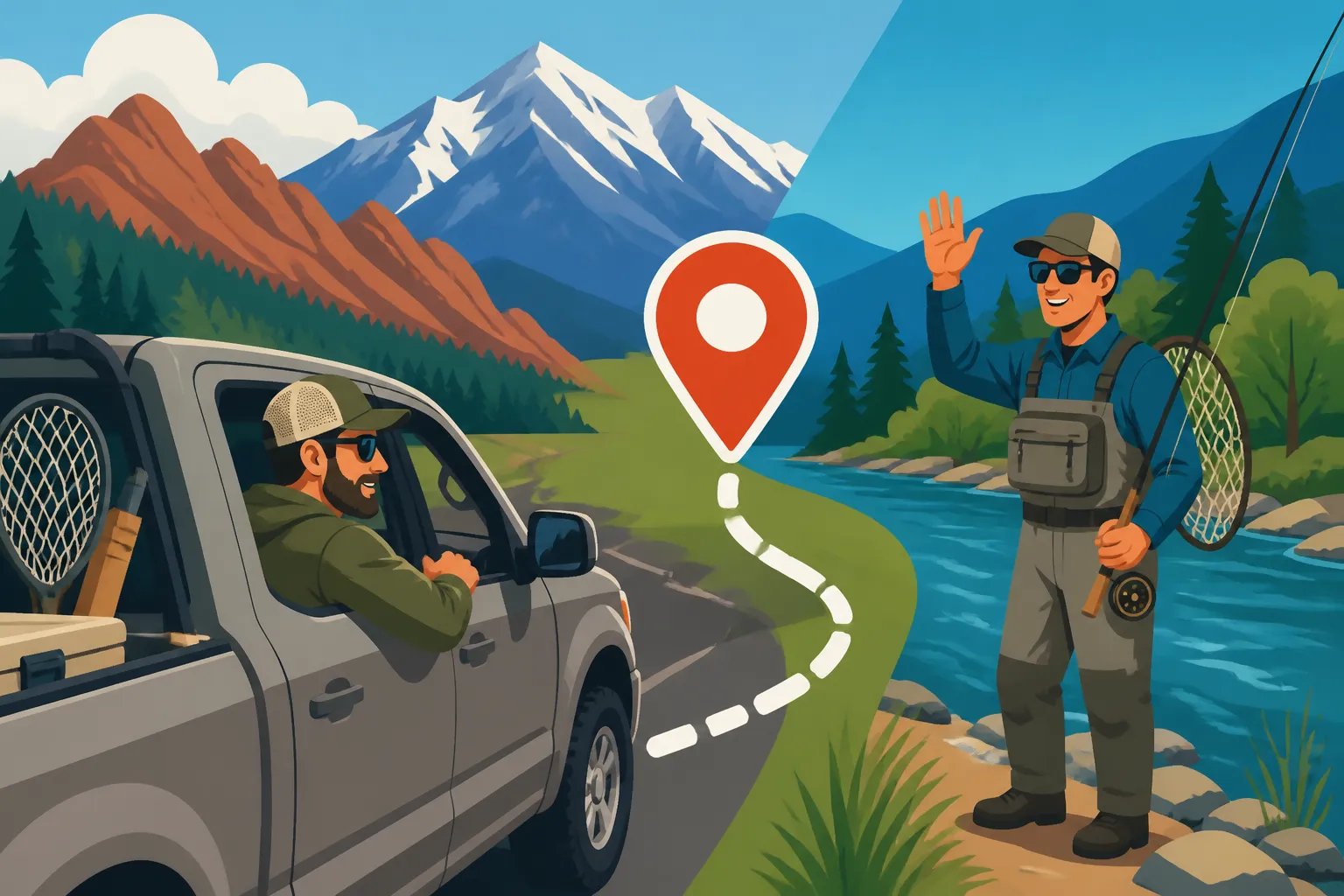
While there's no hard and fast rule, most Colorado fishing guides will try to keep their personal pre-trip drive to meet clients to a maximum of 30 to 60 minutes from their own home or the outfitter shop. If a guide is based out of Salida, they're perfectly happy to meet you right there to fish the Arkansas. They might drive 20-30 minutes north or south along the river to reach a particular launch or access point, but they won't typically drive to, say, Fort Collins to meet you.
This also means that you, the client, are generally expected to travel to the guide's operating area. If you're staying in Denver and want to fish the Dream Stream, you'll need to make the two-hour drive to the South Platte Valley to meet your guide. The guide isn't going to drive from their home near the Dream Stream to pick you up in downtown Denver. It just doesn't make logistical or financial sense for them. This expectation is a standard part of Hiring a Fishing Guide in Colorado, What to Expect.
Any request for a guide to drive significantly outside their normal operating zone would almost certainly incur an additional travel fee. This fee would cover their extra time, fuel, and vehicle expenses. It's usually something negotiated directly during the booking process and isn't typically part of a standard Colorado Fly Fishing Guide Costs Explained.
| Meeting Point Type | Typical Location | Guide's Drive Expectation | Client's Drive Expectation | Notes |
|---|---|---|---|---|
| Fly Shop | Within guide's home town/operating area | Short (0-15 minutes) | Travel to guide's general area | Common for walk-wade/float trips. |
| Boat Ramp/Marina | Directly at the water access | Short (0-15 minutes) | Travel to guide's general area | Essential for lake/reservoir trips. |
| River Access Point | Specific public parking/trailhead | Moderate (15-30 minutes) from shop/home | Travel to guide's general area | For specific river sections. |
| Client's Lodging | Only if very close to fishing spot | Varies (often 0-5 minutes) | Guide usually doesn't pick up at hotel | Highly situational, usually for premium services or very local stays. |
The Role of Communication in Meeting Point Selection
This cannot be stressed enough: communication is paramount. When you're inquiring about or Booking a Colorado Fishing Guide Online, make sure to ask direct questions about where you'll be meeting. Don't make assumptions!
- When you first contact a guide or outfitter: State where you're staying (e.g., "I'll be in Breckenridge for my trip") and ask where they typically meet clients for the water you're interested in (e.g., "If we fish the Blue River tailwater, where's the usual meeting point?").
- Confirm details: Before your trip, confirm the exact meeting time, location, and what to bring. A good guide or outfitter will provide these details, often via email or a confirmation call.
- Be realistic: Understand that guides are running a business with tight schedules and logistical constraints. While they aim to be accommodating, their primary focus is getting you on the fish efficiently and safely.
Using platforms like FishingBooker can streamline this, as many guide profiles clearly state their primary operating locations and sometimes even list common meeting points. It makes Choosing a Colorado Fishing Guide, What to Look For much easier when you can filter by region.
Factors That Influence a Guide's Willingness to Travel Further
While most guides adhere to a specific operating radius, there are certain situations where a guide might be willing to stretch their typical travel boundaries. However, these usually come with specific conditions.
Multi-Day Trips and Custom Itineraries
If you're planning a multi-day fishing adventure, perhaps combining several different rivers or fishing spots over two or three days, a guide's flexibility on meeting locations might increase. For a multi-day trip, the economics of their time and travel change. Instead of driving a long distance for a single day's pay, they are now securing multiple days of work.
In such scenarios, a guide might be willing to drive a bit further for the initial meeting, or even stay overnight in a different area if your itinerary moves from one region to another. For instance, if you're doing a multi-day float through a remote stretch like the Gunnison Gorge, your guide might arrange to meet you at a more distant launch point, but that's typically baked into the specific nature of a Guided Trips in the Black Canyon of the Gunnison experience. They're already committing to a longer, more involved trip with specialized logistics. This isn't the same as asking them to drive an hour out of their way for a standard half-day trip.
Premium Services and Added Costs
Some guides or outfitters offer premium services that do include extended travel or even client pick-ups from more distant locations. However, these services invariably come with a higher price tag. This isn't because the guide is trying to gouge you; it's to compensate them fairly for the additional time, fuel, vehicle wear and tear, and logistical planning involved.
If you have a very specific need—for example, you're flying into Denver and want a guide to pick you up directly from the airport to head to a distant river—you'll need to inquire about this as a specialized request. Be prepared for a surcharge that could be significant, reflecting the guide's lost time, fuel costs, and the fact that they could have been guiding another trip during that travel period. It’s always best to be upfront about such requests when discussing What a Full-Day Colorado Guided Fishing Trip Costs or any other trip option. It's a business decision for them, not a personal favor, and respecting that will lead to a smoother booking process.
The Specific Fishery and Guide Expertise
Sometimes, the fishery itself dictates the travel arrangements. If you are seeking to fish a very specific, perhaps remote, high-country lake for native cutthroat, or a particularly technical tailwater for trophy trout, there might only be a handful of guides in the entire state who possess that specialized knowledge and permit. In these unique cases, the expectation flips: the client must travel to the guide's area of expertise, regardless of distance.
For example, if you want to fish for Greenback Cutthroat Trout in one of their designated recovery waters, you're going to travel to the specific region where those conservation efforts are underway and meet a guide who is specifically permitted and knowledgeable about that delicate ecosystem. The value lies in the guide's unique access and expertise, not their ability to chauffeur you from a distant city. Think of it like this: if you want to climb Mount Everest, you go to Nepal, you don't expect the sherpa to come pick you up in Kansas. The same principle applies to highly specialized fishing experiences.
Practical Tips for Anglers Planning Their Trips
Navigating the logistics of meeting your guide doesn't have to be stressful. With a little foresight and clear communication, you can ensure a smooth start to your Colorado fishing adventure.
Researching Guide Locations Before Booking
Before you even pick up the phone or send an email, do a little homework. Most reputable outfitters and individual guides have websites or profiles on booking platforms that clearly state their primary operating regions.
- Check the "About Us" or "Contact" sections: These often mention the towns or rivers where the outfitter is based.
- Look at their listed trips: If they primarily advertise trips on the Fryingpan, Roaring Fork, and Colorado Rivers, it's a good bet they operate out of the Basalt/Glenwood Springs area, not the San Luis Valley. You can then look up information on popular destinations like Guided Trips on the Fryingpan River Near Basalt.
- Use online booking platforms: Websites like FishingBooker often allow you to search for guides by location or specific body of water. This gives you an instant visual of guides operating near your desired fishing spot or vacation base. This kind of research helps you align your vacation plans with a guide whose home base is already conveniently located.
Asking Direct Questions About Meeting Points
Once you've identified a potential guide, don't be shy about asking specific questions about meeting logistics. This is a normal and expected part of the booking process.
Here are some good questions to ask:
- "Where do you typically meet clients for trips on [name of river/lake]?"
- "I'll be staying in [your town/hotel]. How far is that from our usual meeting spot?"
- "Is there an option for pick-up from my lodging, and if so, what would the additional cost be?" (Be prepared for a "no" or a significant surcharge here, but it never hurts to ask if it's important to you).
- "What's the best way to get to the meeting point from [your location]?"
Clear, upfront communication prevents misunderstandings and ensures everyone is on the same page. It also helps you understand what's included in your trip, alongside considerations like What's Included in a Colorado Guided Fly Fishing Trip or What to Bring on a Half-Day Colorado Fishing Trip.
Considering the Trade-offs of Travel
Ultimately, planning a guided fishing trip often involves weighing the trade-offs between your desired fishing location, the expertise of a specific guide, and the logistics of travel. Sometimes, you might find an amazing guide who specializes in a river that's a longer drive from your accommodation. In such cases, you need to decide if the quality of the guiding experience is worth the extra driving time on your end.
For many anglers, the answer is a resounding yes! The opportunity to spend a day with an expert, learning the nuances of a new fishery, often outweighs an early morning start or an extra hour in the car. It's about maximizing your time on the water with someone who can truly put you on fish. Remember, while guides will drive a reasonable distance within their operating territory to get to the water, their primary commitment is to the quality of the fishing experience, not necessarily serving as your personal chauffeur across the state. They expect you to meet them at the "front door" of the fishing grounds.
Disclaimer
This article is for general informational purposes only and does not constitute professional advice. Laws, prices and regulations vary by location and change over time. Consult a qualified professional for guidance on your specific situation.