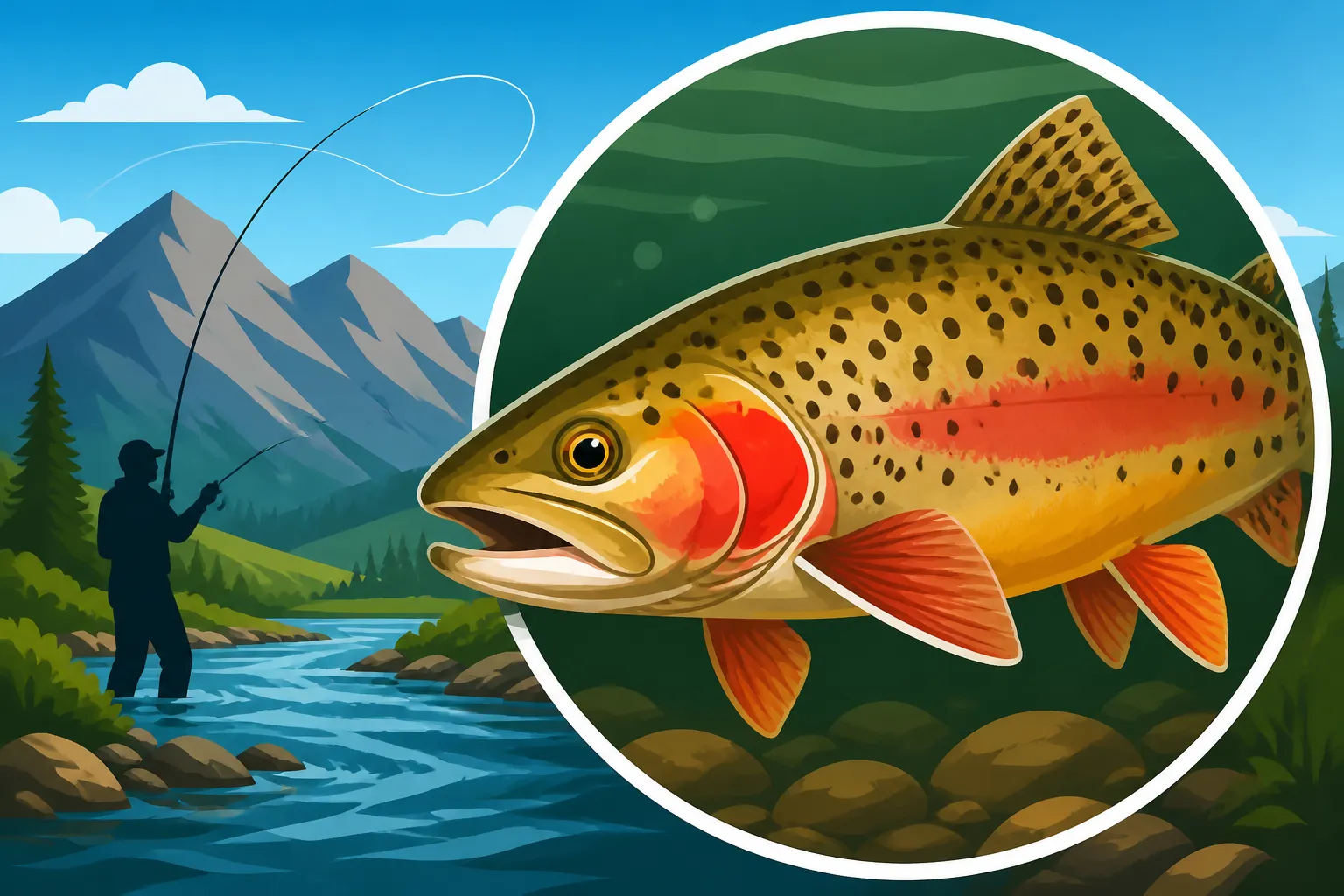
What Colorado River Cutthroat Trout Look Like
It's incredibly frustrating when you're out on a beautiful Colorado river, you hook into a gorgeous trout, and you think, "Is this a native cutthroat, or is it a rainbow?" The truth is, identifying trout can be tricky, especially when you're trying to distinguish between different subspecies or hybrids. This guide is here to help you understand exactly what a Colorado River Cutthroat Trout looks like, so you can confidently identify this beautiful native fish the next time you encounter one.
The Distinctive Markings of the Colorado River Cutthroat Trout
When you pull a fish from the clear waters of a Colorado stream, the first thing many anglers look for are those iconic "slashes" that give the cutthroat its name. But it goes beyond just that, especially when you're trying to pinpoint a specific subspecies like the Colorado River Cutthroat. They have a nuanced beauty that sets them apart.
The Tell-Tale Cutthroat Slash
The most famous calling card of any cutthroat trout, including the Colorado River Cutthroat, is that vibrant, reddish-orange slash beneath each side of its jaw. Think of it like a pair of painted mustaches, though they can range in intensity. Sometimes, these marks are a brilliant, almost neon orange, especially on a male fish in spawning colors. Other times, on a younger fish or one from a more turbid environment, they might be a faded yellow or a soft, peachy hue. It's not always a dramatic splash of color, but it's almost always present.
This distinct marking is absolutely crucial for distinguishing a pure cutthroat from a rainbow trout, which lacks this feature entirely. However, it's important to remember that a "cutbow," a hybrid of a rainbow and a cutthroat, might also display some version of this slash, making things a bit trickier. We'll dive into how to sort out those hybrids a bit later, but for now, know that this jaw mark is your primary visual cue.
Overall Body Color and Spotting Patterns
Beyond the famous slash, the Colorado River Cutthroat Trout has a very specific body coloration and spotting pattern that, once you learn it, becomes a reliable identifier. Typically, their bodies exhibit a greenish-yellow to an olive-green hue, often with a lovely brassy or copper sheen, especially along their flanks. This isn't the bright silver of a typical stocked rainbow, nor the darker, mottled browns and golds of a brown trout. It's a more subdued, earthy palette that helps them blend perfectly into their rocky, often moss-lined stream beds.
Now, let's talk spots, because this is where the real nuance comes in. Colorado River Cutthroat Trout are characterized by a profusion of small, relatively numerous, dark spots. The key here is their distribution: these spots are generally concentrated more heavily towards the tail end of the fish, often extending onto the dorsal (top) fin and the caudal (tail) fin itself. While you might find some spots scattered on the mid-body, they tend to be much sparser and smaller on the anterior (front) half of the fish, especially towards the head. Imagine a shotgun blast of tiny dark dots, heaviest at the back, thinning out as you move forward. This differs significantly from the more evenly distributed, sometimes larger spots you might see on a rainbow trout, or the larger, haloed spots of a brown trout.
Understanding the Habitat That Shapes Their Appearance
It's fascinating how the environment can literally paint a fish. The unique coloration and patterns of the Colorado River Cutthroat Trout aren't just for show; they're a result of millennia of evolution in very specific types of waters. Knowing where these fish come from helps to explain why they look the way they do and why their conservation is so vital to our state's angling heritage.
High-Altitude Streams and Rivers
The native range of the Colorado River Cutthroat Trout is, as the name suggests, within the Colorado River drainage, primarily in the western part of our state. This means they are often found in relatively high-altitude streams and rivers – places with crystal-clear, cold water, rocky bottoms, and frequently, an abundance of vegetation like moss and algae. Their greenish-yellow to olive-green backs, sometimes with a subtle gold or bronze tint, are perfect camouflage against these vibrant, natural backgrounds. Imagine peering into a shaded riffle where the rocks are covered in green algae and dappled sunlight dances on the bottom; a Colorado River Cutthroat blends in seamlessly.
The small, dense spots concentrated on their posterior (tail end) also play a role in this camouflage. When a predator, like a hawk or an otter, looks down into the water, the broken pattern of spots helps to disrupt the fish's outline, making it harder to distinguish from the pebbly, uneven riverbed. It's a testament to nature's design, perfectly adapting these fish to their often pristine, unspoiled mountain homes. If you're lucky enough to spot one in its natural element, take a moment to appreciate this connection to its environment. You can learn more about where these specific fish thrive by reading Colorado River Cutthroat Trout, Where to Find Them.
Geographic Range and Historical Significance
Historically, the Colorado River Cutthroat Trout was the dominant native trout species throughout the vast Colorado River Basin, stretching across western Colorado and into parts of Wyoming and Utah. They were the original inhabitants, adapted to the unique conditions of these western waters long before European settlers introduced other trout species like rainbows and browns. Their survival and continued presence in these waters are a symbol of a healthy, functioning ecosystem.
Today, their populations are often fragmented and exist in smaller, isolated pockets, usually in headwater streams where they've been protected from hybridization with non-native trout. Identifying these fish accurately is more than just an academic exercise; it's a critical step in conservation. Anglers who can correctly identify a native Colorado River Cutthroat are better equipped to understand and adhere to specific regulations designed to protect them, such as catch-and-release rules or bait restrictions in certain areas. This awareness helps ensure these magnificent fish continue to grace our rivers for generations to come, preserving a vital piece of Colorado's natural heritage.
Differentiating Colorado River Cutthroat from Other Trout Species
One of the biggest challenges for anglers in Colorado is telling the various trout apart. Our waters are home to rainbows, browns, brookies, and several subspecies of cutthroat, not to mention hybrids. It's like a fishy family reunion where everyone looks a little bit alike, but each has their own distinct personality. Understanding the subtle differences is key to proper identification and respecting specific fishing regulations.
Colorado River Cutthroat vs. Rainbow Trout (and Cutbows)
This is probably the most common point of confusion for anglers. Both Colorado River Cutthroat and Rainbow Trout can have somewhat silvery bodies, and both are spotted, leading to mix-ups. However, there are a few key distinctions:
- The Lateral Band: Rainbow Trout are famous for their iridescent pink or red lateral band that runs horizontally along their sides, especially prominent during spawning. Colorado River Cutthroat Trout, on the other hand, typically lack this distinct lateral band. While they might have a faint, blush-like coloring along their sides, it's never the vibrant, distinct stripe of a rainbow.
- The Cutthroat Slash: As we've discussed, the vivid red-orange slashes under the jaw are unique to cutthroat trout. Rainbows do not have these. If you see a fish with a prominent pink lateral band and those jaw slashes, you're likely looking at a "cutbow" – a hybrid of a rainbow and a cutthroat. These hybrids are fertile and can make identification even more complex, often exhibiting a mix of traits from both parent species. Knowing How to Tell a Cutthroat From a Rainbow Trout can save you a lot of guesswork.
- Spotting Patterns: While both are spotted, the distribution differs. Rainbows typically have more evenly distributed spots across their entire body, from head to tail. Their spots are often rounder and sometimes a bit larger than those on a Colorado River Cutthroat. Remember, the Colorado River Cutthroat's spots are usually smaller, more numerous, and concentrated towards the tail. For a deeper dive, check out Telling a Cutbow From a Pure Cutthroat.
Colorado River Cutthroat vs. Greenback and Rio Grande Cutthroat
Colorado is incredibly fortunate to be home to several subspecies of native cutthroat trout. Besides the Colorado River Cutthroat, we also have populations of Greenback Cutthroat Trout and Rio Grande Cutthroat Trout. While they all share that iconic "cutthroat" slash, there are subtle differences in their appearance and geographic ranges that can help distinguish them, though genetic testing is truly the only definitive method for subspecies identification.
- Spotting Density and Size: Generally, Colorado River Cutthroat Trout tend to have more numerous, often smaller spots spread over a larger portion of their body (especially toward the tail) compared to Greenback Cutthroat, which can have larger, more widely spaced spots. Rio Grande Cutthroat Trout, conversely, often have relatively few spots, mainly concentrated on the caudal (tail) fin, and sometimes extending onto the back.
- Overall Coloration: While all can have an olive or greenish-brown base, Greenbacks sometimes display a more distinct golden or brassy hue, while Rio Grandes can lean towards a slightly darker, more drab coloration depending on their specific stream.
- Geographic Range: This is often the most practical identifier in the field. If you're fishing in a stream that is known to be part of the Arkansas or South Platte River drainages (eastern slope), and you catch a native cutthroat, it's more likely to be a Greenback. If you're in the southwestern part of the state, in the San Luis Valley or other drainages flowing into the Rio Grande, it's likely a Rio Grande Cutthroat. In the western part of the state, in the Colorado River drainage, you'll be looking for the Colorado River Cutthroat. This knowledge of Greenback Cutthroat Trout Recovery in Colorado and Rio Grande Cutthroat Trout in the San Luis Valley is invaluable. Always consult local regulations or a stream-specific guide to know which native cutthroat species are present in the water you're fishing.
Practical Tips for Anglers in the Field
Identifying fish, especially native species like the Colorado River Cutthroat, is a rewarding skill that deepens your connection to the sport and the environment. But it's not always easy when a fish is wiggling at the end of your line! Here are some practical tips to help you confidently identify your catch while also ensuring its well-being.
Observe Carefully and Respectfully
When you land a fish, especially if you suspect it might be a native cutthroat, slow down for a moment. Instead of immediately going for the quick release, take a few extra seconds to observe its features. Keep the fish in the water as much as possible; a quick glance at the jaw for that tell-tale slash, a look at the body for the lateral band (or lack thereof), and a mental note of the spotting pattern can go a long way.
If you must lift the fish for a photograph or closer inspection, do so with wet hands and support its body horizontally. Minimize its time out of the water, especially in warmer conditions. Native cutthroat trout are often managed under strict catch-and-release rules in their native habitats to protect their fragile populations. Being able to identify them quickly helps you adhere to these vital regulations. Taking a quick, clear photo can also be incredibly helpful. You can refer to it later when you have more time to consult a field guide or ask for an expert opinion. This approach aligns perfectly with Catch-and-Release Rules on Colorado's Cutthroat Waters, ensuring these beautiful fish thrive.
Using Resources for Identification
You don't have to be a ichthyologist to identify fish correctly. There are plenty of fantastic resources out there to help you become a savvy fish identifier. A good, waterproof field guide specific to Colorado's fish species is an invaluable tool to keep in your pack. You can find excellent field guides on Amazon that specifically focus on Colorado's fish species, often with detailed illustrations or photographs that highlight the subtle differences between trout. These guides can be a lifesaver when you're questioning a particular catch.
Additionally, Colorado Parks and Wildlife (CPW) offers a wealth of information. Their website often has fish identification pages, and their annual fishing regulations brochure, which you should always carry, frequently includes illustrations or descriptions of common species, especially native ones. Familiarizing yourself with these resources before you hit the water can significantly boost your confidence. Next time you're gearing up for a trip, consider adding a waterproof field guide, available on Amazon, to your vest or pack, or simply download a digital version to your phone (just remember service can be spotty in the backcountry!). For a more general overview, you might find Colorado's Trout Species, A Field Guide particularly useful, and always remember to check Colorado Fishing Regulations Every Angler Should Know before heading out.
| Feature | Colorado River Cutthroat Trout | Rainbow Trout | Brown Trout |
|---|---|---|---|
| Jaw Markings | Distinct red, orange, or yellow "slashes" under the jaw | No slashes | No slashes (sometimes yellow jawline, not a true slash) |
| Body Color | Greenish-yellow to olive-green, often with brassy tones | Silvery to olive-green, often with prominent pink/red lateral band | Golden brown, olive-brown, or tan |
| Spotting Pattern | Numerous small, dark spots, concentrated towards the tail and fins | Smaller, dark spots, often more evenly distributed across the body | Large, dark spots (often with light halos), and red/orange spots |
| Lateral Band | Generally absent or very faint, not a distinct stripe | Distinct pink or red iridescent stripe along the lateral line | Absent |
| Caudal Fin | Often spotted, typically square or slightly emarginate | Often spotted, typically square or slightly emarginate | Usually unspotted, slightly forked |
Disclaimer
This article is for general informational purposes only and does not constitute professional advice. Laws, prices and regulations vary by location and change over time. Consult a qualified professional for guidance on your specific situation.