What a Mountain Whitefish Looks Like
Have you ever been out on a pristine Colorado river, casting for what you assume are trout, only to pull in a fish that looks… well, a little different? It’s not quite a rainbow, not exactly a brown, and it leaves you scratching your head. That's a common experience for many anglers, and chances are, you've just encountered the often-misunderstood mountain whitefish. This guide will help you clearly identify this unique native species and appreciate its place in our waters.
Understanding the Mountain Whitefish: Its Unique Appearance
Catching a mountain whitefish for the first time can be a bit of a puzzle. Many anglers, especially those new to Colorado's diverse waters, might initially mistake it for a trout, particularly a smaller, paler one. But once you know what to look for, its distinguishing features become quite clear. It's a fascinating fish with an appearance perfectly adapted to its riverine home, and truly, it’s a beautiful species in its own right, not just a "trout wannabe."
Body Shape, Fins, and Overall Profile
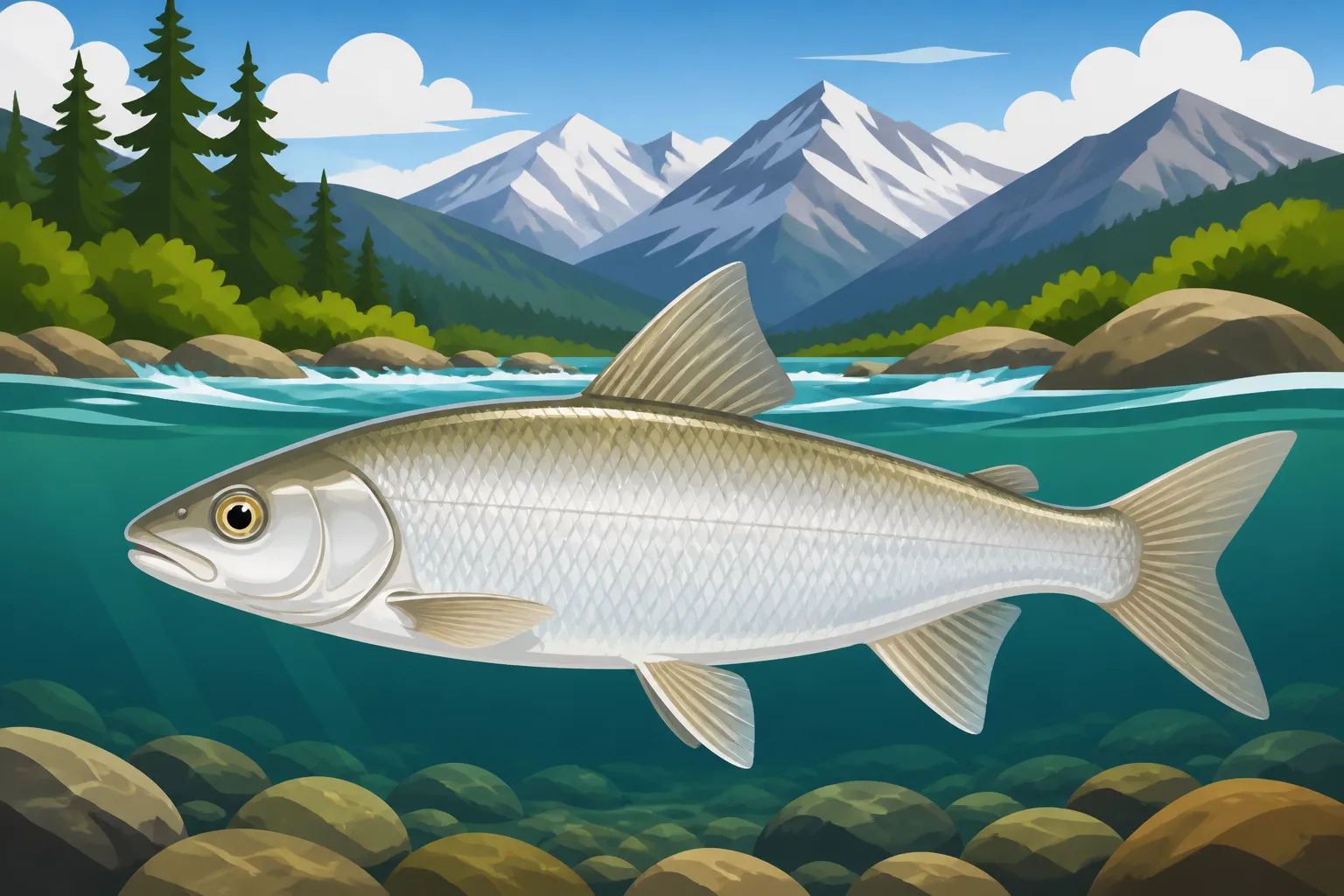
The mountain whitefish has a streamlined, somewhat cylindrical body, often described as torpedo-shaped, which helps it navigate strong river currents with ease. Unlike the often deeper-bodied trout, whitefish tend to be slenderer, giving them a more delicate profile in the water. They typically have a small, somewhat pointed head that flows smoothly into their body. This sleeker design is a key indicator that you've hooked something other than your typical Colorado trout.
Their fins offer some clues as well. Like trout, they possess an adipose fin—that small, fleshy fin on the back near the tail, lacking rays. However, on a mountain whitefish, this adipose fin tends to be proportionally smaller than what you'd see on a rainbow or brown trout. Their other fins, particularly the pectoral and pelvic fins, are generally smaller and more subdued, blending into their overall sleek form. The caudal fin, or tail fin, is usually slightly forked, allowing for efficient propulsion in moving water.
The Distinctive Mouth and Scales
One of the most defining characteristics of the mountain whitefish, and arguably the easiest way to tell it apart from a trout, is its mouth. Whitefish have a small, subterminal mouth, meaning it's located on the underside of the head, rather than at the very front (terminal) like a trout. This mouth is soft and rubbery, perfectly designed for foraging on the bottom of rivers and streams, sifting through gravel and pebbles for aquatic insects. If you catch a fish and notice its mouth is more "under" its snout, almost like a sucker or carp, you’re likely holding a mountain whitefish.
Another notable feature is their scales. Mountain whitefish have noticeably larger and more prominent scales compared to the finer, often almost imperceptible scales of many trout species. When you run your hand along a whitefish, you can distinctly feel the individual scales. This difference in scale size is a dead giveaway once you've learned to recognize it. These larger scales contribute to their slightly coarser feel compared to the smooth, almost slippery skin of a trout.
Coloration and How it Helps Them Blend In
In terms of coloration, mountain whitefish are generally quite subtle, designed for camouflage in clear river environments. Their backs are typically an olive-green or brownish-silver, gradually fading to bright silvery sides, and finally to a clean white belly. This countershading helps them blend in, whether viewed from above by a predator like a hawk or from below by a river otter. The specific hues can vary slightly depending on the clarity and depth of the water they inhabit, as well as their diet. Fish from very clear, gravel-bottomed streams might appear lighter and more silvery, while those from areas with more dark substrate might have a richer, deeper olive tone on their backs.
Occasionally, you might see a faint, indistinct row of spots along their lateral line, but these are never as pronounced or colorful as the vibrant spots, halos, and speckles you'd find on a brown trout or the iridescent band of a rainbow. Their overall appearance is one of understated elegance, built for survival in the challenging currents of Colorado's coldwater rivers. They truly embody the subtle beauty of a native fish perfectly adapted to its niche.
Where to Find Them and What They Eat: Habitat and Habits
Understanding where mountain whitefish live and what they consume can also help with identification, as their physical traits are directly linked to their lifestyle. These aren't creatures of still, warm lakes; they are true inhabitants of the flowing, cold waters that many of us cherish for trout fishing. Learning their habits gives you an edge in both finding and appreciating them.
Preferred River Sections and Water Conditions
Mountain whitefish are creatures of cold, clear, well-oxygenated rivers and larger streams, which makes Colorado's mountain drainages ideal habitats. You'll often find them sharing the same stretches of water as brown trout and rainbow trout, particularly in rivers with gravel or cobble bottoms where they can easily forage. Think of the larger freestone rivers and tailwaters across the state – places like the upper Colorado River, the Yampa, the Fryingpan, and the Blue River. They aren't generally found in tiny high-alpine brooks or warm, turbid plains reservoirs; they need that consistent cold, clean flow.
Within these rivers, whitefish tend to prefer deeper runs, pools with moderate current, and the slower edges of riffles. While trout might be more focused on actively feeding in the faster parts of a riffle, whitefish are often found just downstream, sifting through the streambed in less turbulent water. If you're fishing a deep hole or a broad, gravelly run in a river like the Colorado River Fishing From Glenwood Canyon to Kremmling or Fishing the Yampa River in Steamboat Springs, you have a good chance of encountering one. They're often found in schools, so if you catch one, there are likely more in the vicinity.
Diet, Feeding Behavior, and Seasonal Patterns
The distinctive subterminal mouth of the mountain whitefish is a direct reflection of their diet and feeding behavior. They are primarily bottom feeders, specializing in consuming aquatic invertebrates such as caddisfly larvae, mayfly nymphs, stonefly nymphs, and various other insect larvae and pupae that cling to or drift along the riverbed. They use their specialized mouths to "snuffle" along the bottom, sucking up tiny organisms and detritus. This means they're not typically leaping for dry flies on the surface or chasing down baitfish like larger trout might.
Their feeding patterns are pretty consistent throughout the year, though they might become less active in the coldest parts of winter. In spring, summer, and fall, they are constantly on the lookout for subsurface food. You'll often find them stacked up in deeper runs, patiently waiting for the current to deliver a meal or actively grazing the bottom. During the fall, they undergo their spawning ritual, typically between September and November, where they gather in shallower gravelly areas to deposit eggs. This is a time when they might be particularly active, though anglers are generally encouraged to avoid disturbing spawning fish.
Separating Fact from Fiction: Whitefish vs. Trout Identification
It's completely understandable why mountain whitefish are so often mistaken for trout. They inhabit the same waters, respond to many of the same fishing techniques, and have a similar overall shape. However, knowing the subtle yet distinct differences can not only satisfy your curiosity but also ensure you're in compliance with any specific regulations that might apply to either species. Trust me, a game warden checking your catch will appreciate you knowing the difference!
Why the Confusion is So Common
The primary reason for confusion is shared habitat. When you're fishing a classic trout stream, and every other fish you catch is a rainbow or a brown, it's natural to assume anything else on your line from that same water is just another variation of trout. Plus, the mountain whitefish, while distinct, isn't a brightly colored or aggressively patterned fish that immediately screams "different." It’s silvery, streamlined, and blends in, much like a smaller, un-spotted trout might appear at first glance.
Furthermore, many popular fishing techniques for trout—especially nymphing or fishing with small baits—are also highly effective for whitefish because their diets overlap significantly. If you're drifting a pheasant tail nymph or a small worm along the bottom, both species are likely to take it. This shared vulnerability to certain presentations only adds to the mistaken identity, as anglers are often focused more on the bite and fight than the exact species when the adrenaline is pumping. Even seasoned anglers can sometimes pause for a moment when a whitefish comes to the net, just to double-check.
A Head-to-Head Comparison: Key Differences
To really clear up any confusion, let's break down the key differences between a mountain whitefish and the common trout species you'd find in Colorado. Keep this table in mind next time you're on the water, and you'll be a pro at identifying them in no time!
| Feature | Mountain Whitefish | Trout (Rainbow, Brown, Cutthroat) |
|---|---|---|
| Mouth Position | Small, subterminal (underneath snout) | Terminal (at the very front of the snout) |
| Scales | Larger, easily visible, and palpable | Smaller, finer, often barely visible without close inspection |
| Coloration | Generally silvery to olive-green back, white belly, few/no distinct spots | Varies greatly: spots, halos, iridescent bands, vibrant colors |
| Body Shape | More slender, cylindrical, torpedo-shaped | Often deeper-bodied, more robust |
| Adipose Fin | Present, but typically smaller than on trout | Present, usually more prominent |
| Behavior | Primarily bottom feeders, often schooling | Varied diet (insects, baitfish), can be surface feeders, more solitary often |
| Fight | Often described as a "dead weight" or strong head shakes | More acrobatic, jumps, runs (especially rainbows) |
When you're out there, remember to quickly check for that mouth position and the size of the scales. Those are usually the easiest indicators. If you're still not sure, don't fret; it happens to the best of us! Just keep practicing your observation skills. For more general guidelines on what fish live in our waters, you can always check out Colorado's Trout Species, A Field Guide.
Fishing for Them: Tackle, Techniques, and Regulations
Fishing for mountain whitefish often happens inadvertently when targeting trout, but they can be a fun and challenging target on their own, especially if you know their habits. You'll typically find success using lighter tackle that you'd use for trout, like a 4-weight or 5-weight fly rod, or a light spinning rod with 2-6 pound test line. They're not massive fish, so light gear makes the fight more enjoyable.
For flies, think small nymphs that imitate their natural food sources. Patterns like pheasant tails, hare's ears, prince nymphs, and caddis larvae imitations in sizes 16-20 are often highly effective. You'll want to fish these deep, often with some split shot to get them right to the bottom where whitefish feed. This deep nymphing approach, as detailed in articles like Nymphing Techniques for Colorado Tailwaters, is ideal. If you're using spin tackle, small worms, corn, or tiny salmon eggs drifted along the bottom can also entice a bite. The key is presenting your offering where they are actively feeding – right on the riverbed. You can even find a wide array of small nymphs and split shot on Amazon if you need to stock up before your next trip.
Regarding regulations, mountain whitefish are typically managed differently than trout in Colorado. While bag limits often exist, they are usually more generous, or sometimes there are no specific limits at all in certain waters because they are abundant. However, it is absolutely crucial to always consult the current Colorado Parks and Wildlife (CPW) fishing regulations brochure for the specific water you're fishing. Rules can change, and knowing the difference between a whitefish and a trout can prevent you from inadvertently violating a regulation. The document Colorado Fishing Regulations Every Angler Should Know is a great resource to keep handy.
The Mountain Whitefish's Place in Colorado's Rivers
Beyond just identification, it's worth taking a moment to appreciate the ecological role and native status of the mountain whitefish. They are not just "filler fish" between trout; they are a vital part of Colorado's aquatic heritage, playing an important role in the health and balance of our river ecosystems.
Ecological Role and Conservation Status
The mountain whitefish holds a significant place in the intricate food web of Colorado's coldwater rivers. As primary consumers of aquatic insects, they help control invertebrate populations, and in turn, they serve as a valuable food source for larger predatory fish, such as large brown trout and bull trout where they coexist, as well as otters and various bird species. Their presence indicates a healthy, functioning river ecosystem with good water quality and abundant insect life. They are a testament to the natural diversity of our state's waterways.
Compared to some of Colorado's other native fish, which face severe threats, the mountain whitefish populations are generally considered stable and healthy across much of their range in the state. However, like all aquatic species, they are sensitive to habitat degradation, water pollution, and changes in water flow. Understanding and respecting their role is part of responsible angling and overall conservation efforts. While they are not considered an endangered species, articles like Colorado's Endangered and Threatened Fish remind us that careful stewardship of all native species is paramount.
Enjoying the Experience of Catching a Native Fish
Catching a mountain whitefish is a unique experience. While they might not be as acrobatic as a rainbow trout or as sought-after for their trophy size as a brown, they offer a subtle fight that's often described as a strong, deep pull or a series of steady head shakes. Landing one gives you the chance to connect with a true native of Colorado's waters, a species that has been navigating these currents for millennia.
Next time you hook into one, take a moment to admire its sleek form, its distinctive mouth, and its iridescent scales. Appreciate its quiet strength and its role in the river. Whether you release it or decide to keep it for the table (they are surprisingly good eating, with delicate white flesh, similar to a panfish), it's a valuable part of the Colorado fishing experience. Embrace the diversity, and celebrate every fish you bring to the net, especially the native ones like the mountain whitefish. And remember, having the right gear, which you can easily find on Amazon, can make all the difference in appreciating the subtle nuances of species like these.
Disclaimer
This article is for general informational purposes only and does not constitute professional advice. Laws, prices and regulations vary by location and change over time. Consult a qualified professional for guidance on your specific situation.