How to Identify a Splake in Colorado
Catching a fish in Colorado's stunning high-country lakes or deep reservoirs can sometimes throw you for a loop. You reel in what you think might be a brook trout, but something just seems… off. Or maybe it resembles a lake trout, but not quite. This moment of angler confusion is completely normal, especially when you've landed a splake. These unique hybrids can be tricky to distinguish from their parent species, but understanding their tell-tale features is key to not only correctly identifying your catch but also adhering to regulations. This guide will walk you through everything you need to know to confidently identify a splake the next time one bites your line.
What Exactly Is a Splake? Unpacking the Hybrid Trout
Before we dive into the nitty-gritty of identification, let's clear up what a splake actually is. It's not a naturally occurring species in the wild, which is often why anglers find them so perplexing. A splake is a hybrid fish, born from the cross-breeding of two different trout species: a male brook trout and a female lake trout. Think of it as a carefully crafted blend, combining some of the best characteristics of both parents.
This cross is typically done in hatcheries, not in the wild. The result is a sterile fish, meaning it cannot reproduce. This sterility is actually a strategic benefit for fisheries management. By stocking splake, Colorado Parks and Wildlife (CPW) can introduce a robust, fast-growing sport fish without the concern of it overpopulating a water body or, more critically, interbreeding with and diluting the genetics of precious native trout populations. They often thrive in specific cold-water environments that might not be ideal for either parent species to reach their full potential, offering anglers a unique challenge and a great fight. You might be surprised to learn that other sterile hybrids, like tiger trout, are also stocked for similar reasons, often to control overabundant populations of other fish. To learn more about other trout species in the state, check out Colorado's Trout Species, A Field Guide.
The Purpose Behind the Hybridization
So, why go to all the trouble of creating a hybrid? In Colorado, splake play a vital role in balancing certain aquatic ecosystems and providing diverse angling opportunities. For instance, brook trout, one of the parent species, can sometimes overpopulate smaller, higher-elevation lakes, leading to stunted growth. Lake trout, the other parent, prefer much deeper, colder water and might not thrive in all the waters where brook trout do.
The splake, being a blend, can often tolerate a wider range of temperatures and conditions than a pure lake trout, while also growing larger than a typical brook trout. This makes them an excellent candidate for certain waters where CPW wants a larger, more aggressive sport fish that won't disrupt delicate ecosystems. They provide a unique fishing experience in places where other trout might struggle or where a sterile predator is beneficial. If you're keen to understand more about specific stocking efforts, regularly checking Reading Colorado's Weekly Stocking Report can provide valuable insights.
Key Physical Characteristics: Spotting a Splake on the Hook
Okay, so you've got a fish on the line, and you suspect it might be a splake. How do you tell for sure? This is where a keen eye and a bit of knowledge about its parent species come in handy. Splake often exhibit a fascinating mix of features from both brook trout and lake trout, making identification a fun, albeit sometimes challenging, puzzle. Let's break down the most reliable characteristics.
Tail Shape: The Dead Giveaway
Perhaps the single most reliable feature to identify a splake is its tail fin. This is often the first thing experienced anglers look at.
- Splake: A splake will typically have a moderately forked tail. It's not as deeply forked or crescent-shaped as a true lake trout, nor is it nearly as square or slightly emarginate (slightly indented) as a brook trout. It's truly a compromise, a gentle 'V' shape that sits right in the middle.
- Brook Trout: Known for their square or very slightly forked tail fin. It often looks quite blunt.
- Lake Trout: Distinguished by a deeply forked or crescent-shaped tail. It looks like it was carved out in the middle.
When you've got the fish in hand, gently spread its tail to see the shape. If it's somewhere between square and deeply forked, you're likely holding a splake. This is a crucial detail that can save you a lot of head-scratching.
Coloration and Markings: A Blended Palette
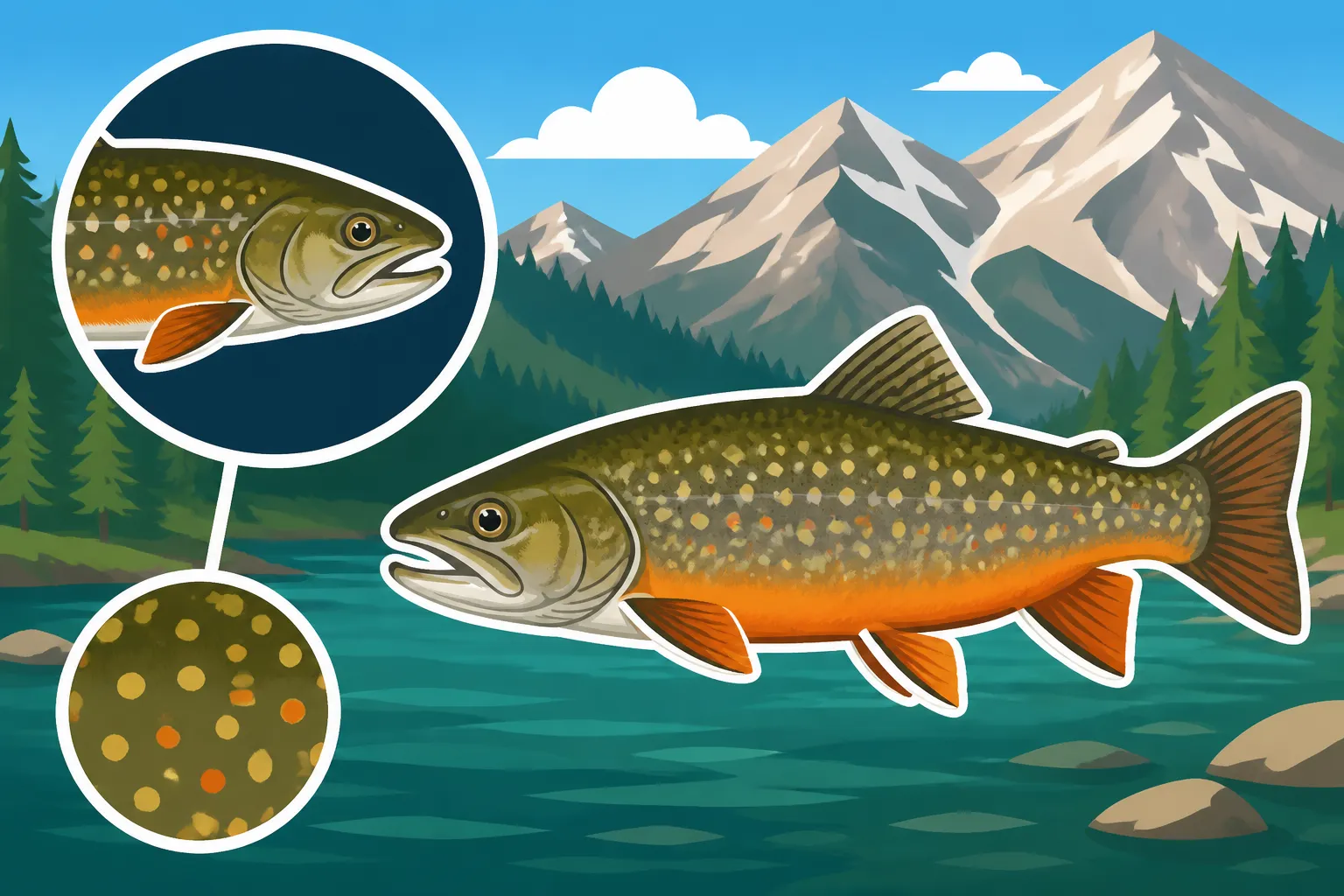
Splake coloration can be a beautiful and confusing blend. They often inherit the striking vermiculations (worm-like markings) of the brook trout, but these patterns tend to be less distinct and more muted.
- Splake: Their body color can vary, but often ranges from olive green to brownish, with pale, yellowish spots scattered over their sides. These spots might even have a faint halo, reminiscent of some brook trout markings. The vermiculations, if present, are usually on the back and dorsal fin, but they might not be as pronounced as on a brook trout. They typically lack the bright red or orange spots with blue halos that make brook trout so vibrant. The belly might be whitish or creamy, but rarely bright orange or red like a spawning brook trout.
- Brook Trout: These fish are stunning, with dark olive to black bodies adorned with distinct, light-colored vermiculations on their back and dorsal fin. They also have prominent red or orange spots, often surrounded by a blue halo, along their sides. Their lower fins (pectoral, pelvic, anal) typically have a white leading edge followed by a black stripe, then an orange or reddish color.
- Lake Trout: Tend to be darker, often gray to greenish-brown, covered in irregularly shaped, light-colored spots (yellowish or whitish) on a darker background. They do not have the vermiculations of a brook trout, and their fins lack the vibrant white leading edges.
Looking closely at the pattern of spots – whether they are light on dark or dark on light – and the presence and clarity of vermiculations, can help narrow down your identification. Sometimes a simple field guide (many great options are available on Amazon for easy access in your tackle box) can be invaluable for cross-referencing these visual cues.
Mouth and Head Structure: Subtle but Important Clues
The mouth and head can offer additional clues, though these are often more subtle and require a bit more familiarity with the parent species.
- Splake: The mouth of a splake is generally intermediate in size between its parents. It’s usually a bit larger than a brook trout's but not as massive or deeply-cleft as a lake trout's. You might notice teeth on the vomer (a bone on the roof of the mouth) which are more developed than in brook trout but perhaps less so than in a large lake trout.
- Brook Trout: Have a relatively small mouth that typically doesn't extend past the eye.
- Lake Trout: Possess a very large mouth, extending well beyond the eye, with strong teeth, including prominent ones on the vomer.
When examining the mouth, be careful! Always handle fish with wet hands to protect their slime coat, and try to minimize their time out of the water. A quick glance is all you need.
Other Distinguishing Features in Brief
Here's a quick rundown of other features to consider:
- Size: Splake can grow larger than brook trout, often reaching sizes comparable to smaller lake trout, especially in waters with ample forage. How Big Lake Trout Get in Colorado offers perspective on one of its parents.
- Body Shape: Splake generally have a more streamlined body than a lake trout, but can appear more robust than a typical brook trout. Again, it's an intermediate form.
- Fin Coloration: While not as distinct as a brook trout's, a splake might show some faint white edging on its lower fins, a nod to its brook trout heritage, but usually without the stark contrast.
To truly master identification, practice makes perfect. The more trout you catch and examine, the easier it becomes. You might even consider keeping a small magnifying glass, easily found on Amazon, in your gear bag to get a closer look at fin rays or subtle markings.
Here's a quick comparison table to help you in the field:
| Feature | Splake | Brook Trout | Lake Trout |
|---|---|---|---|
| Tail Fin | Moderately forked | Square or slightly emarginate | Deeply forked |
| Body Color | Olive to brownish, pale spots | Dark olive to black, vibrant vermicular | Gray to greenish-brown, irregular light spots |
| Spots | Pale, yellowish, sometimes with faint halos | Red/orange spots with blue halos | Irregular yellowish/whitish spots |
| Vermi-culations | Faint or indistinct on back/dorsal | Prominent on back and dorsal fin | Absent |
| Lower Fins | Faint white leading edge possible | Distinct white leading edge, black stripe, red/orange | No white leading edge |
| Mouth Size | Intermediate, extends near or slightly past eye | Relatively small, does not pass eye | Very large, extends well past eye |
Where You're Likely to Encounter a Splake in Colorado
Knowing what a splake looks like is one thing, but knowing where to find them can really help you anticipate what you've hooked. Splake aren't found in every body of water in Colorado; their presence is a direct result of strategic stocking efforts by Colorado Parks and Wildlife. They tend to thrive in specific types of environments that cater to their unique hybrid needs.
Preferred Habitats: Cold and Deep
Generally, splake prefer cold, clear, and relatively deep lakes and reservoirs. They enjoy water temperatures that are cooler than what typically suits a rainbow trout, but they can often tolerate slightly warmer conditions than a pure lake trout might prefer. This makes them excellent candidates for many of Colorado's high-altitude lakes and larger mountain reservoirs, where oxygen levels are good and water temperatures remain cool throughout the year.
They often inhabit the deeper sections of these waters, cruising for food, but they can also be found shallower, especially during cooler periods or low light conditions. If you're fishing a water body that is known for both brook trout and lake trout, or has characteristics that fall somewhere in between the ideal habitats for those species, there's a good chance splake might be present.
Colorado's Stocking Programs for Splake
Colorado Parks and Wildlife stocks splake for specific management goals. As sterile fish, they can be introduced to provide a sport fishery without concerns about natural reproduction impacting other species. This makes them a versatile tool. While specific stocking locations can change from year to year, splake have been stocked in various waters across the state, from smaller high-mountain lakes accessible by hike to larger reservoirs. You can often find information about where splake have been stocked by checking CPW's official resources. A great place to start looking for information on where specific species might be found is the Colorado's Fishing Atlas to Plan a Trip.
The decision to stock splake is often made to fill a niche where another species might not perform as well. For example, in a lake with an overabundance of small brook trout, introducing sterile splake can help control the brook trout population while also providing a larger fish for anglers to target. Similarly, in waters where lake trout stocking might be limited or where they don't grow as quickly, splake offer a viable alternative. This contributes to the diverse angling experiences Colorado is famous for. You can learn more about how and why they're stocked in Is Splake Stocked Anywhere in Colorado?.
Why Proper Splake Identification Matters
You might be thinking, "It's just another fish, what's the big deal if I mistake a splake for a brook trout?" While it might seem minor, correctly identifying your catch has several important implications for both anglers and the long-term health of Colorado's fisheries. It's not just about bragging rights; it's about responsible angling and conservation.
Adhering to Fishing Regulations
The most immediate and practical reason to accurately identify a splake is to ensure you're following Colorado's fishing regulations. Different species of trout often have different bag and possession limits, size restrictions, or even specific bait restrictions on certain waters.
Imagine you're fishing a lake that has a strict two-fish limit on brook trout, but a more generous limit on splake. If you mistake a splake for a brook trout, you might accidentally stop fishing prematurely, or worse, keep more brook trout than allowed if you're not paying attention. Conversely, if you mistake a small brook trout for a splake and keep it when there's a minimum size limit for splake, you could be in violation. Enforcement officers, like the wildlife wardens that might check your catch, are very good at identifying species, and ignorance of the rules isn't usually an acceptable defense. Always double-check Colorado Fishing Regulations Every Angler Should Know for the specific body of water you're fishing.
Proper identification ensures you stay within the legal limits, contributing to sustainable fishing practices and avoiding potential fines or penalties. Taking a clear photo of your catch with a waterproof camera (many options on Amazon) can also be helpful if you need to review it later or share with an expert.
Contributing to Conservation and Fisheries Management
Beyond regulations, accurate identification plays a role in broader conservation efforts. Colorado has several native trout species, like the greenback cutthroat, Colorado River cutthroat, and Rio Grande cutthroat, which are subjects of significant recovery and protection efforts. Distinguishing these from stocked fish, including splake, is crucial. While splake are sterile and generally pose less of a genetic threat than fertile non-native species, understanding the full picture of what's being caught in a particular water helps CPW assess the success of their stocking programs and the health of the fish populations.
When you correctly identify a fish, you're better equipped to understand its role in the ecosystem. This awareness fosters a deeper appreciation for the nuanced management strategies CPW employs. For example, knowing that splake are sterile hybrids, as explored in What a Triploid Trout Is and Why It Matters (a triploid is another type of sterile fish), helps you understand why they might be stocked in certain places as a management tool. Understanding Identifying Colorado's Native vs Stocked Trout is a larger piece of this puzzle.
Enhancing Your Angling Knowledge and Experience
Let's be honest, there's immense satisfaction in knowing exactly what you've caught. Every fish species presents its own unique challenge and reward. By learning to identify splake, you're not just avoiding trouble; you're becoming a more knowledgeable and skilled angler. You start to understand their behavior, where they prefer to hide, and what they might bite on, all of which enriches your overall fishing experience.
Developing your identification skills also makes you a better advocate for the sport and the environment. You can educate other anglers, share your knowledge, and contribute to a community that values conservation and responsible outdoor recreation. So, the next time you hook into a fish that makes you pause, remember these tips, and take pride in accurately identifying that unique Colorado splake!
Disclaimer
This article is for general informational purposes only and does not constitute professional advice. Laws, prices and regulations vary by location and change over time. Consult a qualified professional for guidance on your specific situation.