What Downrigger Gear a Blue Mesa Charter Provides
You're heading out to the vast, stunning waters of Blue Mesa Reservoir, perhaps dreaming of pulling up a giant lake trout or a schools of vibrant kokanee salmon. It's an incredible destination, but let's be real, a lake of that size and depth, teeming with specific species that love the deeper, colder water, requires some serious gear. If you're considering a charter, one of the biggest questions is often about specialized equipment, particularly downriggers. It’s natural to wonder, "What downrigger gear does a Blue Mesa charter actually provide?" This guide will lay out exactly what you can expect so you can focus on the fishing, not the logistics.
Understanding Downriggers and Why They're Key on Blue Mesa
Fishing Blue Mesa, especially for its prized lake trout and kokanee salmon, isn't quite like casting a line into a local pond. These species often inhabit specific depths, following temperature gradients and forage. This is where downriggers become absolutely essential, and it's why understanding their role is crucial before you even step foot on a charter boat.
What is a Downrigger and How Does it Work?
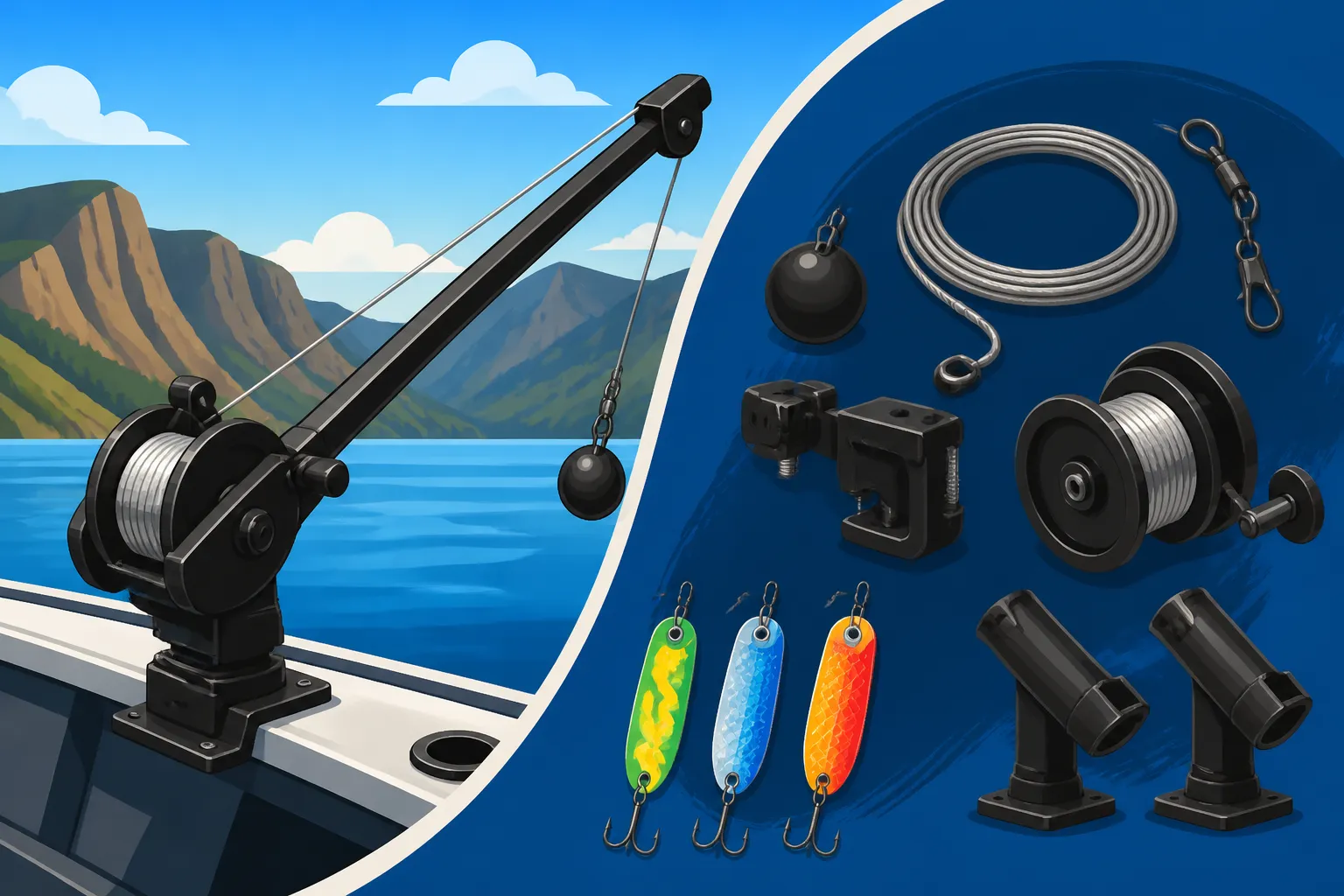
At its core, a downrigger is a specialized piece of fishing equipment designed to get your lure or bait down to a precise depth in the water column and keep it there while trolling. Think of it like a controlled, adjustable elevator for your fishing line. It typically consists of a long boom, a reel spooled with strong wire or heavy braid, a heavy "cannonball" weight (often 8-15 pounds), and a release clip. Your fishing line, with its lure or bait, is attached to this release clip.
When you deploy the downrigger, the cannonball weight sinks, pulling your fishing line and lure down with it to your desired depth. Crucially, the release clip is designed to hold your line under normal trolling tension but will release your fishing line the moment a fish strikes, allowing you to fight the fish directly on your rod and reel without the heavy downrigger weight attached. It sounds a bit complicated, and honestly, operating one effectively with multiple lines in the water can be, which is precisely why charter captains are so valuable. They handle all the intricate details, allowing you to simply grab the rod when a fish hits.
Why Blue Mesa Requires Downrigger Expertise
Blue Mesa Reservoir is Colorado’s largest body of water, sprawling across 20 miles and plunging to depths of over 300 feet in some areas. This immense size and significant depth mean that fish aren't just lurking near the shoreline; they're often suspended in open water or hugging deep underwater structures, sometimes 50, 80, or even 100+ feet down. Without a downrigger, reaching these depths consistently with the right presentation would be incredibly challenging, if not impossible, for most anglers.
The primary target species on Blue Mesa, the magnificent lake trout and the hard-fighting kokanee salmon, are notorious for preferring colder, deeper water, especially as the seasons progress into summer and fall. Lake Trout Fishing in Colorado and Kokanee Salmon Fishing in Colorado often involve targeting these depths, sometimes even requiring How Deep to Fish Blue Mesa Reservoir for Lake Trout. A skilled captain uses a downrigger to precisely position lures in the narrow temperature bands where these fish are most active, or along specific underwater contours that only a downrigger can effectively reach. This precision is a game-changer on a lake as vast and deep as Blue Mesa.
Standard Downrigger Gear Provided by Blue Mesa Charters
When you book a fishing charter on Blue Mesa, you're not just paying for a boat and a guide; you're paying for access to a complete, professional fishing system. This includes the high-quality, specialized downrigger gear that would be a significant investment for any individual angler. The beauty of it all is that it's set up, maintained, and operated by your experienced captain.
The Downrigger Unit Itself
Every reputable Blue Mesa charter specializing in lake trout and kokanee will have multiple downrigger units mounted securely to the boat. These units are typically heavy-duty, marine-grade equipment, often from brands known for their reliability in demanding conditions. You might see manual crank models, but many professional charters will use electric downriggers. Electric models are a huge advantage because they allow the captain to precisely control the depth with the push of a button, make quick adjustments, and retrieve the heavy cannonball weights effortlessly, which is a major benefit when you're moving around the lake or bringing in multiple lines.
The charter provides not just the downrigger itself, but also the heavy-duty line (often stainless steel cable or specialized braid) spooled onto the downrigger's reel, and the heavy cannonball weights. These weights are designed to keep your lines tracking true at speed and depth, even in windy conditions or when maneuvering the boat. The charter ensures all these components are in excellent working order, so you don't have to worry about a rusty cable or a malfunctioning reel.
Rods, Reels, and Line for Downrigger Fishing
You won't be using your standard bass fishing combo for downrigger fishing on Blue Mesa. Charters provide specialized rods and reels specifically designed for this technique. These rods are usually shorter and have a softer, more parabolic action than typical trolling rods. This flexibility is crucial because it acts as a shock absorber when the downrigger release clip pops off, preventing line breakage or the hook from pulling free from the fish's mouth.
The reels provided are almost always baitcasting or level-wind models, often equipped with line counters. A line counter is incredibly important for downrigger fishing, allowing the captain (and you) to know exactly how much fishing line is out after the release, which helps in identifying patterns or replicating successful depths. The line itself will be a strong monofilament or fluorocarbon, chosen for its specific properties like stretch and invisibility, and it will be spooled correctly and checked for nicks and abrasions by the charter. This meticulous setup ensures that when a fish strikes, you have the best chance of landing it.
Weights, Releases, and Terminal Tackle
Beyond the main downrigger unit, the charter also supplies all the critical accessory gear that makes downrigger fishing effective. This includes a variety of cannonball weights, which are selected based on depth, trolling speed, and water conditions. More importantly, they provide the specialized release clips. These clips are designed to firmly hold your fishing line while still allowing it to "release" when a fish strikes, sending a clear signal up your rod. Some charters even use "stacker clips," which allow them to run multiple lines off a single downrigger weight, maximizing the number of lures in the strike zone.
The charter also provides all the terminal tackle: swivels, snaps, leaders, and the lures themselves. For Trolling Techniques for Colorado Reservoirs, especially Blue Mesa, this means a wide array of specialized baits. You can expect to see various spoons, dodgers, flashers, and artificial squids used for kokanee salmon, or larger spoons, large soft plastic swimbaits, and even live (or cut) bait presentations for monster lake trout. The captain knows which colors and patterns are working best for the day, taking all the guesswork out of lure selection for you.
The Value of a Charter's Experience and Specialized Gear
Booking a charter isn't just about renting equipment; it's about leveraging the guide's extensive knowledge and their investment in specialized, high-performance gear. This combination drastically increases your chances of success on a challenging and productive fishery like Blue Mesa.
Expertise in Operating Downriggers and Reading Sonar
The true magic of a Blue Mesa charter isn't just having the downriggers; it's having a captain who knows how to use them with unparalleled skill. They don't just drop a weight and hope for the best. These captains are experts at reading their fish finders and sonar units, interpreting the intricate displays to pinpoint schools of kokanee, identify the location of structure-holding lake trout, or even spot individual trophy fish suspended in the abyss. They understand the nuances of the water column, the thermocline (temperature layers), and how these factors influence fish behavior.
Your guide will use this information to precisely set the downriggers to the exact depth where fish are holding. They'll adjust trolling speed, make subtle turns to cover productive contours, and even explain what you're seeing on the screen if you're interested in learning. This kind of hands-on experience and real-time decision-making is something you simply can't replicate on your own without years of dedicated practice. When you book through platforms like FishingBooker, you can often read reviews that highlight the guide's proficiency with this equipment. For more on what to look for, check out Choosing a Colorado Fishing Guide, What to Look For.
High-Quality, Well-Maintained Equipment
Let's face it, investing in a full downrigger setup—multiple units, specialized rods and reels, a huge array of terminal tackle and lures—is a significant financial commitment. Most recreational anglers don't have this kind of gear, nor the space to store it, or the time to meticulously maintain it. Charter operations, however, are businesses built on providing this very service. They regularly inspect, clean, and replace components, ensuring that every piece of equipment on board is in optimal condition.
This means you step onto the boat knowing that the downriggers will function flawlessly, the rods won't break on a big fish, and the reels will perform smoothly. There's immense peace of mind in not having to worry about equipment failure or needing to troubleshoot a balky downrigger while you're out on the water. This commitment to quality gear, combined with the captain's expertise, transforms a potentially frustrating day into an efficient and often highly successful fishing excursion.
What You Should Still Bring (Beyond the Downrigger Gear)
While your Blue Mesa charter will cover all the specialized fishing gear, there are still a few essentials you'll need to bring along to ensure you have a comfortable and enjoyable day on the water. Think of these as your personal comfort and legal compliance items.
Personal Essentials and Fishing License
First and foremost, you absolutely need your Colorado Fishing License Guide for Residents and Nonresidents. It doesn't matter if you're on a guided trip; every angler 16 years and older must possess a valid Colorado fishing license and a Habitat Stamp. If you don't have one, you won't be able to fish. Make sure you purchase it before your trip, as finding a place to buy one right at the reservoir can be a scramble, and you'll want to have Showing Your Colorado Fishing License in the Field ready if a wildlife officer checks.
Beyond the license, consider the variable Colorado weather. Layers are key! Even if it starts warm, the wind can pick up on Blue Mesa, and temperatures can drop quickly. Bring sunscreen, sunglasses (polarized are a huge plus for spotting fish), a hat, and appropriate footwear (non-slip soles are always a good idea on a boat). Don't forget any personal medications you might need. A good rule of thumb is to prepare for conditions that are colder and windier than the forecast suggests.
Camera and Cooler
You're going to want to capture the memories, whether it's the stunning scenery of Blue Mesa or the trophy lake trout you're about to land. Bring your camera or make sure your phone is charged. Many guides are happy to snap a few photos for you.
If you plan on keeping any fish within the legal Colorado Bag and Possession Limits by Species, you'll want to bring a cooler. Most charter boats have extra space, and your guide will often help you clean your catch at the end of the day. A cooler ensures your fish stay fresh for the ride home. Just remember to check Colorado Fishing Season Dates and Bag Limits and listen to your guide regarding what's legal to keep.
It’s worth noting that while some charters might offer drinks or a light snack, it’s always a good idea to bring your own water and any snacks you prefer. A full day on the water can build up an appetite, and staying hydrated is crucial, especially at Colorado's altitude.
Here's a quick rundown of what a Blue Mesa charter typically provides versus what you should remember to bring yourself:
| Category | Provided by Charter | Bring Yourself |
|---|---|---|
| Fishing Gear | Downrigger units (electric/manual) | (None, unless you have specific lucky lures/rods you want to try, but check with guide first) |
| Downrigger weights and release clips | ||
| Specialized downrigger rods and reels | ||
| All fishing line and terminal tackle | ||
| Lures, baits, and flies appropriate for Blue Mesa | ||
| Boat, fuel, and all safety equipment (life jackets) | ||
| Sonar/fish finders | ||
| Personal Items | (Often water, sometimes light snacks) | Valid Colorado fishing license and Habitat Stamp |
| Sunscreen, sunglasses, hat | ||
| Layers of clothing (rain jacket, warm layers) | ||
| Non-slip footwear | ||
| Personal medications | ||
| Camera/phone | ||
| Cooler for your catch (if keeping fish) | ||
| Extra snacks and drinks |
Ultimately, booking a Blue Mesa charter means you get to experience the thrill of deepwater fishing for lake trout and kokanee salmon without the daunting investment in complex downrigger gear or the steep learning curve of operating it. The charter provides everything you need on the fishing side, from the high-tech downriggers to the perfectly rigged rods and the captain's invaluable expertise. Your job is simply to show up with your license, dress appropriately, and be ready to reel in some fantastic fish. If you're looking to book, checking a platform like Booking a Colorado Fishing Guide Through FishingBooker can help you find a reputable outfitter.
Disclaimer
This article is for general informational purposes only and does not constitute professional advice. Laws, prices and regulations vary by location and change over time. Consult a qualified professional for guidance on your specific situation.