Fly Selection for Colorado’s Stonefly Hatch
There’s nothing quite like the collective gasp that goes through the fly fishing community when the word gets out: "The stoneflies are hatching!" For many of us, it’s the Super Bowl of the Colorado fishing calendar, a chance to toss huge flies and see aggressive takes from some of the biggest trout in the river. But let’s be real, the excitement can quickly turn to frustration if you're not armed with the right patterns. This guide will walk you through selecting the perfect flies to conquer Colorado's legendary stonefly hatches, ensuring you’re ready when those colossal bugs start crawling.
Understanding Colorado's Stonefly Species and Their Seasons
Colorado is home to several species of stoneflies, each with its own preferred habitat, size, color, and, crucially, hatch timing. Knowing which stonefly is on the menu can make all the difference between a day of relentless casting and a day of hook-ups. These are robust insects, often found in cold, well-oxygenated freestone rivers, making them a prime food source for large, hungry trout.
The Mighty Salmonflies: Early Summer Giants
When anglers talk about "the stonefly hatch" in Colorado, more often than not, they’re referring to the granddaddy of them all: the Salmonfly (Pteronarcys californica). These aren't just big bugs; they're absolute behemoths, often growing up to two or three inches long. Their sheer size makes them an irresistible meal for trout, and when they emerge, it's pure chaos on the river.
Salmonflies typically hatch in late spring to early summer, often coinciding with or just after the peak of spring runoff, usually in late May through June, depending on snowpack and elevation. You'll find them most famously on major freestone rivers like the Arkansas River, the Colorado River below Glenwood Canyon, and the Gunnison River. The challenge with Salmonflies isn't just their size, but also their habit of crawling to the bank to hatch, meaning many adults end up clinging to streamside vegetation. However, a good number invariably tumble into the water, becoming easy targets for opportunistic trout. Observing these massive insects buzzing around the bushes or seeing their discarded shucks on rocks is a sure sign the party has started.
Golden Stones: The Versatile Mid-Summer Eaters
Following the Salmonfly spectacle, or sometimes overlapping with it, come the Golden Stones (Hesperoperla pacifica). These are often a bit smaller than their Salmonfly cousins, usually ranging from one to two inches, but they are no less important to the trout. Their golden-brown bodies make them distinct, and their hatch can be a more prolonged affair, often stretching from late June through July and even into August on some waters.
What makes Golden Stones so versatile is their broader distribution. While Salmonflies prefer specific large river systems, Golden Stones can be found on many of Colorado's freestone rivers, including stretches of the Fryingpan River, the Roaring Fork River, and even smaller mountain streams. Trout continue to feed heavily on these protein-packed insects, and unlike Salmonflies which can be a flash-in-the-pan event, the Golden Stone hatch provides a more consistent opportunity for anglers to throw large patterns throughout the summer. If you're missing the intense Salmonfly window, the Golden Stones offer a fantastic second act, often in more manageable river conditions as runoff subsides.
Skwalas and Yellow Sallies: Early and Late Season Surprises
While Salmonflies and Golden Stones grab most of the headlines, don't overlook the importance of other stonefly species throughout the year. The Skwala stonefly (Alloperla pallidula), for instance, is an early-season harbinger of spring. These olive-bodied stoneflies emerge in March and April, often when the water is still quite cold and the weather unpredictable. They’re a fantastic opportunity to catch trout waking up from their winter lethargy.
Skwala hatches are less widespread but can be very productive on certain rivers. They typically emerge on warmer, lower-elevation stretches, and their olive color and one to one-and-a-half-inch size are crucial details for fly selection. Then, as summer progresses and even into early fall, you’ll encounter the smaller, bright Yellow Sallies (Isoperla patricia). These vibrant yellow stoneflies, usually less than an inch long, are often overlooked but can provide consistent dry fly action, especially during midday lulls in other hatches. They’re not as dramatic as a Salmonfly hatch, but they’re a reliable food source found in many of Colorado's rivers.
Essential Nymph Patterns for Subsurface Success
Before the grand aerial display of adult stoneflies, trout spend countless hours feeding on their nymphal forms. These aquatic insects crawl along the river bottom for years before emerging, making them a consistent food source. Ignoring the nymph stage is a common mistake, especially when the adults aren't actively flying or falling into the water. In many cases, if you're not getting bites on dries, going subsurface with a heavy stonefly nymph can completely turn your day around.
Imitating the Crawling Nymph Stage
Stonefly nymphs are characterized by their flattened bodies, strong legs, and two prominent tails. They cling to rocks and substrate, navigating the currents and feeding on algae and detritus. When a nymph is dislodged, whether by high water, passing debris, or even a clumsy angler, it becomes an easy meal for a hungry trout. Therefore, your nymph patterns need to be heavily weighted to get down to where the fish are holding, particularly in the fast-flowing, oxygenated waters that stoneflies prefer.
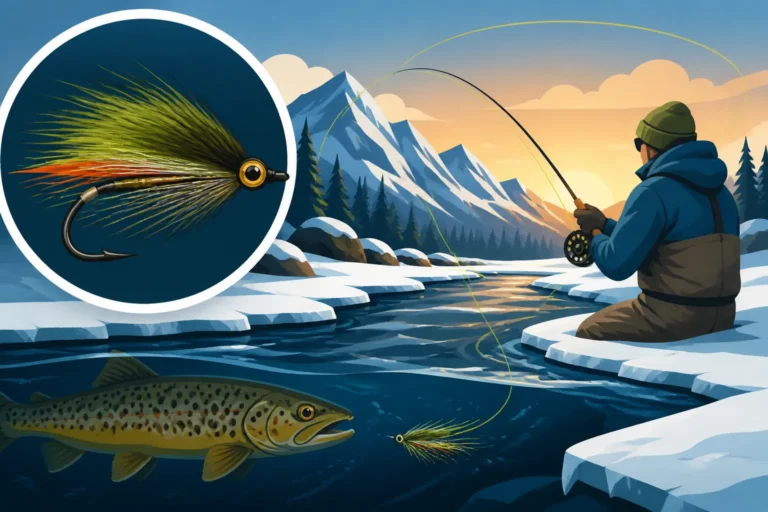
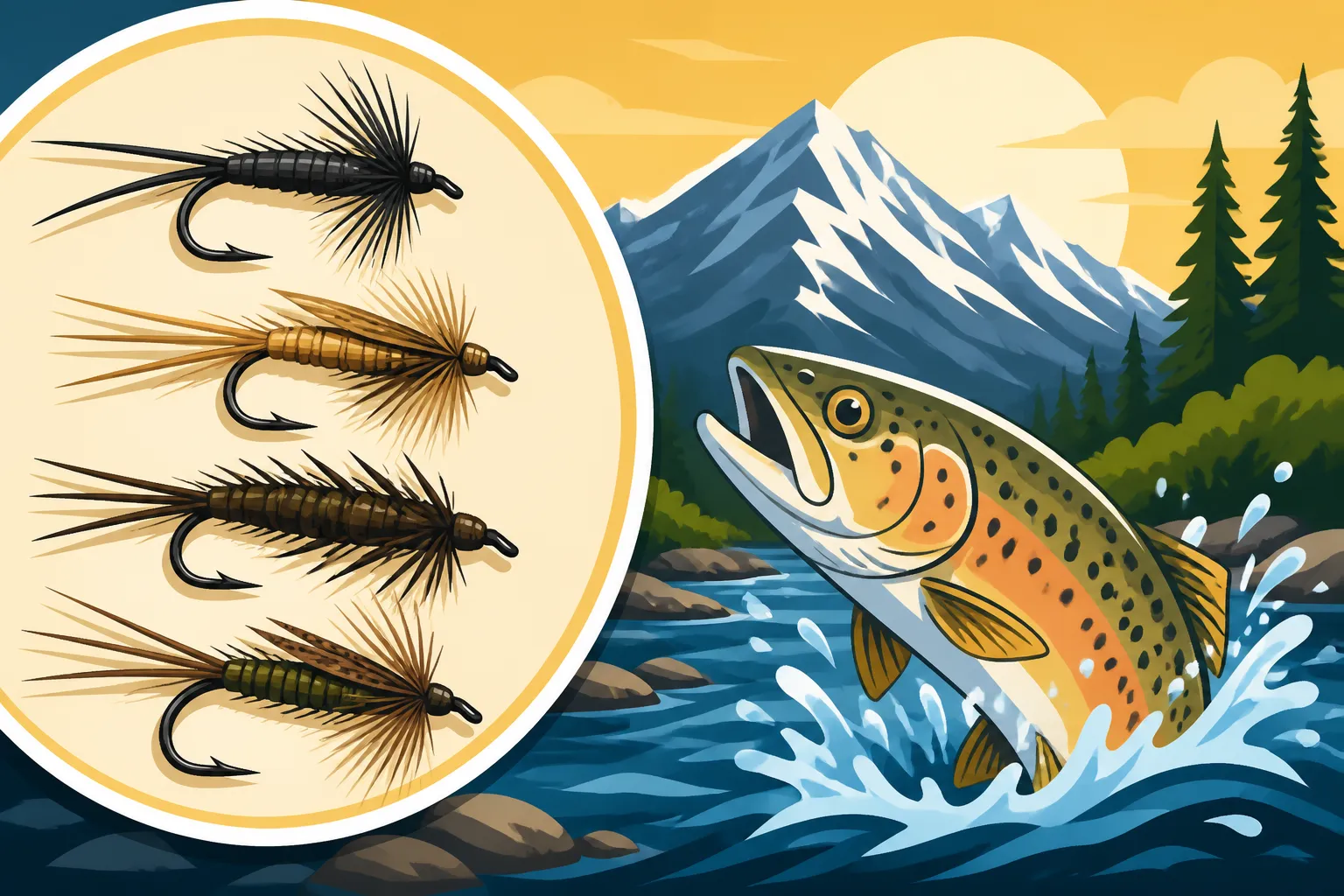
Patterns like the Pat's Rubber Legs are legendary for a reason. Its simple yet effective design, featuring rubber legs and a chenille body, perfectly imitates the buggy profile and movement of a stonefly nymph. The Twenty Incher Stone is another excellent choice, offering a more realistic segmented body and often incorporating biot or goose primary wing cases. For a simpler, yet highly effective option, the Girdle Bug or Yuk Bug are fantastic and can be tied in various sizes and colors. When it comes to color, focus on black, dark brown, golden, and olive, reflecting the natural coloration of the different stonefly species. Sizes typically range from a beefy #4 down to a #12 for smaller species like Yellow Sallies. The key is to match the size and color to the specific stonefly species you believe is active or has been active in the area. Remember, you can often find a wide variety of these patterns ready to ship from Amazon if your local fly shop is out of stock.
Fishing Strategies for Nymphs in High Water
Fishing stonefly nymphs effectively, especially during the often-turbid and powerful conditions of spring runoff, requires a strategic approach. Trout tend to hold in areas where they can expend less energy while still having access to food. This means targeting softer water, such as current seams, eddies, behind large rocks, and deep pockets along the riverbanks. These are the places where dislodged nymphs will collect, making them prime feeding lies.
When the water is high and fast, adding extra weight to your rig is almost always necessary to ensure your flies get down to the strike zone. Think about using larger split shot or even a heavy lead-free weight above your flies. A good rule of thumb is to use enough weight so your flies are occasionally ticking the bottom, indicating they’re at the correct depth. Employing a strike indicator is crucial for detecting subtle takes in these conditions. Consider a larger, more buoyant indicator that can handle the drag of your weighted rig. Your leader length will also need adjustment; longer leaders (9-12 feet) are often necessary to allow your flies to sink naturally without being pulled horizontally by the current. Focusing your efforts on slower, deeper runs and avoiding the fastest parts of the main current will significantly increase your chances of success. A helpful read for navigating these challenging conditions is "What to Fish During Colorado's Spring Runoff", which offers more insights into high water tactics.
The Thrill of Dry Fly Stonefly Imitations
For many fly anglers, the apex of the stonefly hatch is when the adults are on the water, and trout are eagerly rising to them. The sight of a large, buggy imitation disappearing in a violent splash, followed by the electrifying tug of a strong fish, is what dreams are made of. This is when you put away the heavy nymph rigs (or maybe just shorten the dropper) and prepare for some heart-stopping topwater action.
Topwater Terror: Adult Stonefly Patterns
Adult stoneflies are not delicate insects. They are large, clumsy, and often struggle on the water's surface, particularly when laying eggs or attempting to fly. Trout key into this vulnerable presentation, and your dry fly patterns should reflect this robust profile. The key here isn't always hyper-realism, but rather a convincing silhouette, ample hackle, and often, prominent rubber legs to imitate the struggling insect.
The Chubby Chernobyl has become a modern classic, and for good reason. Its buoyant foam body, splayed wing, and rubber legs create an irresistible, high-floating target that trout can't resist. Tied in orange, black, or golden, it’s a go-to. Another fantastic choice is the Stimulator, a classic attractor pattern that, when tied in larger sizes (#4-10) and stonefly colors (orange, yellow, brown), does a remarkable job of mimicking a big adult stonefly. For a more traditional, yet still effective, approach, patterns like the Rogue River Stone or the aptly named Sofa Pillow offer a buggy profile that has tricked countless trout over the years. Remember, size matters with dry stoneflies; often, the bigger, the better, especially during the peak of the Salmonfly hatch. Having a diverse selection of these patterns in your fly box is essential for dry fly fishing Colorado's freestone rivers.
Mastering the Dead Drift and Twitch
Presenting large dry flies effectively requires precision and an understanding of trout behavior. The goal is often a perfect dead drift – allowing your fly to float naturally on the current, free of any drag that might make it look unnatural. Casting upstream and employing strategic mends will help achieve this, keeping your fly line off the water as much as possible to avoid pulling your fly. Trout are experts at detecting unnatural movement, so a drag-free float is paramount.
However, adult stoneflies aren't always perfectly still. They might twitch their wings, struggle to get airborne, or even tumble down a riffle. Incorporating a subtle twitch into your dead drift can sometimes be the magic touch that elicits a strike, particularly when trout are being finicky. Just a gentle pull of the line, enough to make the fly jiggle slightly, can simulate a struggling insect and trigger an aggressive take. Focus your casts along bankside vegetation, under overhanging branches, and near structure like large rocks and logjams. These are prime ambush points where adult stoneflies are most likely to fall into the water, and where big trout often hold, waiting for their next meal.
Bridging the Gap: Emergers and Cripples
The transition from nymph to adult is one of the most vulnerable stages in an insect's life cycle. Trout are highly attuned to these moments, often keying in specifically on emergers – those insects struggling to shed their nymphal shucks and break free of the water's surface. Ignoring this "in-between" stage can mean missing out on significant opportunities, especially on more pressured waters where fish become selective.
The Vulnerable Emergence Stage
Stonefly nymphs typically migrate to the riverbanks or large rocks to emerge, but not all of them make it cleanly. Many will get swept into the current just as they are beginning their transformation, or get caught in the surface film, half-hatched. These "cripples" or "emergers" are easy prey for trout, as they are unable to escape and represent a substantial meal without much effort.
While specific "stonefly emerger" patterns are less common than general nymph or dry patterns, you can effectively imitate this stage by modifying existing patterns or using versatile emerger styles. A slightly less weighted nymph, or a nymph pattern with a soft hackle collar, can mimic a nymph trying to swim to the surface. Similarly, a dry fly pattern with a clipped hackle or a shuck imitation at the tail can represent a cripple stuck in the film. Some anglers will even use a general emerger pattern, like a variation of Lawson's Green Drake Emerger (if tied in stonefly colors and size), to great success during this phase. Fishing these patterns in the upper water column or just below the surface can be incredibly effective when trout are visibly feeding but ignoring your traditional dry flies. It’s about meeting the fish where they’re at, focusing on their current feeding preference.
Dry-Dropper Rigs for Versatility
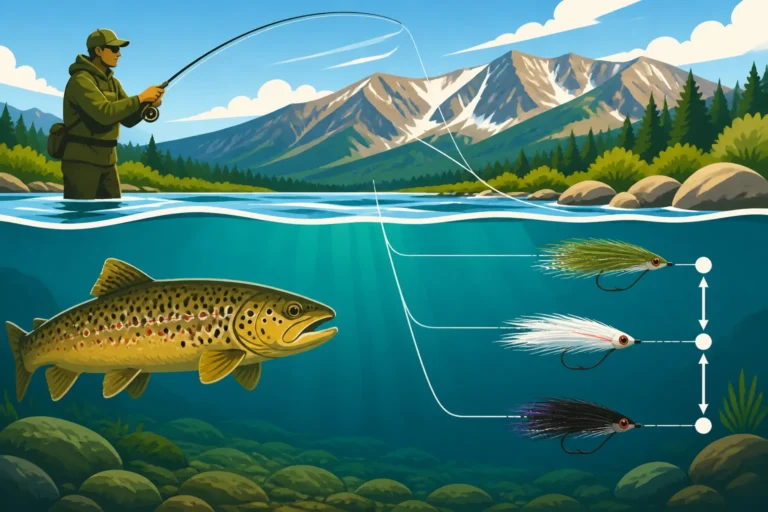
Perhaps one of the most versatile and deadly setups for fishing the stonefly hatch, particularly when the hatch is sporadic or trout are not fully committed to either nymphs or dries, is the dry-dropper rig. This technique allows you to present a large, buoyant dry fly (often a stonefly imitation itself) on the surface, while simultaneously presenting a nymph pattern a foot or two below it. It’s like offering a two-course meal!
The large, buoyant dry fly acts as both an attractor and a strike indicator. It provides the visual stimulation of a potential meal on the surface, drawing attention, while also suspending your nymph at a critical depth. When the dry fly hesitates, twitches, or disappears, you set the hook! The dry fly could be a high-floating Chubby Chernobyl or a large Stimulator, tied with plenty of foam and hackle to support a weighted nymph. The dropper nymph is typically a stonefly imitation like a Pat's Rubber Legs, but can also be a smaller attractor pattern or a mayfly nymph, depending on what else might be present. Learning how to tie a dry-dropper rig for a freestone river will give you immense flexibility, allowing you to cover multiple feeding zones and adapt quickly to changing conditions without re-tying your entire leader. Just ensure your leader and tippet (typically 2X to 4X fluorocarbon for the dropper) are strong enough to handle both the weight of the nymph and the potentially aggressive take from a large trout.
Practical Tips for a Successful Stonefly Hatch
The stonefly hatch is a truly epic event, but it's not always as simple as throwing the biggest bug you have. A successful day requires keen observation, a bit of strategic thinking, and having the right gear. It's about blending into the environment and understanding what the trout are truly keying into.
Reading the Water and Observing the Hatch
One of the biggest mistakes anglers make is arriving at the river with a preconceived notion of what the fish are doing. With a stonefly hatch, conditions can change rapidly. Before you even make your first cast, take the time to observe. Look for stonefly shucks – the discarded exoskeletons – clinging to rocks, branches, or bridge abutments. These are definitive proof that nymphs are emerging. Watch the bankside vegetation for adult stoneflies crawling around. If you see them, it's a good sign the hatch is underway.
Then, turn your attention to the water itself. Are you seeing active rises? If so, note their nature – splashy, aggressive takes often indicate large, struggling adults on the surface. Slower, subtler rises might suggest trout are feeding on emergers or cripples. Pay attention to water clarity and level. If the river is high and off-color due to runoff, trout might be holding in slower, clearer pockets closer to the bank or in deep seams. This is where understanding where trout hold during high water becomes crucial. If the water is lower and clearer, fish might be more spread out, and you’ll need to be more stealthy in your approach. The more you observe, the more clues you'll gather to inform your fly selection and presentation.
Gear Considerations for Stonefly Season
Chucking large, wind-resistant stonefly patterns isn’t always easy, and your gear selection can make a big difference in your effectiveness and enjoyment. You’ll need a rod that can handle the job without feeling underpowered. For most Colorado rivers during stonefly season, a 5 or 6-weight fly rod is ideal. A 5-weight offers a good balance of delicacy for smaller dries and enough backbone for larger patterns and fighting strong trout, while a 6-weight provides more power for casting those big, air-resistant Chubby Chernobyls, especially in the afternoon winds that often whip through Colorado canyons.
When it comes to leader and tippet, don’t skimp on strength. Large stonefly patterns and the possibility of hooking a trophy trout demand robust connections. A 9-foot leader tapering to 2X or 3X is a good starting point for your main fly. If you’re running a dropper, use 3X or 4X fluorocarbon tippet for stealth and abrasion resistance. Fluorocarbon also sinks, which can help get your nymph down quicker. Don't forget high-quality floatant for your dry flies – keeping those big bugs riding high is essential. Finally, given that many prime stonefly rivers are large and feature swift currents, reliable waders and wading boots (perhaps with studded soles for extra grip) are a must for safe navigation and accessing prime fishing lies.
Beyond the Hatch: Post-Hatch Strategies
The intense period of the primary stonefly hatch, particularly for Salmonflies, can feel all too fleeting. One day the river is crawling with bugs and rising fish, the next it seems they've all disappeared. But the impact of these prolific insects doesn't vanish overnight, and understanding how trout react in the aftermath can extend your success.
When the Big Bugs Are Gone
Just because the visible hatch has dwindled doesn't mean the trout have forgotten the protein feast. Their memory of large, easy meals can linger for days, or even weeks. This means that even after the bulk of the adult stoneflies are gone from the water's surface, trout will still be receptive to large stonefly nymph patterns. They’ll actively search for dislodged nymphs or even straggler adults that may have survived the initial emergence.
Continue to fish those heavy Pat's Rubber Legs or Twenty Incher Stone nymphs in the deeper runs and pockets. Trout will naturally drop back into these areas after a period of intense surface feeding, conserving energy while still looking for substantial meals. It's also a good time to experiment with larger attractor patterns that hint at a stonefly's profile, even if they aren't exact imitations. As other insect hatches, like caddis or mayflies, begin to gain prominence, you can gradually transition to smaller nymph and dry fly patterns, but always keep a few stonefly imitations handy as a "comfort food" option for hungry trout.
Dealing with Variable Conditions
Colorado's weather and river conditions can be famously fickle, and the stonefly season, often coinciding with dynamic spring and early summer weather, is no exception. Runoff can fluctuate, afternoon thunderstorms can suddenly blow in, and water temperatures can swing. A successful angler isn't just someone who knows their flies; it's someone who can adapt.
Always check the latest river flows and weather forecasts before heading out. If heavy rains are predicted or flows are rising rapidly, it might mean the water will become murky, pushing trout closer to the banks and making nymphing the most effective technique. Conversely, if conditions are stable and clear, trout might be more willing to rise. Having a diverse fly box that includes various sizes and colors of both stonefly nymphs and dry flies is paramount. Don't be afraid to change your flies frequently if you're not getting bites. Sometimes a subtle shift in color from black to brown, or a change in size, can make all the difference. Moreover, carry appropriate layers of clothing for hot sunny days and sudden cold fronts, as well as rain gear. Being comfortable and prepared for the elements will allow you to stay on the water longer and increase your chances of finding success, no matter what surprises Colorado throws your way.
Disclaimer
The information provided in this guide is for general informational purposes only and is not a substitute for checking current regulations and conditions. Always consult the official Colorado Parks and Wildlife (CPW) website or their latest fishing regulations brochure before heading out on your fishing adventures. River conditions, stocking schedules, and regulations can change frequently. Fish responsibly and safely.