How to Fish a Streamer at First Ice
When that first skim of ice finally forms on Colorado's high-country lakes and reservoirs, it's an exciting, albeit fleeting, opportunity for anglers. But many folks struggle to bridge the gap from open-water techniques to effective ice fishing, especially when it comes to targeting those larger, predatory fish that are still actively feeding. If you've ever drilled a dozen holes only to stare at a blank sonar screen, wondering why those fat trout aren't biting, you know the frustration. This guide is all about mastering the art of streamer fishing at first ice in Colorado, helping you understand fish behavior, select the right gear, and employ the best techniques to hook into some truly memorable catches.
Understanding First Ice Conditions and Why Streamers Work
That initial freeze-up isn't just about hard water; it's a dynamic period that dramatically influences fish behavior. Knowing what's happening beneath the surface is key to putting more fish on the ice.
The Dynamics of First Ice Formation
As autumn gives way to winter, the water temperature drops, first cooling the surface, then mixing with deeper layers. When the surface finally freezes, it often happens quickly, leading to what we call "first ice." During this window, several crucial conditions are at play. Water clarity is often at its peak, as seasonal algae blooms have died off and sediment has settled. This crystal-clear water means stealth is paramount, but it also means fish can see your offering from further away.
Oxygen levels are generally still high throughout the water column, particularly in shallower areas or around remaining vegetation, which keeps fish active. Unlike the mid-winter slump where fish become more lethargic and suspend in deeper, more stable water, during first ice, many species—especially trout—are still actively patrolling shallower areas. They're trying to pack on calories before the leanest parts of winter truly set in, making them aggressive and opportunistic. This is often their "last meal" push, and they’re looking for substantial prey items, not just tiny nymphs or bloodworms.
Why Streamers are Prime for This Period
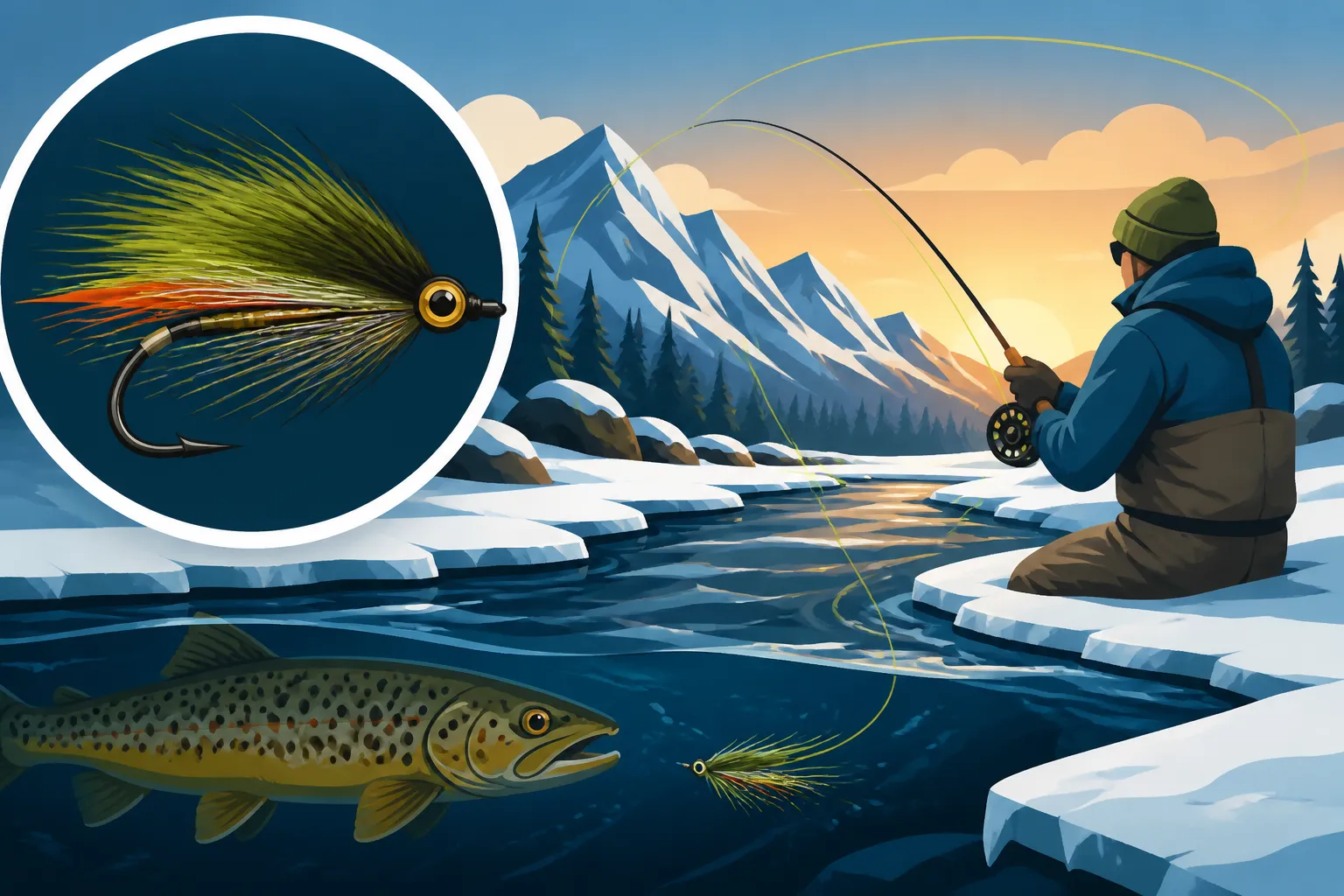
This active, predatory behavior is precisely why streamers shine during first ice. Streamers mimic baitfish, leeches, and larger insect larvae that are still active and often concentrated in these shallower zones. Think about a minnow or a sculpin darting around under the ice—it's a high-value meal that requires less energy expenditure for a trout to chase down compared to picking off individual zooplankton.
The ability of streamers to cover water quickly and effectively is another huge advantage. When you're fishing a fresh sheet of ice, you might not know exactly where the fish are holding. Casting and retrieving a streamer, or jigging it through the water column, allows you to search a wide area beneath your hole. This active presentation triggers reaction strikes from trout that might not commit to a slower, more subtle offering. It's about getting in their face with something enticing and making them react before they can think too much about it. It’s a stark contrast to the often painstaking micro-jigging needed in mid-winter.
Essential Gear for Streamer Fishing at First Ice
Having the right tools for the job can make all the difference, especially when you're battling the elements and potentially trophy fish through a small hole in the ice.
Rods, Reels, and Line for Ice Streamers
For streamer fishing at first ice, you'll want to opt for slightly heavier-duty ice fishing gear than you might use for panfish or tiny trout. A medium-heavy to heavy power ice rod, typically 28 to 36 inches long, offers the backbone needed to cast heavier streamers and handle larger fish that are likely to engulf your offering. Look for a rod with a sensitive tip to detect subtle bites, but plenty of power in the blank to set the hook and control a strong fish. Brands like Fenwick, St. Croix, or even some of the more specialized ice fishing brands like Thorne Bros. offer excellent options.
Pair this with a reliable spinning reel in the 500 to 1000 size range. It needs to have a smooth drag system, as big trout can make powerful runs even through a small hole. Spool up with 6-10 lb test braided line. Braid offers superior sensitivity, allowing you to feel every bump and subtle take, and it has no stretch for solid hooksets. Because braid can be visible in clear water, and is prone to freezing, always tie on a 6-10 foot leader of 6-10 lb test fluorocarbon. Fluorocarbon is nearly invisible underwater and is more abrasion-resistant against the edge of the ice hole. You can find a great selection of these on Amazon, often in combination packs.
Electronics and Augers: Your Eyes and Ears Below
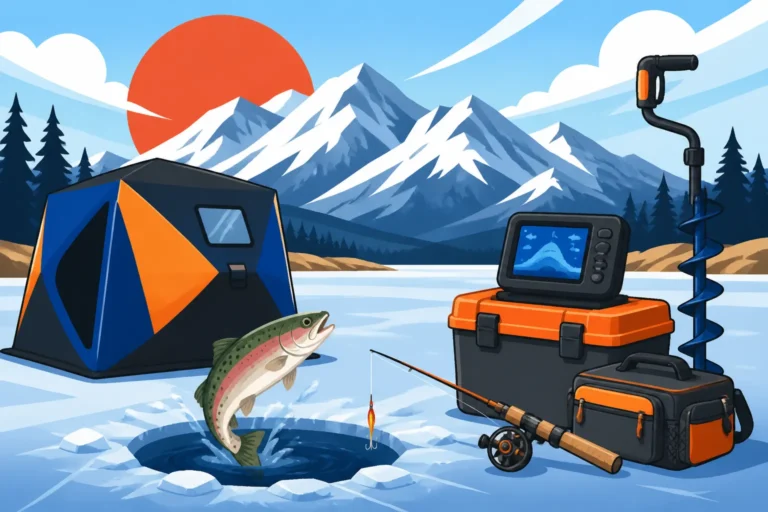
A good fish finder (flasher or LCD unit) is practically indispensable for first-ice streamer fishing. It allows you to see your streamer, gauge its depth, watch how fish react to it, and detect bites you might otherwise miss. You'll be able to identify structure, bottom composition, and most importantly, the presence of fish. Brands like Vexilar, Marcum, and Humminbird are industry standards. Seeing a fish rise aggressively to your streamer on the flasher before you even feel the strike is an absolute game-changer.
An efficient auger is equally critical. For streamer fishing, you'll be actively "hole hopping," drilling multiple holes to locate active fish. A gas, propane, or electric auger will save you a lot of time and effort compared to a manual auger, allowing you to cover more ground. Electric augers like the Ion or StrikeMaster Lithium 40V are fantastic choices as they are quiet, odorless, and powerful enough to cut through early ice with ease. Remember, the more holes you drill, the better your chances of intercepting cruising trout.
Safety Gear and Apparel
First ice is inherently more dangerous than well-established mid-winter ice. Always prioritize safety. A spud bar is your best friend; use it to test ice thickness as you move. Carry ice picks around your neck, ready to use if you accidentally fall through. A flotation suit or a life vest is also a wise investment, especially when venturing onto new ice. Dress in layers, avoiding cotton, and opt for wool or synthetic base layers, fleece mid-layers, and a waterproof/windproof outer shell. Warm, waterproof boots and gloves are non-negotiable. It's better to be slightly overdressed and shed layers than to be dangerously cold. Always tell someone where you're going and when you expect to return. For more insights on staying safe, you might want to read our guide on How Thick Ice Needs to Be Before You Fish It in Colorado.
Streamer Patterns and Presentation Techniques for Early Ice
Choosing the right streamer and presenting it effectively is where the art of this technique truly comes alive.
Top Streamer Patterns for Colorado
When selecting streamers for first ice in Colorado, you want patterns that imitate common baitfish and invertebrates. Natural colors often work best, but don't shy away from some flash or brighter accents, especially on overcast days or in stained water.
- Woolly Buggers: This classic pattern is incredibly versatile. Black, olive, brown, or white Woolly Buggers in sizes #4-8 are always a good bet. They imitate leeches, sculpins, and various aquatic insects. The marabou tail provides enticing movement with minimal jigging.
- Clouser Minnows: Originally a saltwater fly, Clouser Minnows (chartreuse/white, grey/white, or olive/white in sizes #2-6) are deadly for trout. The dumbbell eyes give them a jigging action and help them sink quickly. They perfectly mimic small baitfish like shiners or dace.
- Sculpin Patterns: Sculpins are a favorite food for large trout and are abundant in many Colorado waters. Patterns like the Sculpzilla, articulated sculpins, or even simple rabbit strip sculpins in natural browns and olives (sizes #2-6) can be incredibly effective. Their chunky profile and lifelike movement are irresistible.
- Articulated Streamers: For truly large, predatory trout, articulated streamers that offer more length and exaggerated movement can be very productive. Patterns like the Sex Dungeon, Bugger Beast, or other multi-jointed flies in 3-5 inch lengths can entice trophy fish. These often mimic larger baitfish or even smaller trout.
Many anglers compile their favorite streamer boxes, and it's always a good idea to have a variety of sizes and colors. Sometimes, a subtle change in color or size can unlock a hot bite. You can often find pre-selected streamer kits or individual patterns on Amazon, making it easy to stock up.
Jigging and Stripping Methods
The way you present your streamer through the ice is critical. It's not a static bait presentation; it requires active engagement.
- Aggressive Jigging: Start with a moderately aggressive retrieve. Drop your streamer to the desired depth (often near the bottom or suspending baitfish), then perform short, sharp lifts of 6-12 inches, allowing the streamer to flutter back down. Pause for a few seconds between jigs. Experiment with the cadence and height of your lifts. Sometimes a quick succession of short jigs followed by a long pause is the ticket. This technique is particularly effective for active lake trout or robust brown trout. You might feel the bite on the drop or during the pause as the streamer settles. For more species-specific tips, check out our guide on Jigging for Lake Trout Through the Ice.
- Long Slow Lifts: Sometimes, a more subtle approach is needed. Try long, slow lifts of 1-3 feet, letting the streamer glide up gracefully, then slowly lowering it back down. This mimics a wounded or slow-moving baitfish. This can be deadly for hesitant trout that are still active but not chasing aggressively.
- Dead Sticking: While it sounds counterintuitive for streamers, dead sticking can be effective, especially with a lively pattern like a Woolly Bugger. Drop your streamer to the desired depth and hold it still, allowing the inherent movement of the marabou or rabbit strip to do the work. This is particularly useful if you're fishing multiple holes with a second rod (where legally permitted with a Colorado's Second-Rod Stamp and Who Needs One).
- Reading the Flasher: Pay close attention to your fish finder. If fish are rising quickly to your streamer but not committing, try making your presentation faster or more erratic. If they're following slowly, try a longer pause or a more subtle jig. The flasher is your immediate feedback loop, telling you exactly how fish are reacting to your retrieve.
Targeting Specific Species
While the general principles of streamer fishing apply, a few species-specific nuances can increase your success.
- Rainbow and Cutthroat Trout: These trout are often found cruising shallower flats, weed lines, and points. They respond well to aggressive jigging with smaller streamers (Clousers, Woolly Buggers) or even some of the flashier articulated patterns. Focus your efforts in depths of 5-20 feet, especially near areas that drop off into deeper water. Our guide on Colorado's Trout Species, A Field Guide offers excellent insights into identifying these fish.
- Brown Trout: Brown trout are typically more predatory and often hold near structure like rocks, submerged timber, or sharp drop-offs. They will readily ambush larger streamers, especially those imitating sculpins or other fish. Focus on more natural colors, and don't be afraid to fish closer to the bottom or even let your streamer rest on the bottom for a few seconds before lifting.
- Lake Trout (Mackinaw): During first ice, smaller lake trout can often be found in shallower depths (15-40 feet) chasing baitfish. Larger lake trout might still be deeper but will often move shallower to feed. Larger, articulated streamers or big Clousers are excellent for lakers. Jigging aggressively with long pauses is a common tactic. Blue Mesa Reservoir is a fantastic spot for these, as detailed in Fishing Blue Mesa Reservoir for Lake Trout.
Strategic Approach and Locating Fish
First ice fishing is a game of mobility and systematic searching. You can't just pick one spot and expect the fish to come to you.
Identifying Key Structure
Fish are creatures of habit and structure. At first ice, they often gravitate towards areas that offer cover, food, or a transition between depths.
- Points and Drop-offs: These are classic ambush points. Fish will cruise along drop-offs, waiting for baitfish to swim by. Position yourself to cast/jig your streamer along the contour of the drop-off.
- Submerged Humps and Islands: Underwater topography that rises from the bottom creates excellent feeding grounds. Baitfish gather around these structures, and predatory fish follow.
- Weed Lines and Old Vegetation: Even under the ice, dying vegetation can provide cover and attract small invertebrates, which in turn attract baitfish and trout. Look for darker areas on the ice, which might indicate vegetation below.
- Inflows and Outflows: Any moving water, even slow currents from inlets or outlets, can concentrate oxygen and nutrients, attracting fish. Be extremely cautious around moving water, as ice thickness can vary dramatically.
- Transition Areas: The transition from rocky bottom to mud, or from shallow to deep water, can be a holding area for fish.
Utilize topographic maps or sonar to identify these key structures before you even step on the ice. The Colorado Parks and Wildlife Fishing Atlas is an invaluable tool for this, providing detailed bathymetry for many reservoirs.
Hole Hopping and Grid Searching
The most effective strategy for first-ice streamer fishing is to be mobile. Don't sit in one spot for too long if you're not getting bites.
- Drill, Drop, and Go: Drill a series of holes in a grid pattern or along a prominent piece of structure. Start by fishing each hole for 5-10 minutes. If you don't mark fish on your flasher or get a bite, move to the next hole.
- Fan Casting/Jigging: From each hole, you can effectively "cast" your streamer in a fan shape below the ice by moving your rod tip around the hole while jigging. This allows you to search a wider radius from a single location.
- Follow the Fish: If you do find active fish in a particular area, don't be afraid to drill more holes nearby to stay on them. Often, fish will move in schools or pods, and being able to relocate quickly is crucial.
Remember, first ice often means fewer anglers and less pressure on fish, but also less predictable fish locations. Your willingness to move and search is your biggest asset. For a broader understanding of where to focus your efforts, explore our article on Colorado's Best Ice Fishing Reservoirs.
Reading the Ice and Water
Beyond just depth, there are subtle clues the environment gives you that can lead to success.
- Ice Transparency: Clear, "black" ice usually means high water clarity below. In these conditions, use lighter fluorocarbon leaders and more natural streamer colors. Cloudy or snowy ice means less light penetration, sometimes allowing for brighter colors or flashier patterns.
- Snow Cover: A light dusting of snow on the ice can provide cover for fish, making them less wary of anglers above. Heavy snow, however, can insulate the ice, slow down ice formation, and reduce light, which can affect fish activity.
- Wind and Pressure: While you're insulated from the wind on the ice, changing weather patterns, especially dropping barometric pressure, can sometimes trigger a feeding frenzy. Pay attention to the forecast, as detailed in our guide on How Water Temperature Affects Trout Feeding.
The key is to observe, adapt, and experiment. First ice is a dynamic environment, and the most successful anglers are those who can quickly adjust their tactics based on what the fish are telling them.
Disclaimer
Fishing on frozen bodies of water carries inherent risks. Ice conditions can be unpredictable and vary widely. Always exercise extreme caution, test ice thickness frequently, never fish alone, and be prepared for emergencies. The information provided in this guide is for educational purposes only, and anglers are solely responsible for their safety and adherence to all Colorado Parks and Wildlife regulations.