Best Streamer Colors for Murky Colorado Water
There's nothing quite as frustrating as heading out to your favorite Colorado fishing spot, only to find the water you were hoping to fish has turned into a murky, off-color mess. Whether it's from recent rains, snowmelt runoff, or dam releases, low visibility conditions can make you question everything you thought you knew about fly fishing. This guide is here to cut through that murk and help you understand which streamer colors give you the best shot at enticing those elusive Colorado trout when the water isn't crystal clear.
Understanding Murky Water Conditions in Colorado
Before we even talk about colors, it’s crucial to understand what "murky water" really means in the Colorado context and why it happens. It's not just about a river turning chocolate milk brown; murky can also mean slightly stained, cloudy, or simply having reduced visibility due to various factors. Knowing the cause can sometimes give you an edge in choosing the right approach.
Why Water Gets Murky in Colorado
Colorado's diverse landscape means its rivers and reservoirs are susceptible to murkiness from several natural and man-made occurrences. One of the most common culprits is spring runoff. As the snowpack in the high country begins to melt, it often brings with it a surge of sediment, silt, and debris, turning once-clear mountain streams into raging, discolored torrents. This typically peaks in late May and early June, a period when many anglers shift their focus to tailwaters, as explained in our guide on When Colorado's Spring Runoff Hits and How to Fish Around It.
Beyond runoff, heavy rainfall can quickly dislodge dirt and organic matter from riverbanks and surrounding terrain, especially in areas affected by wildfires, leading to localized turbidity. Another significant factor is dam releases. When reservoirs like Blue Mesa or the Fryingpan release water, it can sometimes stir up sediment from the bottom, causing the river downstream to become cloudy. Even persistent strong winds whipping across large, shallow reservoirs can churn up the bottom, significantly reducing water clarity. These conditions present unique challenges, forcing anglers to adapt their tactics beyond conventional clear-water strategies.
How Murky Water Affects Trout Behavior
Trout are primarily sight feeders, and their world revolves around detecting prey. When water visibility drops, their ability to spot small insects or minnows is severely hampered. This doesn't mean they stop eating, but it does mean they change their hunting strategy. Instead of relying purely on sight, they'll lean more heavily on their other senses: their lateral line to detect vibrations and movement, and their sense of smell to pick up scent.
In murky conditions, trout often move closer to the banks or into slower, more predictable currents where they can ambush prey without expending too much energy in fast, disorienting water. They become less selective about their food choices and more opportunistic, grabbing anything that presents itself as an easy meal. This is where streamers come into their own. A larger, more noticeable profile, combined with strong vibrations and a distinct color, can trigger a predatory strike even when the fish can barely see what it's attacking. You're trying to appeal to their instinct to react rather than their ability to scrutinize.
The Science Behind Streamer Colors in Murky Water
When the water is clear, choosing a streamer color can often be about matching the specific baitfish or insect prevalent in the area. But in murky water, those subtle distinctions become largely irrelevant. Here, it’s less about mimicry and more about making your fly noticeable in a low-visibility environment.
Visibility Versus Silhouette
In low-light or turbid conditions, the way light penetrates the water changes dramatically. Reds and oranges are the first colors to be absorbed by water, followed by yellow and green. Blues and violets penetrate deepest. However, this is for true color perception. In murky water, fish aren't seeing colors as we do. Instead, they are detecting variations in light and shadow, primarily focusing on the silhouette and contrast of an object against the background.
Darker colors like black, dark brown, and deep olive excel at creating a strong, defined silhouette against whatever limited light exists. Imagine a silhouette against a cloudy sky – it stands out clearly. The same principle applies underwater. A dark streamer presents a clear, opaque shape that fish can discern from the surrounding murk, even if they can't accurately perceive its true color. This strong outline signals "food" to a fish relying on its lateral line and generalized visual cues.
Contrast Is Key
While silhouette is important, contrast adds another layer of effectiveness. A highly contrasting color combination can make a streamer pop, even if the individual colors aren't fully perceived. Think of a black and white checkerboard – the distinct edges and differences are easily seen, even from a distance or in poor lighting.
This is why patterns that incorporate a bright color with a dark one, or even a dark pattern with some reflective flash, can be so effective. The goal isn't necessarily to show the fish a "chartreuse" streamer, but to present something that strongly breaks up the visual monotony of the murky water. The sudden shift from light to dark or vice-versa registers as an anomaly, drawing the fish's attention and encouraging it to investigate. This principle applies whether you're targeting trout in a river or larger species in a reservoir.
Top Streamer Colors for Murky Colorado Water
Now that we understand the "why," let's dive into the most effective streamer colors you should have in your fly box when facing murky conditions on Colorado's rivers and lakes. These choices are based on maximizing visibility and triggering predatory instincts.
Black and Dark Streamers
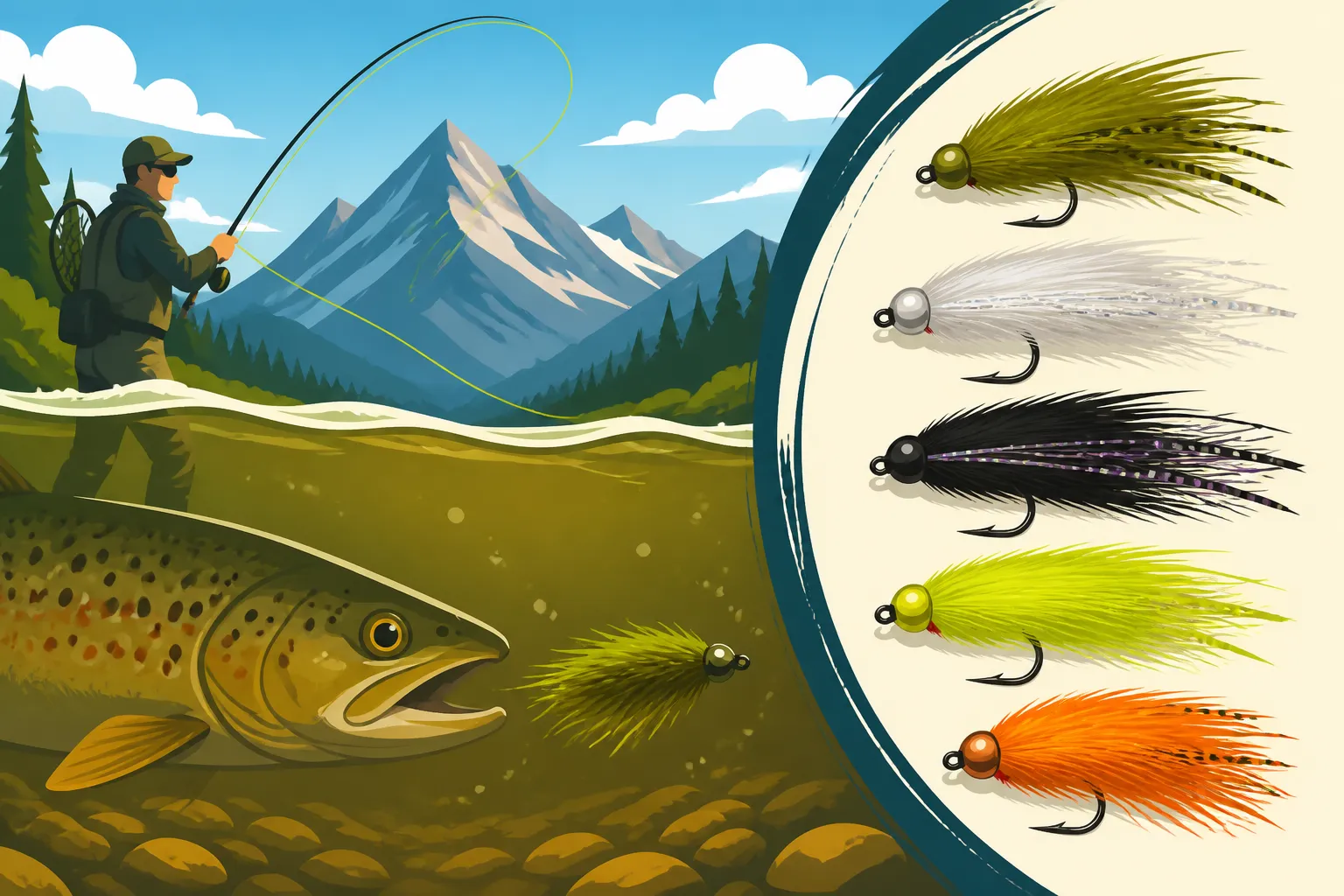
When in doubt, go dark. Black, dark brown, and deep olive are often your best bets in genuinely murky or low-light conditions. These colors absorb light, creating a stark silhouette that is easily detected by fish even when visibility is poor. They don't rely on transmitting a specific hue, but rather on presenting a solid, unmistakable form.
Consider fishing a black Woolly Bugger in the lower sections of the Colorado River after a heavy rain. The water might be off-color, but that black bugger, stripped aggressively, will create a strong, dark profile against the slightly lighter backdrop, often provoking a territorial strike from a brown trout. Similarly, a dark olive Sculpzilla or a black Mohair Leech can be incredibly effective in stained tailwaters or lakes where ambient light struggles to penetrate. These patterns are natural imitations for many baitfish and aquatic creatures that trout prey on, and their dark coloring provides the necessary contrast to stand out in the murk. It's about presenting something that screams "here I am!" without needing perfect visual clarity.
Bright and Fluorescent Streamers
While dark colors create a silhouette, bright and fluorescent colors offer a different advantage: they can literally glow or stand out due to their reflective properties, even in low light. Colors like chartreuse, hot pink, and blaze orange might seem gaudy, but in deeply stained or dark water, they can be surprisingly effective. These colors are often used to trigger an aggressive reaction or curiosity strike, rather than imitating a specific food source.
Imagine a heavily overcast day on a lake like Blue Mesa Reservoir or Eleven Mile Reservoir with slightly stained water. A chartreuse or hot pink streamer, especially one with a bit of flash, can create an almost iridescent glow that catches the fish's eye from a distance. These colors are particularly potent for species like aggressive rainbow trout, lake trout, or even pike and walleye in more turbid reservoirs. While they don't create the same distinct silhouette as a black fly, their ability to "pop" can be the difference-maker. Some anglers even combine them, using a two-tone streamer with a dark back and a bright belly. You can often find a wide variety of these bright, flashy streamers on platforms like Amazon, ready to ship for your next outing.
Two-Tone and Contrasting Streamers
The best of both worlds often lies in combining dark and bright colors to create maximum contrast. Two-tone streamers, featuring a dark back and a lighter belly, or distinct bands of color, can be incredibly effective in murky water. These patterns leverage both the silhouette effect of dark colors and the attention-grabbing power of brighter hues.
Think of a black and yellow Gartside Gurgler or a black and white Clouser Minnow. The stark contrast between the two colors creates a very noticeable profile. The fish might perceive the dark part as the back of a baitfish and the lighter part as its belly, adding a sense of realism while still being highly visible. Other effective combinations include olive and white, or even black and red. The key is to create a strong visual disruption in the water column. When trout are struggling to see, a fly that screams "look at me!" through its high contrast is much more likely to get their attention than a uniformly colored pattern that blends into the background. This approach is particularly effective when you suspect fish are holding in slightly clearer pockets within generally murky water.
Beyond Color: Streamer Attributes for Murky Conditions
While color is a critical factor, it’s not the only consideration when fishing streamers in murky Colorado waters. Other attributes of your fly and how you present it play an equally important role in getting those strikes.
Size and Profile Matters
In clear water, stealth and realistic imitation often dictate using smaller, more subtle flies. In murky water, the opposite is generally true. Larger, bulkier streamers create a more substantial visual profile and displace more water, sending stronger vibrations through the water column that fish can detect with their lateral line. A large profile is simply easier for a fish to see and feel.
Consider upsizing your typical streamer patterns. If you usually throw a size 6 Woolly Bugger, try a size 4 or even a size 2 in murky conditions. Similarly, patterns tied with rabbit strips, marabou, or even synthetic materials that bulk up significantly in the water will create a larger presence. Think about big articulated flies like a Sex Dungeon or a Drunk & Disorderly. These not only have a larger footprint but also an exaggerated movement that further enhances their detectability. When the trout can't rely on pinpoint vision, you need to give them something impossible to ignore.
Flash and Movement
While color gets the initial attention, flash and exaggerated movement can seal the deal in murky water. Anything that glitters, shimmers, or creates erratic motion adds another dimension to your streamer's appeal. The subtle glint of a Krystal Flash or the undulating movement of a rabbit strip can be the final trigger for a fish that's already noticed your fly's silhouette or bright color.
Streamers incorporating materials like Krystal Flash, Flashabou, or Slinky Fibre can create flashes of light that mimic the scales of fleeing baitfish, even in low light. These metallic or iridescent strands reflect what little light is available, making the fly more dynamic. Additionally, patterns tied with soft, mobile materials like marabou, rabbit fur, or articulated shanks will pulsate and "breathe" in the water, creating an irresistible, lifelike action. This movement sends out strong vibrations that trout can pick up with their lateral line, even if they can't clearly see the fly. When fishing for species like brown trout in rivers like the Arkansas River near Salida, especially in off-color water, a flashy, wiggling streamer can be incredibly effective.
Weight and Sink Rate
Getting your streamer to the right depth is always crucial, but it becomes even more important in murky water. Fish often hug the bottom or hold tight to structure in these conditions, seeking refuge from strong currents and using cover for ambush points. If your fly isn't getting down to their strike zone, all the right colors and movement in the world won't matter.
This means you might need to use heavier streamers or add additional weight to your leader. Streamers tied with lead eyes (like a Clouser Minnow) or coneheads will sink faster. If your fly box is short on heavily weighted patterns, consider adding a small amount of lead shot or tungsten putty a foot or two above your streamer. The depth you need will depend on the water body and current speed. For instance, in a deep, murky hole on the Gunnison River, you'll want something that plummets quickly. Conversely, in a slower, shallower back eddy, less weight might be necessary to avoid snagging. Don't be afraid to experiment with different weights to find that sweet spot where your streamer is drifting or swinging right through where the fish are holding. This is also important to consider when looking at Nymphing Techniques for Colorado Tailwaters, as getting flies deep is a shared challenge.
Fishing Techniques for Murky Water with Streamers
Having the right streamer is only half the battle; knowing how to fish it effectively in murky conditions is just as important. Your presentation needs to grab attention and trigger an instinctual response.
Aggressive Strips and Swings
In clear water, a subtle retrieve might fool a wary trout. In murky water, subtlety is often your enemy. You want to make your streamer as noticeable as possible, and aggressive strips and swings are key to achieving this. Rapid, erratic movements mimic a panicked baitfish, a wounded minnow, or another easy meal struggling in the current. These actions create strong vibrations that broadcast your fly's presence far and wide.
When retrieving, try varying your strip speed and length. A few short, quick strips followed by a pause, or long, steady pulls, can induce a strike. On rivers, casting across or slightly upstream and letting your streamer swing down and across the current can be incredibly effective. As the fly swings, it presents a broadside profile to the fish, and the tension from the line makes it "swim" enticingly. Don't be afraid to experiment; sometimes a super-fast, jerky retrieve is what they want, other times a slower, more methodical approach with frequent pauses will trigger a chase. The idea is to make your streamer stand out and look like an easy target.
Targeting Structure and Seams
Trout in murky water often seek out areas of reduced current and increased cover. This means focusing your casts on structures and seams where fish are likely to conserve energy and wait for food to come to them. Think about logs, rocks, undercut banks, and current seams – these are all prime holding spots.
Look for the "soft" water adjacent to faster, murkier flows. This might be a pocket behind a large boulder, the calmer water along an eddy line, or the deeper, slower sections of a pool. Trout will often position themselves in these areas, slightly out of the main current, with their noses pointed towards the murky flow, waiting for something edible to drift or swim by. Focus on repeated, accurate casts to these specific targets. You might need to make several presentations to the same spot, allowing your streamer to sink and swing through the entire likely holding area. Understanding How to Read Colorado's Fishing Regulations Brochure can often provide clues to prime fishing spots and their unique characteristics.
Slowing Down Your Presentation
While aggressive retrieves are often recommended, there are times when a slower, more deliberate presentation can be surprisingly effective in murky water. This might seem counter-intuitive, but sometimes trout need more time to locate and commit to a strike, especially if the murkiness is extreme or the water is particularly cold.
A slower retrieve allows the fish more time to home in on your streamer using their lateral line and any available visual cues. This is particularly true for bottom-dwelling species or in situations where fish are less active. Try a dead-drift presentation in slow-moving pockets, or a slow, hand-twist retrieve in lake environments. The key is to keep the fly in the strike zone for as long as possible. If aggressive stripping isn't producing, don't be afraid to slow things down. Sometimes a subtle wiggle or slow pulse of a marabou tail is all it takes to convince a hesitant trout. For more insight into seasonal patterns, check out Colorado Fishing Seasons Month by Month.
Recommended Streamer Patterns for Murky Colorado Water
With so many patterns out there, it can be overwhelming to choose. Here are a few tried-and-true streamer patterns that consistently perform well in murky conditions across Colorado.
Woolly Bugger Variations
The Woolly Bugger is arguably the most versatile and essential streamer pattern ever created, and its effectiveness only increases in murky water. Its marabou tail and hackled body provide incredible movement and a distinct profile. In murky conditions, focus on black, olive, or dark brown variations.
- Black Woolly Bugger: The ultimate silhouette producer. It's often mistaken for leeches or dark baitfish. A bead-head version will help it sink quickly.
- Olive Woolly Bugger: A fantastic all-around choice, mimicking various baitfish and aquatic insects. Its dark hue still creates a great profile.
- Black & Olive Woolly Bugger: Combines the best of both, offering a subtle contrast that can be very effective.
Consider tying or buying these in larger sizes (e.g., #4, #2) and with flashier materials mixed into the tail or body. You can even find kits on Amazon to tie your own, allowing for endless customization.
Articulated Streamers
Articulated streamers are designed with multiple segments, giving them an incredibly lifelike, snakelike action in the water. This exaggerated movement is a huge advantage in murky conditions, sending out strong vibrations that attract fish from a distance.
- Sparkle Minnow (Dark Variations): While often tied in bright colors, dark olive, black, or even brown versions of the Sparkle Minnow (or its articulated cousin, the Articulated Sparkle Minnow) are deadly in murky water. The inherent flash in the body still shines through, while the dark back provides contrast.
- Sex Dungeon: A popular, large articulated pattern that pushes a lot of water. Tie it in black, olive, or a black/blue combination for maximum murk penetration.
- Drunk & Disorderly: Another large, articulated streamer with a big profile and erratic action. Dark colors are the way to go here.
These patterns are fantastic for targeting larger, more aggressive trout, especially the brown trout found in many of Colorado's Gold Medal Waters. For an in-depth look at these prized areas, check out Colorado Gold Medal Water Regulations Explained.
Sculpin Patterns
Sculpins are small, bottom-dwelling fish that are a primary food source for larger trout in many Colorado rivers and lakes. Their wide, flat heads and mottled bodies make them perfect for imitation with streamers. In murky water, their darker natural colors combined with a bulky profile are highly effective.
- Sculpzilla: A classic sculpin imitation. Tie or buy it in natural colors like olive, black, or brown. Its weighted head gets it down quickly, and the rabbit strip tail provides excellent movement.
- Muddy Buddy: Another excellent sculpin pattern, often tied with a mix of dark furs and flash.
- Dali Llama: While not strictly a sculpin, this pattern has a similar bulky, bottom-dwelling profile and is often very effective in darker water.
When fishing sculpin patterns, try to bounce them along the bottom, mimicking the natural movement of a sculpin darting from rock to rock. This technique can provoke strikes from opportunistic trout. Knowing the types of fish in these areas can also help, so consider reviewing Colorado's Trout Species, A Field Guide.
Other Effective Patterns
Beyond the big three, a few other patterns deserve a spot in your murky water streamer box.
- Clouser Minnow (Dark or Two-Tone): While often associated with saltwater, the Clouser Minnow is incredibly effective in freshwater. Its lead eyes make it jig vertically, and dark colors like black/purple or black/white create fantastic contrast.
- Mohair Leech: Simple, soft, and buggy, the Mohair Leech in black or dark olive is a silent killer in slow, murky water. It moves beautifully with minimal retrieve.
- Slumpbuster: A compact, weighty pattern that mimics various baitfish. Again, dark olive or black are the preferred colors for murk.
It's always a good idea to have a variety of these patterns in different sizes and weights. You never know exactly what the fish will prefer on any given day, and being able to adapt is key to success when facing challenging water conditions.
Murky Water Streamer Selection Guide
To help summarize, here's a quick guide to streamer colors and conditions:
| Water Clarity Condition | Recommended Streamer Colors | Key Attribute Focus | Best For | Notes |
|---|---|---|---|---|
| Very Murky / Dark Stains | Black, Dark Brown, Deep Olive | Strong Silhouette | Overcast days, post-rain, heavy runoff | Creates a clear, opaque shape against low light. |
| Stained / Off-Color | Chartreuse, Hot Pink, Blaze Orange | Iridescent Glow / Contrast | Slightly less turbid water, aggressive fish | Pops and creates visibility from a distance, good for active searching. |
| Variable Murkiness | Black/Yellow, Olive/White, Black/Red, Black/Blue | High Contrast / Two-Tone | Mixed light, varying turbidity | Combines silhouette and bright contrast for maximum detection. |
| Low Light / Dawn/Dusk | Black, Dark Blue, Purple | Silhouette / Absorption | Early morning, late evening, deeply shaded areas | Dark colors are often best when natural light is minimal. |
| Any Murky Condition | Flash (Krystal Flash), Mobile Materials (Rabbit, Marabou) | Movement & Attraction | Always beneficial | Adds lifelike action and reflective properties to any color. |
Disclaimer
The information provided in this guide is for general informational purposes only. Fishing conditions in Colorado can change rapidly, and it is always the angler's responsibility to check and comply with the most current regulations set forth by Colorado Parks and Wildlife (CPW). Always prioritize safety on the water and be mindful of changing weather and water conditions.