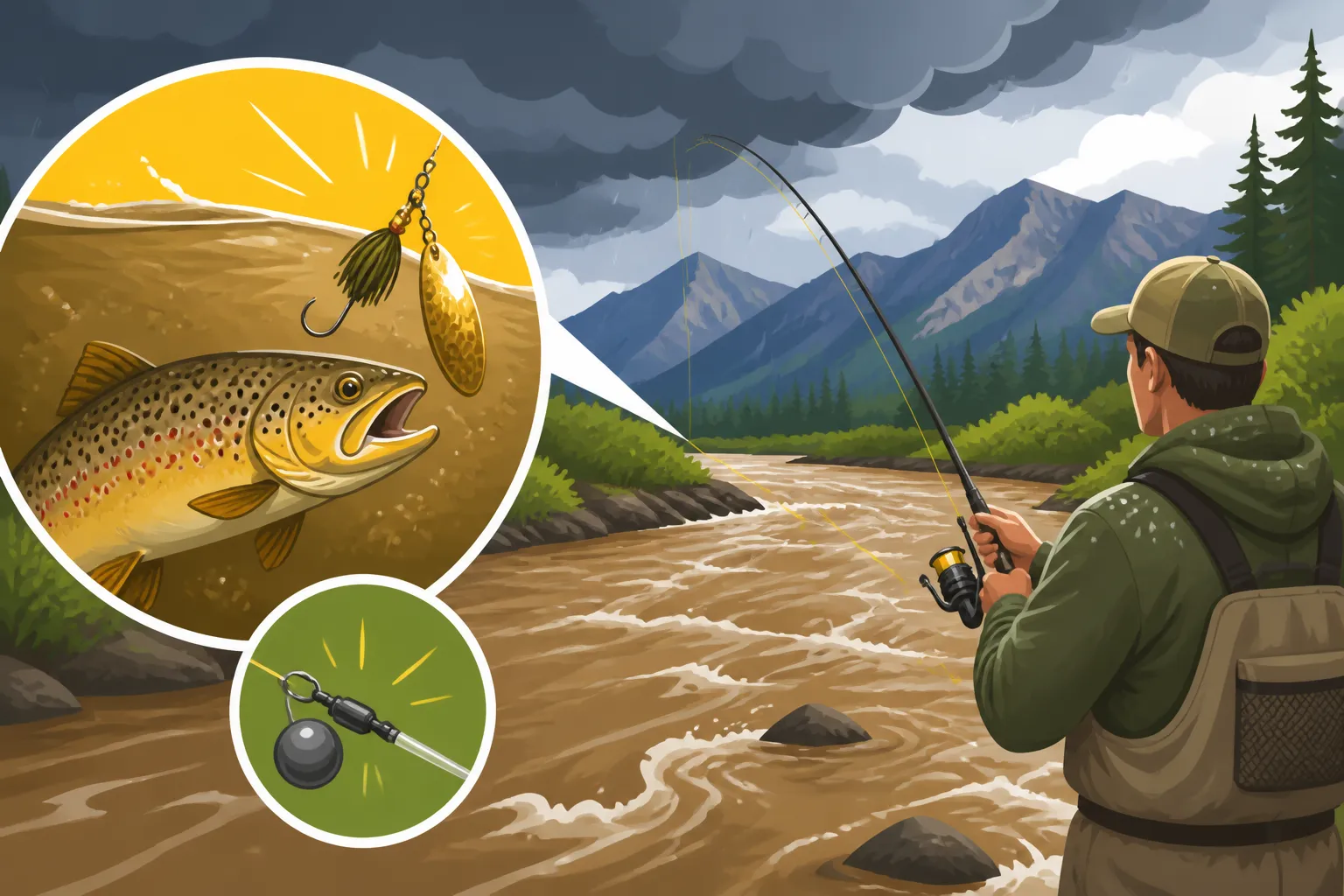
Best Technique for Fishing a Muddy River After Rain
You've been planning that Colorado fishing trip for weeks, maybe even months, picturing pristine mountain streams and hungry trout. Then, a sudden rainstorm hits, and your beautiful river turns into a muddy torrent, seemingly devoid of fish. It's frustrating, I know, to see your fishing plans literally washed away. But don't hang up your waders just yet; fishing a muddy river after rain isn't just possible, it can actually be incredibly rewarding if you adjust your tactics. This guide will walk you through the best techniques to find success when the water looks like chocolate milk.
Understanding the Challenge of Murky Water
When heavy rain sweeps through Colorado's mountains and plains, it doesn't just raise water levels; it churns up the bottom, carrying sediment, dirt, and debris downstream. This transformation can be disheartening for anglers, making the river look completely unfishable. However, understanding why the river changes and how fish react to it is the first step toward figuring out how to catch them.
The Science of Sediment and Flow
Rainfall, especially intense downpours or rapid snowmelt, dramatically increases the volume and velocity of water in rivers and streams. This surge of water gains energy, allowing it to dislodge fine particles from the riverbed and banks. This sediment, composed of clay, silt, and sand, is then suspended in the water column, giving the river its characteristic murky, "muddy" appearance. The more intense the rain and the steeper the terrain, the more sediment is typically mobilized. This is why a small mountain stream can turn brown almost instantly, while a larger, slower river might take longer but become even murkier.
Beyond just visibility, the increased flow rate also means a faster current. This higher velocity can disorient fish, making it harder for them to hold their position and expend more energy. It also reduces the areas where fish can comfortably sit without being swept downstream. The water temperature might also drop or rise suddenly, depending on the rain's temperature, which can affect fish metabolism and feeding activity. Understanding these physical changes helps us predict where fish might be and what they're doing.
Trout Behavior in Murky Water
You might think that fish just vanish when the water gets muddy, but that's rarely the case. They simply adjust their behavior. Trout, for instance, are highly visual predators in clear water, relying on their eyesight to spot insects and baitfish. When visibility drops to mere inches, their primary hunting tool is severely hampered. This doesn't mean they stop eating, though; it means they switch to other senses. Their lateral line system, which detects vibrations and pressure changes in the water, becomes incredibly important. Their sense of smell also plays a much larger role.
In murky, fast water, trout will often move to areas of slower current. This could be behind large rocks, in eddies, along slower seams, or right up against the bank where the current is weakest. These "soft water" pockets offer refuge from the powerful flow, allowing them to conserve energy. They also tend to move closer to the bottom, where the current is typically slower and where their natural food sources (like nymphs and worms washed out of the banks) are being tumbled along. The low visibility can also make them feel more secure and less wary of predators, including you! Sometimes, this means they'll be more aggressive about taking a fly or lure that they can detect. This shift in behavior is key to targeting them effectively.
Tactical Adjustments for Muddy Water Success
Fishing a muddy river requires a complete overhaul of your usual clear-water strategies. Forget delicate dry flies and subtle presentations; it's time to get aggressive and focus on what fish can detect.
Focusing on Scent and Vibration
Since visibility is close to zero, your primary goal is to appeal to a trout's other senses: smell and its lateral line system. This means choosing baits, lures, and flies that either emit a strong scent or create significant vibration in the water. For bait anglers, this is a golden opportunity. Worms, especially nightcrawlers, are excellent choices because they naturally smell like food and release attractive oils. PowerBait, particularly the highly scented versions, can also be very effective. Many anglers swear by adding commercial fish attractants to their lures or soft plastics, which can be found readily on platforms like Amazon. Just make sure to check Colorado Bait Restrictions and Where They Apply before using any live bait or specific scents in certain waters.
When it comes to lures and flies, think about their action. Spinners and spoons create flash and vibration that fish can feel even if they can't see them. Crankbaits with internal rattles are also fantastic in these conditions. For fly anglers, heavily weighted streamers or large nymph patterns that push a lot of water become your best friends. The key is to generate enough sensory input that a fish, hiding in a dark eddy, is alerted to your offering and feels compelled to investigate.
Heavy Nymphing and Streamer Fishing
This is where fly anglers can really shine in muddy water. You need to get your flies down to where the fish are holding – typically right on the bottom, out of the main current. This means adding more weight than you usually would. Think heavy split shot, tungsten jig-style nymphs, or even a lead core line for spin fishing. When nymphing, focus on using larger, darker patterns that create a silhouette against the slightly lighter murky water. Good choices include large stonefly nymphs (like Pat's Rubber Legs or 20-Mule Team Stoneflies) or worm patterns. For detailed nymphing strategies, check out Nymphing Techniques for Colorado Tailwaters.
Streamer fishing becomes incredibly potent. These larger, often weighted flies imitate baitfish or leeches, which are hearty meals that trout will actively hunt by feel and vibration. Darker colors like black, brown, or olive are often preferred, as they create a stronger silhouette. Chartreuse or white can also work well, offering a high contrast. Retrieving streamers with short, erratic strips will make them dart and pulse, sending out those crucial vibrations that fish can detect with their lateral line. Imagine a lost minnow struggling in the current – that's the impression you want to create. This technique can be especially effective for targeting larger Brown Trout in Colorado, Where They're Wild that are opportunistic feeders.
Bait Fishing and High-Contrast Lures
For those who prefer spin fishing or bait fishing, a muddy river can offer some of the easiest fishing of the year. Natural baits like worms are tough to beat. Rig them to drift naturally along the bottom, perhaps with a small weight just enough to keep them down but still allow movement. PowerBait, corn, or even dough balls can also work, especially if they are brightly colored and scented.
When choosing lures, think about maximum visibility and vibration.
- Spinners: Larger blades (like those on Panther Martin or Mepps spinners) create significant flash and thrumming vibration. Gold or silver blades can catch any minimal light available, while painted blades in fluorescent colors like chartreuse or orange can offer high contrast.
- Spoons: Wobbly spoons like a Kastmaster or Daredevil also send out strong vibrations and flash. Again, metallic finishes or bright, contrasting colors are your best bet.
- Jigs: Soft plastic jigs, especially those with scent infused or tipped with a bit of worm, can be deadly when bounced along the bottom. Consider bright colors such as white, chartreuse, or even a glow-in-the-dark option if you can find one, particularly for those deep pockets of water.
A good example might be using a brightly colored, scented worm imitation on a small jig head, slowly dragged through a deep, slow pool. The scent draws them in, and the color gives them something to key in on if they get close enough. You might even find some unexpected species like Channel Catfish in Colorado's Warmwater Lakes that become more active in these conditions.
Table: Muddy Water Fishing Tactics vs. Clear Water Tactics
| Feature | Clear Water Fishing | Muddy Water Fishing |
|---|---|---|
| Visibility | High, visual hunting | Low, non-visual hunting |
| Fish Location | More spread out, often in faster water | Concentrated in slower seams, close to bottom/banks |
| Key Senses | Sight, subtle vibrations | Scent, strong vibrations, lateral line detection |
| Flies/Lures | Smaller, natural colors, delicate presentations | Larger, high-contrast, strong vibration, scented |
| Weight | Minimal, to allow natural drift | Heavy, to get to the bottom quickly and stay there |
| Retrieve | Subtle, natural drift or slow strip | Aggressive, erratic, pulsing for maximum vibration |
| Bait Options | Less critical, sometimes not allowed | Highly effective, strong scents preferred |
Color and Contrast
While scent and vibration are king, color still plays a role in muddy water. The goal isn't necessarily to perfectly mimic a natural food source, but to create a visual anomaly that stands out against the turbid backdrop. High-contrast colors work best. Think:
- Fluorescent Colors: Chartreuse, hot pink, orange, and bright green. These colors can be surprisingly effective, especially under certain light conditions or when they briefly flash in slightly clearer pockets of water. Many jig heads or soft plastic baits available on Amazon come in these eye-popping hues.
- Dark Silhouettes: Black, dark brown, or deep purple. These colors create a distinct silhouette against even slightly lighter muddy water, making them easier for a fish to perceive as a solid object rather than just more sediment. A large, black Wooly Bugger fly is a classic example of this.
- White: Sometimes, a bright white can provide excellent contrast, especially in very dark, silty water. Think of a white jig or a white streamer.
The trick is to experiment. Start with a combination of scent/vibration and a high-contrast color. If that's not working, try a dark silhouette. The best color can often depend on the specific type of sediment in the water, the depth, and even the ambient light conditions. Always carry a variety in your tackle box.
Safety First on a Swollen River
Fishing a muddy, rain-swollen river isn't just about changing your techniques; it's also about prioritizing safety. High water brings with it a whole new set of hazards that can turn a fishing trip dangerous in a hurry.
Wading Safety in High, Turbid Water
The most significant danger in a swollen, muddy river is wading. The current can be deceptively powerful, and the lack of visibility means you can't see the bottom. What looked like a gentle slope might actually be a sudden drop-off, and a smooth rock might be a slick, algae-covered boulder. Even knee-deep water can sweep you off your feet if the current is strong enough. Never wade alone in high water. Always use a sturdy wading staff to probe the bottom ahead of you and maintain three points of contact (two feet and the staff, or one foot and two hands if you're holding onto something).
Avoid crossing main channels or entering areas with obvious strong currents. Stick to the slower, shallower edges and eddies. Pay close attention to your footing, as the bottom can be unpredictable. If you're unsure about the depth or current strength, it's always better to err on the side of caution and stay on the bank. Remember, no fish is worth risking your life over. For more in-depth safety tips, refer to How to Stay Safe Wading Fast Colorado Currents.
Watching for Debris and Obstacles
High water doesn't just move dirt; it moves everything else too. Logs, branches, entire trees, trash, and other debris can be carried downstream at surprising speeds. These can create immediate hazards for anglers. If you're wading, a floating log can knock you off your feet. If you're fishing from a boat, debris can damage your motor or hull. Be constantly aware of your surroundings, both upstream and downstream.
Look for areas where debris is collecting, as these often indicate strong currents or snags where you might lose your gear. While these debris piles can sometimes hold fish (offering cover and food), approaching them requires extreme caution. If a large piece of debris is coming your way, retreat to a safe position. It's also a good idea to wear a personal flotation device (PFD) if you're wading in deep or fast water, or always if you're in a boat.
When to Hold 'Em (or Fold 'Em): Deciding if It's Worth It
Sometimes, even with the best techniques and safety precautions, a river might simply be unfishable. Knowing when to call it a day or seek alternative waters is an important part of being a responsible and successful angler.
Reading the River for Signs of Improvement
Not all muddy water is created equal. A river that's just starting to rise and get slightly off-color can offer excellent fishing, as the fish become more active, feeding on dislodged organisms. However, a river that's a raging, opaque torrent is a different story. Look for signs of improvement:
- Color: Is the water still chocolate brown, or is it starting to lighten to a coffee-with-cream hue? Even a slight improvement in clarity can make a big difference.
- Flow Rate: Is the water still rising rapidly, or has it peaked and started to drop? A dropping water level, even if still high, usually indicates conditions are stabilizing and starting to clear.
- Debris: Is there still a constant stream of large debris floating by, or has it reduced significantly?
It can take a day or even several days for a river to clear up after a major rain event. The speed of clearing depends on the size of the watershed, the intensity of the rain, and the geology of the area. For insights into how long this process might take, read How Long After a Storm Colorado Rivers Clear Up. Patience is often the best technique in these situations.
Alternative Waters When Rivers Are Unfishable
If your chosen river is truly a blown-out mess, don't despair! Colorado offers a vast array of fishing opportunities, and often, a nearby lake or reservoir will be completely unaffected, or even benefit from the increased inflows.
- Lakes and Reservoirs: These larger bodies of water are much less susceptible to rapid changes in clarity from rain. Sediment tends to settle quickly, and the sheer volume of water dilutes any murkiness. If river fishing is a bust, consider heading to one of Colorado's many fantastic stillwaters, like Fishing Eleven Mile Reservoir or Fishing Blue Mesa Reservoir for Lake Trout.
- Tailwaters: These are rivers that flow directly out of the bottom of a large dam. The water released from the dam is often consistent in temperature and clarity, regardless of rainfall upstream. Tailwaters like the Fryingpan River or the Taylor River below Taylor Park Dam can be incredible fisheries during or immediately after a rain event that blows out other rivers. These waters are often cold and clear, offering a completely different fishing experience. You can even check Colorado's Gold Medal Water Rules to find some of the state's most productive tailwaters.
- Small Mountain Lakes: High-alpine lakes are often fed by snowmelt and small springs, making them less prone to turbidity from localized rainstorms, especially if they are above the tree line. These can be beautiful, peaceful alternatives.
The key is to have a backup plan. A quick check of local river conditions online (many guides and fly shops provide regular updates) can help you decide whether to stick to your original plan or pivot to a clearer, safer fishing spot. Always be prepared to adapt, and you'll find success even when Mother Nature throws a curveball.
Disclaimer
This article is for general informational purposes only and does not constitute professional advice. Laws, prices and regulations vary by location and change over time. Consult a qualified professional for guidance on your specific situation.