Colorado’s Native Cutthroat Trout Subspecies
It's a common lament among Colorado anglers, especially those just starting out or even seasoned folks who've always focused on the bigger, more accessible trout: "What exactly is a native cutthroat, and how do I tell it apart from everything else?" It can feel like a puzzle, with so many fish swimming in our beautiful waters. This comprehensive guide is here to untangle that confusion, exploring Colorado's truly unique native cutthroat trout subspecies, why they're so special, and how we can all help protect their future.
Understanding Colorado's Native Cutthroat Trout Heritage
Colorado is a state blessed with incredible natural beauty, and at the heart of its aquatic ecosystems are the native cutthroat trout. These aren't just any trout; they are the original inhabitants, having adapted and thrived in our high-country streams and rivers for thousands of years, long before any other trout species were introduced. Their history is deeply intertwined with the very landscape of Colorado, reflecting the rugged beauty and resilience of this land. Understanding their heritage isn't just about fish; it's about understanding a vital piece of Colorado's natural and cultural legacy.
A Brief History of Cutthroat Trout in Colorado
Imagine Colorado before the gold rush, before settlers carved out towns and built railways. The rivers and alpine lakes teemed with trout, but not the same mix you find today. Back then, it was primarily the native cutthroat that swam these waters, each subspecies uniquely adapted to its specific drainage. They were the apex predators of their aquatic worlds, thriving in pristine conditions. For centuries, these fish formed the backbone of the ecosystem, a vital food source for wildlife and early inhabitants alike. Their existence was a delicate balance, perfectly in tune with Colorado's wild environment.
Early reports from explorers and trappers often spoke of these vibrant fish, noting their distinctive red "cutthroat" slash under the jaw that gives them their name. They were a symbol of the untamed West, a testament to the purity of the Rocky Mountain wilderness. It's a history that reminds us of what once was and what we strive to protect for future generations.
The Decline and Discovery of Native Populations
The arrival of European settlers brought profound changes to Colorado's landscapes and its native fish populations. Overfishing, habitat destruction from mining, logging, and agriculture, and perhaps most significantly, the widespread introduction of non-native trout species like rainbow trout and brown trout, began to decimate cutthroat numbers. It wasn't a malicious act, but rather a lack of understanding about the delicate balance of ecosystems. Many believed that stocking rivers with "better" or faster-growing fish was a good idea, unaware of the devastating impact these introductions would have.
By the mid-20th century, many thought the Greenback Cutthroat Trout, Colorado's state fish, was extinct. Scientists and conservationists then embarked on painstaking work to rediscover and verify remnant populations. It was a race against time, often involving hiking into the most remote, pristine headwater streams, where small, isolated groups of genetically pure native cutthroat had managed to survive. This discovery fueled intense efforts to bring them back from the brink, a story of hope and determination that continues to this day.
How Non-Native Trout Impacted Cutthroat
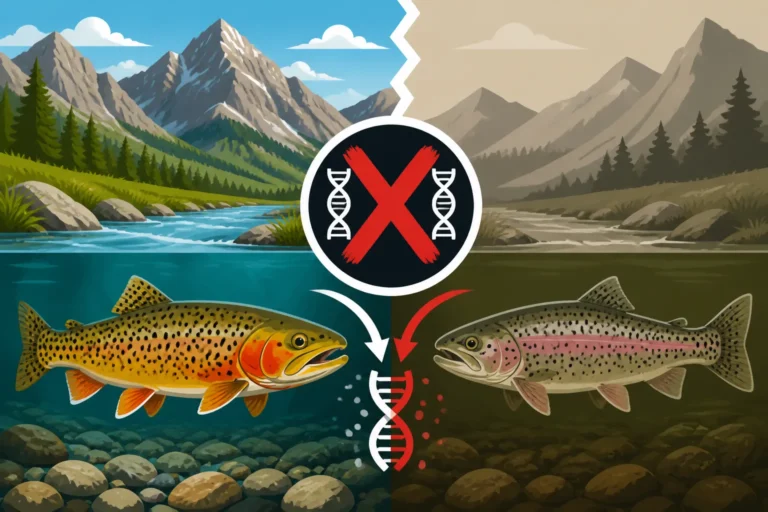
The introduction of non-native trout, while initially well-intentioned to enhance fishing opportunities, proved to be an ecological catastrophe for native cutthroat. Rainbow trout, in particular, readily interbreed with cutthroat, creating "cutbow" hybrids that dilute the genetic purity of the native stock. Why Interbreeding Threatens Native Cutthroat Populations explains this phenomenon in more detail. Brown trout and brook trout, while generally not hybridizing with cutthroat, compete fiercely for food and habitat, often outcompeting the native species, especially in lower elevation waters.
This competition for resources, combined with predation from larger non-native species and the impact of diseases carried by introduced fish, pushed native cutthroat to the highest, most isolated reaches of the state. It essentially forced them into ecological "refuges" where they could maintain their genetic integrity, often in streams too small or too cold for non-native species to thrive. The legacy of these introductions is a complex management challenge that conservationists face daily as they work to restore native populations.
The Greenback Cutthroat Trout: Colorado's State Fish
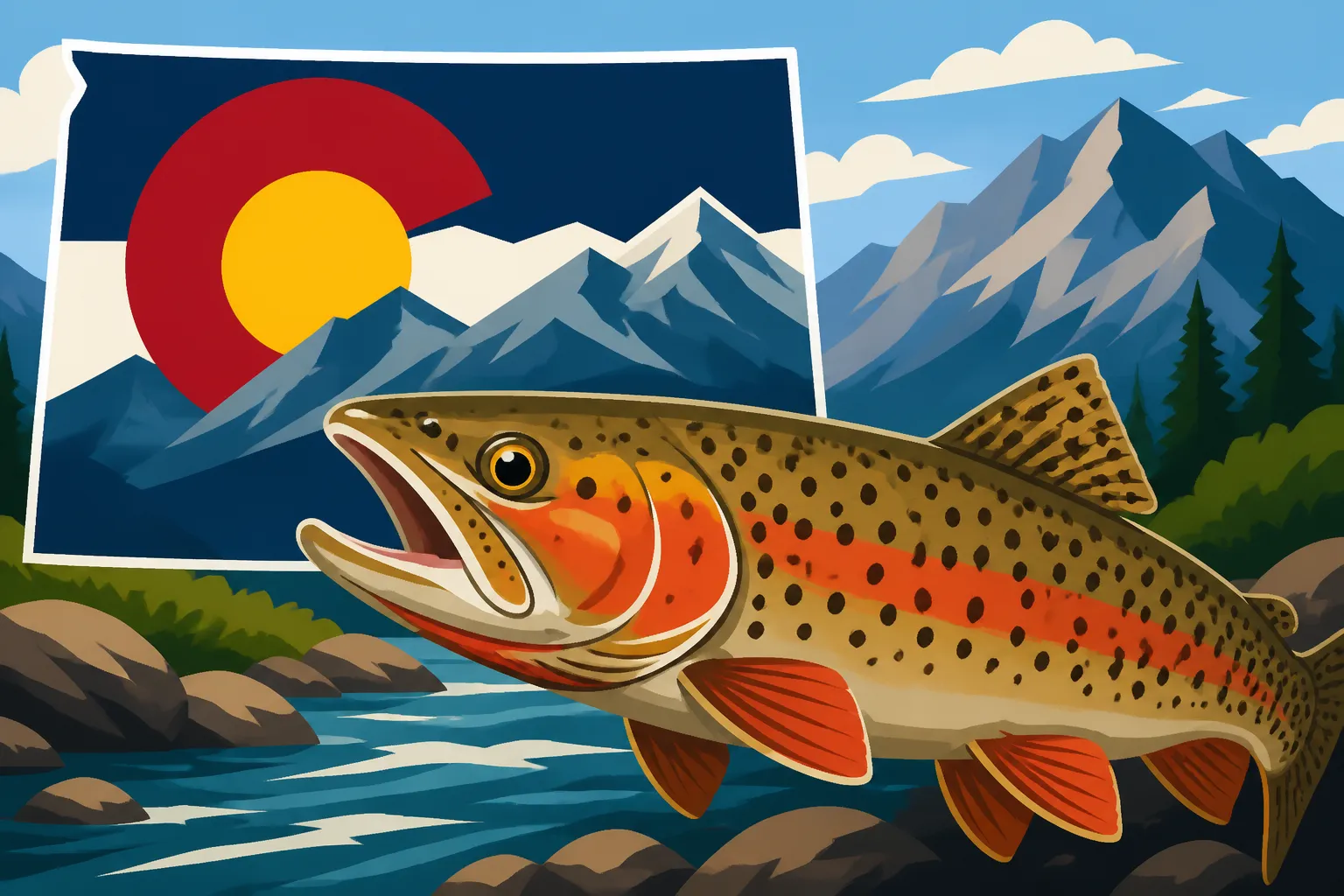
The Greenback Cutthroat Trout holds a special place in the heart of Colorado anglers and conservationists. Not only is it the official state fish, but its journey from near extinction to a symbol of hope is one of the most compelling conservation stories in the West. Often recognized by its distinct golden-green flanks and heavy spotting, the Greenback is a truly magnificent fish.
Distinguishing Features and Historic Range
Genetically pure Greenback Cutthroat Trout, or Oncorhynchus clarkii stomias, are typically characterized by a distinctive greenish-gold coloration on their sides, often fading to a coppery or yellowish belly. Their spots are generally smaller and more concentrated towards the tail, and of course, they possess the vivid red-orange slash under their lower jaw, though this can vary in intensity. What often surprises people is that in certain waters, their coloration can shift, becoming darker or more silvery depending on diet and habitat, making precise identification a nuanced art.
Historically, the Greenback's native range encompassed the South Platte River drainage and portions of the Arkansas River drainage on the eastern side of Colorado's Continental Divide. Think of the rivers flowing east from the Front Range, from the plains up into the high mountains. This vast area was once home to countless populations of these unique fish. Sadly, today, their populations are fragmented, occupying a mere fraction of their historical range, primarily in isolated headwater streams and protected high-alpine lakes where recovery efforts are focused.
The Road to Recovery: Where They Are Today
The story of the Greenback Cutthroat's recovery is one of scientific dedication and tireless effort. For decades, it was believed they were extinct, only for small, genetically pure populations to be rediscovered in remote areas like the tiny tributaries of the Arkansas River. Why the Greenback Cutthroat Almost Went Extinct delves into the historical challenges these fish faced. Today, thanks to extensive habitat restoration, barrier construction to prevent hybridization with non-native trout, and careful reintroduction programs, the Greenback is slowly, but surely, making a comeback.
These efforts involve capturing pure Greenbacks, often via electrofishing, rearing their offspring in specialized hatcheries, and then reintroducing them into carefully prepared, non-native-free waters. It's a slow and meticulous process, but it's working. You can learn more about this ongoing journey in How the Greenback Cutthroat Is Recovering in Colorado. While they are still a species of concern, their improved status allows for some limited, highly regulated fishing opportunities, a testament to the success of these conservation initiatives.
Legalities of Fishing for Greenbacks
Given their endangered past and ongoing recovery, fishing for Greenback Cutthroat Trout comes with very specific and strict regulations. In many waters where Greenbacks have been reintroduced or where remnant populations exist, fishing is often restricted to catch-and-release only, sometimes with specific gear restrictions like artificial flies and lures only, or even barbless hooks. Where to Legally Catch Greenback Cutthroat Trout provides detailed information on where you can and cannot target these fish. It is absolutely crucial for any angler planning to fish in Greenback recovery waters to consult the current Colorado Parks and Wildlife (CPW) fishing regulations brochure.
Ignorance of the rules is not an excuse, and penalties for violating these regulations can be severe. The primary goal is conservation, ensuring these precious native fish continue to thrive. When you do encounter a Greenback, taking extra care to handle it gently and release it quickly is paramount. Using a landing net, especially one with rubber mesh that is gentler on a fish's slime coat, is always recommended.
The Colorado River Cutthroat Trout: A Western Slope Icon
Venturing west of the Continental Divide, we encounter another magnificent native: the Colorado River Cutthroat Trout. This subspecies is a true emblem of the Western Slope, inhabiting the vast Colorado River drainage and its countless tributaries. Its resilience in the face of environmental changes makes it a true survivor and a cherished part of Colorado's natural heritage.
Habitat and Appearance of the CRC
The Colorado River Cutthroat Trout (Oncorhynchus clarkii pleuriticus) typically features a deep gold or olive-green body, often with a hint of red or orange on its flanks, particularly during spawning. Their spots are usually more uniform and evenly distributed across their entire body, from head to tail, compared to the Greenback. And, of course, they possess that tell-tale reddish-orange slash under the jaw, which can sometimes be quite pronounced. Like all cutthroat, their exact coloration can vary dramatically based on the water they inhabit, their diet, and the time of year. A fish in a clear, high-alpine lake might look different from one in a tannin-stained stream.
Their native range historically covered nearly all of the Colorado River Basin within Colorado, stretching from the headwaters near Rocky Mountain National Park all the way down to the state's western border, and into portions of Wyoming and Utah. This means they are found in streams and rivers feeding into the mighty Colorado River, including iconic waterways like the Gunnison, Roaring Fork, Yampa, and White Rivers. Today, while still more widespread than the Greenback, their populations are fragmented and primarily reside in the upper reaches of these drainages.
Strongholds and Recovery Efforts in Western Colorado
While facing similar threats to their eastern cousins, the Colorado River Cutthroat Trout has maintained more widespread populations due to the vastness and ruggedness of its native range. Significant strongholds can be found in the Flat Tops Wilderness, the San Juan Mountains, and isolated headwater streams throughout the Western Slope. These remote, pristine environments often serve as natural refuges, making them crucial for the species' long-term survival. Where Colorado River Cutthroat Trout Still Live Natively offers more insights into these key areas.
Recovery efforts for the CRC mirror those for the Greenback, focusing on identifying genetically pure populations, establishing new pure populations in suitable habitats, and protecting existing ones. Projects often involve removing non-native fish from target streams, installing natural or man-made barriers to prevent re-colonization by non-natives, and careful reintroductions. Many of these efforts are spearheaded by Colorado Parks and Wildlife in partnership with federal agencies and local conservation groups.
Fishing Opportunities and Conservation Concerns
Anglers often find fantastic opportunities to fish for Colorado River Cutthroat Trout, especially in the state's wilderness areas and national forests. While specific regulations vary by stream and lake, many waters allow for catch-and-release fly fishing or lure fishing. It's truly a special experience to hike into a remote alpine lake or traverse a pristine stream and cast a fly to these indigenous fish. Knowing that you're interacting with a species that has called these waters home for millennia adds an incredible layer of meaning to the experience.
However, conservation remains a critical concern. Habitat degradation from wildfires, climate change impacting water temperatures and flows, and the persistent threat of hybridization with rainbow trout continue to challenge recovery efforts. Anglers play a vital role in conservation by adhering to regulations, practicing careful Catch-and-Release Rules on Colorado's Cutthroat Waters, and supporting organizations dedicated to native fish recovery. Every careful release and every dollar from your fishing license contributes to their future.
The Rio Grande Cutthroat Trout: Jewel of the San Luis Valley
Journeying south into the vast, high-desert landscape of the San Luis Valley and the surrounding mountains, we discover the third native cutthroat subspecies in Colorado: the Rio Grande Cutthroat Trout. This fish is a testament to adaptation, thriving in the unique aquatic environments of Colorado's southern reaches, a true jewel in an often-overlooked region.
Unique Characteristics and Southern Colorado Home
The Rio Grande Cutthroat Trout (Oncorhynchus clarkii virginalis) is often described as one of the most vividly colored cutthroat subspecies. Their bodies typically range from olive-green to brassy gold, but what truly stands out are the intense crimson or orange hues on their gill plates, belly, and, of course, the distinctive "cutthroat" slash. Their spots are generally larger and more widely distributed than the Greenback's, sometimes extending onto their fins. As with all cutthroat, exact coloration depends on the specific water and diet, making each fish a unique encounter.
Historically, the Rio Grande Cutthroat inhabited the entire Rio Grande River drainage within Colorado, as well as parts of New Mexico. In Colorado, this means primarily the waters of the San Luis Valley, including the Conejos, Alamosa, and Rio Grande Rivers, and their many tributaries that flow from the San Juan and Sangre de Cristo Mountains. These streams often experience dramatic seasonal flow variations and temperature shifts, requiring a hardy fish like the Rio Grande Cutthroat to survive and thrive. You can find more details about their specific locales in Rio Grande Cutthroat Trout in the San Luis Valley.
Preservation Challenges and Successes
Like its native cousins, the Rio Grande Cutthroat Trout has faced severe declines due to habitat loss, overfishing in the past, and especially hybridization and competition with introduced trout species. The vast, open nature of the San Luis Valley and its agricultural history have posed particular challenges for maintaining pristine habitats. Diversion of water for irrigation, grazing impacts, and the widespread stocking of rainbow trout historically put immense pressure on these populations.
Despite these hurdles, dedicated conservation efforts have seen some significant successes. Scientists and local communities are working together to identify and protect genetically pure populations, many of which now exist in isolated headwater streams and designated recovery areas in the San Juan and Sangre de Cristo Mountains. Similar to other cutthroat efforts, stream restoration, barrier construction, and careful reintroductions are key strategies. These projects are often a partnership between state agencies, federal land managers, and local watershed groups.
Experiencing Rio Grande Cutthroat Fishing
For the adventurous angler, seeking out Rio Grande Cutthroat Trout offers a truly rewarding experience, often involving remote hikes into stunning mountain drainages. Many of these waters are managed for native species, meaning strict catch-and-release rules apply, and often only artificial flies and lures are permitted. Fishing for these vibrant fish in the high-country streams that feed the Rio Grande is a chance to connect with an ancient lineage in a truly wild setting.
Always check the current Colorado fishing regulations for the specific stream or lake you plan to visit, as rules can change based on the status of local populations and ongoing recovery efforts. Respecting these fragile ecosystems and handling every fish with the utmost care before release is not just good practice, it's essential for the survival of the species. Bringing a small, packable fishing net is a wise choice, and you can find many excellent options for these on Amazon, making sure to choose a rubber-coated net to protect the fish.
Why Native Cutthroat Trout Conservation Matters So Much
Beyond the sheer joy of catching a beautiful fish, the conservation of Colorado's native cutthroat trout is deeply important for a multitude of reasons. It's not just about saving a species; it's about preserving the ecological health of our watersheds, honoring our state's natural history, and ensuring that future generations can experience the same wild beauty we cherish today. This commitment to conservation is a cornerstone of responsible outdoor recreation in Colorado.
Ecological Importance and Biodiversity
Native cutthroat trout are what scientists call "indicator species." This means their presence and health tell us a great deal about the overall health of an aquatic ecosystem. If cutthroat populations are thriving, it's a good sign that the water quality is excellent, the habitat is intact, and the food web is functioning properly. Conversely, a decline in cutthroat often signals deeper environmental problems that could affect many other species, including those we don't even see.
They are also a vital part of Colorado's biodiversity. Each subspecies has adapted over millennia to its specific environment, possessing unique genetic traits that allow it to survive in challenging conditions. Losing these unique genetic lineages means losing irreplaceable pieces of Colorado's natural heritage, reducing the overall resilience of our ecosystems in the face of environmental change, such as climate shifts or disease outbreaks. Maintaining this biodiversity makes our natural world stronger and more adaptable.
The Cultural and Historical Significance for Colorado
The native cutthroat trout are more than just fish; they are living symbols of Colorado's wild past. For thousands of years, they were a crucial food source for indigenous peoples and early explorers. Their presence shaped the landscape and the cultures that developed around these pristine waters. The story of the Greenback's recovery, in particular, has become a powerful narrative of hope and the triumph of conservation science, a story every Coloradan can take pride in.
For anglers, there's a profound connection that comes from casting a fly to a fish that has finned these very waters for eons. It's a connection to history, to wilderness, and to a legacy that transcends the act of fishing itself. Preserving these species is about preserving a piece of Colorado's soul, ensuring that the stories and traditions tied to these remarkable fish continue for generations to come.
Funding Conservation Through Licenses and Stamps
The work to conserve and restore native cutthroat populations, and indeed all of Colorado's wildlife, requires significant resources. This is where every angler in Colorado plays a direct and crucial role. When you purchase a Colorado fishing license, a substantial portion of that fee goes directly towards funding critical conservation projects, including native trout recovery efforts. This includes habitat restoration, non-native fish removal, genetic research, and reintroduction programs. Colorado Fishing License Guide for Residents and Nonresidents outlines the requirements.
Furthermore, the mandatory Habitat Stamp, which accompanies most licenses, is another vital funding source. The revenue generated from the Habitat Stamp is specifically earmarked for wildlife habitat conservation and management across the state, benefiting countless species, including our native cutthroat. How Colorado's Habitat Stamp Money Gets Used details how these funds are put to work. By buying a license and stamp, you're not just buying the right to fish; you're actively contributing to the health and future of Colorado's wild places and the incredible fish that call them home.
Identifying and Protecting Native Cutthroat in the Field
Knowing how to properly identify Colorado's native cutthroat trout subspecies and how to protect them once you've caught one is paramount for any ethical angler. It’s not always easy, especially with hybrids present, but a keen eye and a commitment to careful handling go a long way. This section will give you the tools to be a responsible steward of these precious fish.
Key Identification Marks for Each Subspecies
Differentiating between cutthroat subspecies and even distinguishing them from rainbow trout can be challenging, but there are key features to look for:
- The Cutthroat Slash: This is the most defining characteristic, the red-orange mark under the lower jaw. However, its intensity can vary, and it might be faint or absent in some fish, especially young ones or those in poor condition. Hybrids (cutbows) can also show a faint slash.
- Spotting Patterns:
- Greenback Cutthroat: Generally smaller, more concentrated spots towards the tail, often sparse or absent on the front half of the body.
- Colorado River Cutthroat: Spots typically more uniform and evenly distributed across the entire body, including the head and fins.
- Rio Grande Cutthroat: Often larger, bolder spots, sometimes extending onto the dorsal and caudal fins.
- Coloration: While variable, Greenbacks tend to have a yellowish-gold or greenish hue, CRC often show more golden or olive tones with some red/orange, and Rio Grandes can be quite vibrant with crimson or orange on their gill plates and belly.
- Absence of White Tip: Pure cutthroat trout typically do not have the white leading edge on their dorsal, pectoral, pelvic, and anal fins that is characteristic of brook trout or the fins of some rainbow trout.
It takes practice, and sometimes even biologists need genetic testing to be absolutely sure. But by observing these features, you can make an educated guess in the field. When in doubt, treat any fish resembling a cutthroat as native and release it carefully. A good, waterproof field guide available on Amazon can be an invaluable resource to help you in the field.
| Feature | Greenback Cutthroat Trout | Colorado River Cutthroat Trout | Rio Grande Cutthroat Trout |
|---|---|---|---|
| Scientific Name | O. clarkii stomias | O. clarkii pleuriticus | O. clarkii virginalis |
| Historic Range | South Platte & Arkansas River drainages | Colorado River drainage (Western Slope) | Rio Grande River drainage (San Luis Valley) |
| Coloration (Typical) | Golden-green flanks, coppery belly | Olive-gold, reddish/orange highlights | Brassy gold, intense crimson/orange on belly/gills |
| Spotting Pattern | Smaller, concentrated on tail, sparse forward | Uniform, evenly distributed body-wide | Larger, bolder spots, often on fins |
| Cutthroat Slash | Often distinct, but can vary | Prominent, reddish-orange | Very pronounced, often crimson |
| Conservation Status | Threatened (recovering) | Species of Special Concern (recovering) | Species of Special Concern (recovering) |
Best Practices for Catch-and-Release
Since many native cutthroat waters are managed as catch-and-release, practicing proper handling techniques is crucial for the fish's survival. Here's how to ensure a healthy release:
- Minimize Fight Time: Bring the fish in quickly to reduce stress and exhaustion.
- Keep Fish in Water: Avoid removing the fish from the water as much as possible. This protects their delicate slime coat, gills, and internal organs.
- Wet Hands: Always wet your hands before touching the fish. Dry hands can remove the protective slime coat, making the fish vulnerable to disease.
- Handle Gently: Support the fish horizontally, never vertically by the jaw or tail only.
- Remove Hook Quickly: Use forceps or a hemostat to quickly and gently remove the hook. If the hook is deeply swallowed, cut the line as close to the hook as possible. Barbless hooks are highly recommended as they cause less damage and are easier to remove.
- Revive if Necessary: Hold the fish gently facing upstream in a current until it can swim away under its own power. Don't pump the fish back and forth; this can force water the wrong way over its gills.
These simple steps make a huge difference in the survival rate of released fish. You can find excellent, fish-friendly tools like rubber-net landing nets and long-nosed forceps on Amazon to aid in quick, gentle releases.
Reporting Your Native Cutthroat Sightings
Your observations in the field can be incredibly valuable to conservation efforts! If you believe you've encountered a genetically pure native cutthroat trout in a stream where its presence is either unknown or particularly rare, consider reporting your sighting to Colorado Parks and Wildlife (CPW). While you shouldn't disturb the fish, a clear photo (especially of the spotting pattern and slash if possible) can be very helpful.
CPW uses angler-submitted data, along with scientific surveys, to monitor populations and track recovery efforts. This information helps them understand where native populations are persisting, where reintroductions are succeeding, and where further conservation work might be needed. Your firsthand account from the riverbank or high-alpine lake can provide critical insights that help protect these fish for the future. Always make sure to note the exact location (GPS coordinates if possible) and the date of your sighting.
Fishing for Native Cutthroat: Ethics, Regulations, and Best Practices
Fishing for native cutthroat trout is a privilege, and it comes with a heightened responsibility. These fish live in often fragile environments, and our actions, even seemingly small ones, can have a big impact. Understanding and adhering to specific ethics, regulations, and best practices ensures that we contribute positively to their survival.
Specific Regulations for Native Cutthroat Waters
The most crucial step before heading out to fish for native cutthroat is to consult the current Colorado Parks and Wildlife fishing regulations brochure. These regulations are updated annually and are specifically designed to protect vulnerable fish populations. Many native cutthroat waters will have special restrictions, such as:
- Catch-and-Release Only: Often, keeping any native cutthroat is strictly prohibited to allow populations to grow.
- Artificial Flies and Lures Only: Bait fishing is frequently banned because fish tend to swallow bait deeper, leading to higher mortality rates upon release.
- Barbless Hooks: Requiring barbless hooks makes hook removal much easier and less damaging to the fish's mouth. Barbless Hook Rules on Colorado Rivers are often in place in these sensitive areas.
- Season Restrictions: Some waters may have specific seasons when fishing is allowed or prohibited to protect spawning fish.
It's not uncommon to find signs at trailheads or along streams designating special regulations for native trout waters. Always read these signs carefully, even if you think you know the rules. Regulations can change, and being informed is your responsibility.
Recommended Gear for Sensitive Environments
Approaching native cutthroat waters, especially in remote, high-country settings, often requires a thoughtful approach to gear. Lightweight, versatile equipment is usually best, but also consider items that promote responsible angling:
- Light Tackle: A lightweight fly rod (2-4 weight) or ultra-light spinning rod is perfect for these smaller streams and can make even smaller native trout feel like a trophy. It's also less likely to over-fight and exhaust the fish.
- Barbless Hooks: Carry a small file or pliers to crimp down barbs on your hooks if they aren't already barbless. This is non-negotiable in many native waters.
- Rubber Mesh Net: A small, soft, rubber-mesh landing net is ideal. It's much gentler on the fish's slime coat and fins than traditional nylon nets, minimizing injury during the landing and release process. You can find these easily on Amazon or at local fly shops.
- Forceps/Hemostats: These are essential for quick and easy hook removal, especially with small flies.
- Water Filter/Bottle: Many native cutthroat waters are in wilderness areas. Carrying a water filter or ample water supply is critical for your own safety and to avoid impacting natural water sources.
Choosing the right gear isn't just about catching fish; it's about minimizing your impact on the delicate ecosystems where native cutthroat thrive.
Leave No Trace Principles for Anglers
Native cutthroat trout often inhabit pristine, wild, and sometimes fragile environments. Practicing Leave No Trace principles is fundamental to preserving these places for both the fish and future visitors.
- Plan Ahead and Prepare: Know the regulations, pack appropriate gear, and understand the area you're visiting.
- Travel and Camp on Durable Surfaces: Stick to existing trails, especially in alpine environments, to avoid disturbing fragile vegetation or stream banks.
- Dispose of Waste Properly: Pack out everything you pack in, including fishing line, broken lures, and food scraps. Don't leave anything behind, not even biodegradable items.
- Leave What You Find: Don't disturb archaeological sites, pick wildflowers, or alter natural features. Leave the environment as you found it.
- Minimize Campfire Impacts: Use established fire rings, keep fires small, and ensure they are completely out before leaving. In many sensitive areas, fires may be prohibited.
- Respect Wildlife: Observe wildlife from a distance, never feed animals, and secure your food to prevent attracting bears or other critters.
- Be Considerate of Other Visitors: Share the trails and streams, keep noise levels down, and yield to others.
By diligently following these principles, anglers become true conservationists, ensuring that the wild beauty of native cutthroat country remains untarnished.
Supporting Native Cutthroat Recovery Efforts
Being a responsible angler goes beyond just following the rules on the water; it extends to actively supporting the broader efforts to recover and sustain Colorado's native cutthroat trout populations. There are many ways to get involved, from the simple act of buying your license to volunteering your time, all of which contribute to a brighter future for these incredible fish.
How Your Fishing License Contributes
We touched on this earlier, but it truly bears repeating: your Colorado fishing license is one of the most direct and impactful ways you support native cutthroat recovery. A significant portion of the funds generated from license sales, along with the required Habitat Stamp, directly finances the scientific research, habitat restoration, reintroduction programs, and enforcement efforts conducted by Colorado Parks and Wildlife (CPW). Without these funds, many of the successful recovery initiatives we've seen would simply not be possible.
Every angler, whether resident or non-resident, is an investor in Colorado's natural resources. It’s an efficient system where those who enjoy the resource directly contribute to its sustainability. So, when you purchase your annual Colorado Fishing License Costs Explained or even a short-term license for a vacation, know that you are making a tangible difference for Greenback, Colorado River, and Rio Grande Cutthroat Trout. It’s a powerful form of collective conservation that ensures these species have a fighting chance.
Volunteer Opportunities and Organizations
For those who want to get even more hands-on, numerous volunteer opportunities exist with various organizations dedicated to native trout conservation. These groups often work in partnership with CPW and federal land agencies on stream restoration projects, non-native fish removal, or public education initiatives. Imagine spending a weekend in a beautiful mountain valley, helping to plant willows along a stream bank to improve fish habitat, or assisting biologists with fish surveys.
Organizations like Trout Unlimited, local watershed councils, and even some national forest volunteer programs frequently seek assistance. These experiences are not only rewarding but also incredibly educational, offering a deeper insight into the science and hard work behind conservation. You'll meet passionate individuals, learn new skills, and contribute directly to the health of the very waters you love to fish. A quick online search for "Colorado native trout volunteer" will often yield results for upcoming projects and contact information for local chapters.
Responsible Angling as a Form of Advocacy
Ultimately, every time you step onto a native cutthroat stream, you are an ambassador for these fish and the environments they call home. Practicing responsible angling — adhering to regulations, practicing careful catch-and-release, and following Leave No Trace principles — is a powerful form of advocacy in itself. It sets a positive example for others and demonstrates a deep respect for the resource.
Furthermore, being informed about native cutthroat issues allows you to speak knowledgeably and advocate for their protection when opportunities arise. This could be by participating in public comment periods for management plans, supporting conservation funding measures, or simply educating a fellow angler on the importance of proper fish handling. The future of Colorado's native cutthroat trout lies in a combination of scientific effort, dedicated funding, and the collective commitment of informed and responsible anglers like yourself. These ancient, resilient fish deserve nothing less.
Disclaimer
This article is for general informational purposes only and does not constitute professional advice. Laws, prices and regulations vary by location and change over time. Consult a qualified professional for guidance on your specific situation.