Do Stocked Trout Reproduce in Colorado Rivers?
Colorado stocked trout usually cannot reproduce effectively in rivers, impacting fisheries managed by Colorado Parks and Wildlife.

Colorado stocked trout usually cannot reproduce effectively in rivers, impacting fisheries managed by Colorado Parks and Wildlife.
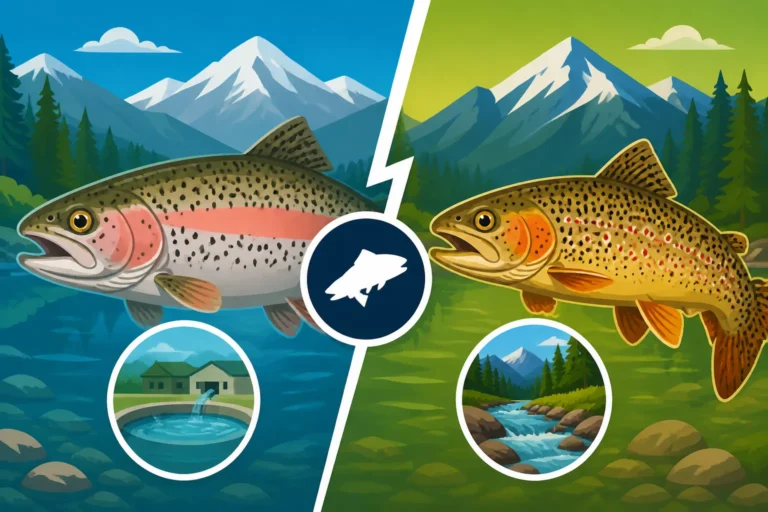
Fin condition, coloration, body shape, and jaw anomalies help anglers distinguish stocked trout from wild Colorado river trout.
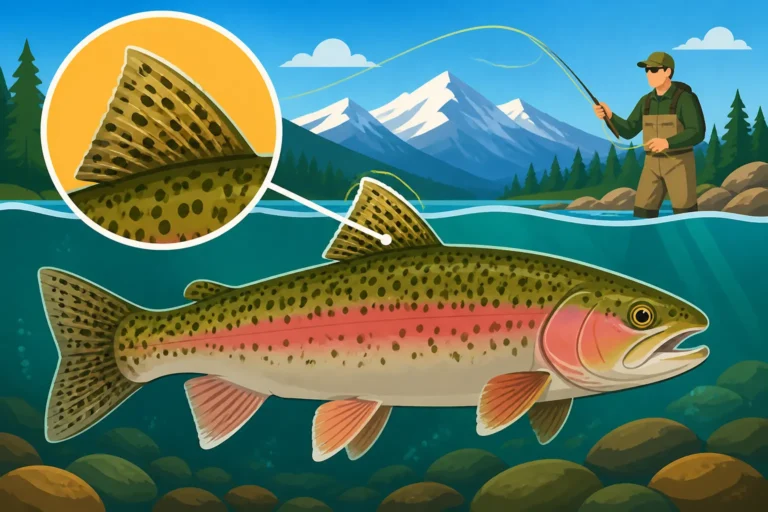
Colorado trout fin clips identify hatchery fish, helping wildlife managers track survival, growth, and stocking programs.
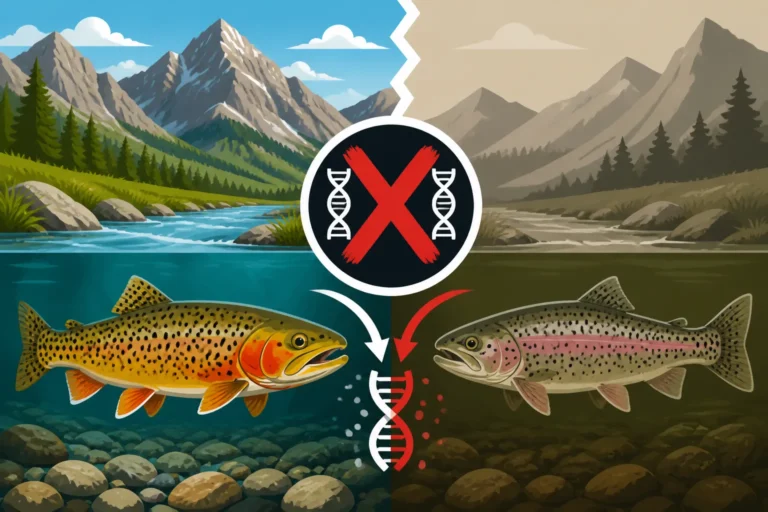
Interbreeding between native Colorado cutthroat trout and non-native rainbow trout creates hybrids that dilute pure genetic lines.

Adaptable, widely stocked rainbows and native cutthroat share Colorado waters, and a spotted fish with a red slash under the jaw hints at hybridization.

Genetic testing of Colorado cutthroat trout identifies pure native populations and prevents hybridization with nonnative rainbow trout.
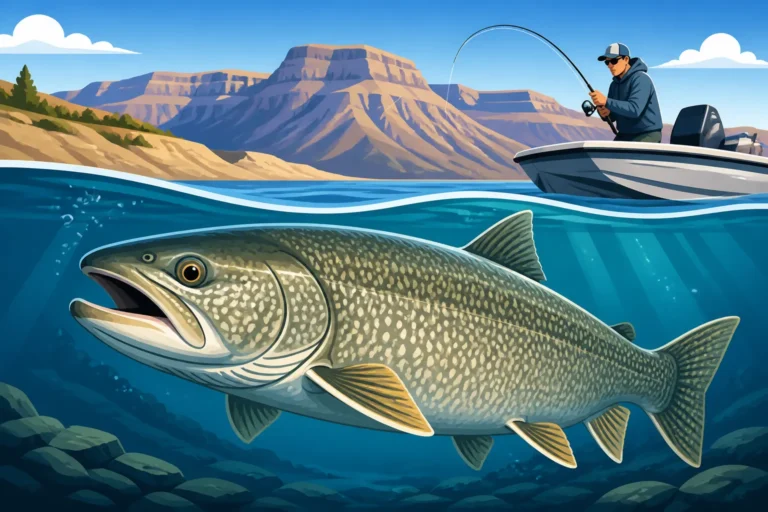
Blue Mesa Reservoir provides deep cold water and kokanee salmon that help lake trout grow to massive trophy sizes.

Colorado lake trout typically reach ages between five and fifteen years, while rare specimens in Blue Mesa Reservoir survive up to thirty years.
Blue Mesa Reservoir and other Colorado waters hold rainbow trout over twenty inches and lake trout reaching forty inches.

Colorado’s biggest recorded rainbow trout weighed twenty-four pounds and was caught in North Delaney Butte Lake by anglers.